The glossary
Techniques
The 28 techniques the recipes here refer to by name — each one explained, so a step that says "deglaze the pan" doesn't assume you already know.
No entries match.
B
- baste
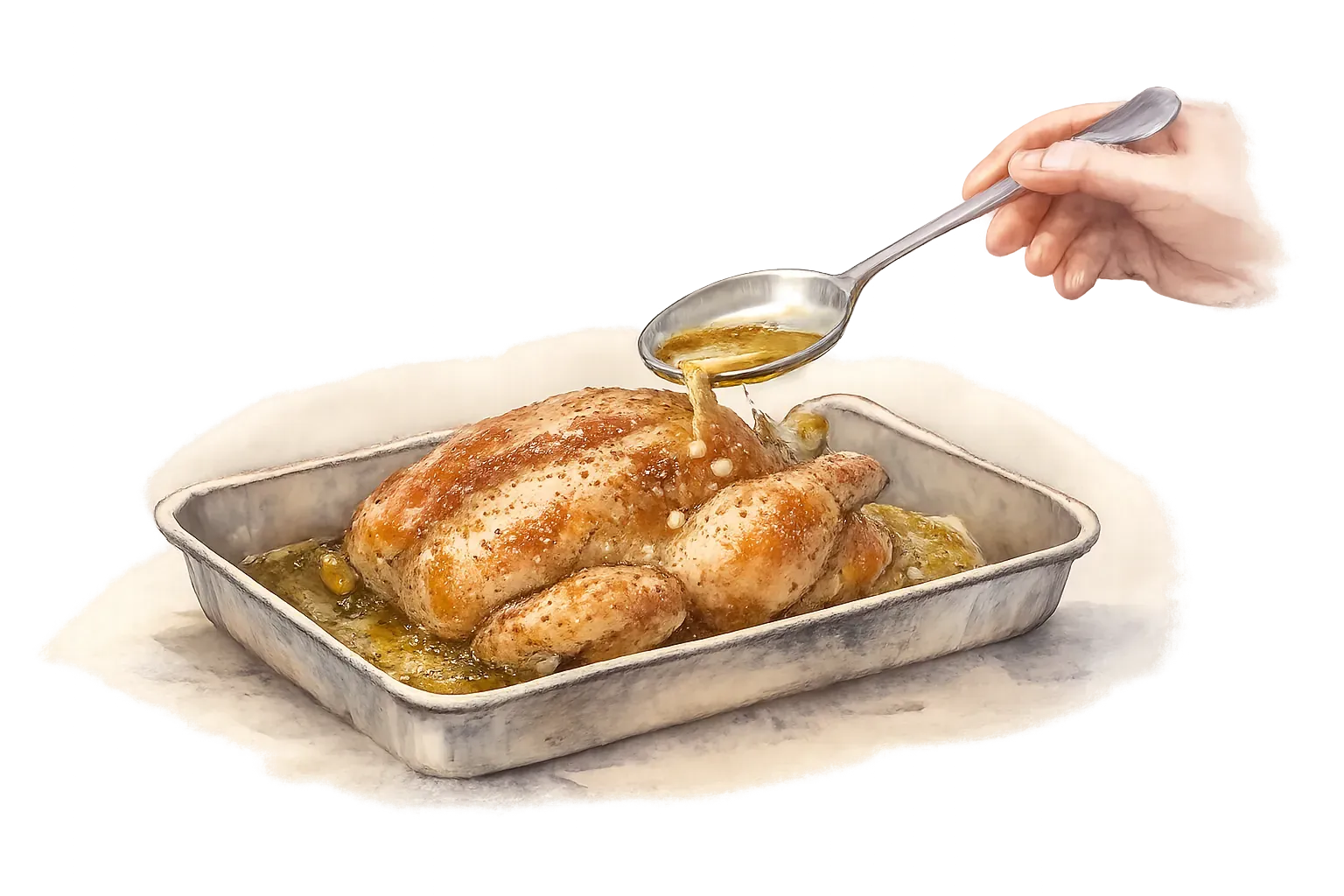
Spoon, brush, or squeeze pan juices, marinade, or melted fat over food as it cooks, to keep it moist and add flavor to the surface.
- blanch
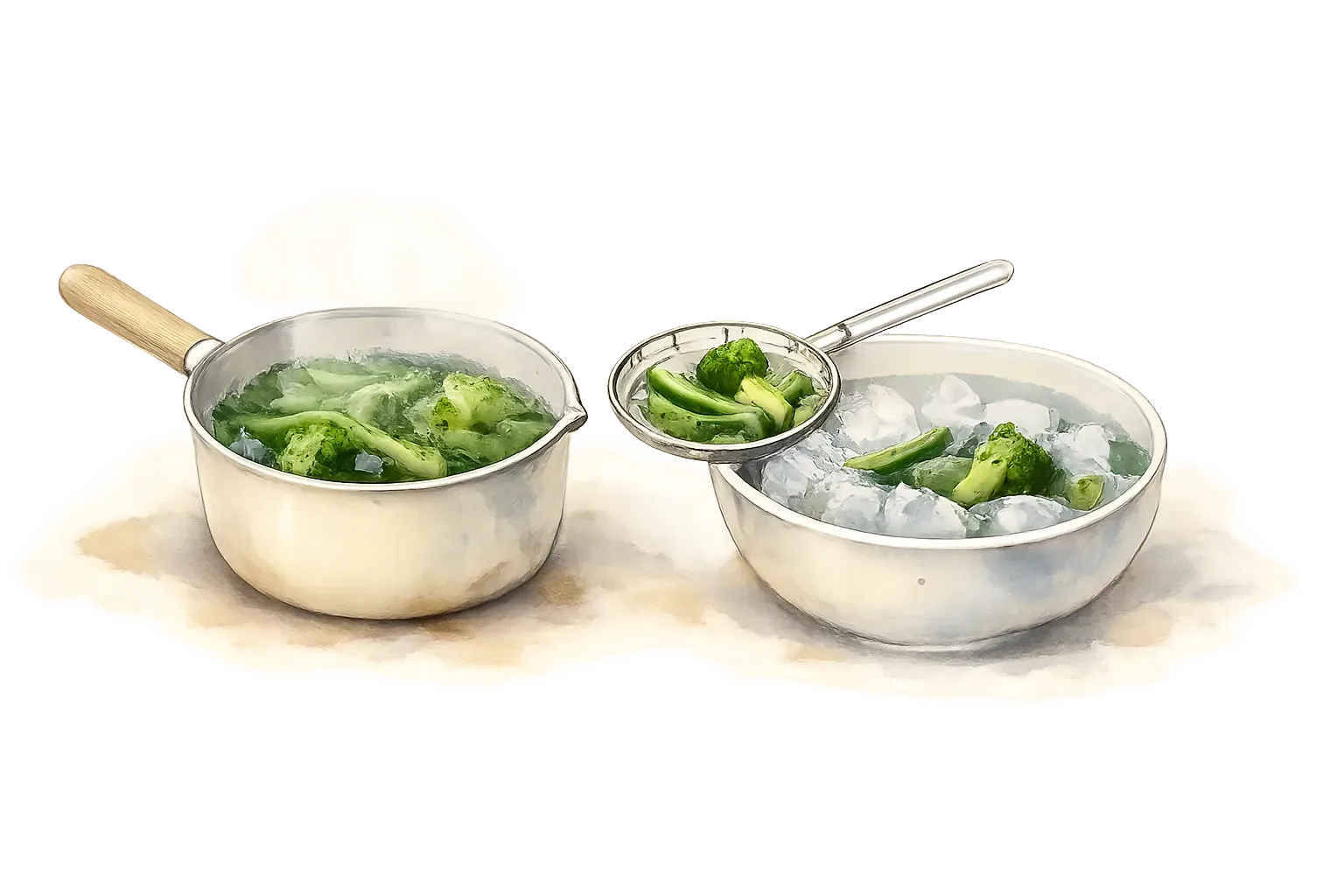
Briefly boil, then immediately transfer to ice water to stop the cooking. Used to partially cook vegetables while preserving color and crispness, or to loosen skins for peeling.
- boil
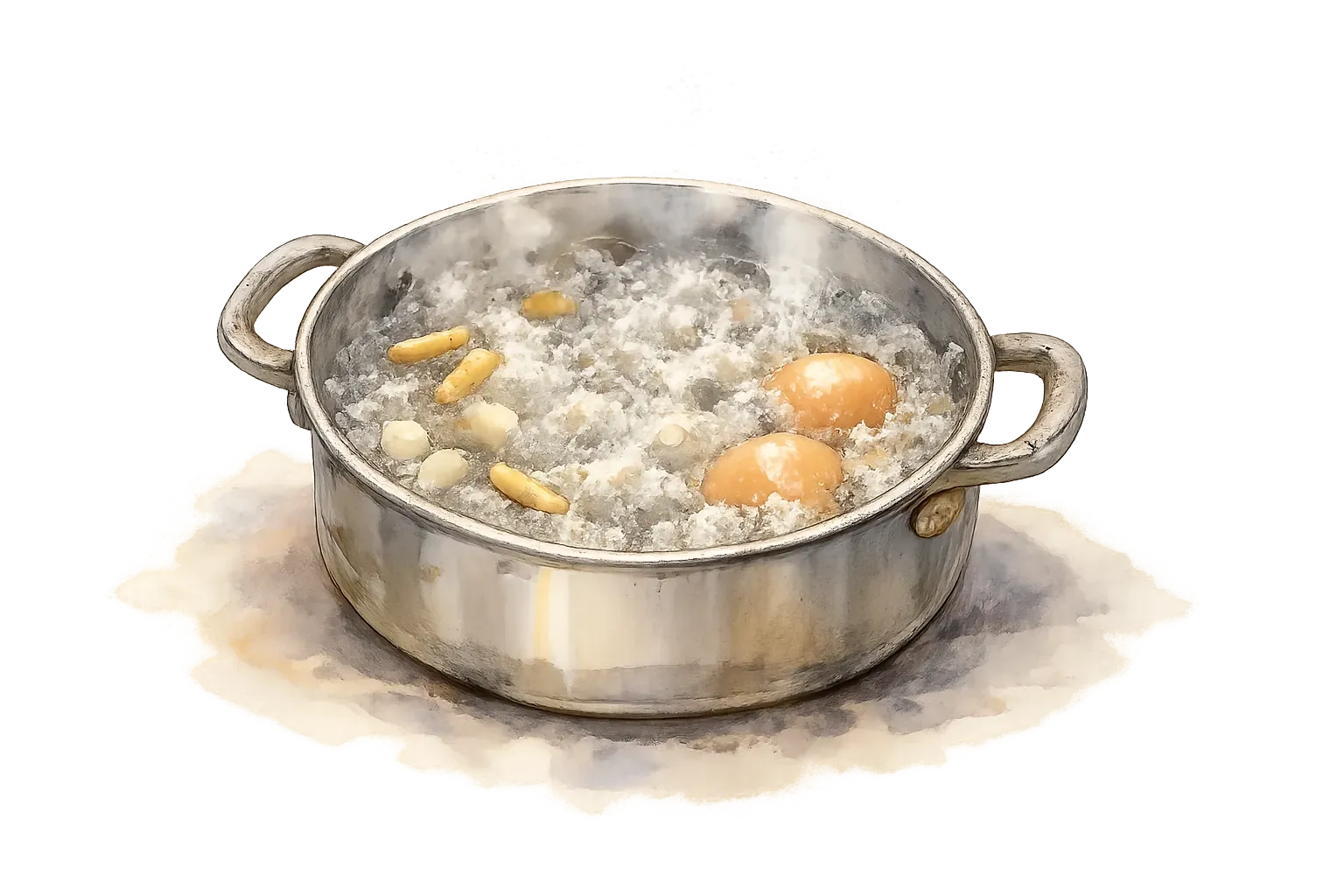
Cook in liquid at a full rolling boil -- large bubbles, the whole surface churning. Right for pasta, potatoes, and eggs; usually wrong for meat and stews, which turn tough and cloudy and want a simmer instead.
- braise
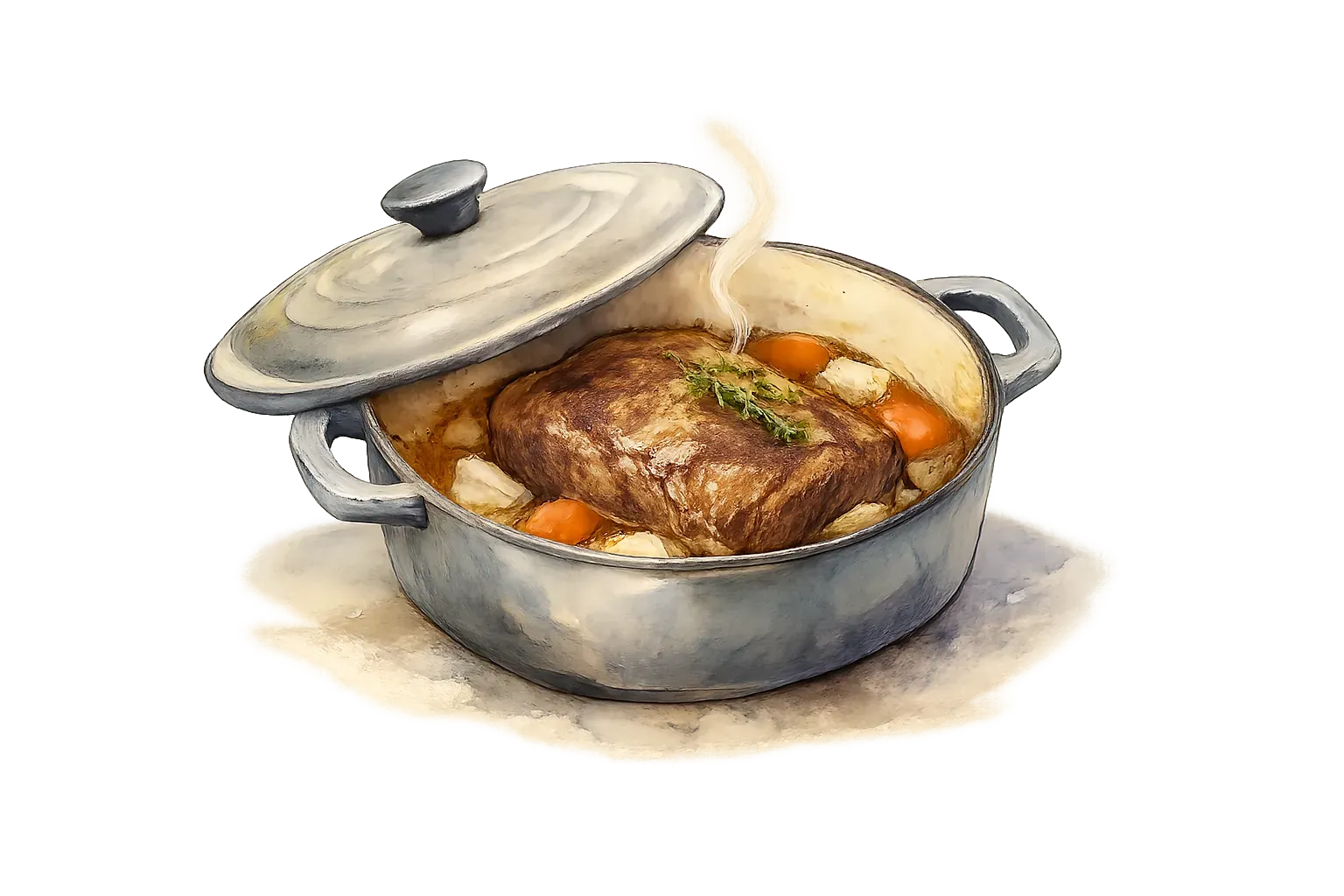
Cook slowly in a covered pot with a small amount of liquid, usually after first browning the main ingredient. Used for tougher cuts of meat that need long, moist cooking to become tender.
- brine
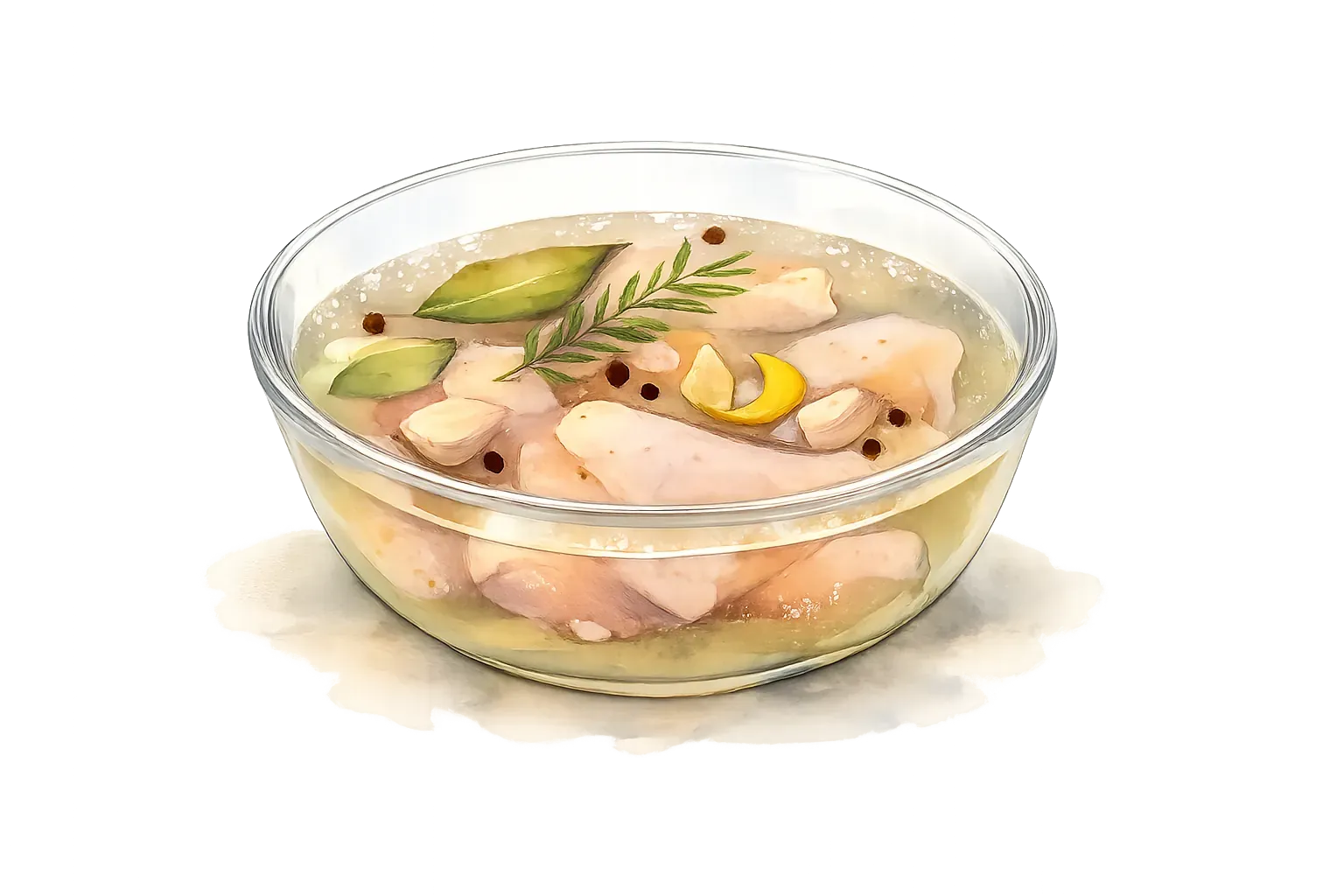
Salt food ahead of cooking so the seasoning reaches well past the surface and the meat holds on to more of its juices instead of squeezing them out. It comes in two forms that are not interchangeable: a wet brine dissolves the salt in water and submerges the food, while a dry brine rubs the salt on directly and adds no water at all. They want different amounts of salt, different timings, and different equipment.
- brown
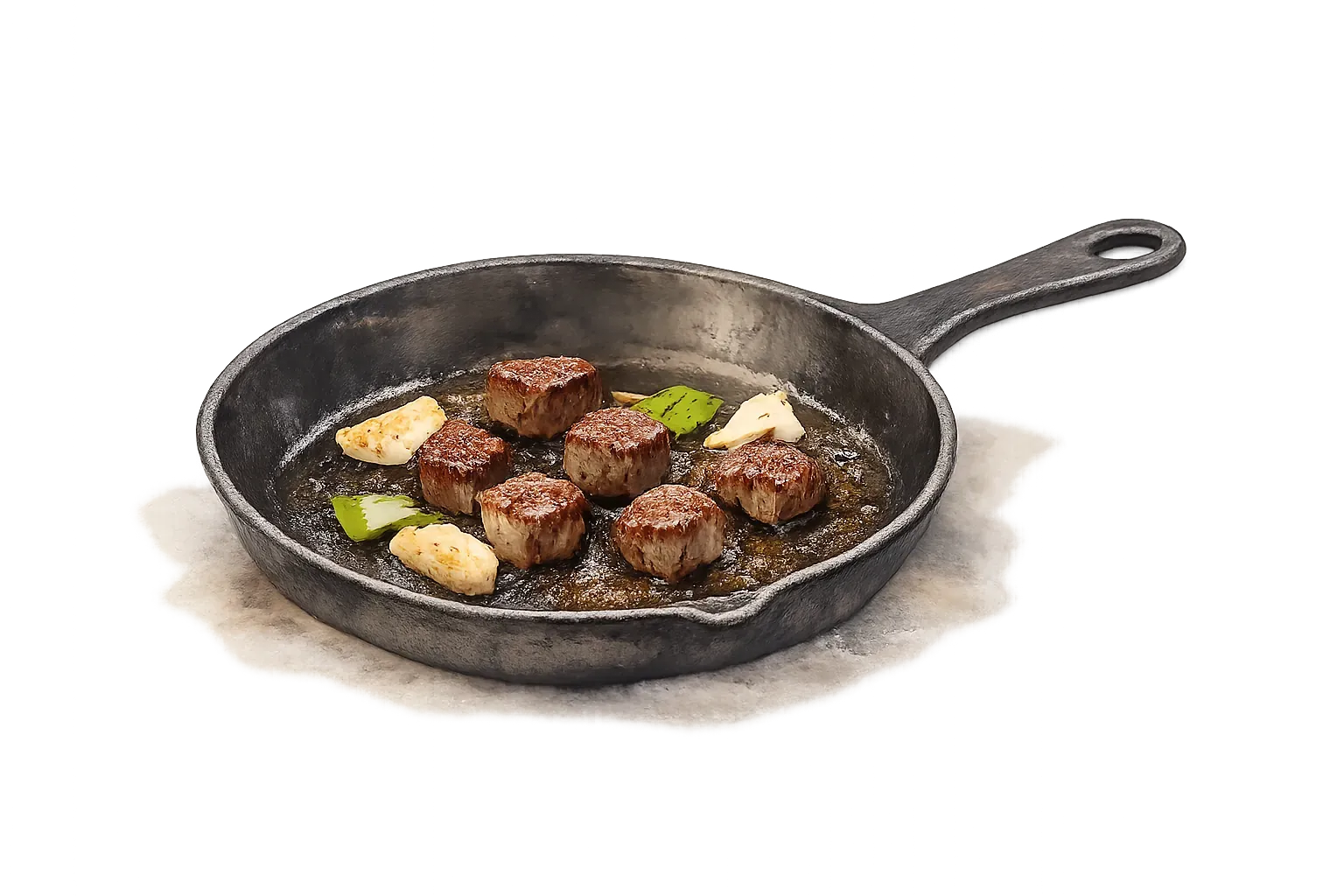
Also: sear
Cook the surface of meat or vegetables in hot fat until deeply colored -- not to cook it through, but to build flavor through the Maillard reaction, which is often the largest single source of savory depth in a braise or stew. Deeply colored means genuinely brown, not beige: the difference between the two is most of the flavor.
- butterfly
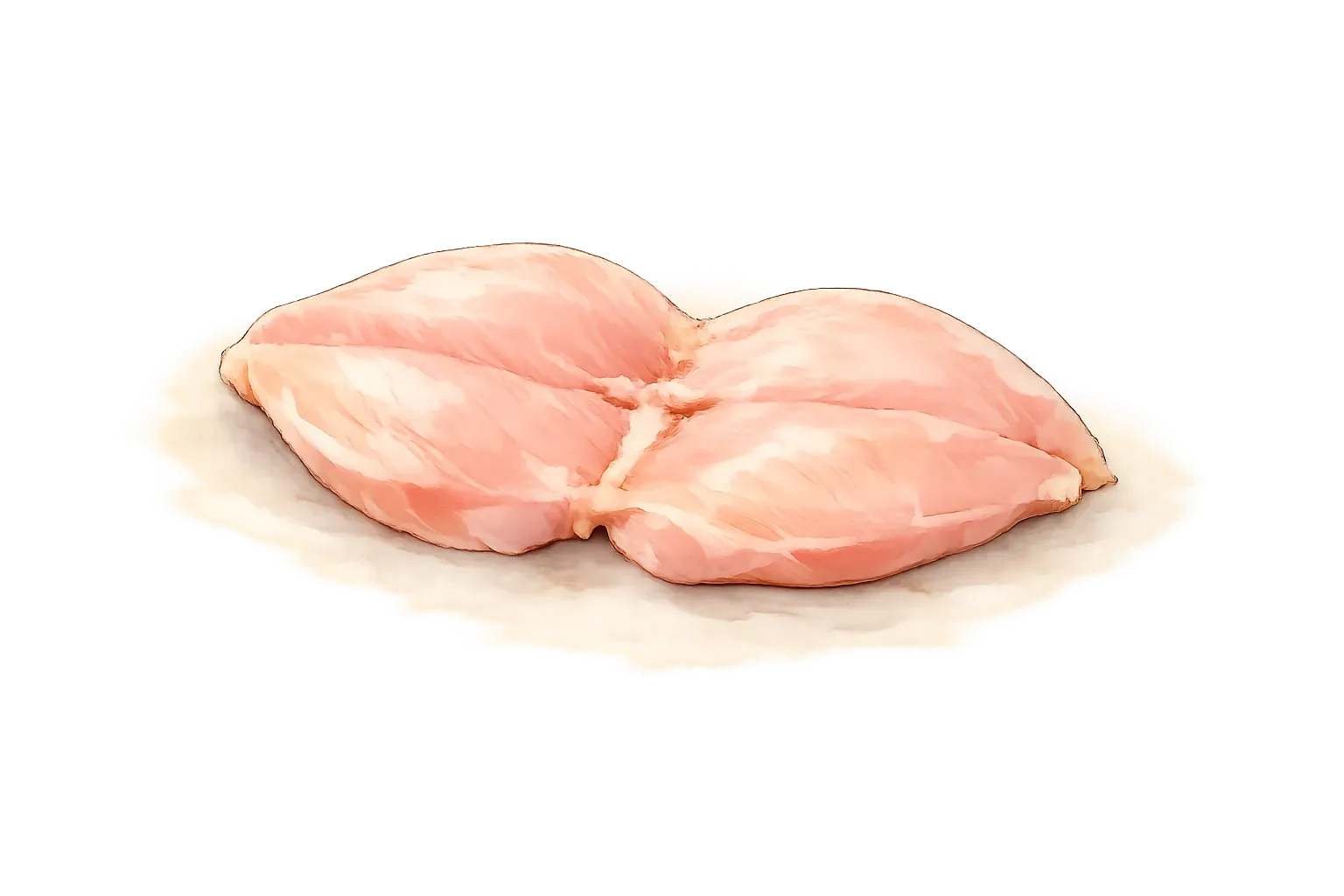
Cut an ingredient (often meat, sometimes bread) nearly in half lengthwise and open it flat, like a book -- used to even out thickness for more consistent cooking, or to create a pocket for stuffing.
C
- caramelize
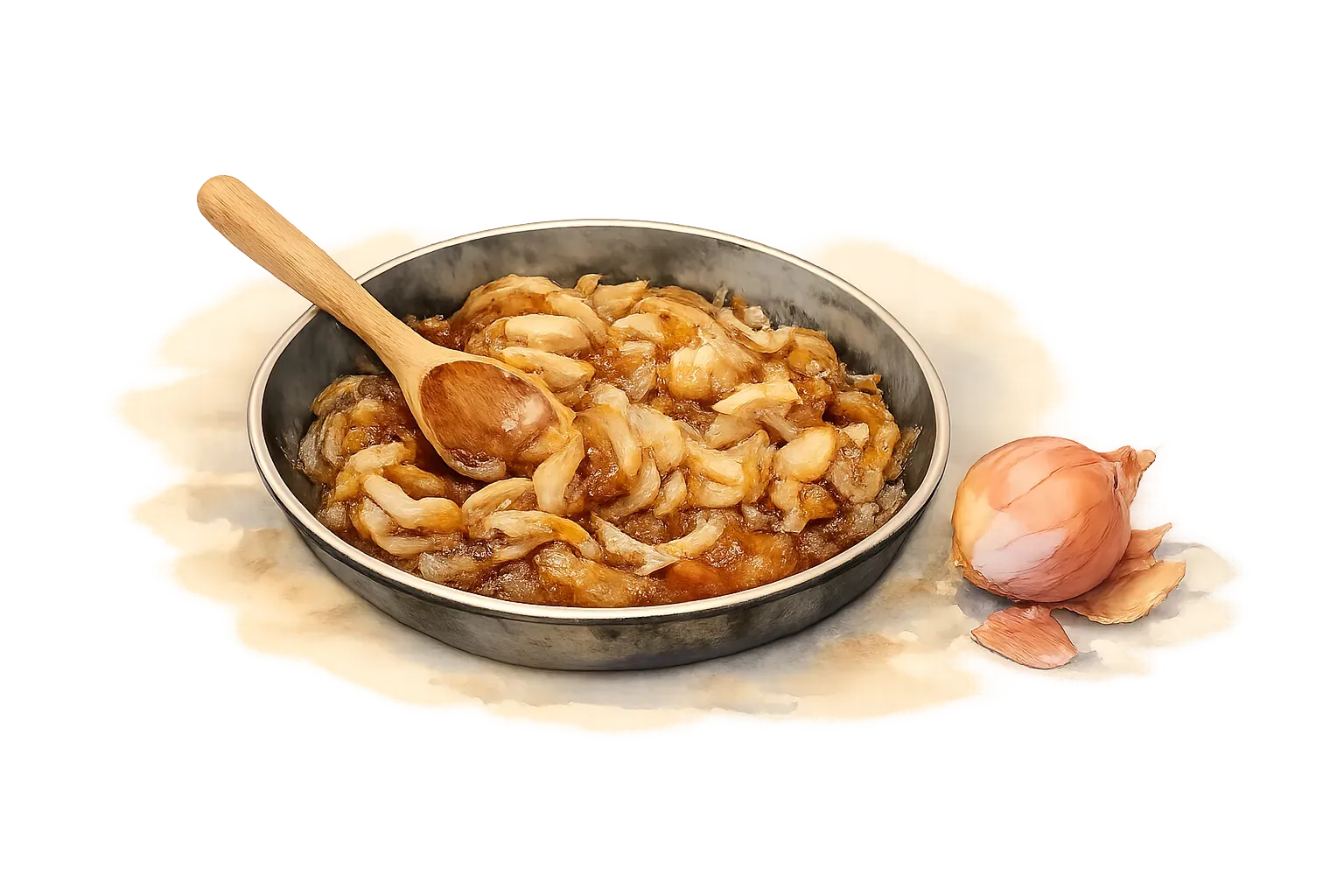
Cook slowly, usually over low-to-medium heat, until natural sugars brown and develop a deeper, sweeter flavor -- classically applied to onions, but the same principle applies to other vegetables and to sugar itself.
- chop
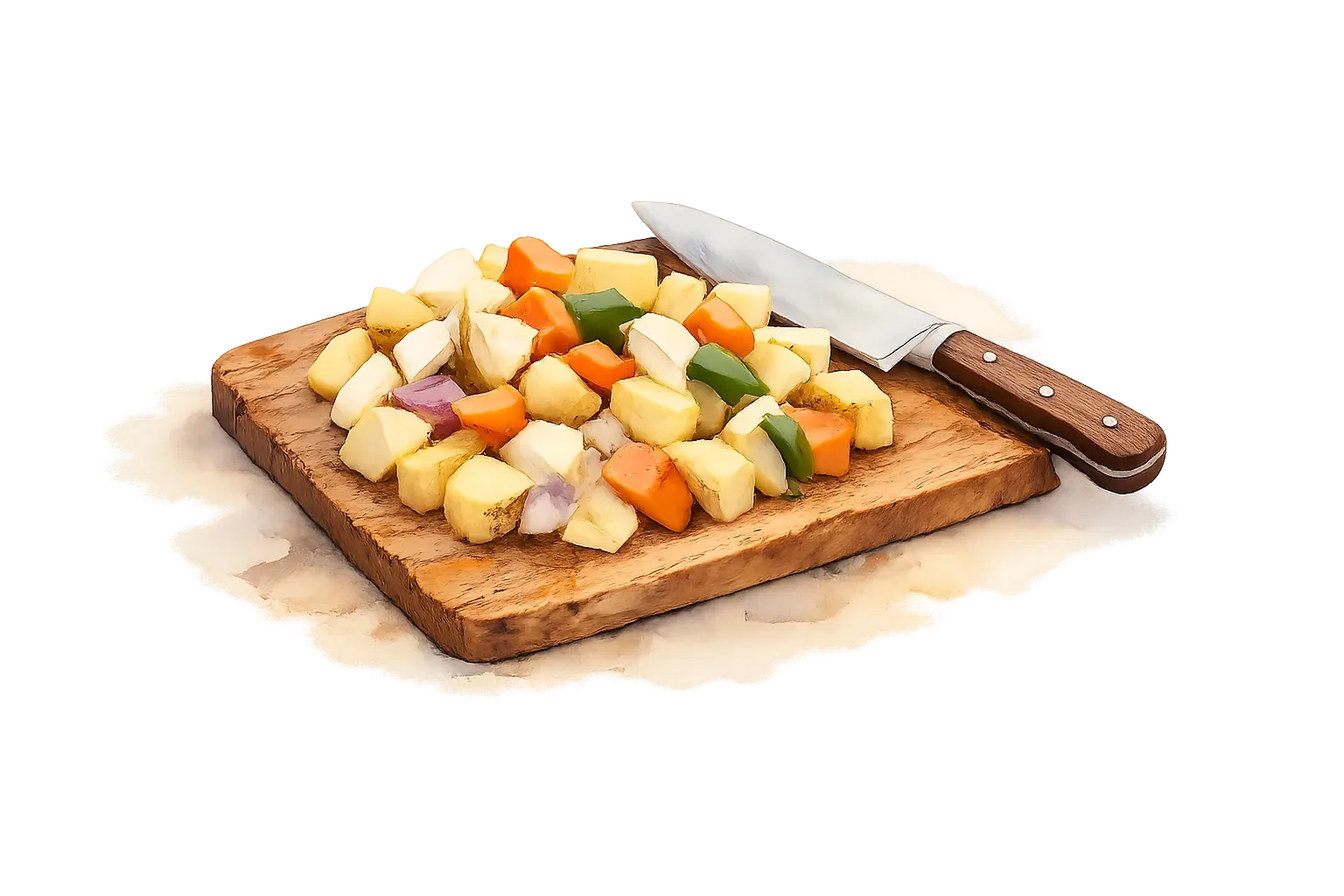
Cut into rough, irregular pieces -- less precise than a dice, where exact uniformity matters less than getting everything roughly bite-sized.
- creaming
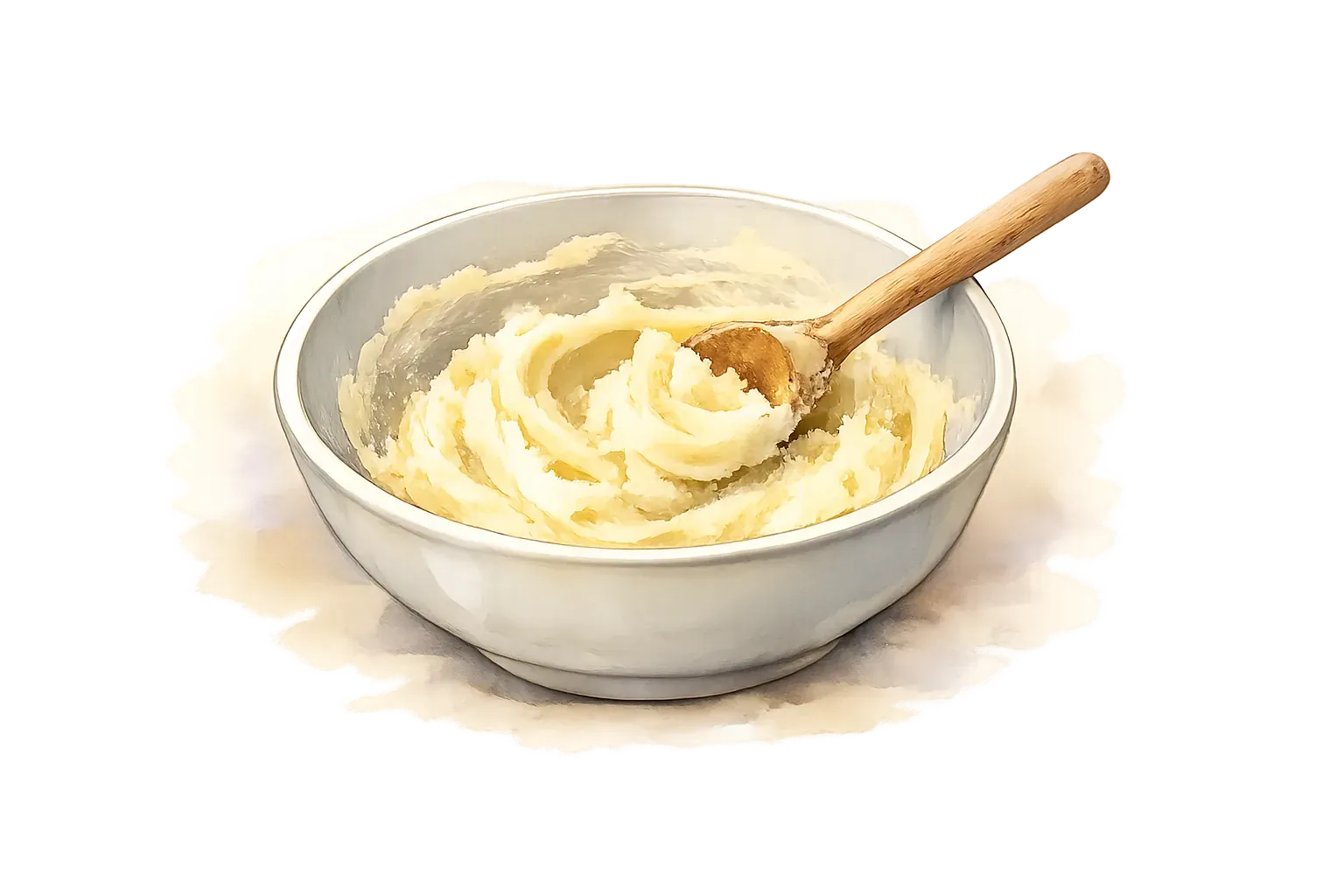
Beating softened butter (or another solid fat) together with sugar until the mixture turns pale, light, and fluffy -- the standard first step in mixing many cakes and cookies, done before eggs or dry ingredients go in.
D
- deglaze
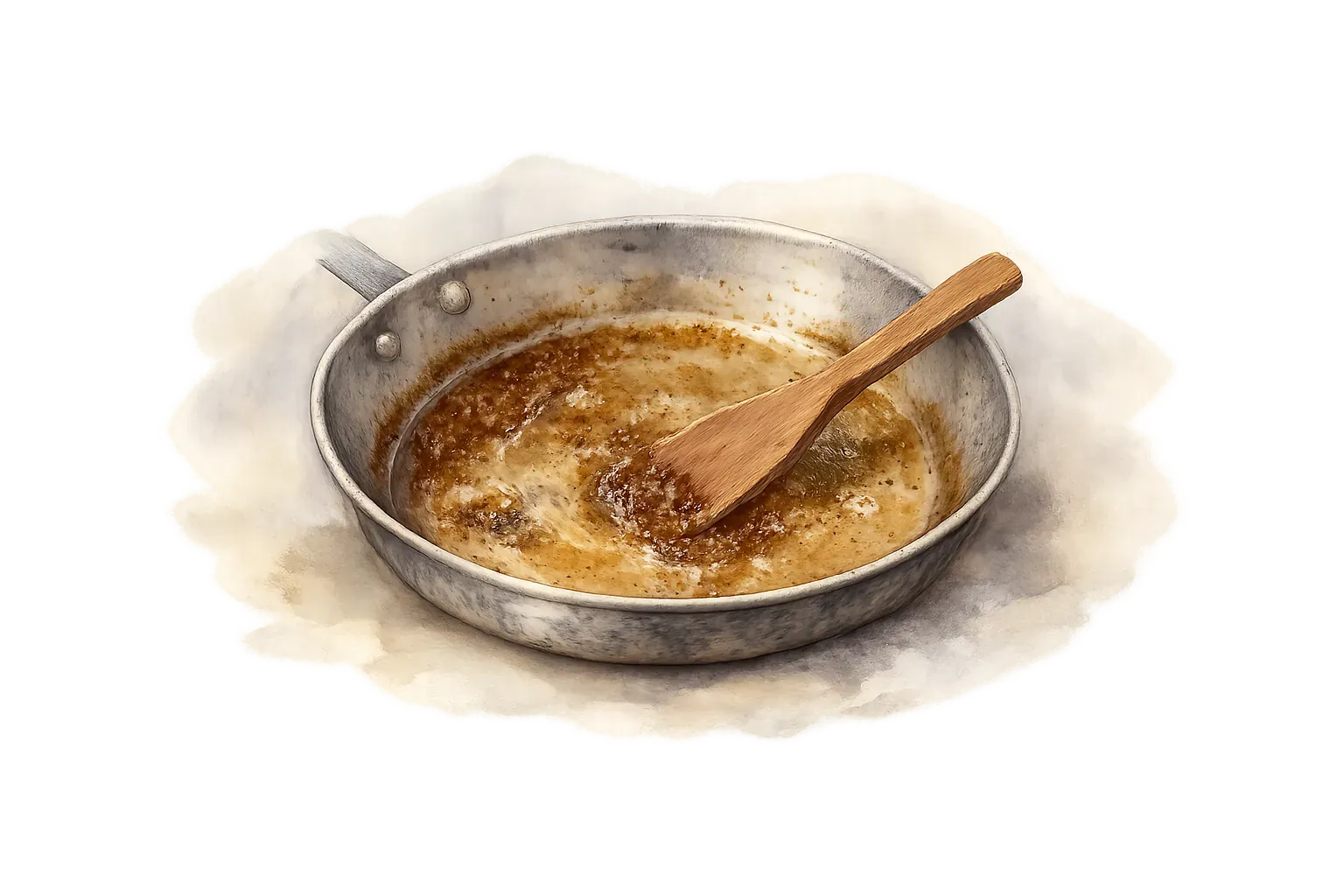
Add liquid (wine, stock, water) to a hot pan after searing or browning, scraping up the browned bits stuck to the bottom -- these bits are called the fond, and they carry a lot of flavor. Fond is deep brown and smells savory; if what is stuck to the pan is black and smells acrid it has burnt, and scraping it in spreads that bitterness through the whole dish.
- dice
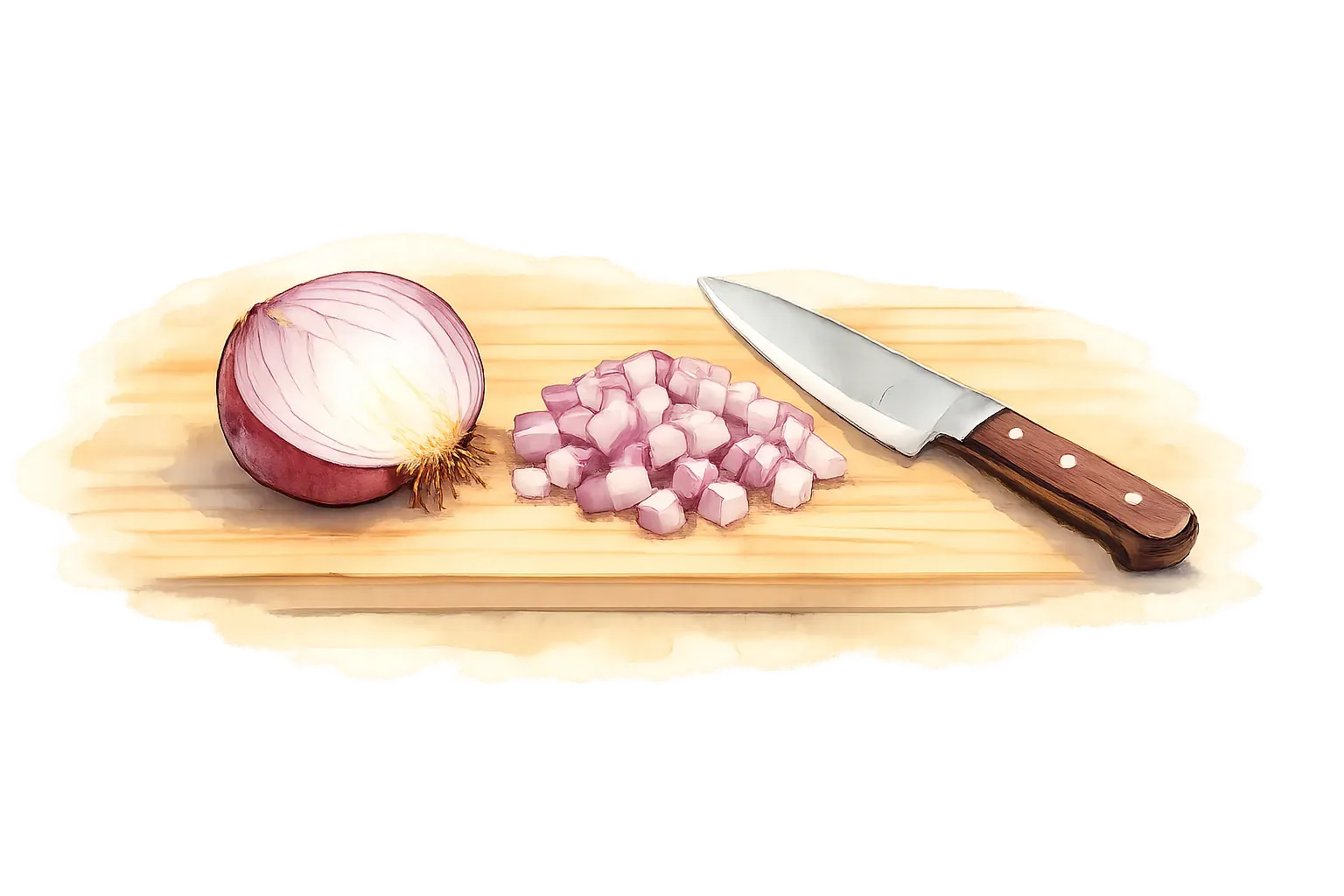
Cut into small, even cubes. Recipes often specify a size (small/medium/large dice); when unspecified, 1/4 to 1/2 inch cubes is a reasonable default. Even sizing matters more than precision -- uneven pieces cook unevenly, and the small ones dissolve before the large ones are ready.
- dredge
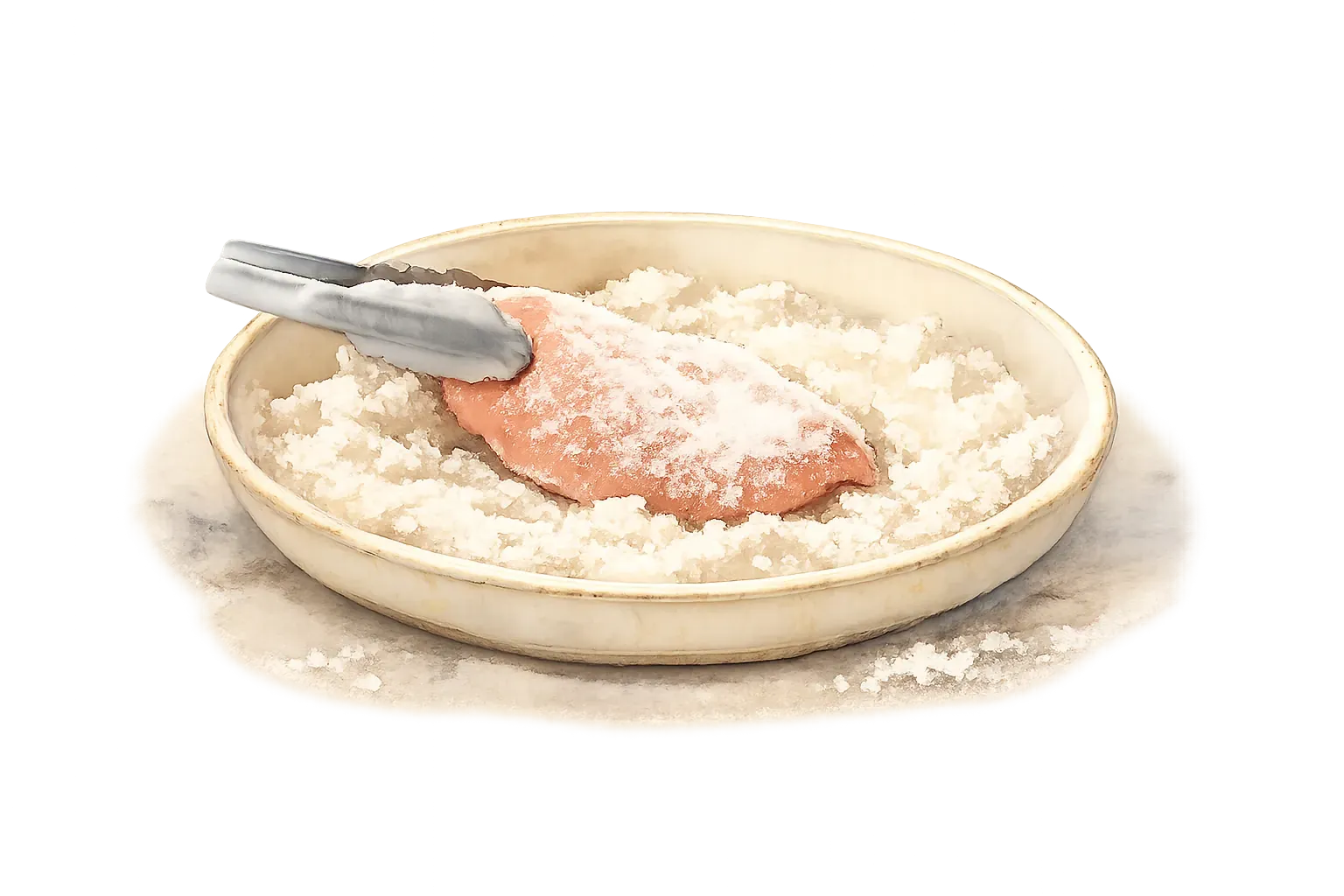
Coat a piece of food (often meat) in a dry ingredient, usually flour or breadcrumbs, before frying or baking -- creates a crust and helps browning.
F
- fold
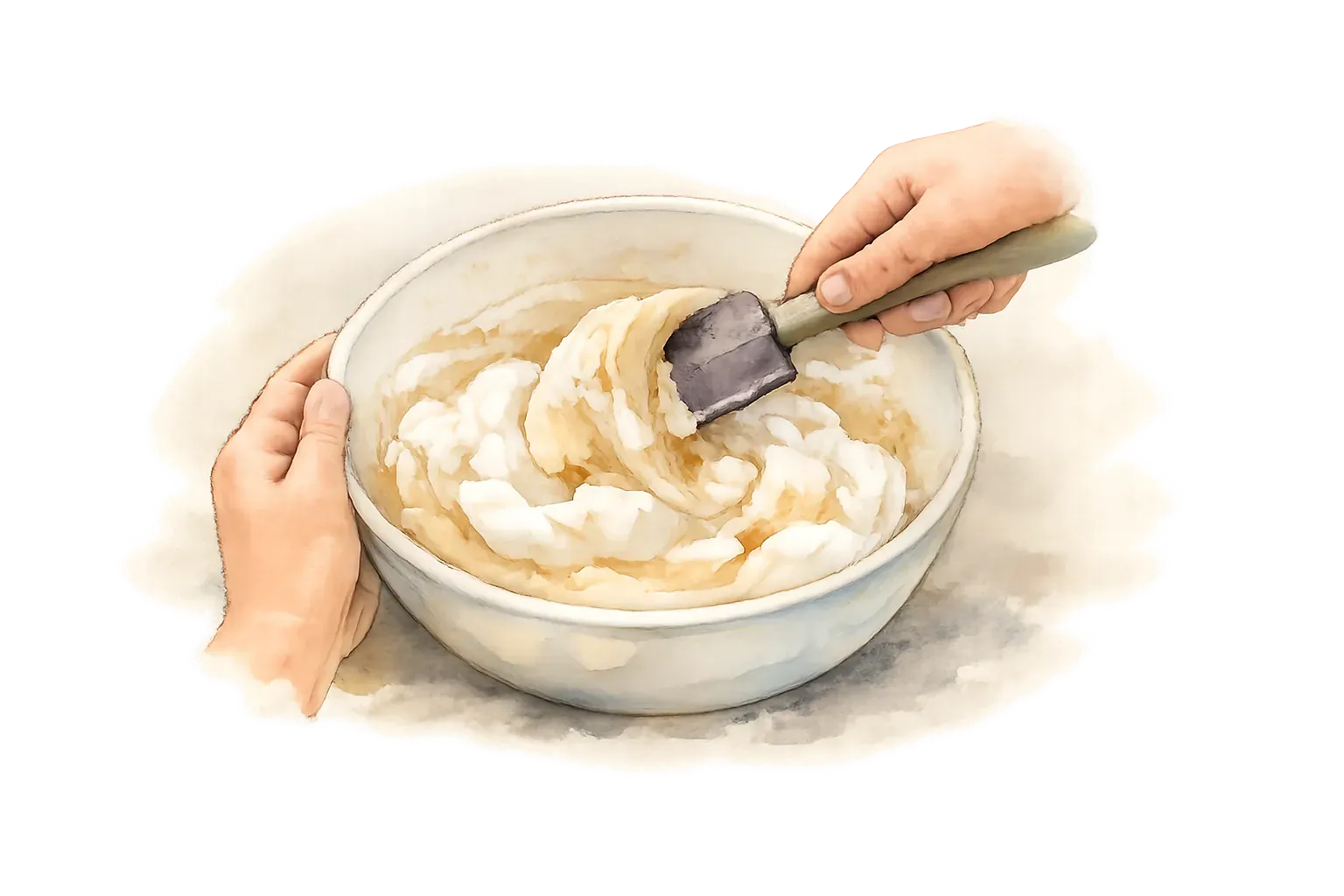
Gently combine a light, airy mixture (whipped cream, beaten egg whites) into a heavier one using a scooping, turning motion -- meant to preserve the air already whipped in, unlike stirring or whisking.
M
- mash
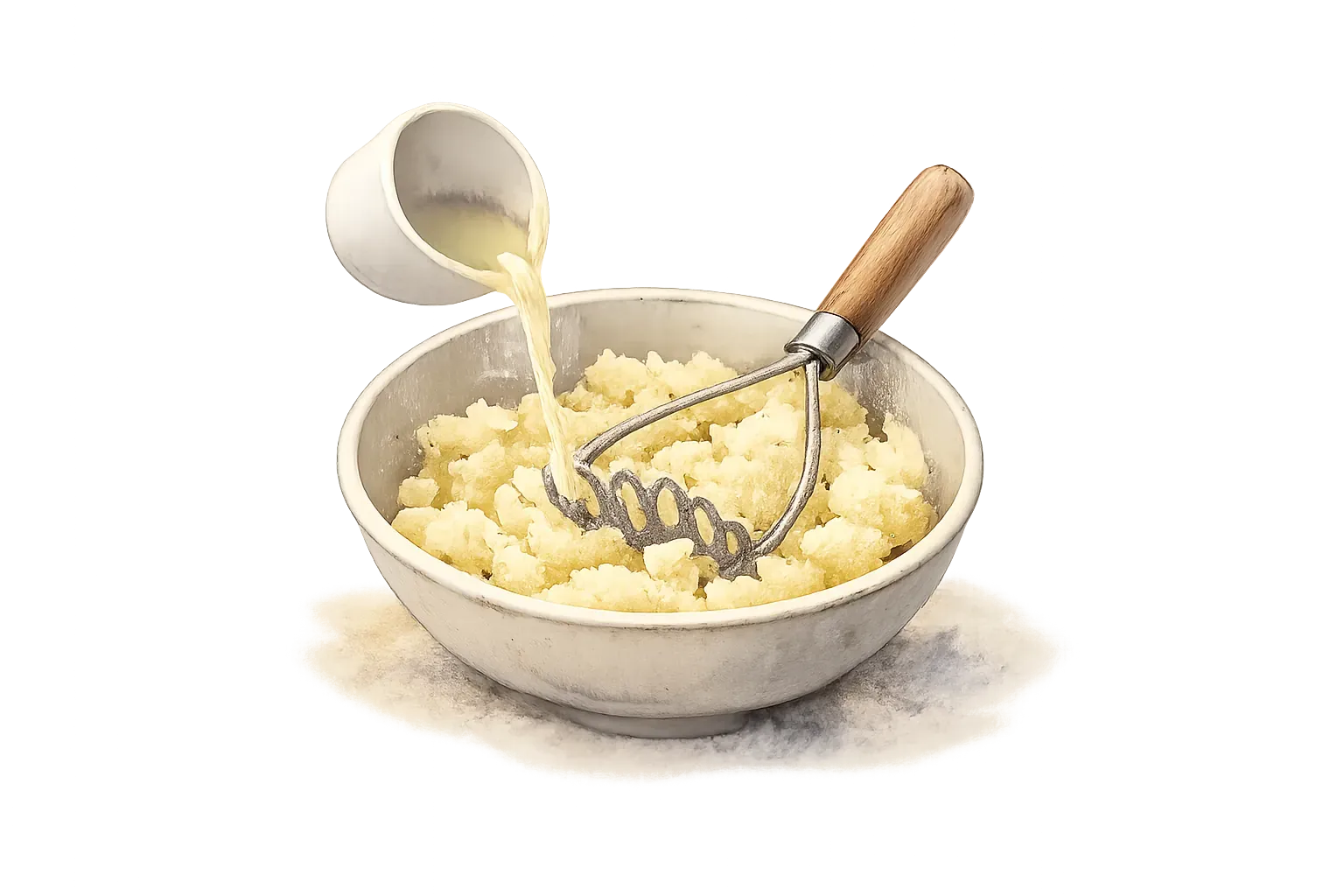
Crush cooked food to a coarse or smooth paste with a fork, masher, or ricer. A few lumps are normal and usually fine; a completely smooth result is a choice, not the standard. Beyond the obvious side dish, mashing part of what is already in a pot and stirring it back in is a standard way to give a soup or stew body without reaching for flour.
- mince
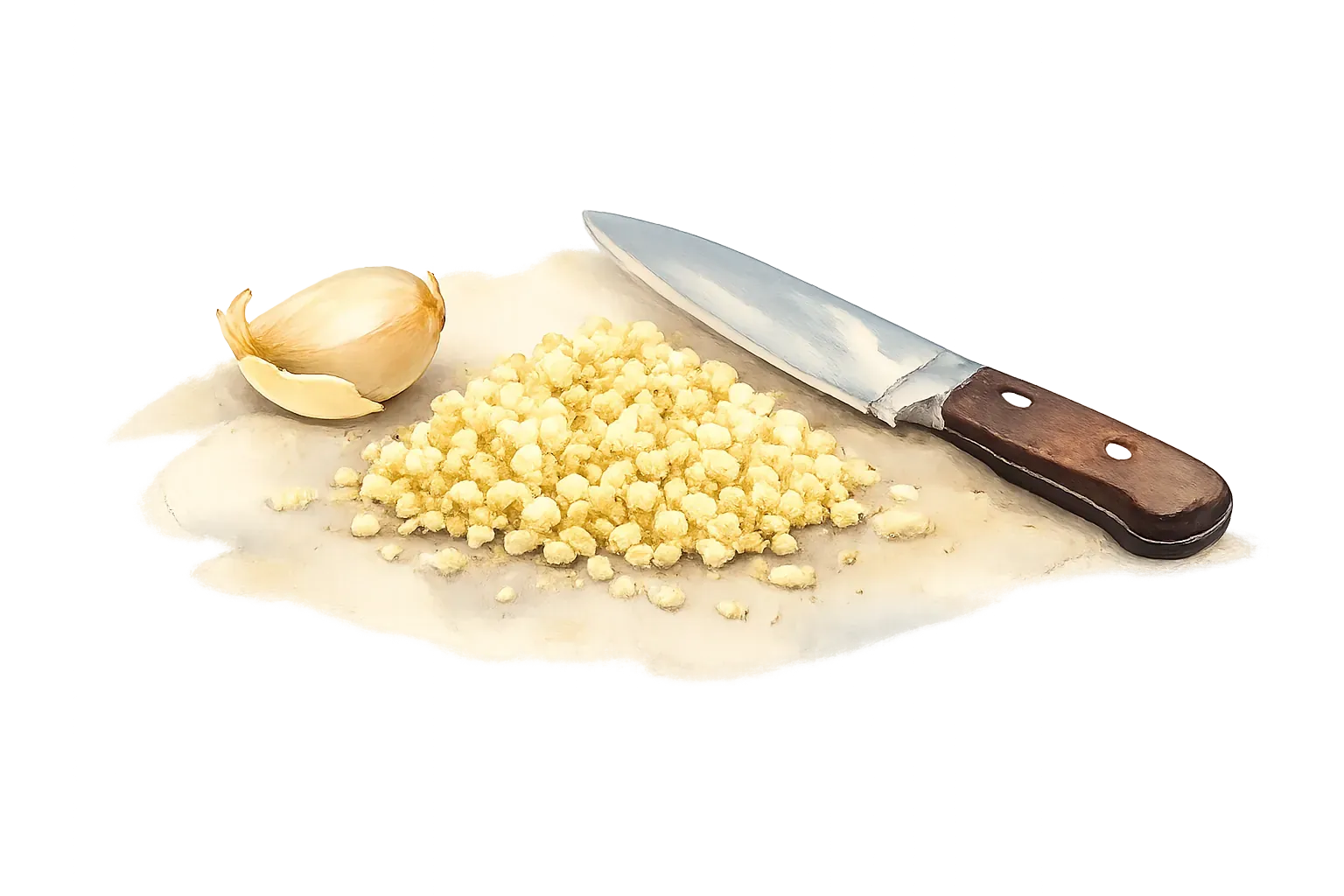
Cut into very small, fine pieces -- finer than a dice or chop. Common for garlic and ginger, where you want the flavor to distribute evenly rather than showing up as distinct pieces.
P
- poach
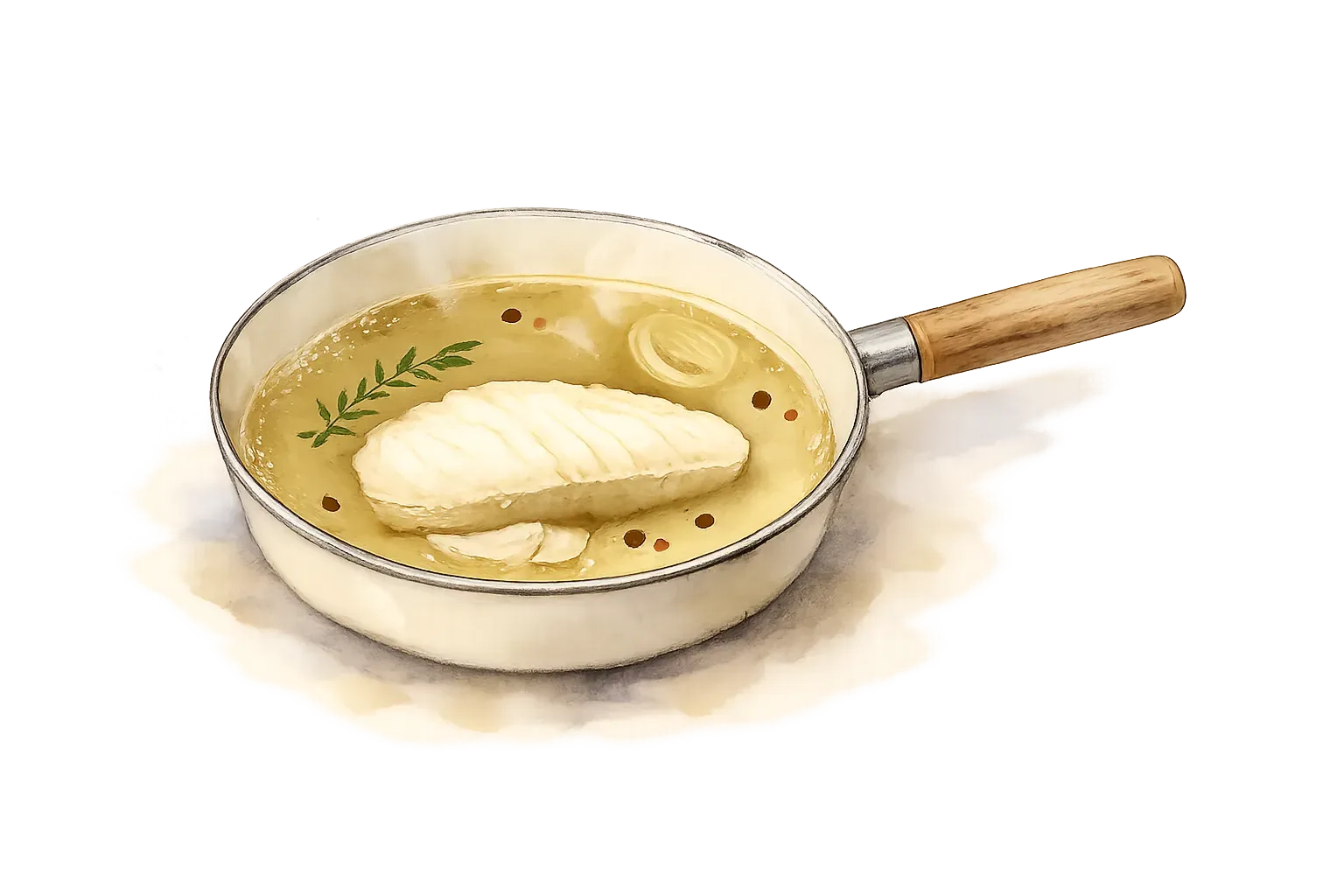
Also: poached, poaching
Cook gently, fully submerged in liquid held well below a boil -- hot enough to cook the food through, gentle enough to leave delicate proteins tender rather than toughened.
R
- render
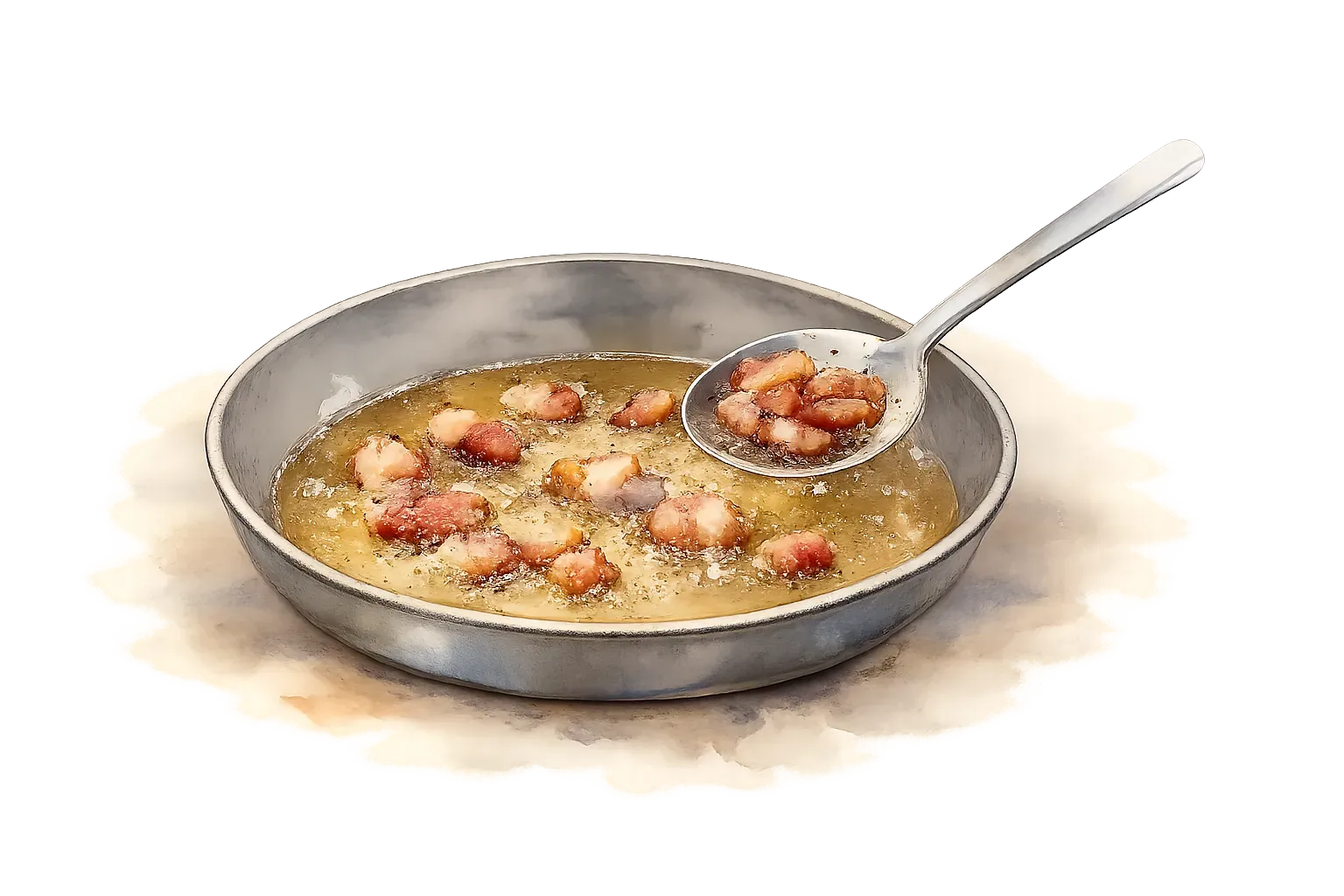
Slowly cook a fatty ingredient (bacon, salt pork, duck skin) to melt out its fat, leaving crisped solids behind. The rendered fat is not a by-product to be poured away -- it is usually the cooking medium for whatever comes next, and it carries the flavor of what it came from.
- roux
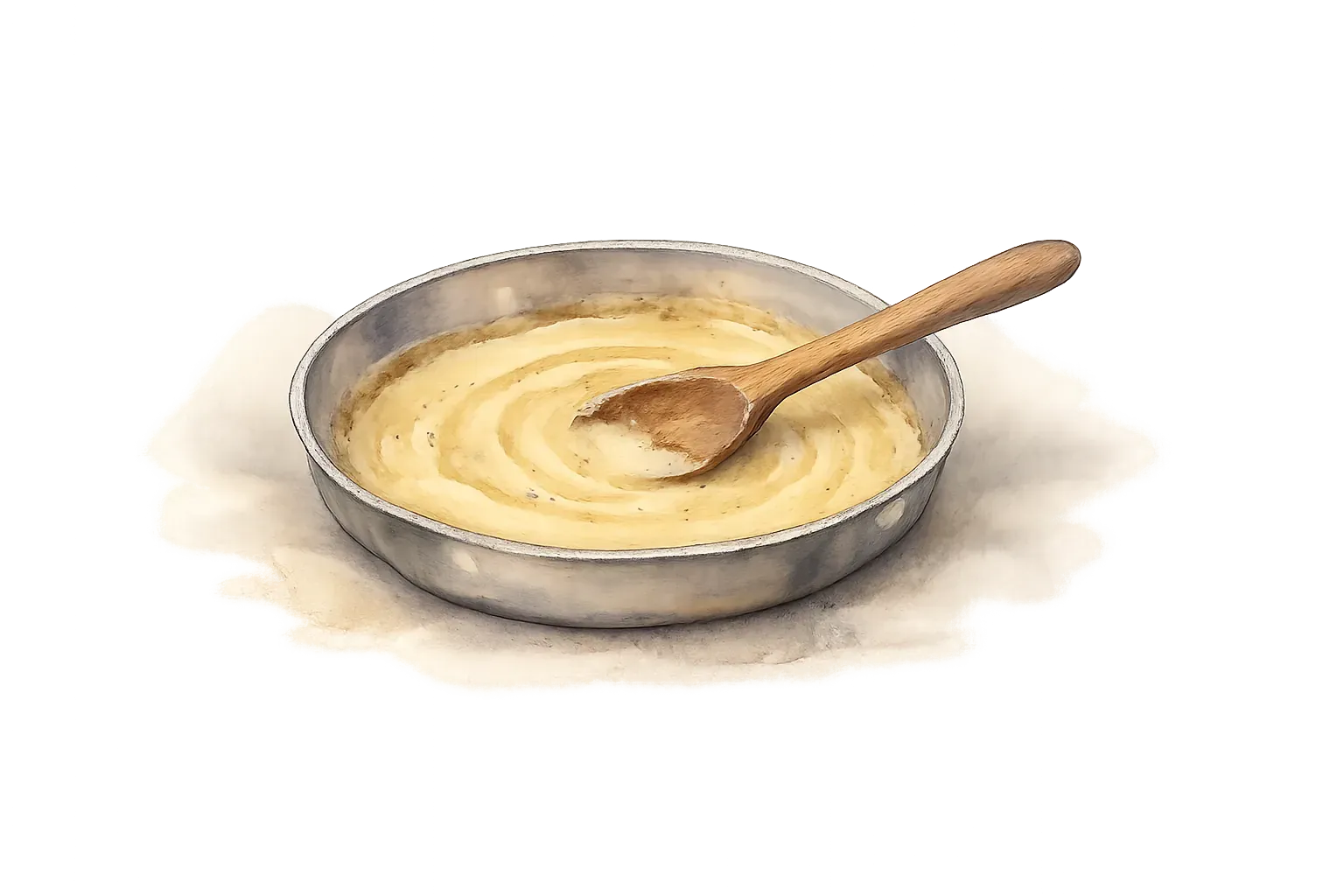
Flour cooked in fat, used to thicken -- the base of most classic cream and cheese sauces, of gravies, and of gumbo. Cooked longer a roux darkens and tastes deeper and nuttier, at the cost of some of its thickening power, so color and thickening strength pull against each other and which one matters more is the choice being made.
S
- sauté
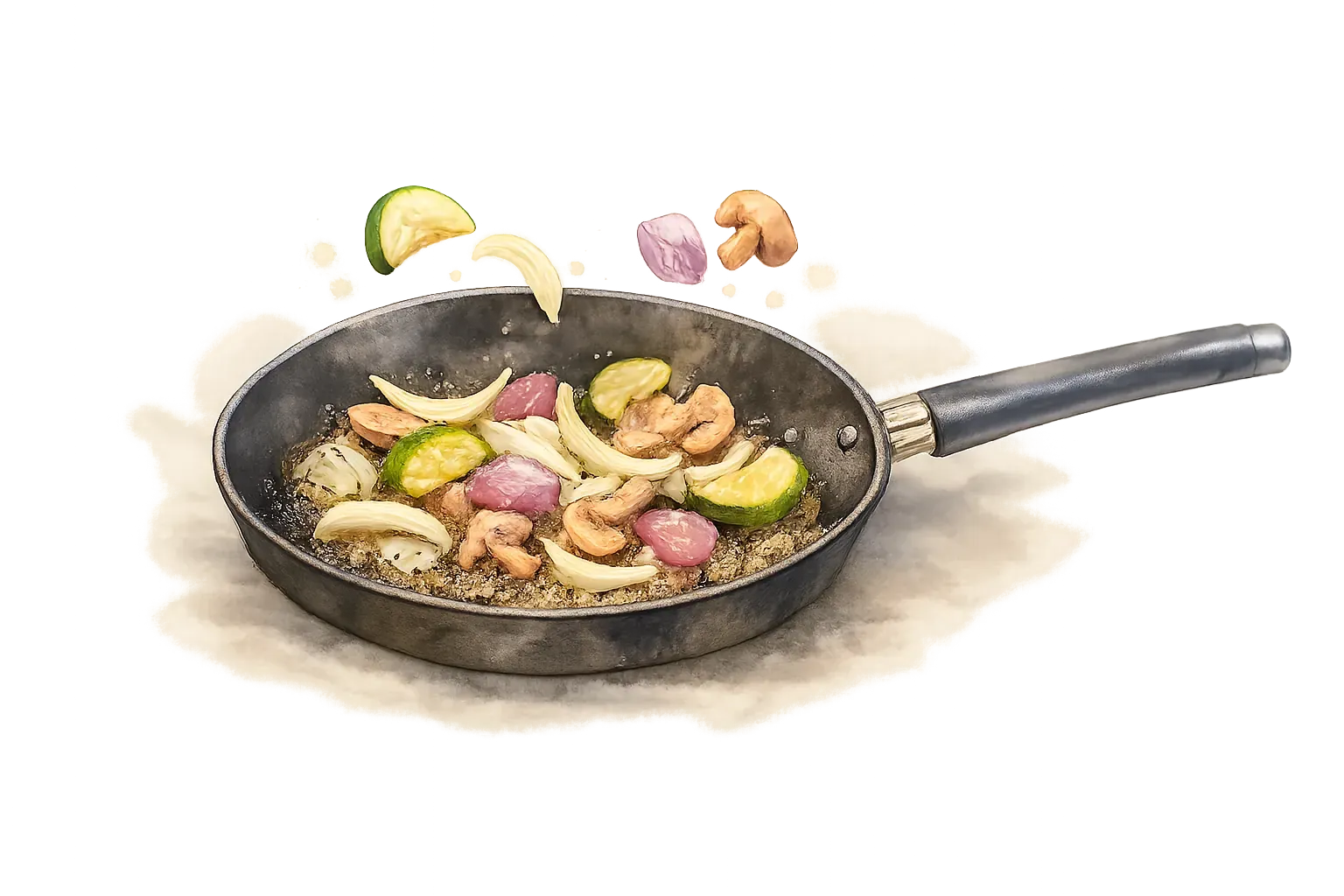
Also: saute, sautee
Cook quickly in a small amount of fat over medium-high to high heat, stirring or tossing frequently. Distinct from frying in that the goal is to cook through and lightly brown, not deep-fry.
- shred
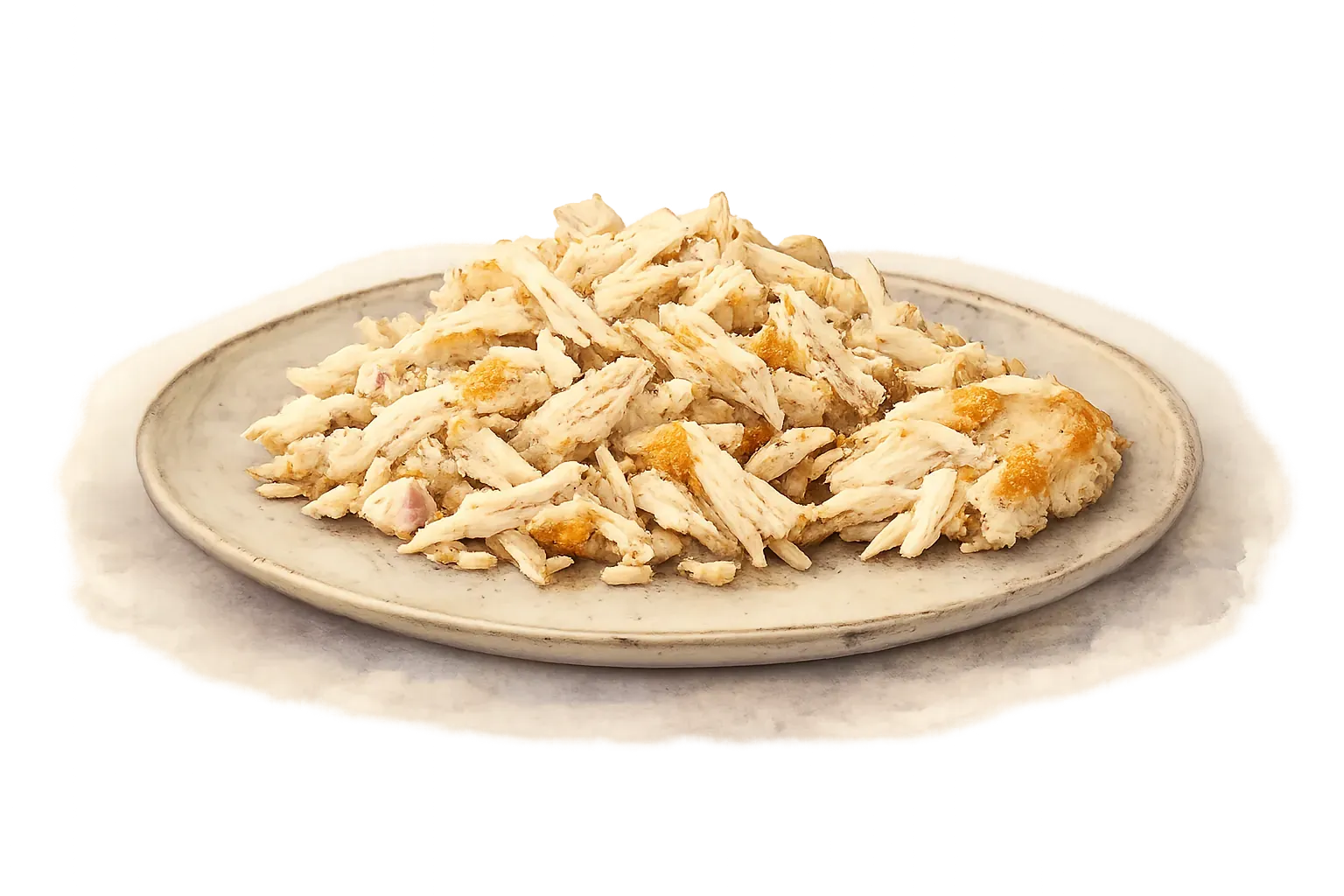
Tear or cut into long, thin strips -- by hand for cooked meat like pulled chicken or pork, or with a grater or food processor for cheese and cabbage. Which approach is right follows from what the strands are for: meat wants coarse strands substantial enough to hold sauce and moisture, while cheese and cabbage want fine, separate ones.
- sift
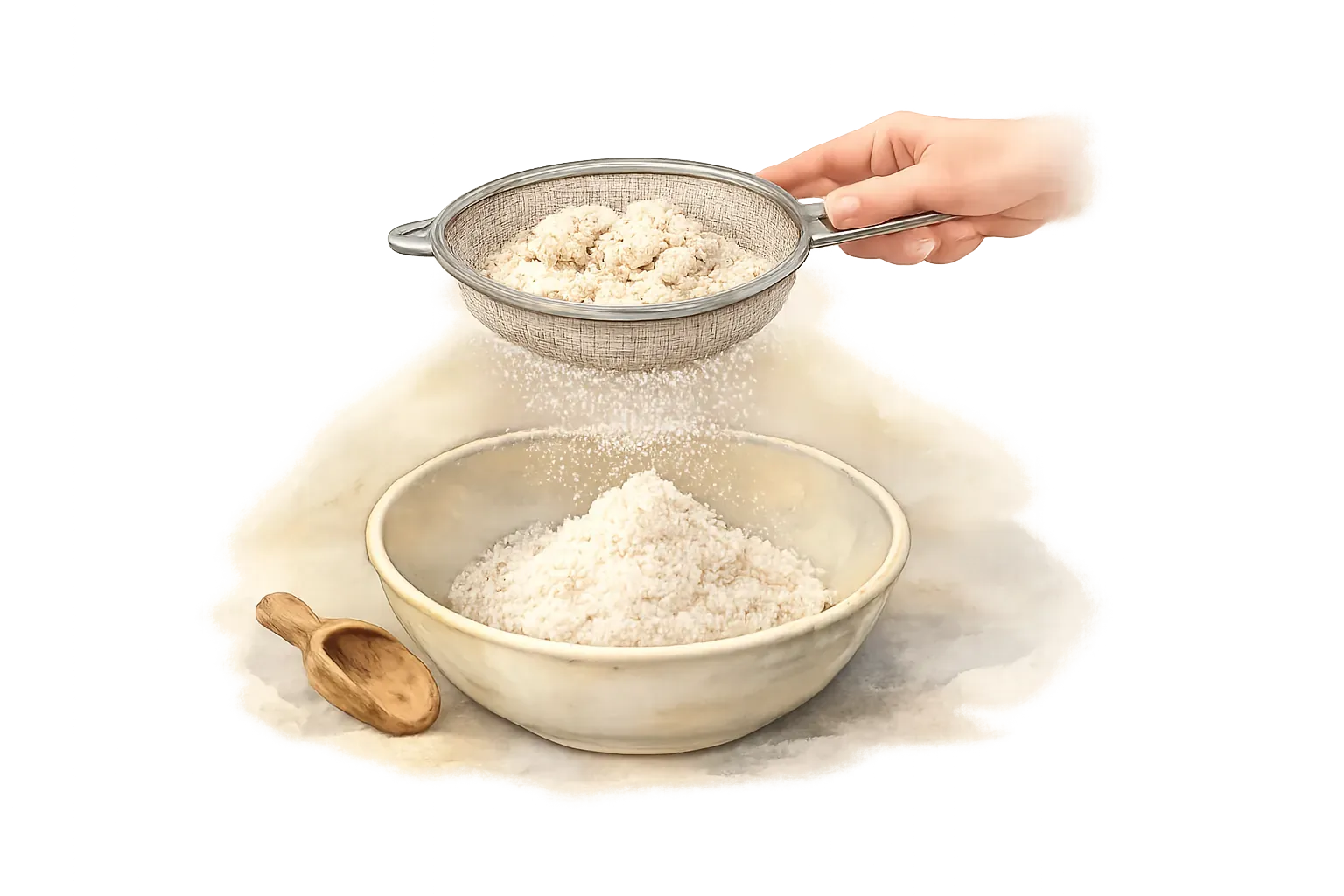
Also: sifted, sifting
Passing dry ingredients -- most often flour, alone or already combined with baking soda, baking powder, cocoa powder, or salt -- through a fine-mesh sieve or sifter to break up clumps and spread anything mixed in evenly throughout before it goes into a batter or dough.
- simmer
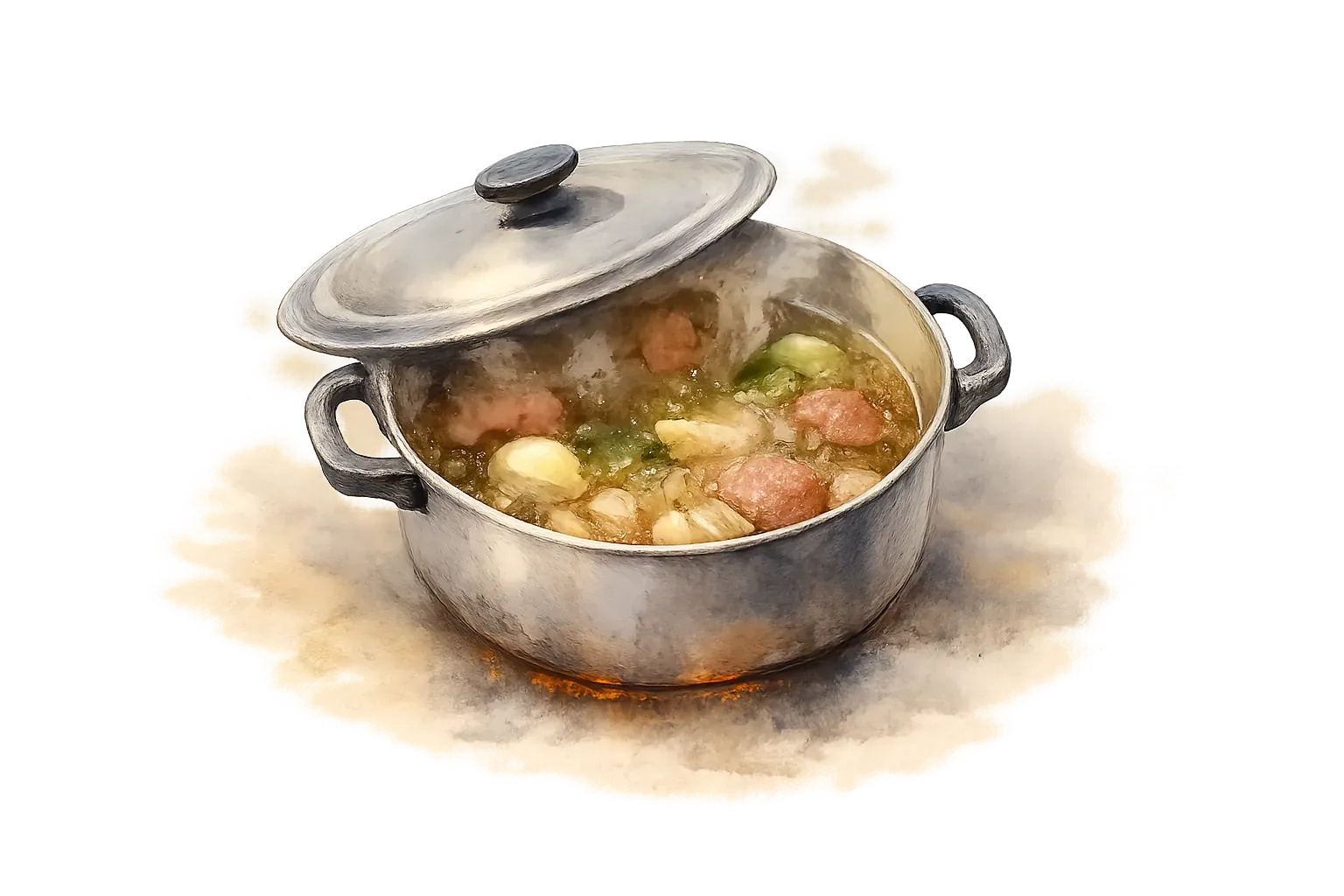
Cook in liquid held just below boiling: small bubbles rising lazily in a few spots, the surface barely moving. A hard boil tightens meat fibers, breaks vegetables to mush, and scorches the bottom, while a bare simmer breaks down collagen gently over time -- which is why so many long-cooked dishes specify one and mean it.
- skewer
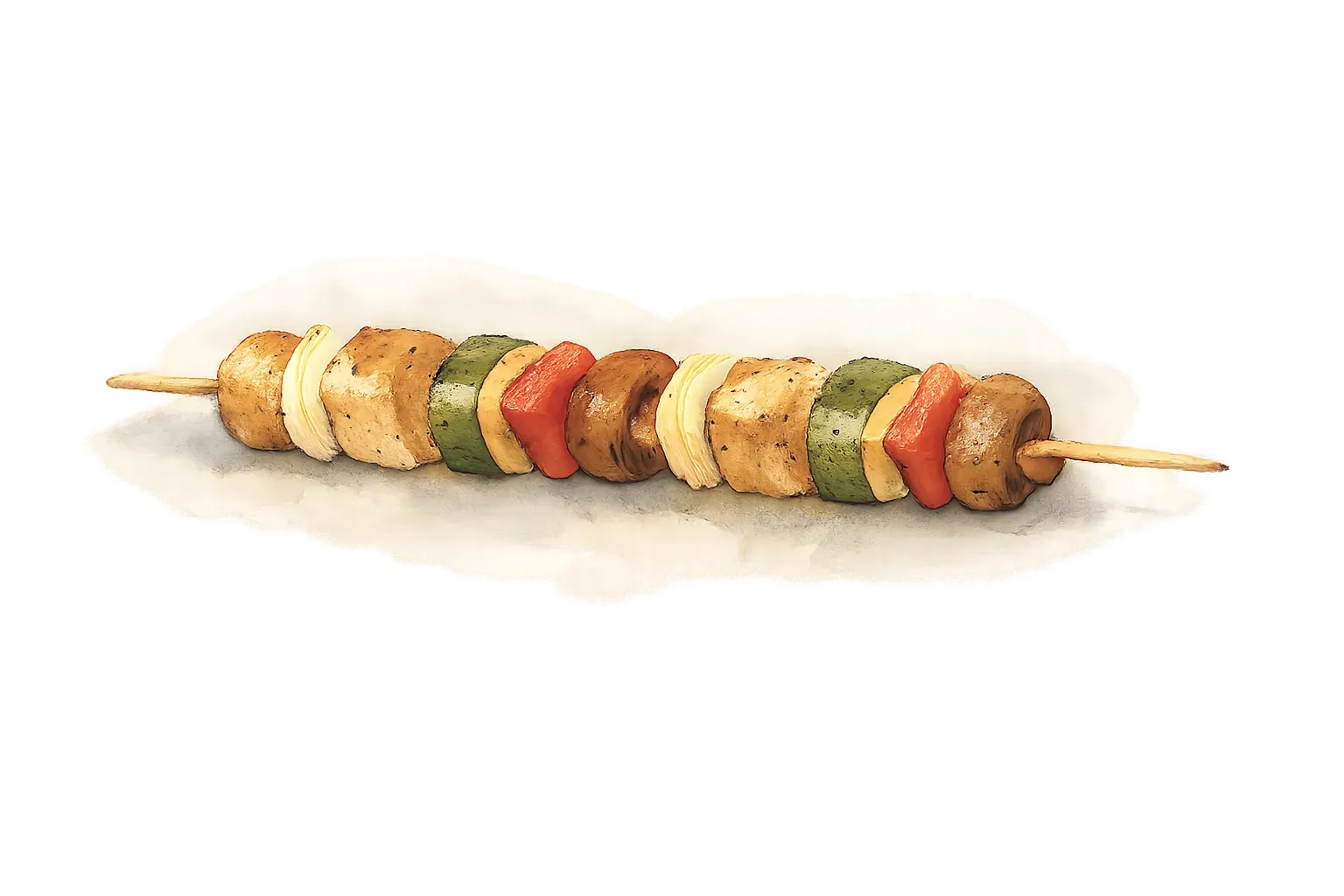
Thread pieces of food onto a long, thin stick (metal or soaked wood/bamboo) for grilling or roasting -- lets smaller pieces cook evenly and be turned or removed from heat together.
- smoke
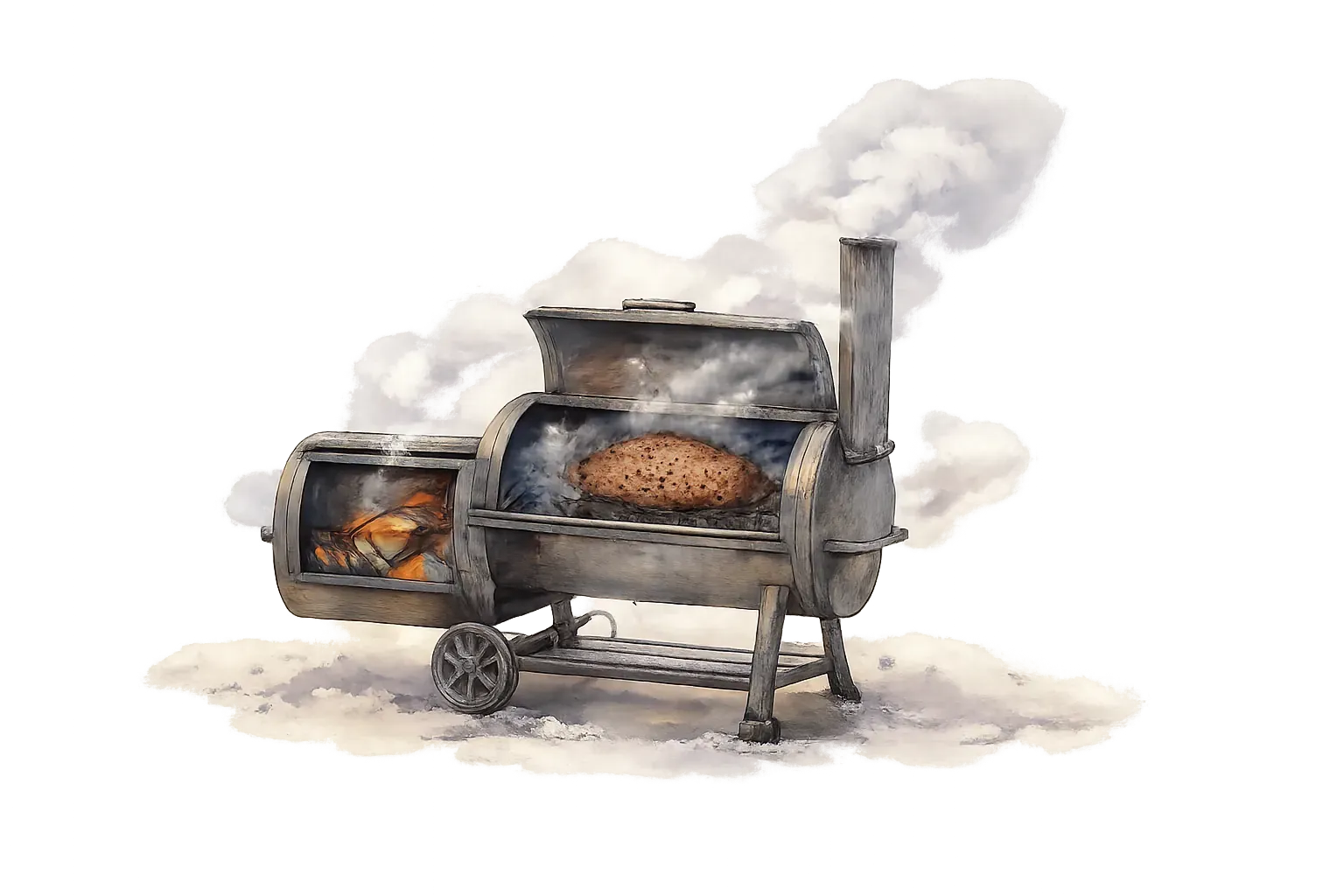
Cook low and slow in a smoker, using wood smoke both as a cooking medium and a flavoring agent -- distinct from grilling, which uses direct high heat.
- sweat
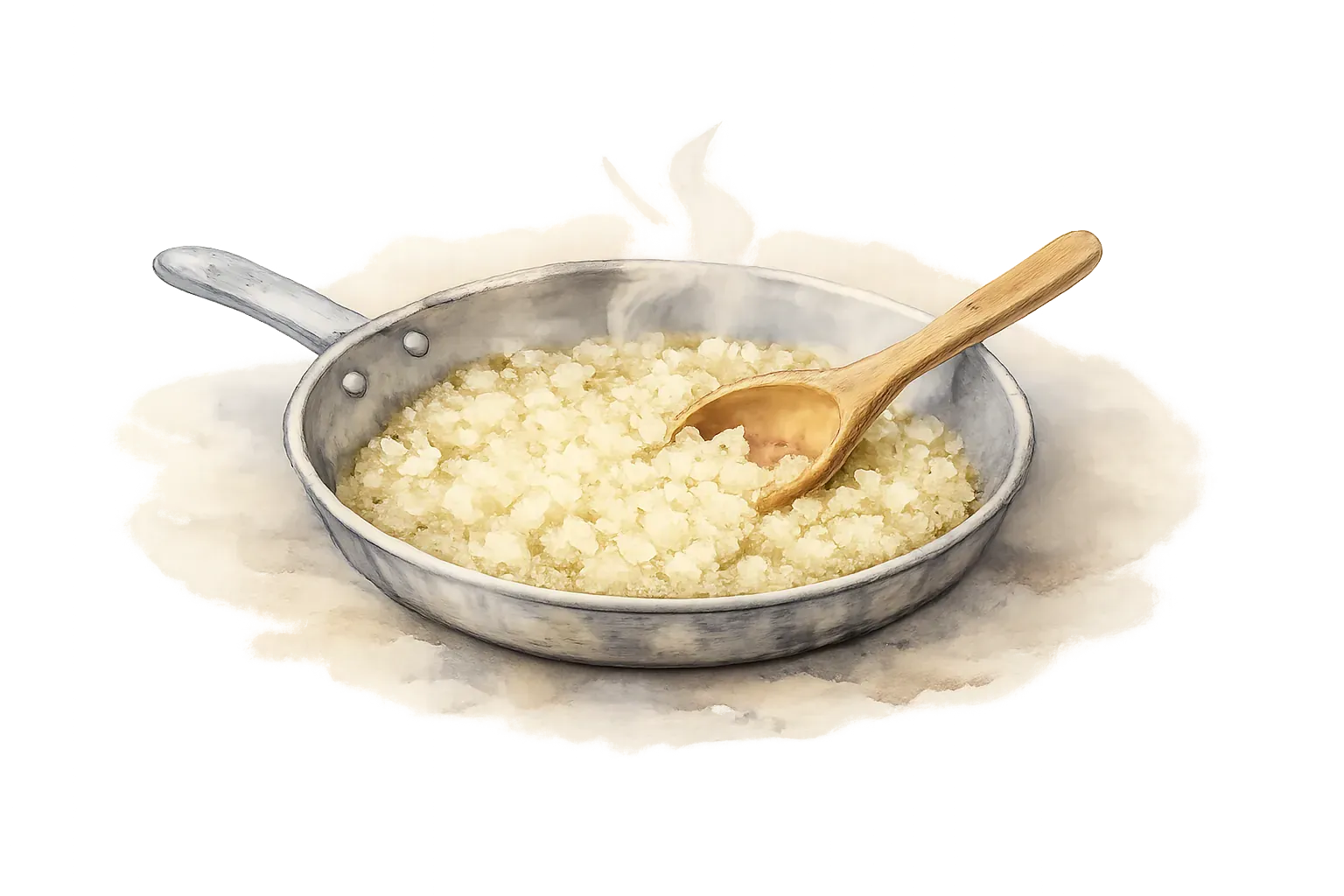
Cook aromatics gently in fat until soft and translucent without browning them -- the name describes the look, as they release water and glisten. Browned onion is delicious but assertive, so sweating is the choice when the aromatics should stay in the background rather than announce themselves.
V
- velveting
Also: velvet, velveting meat
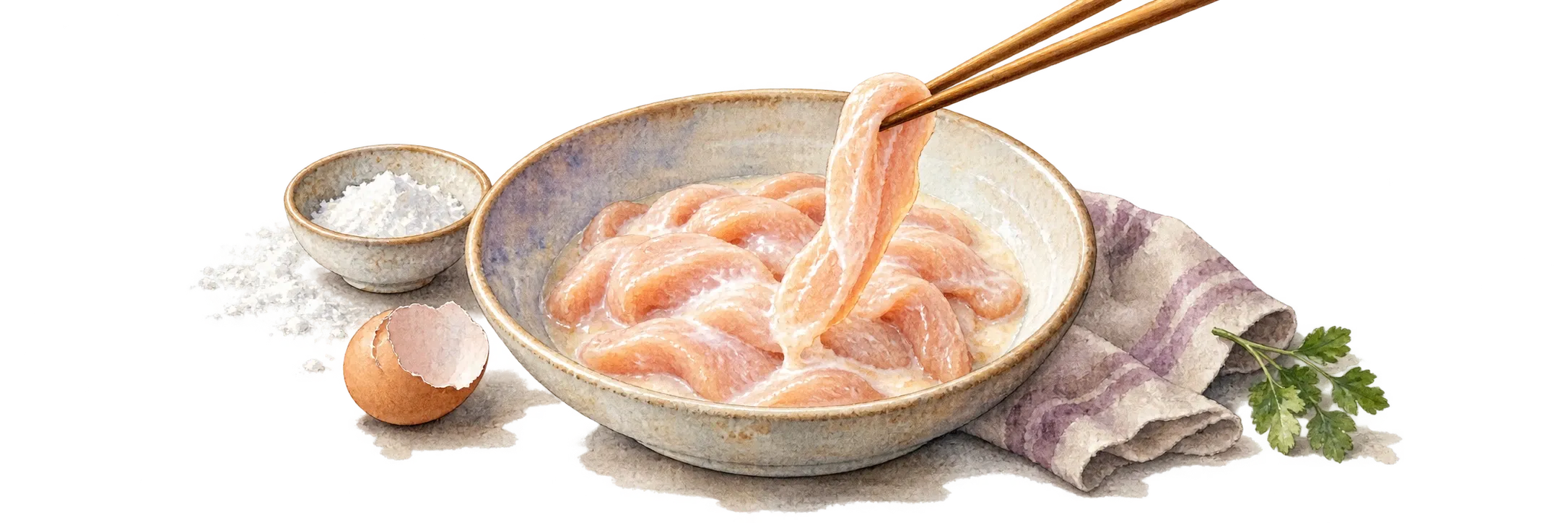
A Chinese restaurant technique that wraps thin slices of lean protein in a starch coating before they hit high heat, so they come out tender and silky instead of dry and stringy. It suits anything lean enough to overcook in seconds -- chicken breast, pork loin, lean beef, shrimp, delicate white fish. Velveting is really two decisions made in order: which coating to put on, and how to cook the coated pieces once it is on.
W
- whisk
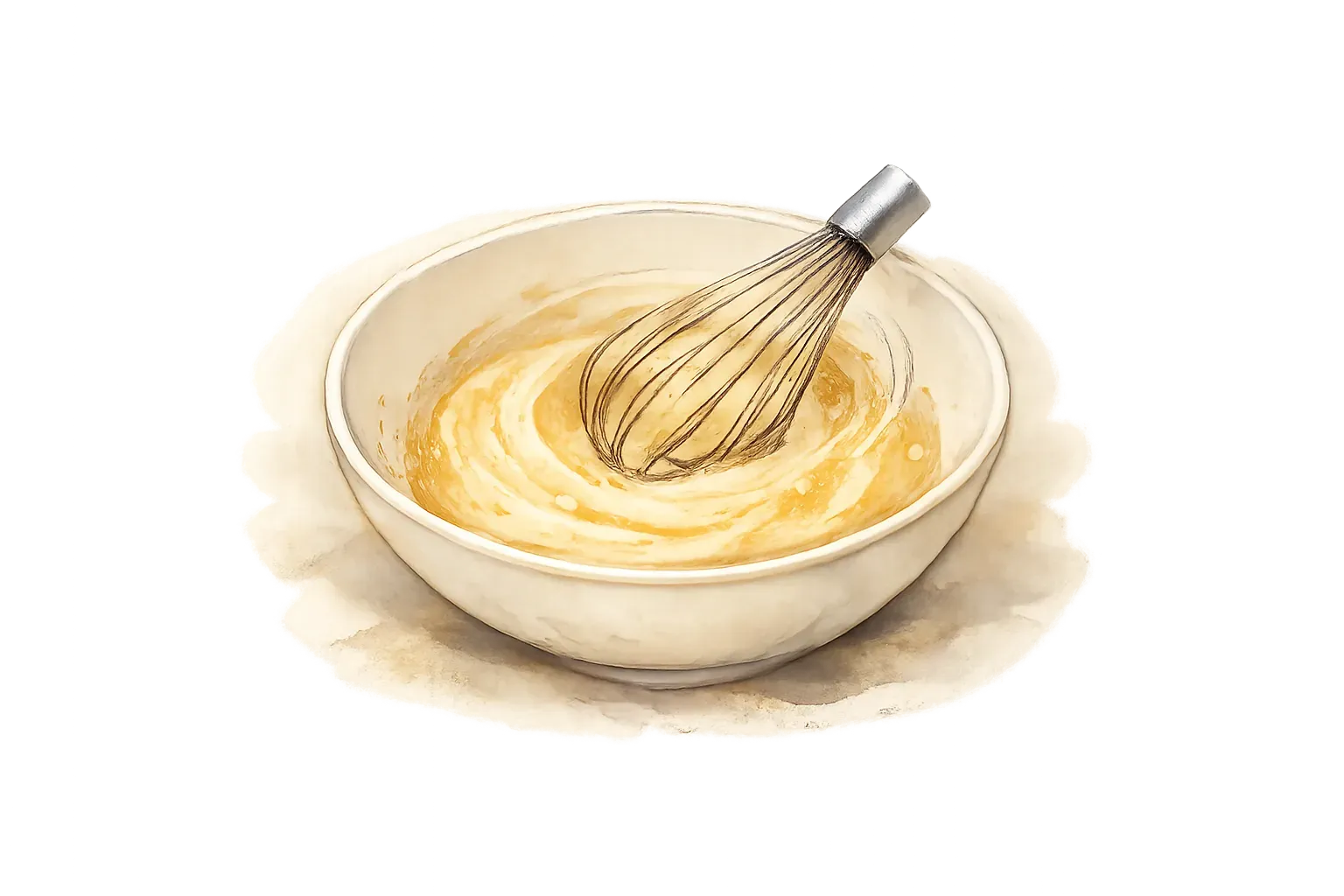
Beat vigorously with a whisk to combine ingredients smoothly and incorporate air -- used for everything from a simple vinaigrette to eggs to a roux-based sauce.