The glossary
Ingredients
377 ingredients used across the recipes here — what each one is, and where the buying or substitution advice differs between a general ingredient and a specific kind of it.
No entries match.
A
- achiote
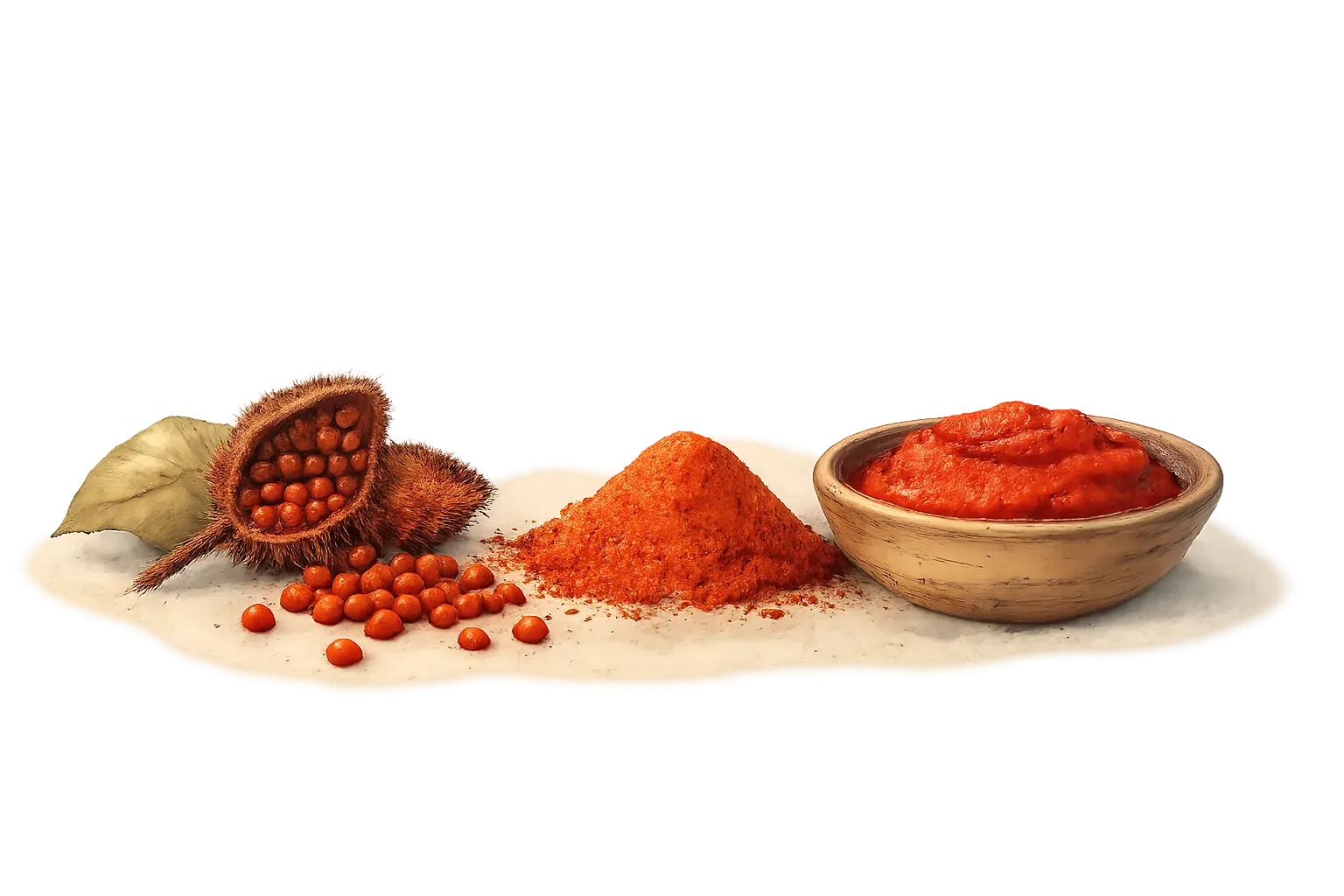
Also: ground achiote, annatto
Seeds of the annatto tree, ground into a reddish-orange powder or paste, valued mainly for its red-orange color and mild, earthy, slightly peppery flavor -- used in Latin American and Caribbean cooking (as in achiote paste for al pastor). Sold as whole seed, ground powder, oil, or a seasoned paste; the forms aren't interchangeable measure-for-measure, since paste already carries added vinegar, salt, and other spices.
- ahi tuna
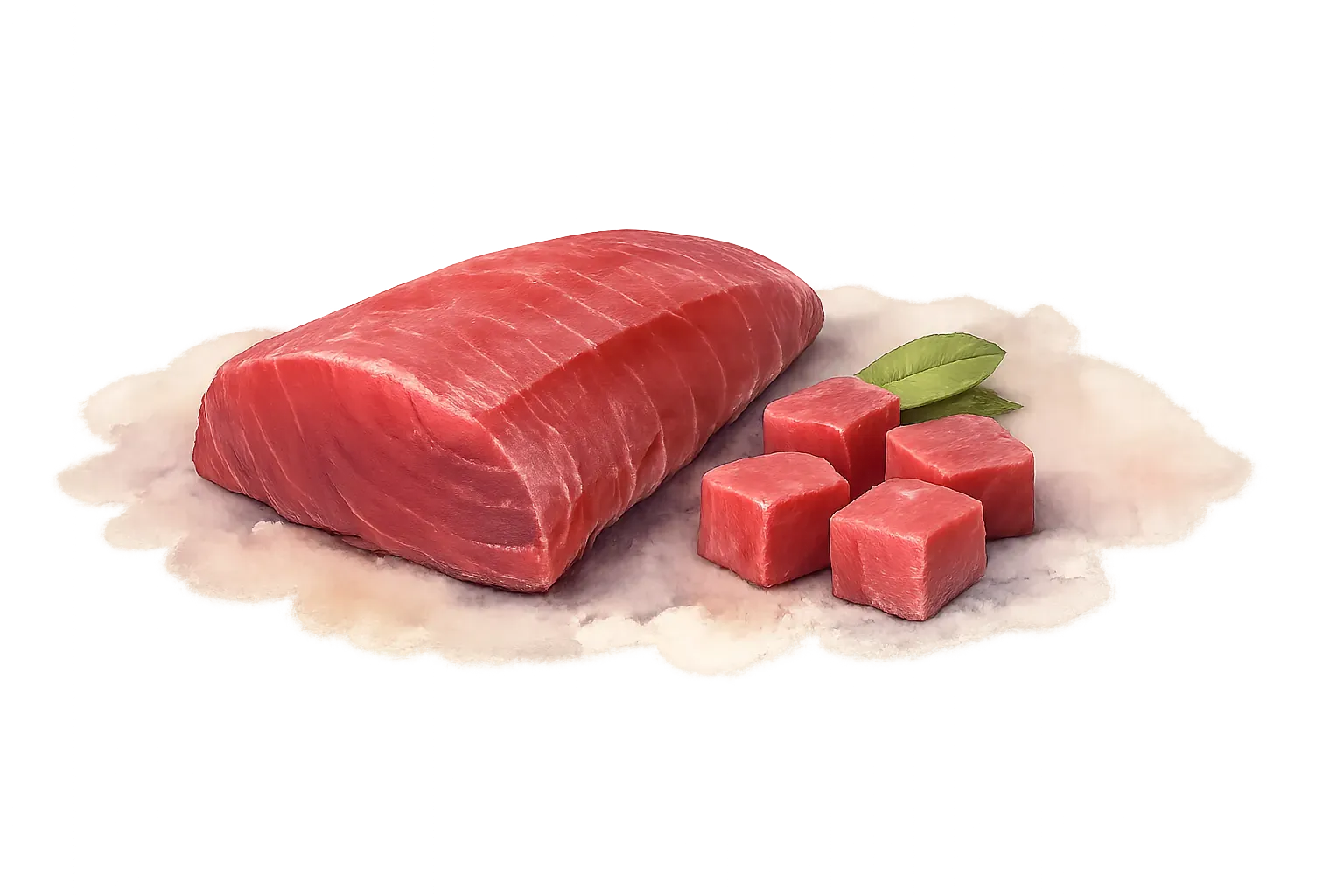
Also: sushi-grade tuna, sashimi-grade tuna
A deep-red, meaty tuna (yellowfin or bigeye, both marketed as "ahi") with a mild, clean flavor, most often eaten raw or barely seared -- for poke, tartare, sashimi, or a rare-seared steak. Its firm, dense texture and low fat content keep it from flaking apart when diced small, which is part of why it works well raw.
- Al Pastor Seasoning
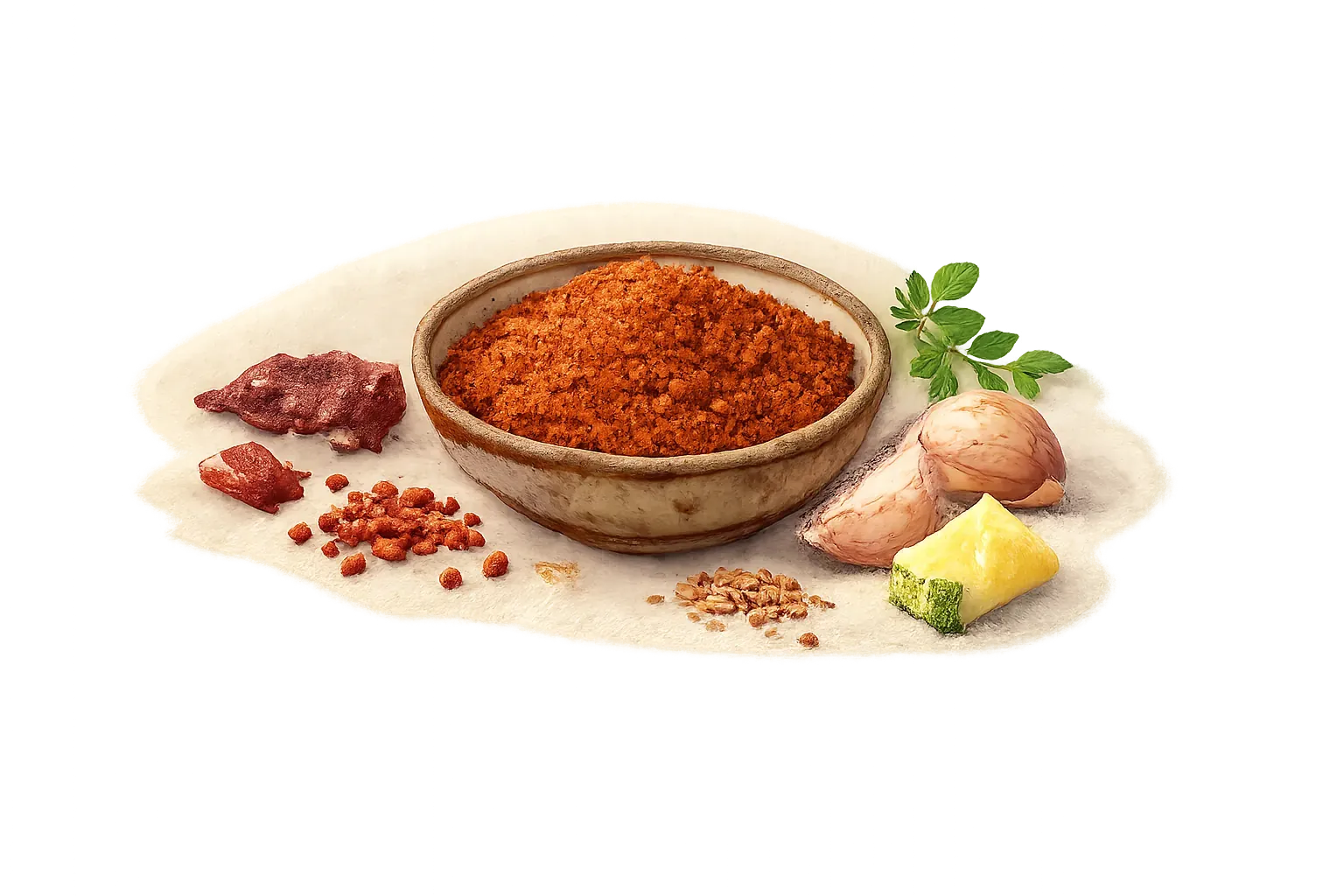
Also: al pastor seasoning
A pre-mixed blend built to season pork with the flavors of al pastor -- typically achiote (annatto), dried chiles, cumin, garlic, oregano, and a touch of pineapple or vinegar tang -- in one shot, rather than building the traditional marinade of dried chiles, achiote paste, and aromatics from scratch.
- all-purpose flour
Also: All purpose flour, Flour
Wheat flour milled to a moderate protein content -- versatile enough for most baking and thickening uses without the extra strength of bread flour or the softness of cake flour.
- allspice
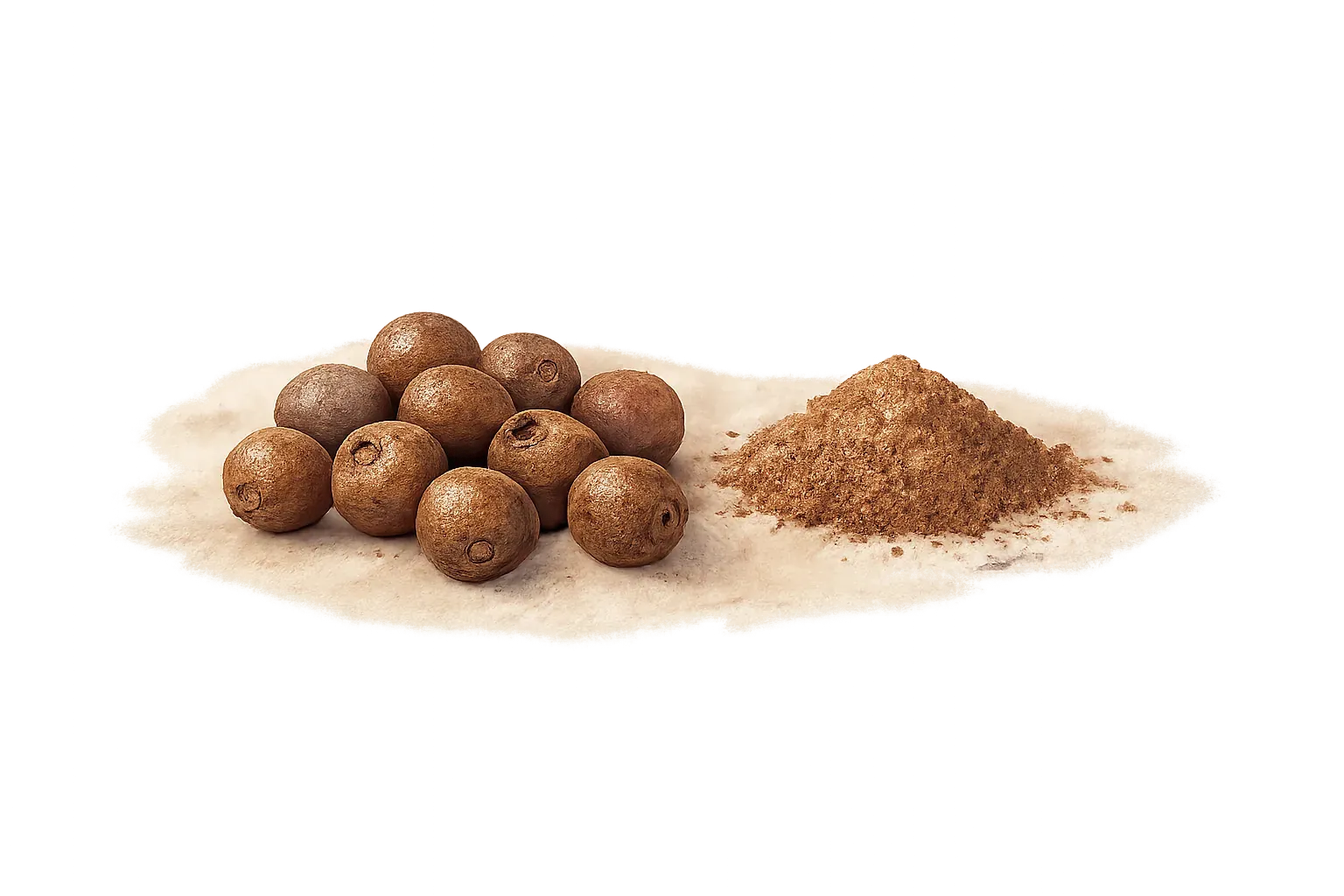
Dried berries of the Pimenta dioica tree, used whole or ground. Despite the name, it's a single spice, not a blend -- its flavor evokes a combination of cinnamon, clove, and nutmeg.
- almonds
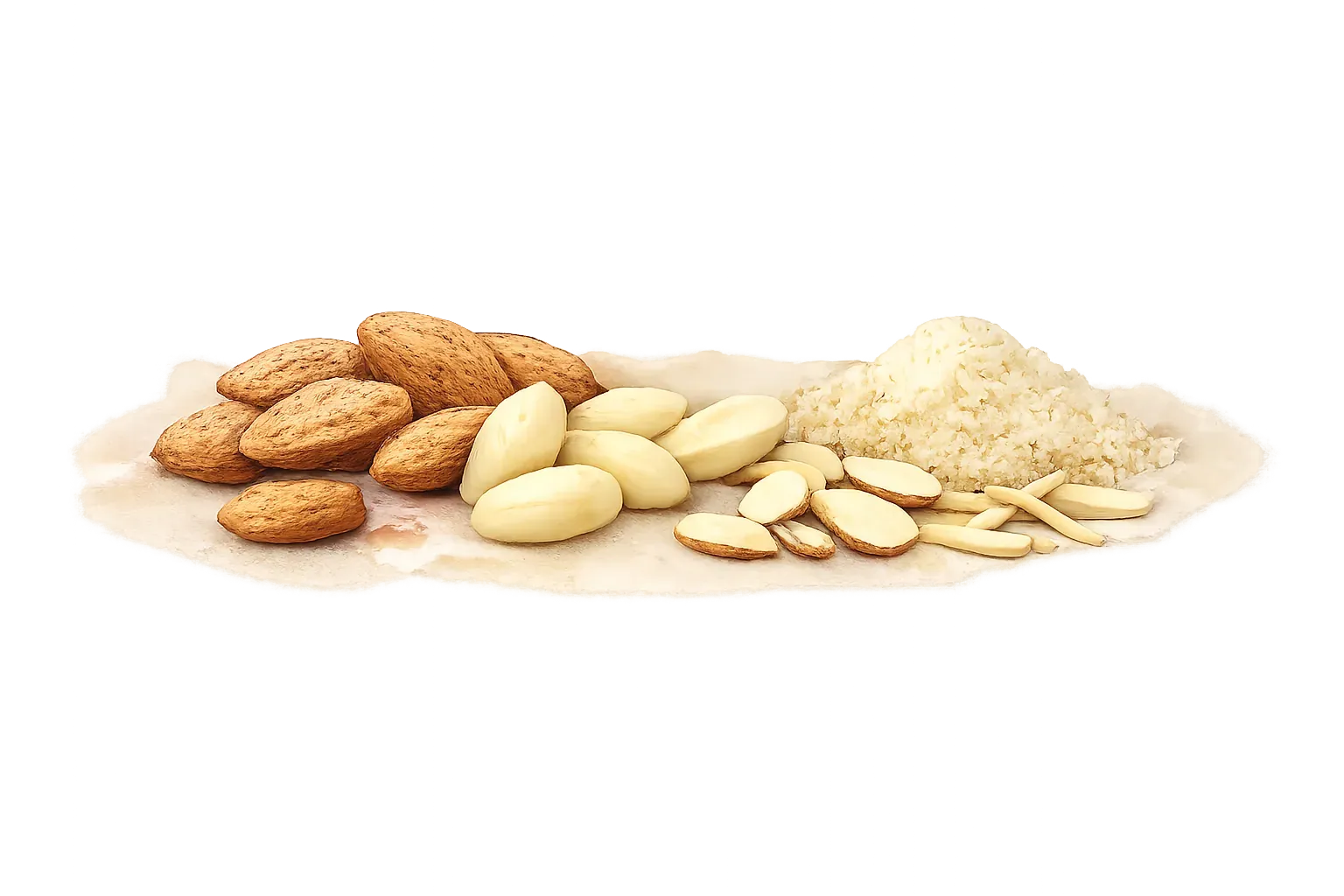
Also: blanched almonds
A mild, sweet tree nut, sold whole, sliced, slivered, or ground, with or without the papery brown skin still on. "Blanched" means the skin has been removed (briefly boiled and slipped off), giving a cleaner ivory color and slightly milder flavor than skin-on almonds -- common where appearance matters, like a garnish scattered over a finished dish.
- American cheese

A mild, smooth-melting processed cheese sold sliced (white or yellow-orange -- purely a coloring choice with no difference in taste) or as a solid block. It's made from natural cheeses like cheddar and colby, blended and remelted with emulsifying salts rather than aged further, which is what keeps it from ever breaking or turning grainy under heat -- exactly why it's prized for cheese sauces, dips, and soups where a real aged cheese might separate or clump. Regulated as pasteurized process cheese, it's required to be made mostly from actual natural cheese, unlike the further-processed cheese product sold as Velveeta -- see processed cheese food for that.
- andouille sausage

Also: andouille
A heavily smoked, coarsely ground pork sausage, a staple of Louisiana Cajun cooking, with a deep smoky flavor and a good amount of spice. Used in gumbo, jambalaya, and similar dishes both for its own flavor and as a fat-rendering base that seasons everything cooked with it.
A kind of sausage
- apple
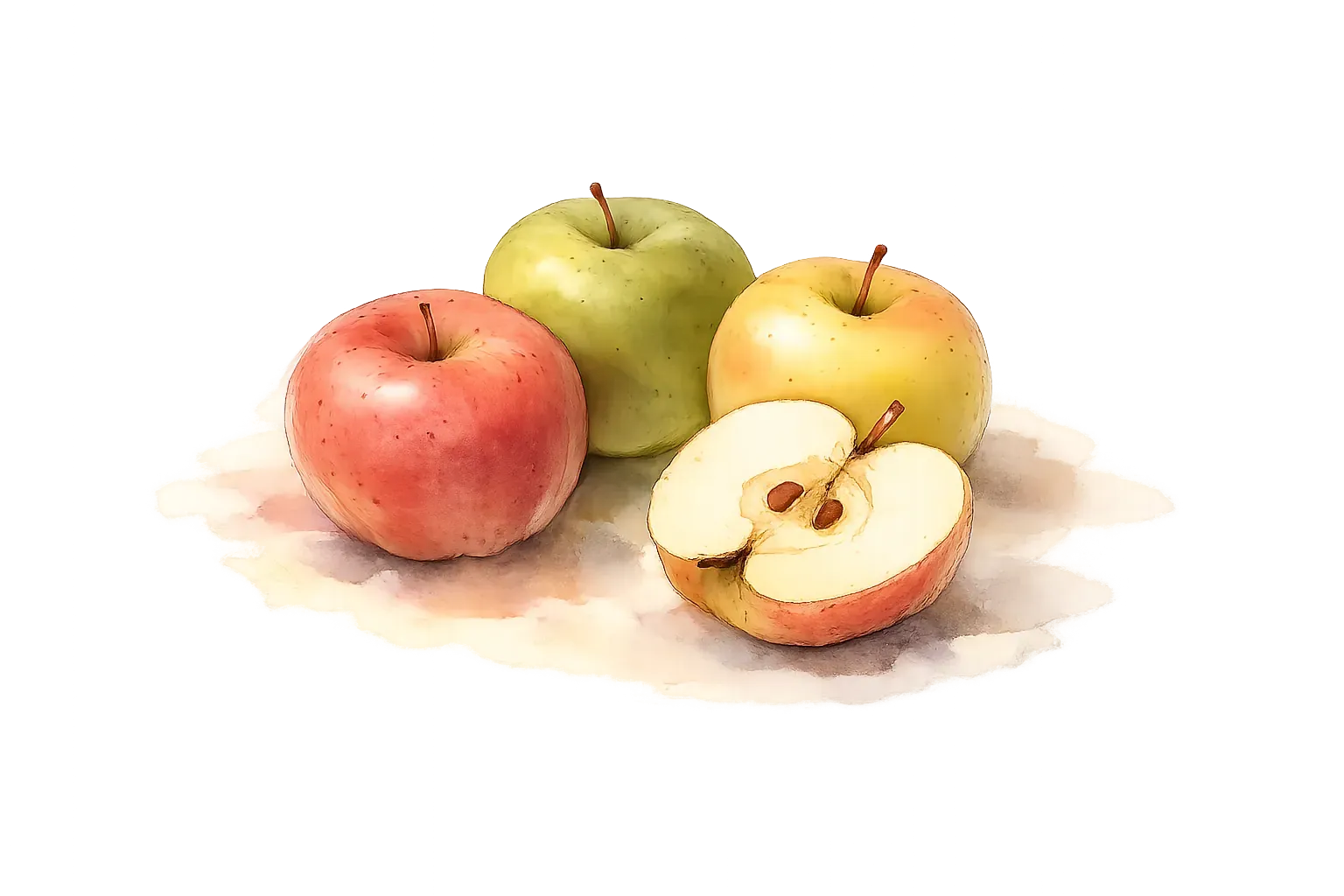
Also: Apples
A crisp, sweet-tart tree fruit eaten raw or cooked; varieties differ widely in sweetness, tartness, and how well they hold their shape versus break down when baked, which matters more for cooking than for snacking out of hand.
- apple cider vinegar
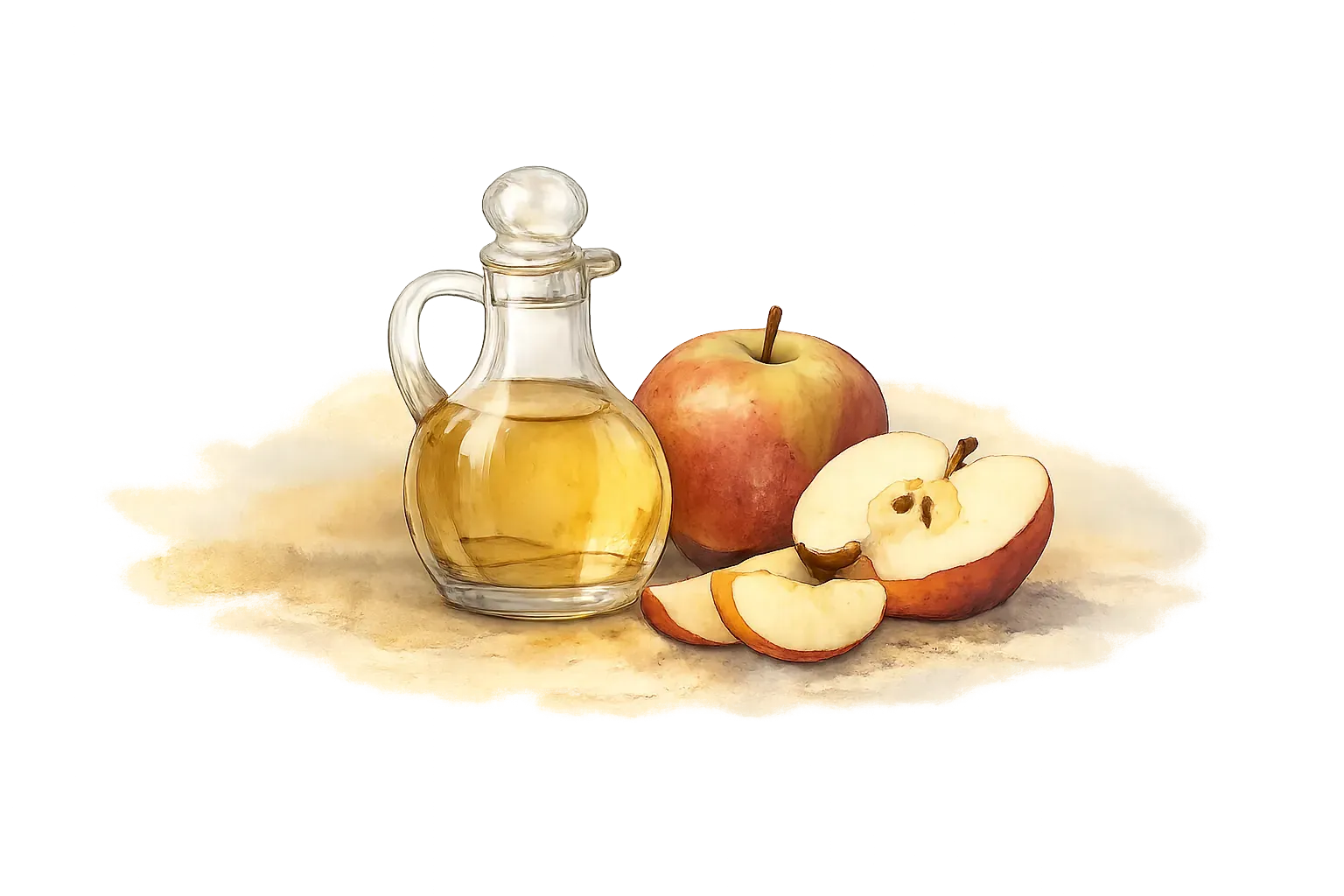
Also: cider vinegar
Vinegar made from fermented apple cider; milder and fruitier than white vinegar, common in dressings, marinades, and pickling.
- apple juice
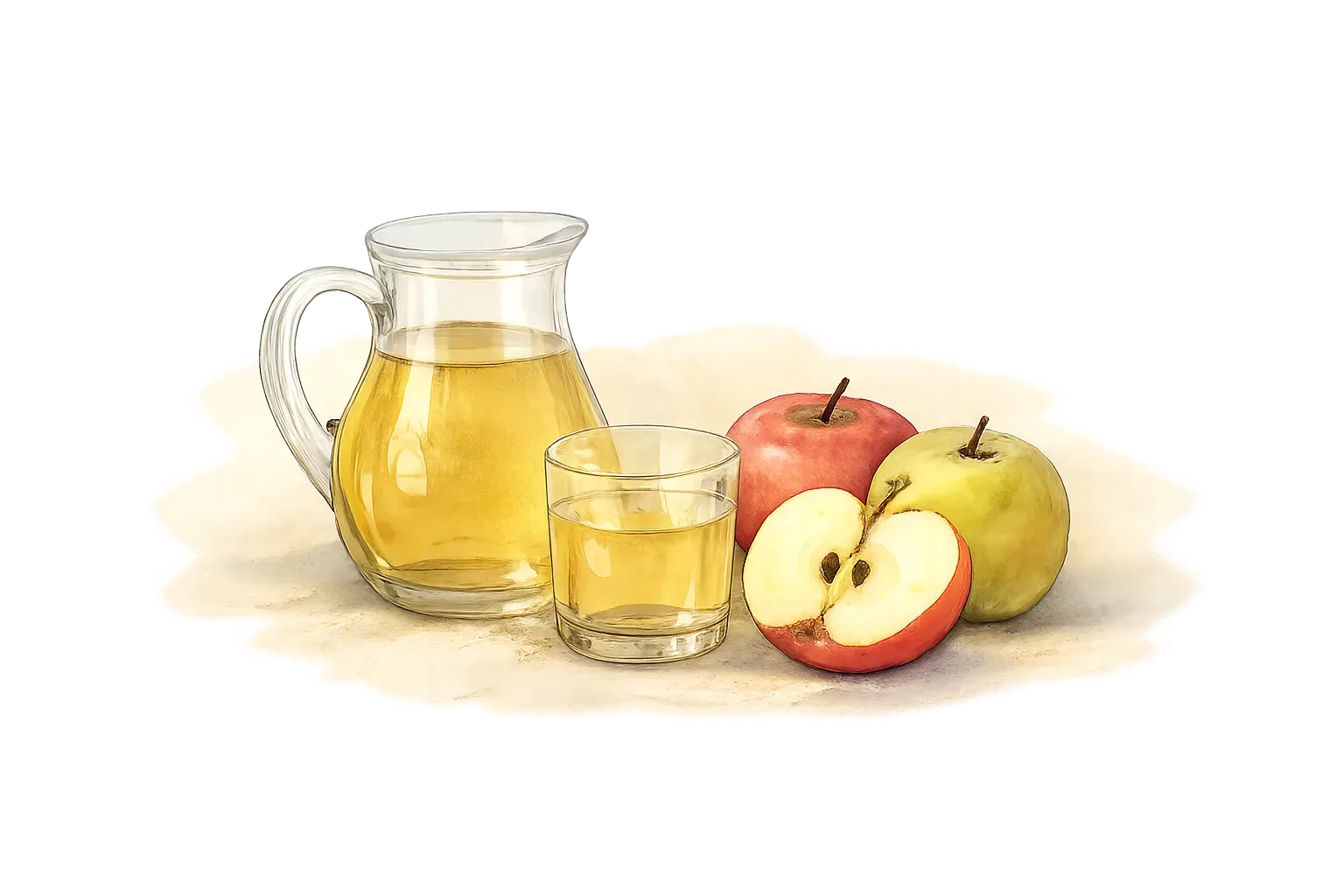
Juice pressed from apples, typically filtered and pasteurized. Used in cooking mainly for its sweetness, acidity, and apple flavor rather than as a beverage -- reducing it by simmering concentrates all three at once, so a sauce built on reduced apple juice gets sweeter and more tart together, not just thicker.
- applesauce
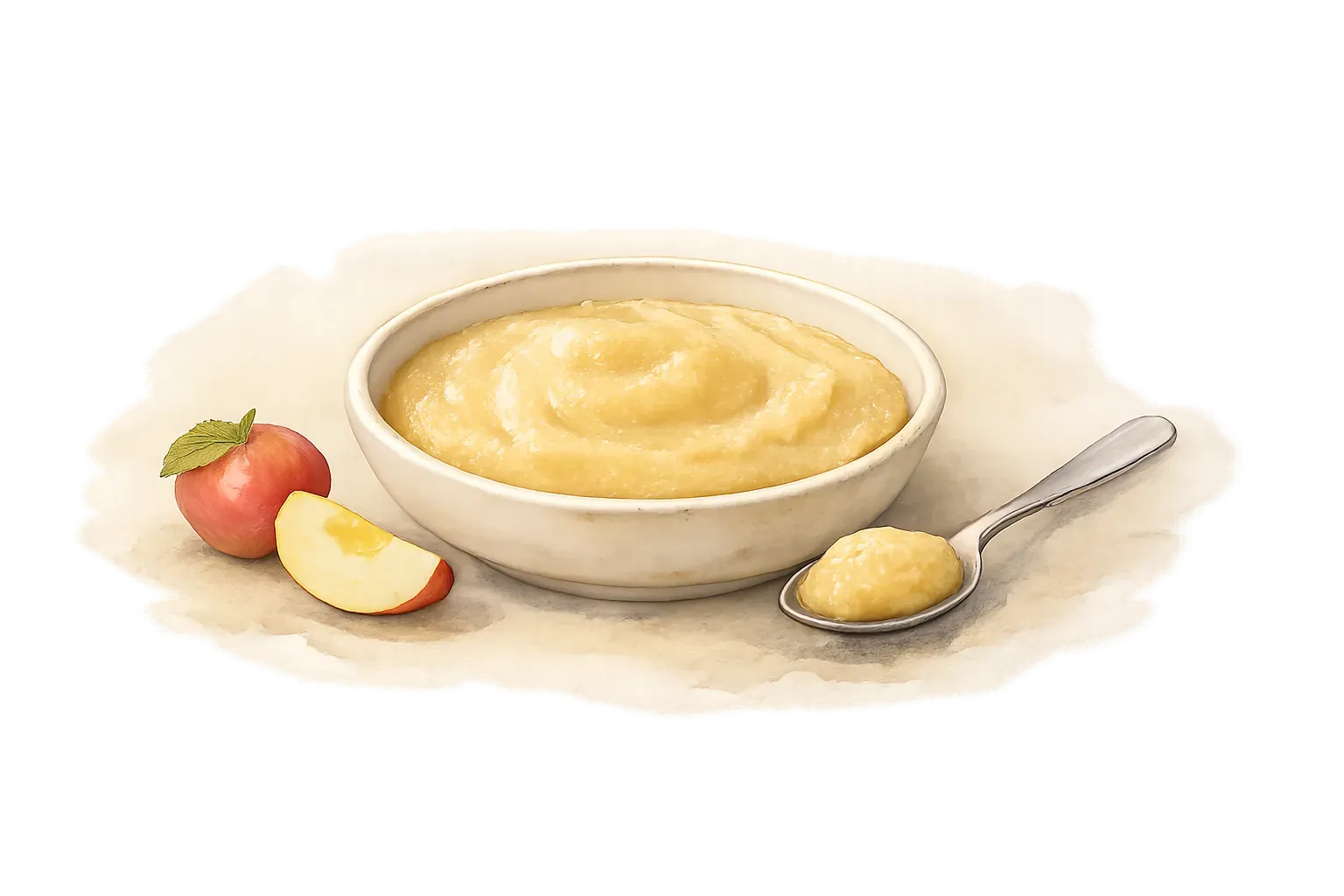
Also: Apple sauce
Apples cooked down and pureed to a soft, spoonable consistency; a side dish on its own, or a moisture-adding substitute for fat or eggs in baking. Sweetened and unsweetened versions differ enough to matter for baking -- a heavily sweetened jar used to replace fat can throw off a recipe's sugar balance.
- apricot preserves
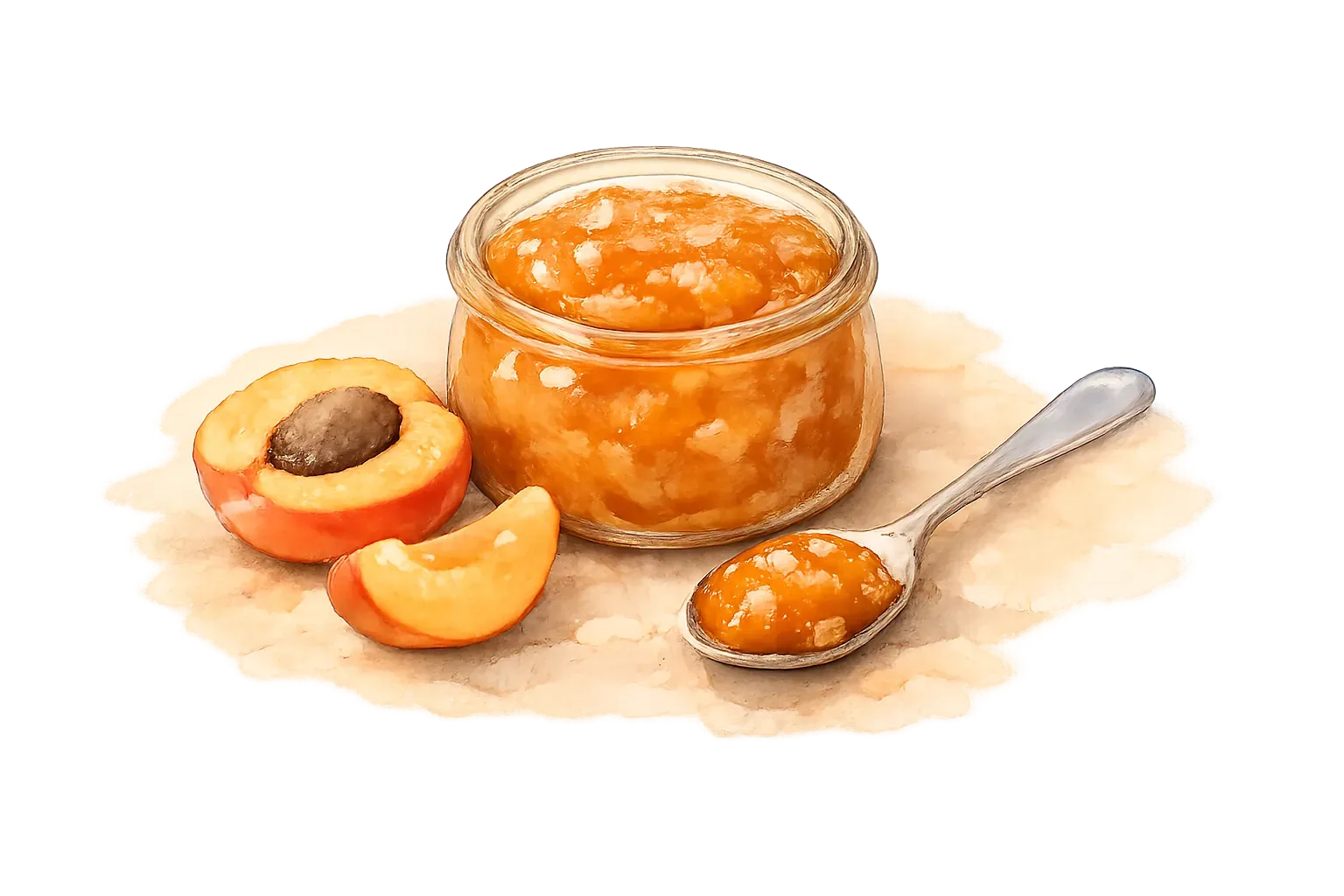
Apricot cooked with sugar until thick and spreadable, with fruit pieces retained; used as a glaze, filling, or condiment. Its sugar content means it also adds sweetness and a glossy sheen wherever it's used, not just apricot flavor.
- artichoke hearts
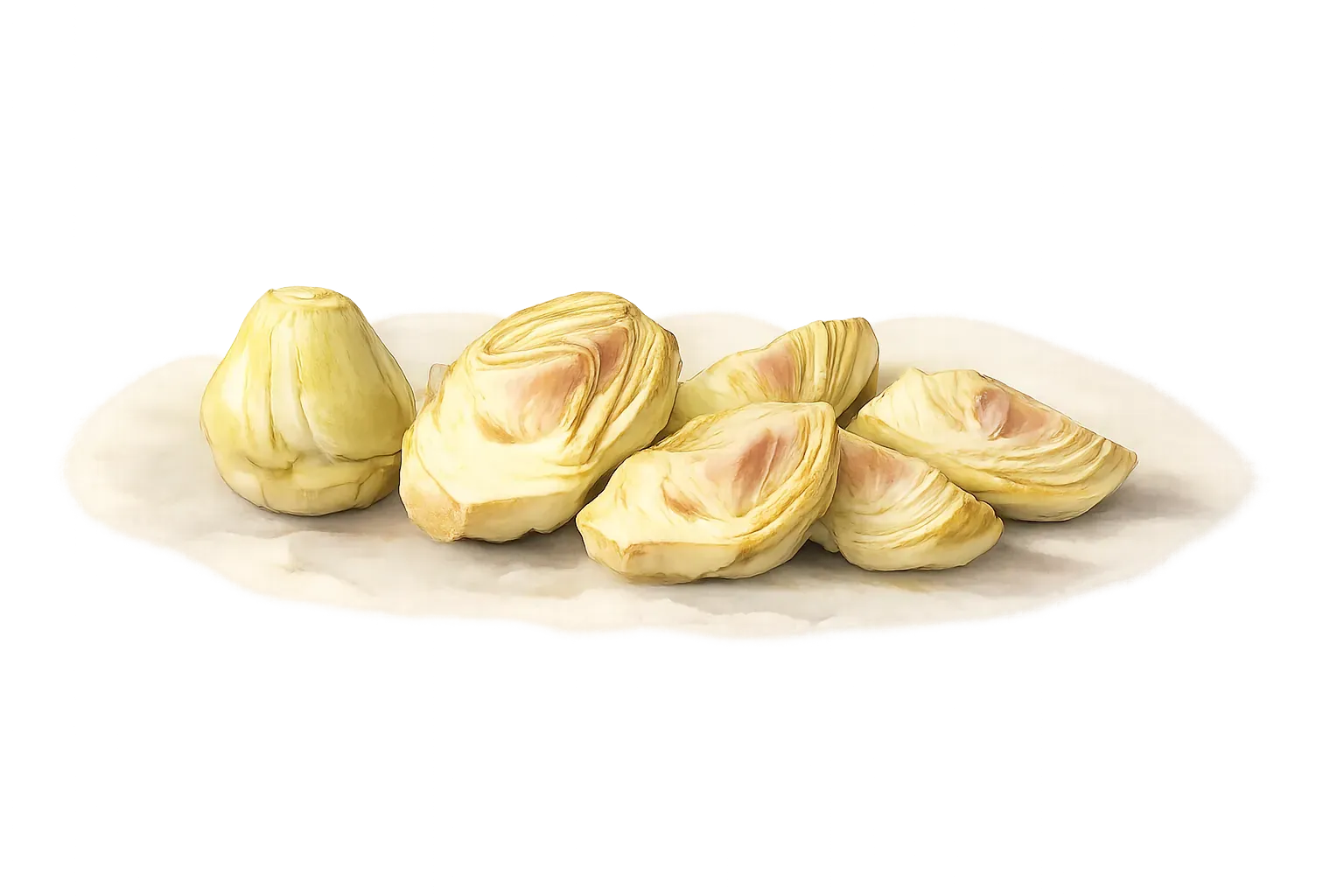
The tender inner base and immature leaves of the artichoke flower bud, with the tough outer leaves and fibrous choke removed. Usually sold canned, jarred, or frozen, ready to eat -- canned hearts are packed in plain brine, marinated jarred hearts carry oil, vinegar, and seasoning, and frozen hearts are the most neutral-tasting of the three.
- asparagus
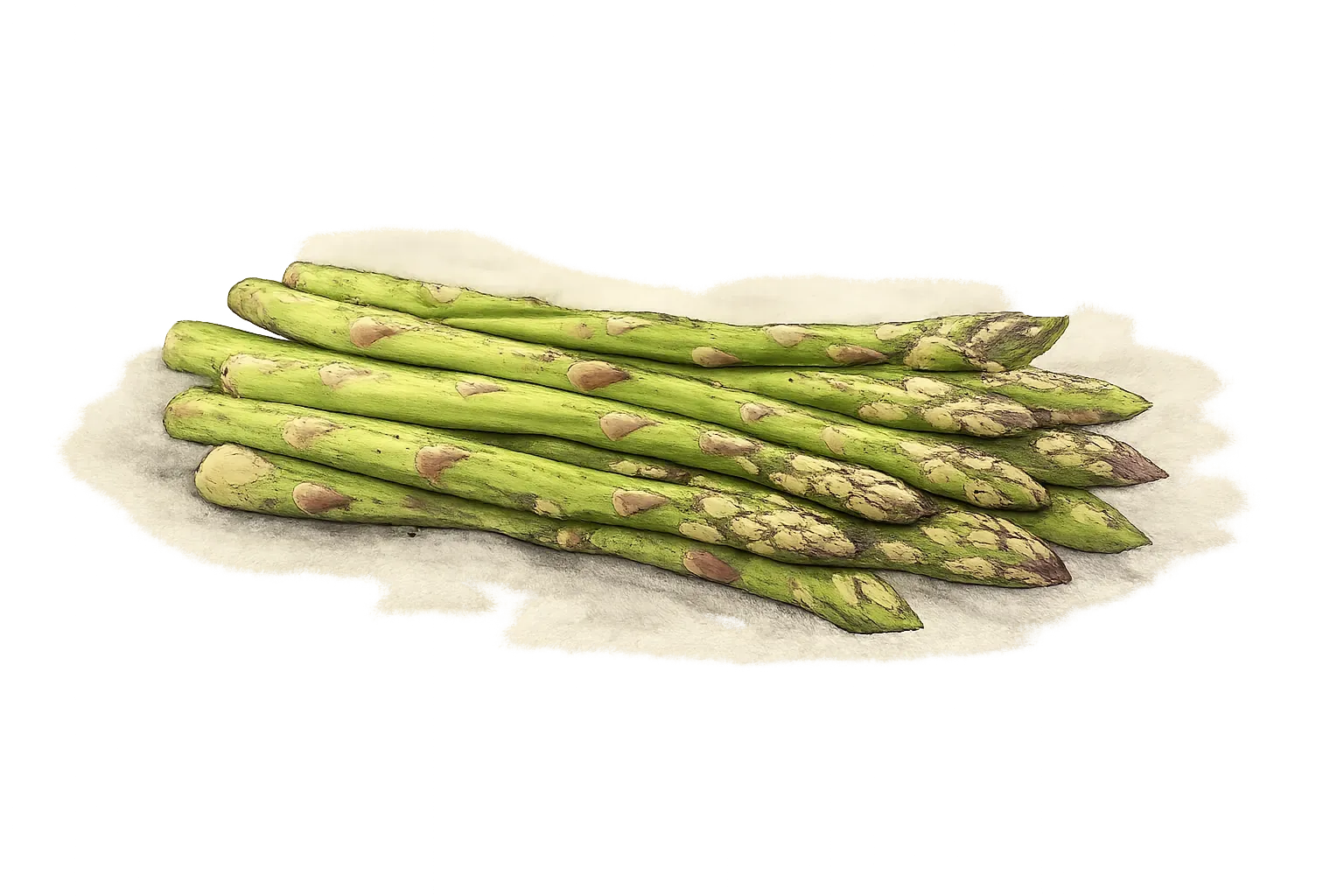
A spring vegetable harvested as young, tender shoots; eaten whole, typically roasted, grilled, steamed, or sauteed. Thin spears cook in minutes, while thick spears can stay crisp inside even after the outside has browned -- thickness, more than any clock, should set the cooking time.
- Atlantic cod

Also: cod
A mild, flaky white fish from the North Atlantic -- a classic choice for baking, frying (fish and chips), and chowders. As with most lean fish, timing matters more than technique: it goes from tender to dry very quickly once it's done.
- avocado
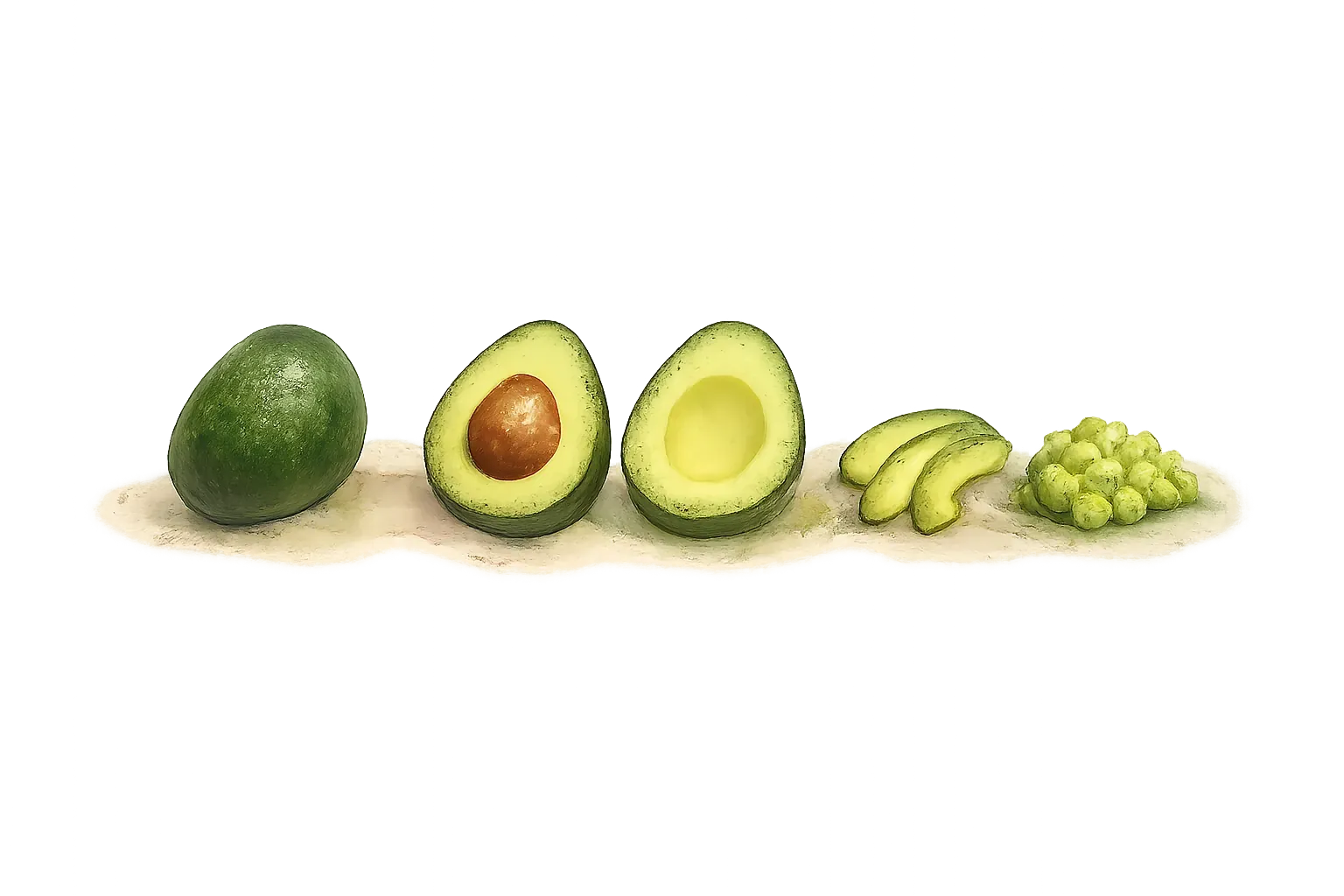
A creamy, high-fat fruit with a large central pit; eaten raw, mashed (guacamole), or sliced once ripe and soft.
B
- baby spinach
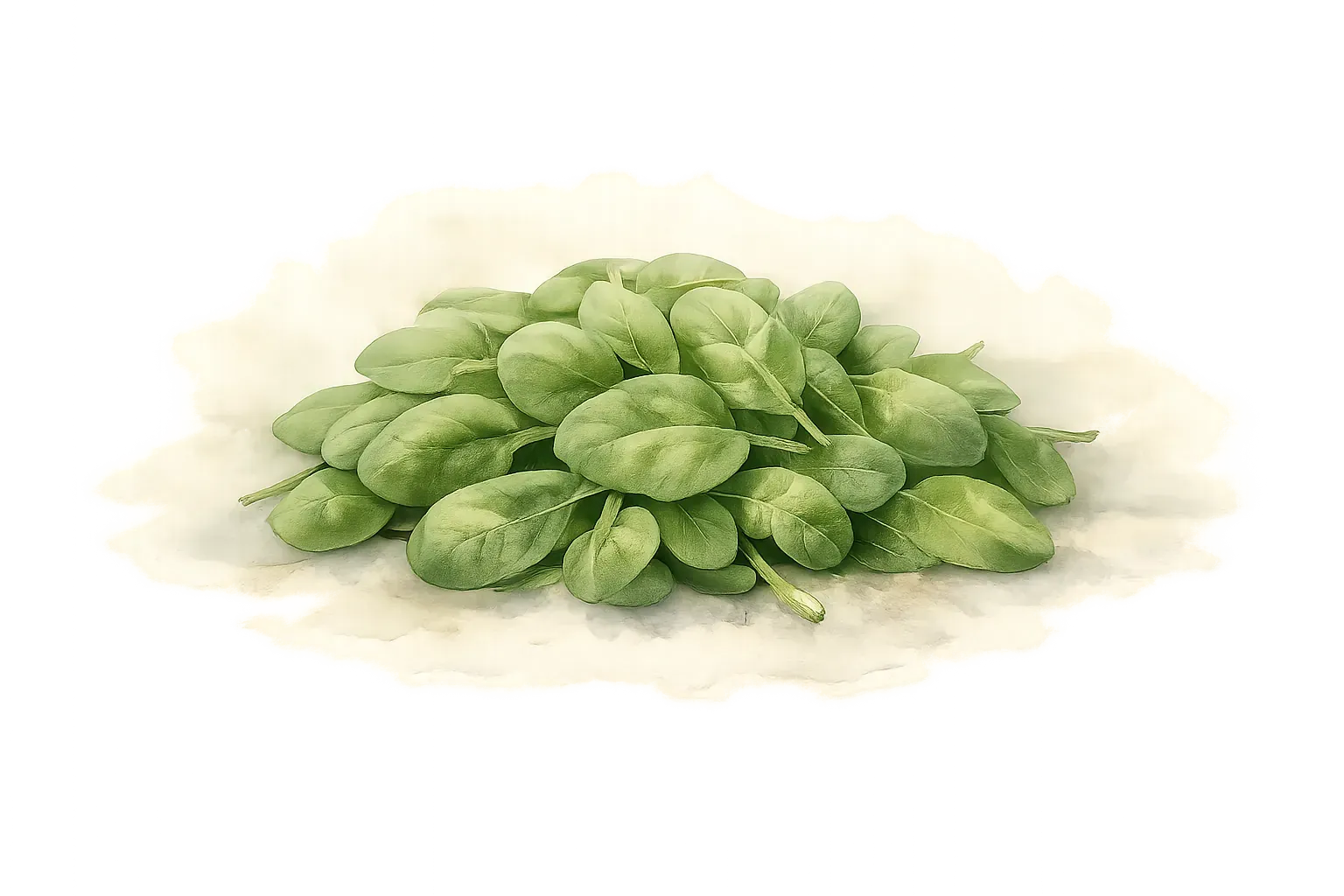
Spinach harvested young, with smaller, more tender leaves and a milder flavor than mature spinach. Often eaten raw as well as cooked. Leafy greens shrink dramatically once cooked, so a large raw volume cooks down to a small portion.
- bacon

Also: 4-5 strips bacon, Cooked Bacon, Crumbled bacon or diced pancetta
Cured, smoked pork belly (usually), sliced into strips and cooked until crisp; used as a main ingredient, garnish, or source of rendered fat.
- bacon grease
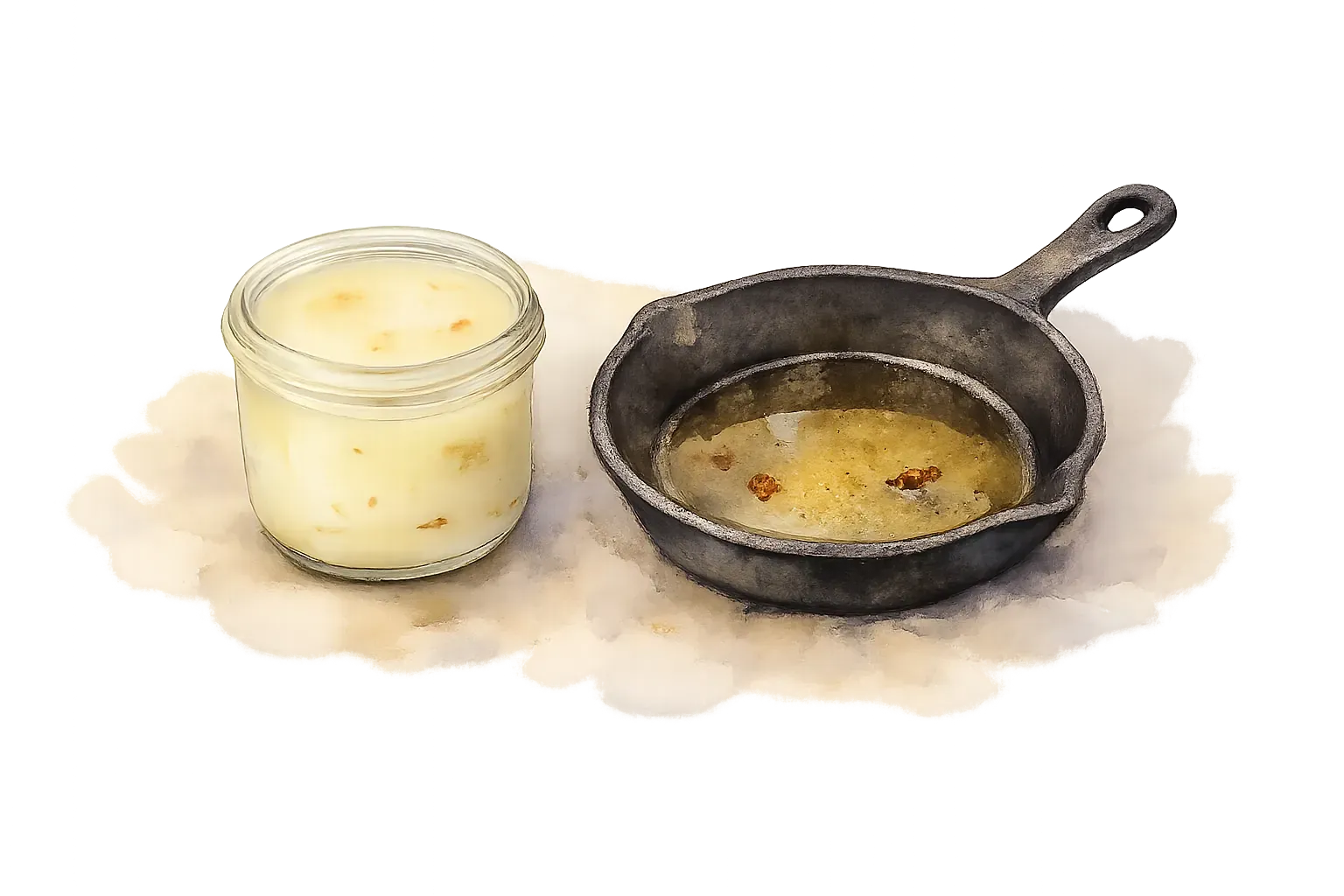
The rendered fat left behind after cooking bacon, saved and reused as a smoky, flavorful cooking fat.
- baking powder
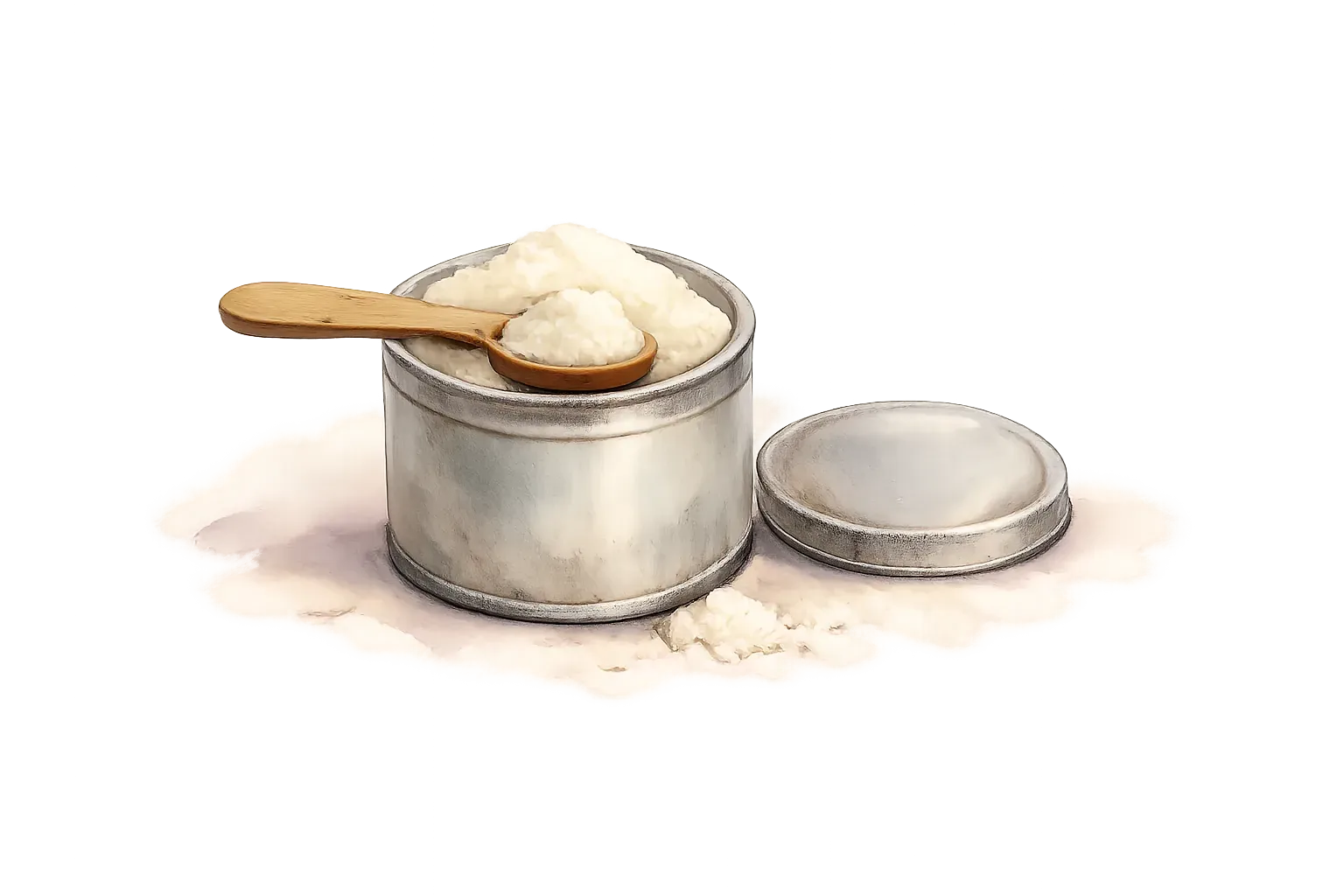
A dry chemical leavener combining an acid and baking soda in one product -- unlike baking soda alone, it doesn't need a separate acidic ingredient to work. Most supermarket baking powder is double-acting, releasing gas once when it's moistened and again with oven heat -- which is why mixed batter still rises even after sitting a few minutes, though it's still best baked without unnecessary delay.
- baking soda
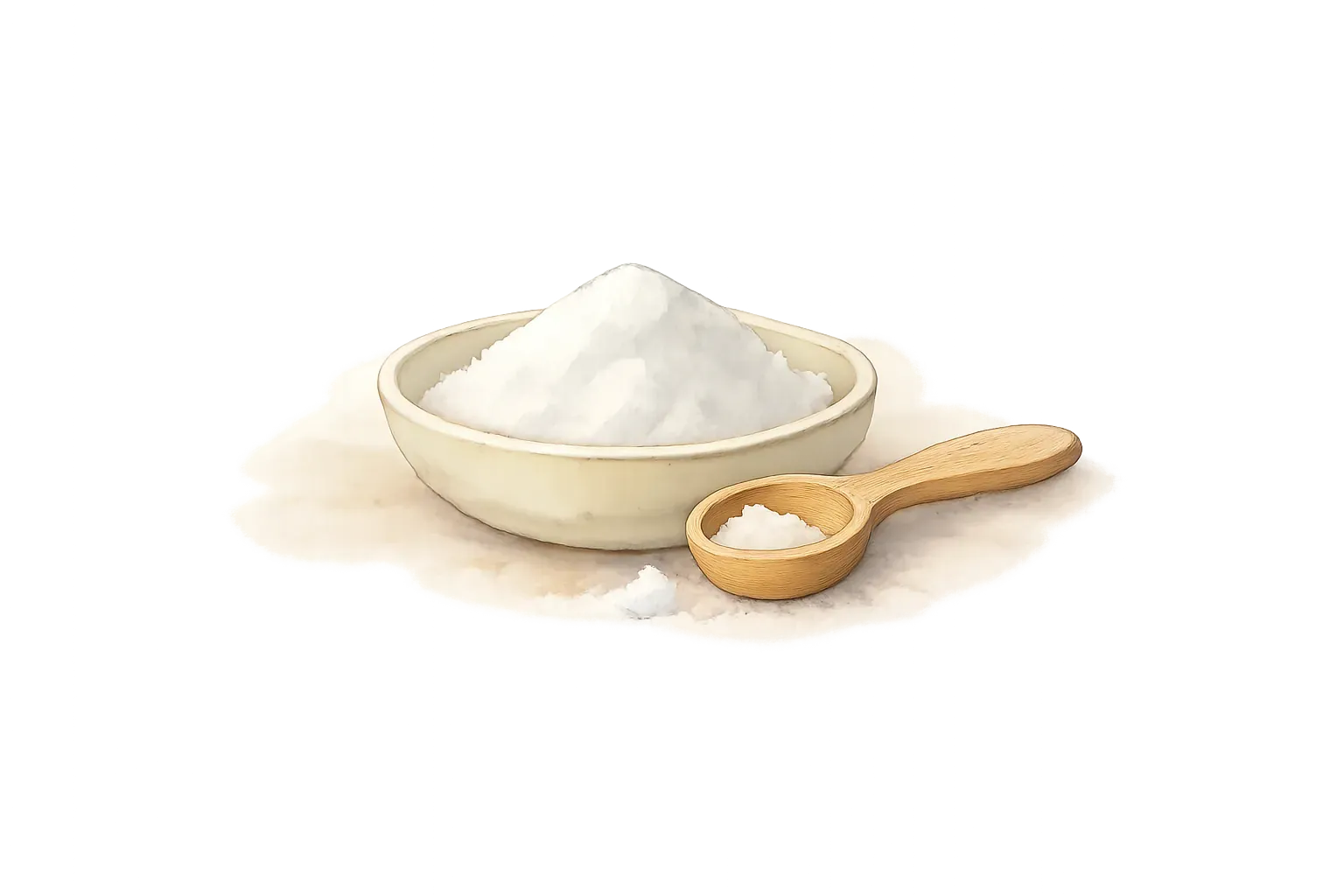
Sodium bicarbonate; reacts with an acidic ingredient (buttermilk, vinegar, brown sugar) to release gas and make baked goods rise. It also raises the batter's pH, which promotes browning and can soften texture -- so even a small amount can noticeably change a baked good's color as well as its rise.
- balsamic vinegar

A dark, sweet-tart Italian vinegar made from reduced grape must, often aged; used in dressings, glazes, marinades, and drizzled over finished dishes.
- bamboo shoots
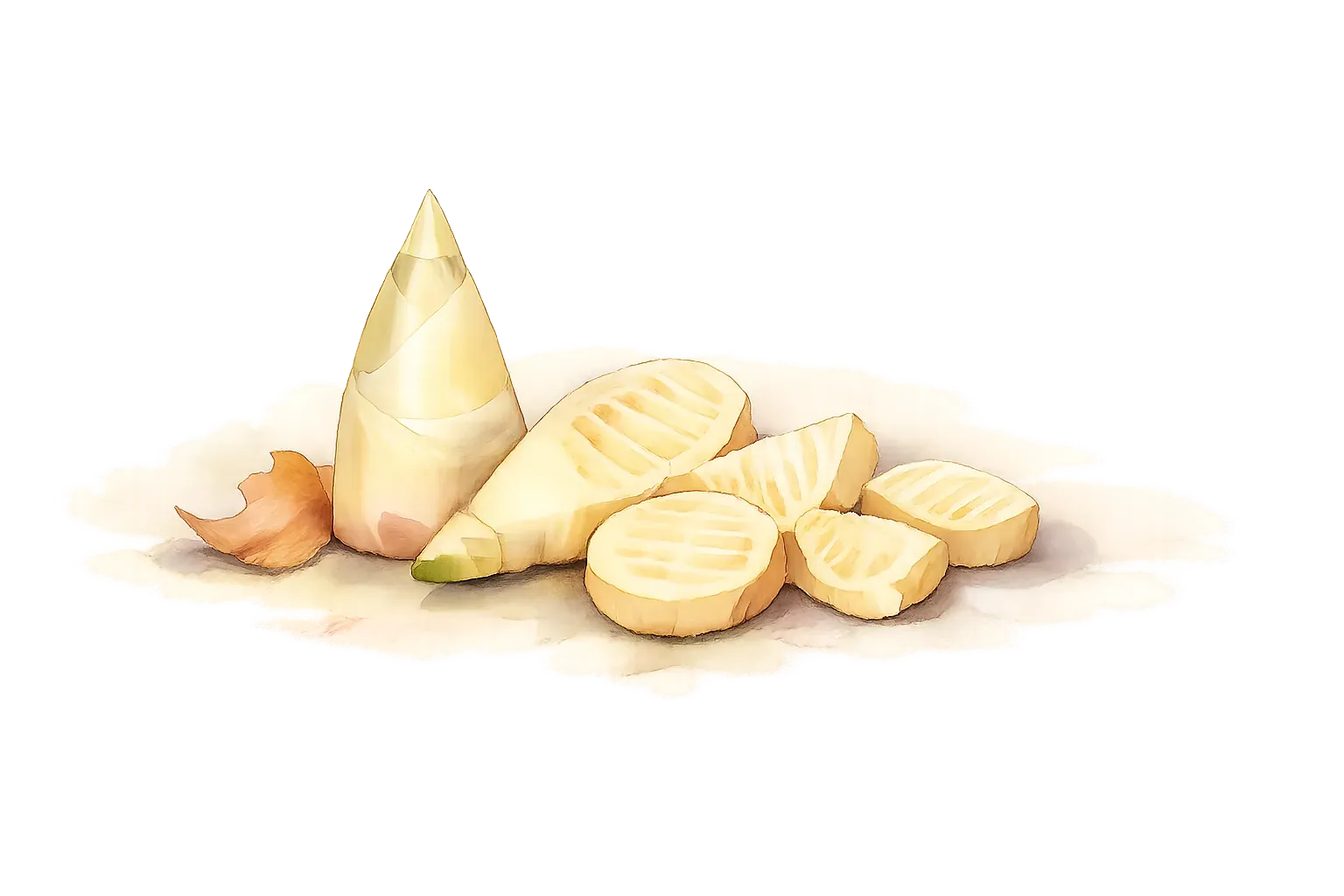
The young, edible shoots of bamboo, harvested before they turn woody; sold pre-cooked (usually canned or jarred), with a mild flavor and crisp texture.
- bamboo skewers
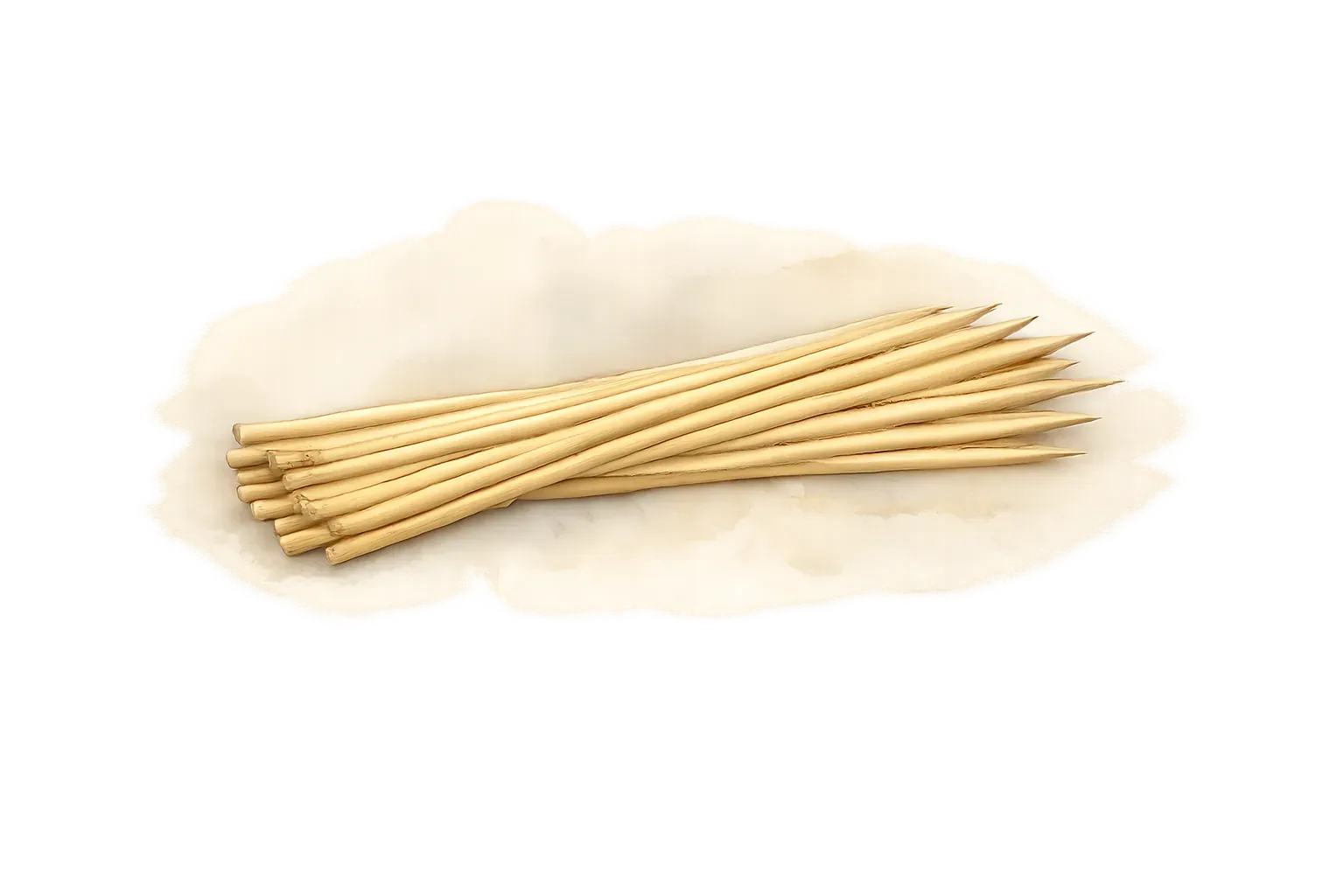
Thin wooden skewers for holding food together on the grill or under the broiler, as with kebabs. They're a tool rather than a food, and their one real weakness is that dry exposed wood scorches -- hence soaking before use.
- barley
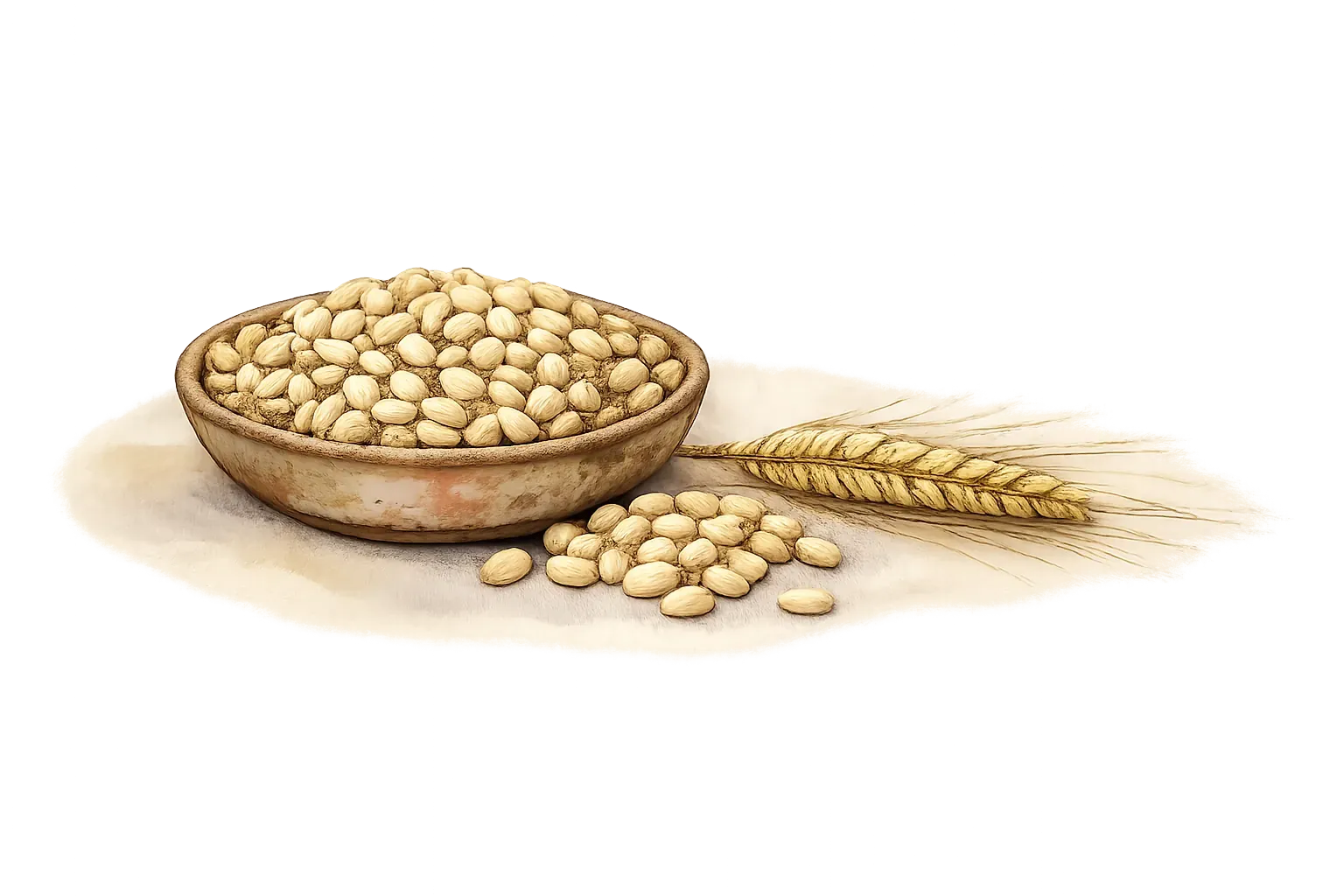
A cereal grain with a chewy texture and nutty flavor, used whole in soups, stews, and side dishes, or malted for brewing. Like other dry grains, it absorbs several times its volume in water as it cooks, so a small dry measure goes further than it looks like it will. It contains gluten, unlike rice or corn, which matters if a substitution needs to avoid wheat/barley/rye.
- basil
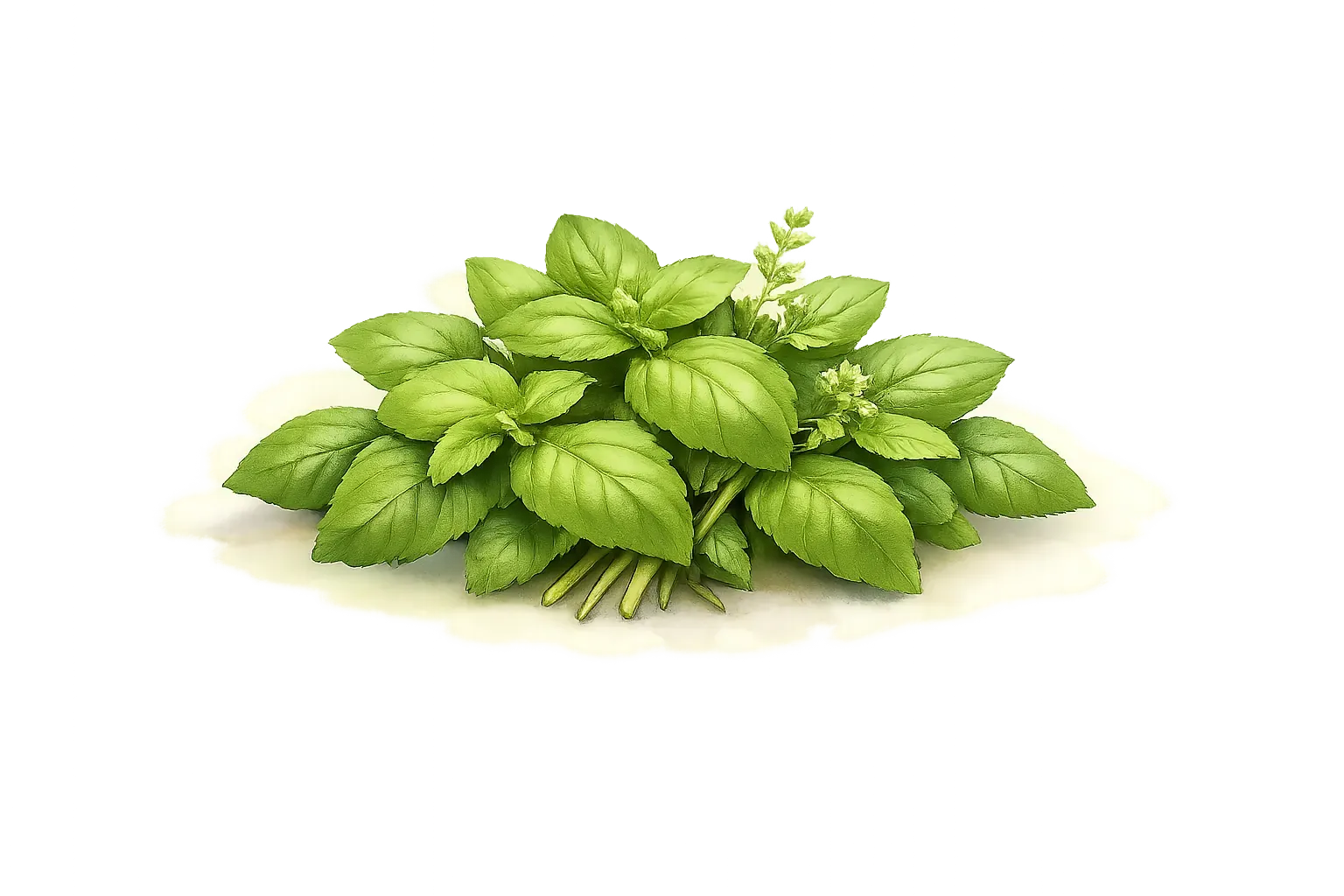
Also: 4-5 Basil Leaves, Dried Basil Leaves, fresh basil
An aromatic herb with sweet, slightly peppery leaves, central to Italian and Southeast Asian cooking; used fresh (pesto, caprese) or dried. Thai basil has a firmer leaf and a distinct anise note, and isn't a direct swap for the sweeter Genovese type most Italian cooking calls for.
- bay leaf
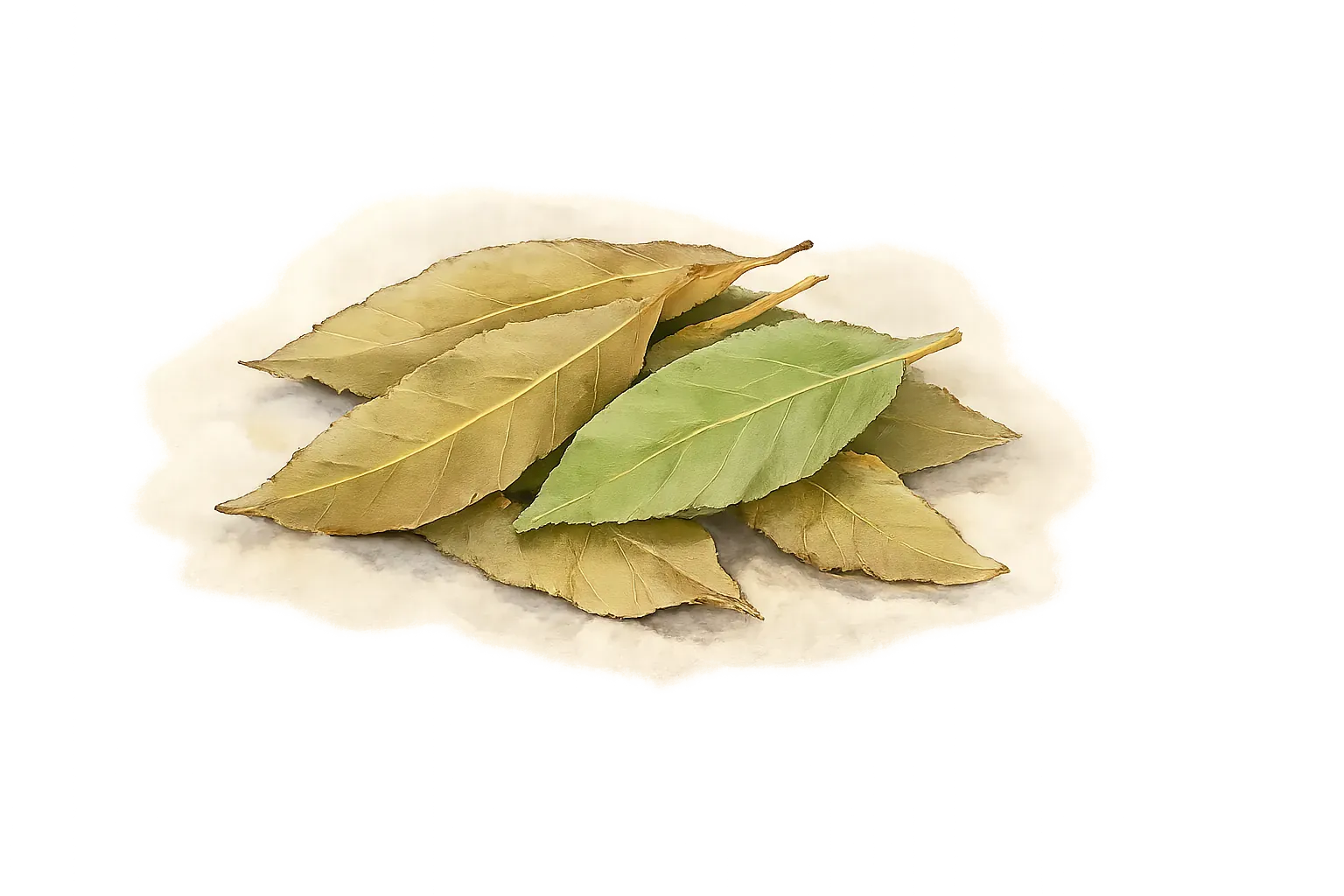
Also: Bay leaves
The dried (or fresh) leaf of the bay laurel tree, simmered whole in soups, stews, and sauces for a subtle background flavor, then removed before serving.
- bean sprouts
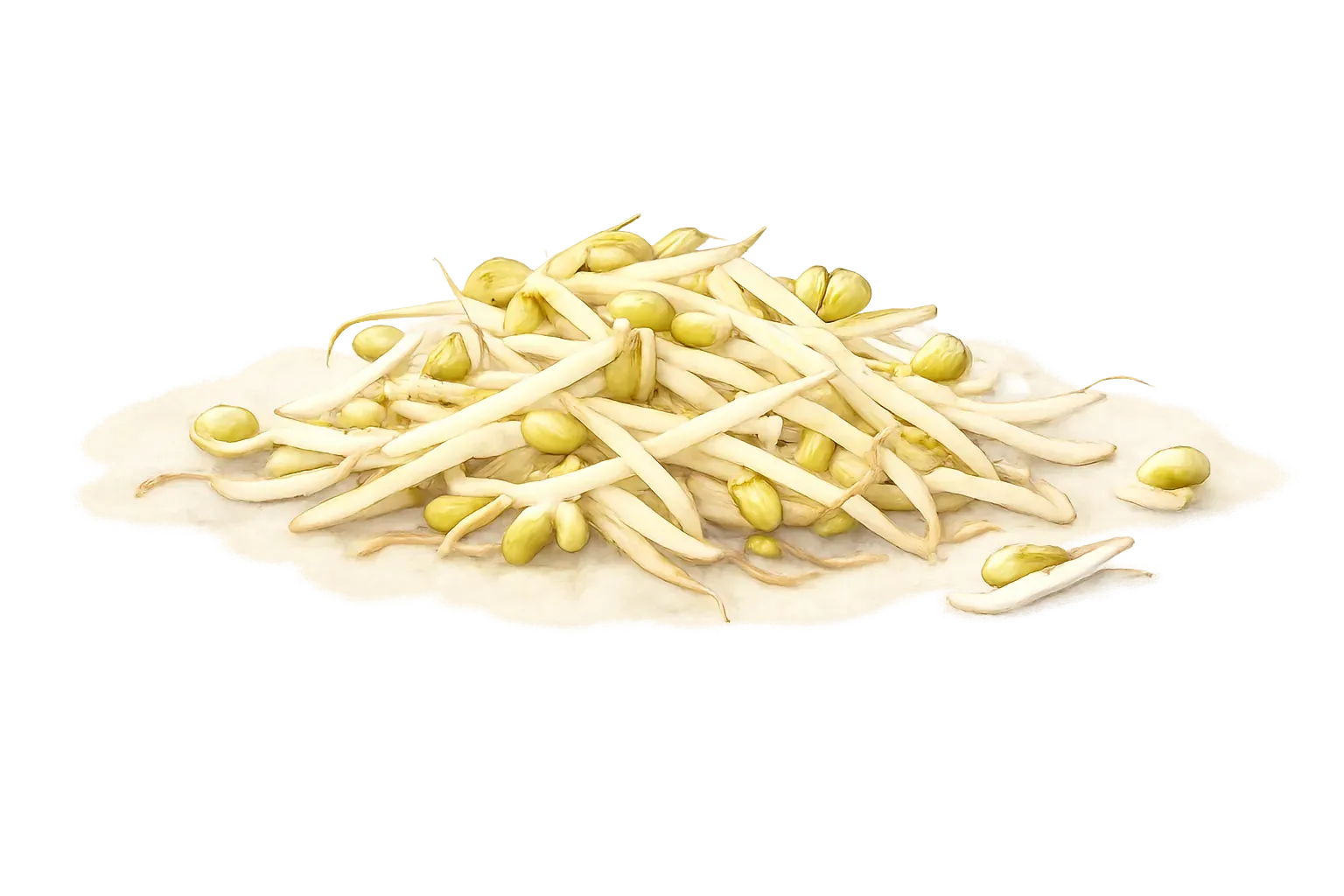
Sprouted mung beans (most commonly), crisp and mild; eaten raw or briefly cooked in stir-fries, soups, and salads. Because they're grown in warm, humid conditions, raw sprouts carry a higher risk of bacterial contamination than most produce -- anyone more vulnerable to foodborne illness (very young, elderly, pregnant, or immunocompromised) is generally better off with them cooked through rather than raw.
- bechamel
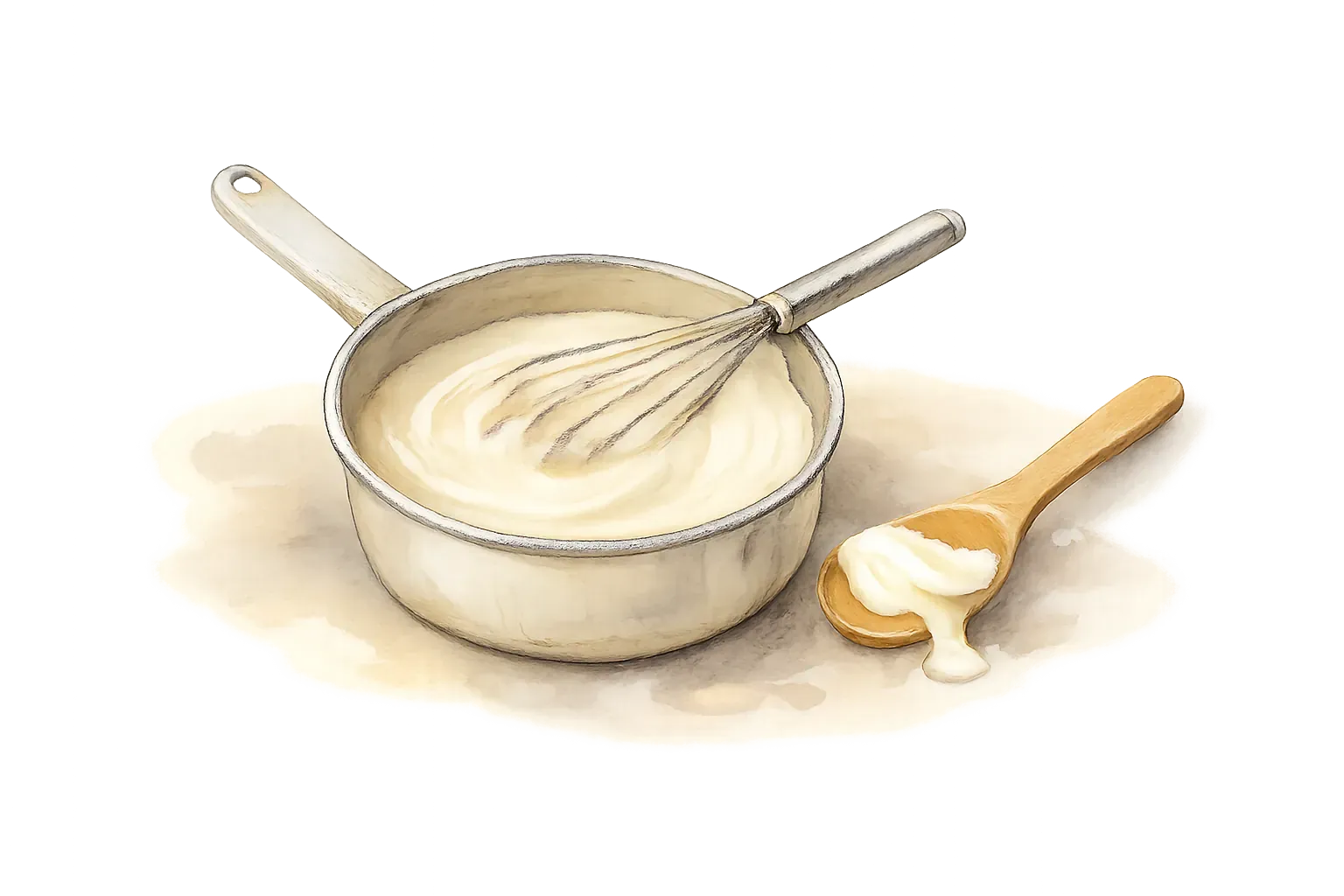
Also: béchamel, white sauce
A basic white sauce made by whisking milk into a butter-and-flour roux and simmering until thickened -- one of the foundational French sauces, and a base for countless others once cheese, mustard, or other flavorings are added. Used both as a component in dishes like lasagna and gratins and, in smaller amounts, stirred into a soup or sauce to add body and a creamy richness.
- beef
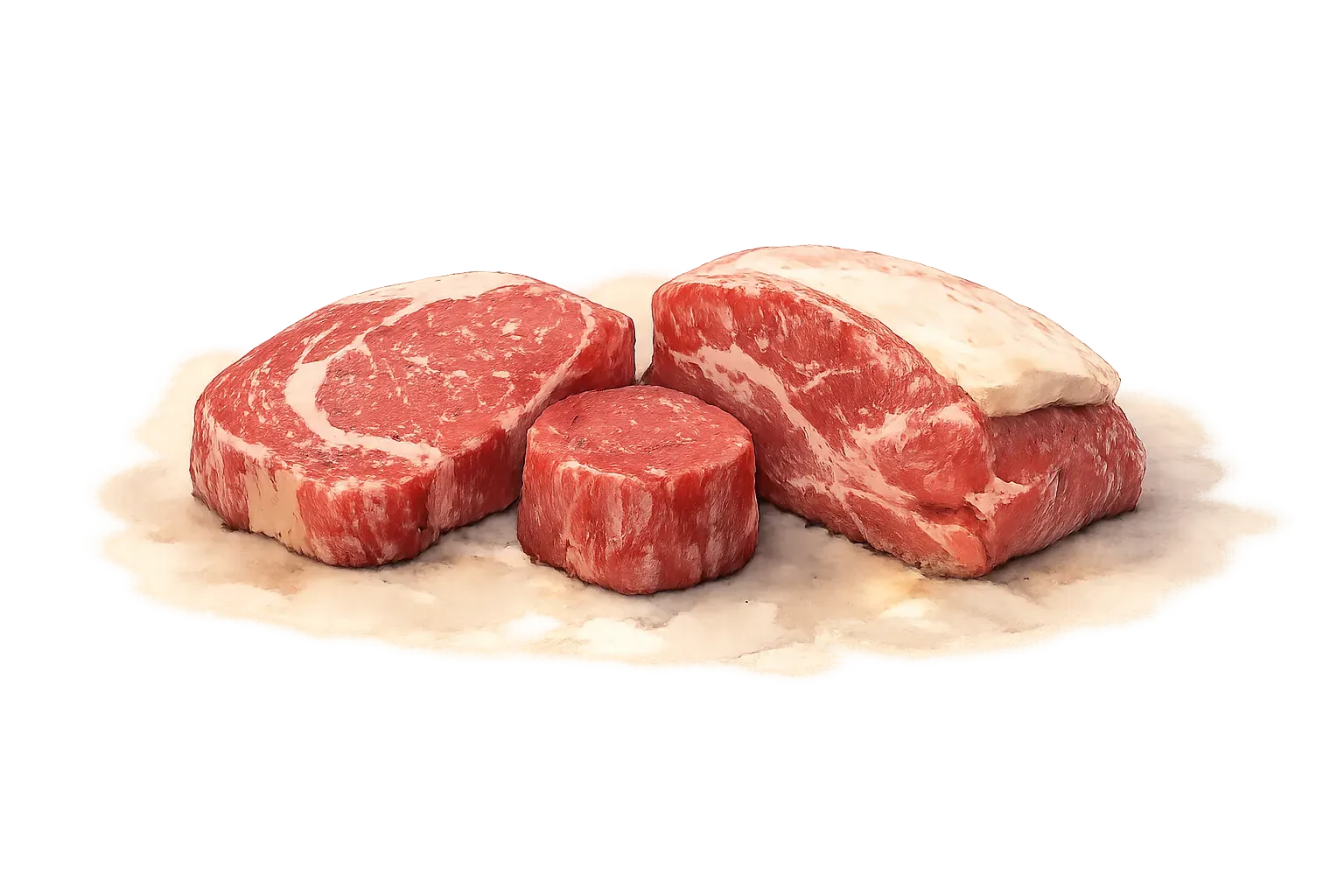
Also: lean beef
Meat from cattle, in cuts ranging from tender (steaks, tenderloin) to tougher ones suited to slow cooking (chuck, brisket). The rule that matters most: tender cuts reward fast, hot cooking, while tougher, collagen-rich cuts need low, slow, moist cooking to break that collagen down into gelatin -- treating one like the other is the single most common mistake.
More specific: beef chuck roast
- beef bones
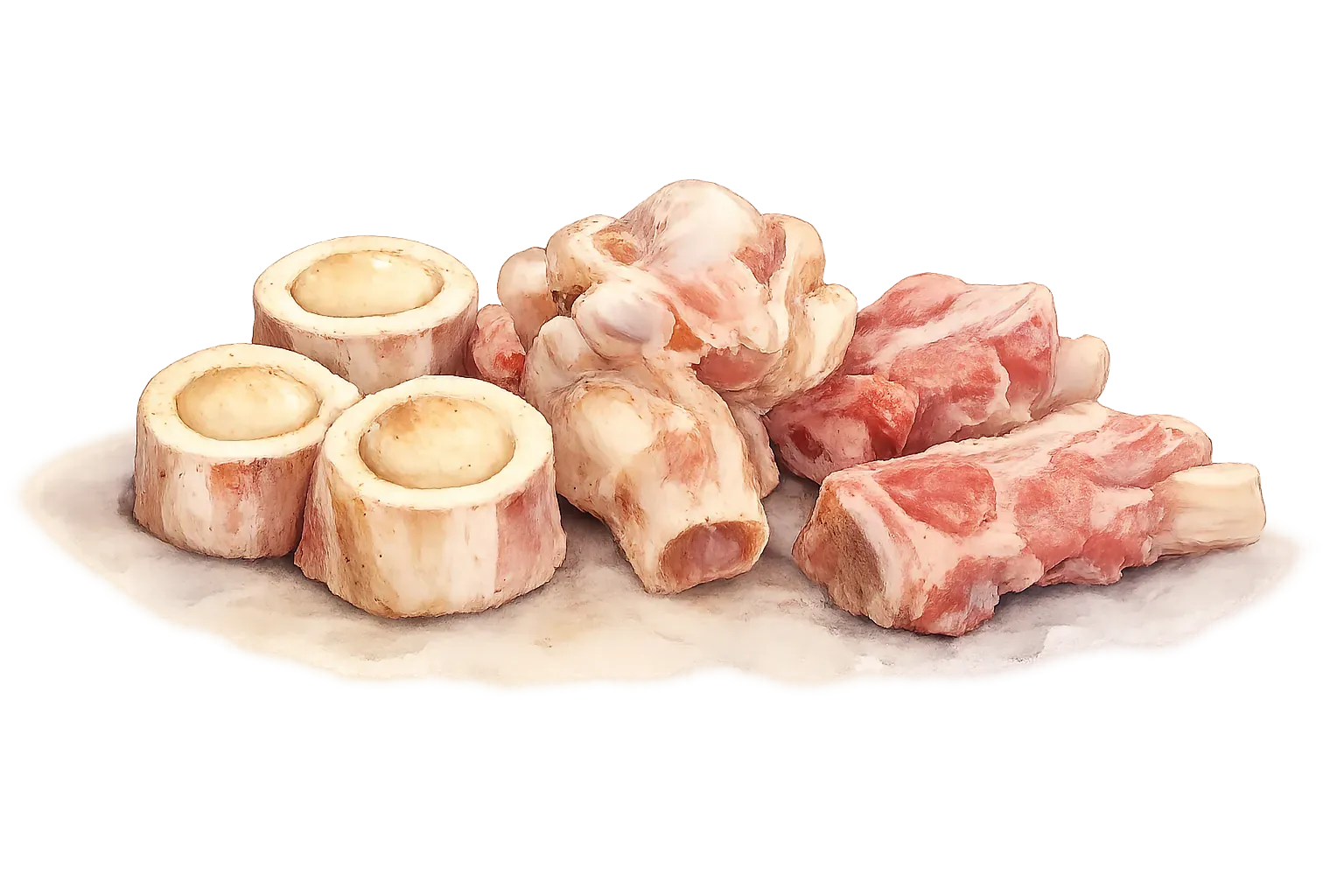
Bones from cattle -- often with some meat and marrow still attached -- simmered for hours to pull collagen and flavor into stock or broth. The connective tissue breaks down into gelatin over long, slow cooking, which is what gives a finished stock body and a silky mouthfeel rather than just watery flavor. Marrow bones add richness; knuckle and joint bones are highest in collagen.
- beef bouillon
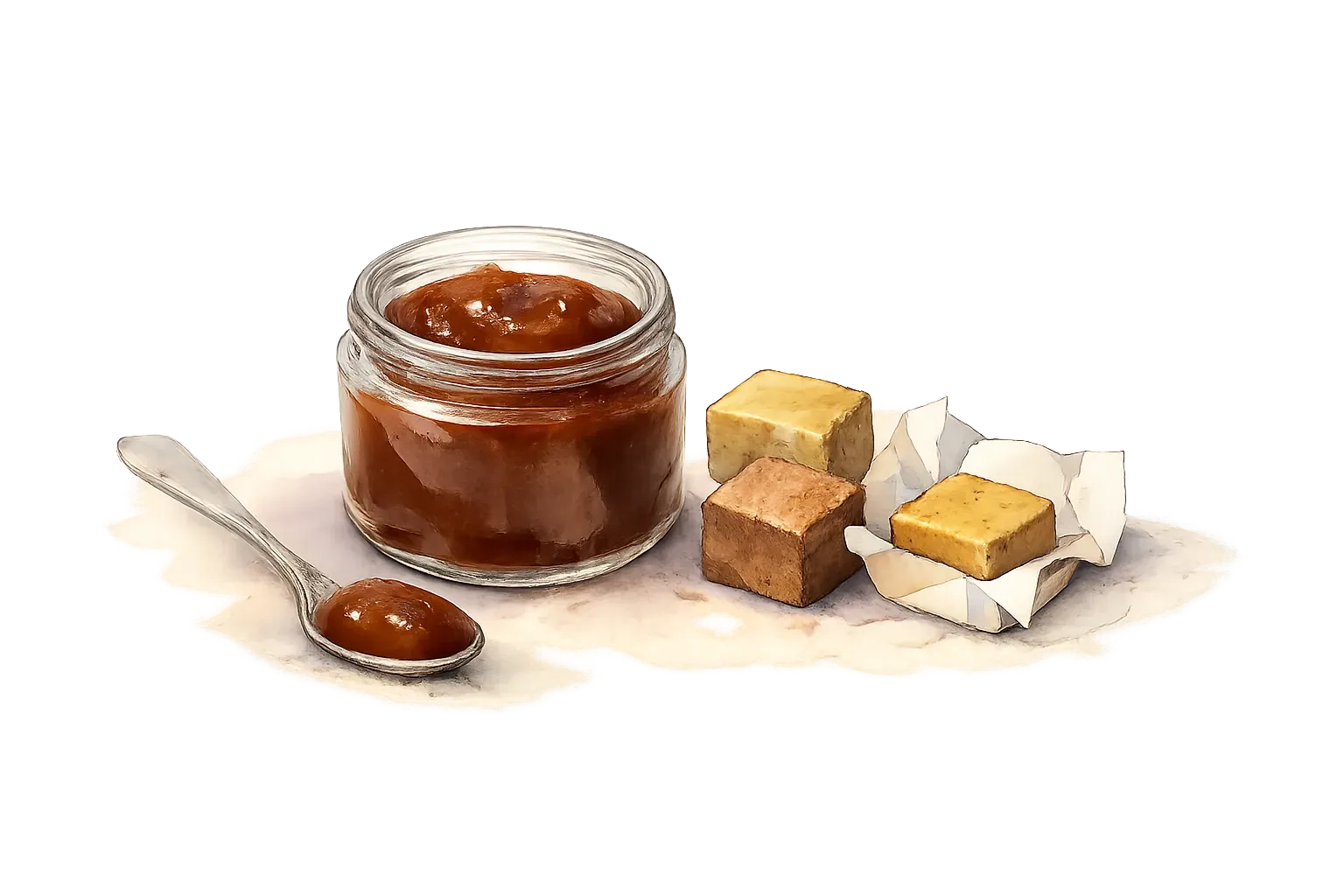
Also: beef stock concentrate, beef bouillon cube
A concentrated, shelf-stable form of beef stock, sold either as a paste in a jar (Better than Bouillon's beef flavor is the best-known) or as small dried cubes meant to be dissolved in hot water to reconstitute into broth. A pantry shortcut for beef broth, and also used in smaller amounts to boost the savoriness of a broth that's already been made.
- beef chuck roast
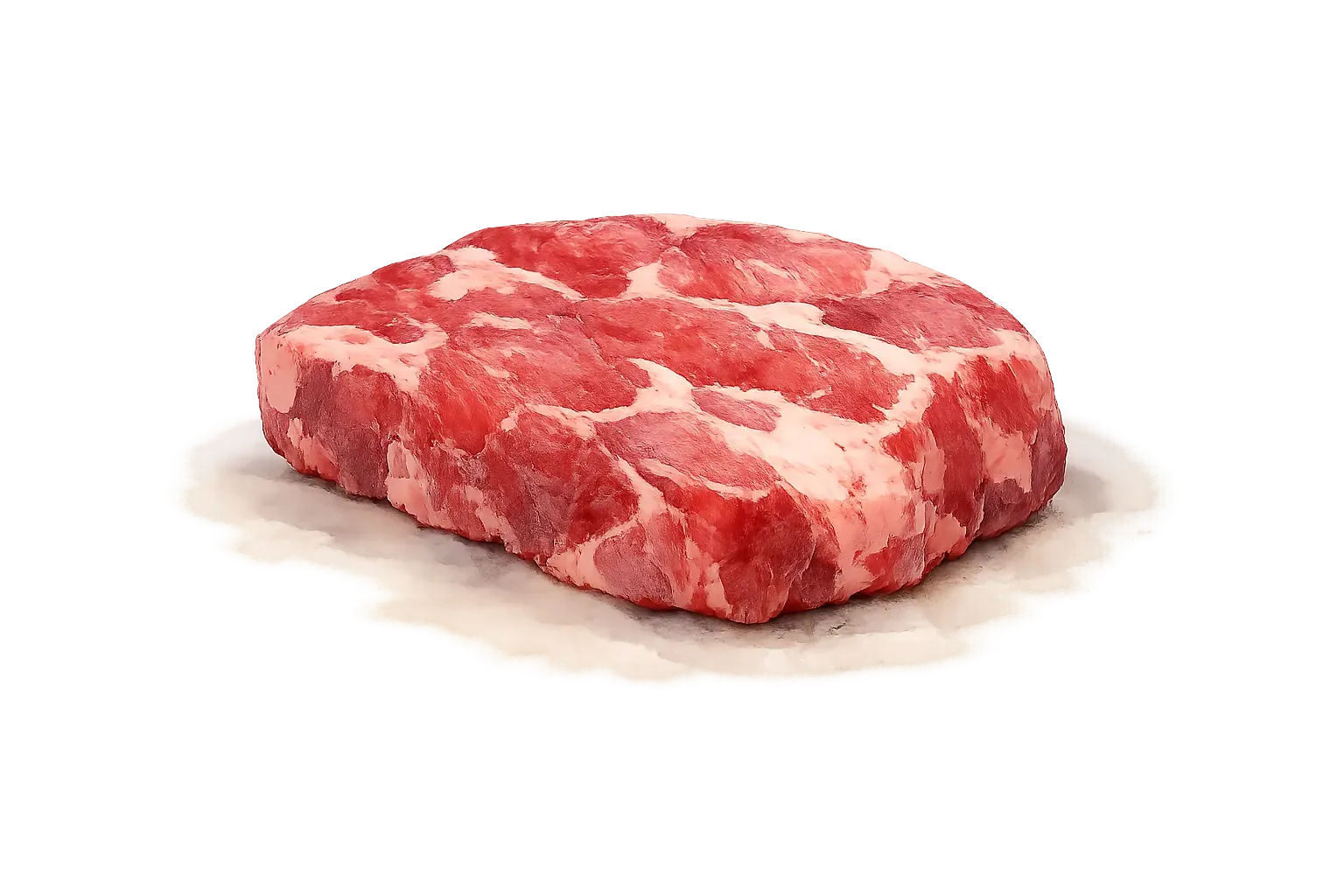
Also: Chuck, Chuck Roast, chuck roast, beef chuck
A well-exercised, well-marbled cut from the shoulder of the cow, tough and chewy if cooked quickly but the standard choice for stews, pot roasts, and braises -- the dense connective tissue that makes it unsuitable for a quick sear is exactly what melts into rich, gelatinous tenderness over a long, low, moist cook.
A kind of beef
- beef stock
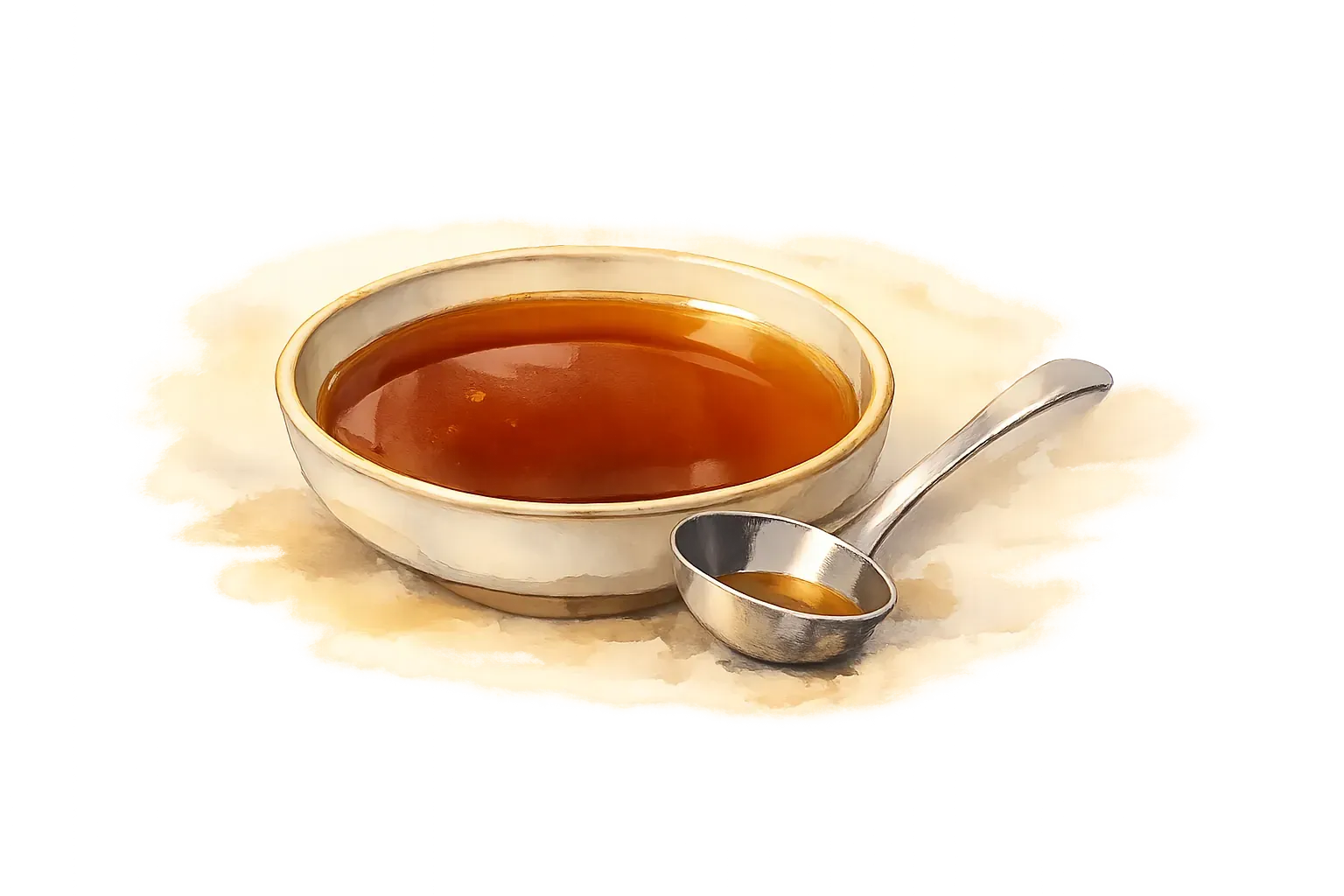
A savory liquid made by simmering beef bones -- and often meat, vegetables, and aromatics -- for hours, then strained; used as a base for soups, stews, and sauces. Homemade versions vary widely in body depending on how much gelatin they extracted, from thin and clear to thick enough to set like jelly when chilled. Store-bought stock is typically thinner and more heavily salted than a well-reduced homemade batch.
- beer

Also: Guinness Beer
A fermented beverage brewed from grain (usually malted barley), water, hops, and yeast; used in cooking for braising liquids, batters, and marinades as well as for drinking. Beer contributes malt sweetness, hop bitterness, and mild acidity to a pot, and its carbonation cooks off once it hits a hot liquid. Style matters more than price -- a dark, malty beer behaves very differently from a light lager or a hoppy IPA.
- beets
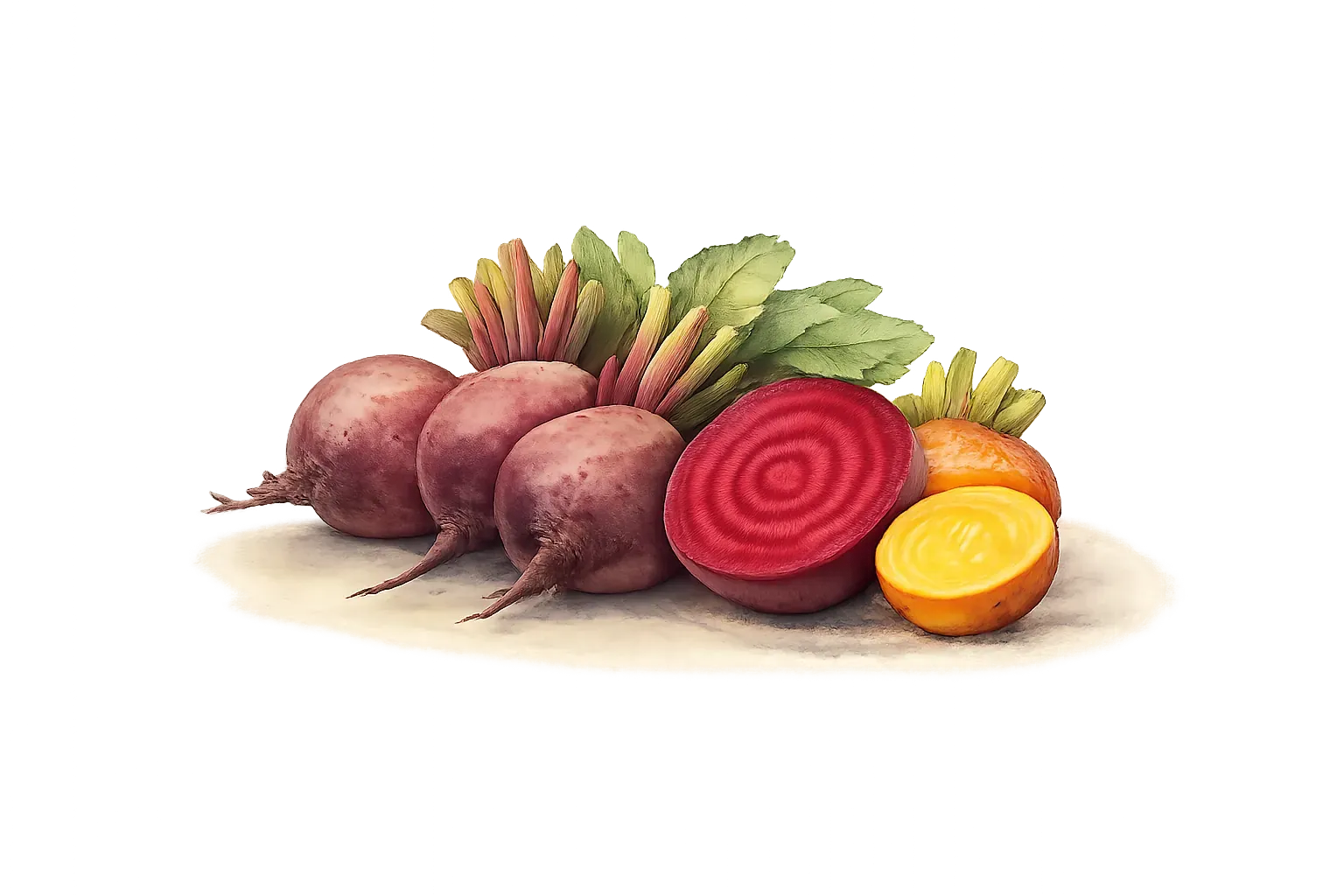
A root vegetable with an earthy, sweet flavor and deep red or golden flesh; roasted, boiled, pickled, or eaten raw and grated. Their high sugar content means they caramelize well under dry heat but can scorch on the outside before the center is tender if the heat runs too high.
- bell pepper
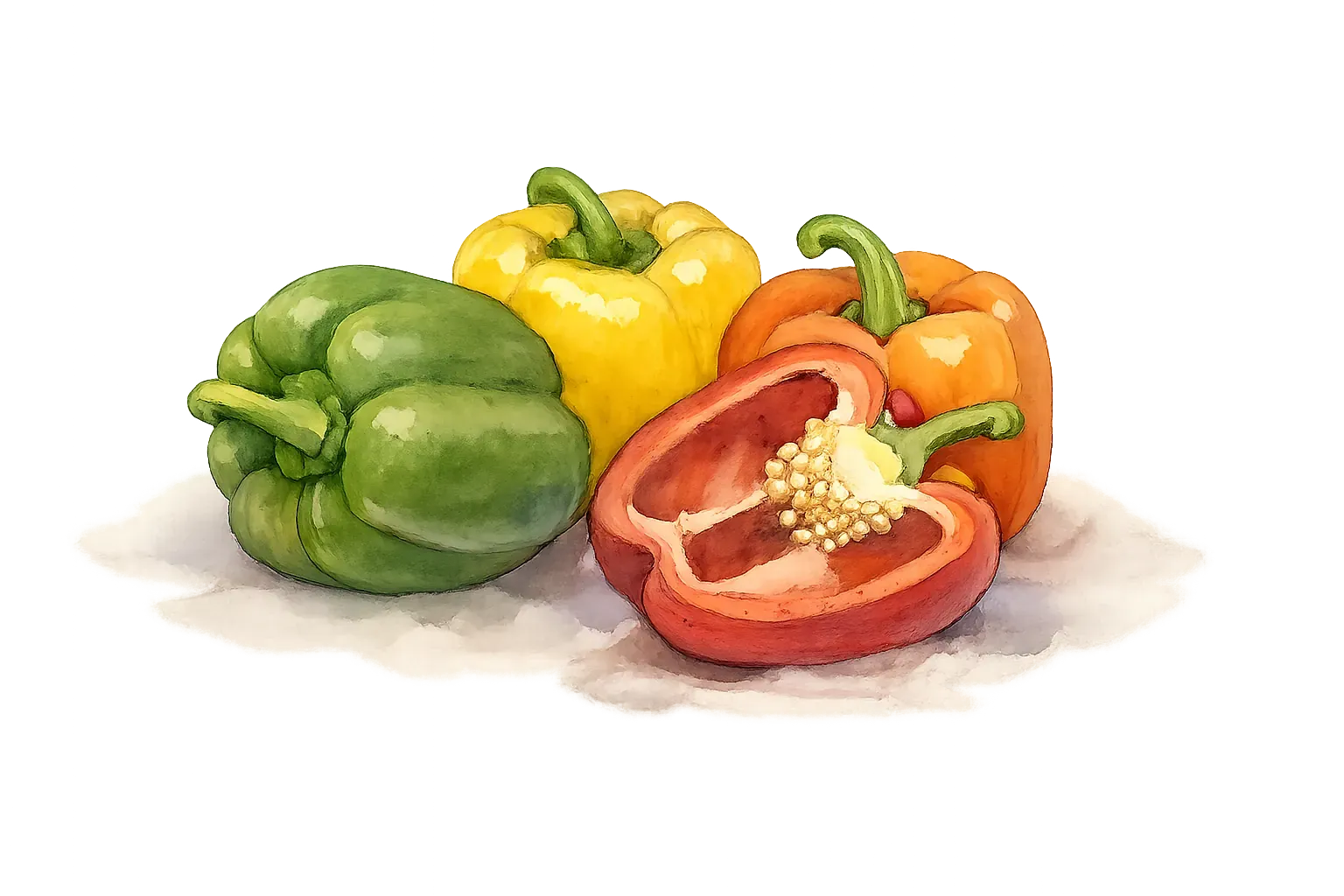
Also: red bell pepper
A sweet, non-spicy pepper eaten raw or cooked; green peppers are picked less ripe and taste more vegetal and slightly bitter, while red, orange, and yellow peppers stay on the plant longer and turn sweeter -- and pricier -- as a result. All colors come from the same plant at different stages of ripeness, not different varieties.
- Bisquick
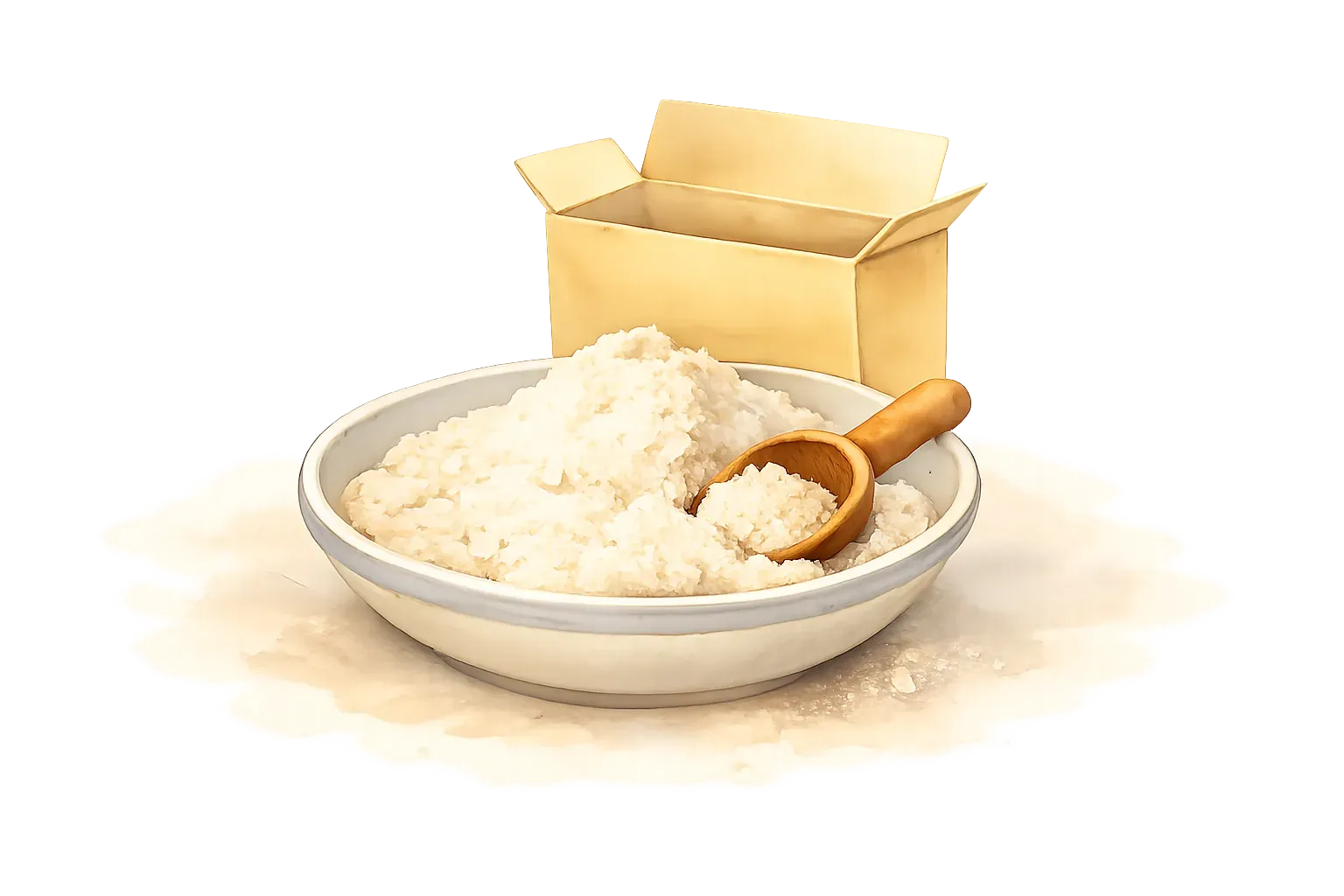
Also: baking mix
A shelf-stable, pre-mixed blend of flour, leavening (baking powder), salt, and shortening, sold under the Bisquick brand and several store-brand equivalents. Meant to shortcut biscuits, pancakes, and similar baked goods to just adding liquid (and sometimes an egg), and also shows up as a binder in savory baked mixtures, where it supplies both structure and a little rise.
- black beans
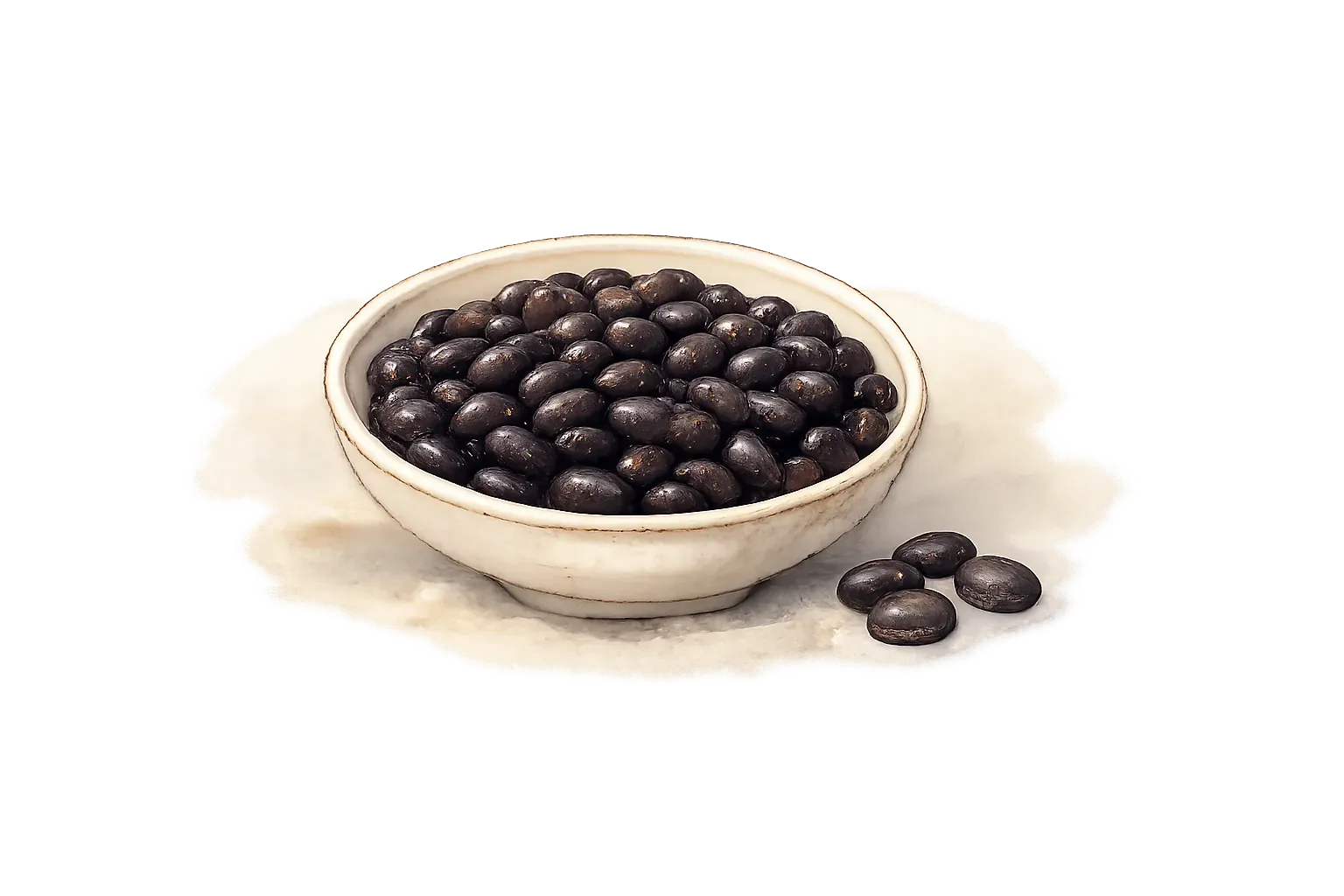
A small, dense, dark bean with an earthy flavor, common in Latin American and Caribbean cooking; used whole in soups, stews, dips, and as a side. Canned black beans are fully cooked and packed in salted liquid, so they add both bean and seasoning at once, while dried beans need soaking and a full cook before use.
- black pepper
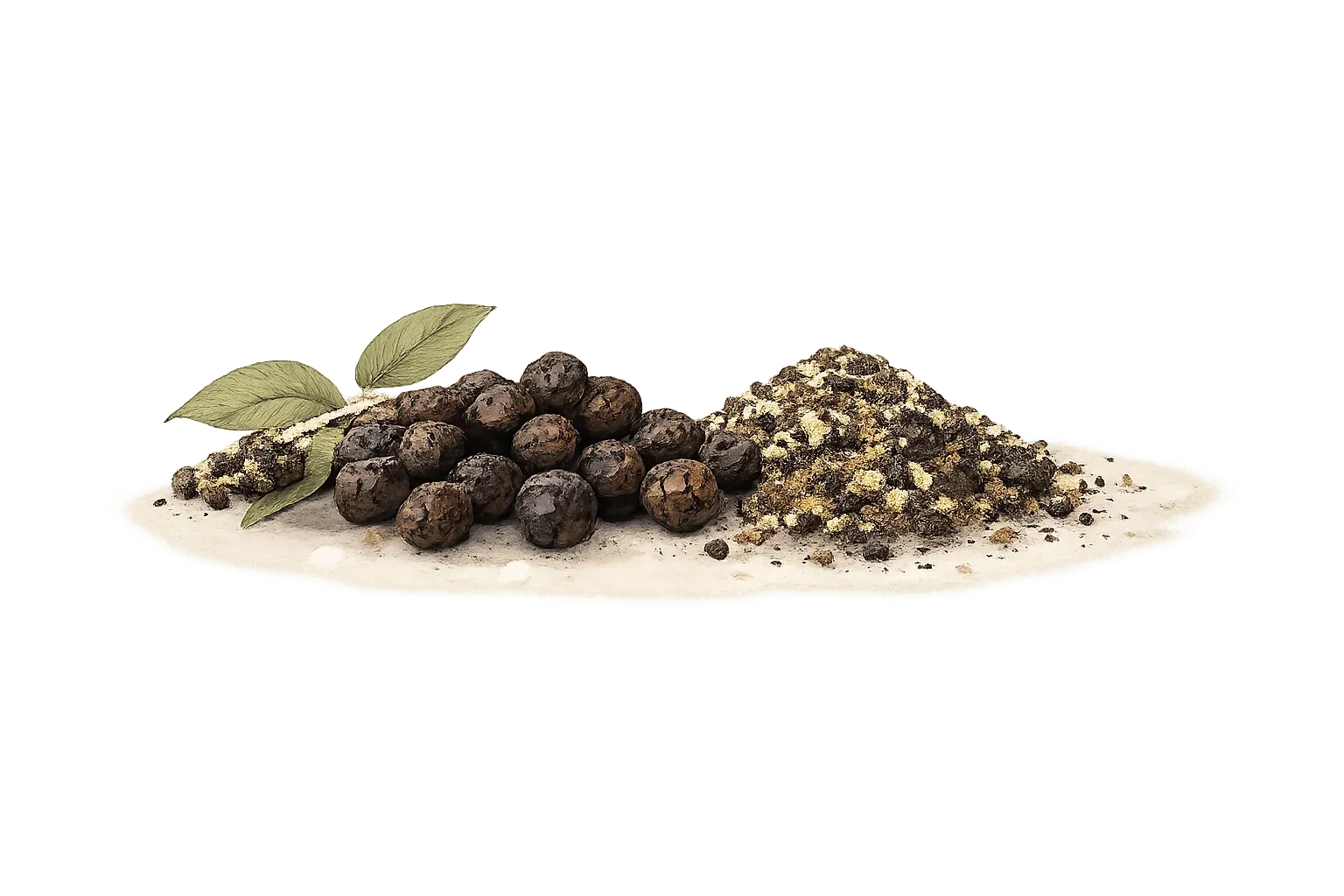
Also: Pepper, fresh cracked pepper, freshly ground black pepper, ground black pepper, ground pepper
The dried, ground berry of the pepper vine -- the most common table spice, adding sharp, mildly hot bite. Freshly ground from whole peppercorns has noticeably more flavor than pre-ground.
More specific: white pepper
- black walnuts
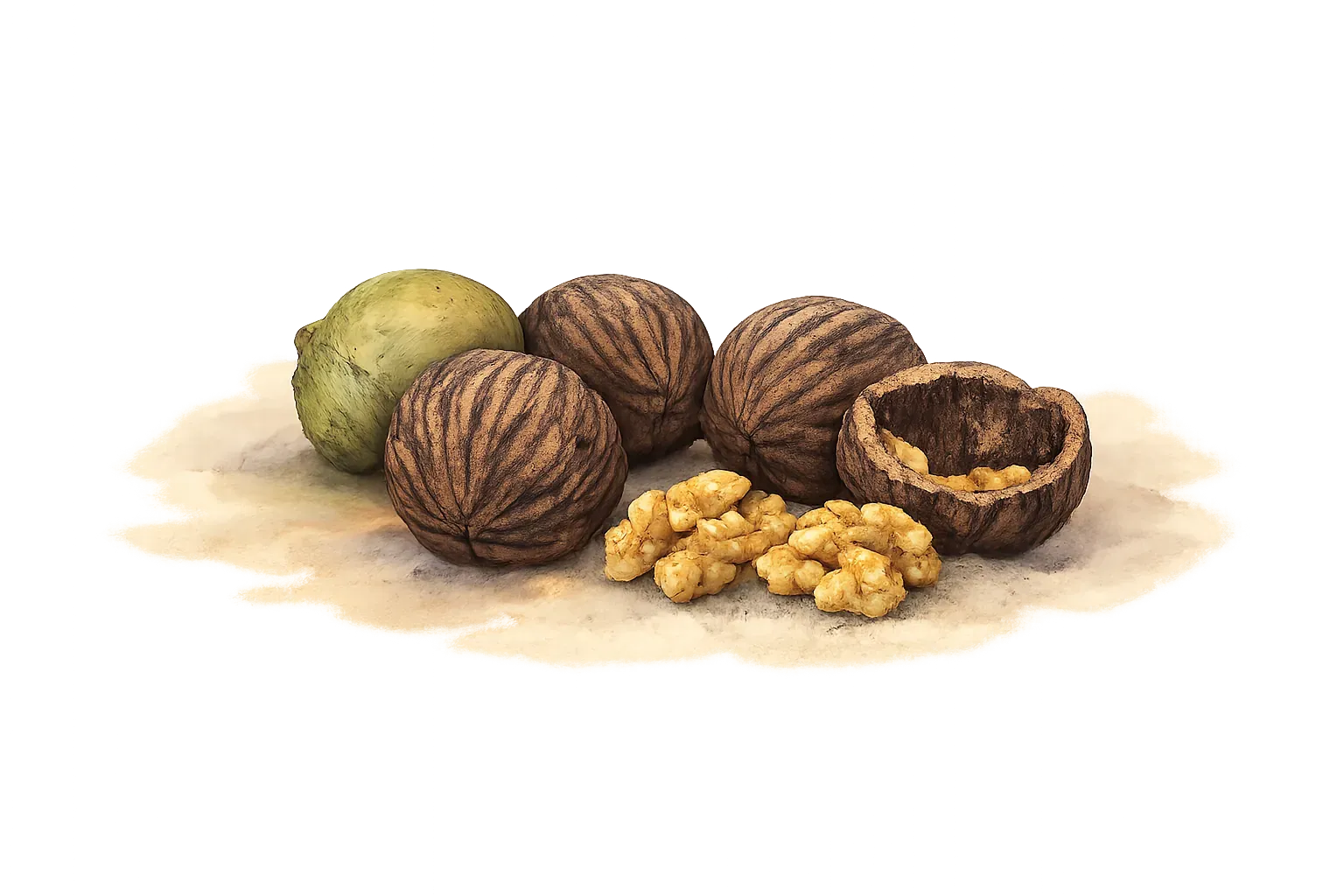
Also: Black Walnut, chopped black walnuts
A North American native nut, distinct from the common English walnut -- much stronger, earthier, and more pungent in flavor, with a slightly oily, almost smoky richness that stands up well in a strongly spiced or fruit-heavy batter rather than getting lost in it. The shell is far harder to crack than an English walnut's, which is part of why the shelled meats cost more and are less widely stocked.
A kind of walnuts
- black-eyed peas
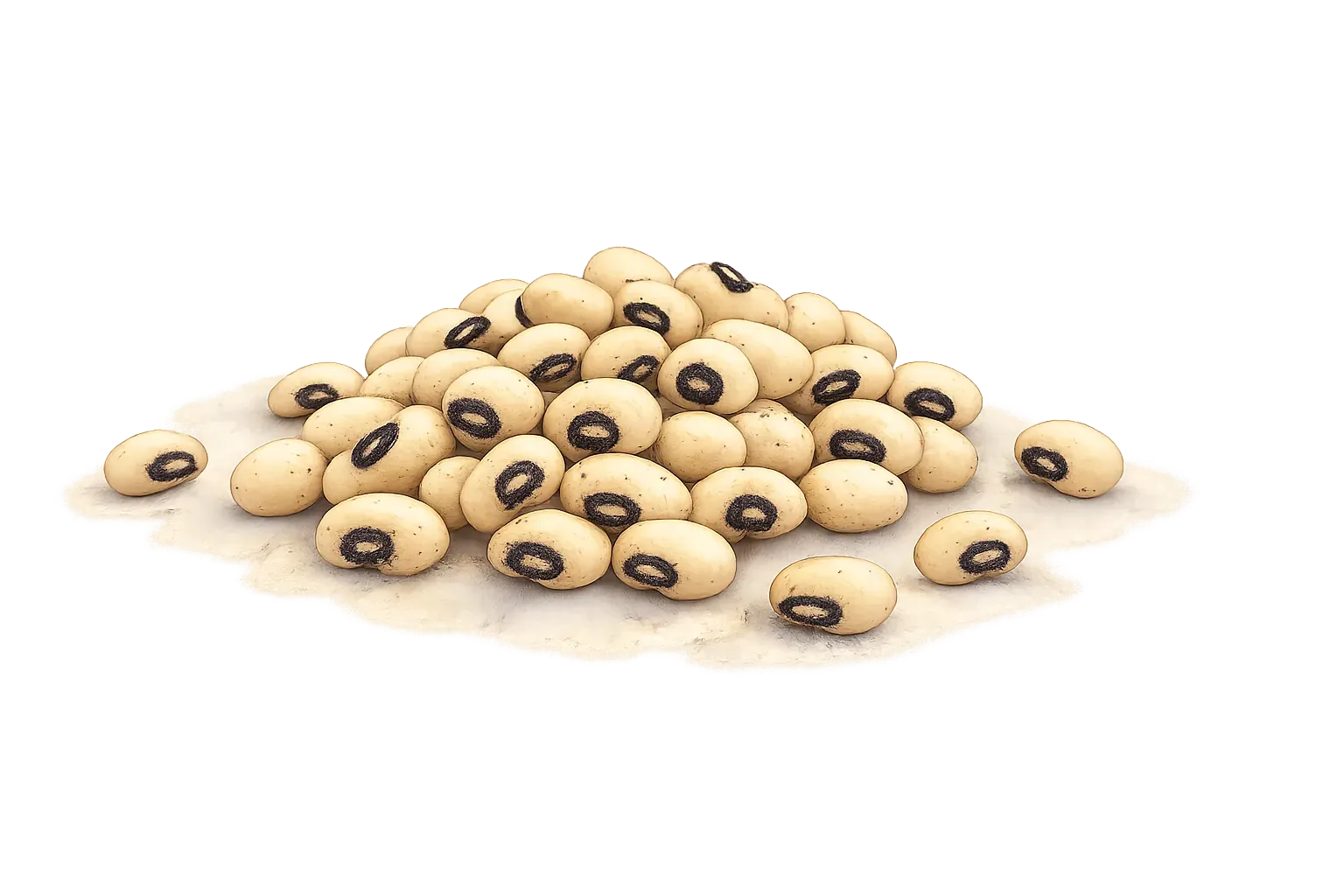
A cream-colored legume with a distinctive black spot on one side, earthy and slightly nutty in flavor; a Southern US staple traditionally eaten with greens and cornbread for luck on New Year's Day. Unlike many dried beans, they don't need soaking before cooking and cook relatively quickly from dry.
- bok choy
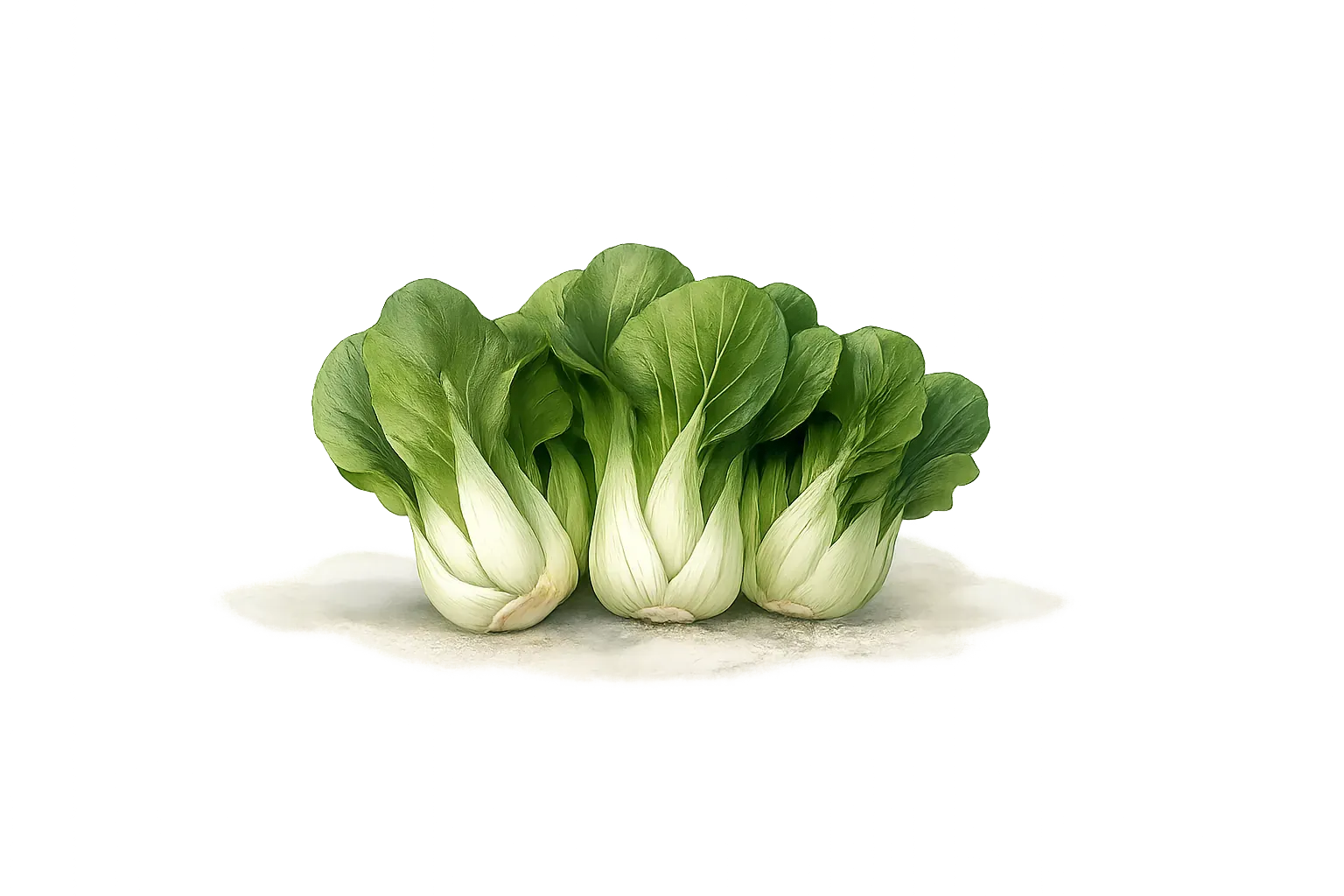
Also: pak choi
A Chinese cabbage with crisp white or pale green stalks and tender dark green leaves -- functionally two vegetables in one, since the stalks and leaves cook at very different rates. Common in stir-fries and Asian-style soups, added toward the end so it wilts and softens without turning mushy.
- bourbon

An American whiskey distilled mainly from corn and aged in new, charred oak barrels, which give it a sweeter, caramel-and-vanilla character than other whiskeys; used in cocktails, glazes, and desserts for that sweet, oaky depth plus alcohol.
- bread flour
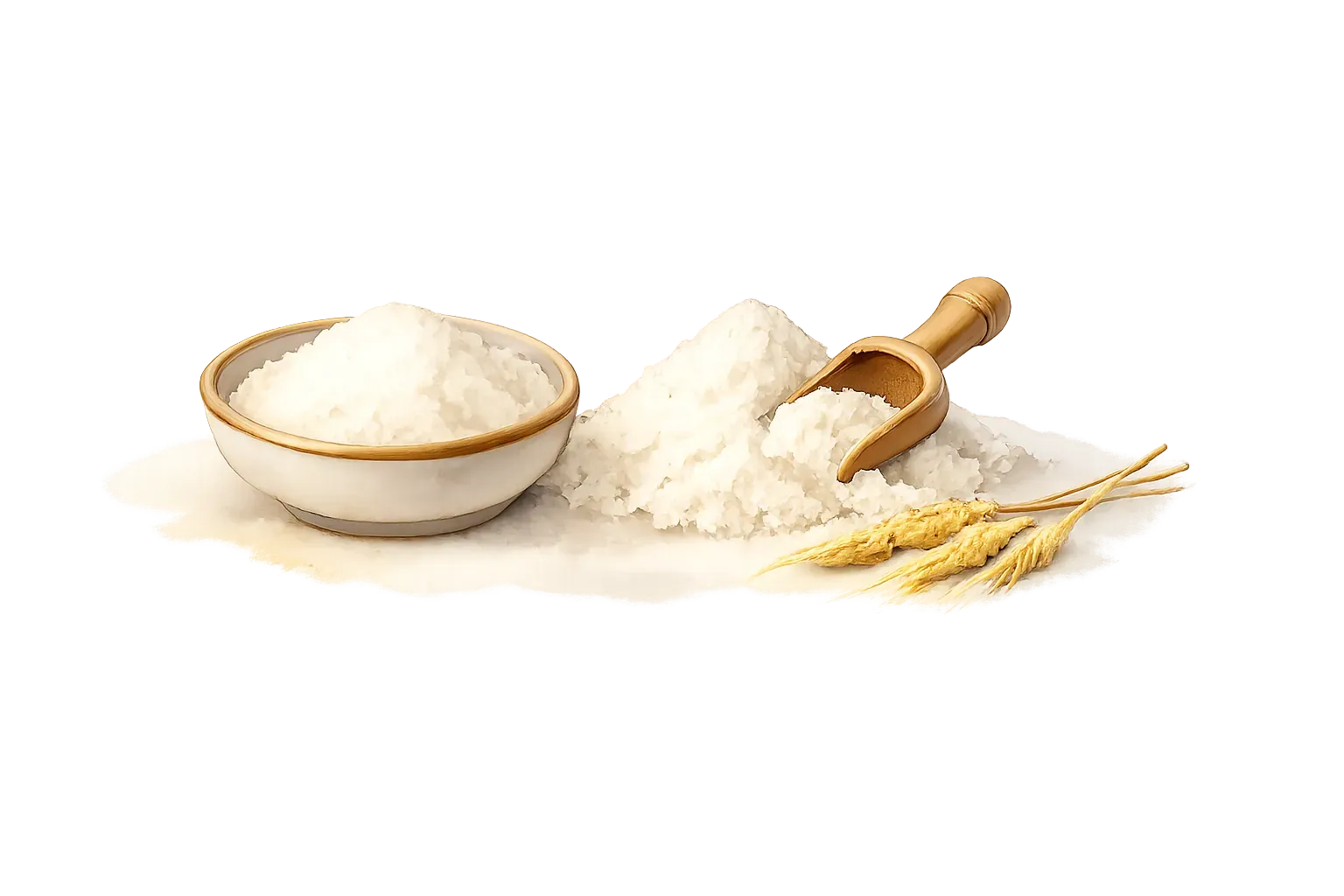
Wheat flour milled with a higher protein content than all-purpose flour, developing more gluten strength -- gives yeast breads a chewier crumb and better structure for large, open holes.
- breadcrumbs
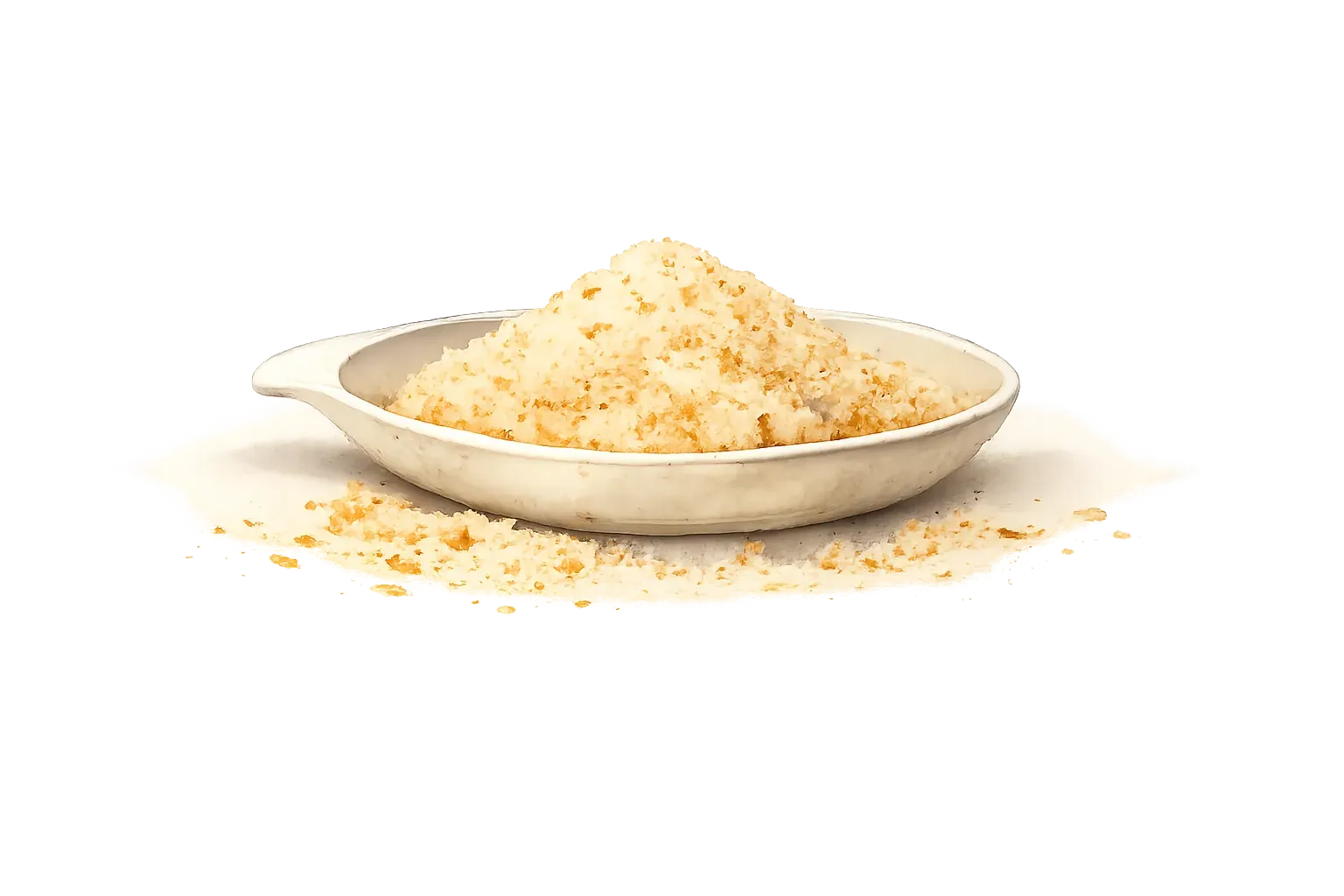
Also: bread crumbs
Dried bread ground into crumbs, used to coat fried or baked foods for crunch, bind meatballs and meatloaf, or top casseroles. Fine, dry crumbs pack densely and absorb liquid readily, which is what lets them bind ground meat mixtures; coarser, airier crumbs like panko stay crisp longer because they hold less oil and moisture.
- brisket
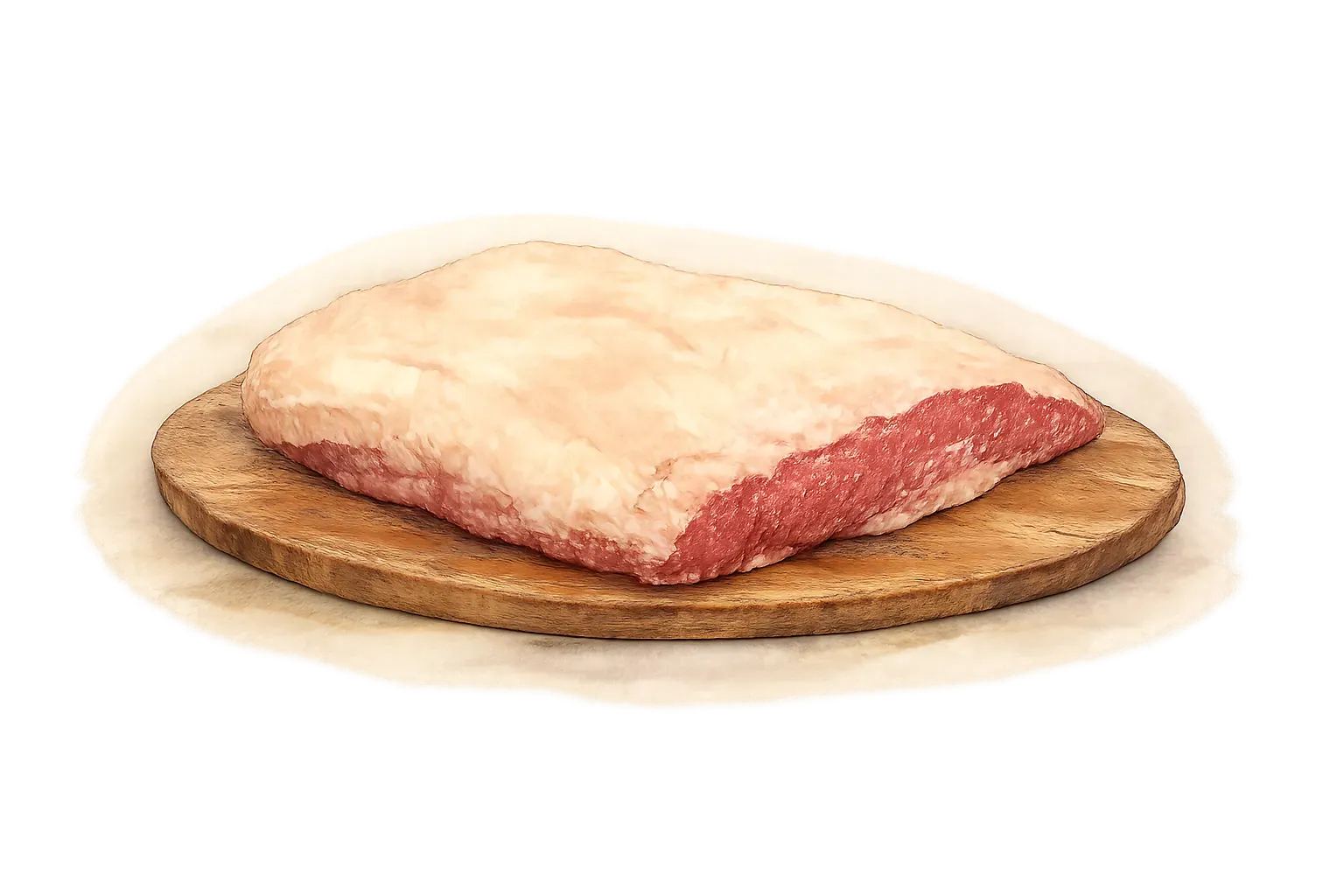
Also: Beef Brisket (Trimmed of all fat (cubed 1-2"))
A tough, well-exercised cut of beef from the cow's chest, dense with connective tissue; needs long, low, slow cooking -- braising or smoking -- to break that collagen down into gelatin and become tender. Cooked quickly like a steak it stays chewy no matter how good the cut, but the same toughness that makes it a poor quick-sear choice is what gives it rich body and flavor after hours of low heat.
- broccoli
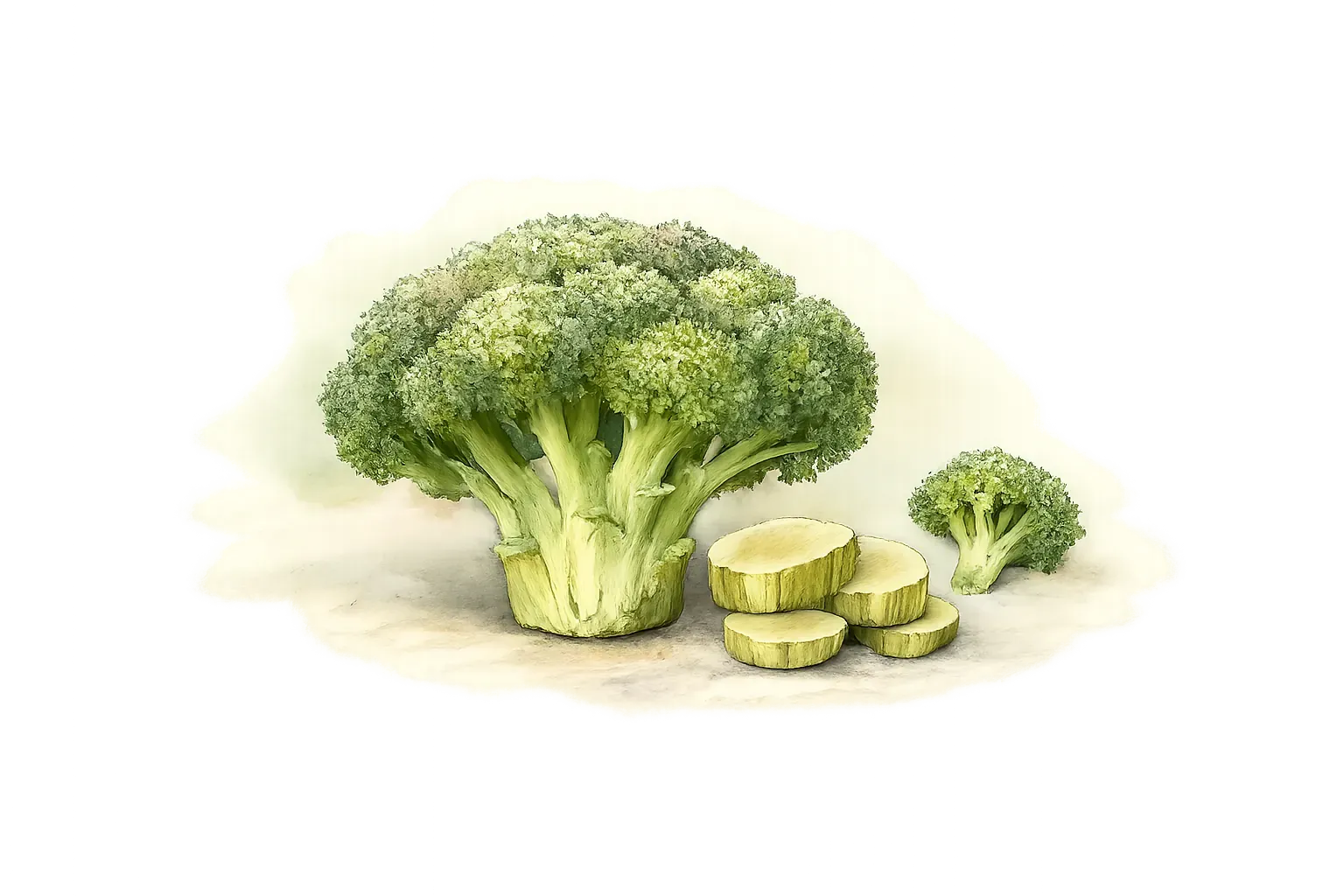
A green vegetable with dense, tree-like flower heads (florets) on an edible stalk; eaten raw, steamed, roasted, or stir-fried. The florets and the stalk cook at different rates -- the stalk is denser and takes longer -- so peeling and slicing the stalk separately lets both finish tender together.
- brown rice
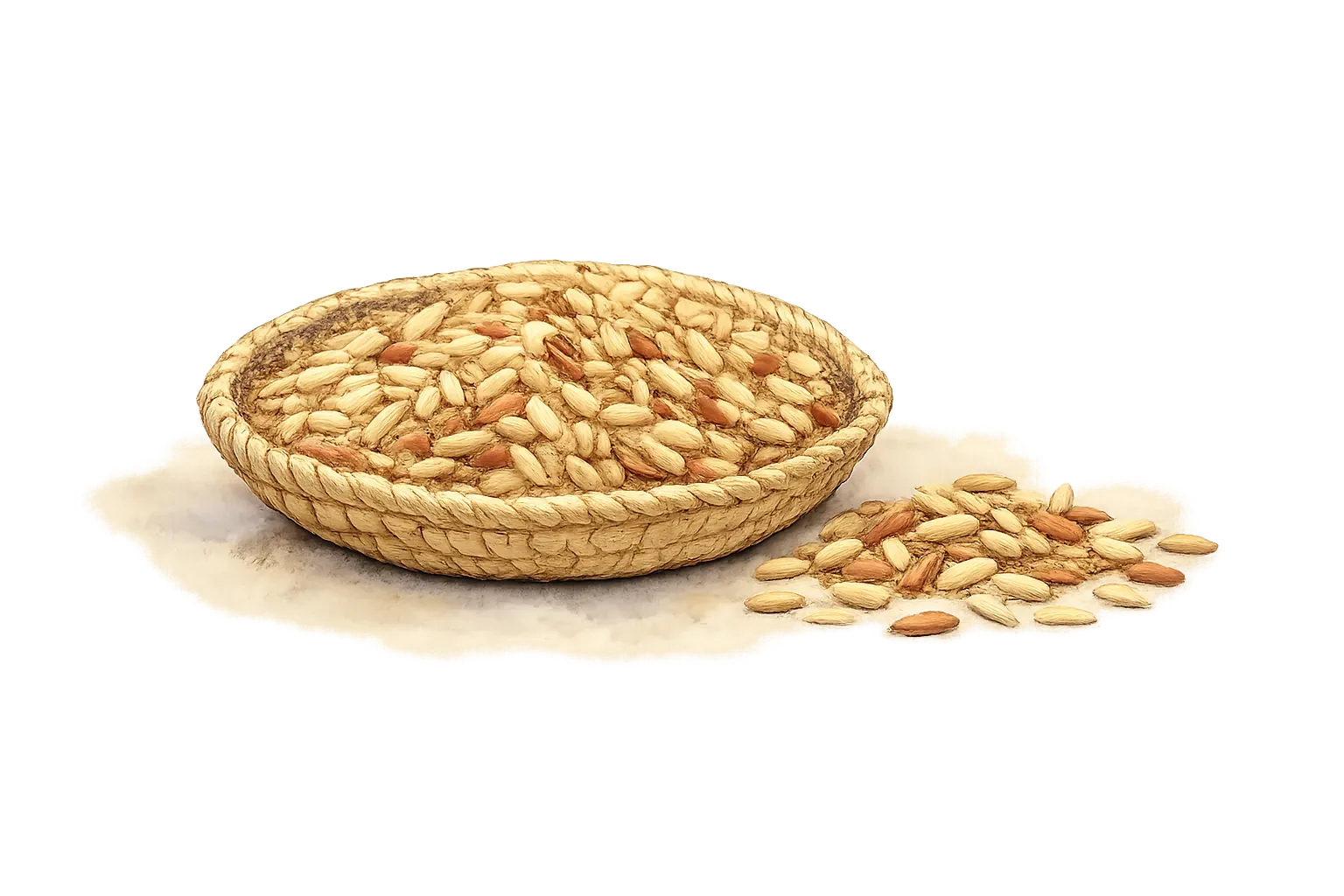
Rice with the bran and germ left on, making it chewier, nuttier, and slower to cook than white rice, which has both removed.
A kind of rice
- brown sugar
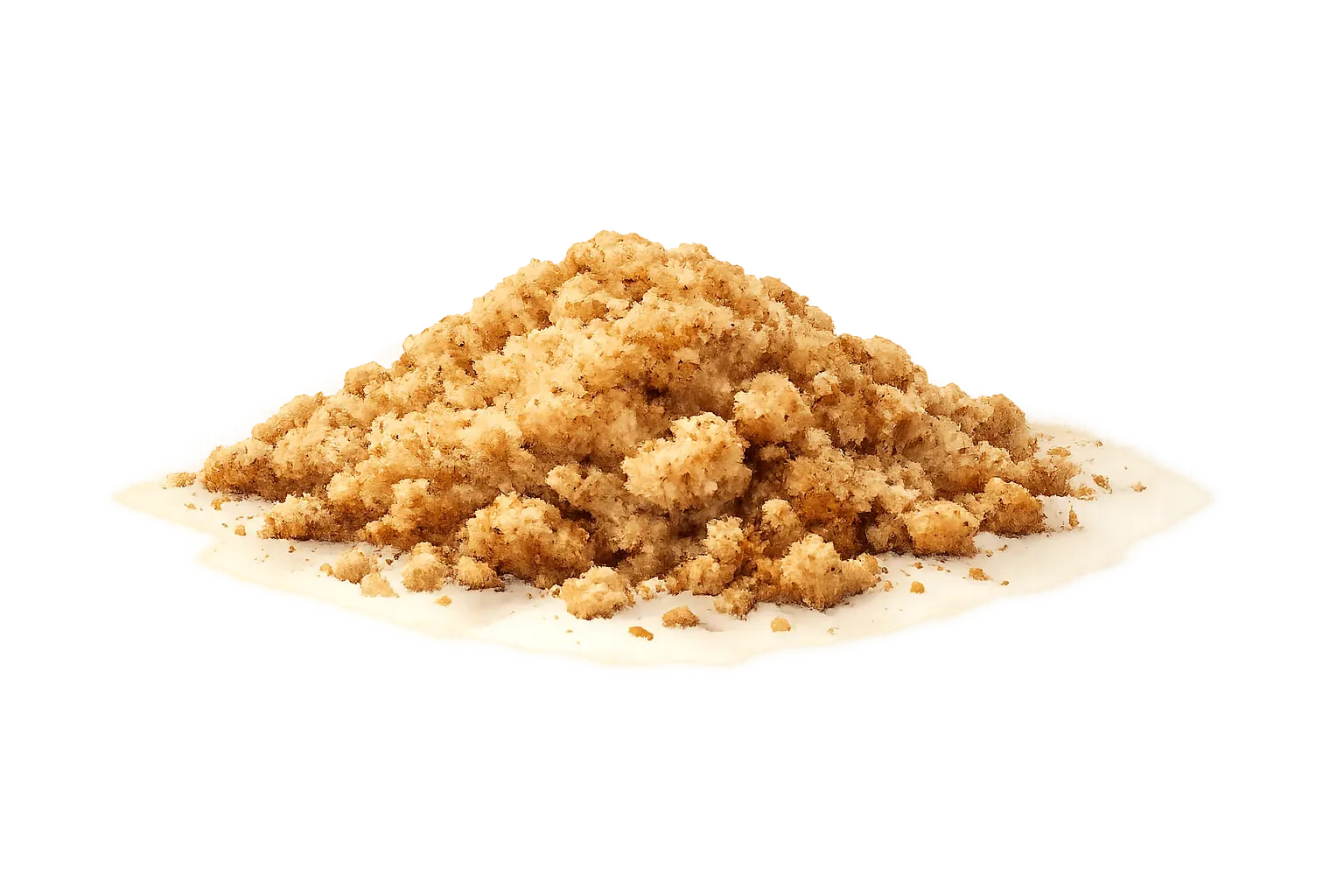
White sugar with molasses added back in, giving it moisture, a deeper flavor, and a soft, clumpable texture; comes in light and dark varieties depending on how much molasses.
A kind of sugar
- Brussels sprouts
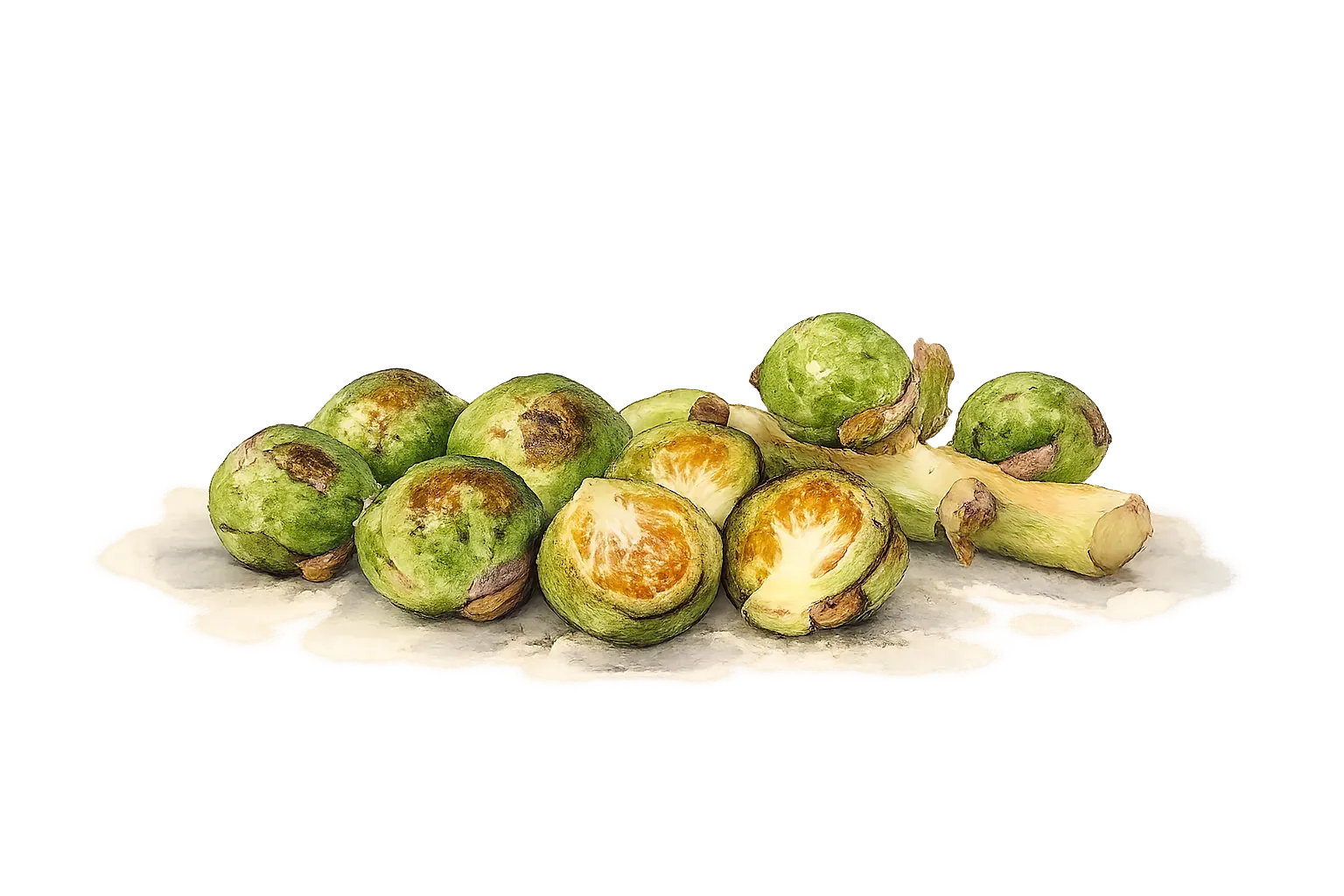
Small, cabbage-like buds that grow along a tall stalk; roasted, sauteed, or shredded raw, often with a caramelized, crisp exterior. Halving them exposes a flat cut face that browns deeply in a hot pan or oven, which is most of what makes roasted sprouts taste good rather than just steamed and bitter.
- butter
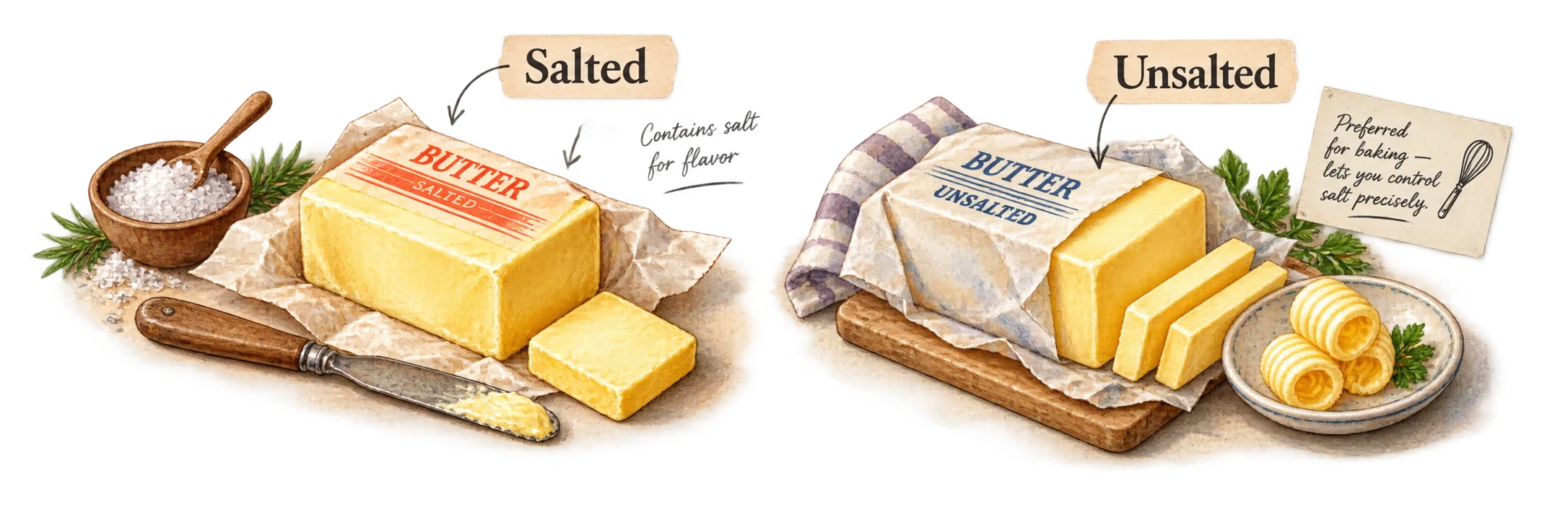
Also: melted butter
A dairy fat churned from cream, used both as a cooking fat and a flavoring; salted and unsalted versions are both common, with unsalted preferred for baking so you control salt precisely.
- butter beans
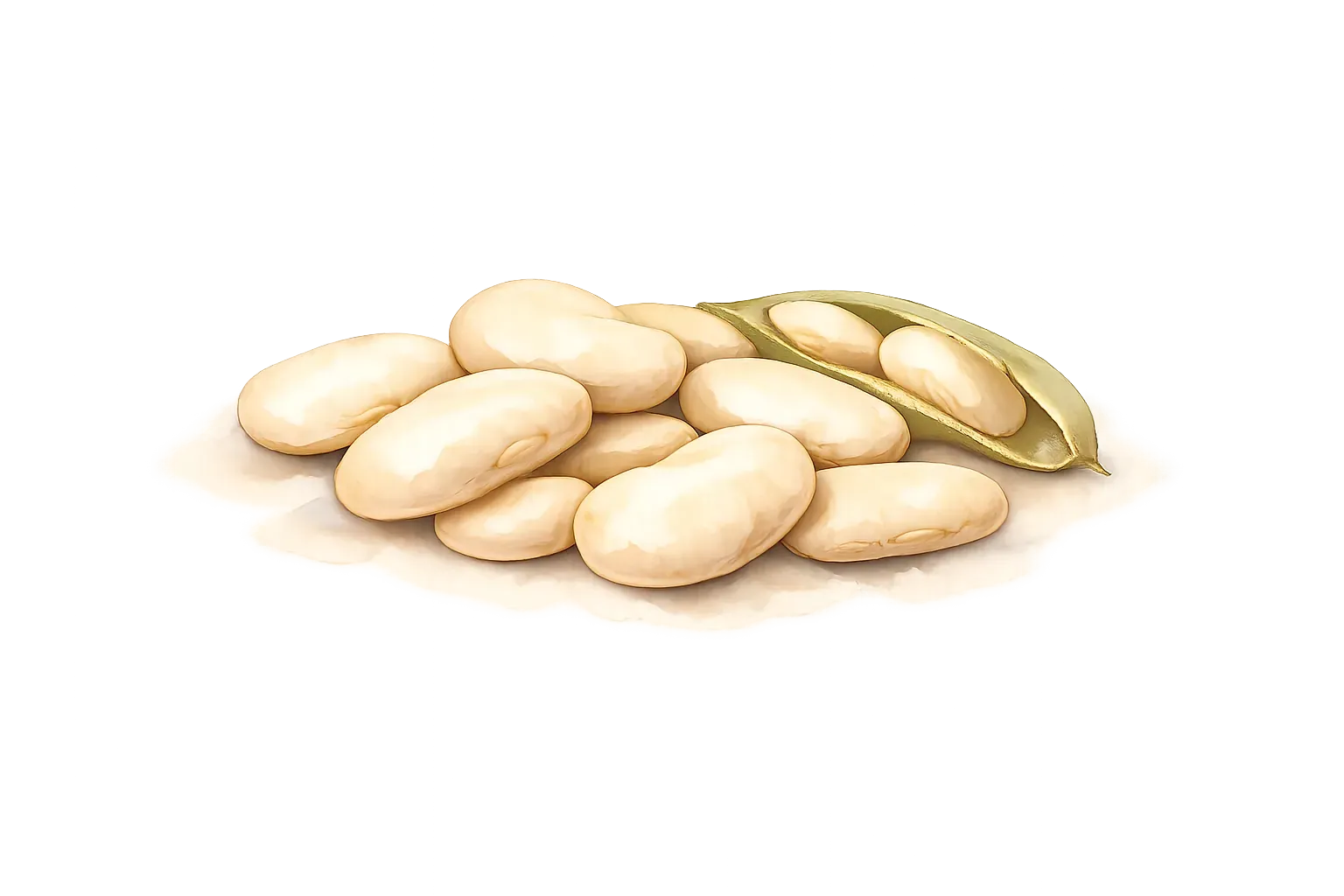
Also: lima beans
A large, flat, starchy bean with a buttery texture, sold fresh, dried, or most often frozen. "Butter bean" and "lima bean" are used interchangeably in much of the South, though butter bean often means the large pale ones and baby lima the smaller, creamier green ones.
- buttermilk

Also: Butter Milk
A tangy, slightly thick cultured dairy product -- most sold today is milk cultured with bacteria rather than the traditional byproduct of churning butter -- used in baking to add tenderness and tang and to activate baking soda. Its acidity reacts with baking soda to produce carbon dioxide, giving biscuits and pancakes made with it extra lift, and it tenderizes gluten for a softer crumb.
- butternut squash
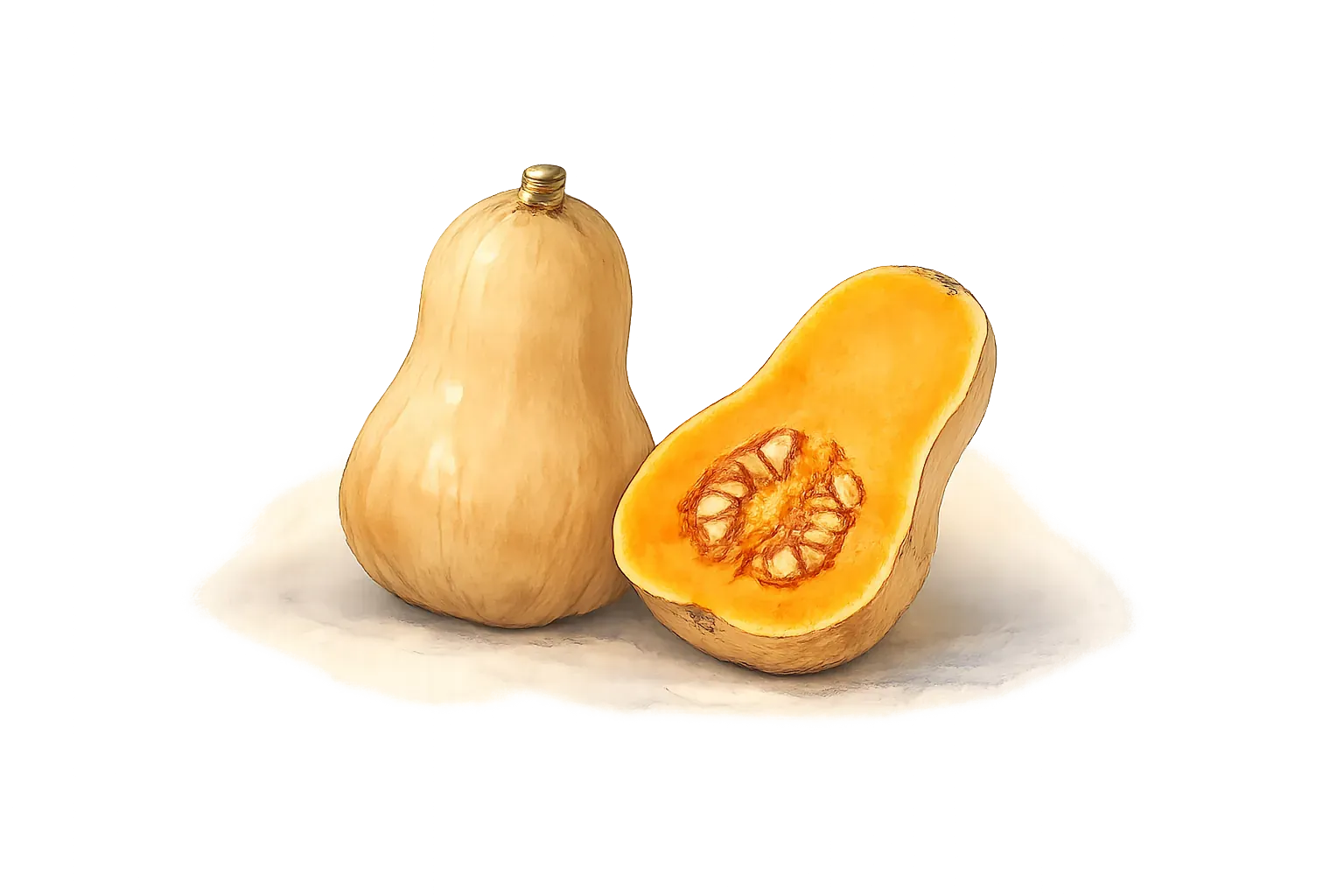
A tan-skinned winter squash with sweet, dense, orange flesh; roasted, pureed into soup, or used anywhere a sweet, dense squash is called for. Its thick skin and hard flesh make it more work to prep raw than most vegetables, but that same density is what lets it roast to a deeply caramelized sweetness rather than turning watery.
C
- cabbage
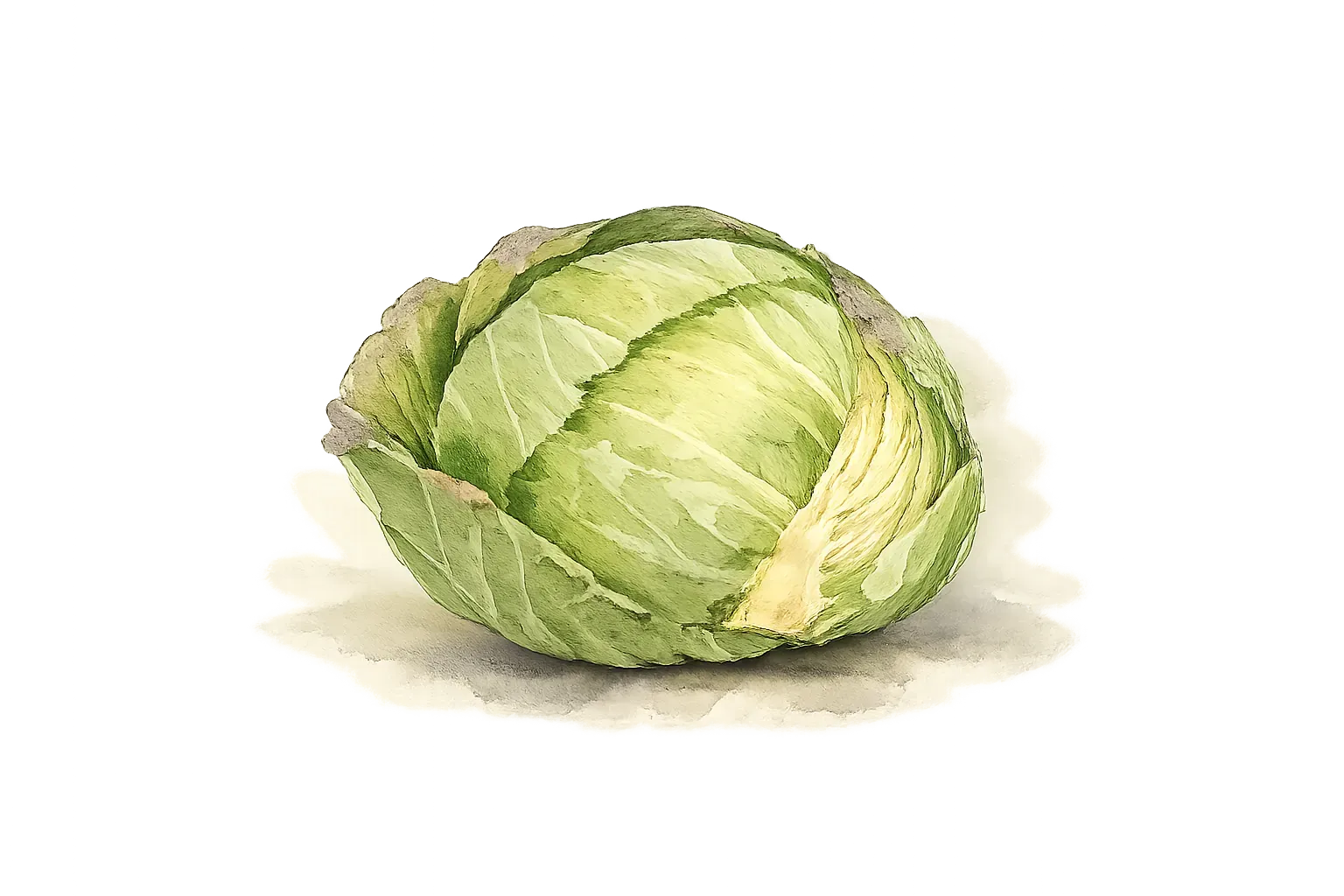
Also: Green Cabbage, Slaw-cut Cabbage, head of cabbage
A leafy vegetable that grows in tight, round heads; eaten raw as in coleslaw, fermented into sauerkraut, or cooked -- braised, sauteed, or boiled. The tightly packed layers mean it holds up to long cooking far better than looser leafy greens without turning to mush as quickly.
More specific: red cabbage
- Cajun seasoning
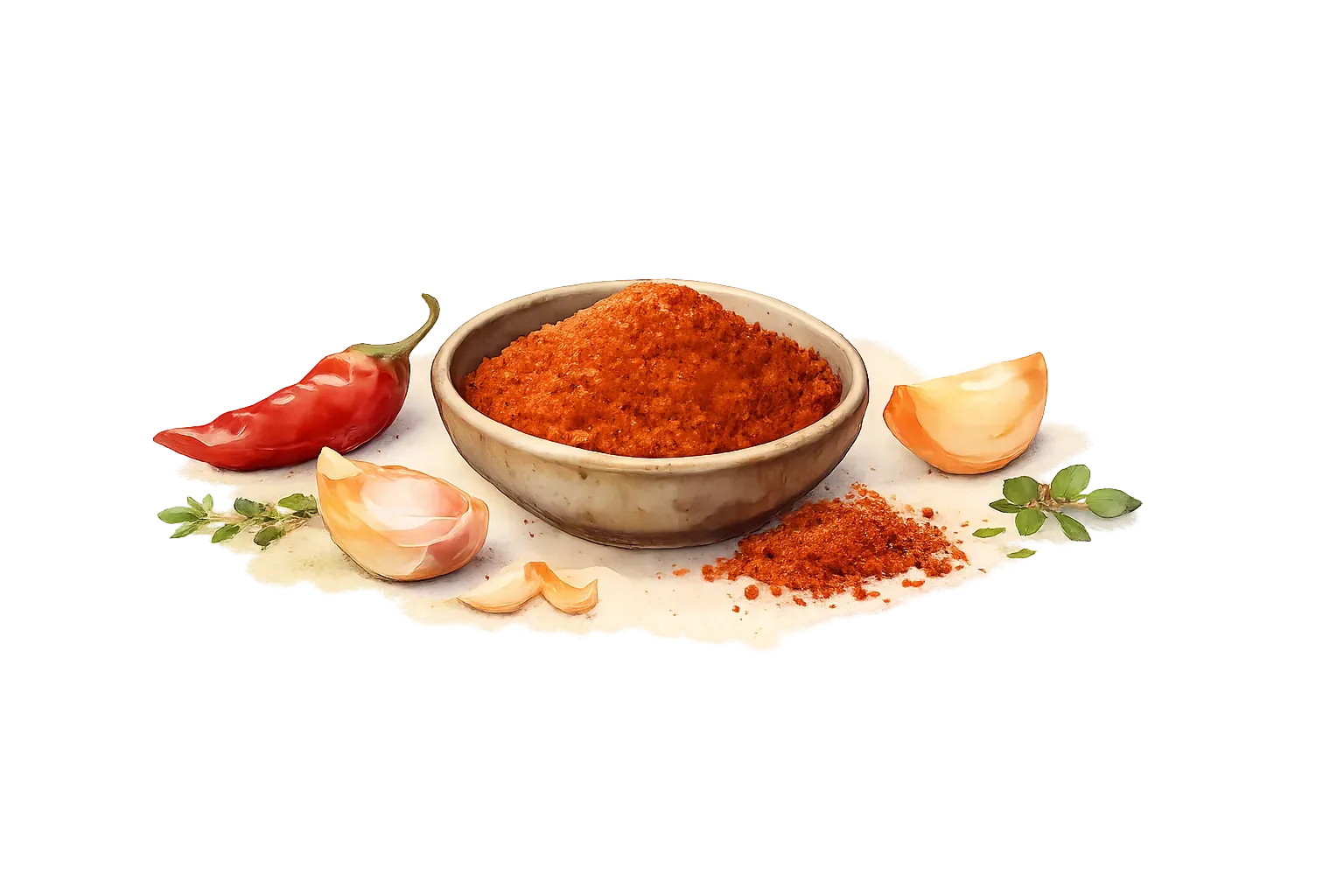
Also: Creole seasoning, Emeril's Essence
A pre-blended spice mix built around paprika, cayenne, garlic, onion, and dried herbs, used to season Cajun and Creole dishes -- jambalaya, gumbo, blackened fish and shrimp -- in one shot. Emeril Lagasse's "Essence" (sometimes called "Bam!") is one well-known named version, but the category covers many similar commercial and homemade blends.
- canned chicken
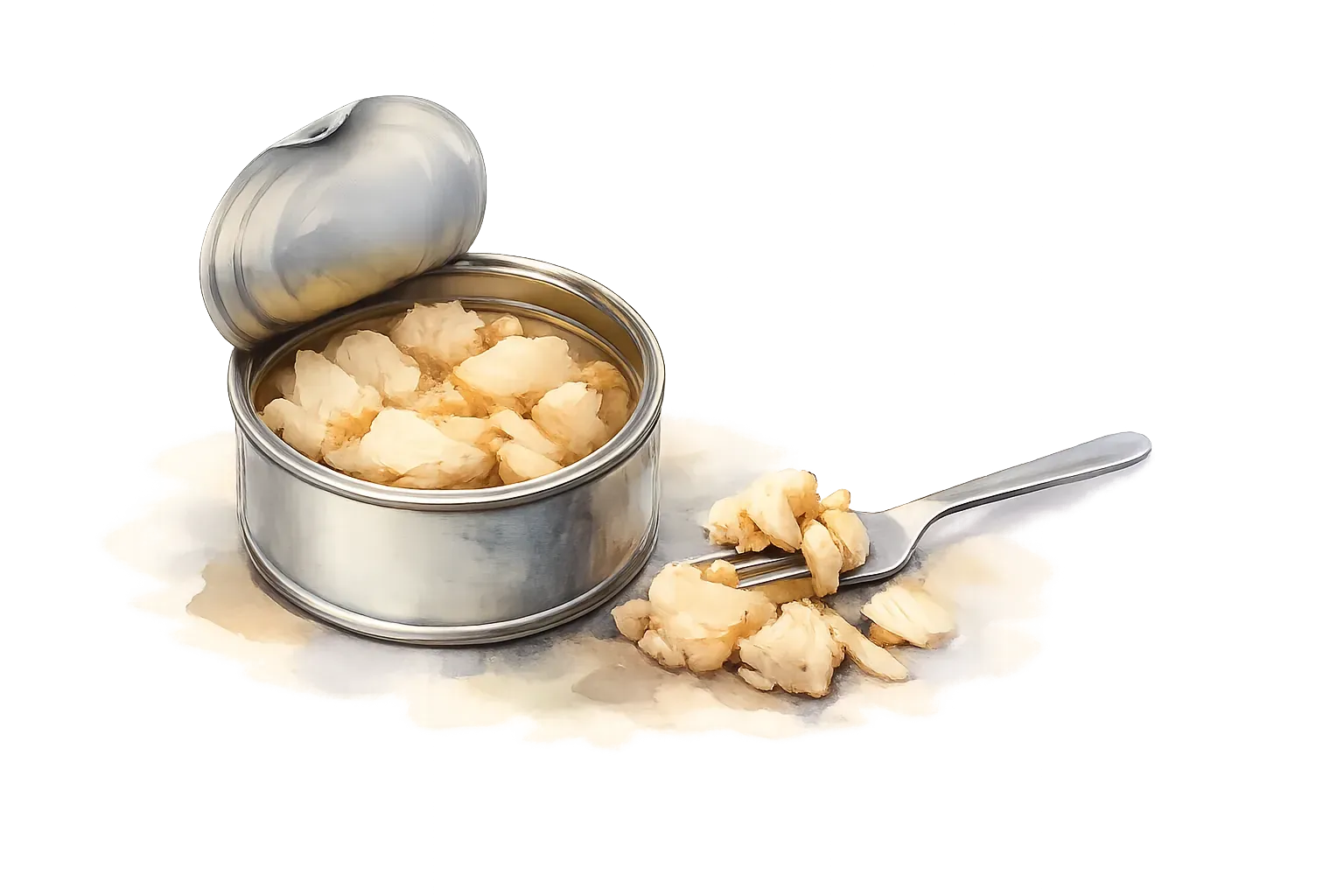
Also: chunk chicken
Fully cooked chicken meat, packed in a can with broth or water -- a shelf-stable shortcut that skips cooking chicken from raw, useful for a quick soup or salad when fresh or leftover cooked chicken isn't on hand.
A kind of chicken breast
- cannellini beans
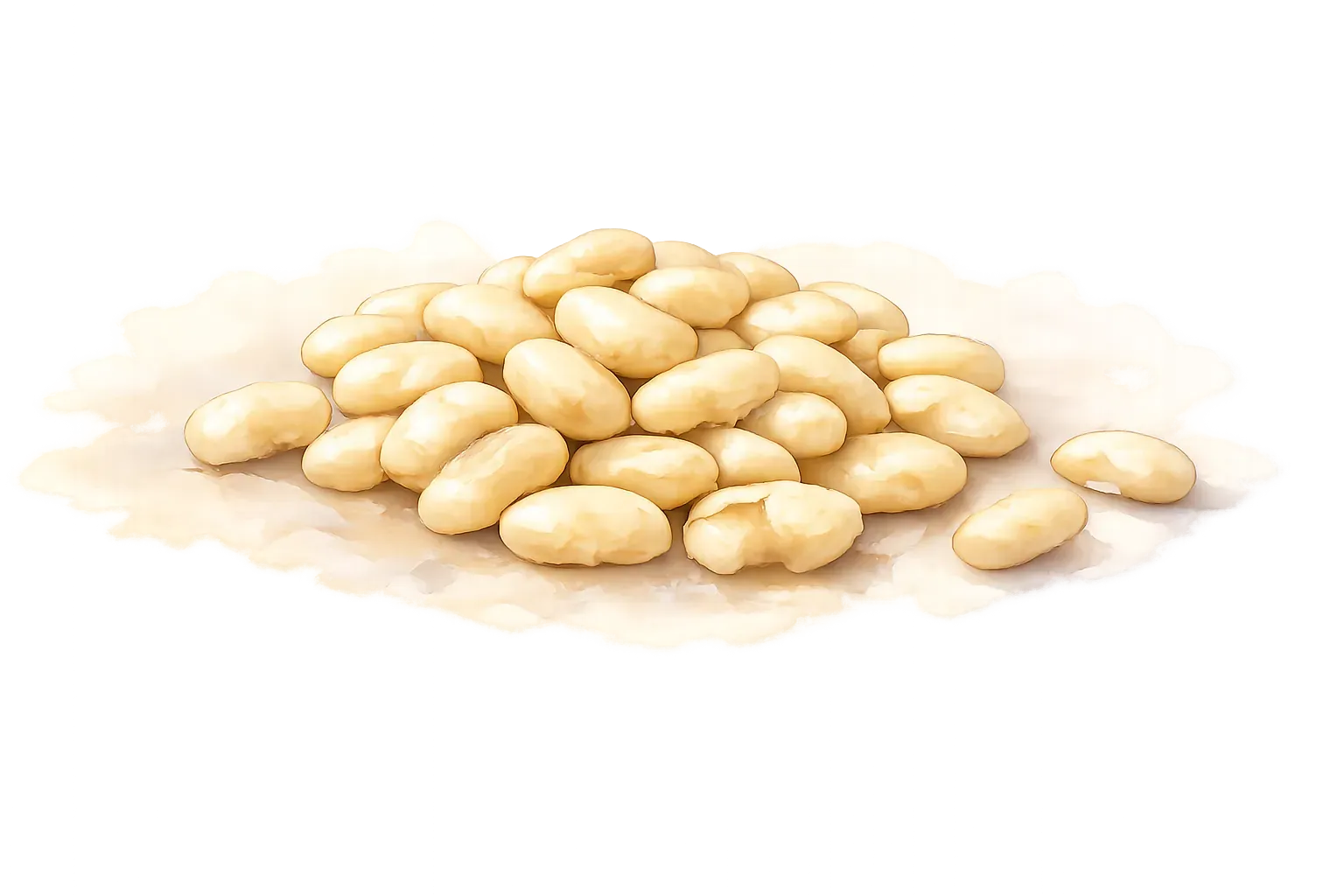
Also: cannelloni beans
A large, creamy white Italian bean with a mild, nutty flavor, common in soups, stews, and salads. Their large size and thin skin mean they hold their shape less firmly than smaller beans and break down somewhat into the surrounding liquid, which naturally thickens whatever they're simmered in.
- canola oil
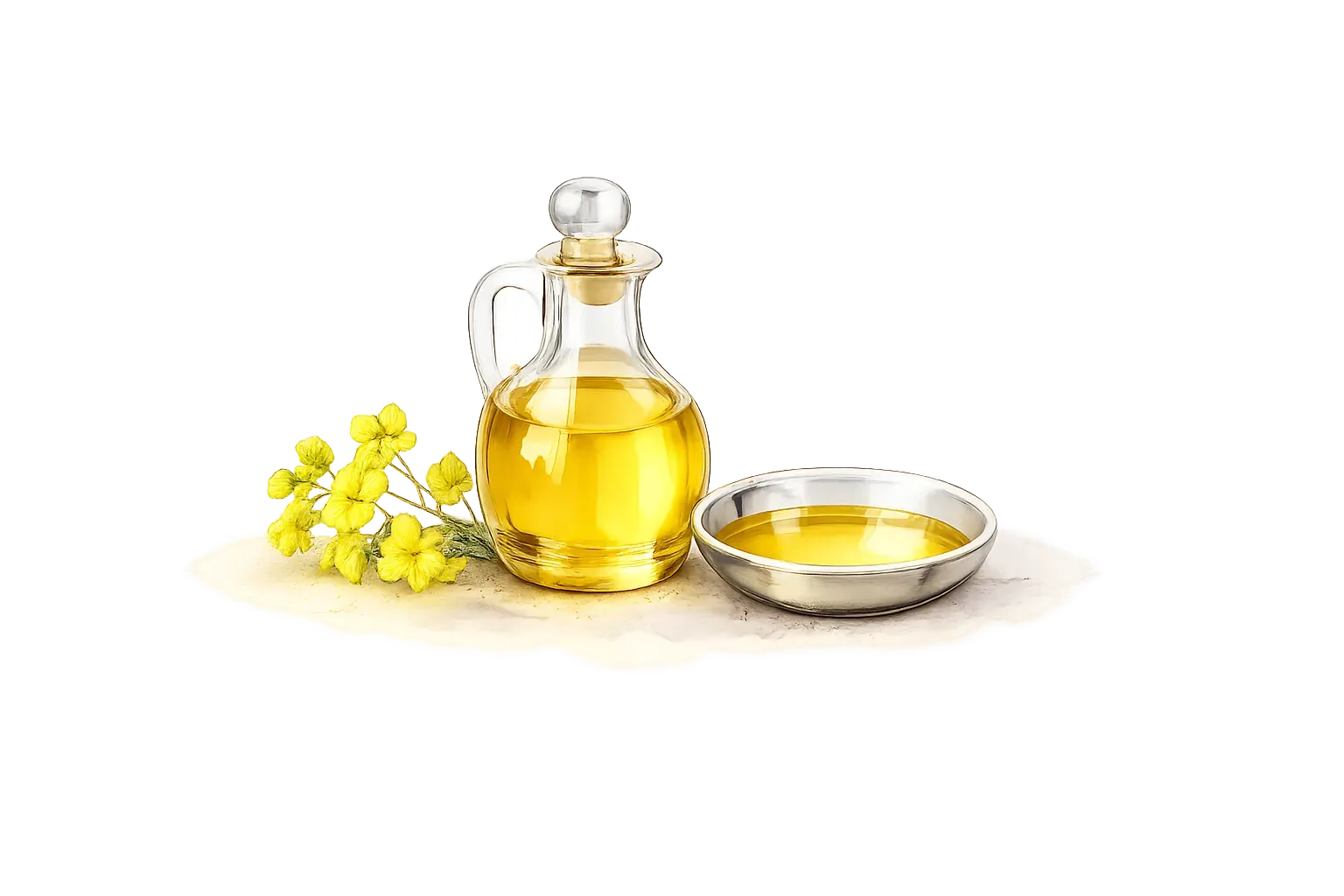
A neutral-flavored vegetable oil pressed from rapeseed bred to be low in erucic acid, used as an all-purpose cooking oil for frying and baking. Its high smoke point and lack of flavor make it a reliable default for high-heat cooking or baking where a fat's own taste shouldn't compete with other ingredients.
A kind of vegetable oil
- caraway seed
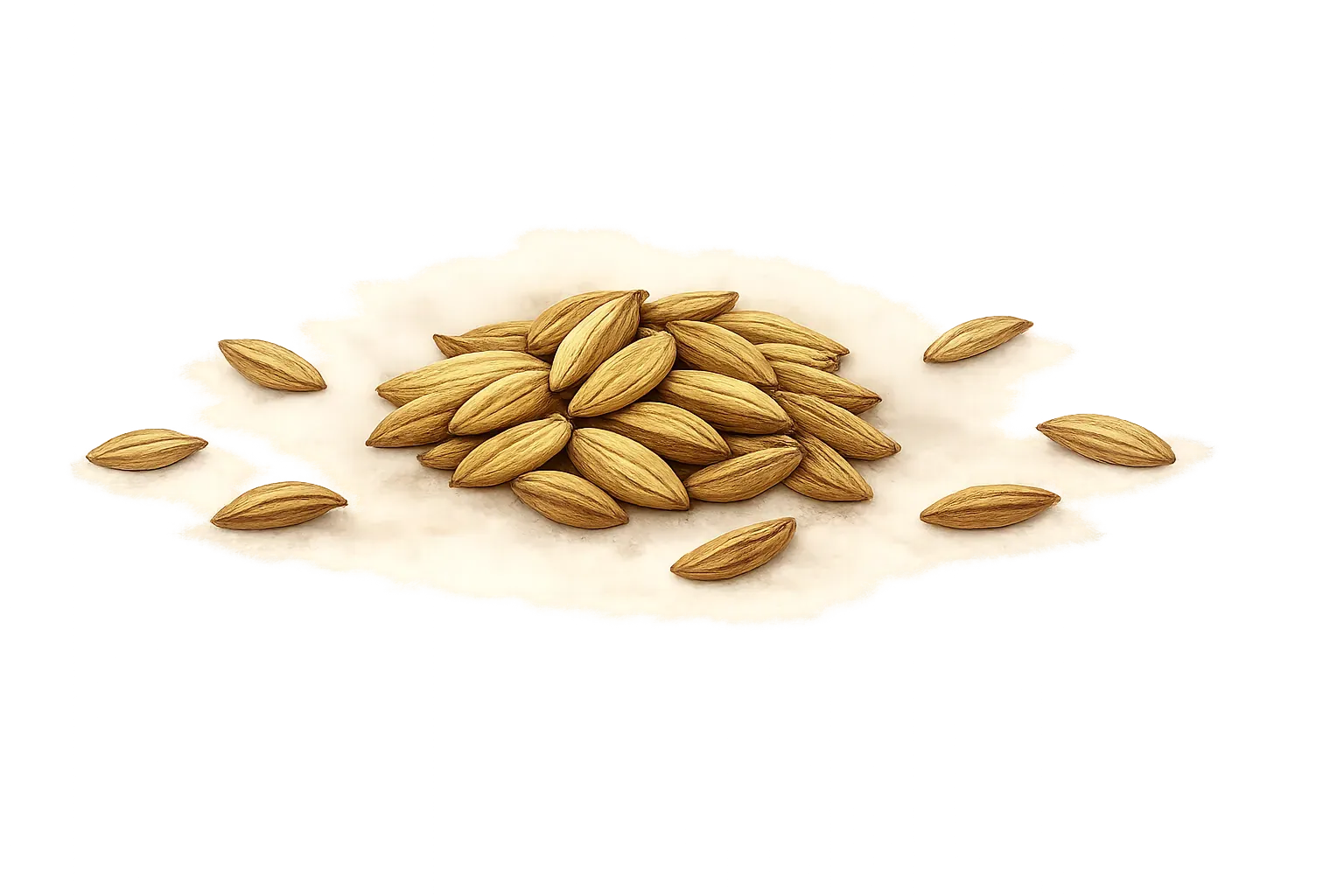
The small, curved, ridged seed of the caraway plant, with a distinctive anise-like, slightly peppery flavor; classic in rye bread and some German and Central European dishes. The flavor is concentrated and a little goes a long way -- toasting the seeds briefly in a dry pan before use intensifies their aroma noticeably.
- carrot
Also: Carrots, carrot fine chopped
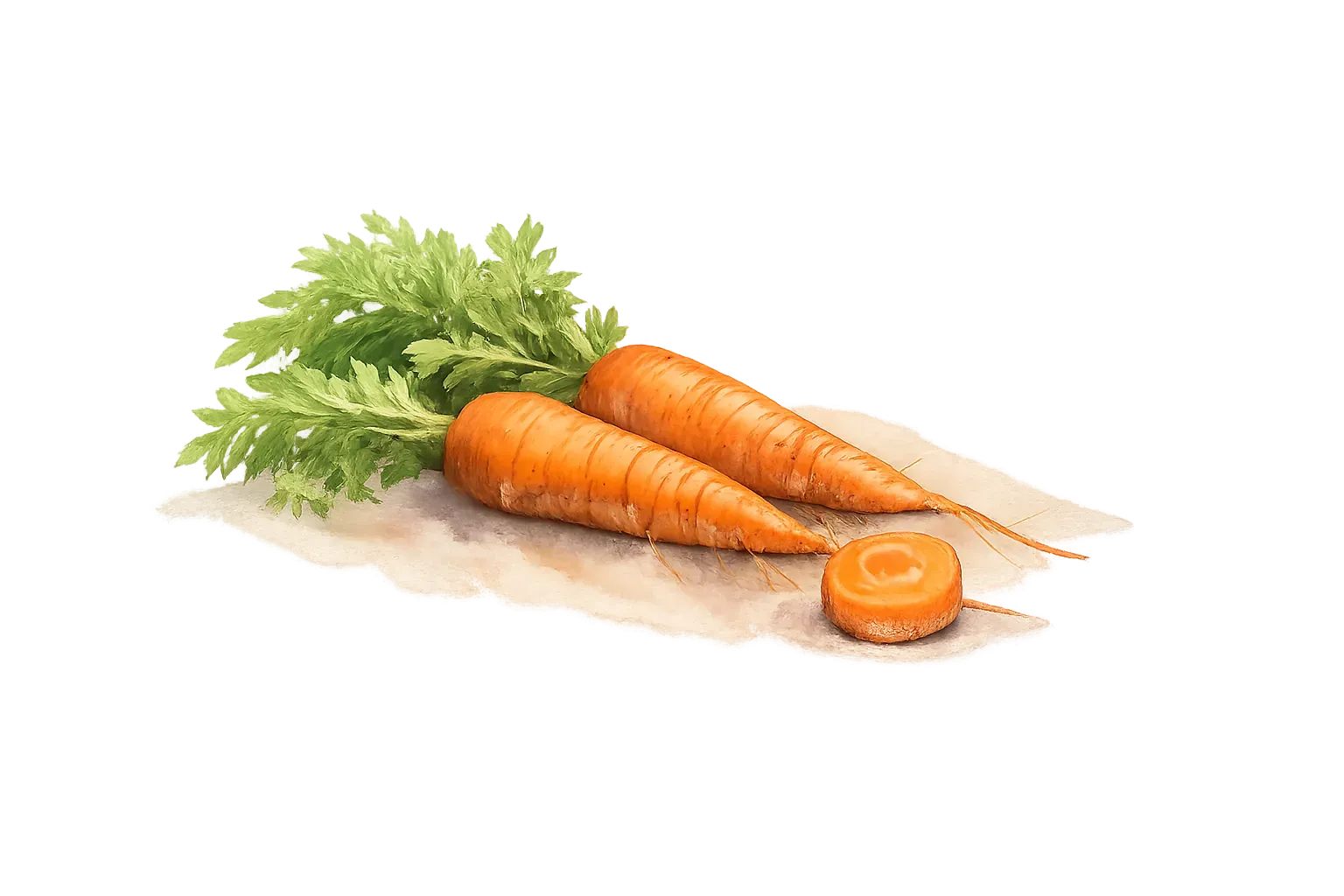
A root vegetable, usually orange, with a sweet, earthy flavor; eaten raw, roasted, boiled, or used as a base aromatic -- along with onion and celery -- in many soups and stews. Its sugar content means it caramelizes well under dry heat, and its firm structure holds up to long simmering better than most vegetables without turning to mush.
- cayenne pepper
Also: Cayenne
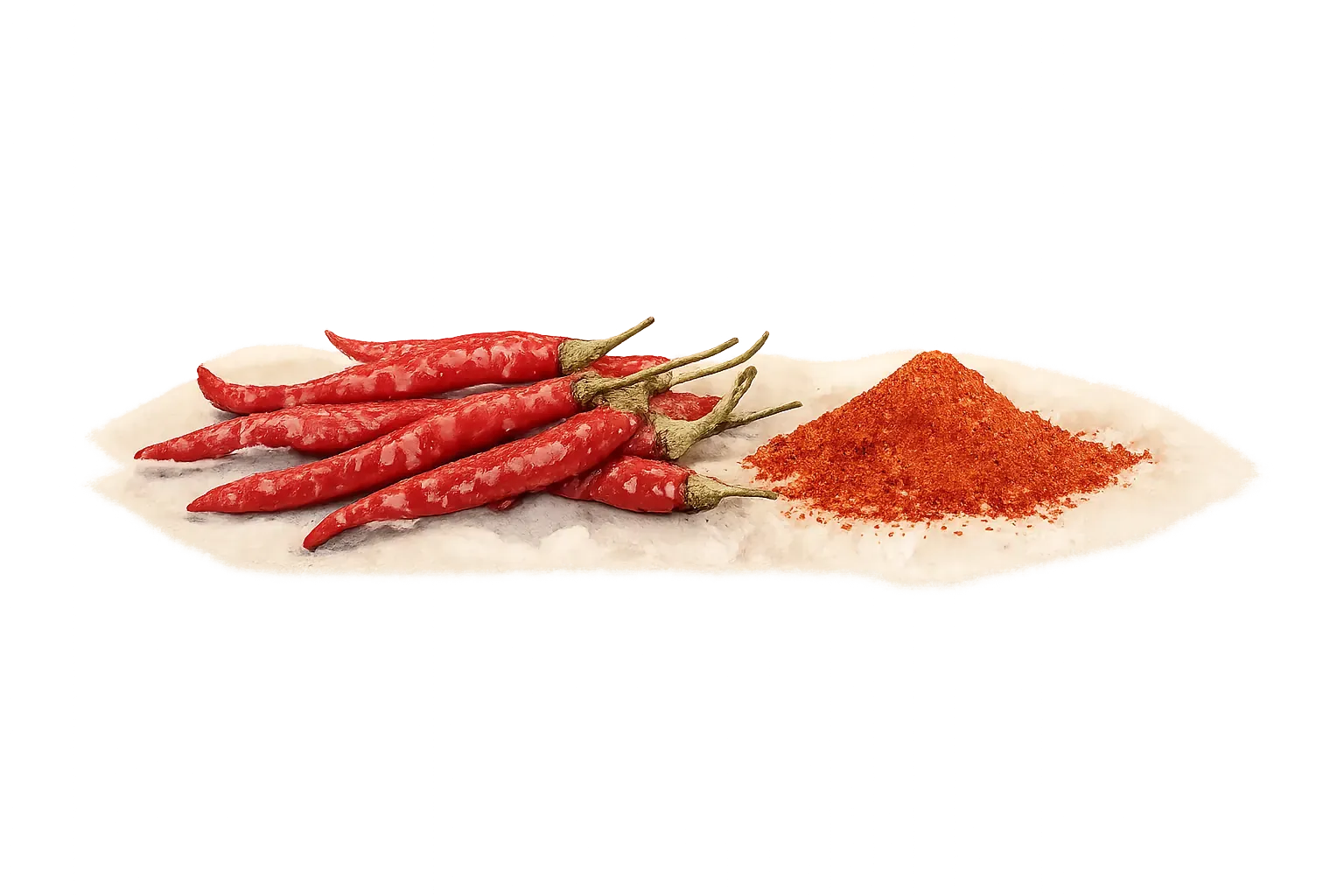
A hot, thin, red chile pepper, most often sold dried and ground into a fine powder; used to add heat rather than complex chile flavor.
A kind of red pepper flakes
- celery
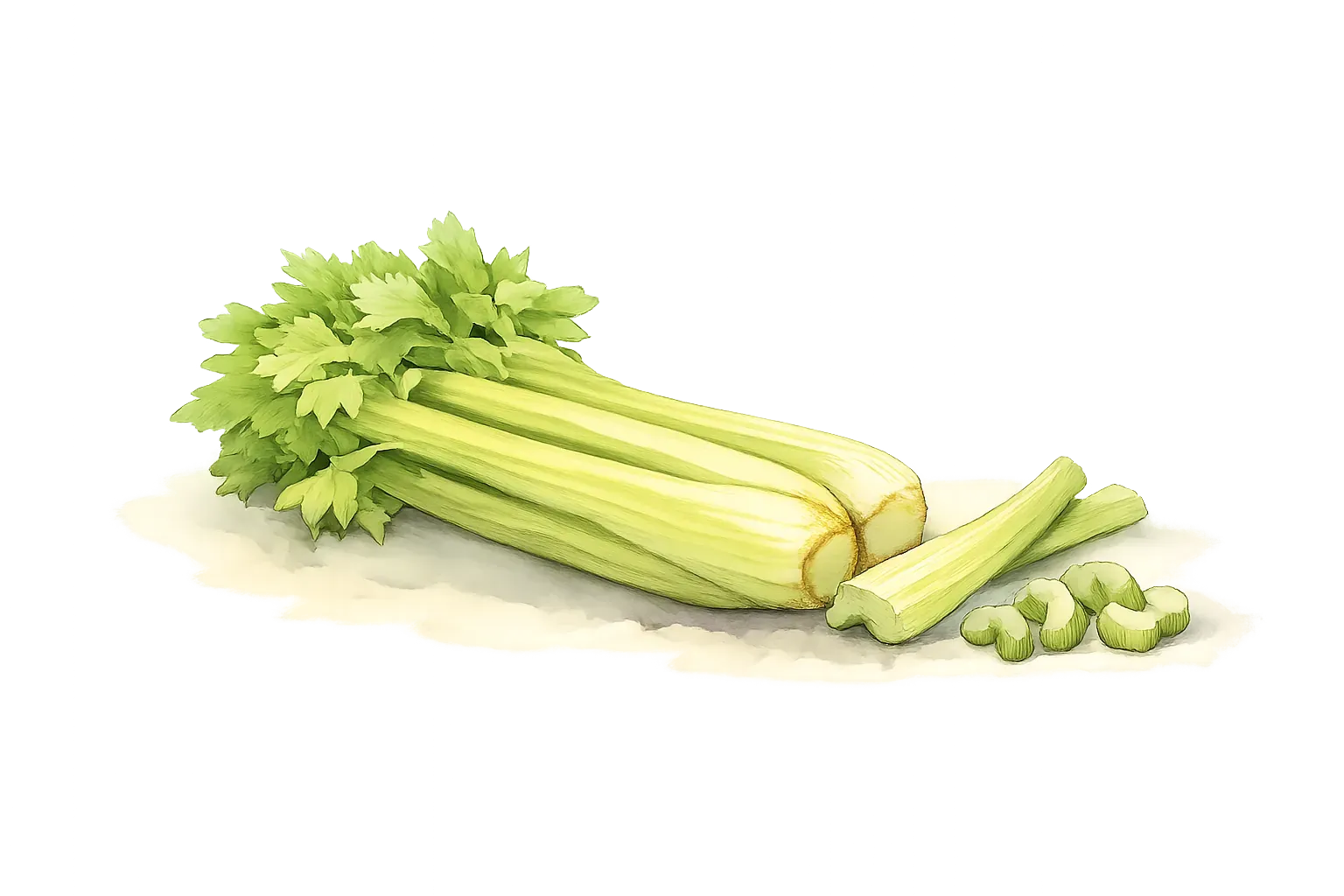
Also: Celery Stalk, Celery Stalks
A crisp, fibrous stalk vegetable with a mild, slightly bitter, savory flavor; eaten raw or used as a base aromatic -- along with onion and carrot -- in many soups and stews. Its high water content makes it cook down quickly and release liquid into whatever it's simmered in, which helps build a soup or stew's base flavor.
- celery salt
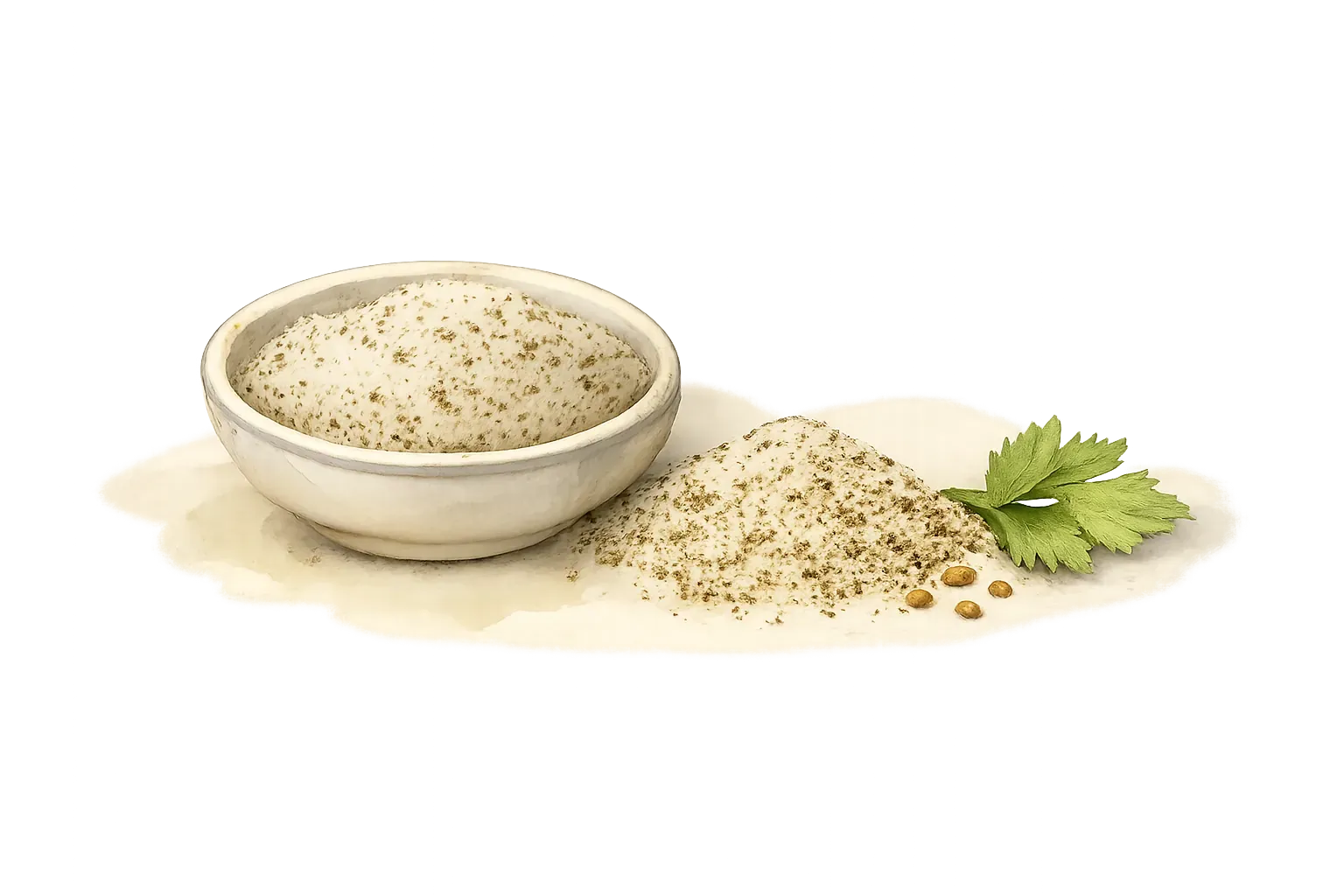
A blend of ground celery seed and table salt -- mostly salt by weight, with just enough ground celery seed to give a savory, slightly herbal edge. A quick way to add a background celery note to a dish without chopping and cooking actual celery, common in chowders, Bloody Marys, and classic American seasoning blends.
- celery seed
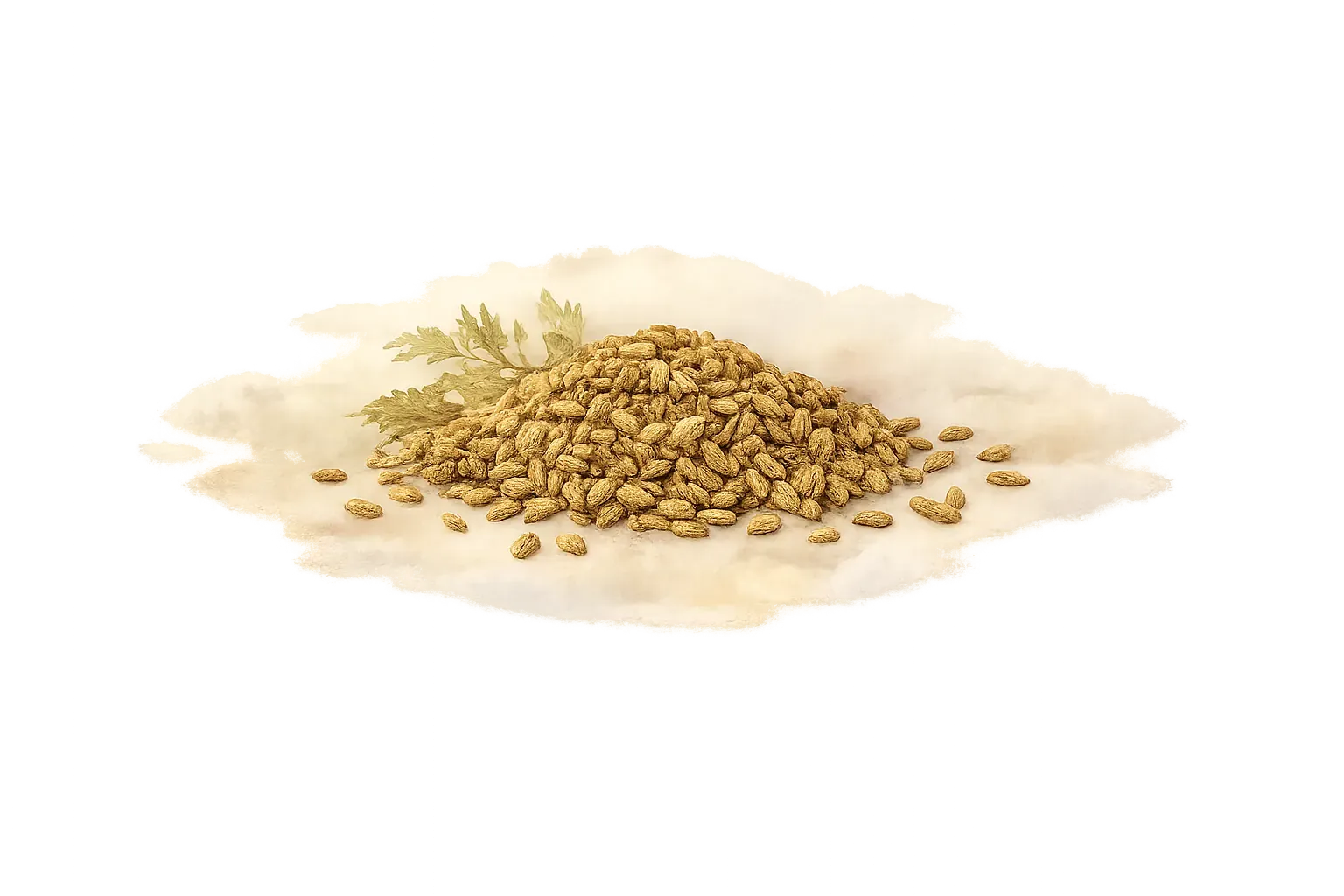
The small, dried seed of a wild celery relative, with a concentrated, slightly bitter celery flavor; used in pickling, dressings, and spice blends. Because the flavor is packed into a tiny seed rather than a stalk's worth of water and fiber, a small pinch carries as much celery character as a much larger amount of chopped celery.
- cheddar cheese
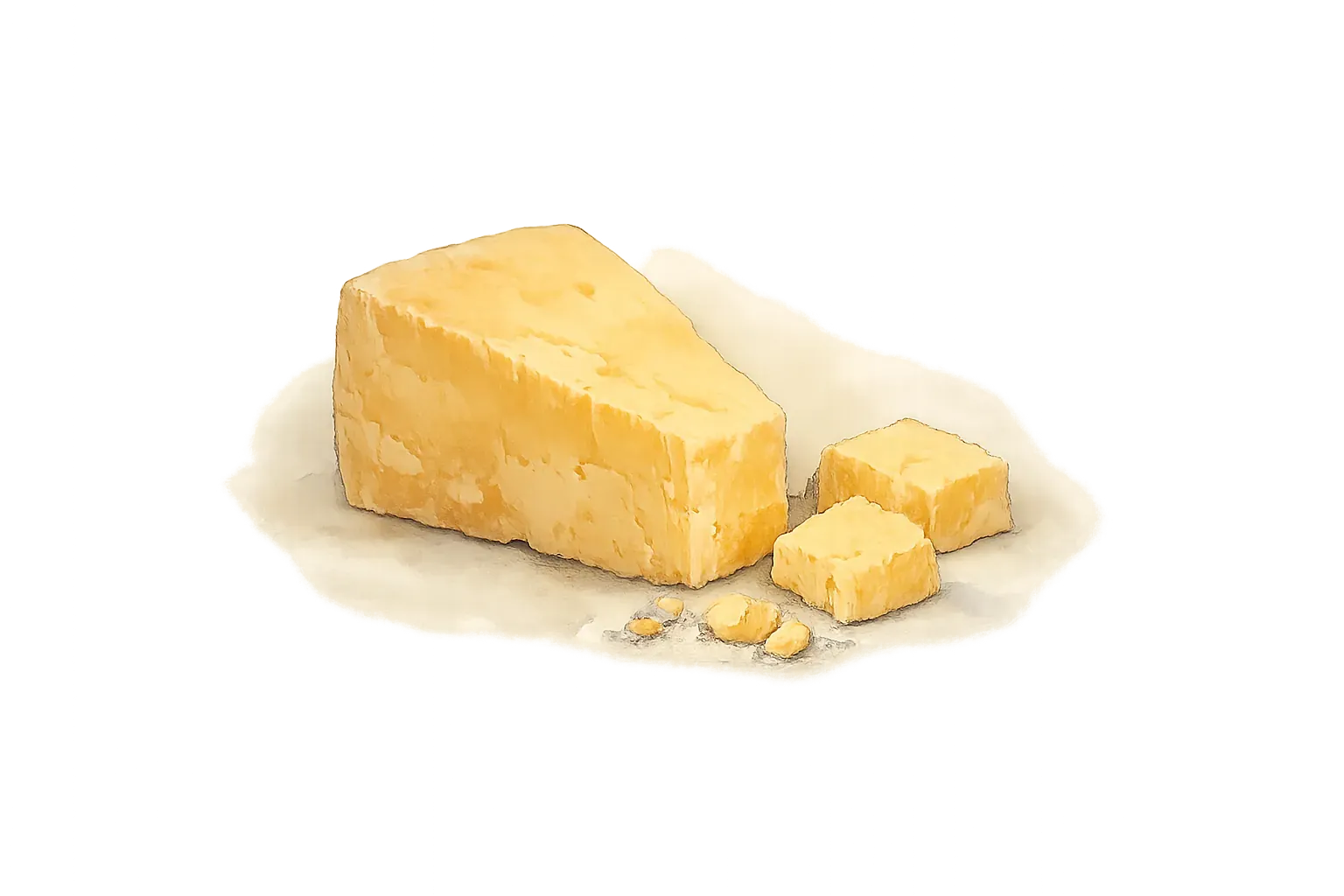
Also: Grated Sharp Cheddar, Sharp Cheddar, Shredded Cheddar/Colby cheese, grated cheddar
A firm, aged cow's-milk cheese ranging from mild to sharp depending on age; melts well and is one of the most widely used cooking and snacking cheeses. Longer aging concentrates the flavor and dries the texture somewhat, which is why sharp and extra-sharp cheddar crumble more readily than mild.
More specific: shredded cheese
- Cheerwine

A cherry-flavored, deep-red carbonated soft drink from the Carolinas, used in cooking mainly as a sweet, fruity braising or glazing liquid. As it cooks, the carbonation disappears and the sugar concentrates, so it behaves more like a sweet reduction than a simple liquid -- it thickens and intensifies in sweetness the longer it simmers.
- cherry tomatoes
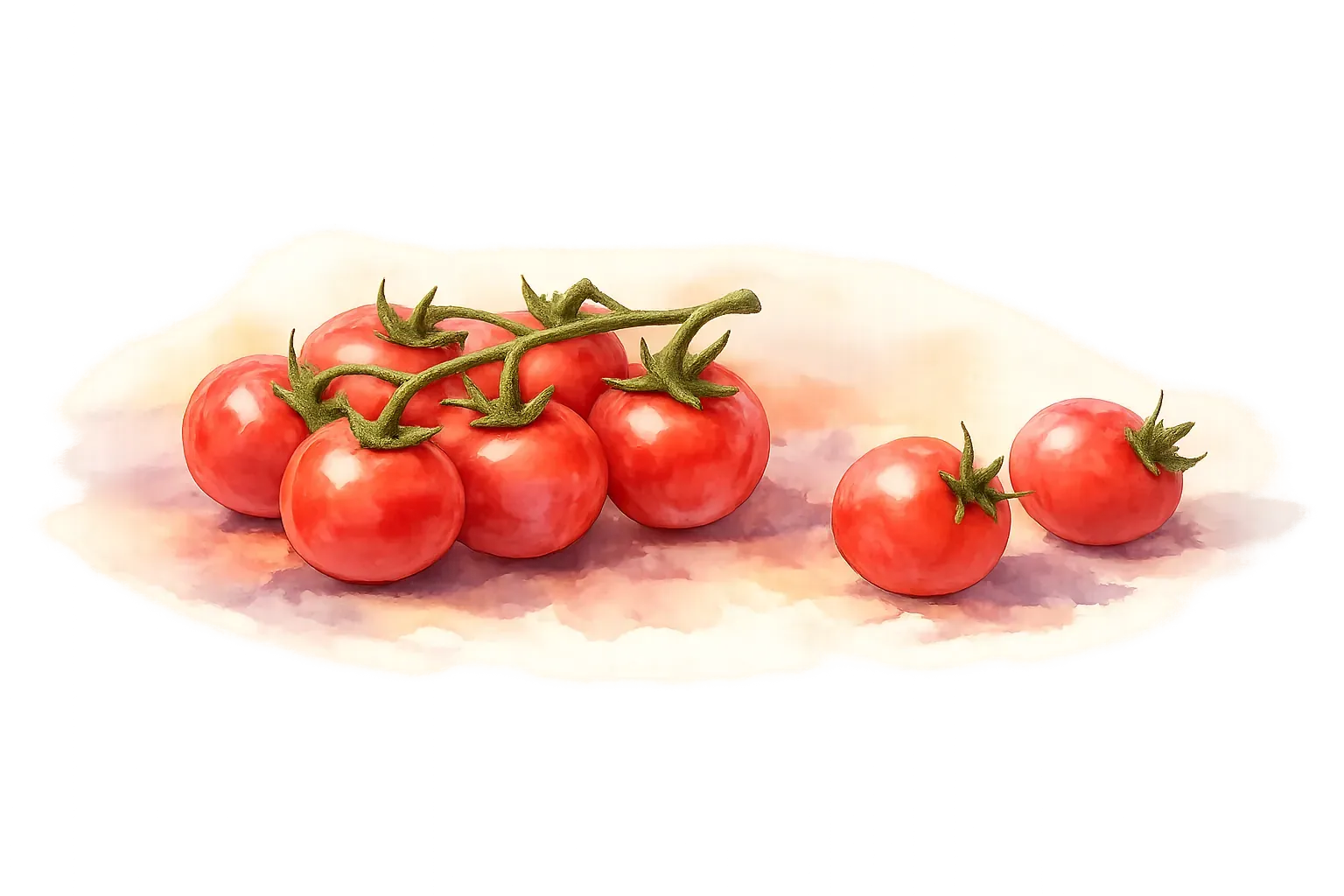
Small, round, very sweet tomatoes, typically eaten whole; good raw in salads or roasted until they blister and burst. Their small size means a much higher skin-to-flesh ratio than a large tomato, which is part of why they burst and caramelize so readily under high heat rather than just softening.
- chicken alphabet soup
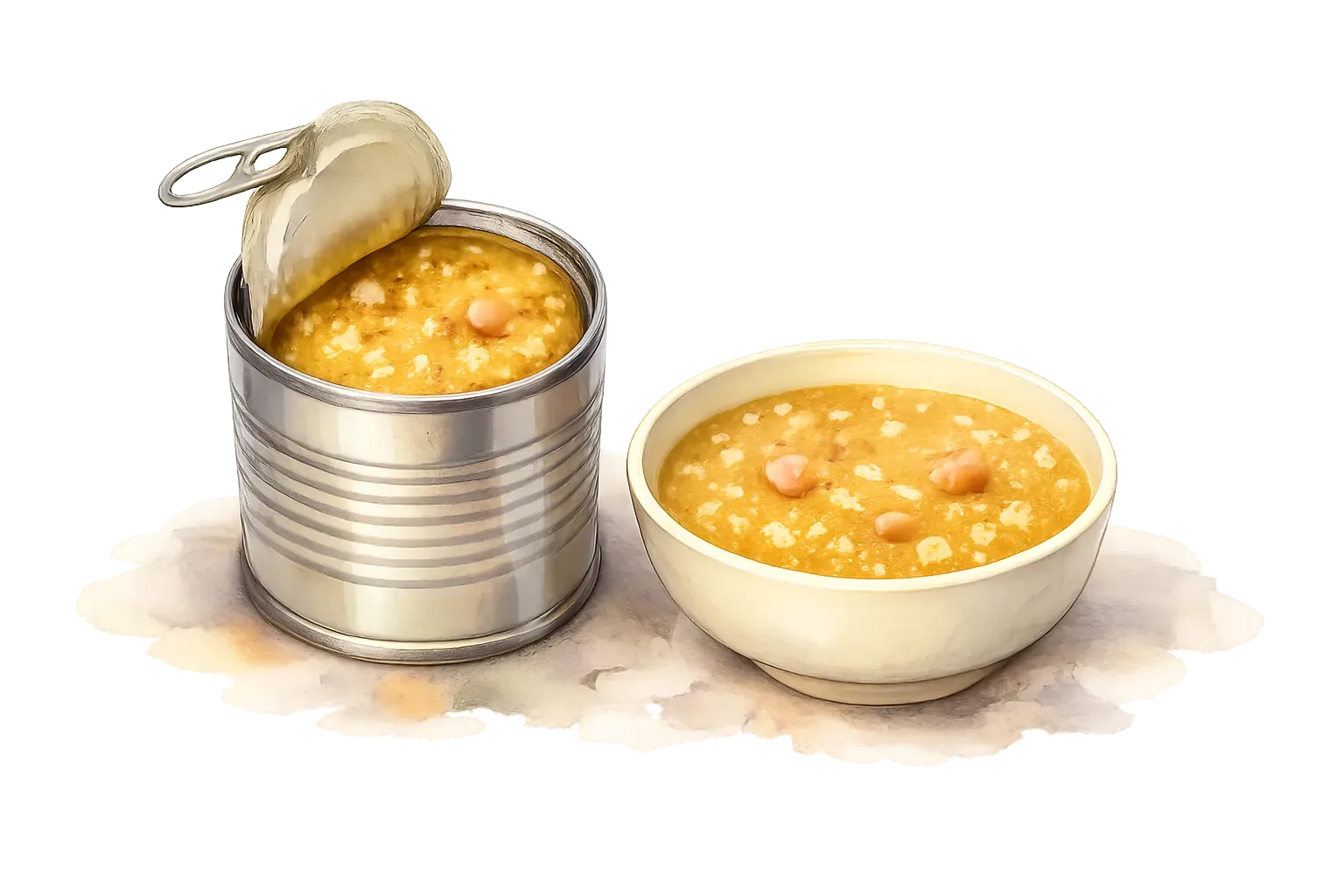
Also: chicken and stars soup
A canned condensed soup (Campbell's is the classic brand) of chicken broth with small alphabet-shaped or star-shaped pasta, meant to be diluted with water or milk like other condensed soups. Also used as a quick base ingredient in a homemade chowder rather than prepared and served on its own.
- chicken bouillon
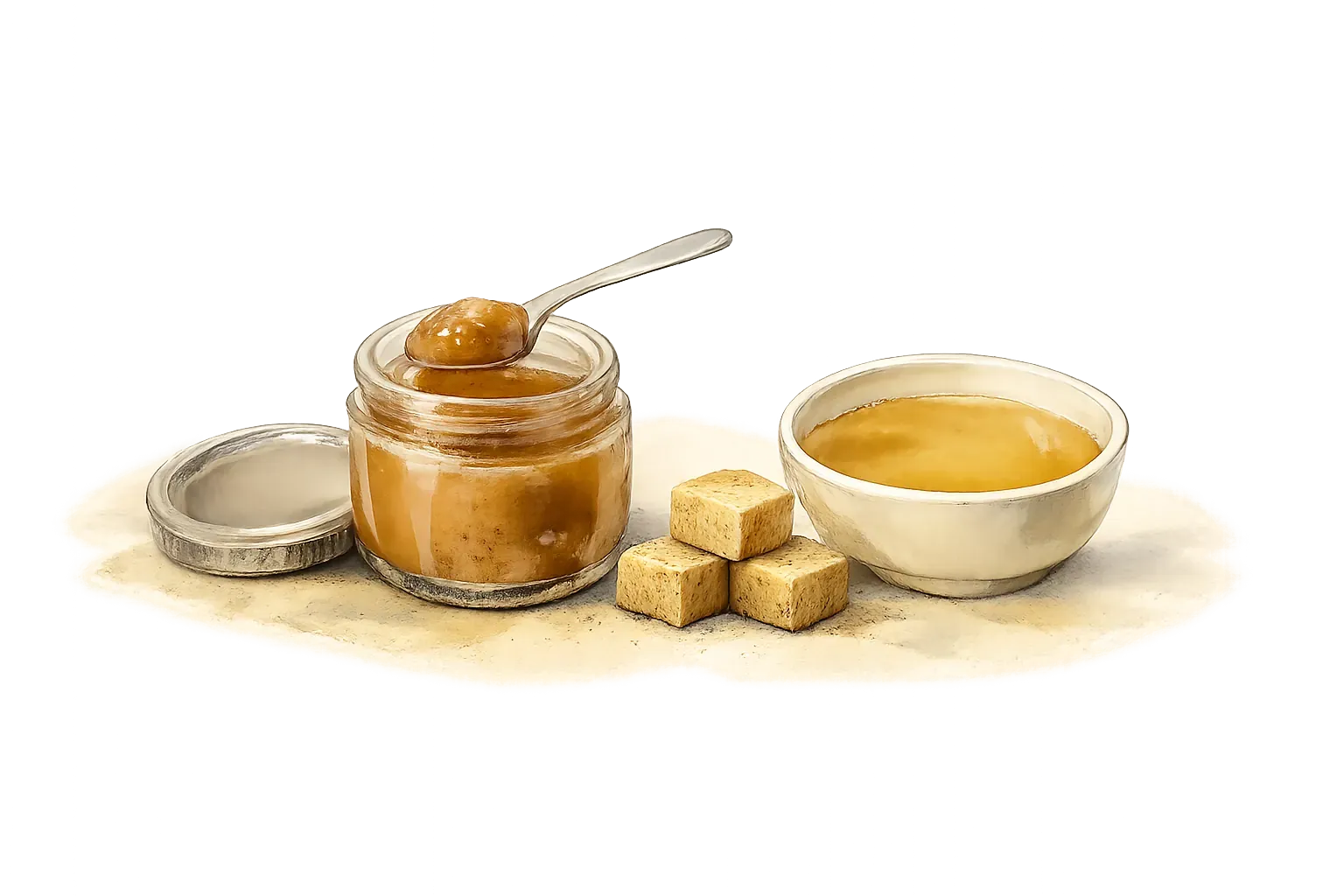
Also: Better than Bouillon, bouillon cube
A concentrated, shelf-stable form of chicken stock, sold either as a paste in a jar (Better than Bouillon is the best-known brand) or as small dried cubes (Knorr among others) meant to be dissolved in hot water to reconstitute into broth. A pantry shortcut for chicken broth, and also used in smaller amounts to boost the savoriness of a broth that's already been made.
- chicken breast
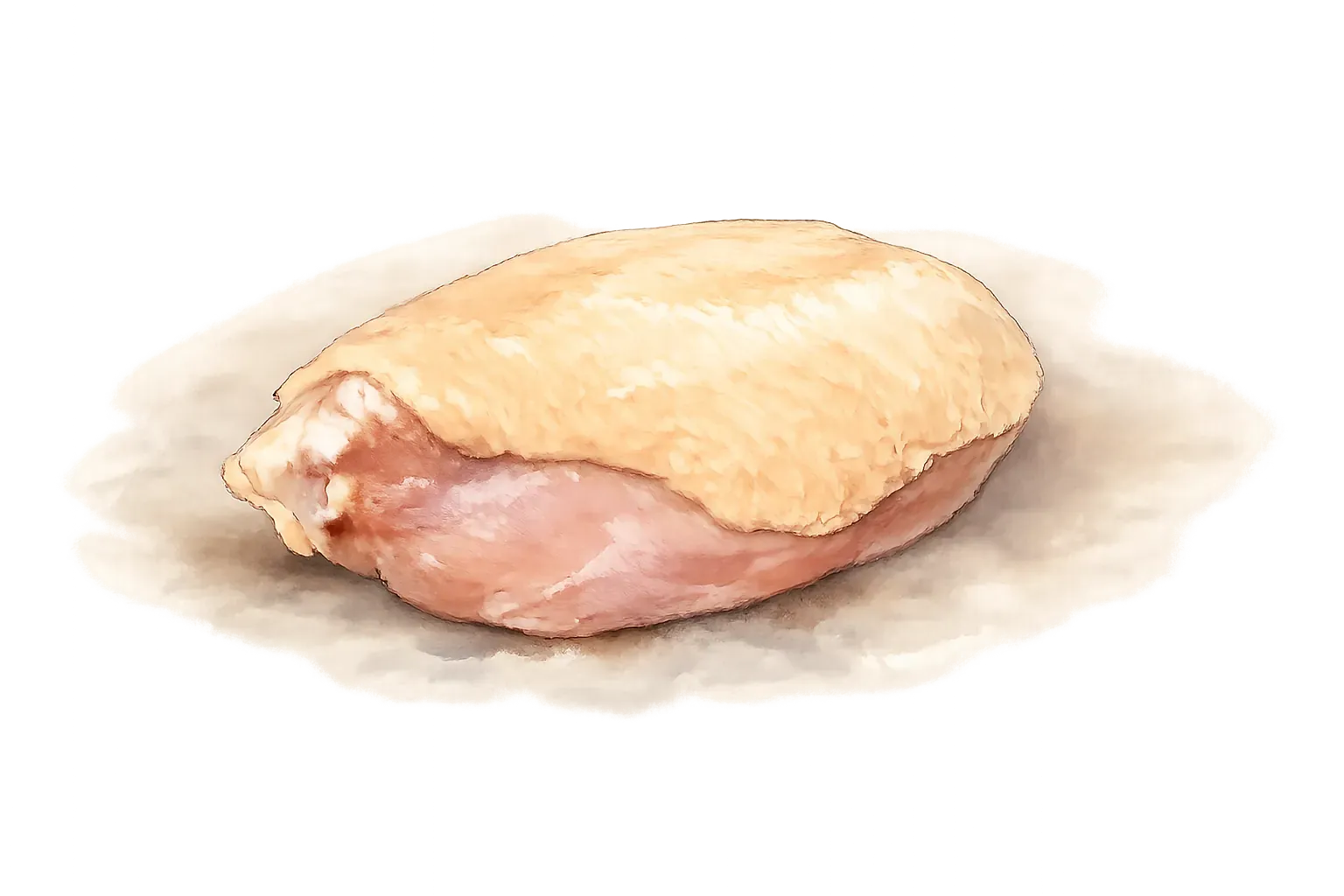
The lean, mild-flavored meat from the chicken's breast; cooks quickly and dries out easily if overcooked, since it has very little fat to buffer against heat. Bone-in, skin-on breasts cook more slowly and stay juicier than boneless, skinless ones, which are more convenient but far less forgiving of a few extra minutes on the heat.
More specific: canned chicken
- chicken broth
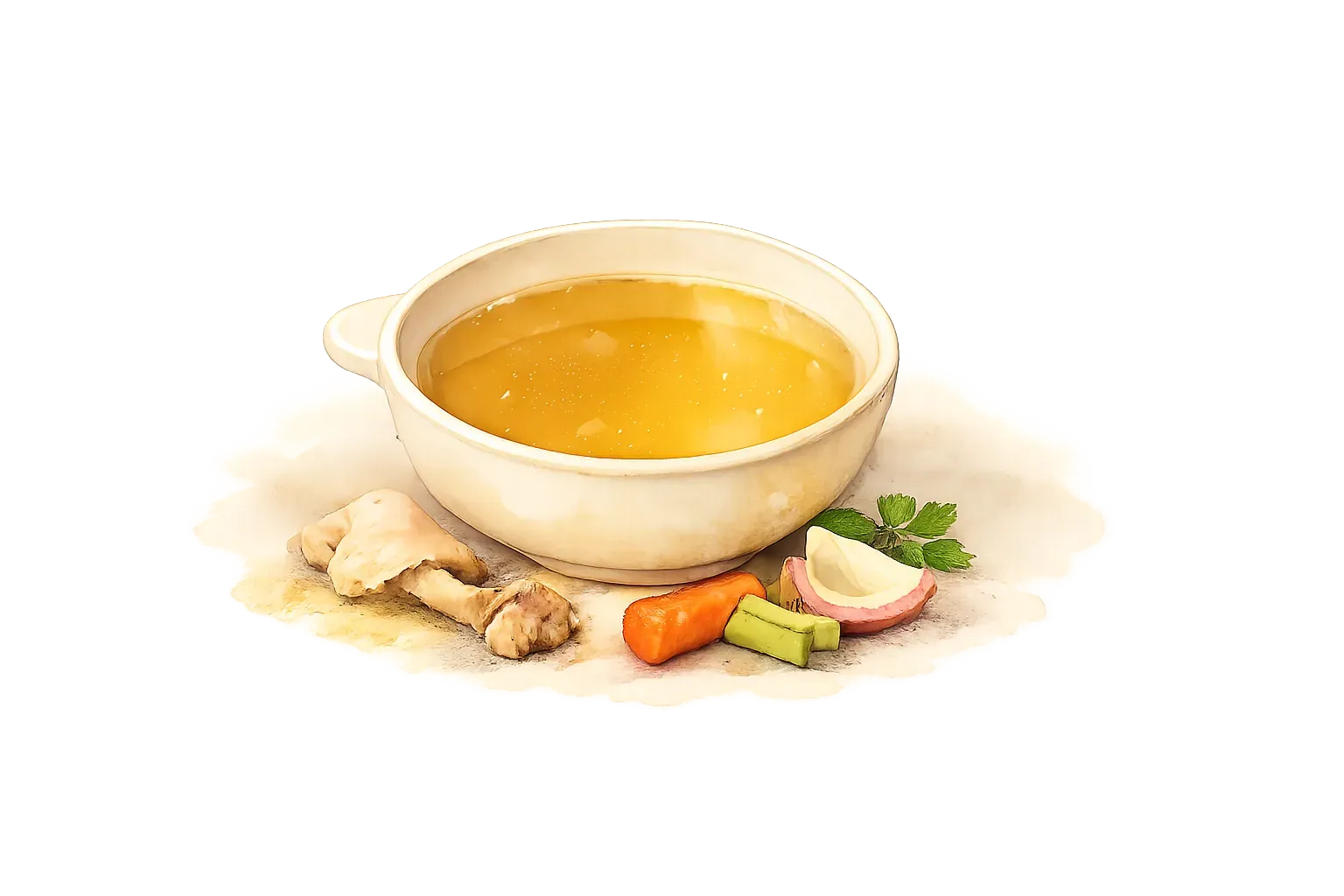
Also: chicken stock
A savory liquid made by simmering chicken (and often bones, vegetables, and aromatics); a common base for soups, sauces, and braises. Stock is simmered from bones and is richer in gelatin -- it may set like jelly in the fridge, which is a good sign -- while broth is made from meat and is thinner.
- chicken thighs
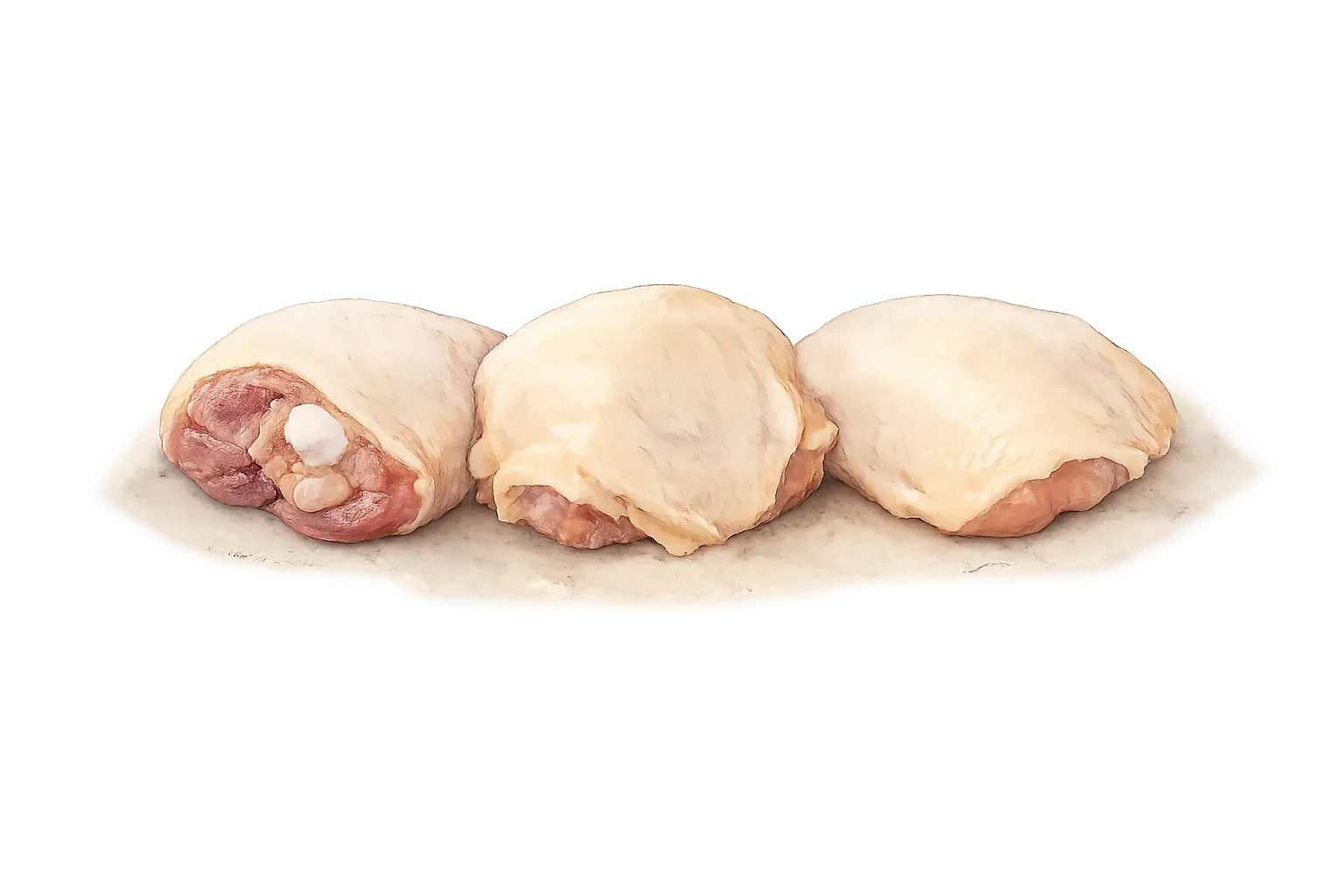
Dark meat from the chicken's thigh; higher in fat than breast meat, which makes it more forgiving to cook and harder to dry out. Bone-in, skin-on thigh yields roughly 55% edible meat once the skin and bone are discarded.
- chicken wings
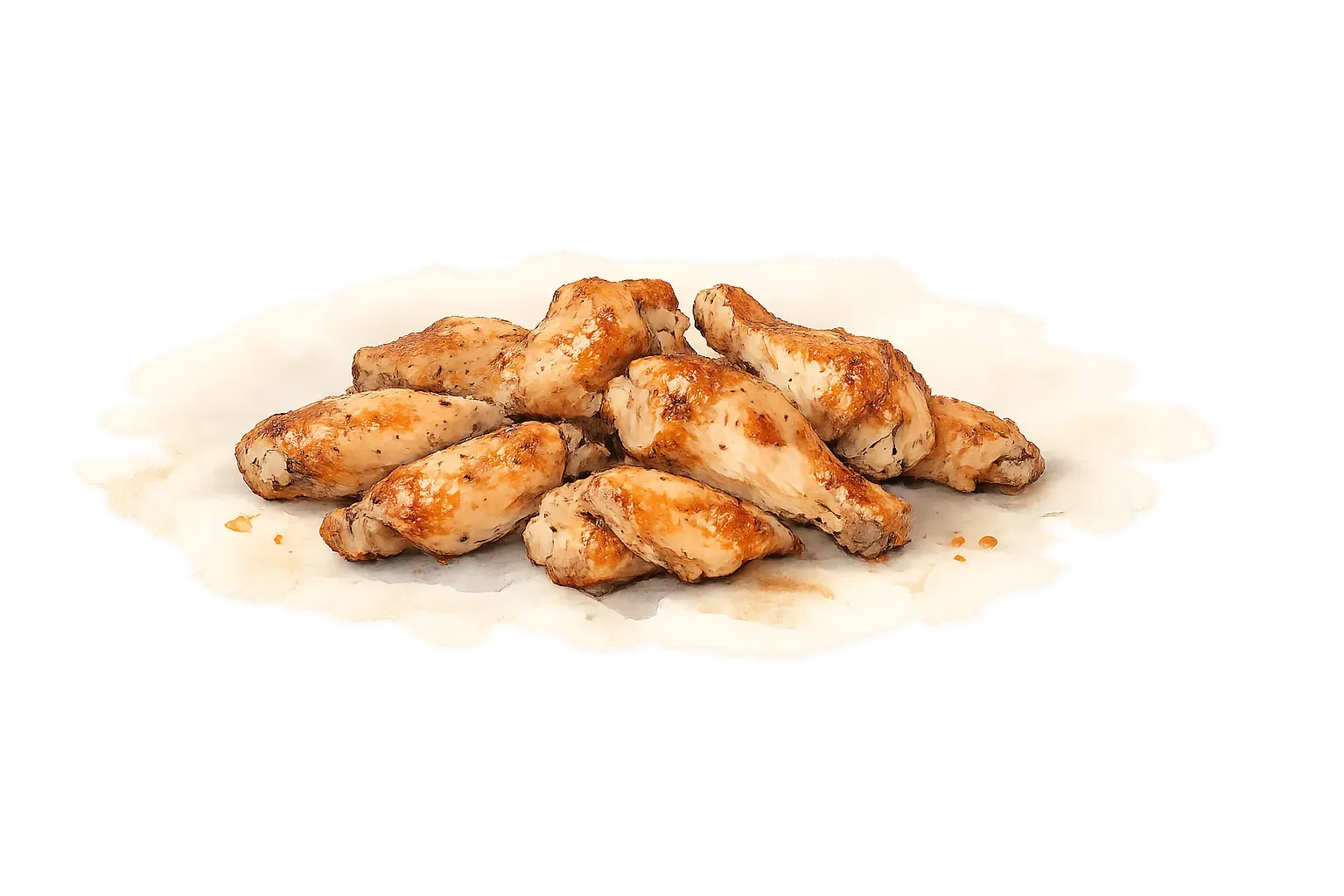
The chicken's wing, often separated into the flat and drumette sections, with a small amount of meat relative to skin and bone; a popular fried or baked appetizer, usually tossed in a sauce after cooking. The high skin-to-meat ratio is what makes wings so well suited to crisping -- proportionally more surface area renders and browns than on almost any other cut.
More specific: drummettes
- chili beans
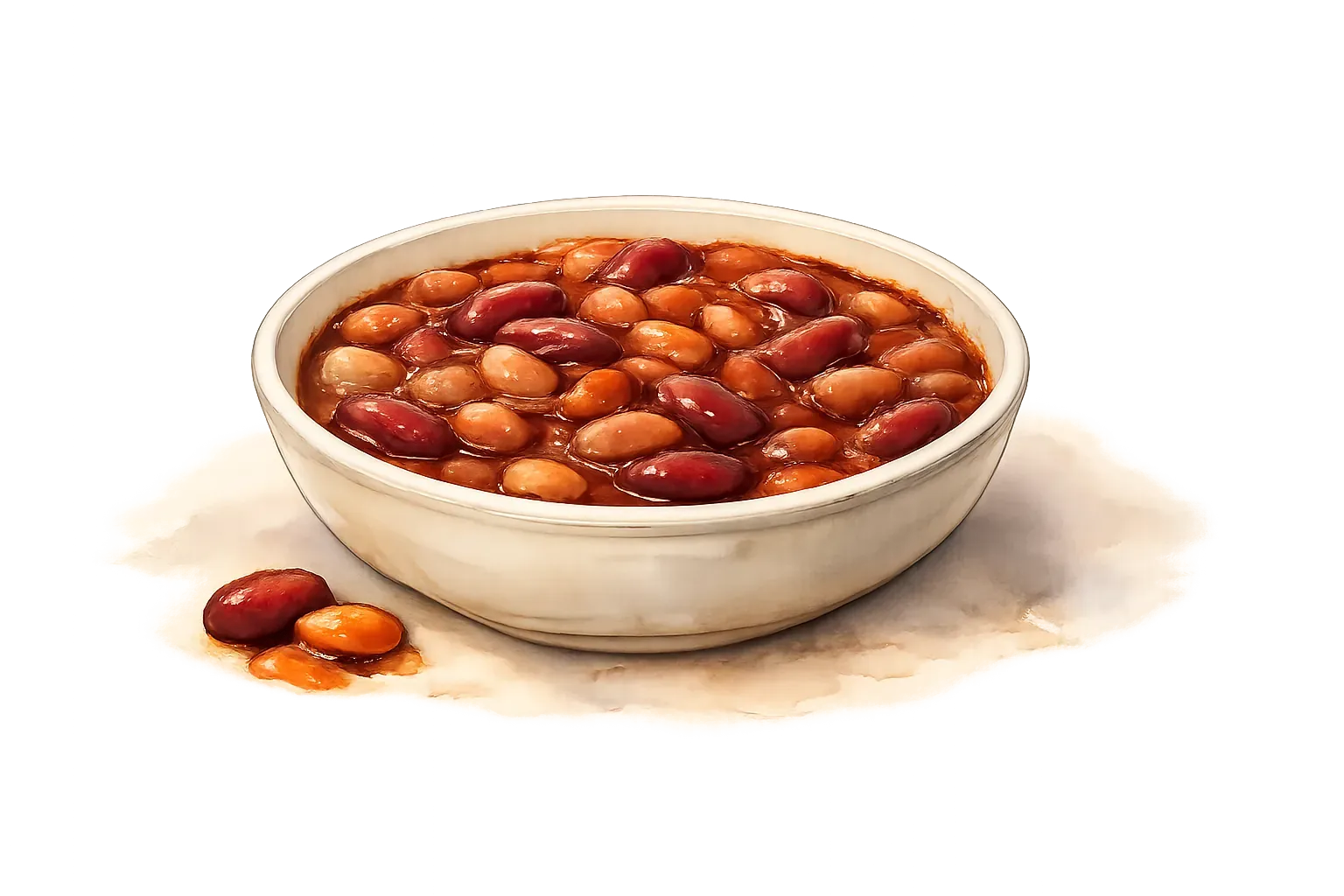
Also: can chili beans
Pinto or kidney beans canned in a seasoned, chili-style sauce, ready to add straight to a pot of chili or a similar dish. Unlike plain canned beans, the sauce is meant to stay in rather than be drained away, contributing seasoning and body along with the beans themselves.
- chili pintos
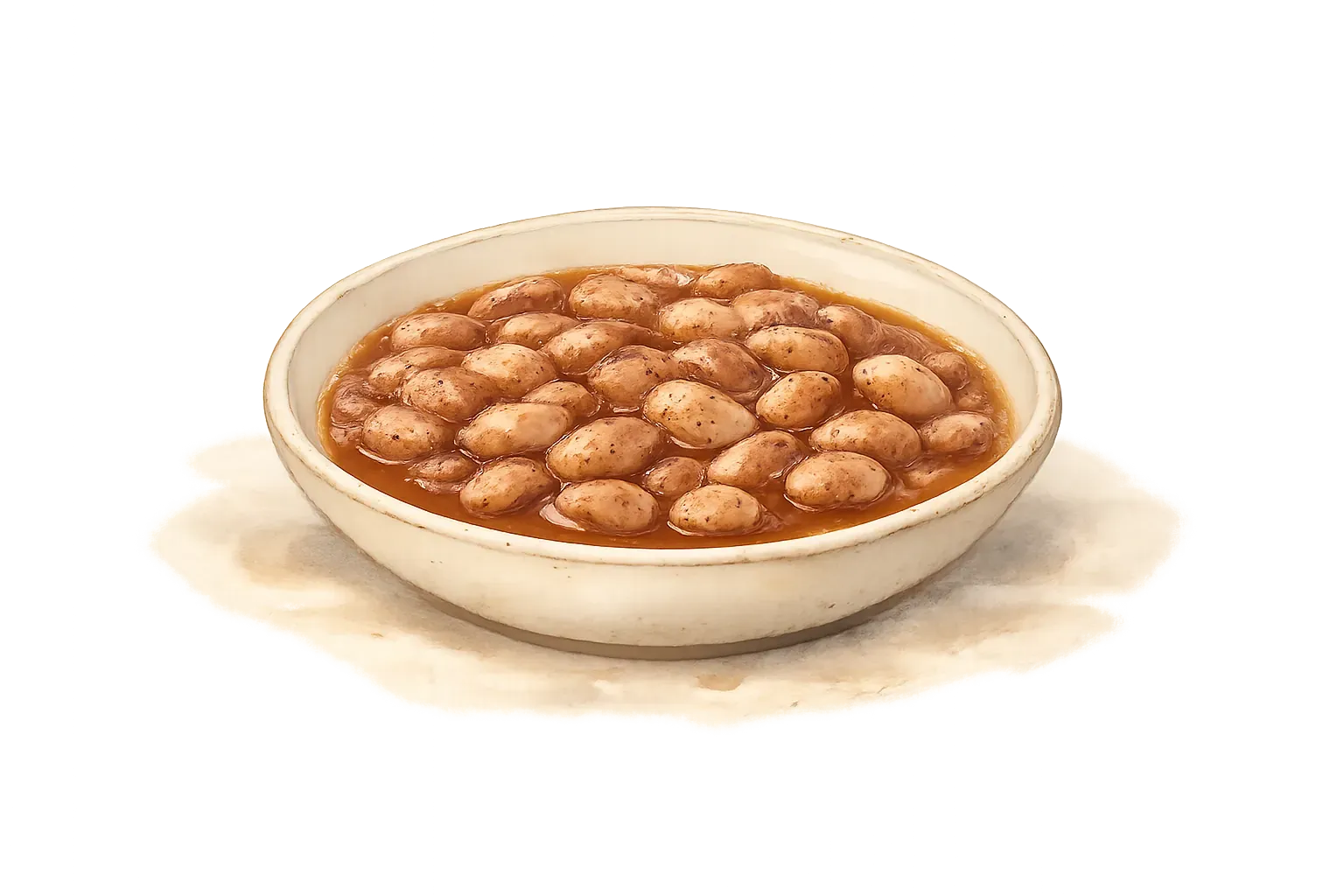
Pinto beans canned in a mild, chili-seasoned sauce -- similar to chili beans, a shortcut for adding pre-seasoned beans to chili or Tex-Mex cooking. The sauce is meant to be used along with the beans rather than drained off, contributing both seasoning and a bit of body to whatever it's added to.
- chili powder
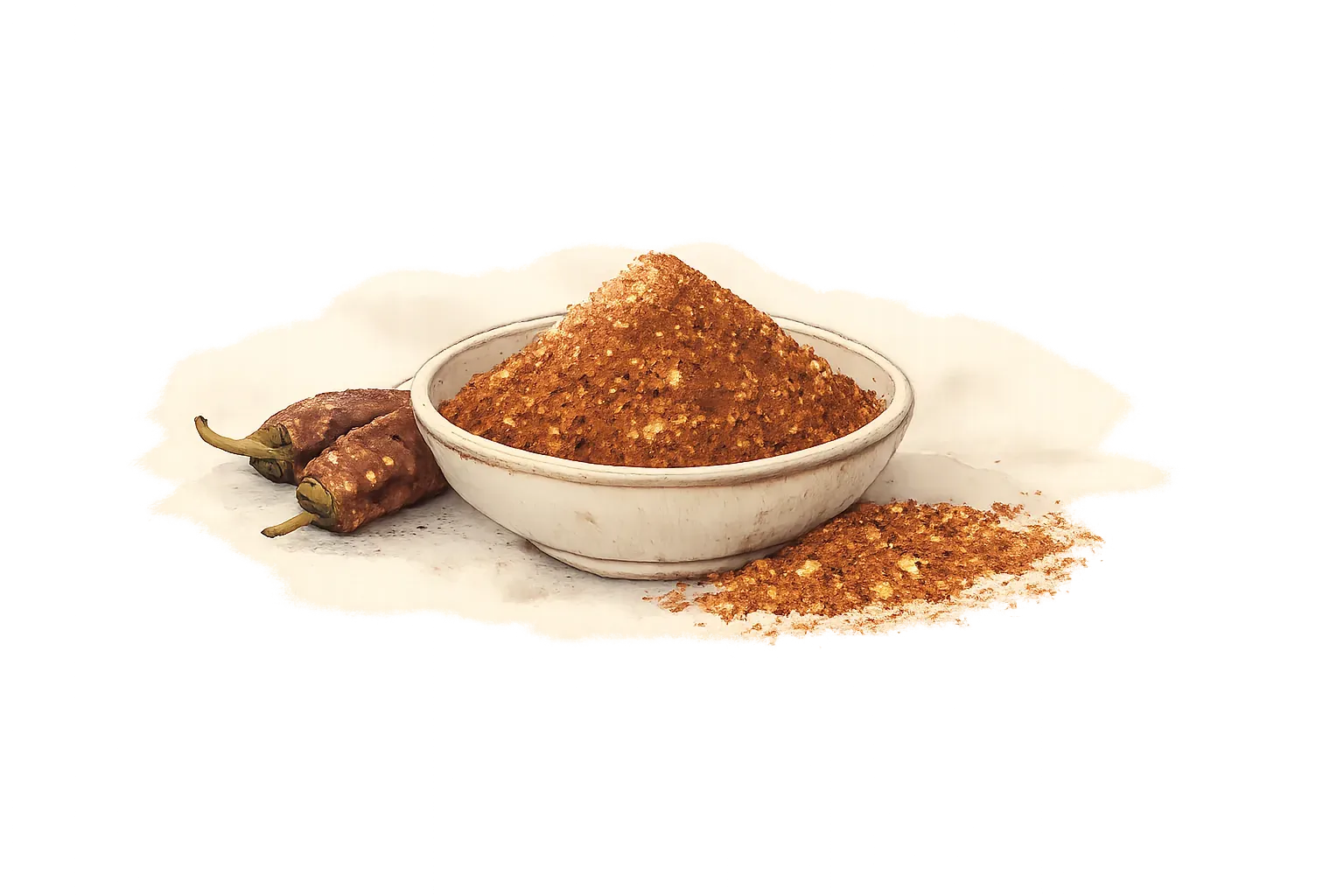
A seasoning blend built around ground dried chiles, usually cut with cumin, garlic powder, oregano, and other spices -- an all-in-one shortcut for red-chile flavor rather than a single pure spice. Blends vary a lot in heat and salt between brands, so it's worth tasting and adjusting rather than trusting the label alone.
- chipotle powder
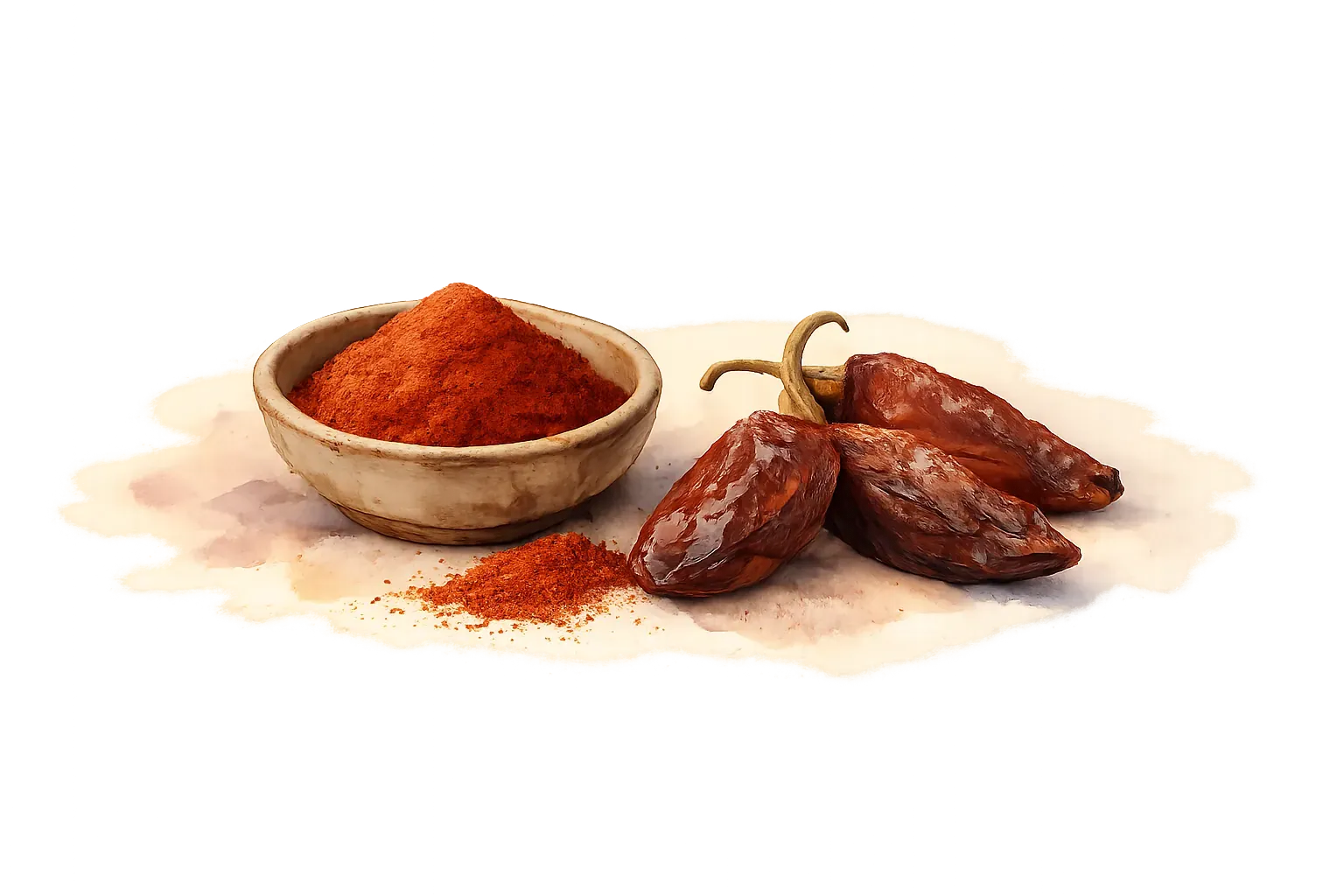
Dried, smoked jalapeno peppers ground into a powder, delivering heat with a distinctive smoky depth that fresh or plain dried chiles don't have. A little goes a long way -- both the smoke and the heat build fast.
- chives
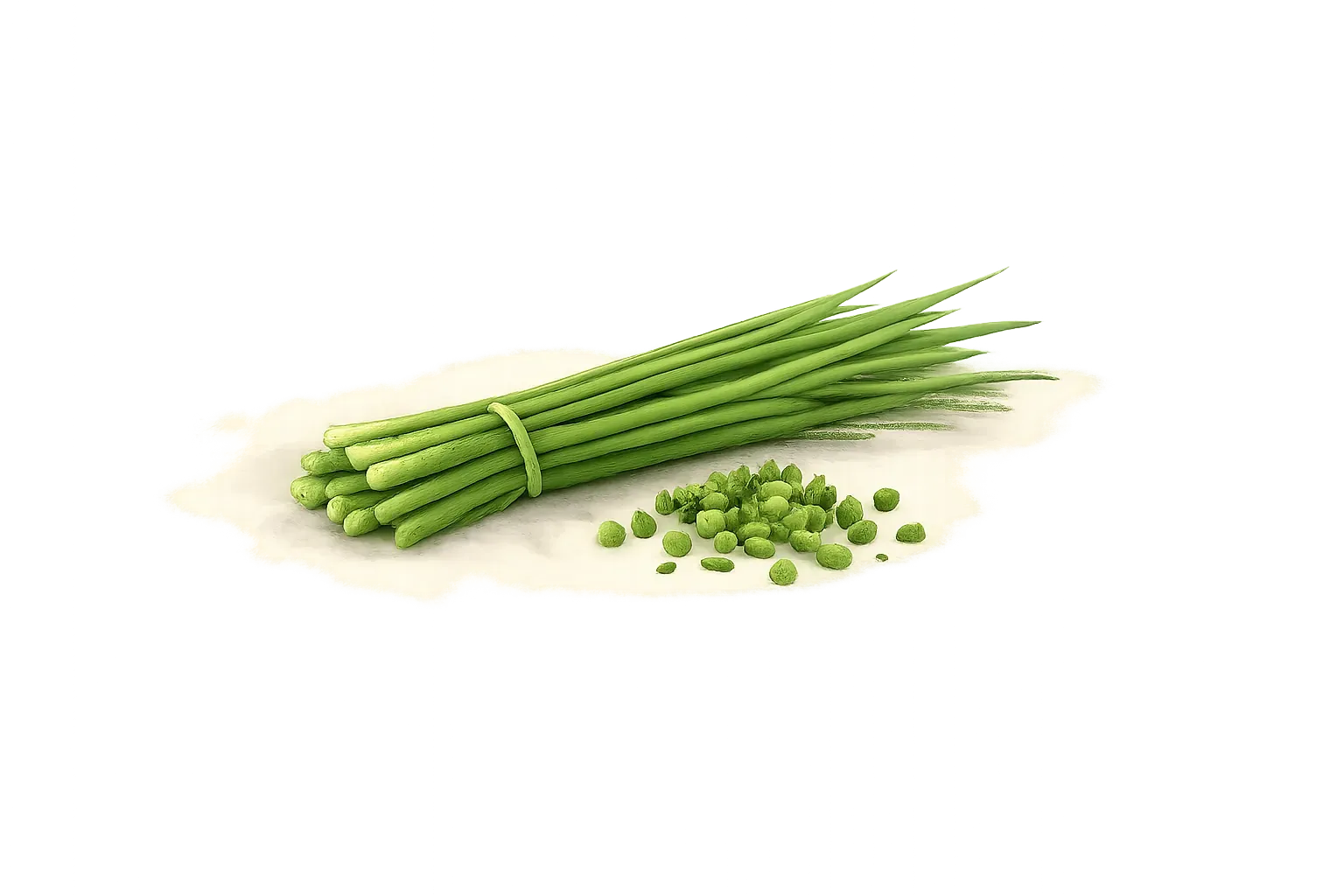
A slender, hollow-stemmed herb in the onion family, with a mild, grassy onion flavor much gentler than a green onion's. Used raw, finely chopped, as a garnish or mixed into a dish for a light onion note without the sharpness or moisture that chopped onion would add.
- chocolate chips

Also: mini chocolate chips, semi-sweet chocolate chips
Small, pre-formed pieces of chocolate, most often semi-sweet, engineered to hold their shape at baking temperatures rather than fully melting flat -- which is exactly why they're less than ideal for recipes that want fully melted, smooth chocolate, like a candy coating or ganache, where a bar or disc of melting chocolate behaves better. Mini chips melt a bit more readily than standard-size chips, given their smaller size.
- chorizo

Also: chouriço, chourico
A seasoned pork sausage built heavily around chile and, in the Spanish and Portuguese styles, smoked paprika. Mexican fresh chorizo is raw and sold loose or in casings to be crumbled and cooked; Spanish chorizo and Portuguese chouriço are both cured and smoked, eaten sliced or simmered whole into beans and stews, closer to a firm smoked salami than a raw sausage. Chouriço tends to be smokier and more garlic-forward than Spanish chorizo, but the two are close enough to use interchangeably.
- chorizo seasoning mix
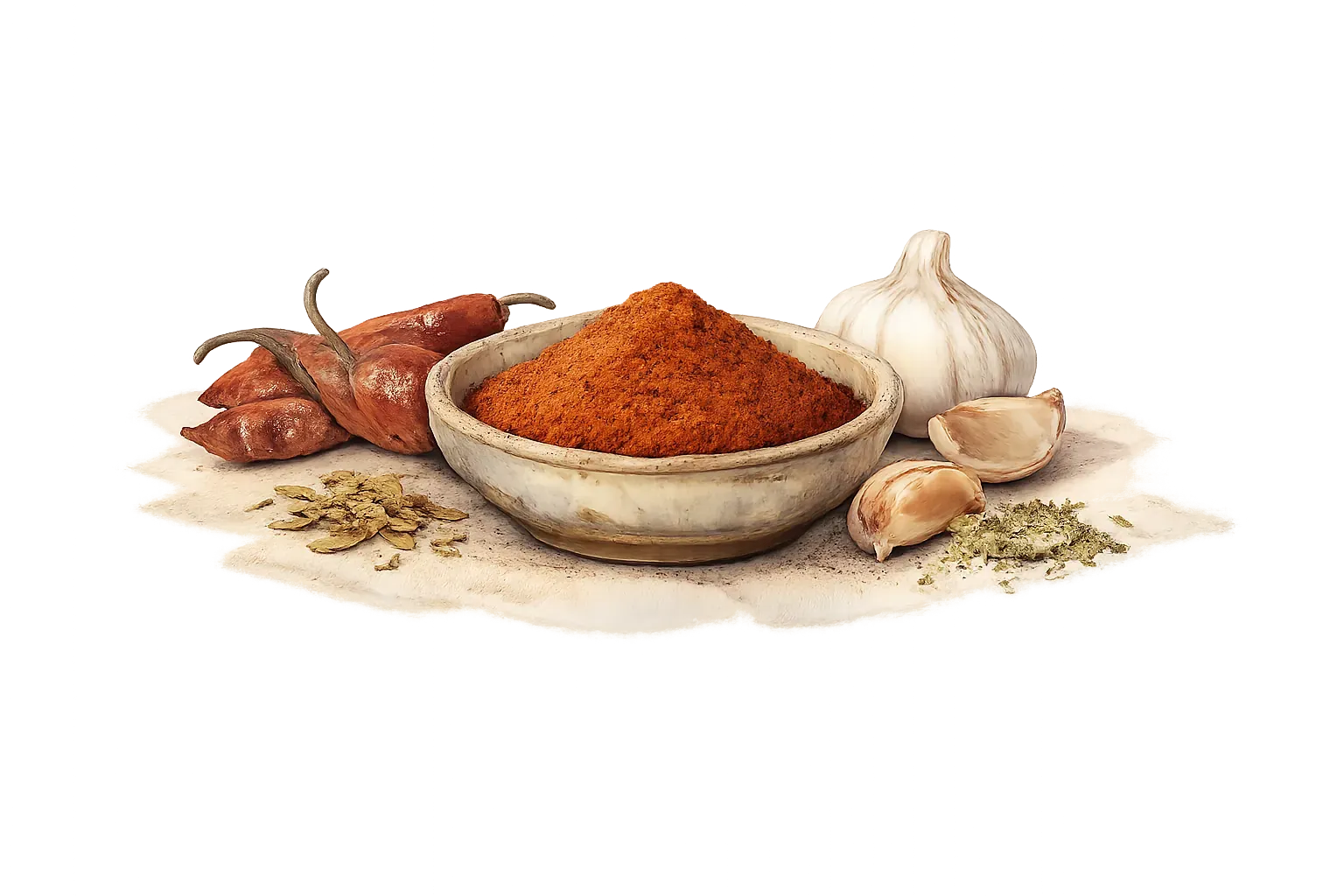
Also: Bolner's Fiesta Brand Chorizo Mix
A pre-blended spice mix (chile powder, cumin, garlic, and similar spices, brand-dependent) built to turn plain ground pork into loose Mexican-style chorizo in one shot, without measuring each spice separately. Bolner's Fiesta Brand is a well-known example, sold specifically for this purpose and typically salt-free, leaving salt to be added separately to taste.
- chow chow
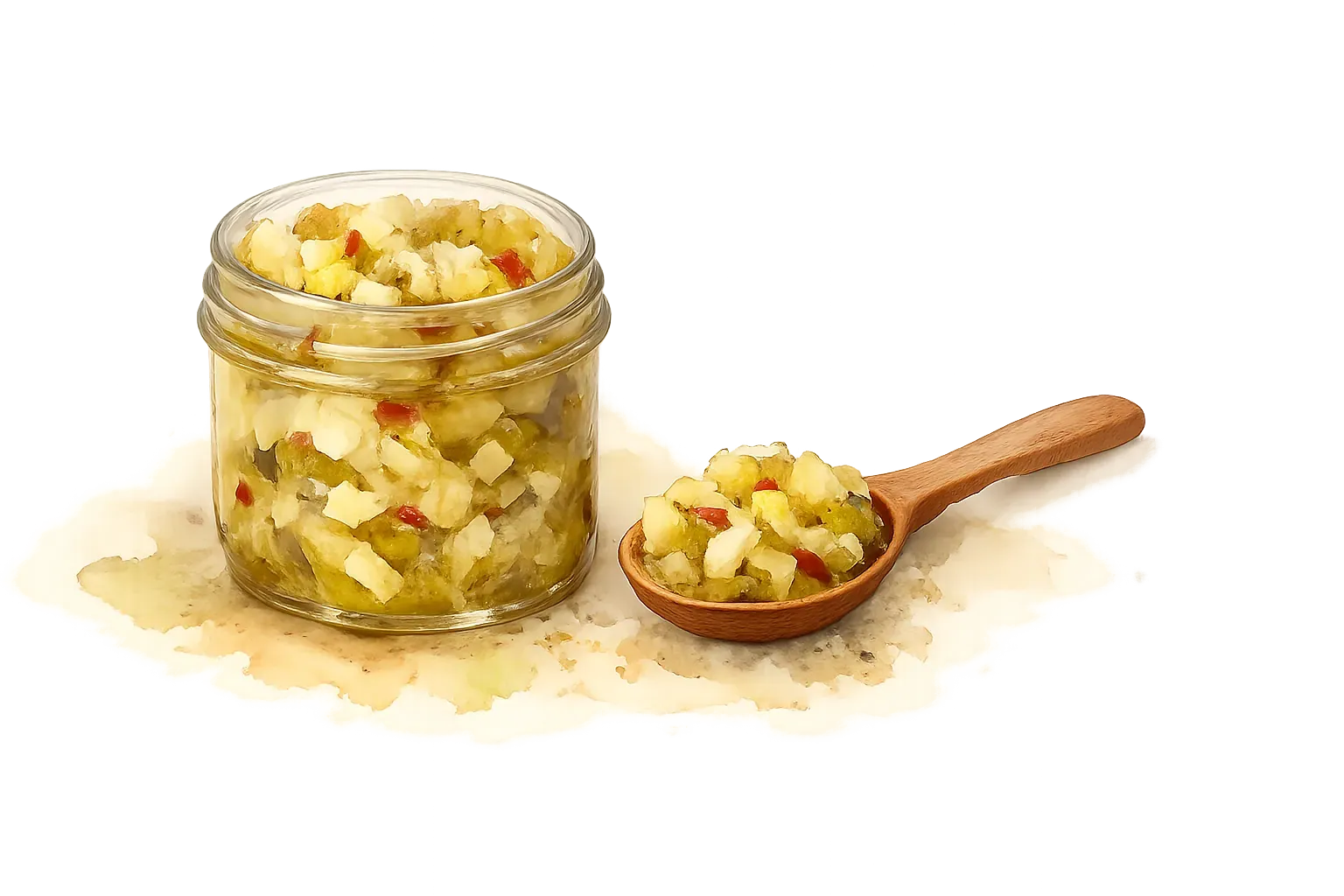
Also: Hot Chow Chow
A tangy, chunky Southern relish of pickled chopped vegetables -- commonly cabbage, green tomato, onion, and pepper -- packed sweet and vinegary. It's a condiment spooned on the side rather than cooked in, so it stays crunchy and bright against slow-cooked or rich food.
- chow mein noodles
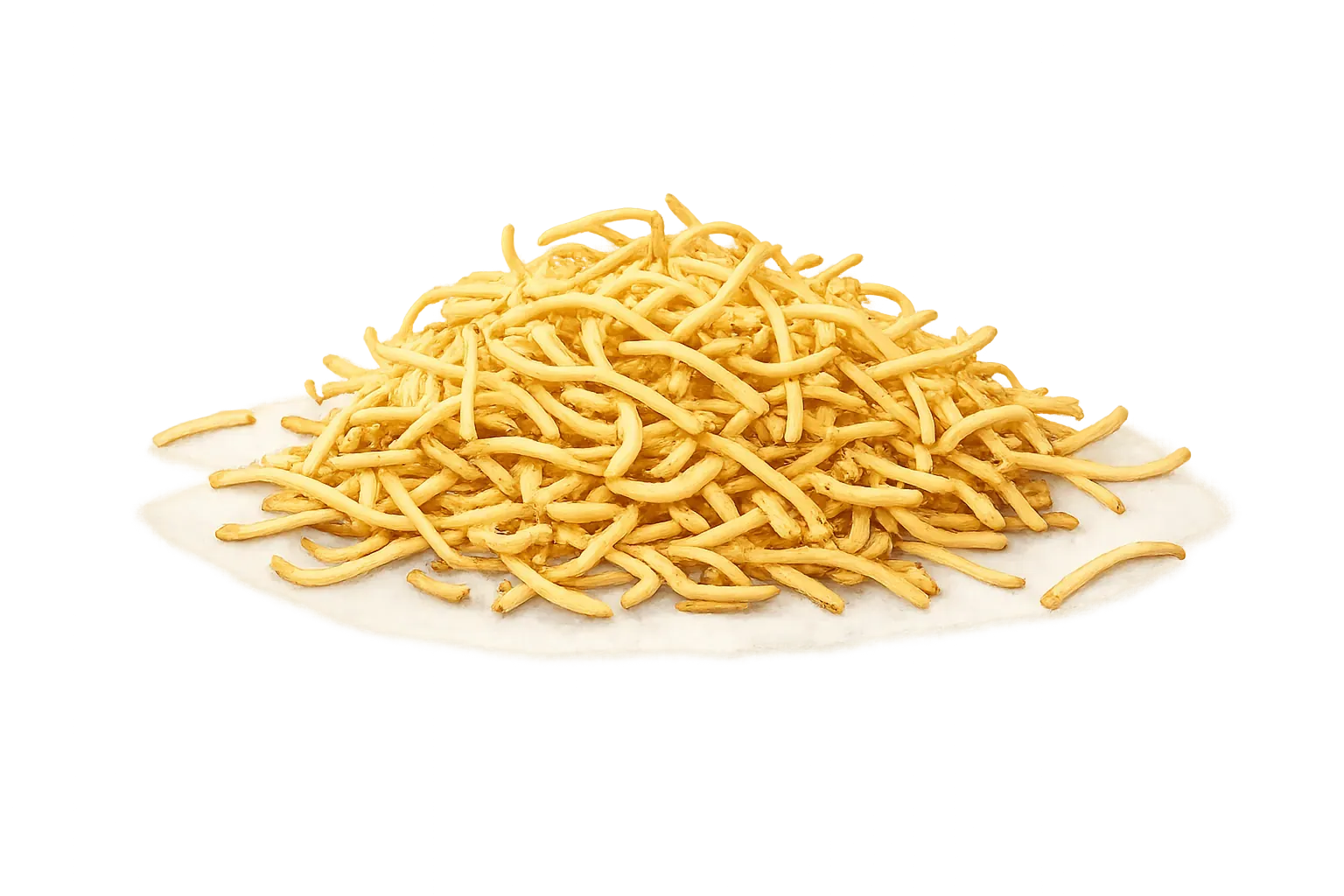
Also: crispy noodles
Thin wheat noodles that have been deep-fried or otherwise cooked crisp and are sold ready to eat straight from the can or bag -- not the same as the soft, stir-fried noodles a chow mein dish is named for. Used as a crunchy topping, scattered over Asian-style soups and salads the way croutons top a Western salad.
- cilantro
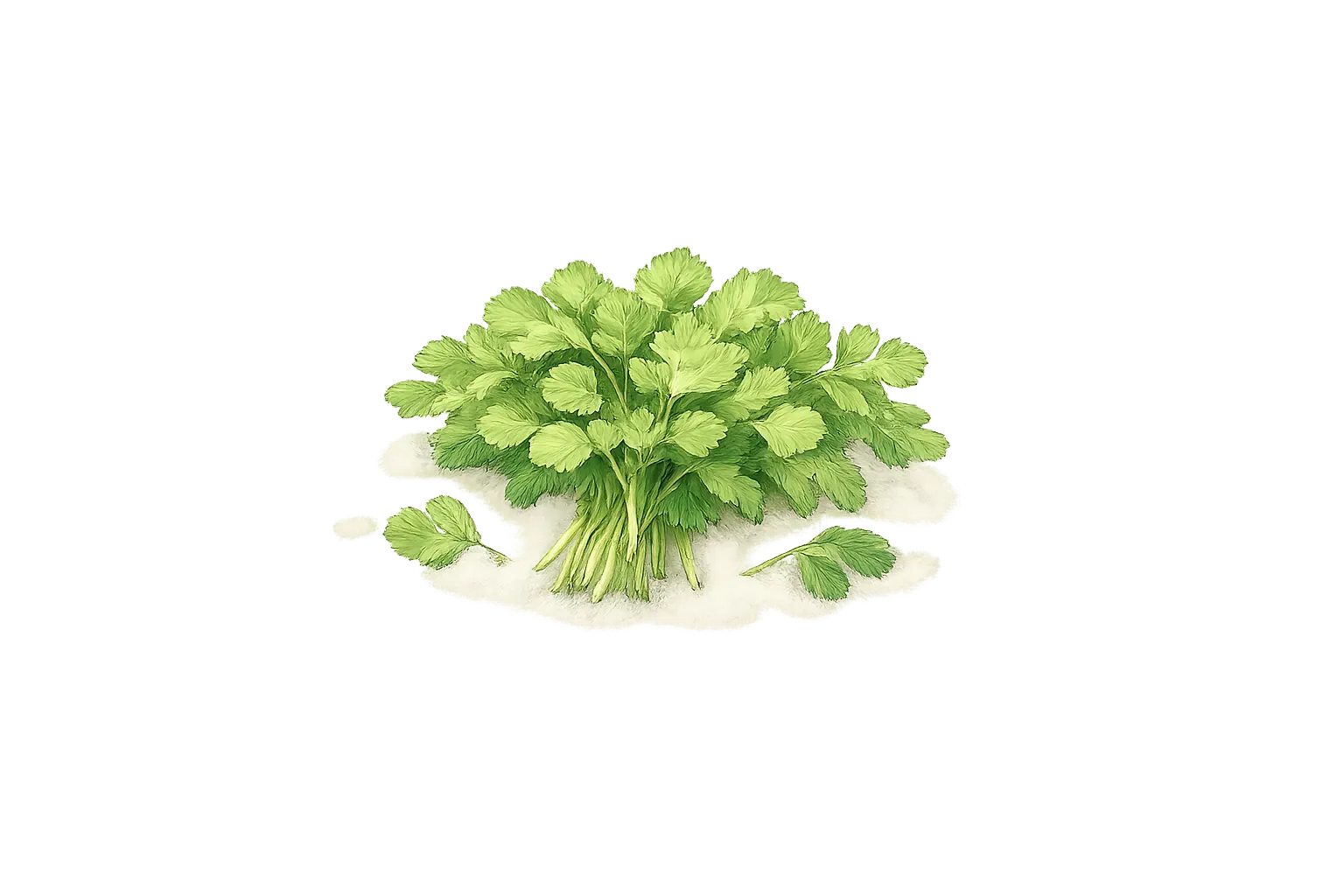
Also: fresh cilantro
The fresh leaves of the coriander plant, with a bright, citrusy flavor -- though a genetic quirk makes some people taste soap instead. It's used raw as a garnish or stirred in at the very end of cooking, since heat quickly dulls both its color and aroma.
- cinnamon
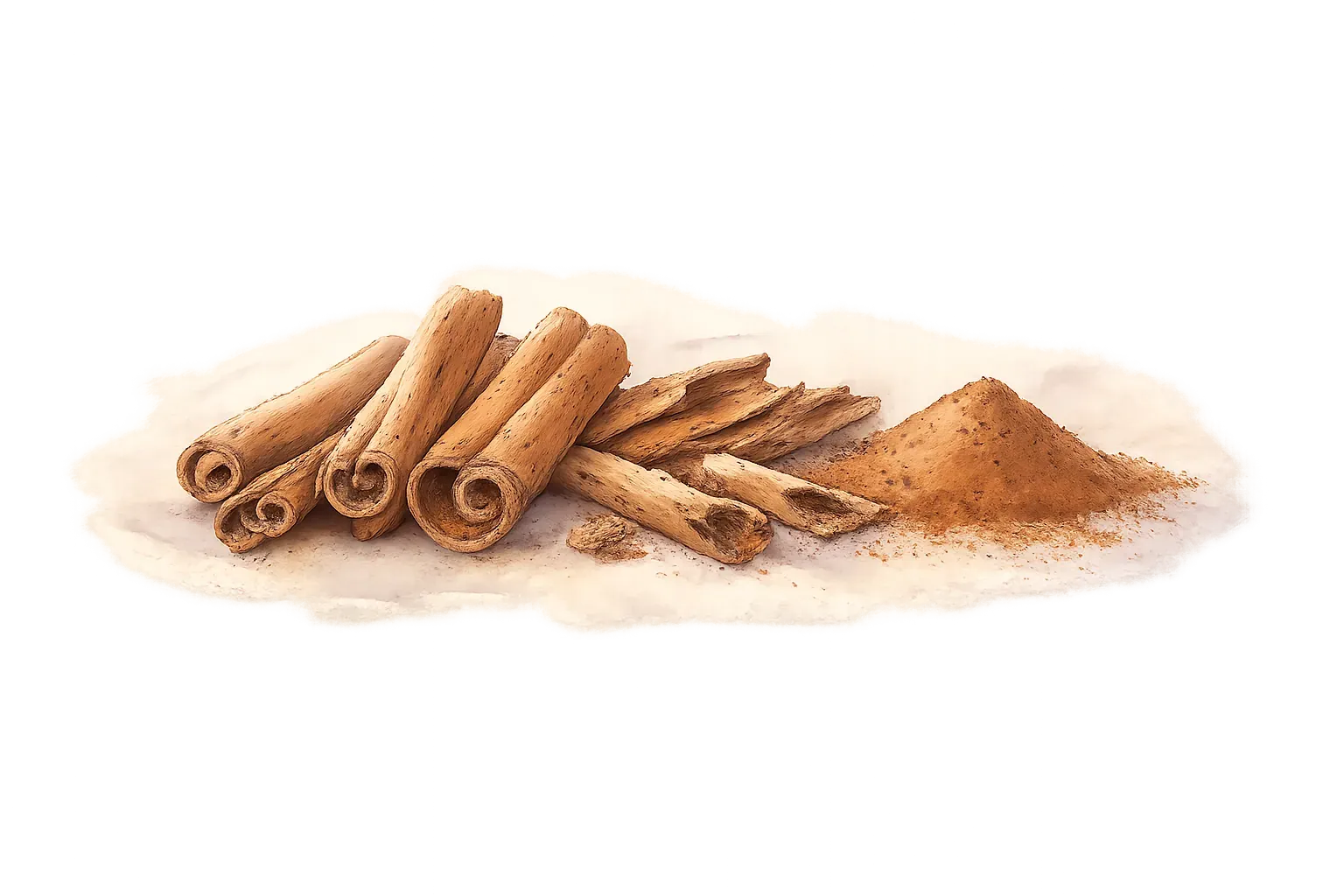
The dried inner bark of the cinnamon tree, sold rolled into sticks or ground into powder; a warm, sweet spice used across both baking and savory cooking. Two distinct species are both sold as cinnamon: softer, more floral Ceylon and the stronger, sweeter cassia most common on supermarket shelves.
- clams
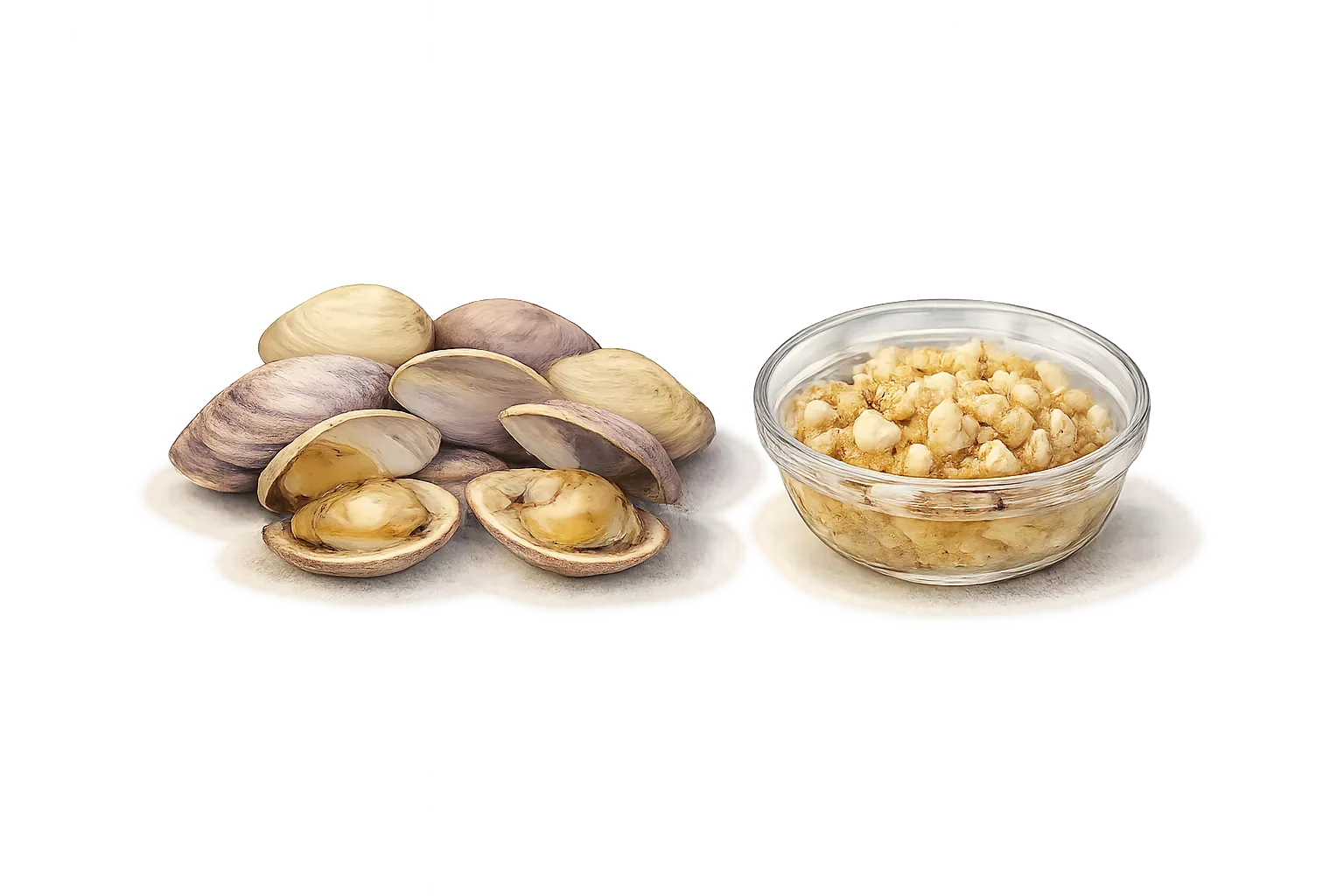
Also: canned clams
A bivalve shellfish with a briny, mildly sweet flavor, sold fresh in the shell, or -- far more convenient for a chowder -- canned, already shucked, minced or chopped, and packed in their own juice. The classic base of clam chowder, where both the clam meat and the flavorful juice they're canned in get used.
- coconut cream

The thick, rich layer that separates from coconut milk, or a product sold that way -- higher in fat and lower in water than regular coconut milk, used to add richness or as a base for desserts and drinks.
- cognac

A French brandy distilled from white wine and aged in oak barrels, produced specifically in the Cognac region of France; it has a fruity, floral character underneath the same oak-and-alcohol warmth as other aged spirits. Used in cocktails, sauces, and desserts like eggnog for its smoother, grape-based sweetness.
- collard greens
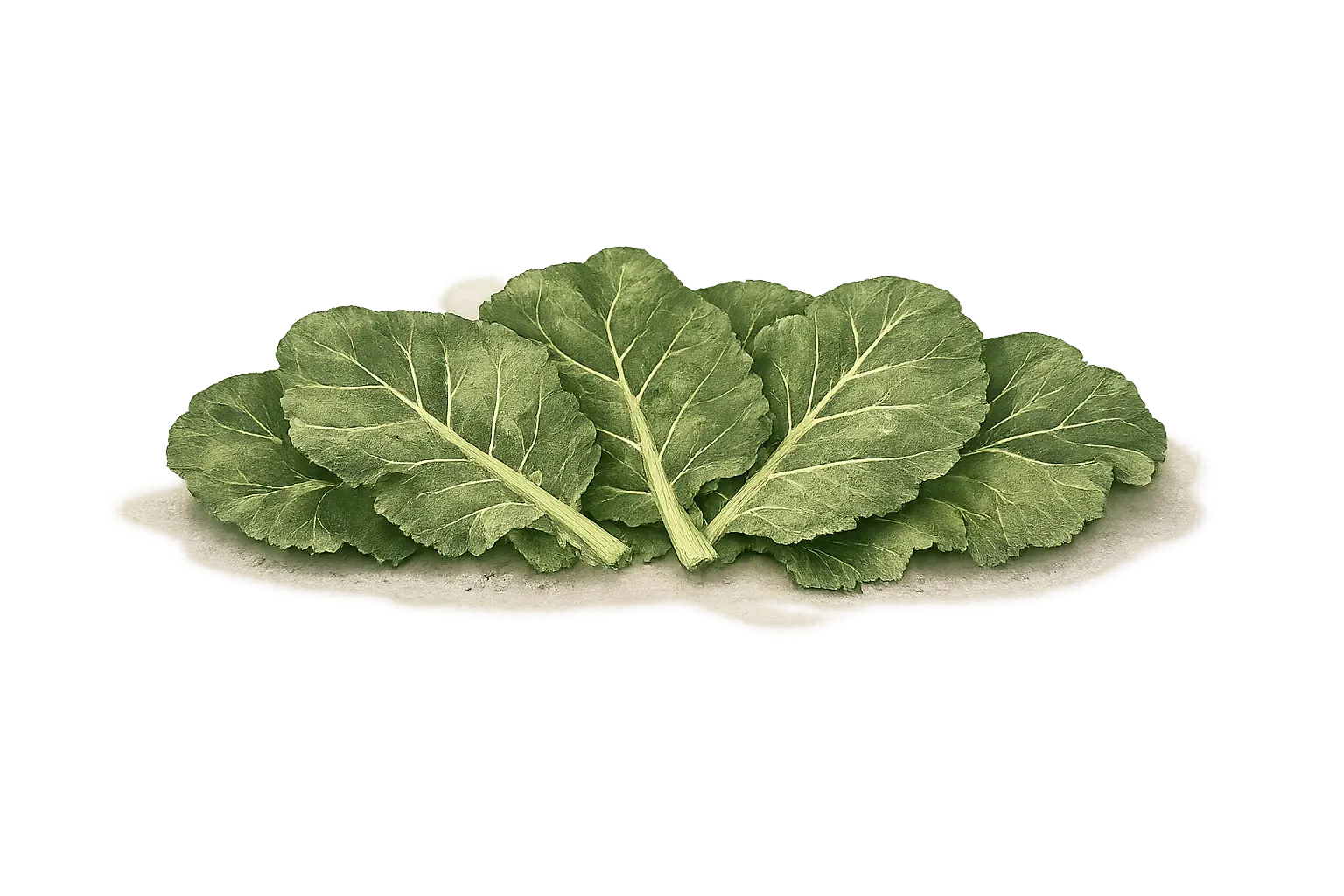
Also: Collard greens ((2 bunches))
Large, sturdy, dark green leaves from a cabbage relative, with a mild bitterness that mellows with long cooking. A Southern US staple, traditionally simmered low and slow, often with smoked pork, until fully tender rather than served raw.
- condensed broccoli and cheese soup
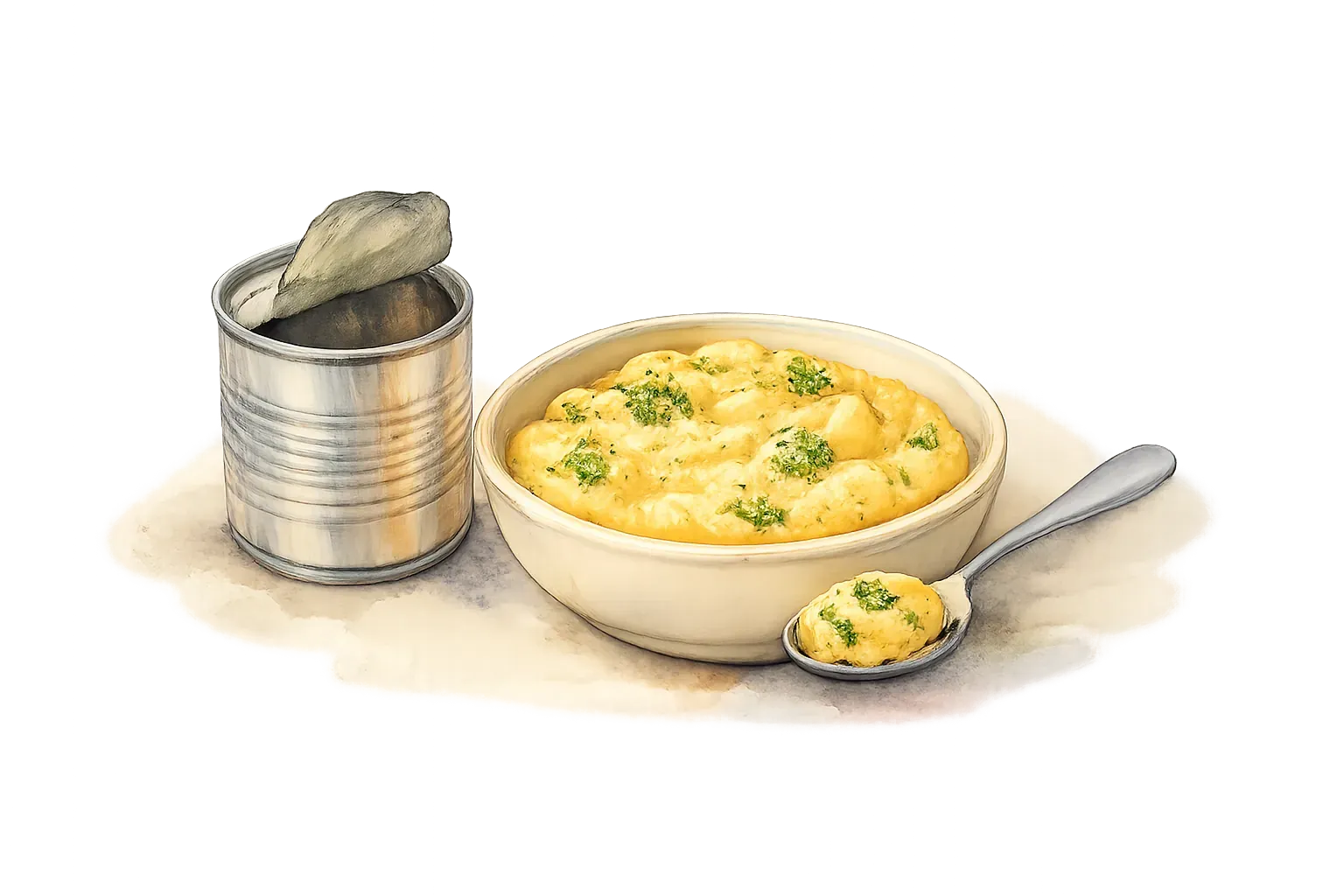
Also: Campbell's condensed broccoli and cheese soup
A canned condensed soup of broccoli, cheese sauce, and seasoning, meant to be diluted with water or milk like other Campbell's-style condensed soups. Used both prepared as its own soup and, as a shortcut ingredient, folded into a homemade soup or casserole for instant broccoli-cheese flavor and thickening power.
- confectioners sugar
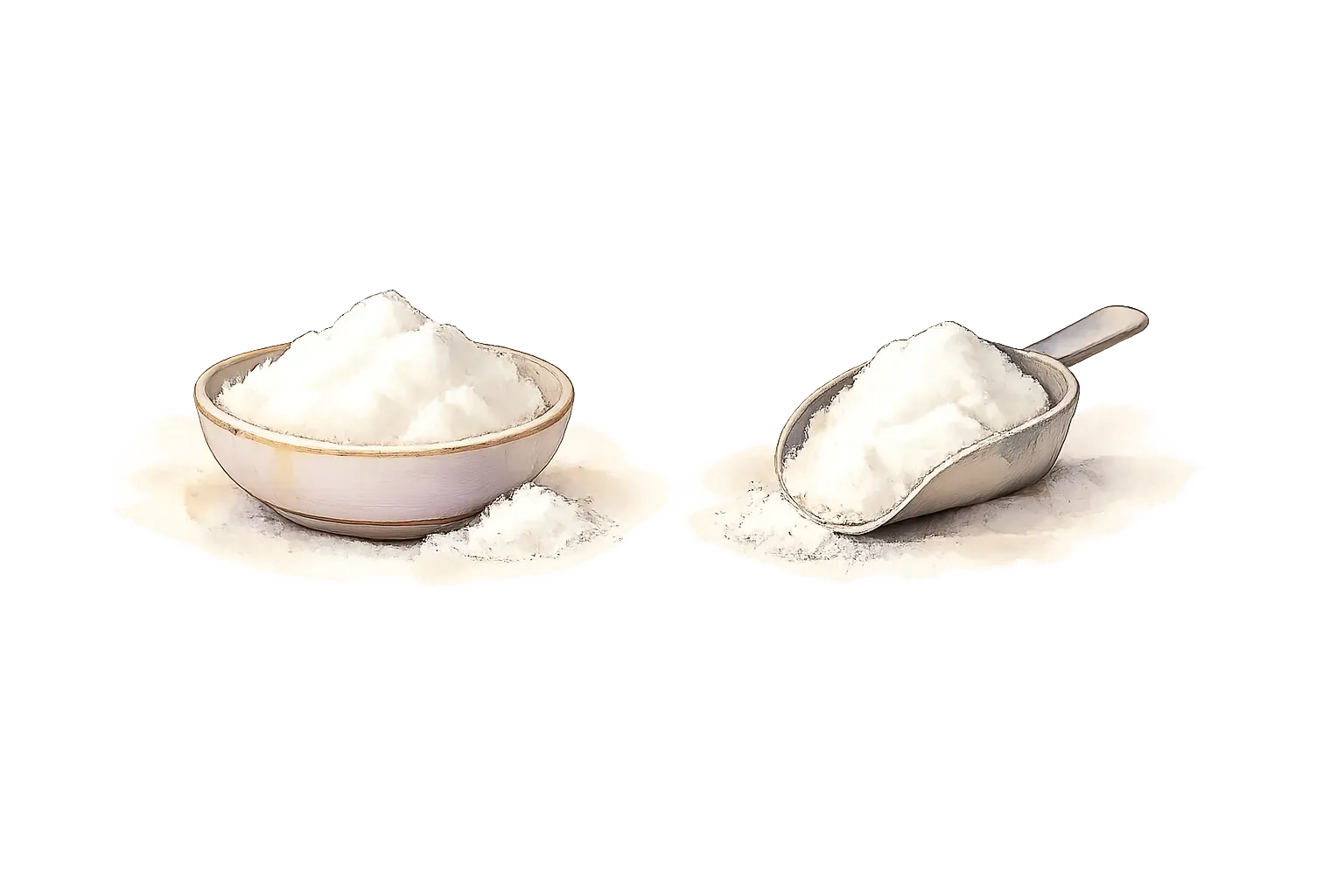
Also: powdered sugar, icing sugar
Granulated sugar ground into a fine powder and mixed with a small amount of cornstarch to keep it from clumping, giving it a much lighter, fluffier texture than regular sugar by volume. Used for glazes, frostings, and dusting, where it dissolves smoothly into liquid without the graininess granulated sugar would leave behind.
A kind of sugar
- cooking spray
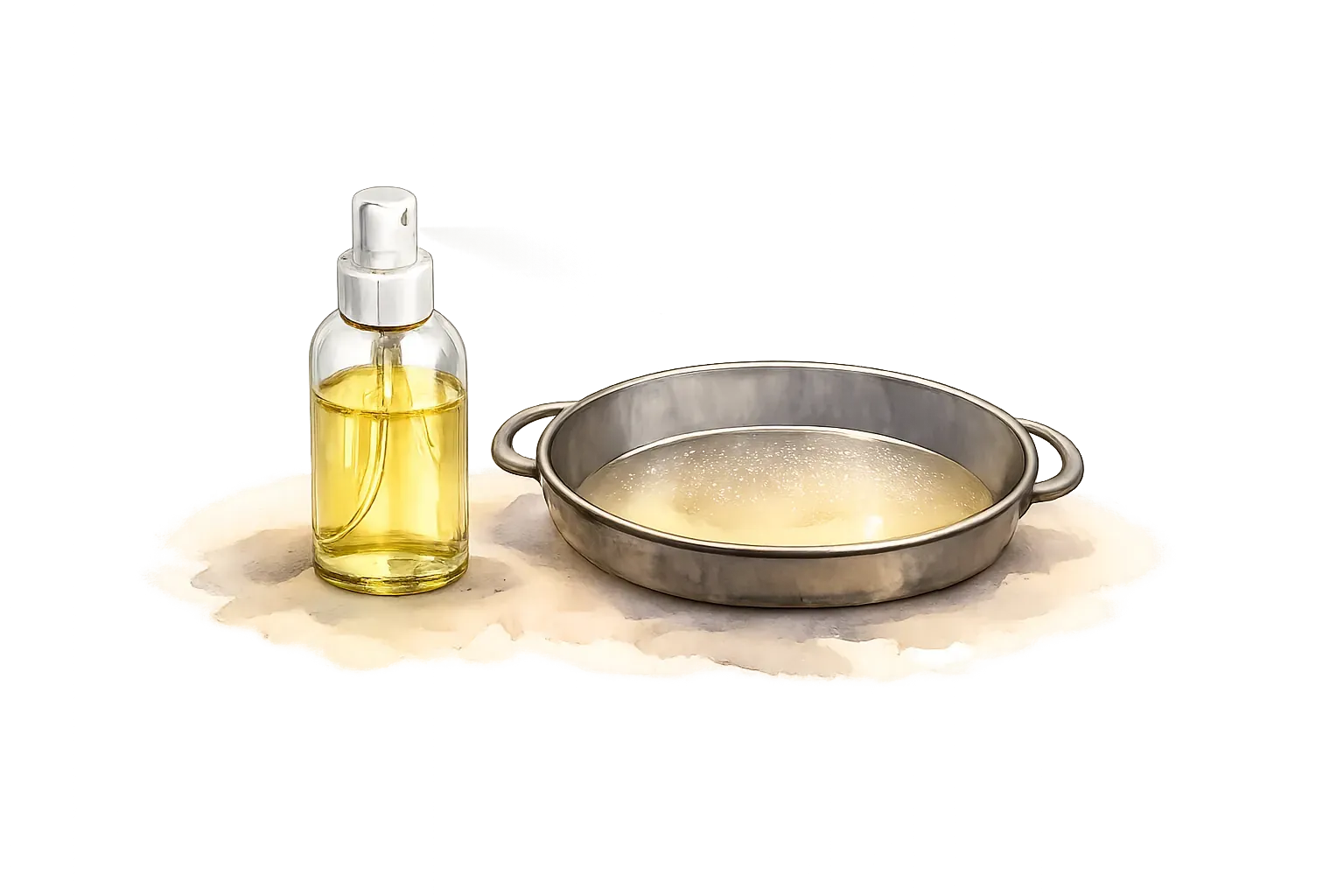
Oil in an aerosol or pump spray, applied in a thin, even film to keep food from sticking to a pan or baking dish. It's a delivery method more than a distinct ingredient -- most brands use a neutral refined oil chosen for how thin and even a coat it lays down.
- coriander
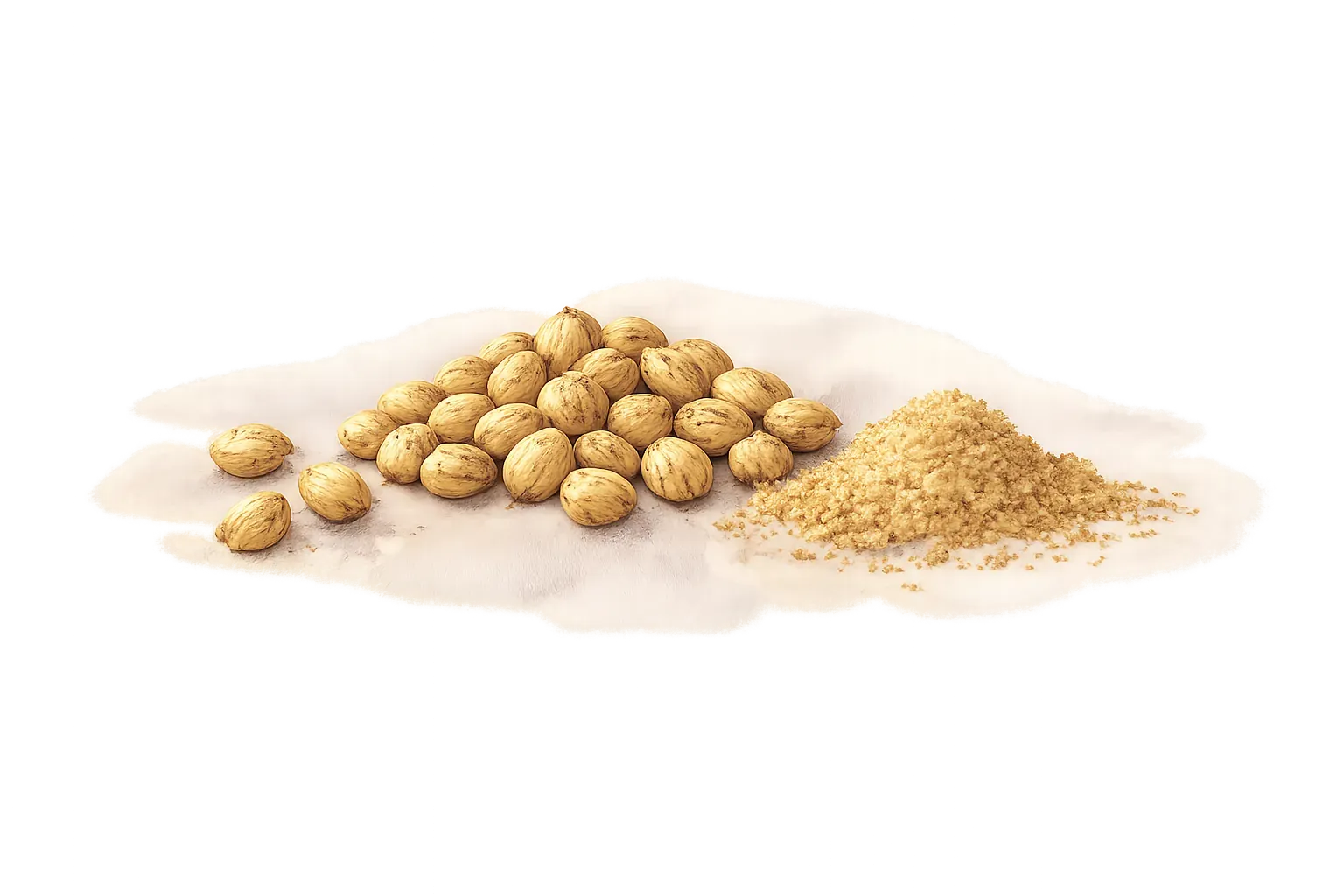
The dried seed of the coriander plant -- the same plant fresh cilantro leaves come from -- with a warm, citrusy, faintly floral flavor completely distinct from the fresh leaf. Sold whole or ground, and used far more in spice blends and long-cooked dishes than as a standalone seasoning.
- corn
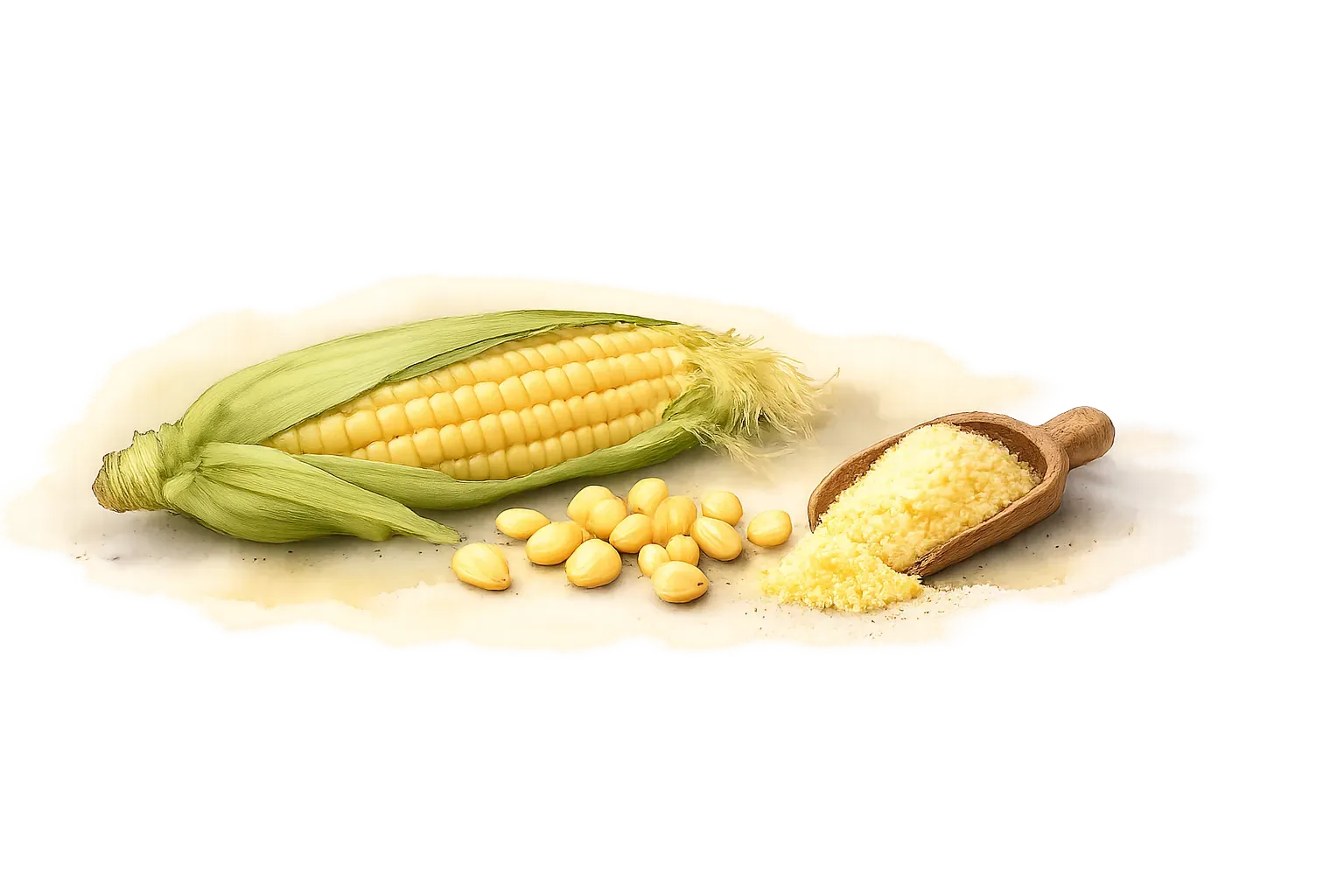
Also: Sweet corn, can yellow corn, sweet whole kernel corn, white corn
A sweet vegetable grain, eaten as fresh kernels (on or off the cob) or used dried and processed into cornmeal, masa, and other products.
More specific: cream-style corn
- corn oil
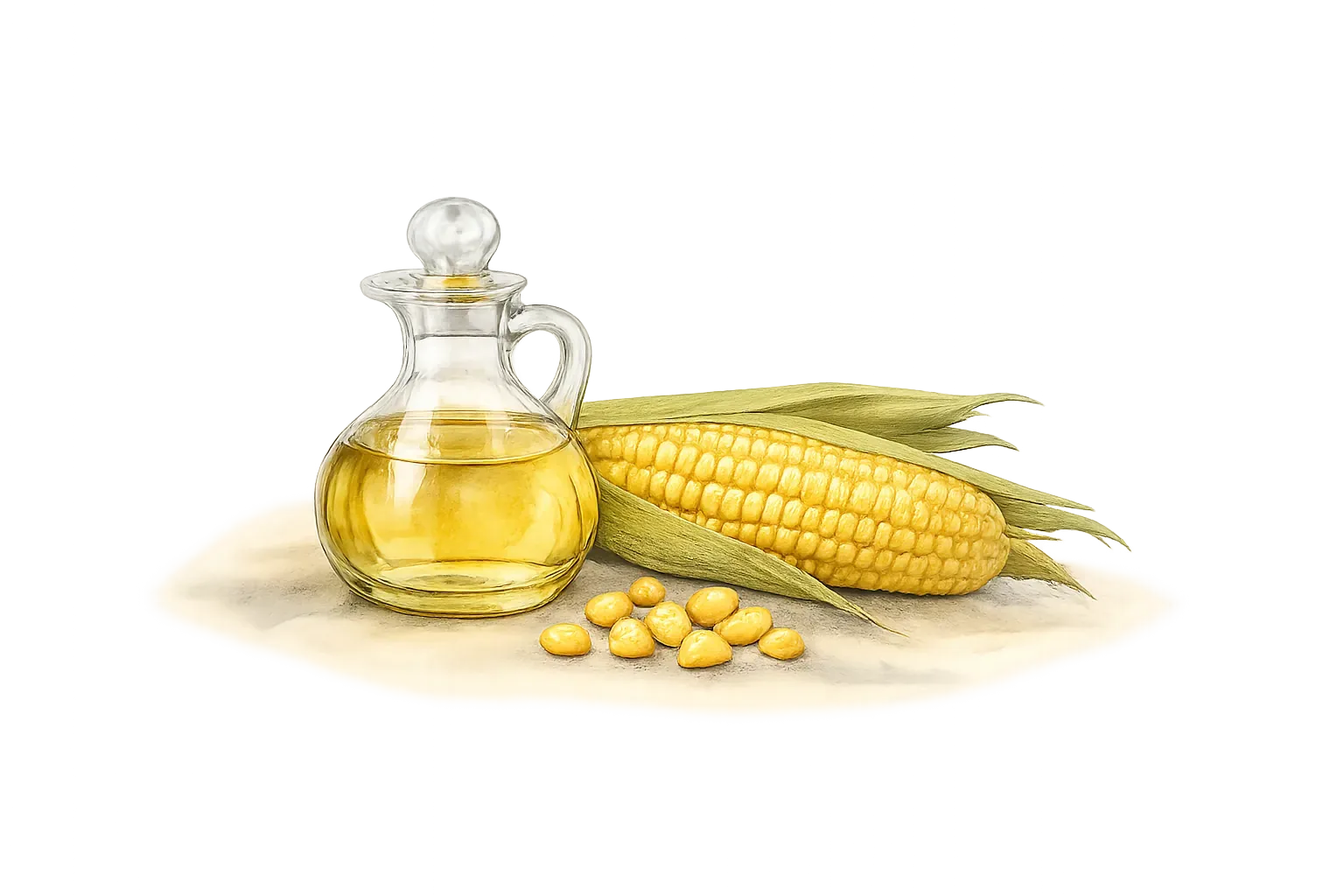
A neutral, high-smoke-point vegetable oil pressed from corn -- interchangeable with canola or other neutral oils in most cooking, valued for its high smoke point and low cost. Common in Southern and Tex-Mex frying and sautéing.
A kind of vegetable oil
- corn tortillas
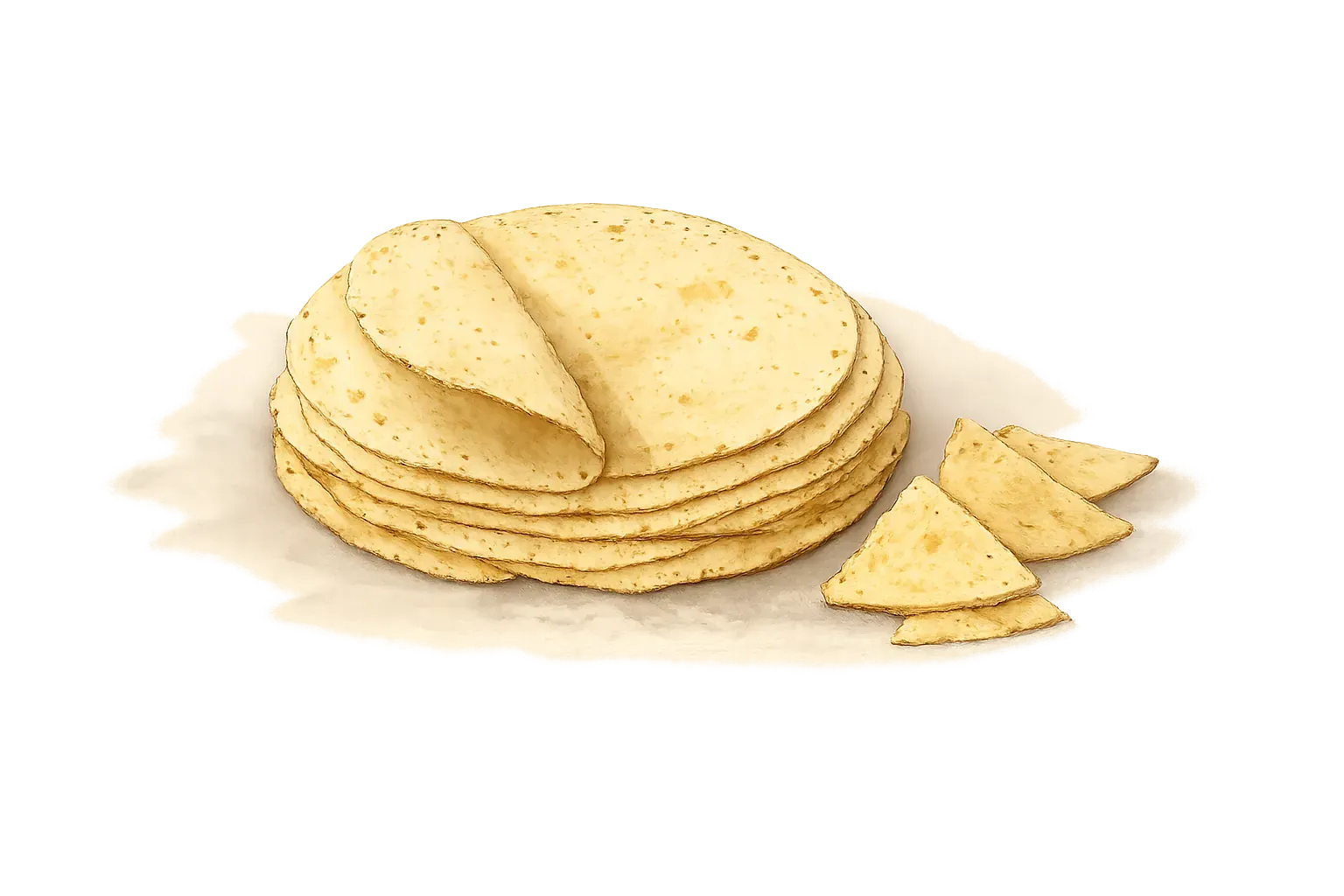
Thin, round flatbreads made from corn masa -- the base for tacos, enchiladas, and similar dishes, and also cut into strips or wedges and fried into chips. Unlike flour tortillas, they contain no gluten, so they're less stretchy and can crack if folded cold.
- corned beef
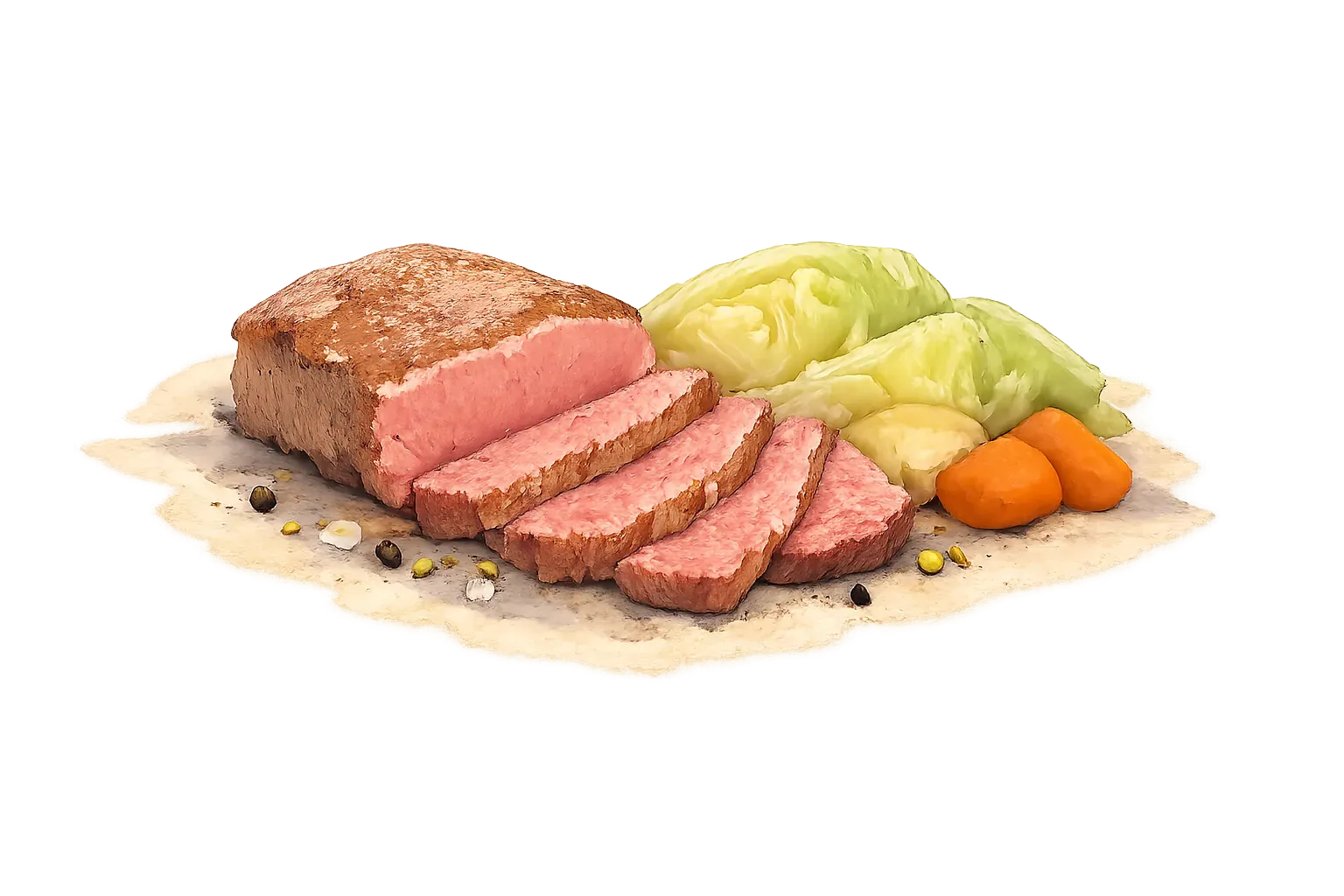
Also: 2-4 lb corned beef
Beef brisket cured in a seasoned salt brine -- traditionally with large 'corns' of coarse salt, which is where the name comes from. It's simmered or slow-cooked until fork-tender, classically alongside cabbage, and arrives already well seasoned by the cure.
- corned beef liquor
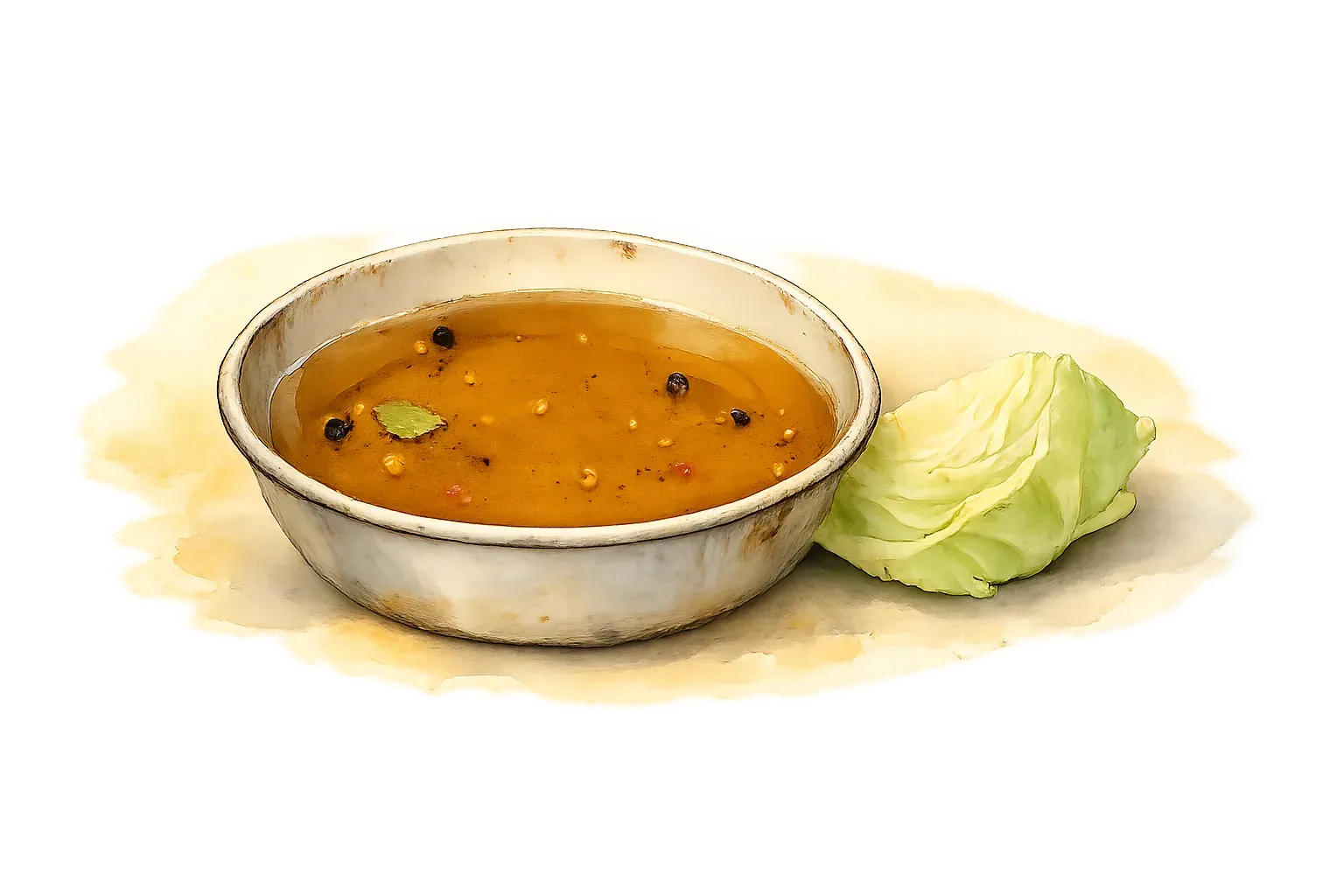
The seasoned cooking liquid left over from simmering corned beef -- concentrated with dissolved salt, gelatin, fat, and spice from the brisket and its seasoning packet. It's flavorful enough to reuse as a braising liquid for other vegetables, most classically cabbage, rather than being poured down the drain.
- cornmeal
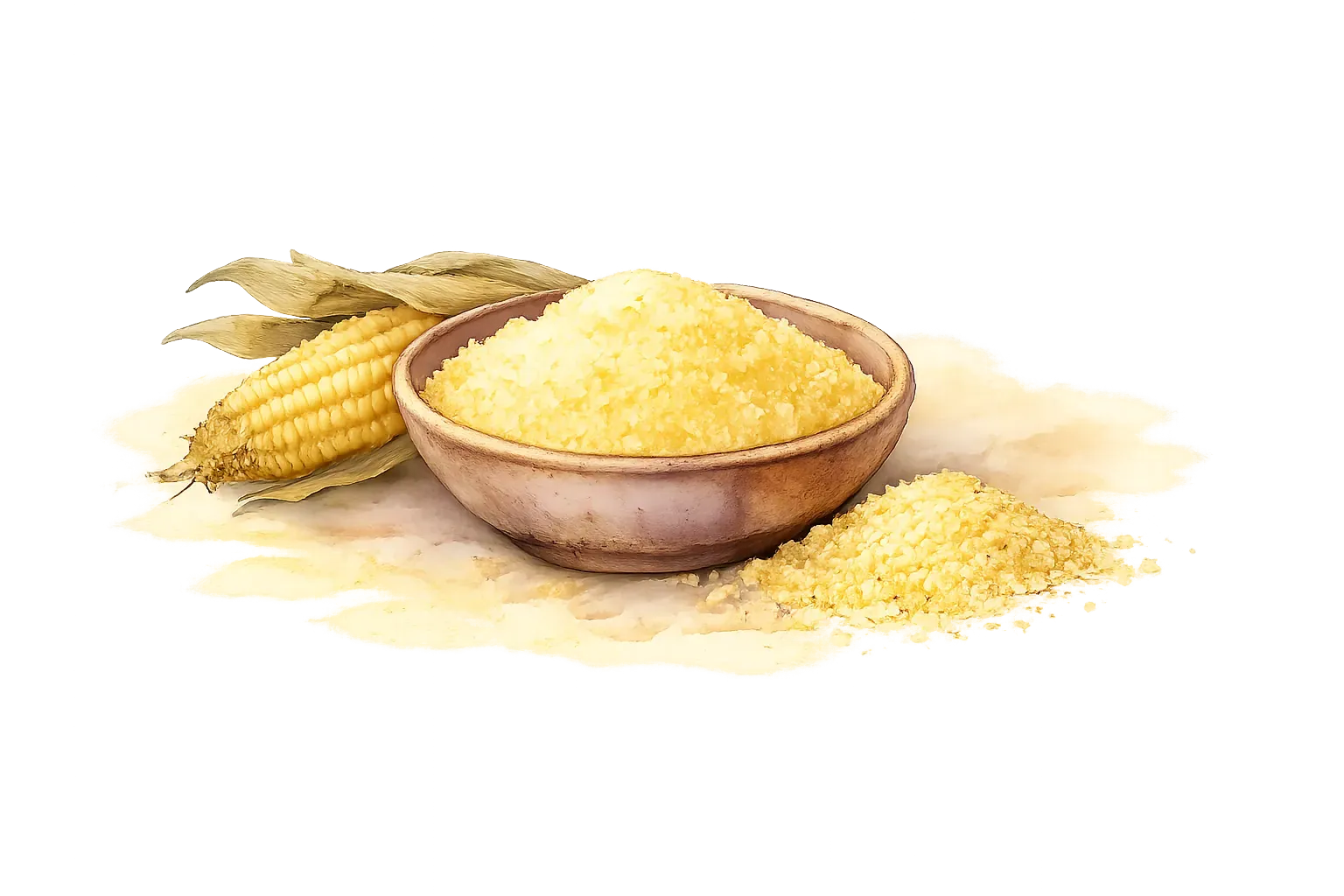
Corn ground into a coarse meal, used for cornbread, as a crisp coating for frying, and cooked into porridge-like dishes such as polenta and grits. The grind ranges from fine to coarse, and that grind changes both texture and how long it needs to cook.
- cornstarch
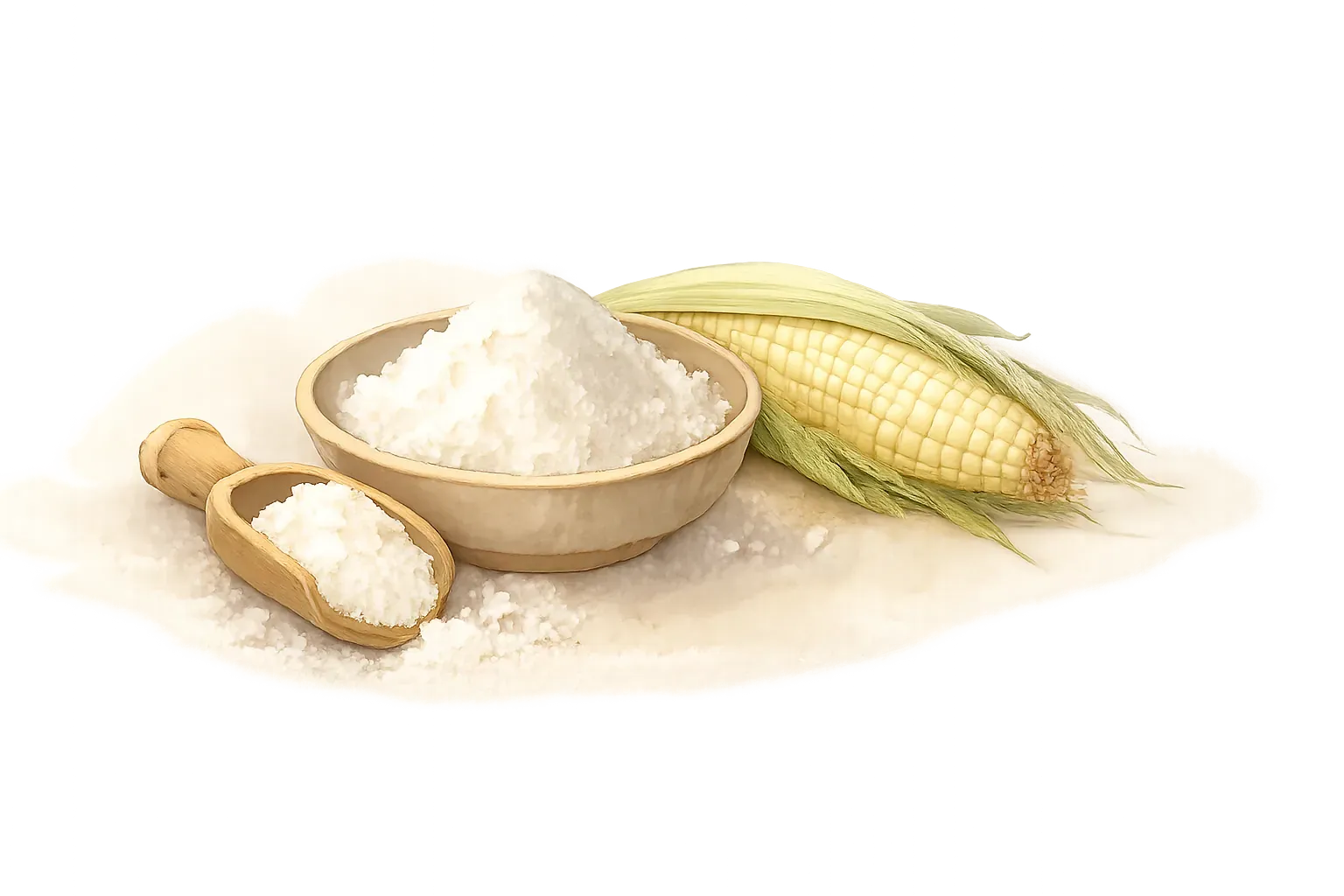
Also: corn starch
A fine, powdery starch extracted from corn, used to thicken sauces, gravies, and fillings. It's almost always mixed with cold liquid into a smooth slurry before going into something hot -- added dry, or straight into hot liquid, it clumps instead of dissolving.
- cottage cheese
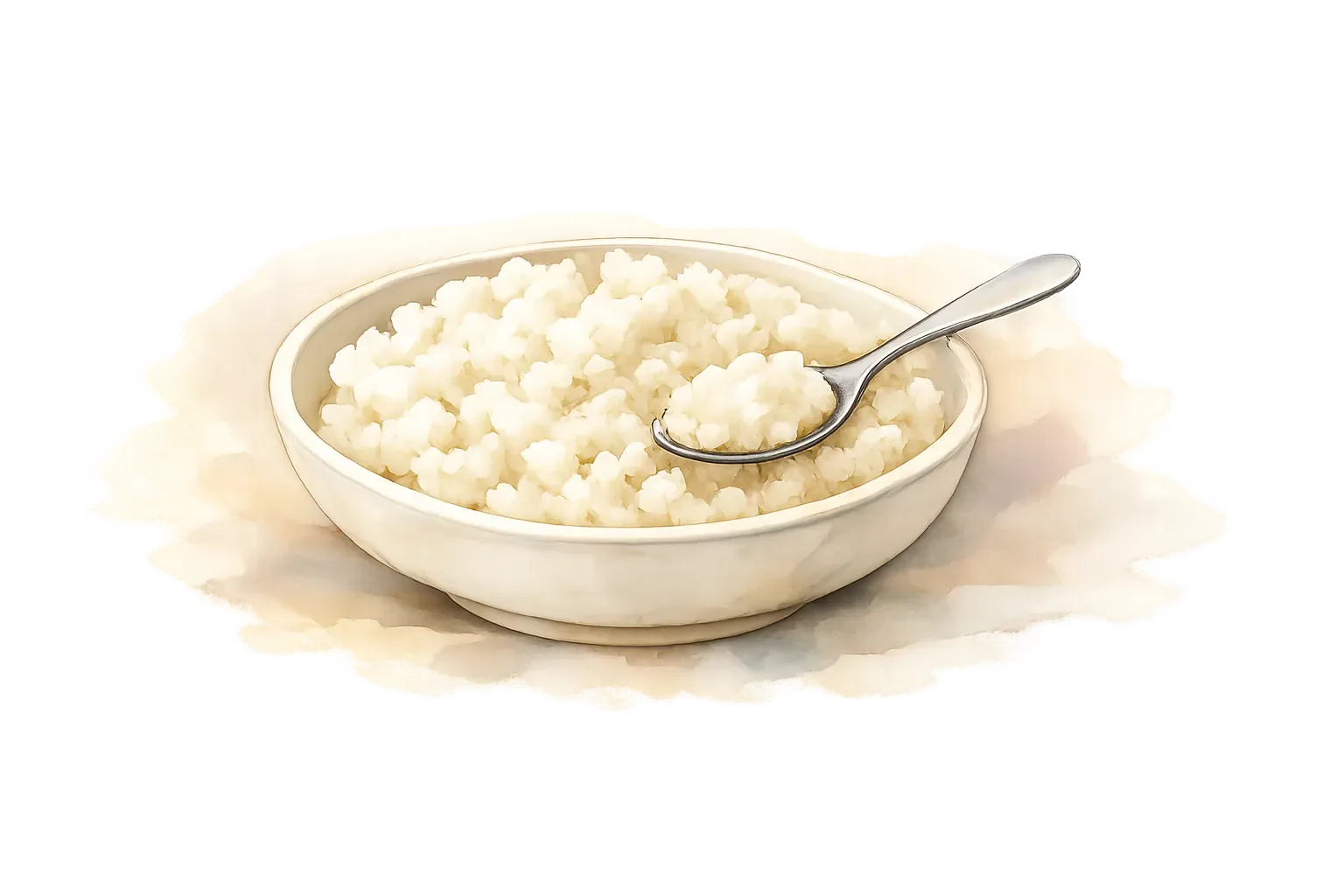
A fresh, mild, lumpy-curd cheese with a slight tang, aged little enough that it barely melts. Eaten on its own, or blended smooth and folded into baking and casseroles for moisture and protein without much added flavor.
- country ham
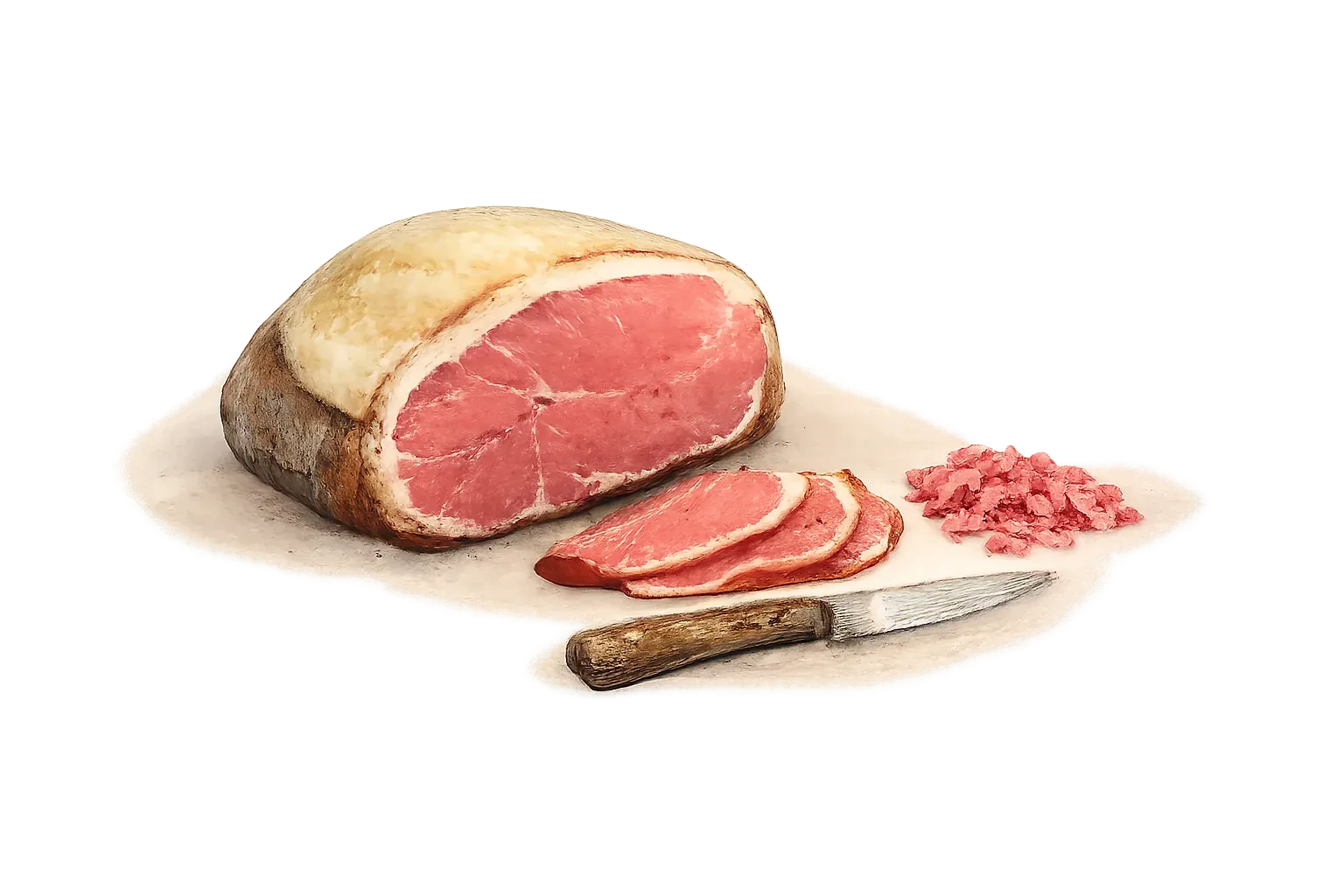
A Southern-style dry-cured, aged ham, salted and hung to dry for months rather than wet-brined and smoked the way a supermarket "city ham" is. Far saltier and more intensely flavored than regular ham -- used in small amounts, diced or shredded, to season soups, beans, and greens rather than eaten in large slices the way a holiday ham would be.
A kind of ham
- country sausage
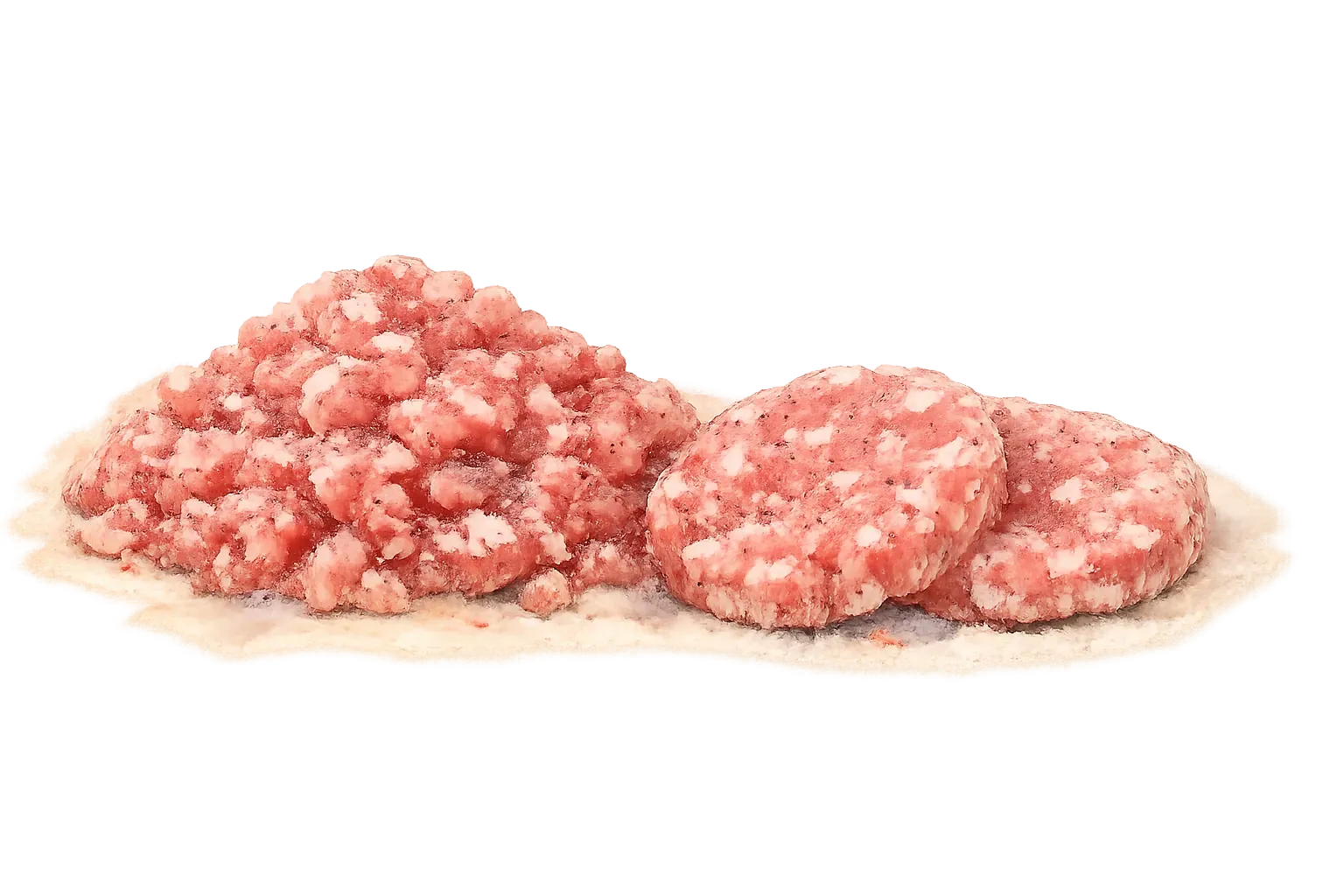
Also: Country Sausage (not hot)
A coarsely ground, well-seasoned fresh pork sausage in the American Southern breakfast style, sold loose in bulk or formed into patties rather than stuffed into casings and links. It's raw and must be fully cooked, typically browned in a skillet.
A kind of sausage
- crab meat
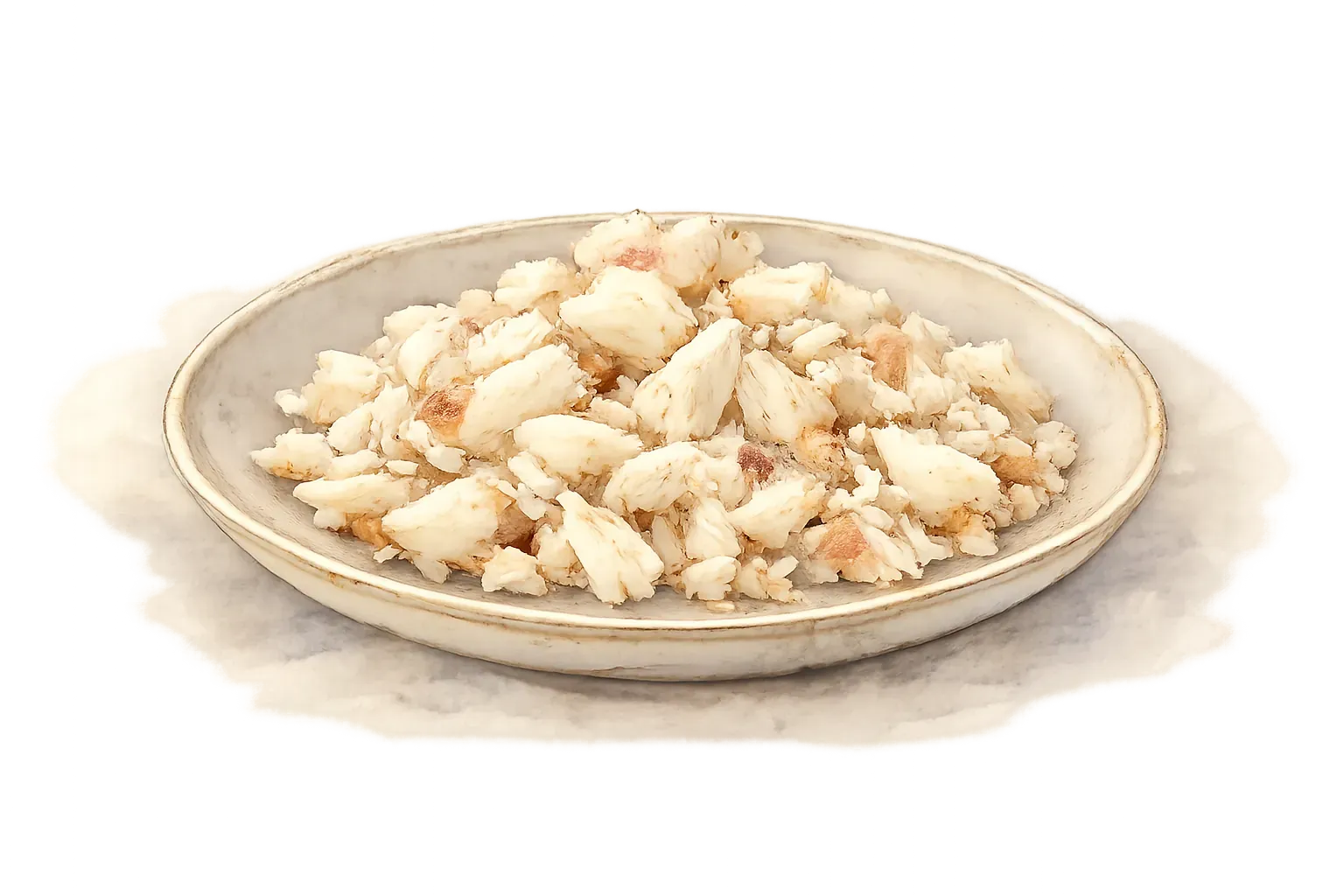
Also: backfin blue crab meat, Blue Crab Meat
The cooked, picked meat from crab, sold fresh, pasteurized in a can or tub, or frozen, in graded qualities. Used in crab cakes, salads, and other seafood dishes where it's the star ingredient rather than something cooked for long.
- cream

The high-fat layer skimmed from milk, used to enrich sauces and soups or whipped into peaks for desserts. Fat content defines the different products sold as cream: heavy or whipping cream is high enough in fat to whip and to simmer without curdling, while light cream is thinner and more prone to breaking in a hot or acidic sauce.
- cream cheese
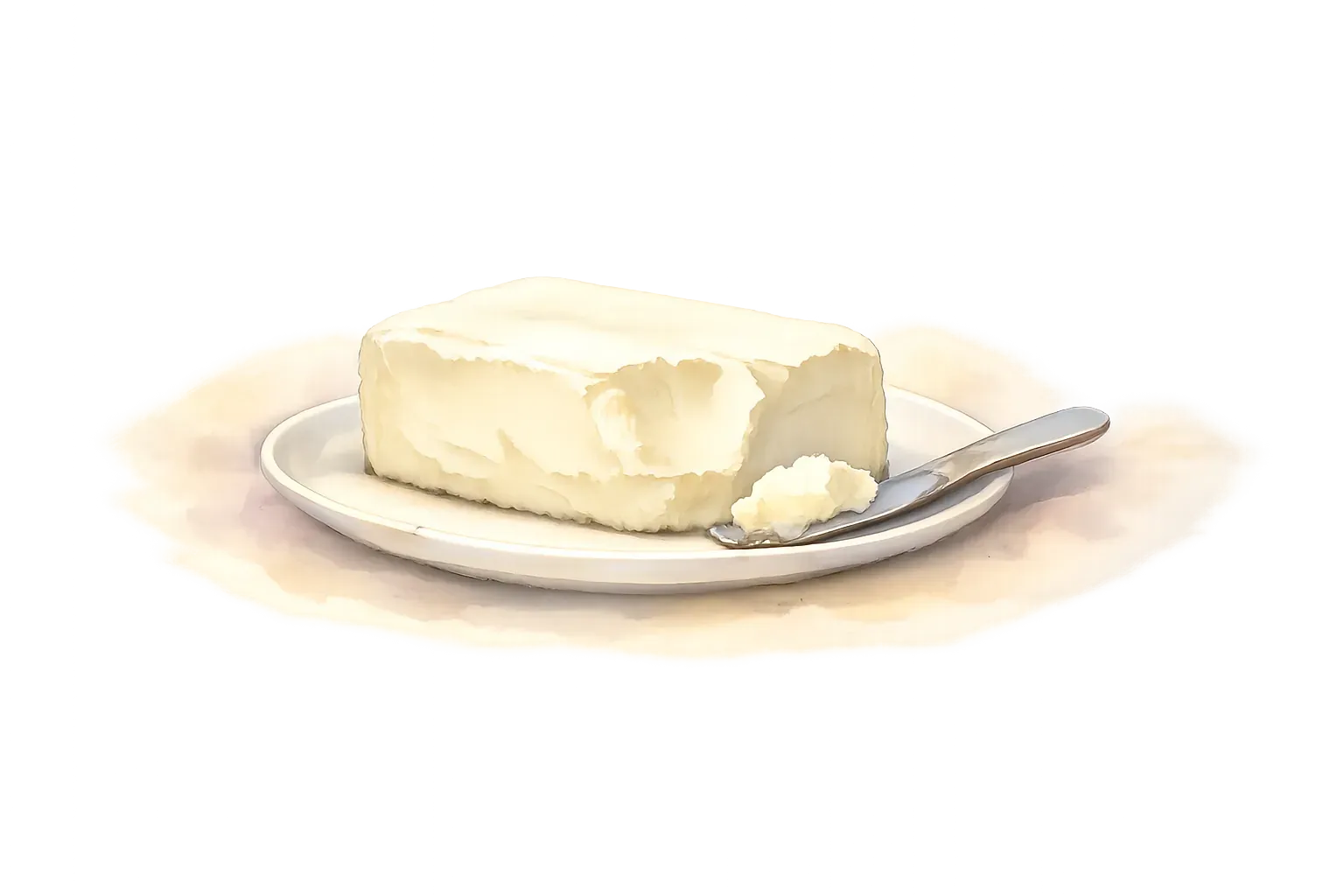
A soft, mild, tangy fresh cheese, spread on its own or used as a base for dips, fillings, and frostings. It doesn't melt the way an aged cheese does -- heated gently it turns smooth and pourable, but overheated it can turn grainy or split.
- cream of celery soup
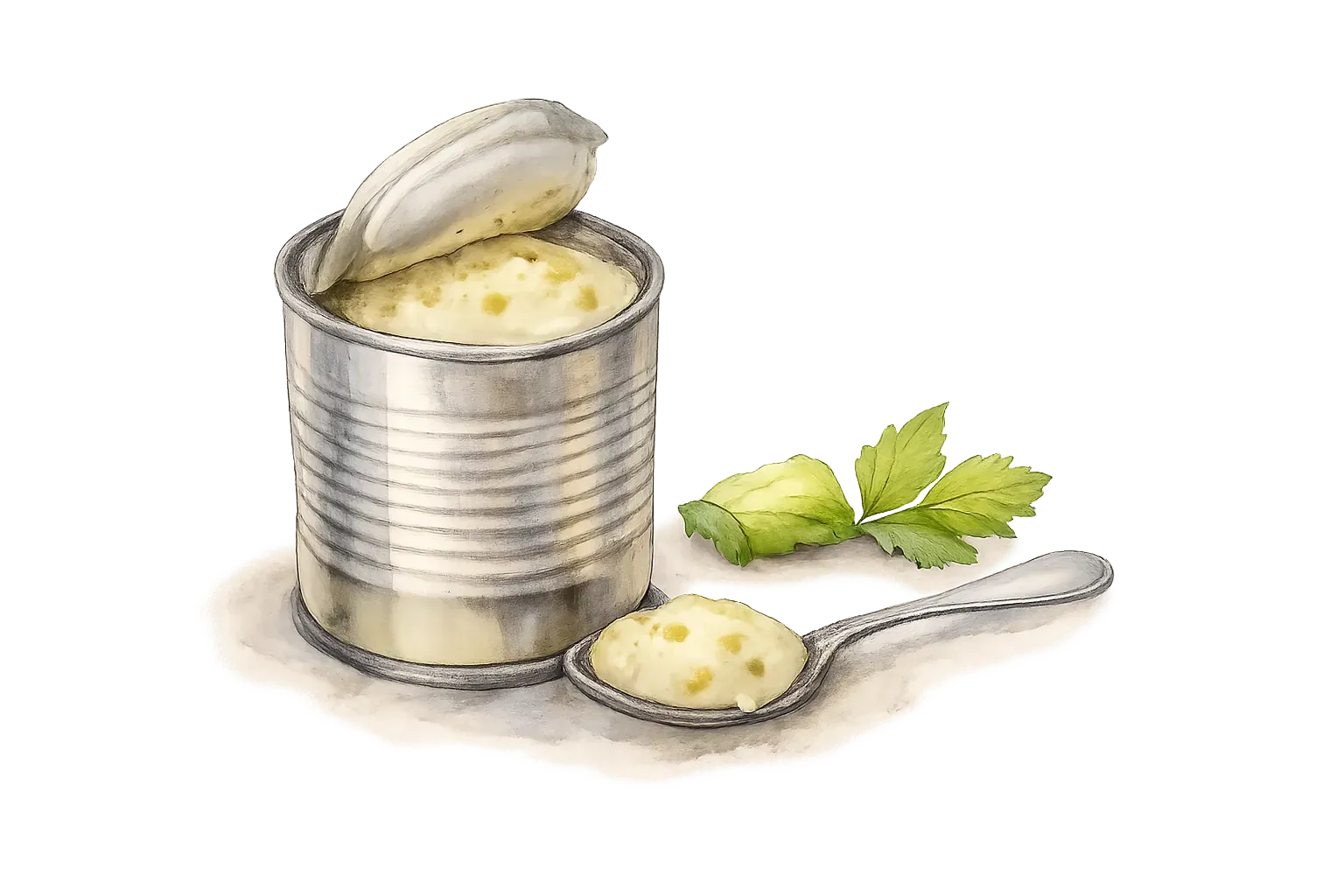
A canned condensed soup built on a celery-flavored white sauce, used the same way cream of mushroom or cream of chicken soup is -- as a one-can shortcut for a creamy, thickened base in a casserole or a chowder, rather than being served on its own as a soup.
A kind of Cream of Mushroom Soup
- cream of chicken soup
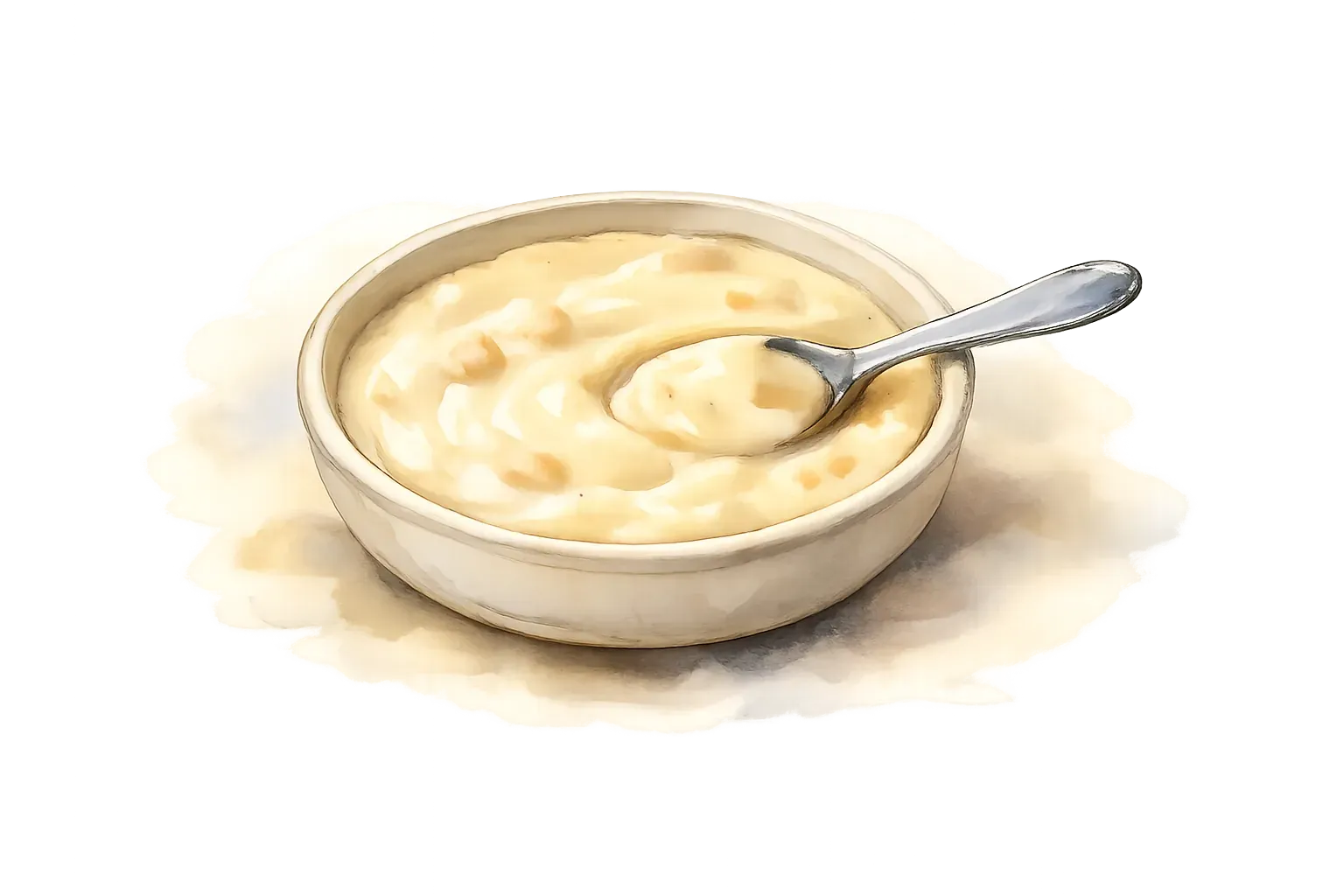
Also: Cream of Chicken & Herbs
A canned, condensed cream soup with a chicken-flavored white sauce base. It's used far more often as a shortcut binder and sauce base in casseroles than as an actual soup, added straight from the can without the dilution the label's soup directions call for.
- Cream of Mushroom Soup

A canned, condensed cream soup with a mushroom-flavored white sauce base. Like other condensed soups, it's used mostly as a ready-made binder and sauce in casseroles, added straight from the can rather than diluted into an actual soup.
More specific: cream of celery soup
- cream-style corn
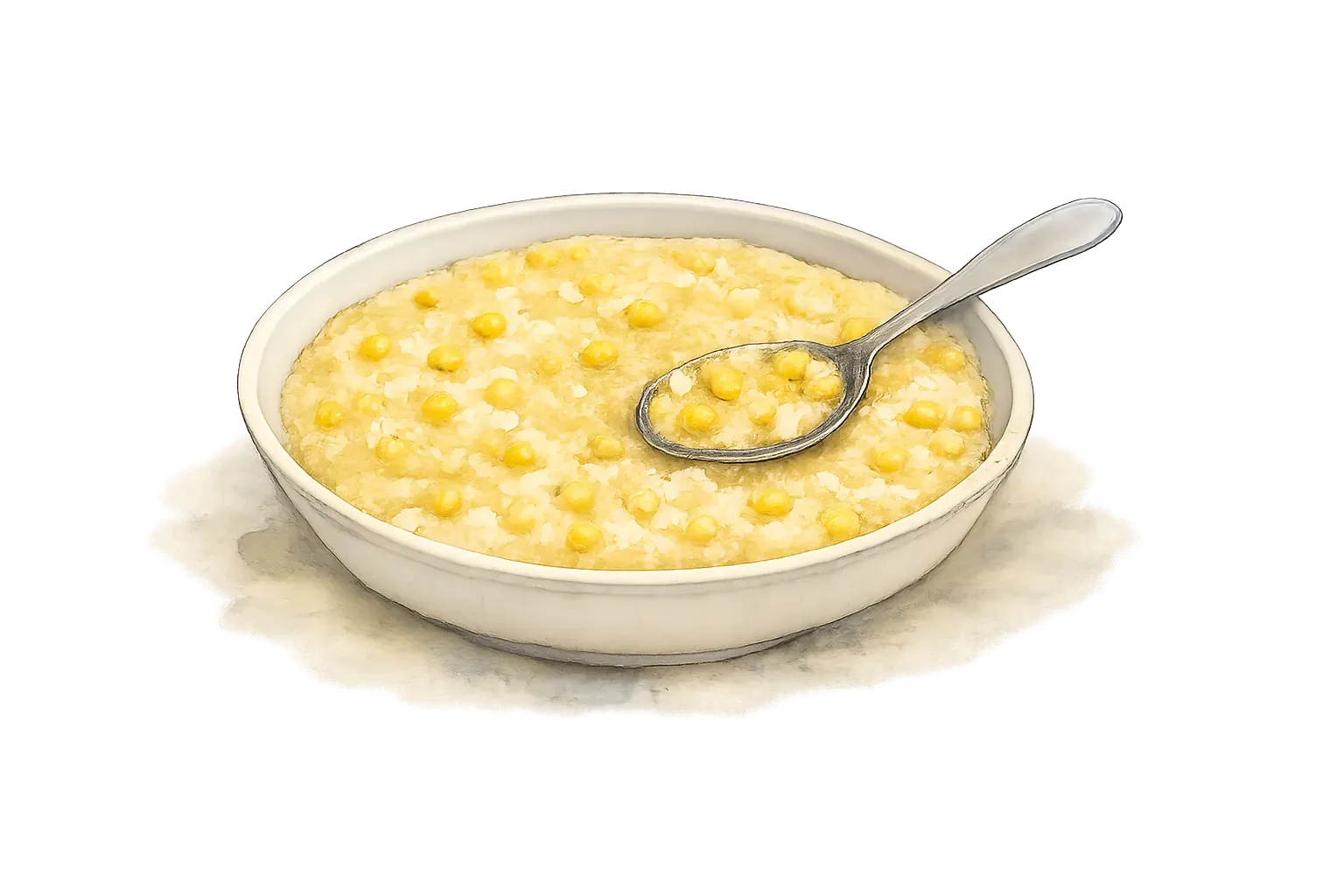
Also: creamed corn
Canned corn where part of the kernels are scraped and pureed into a thick, creamy liquid along with whole or cut kernels, rather than being packed in plain water like regular canned corn -- no actual dairy cream involved, despite the name. Used in chowders, casseroles, and cornbread for both corn flavor and a thickening, creamy texture.
A kind of corn
- crème fraîche

Also: cream friache
A thick, cultured cream, tangy like sour cream but richer and less sharp, with a higher fat content that lets it be boiled or simmered without curdling -- something sour cream can't reliably do. Used as a finishing garnish (a dollop on soup) and, in cooking, as a stable way to add creaminess to a hot sauce.
- crushed peanuts
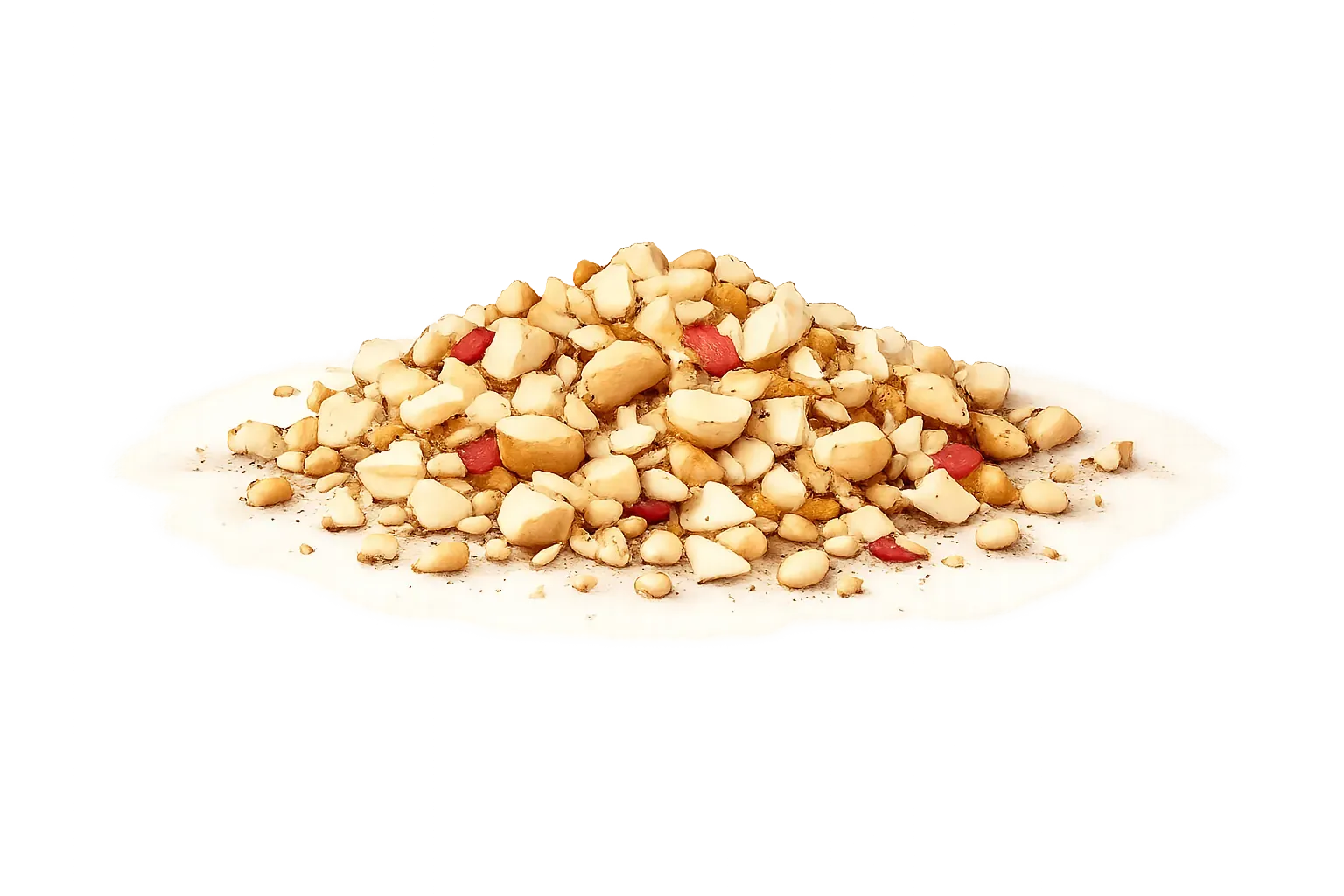
Also: Crushed Peanut
Roasted peanuts broken into small pieces, used as a crunchy topping or garnish, especially in Southeast Asian dishes. Because they're high in oil, they go rancid faster than most pantry staples, so freshness matters more than the printed date suggests.
- crushed tomatoes
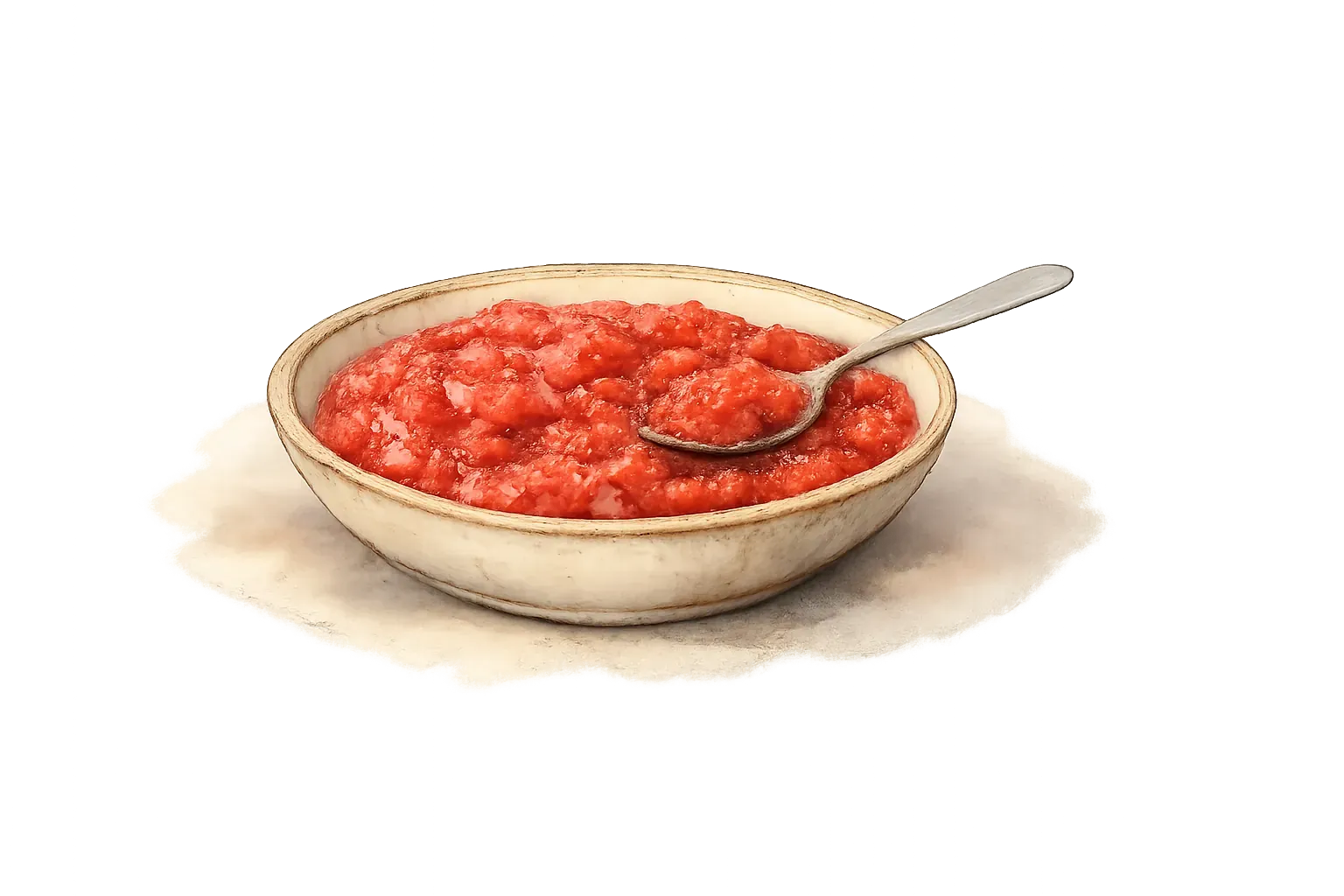
Tomatoes cooked down and crushed to a thick, coarse puree, thicker than tomato sauce but not as smooth as tomato paste; a common base for pasta sauce, chili, and soups.
- cucumbers
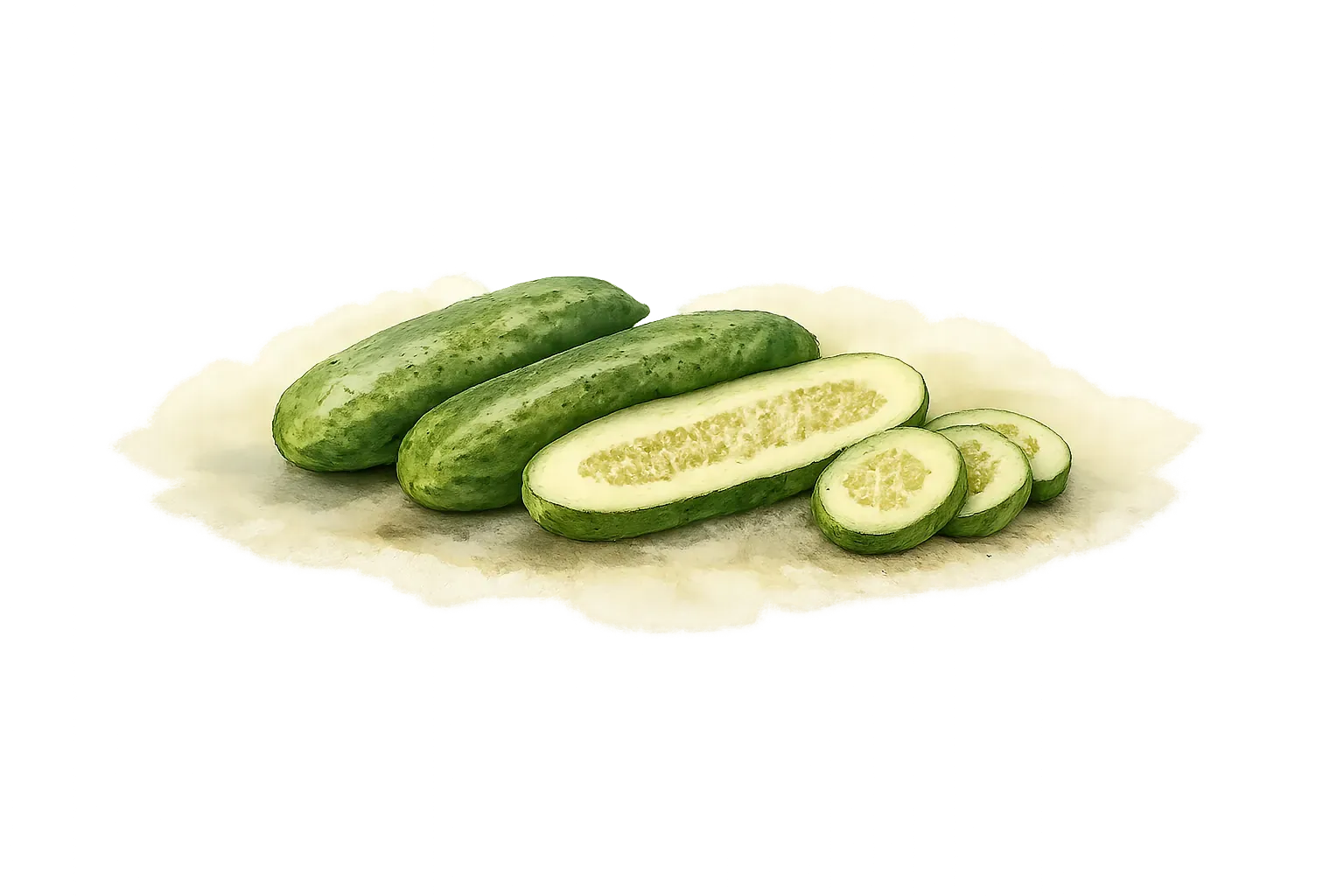
Also: large cucumbers
A crisp, watery, mild vegetable -- botanically a fruit -- eaten raw in salads and sandwiches or pickled. Their high water content is what defines how to use them: great for raw crunch, but they turn soft and shed a lot of liquid if cooked.
- cumin
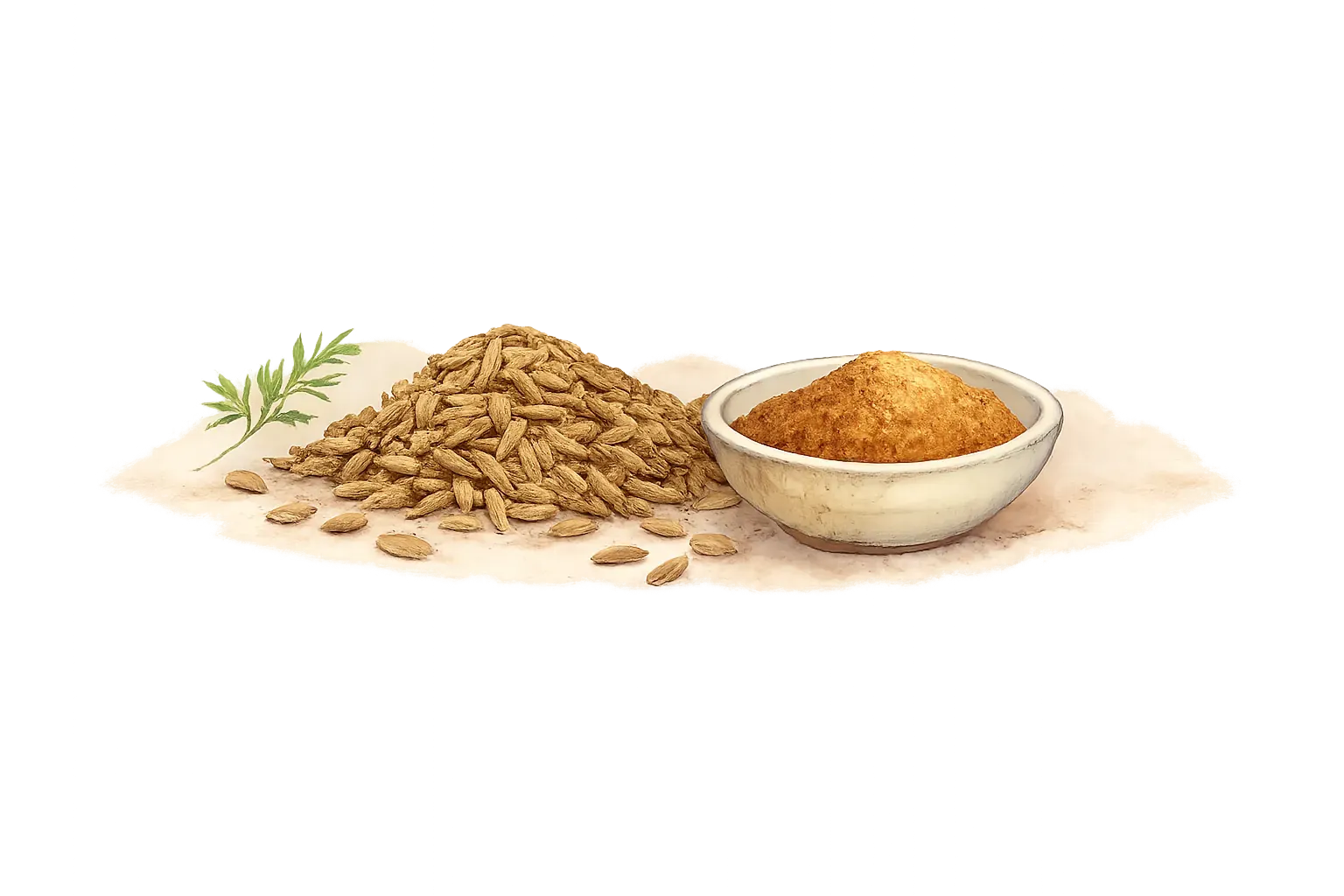
Also: ground cumin
The dried seed of a plant in the parsley family, sold whole or ground, with a warm, earthy, slightly smoky flavor central to Mexican, Indian, and Middle Eastern cooking. Whole seeds toasted briefly in a dry pan or hot oil release noticeably more aroma than pre-ground cumin added straight in.
D
- diced tomatoes
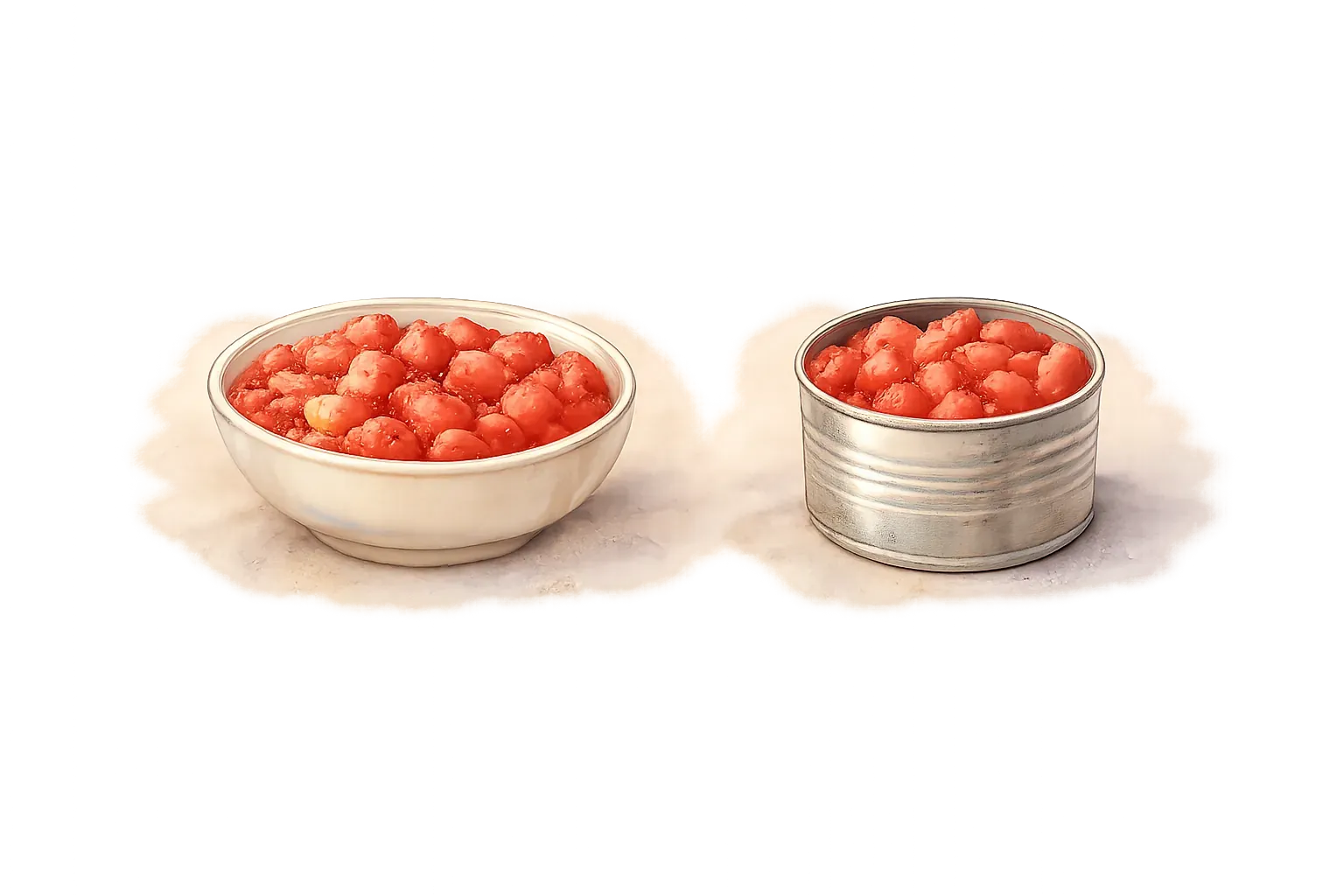
Also: petite diced tomatoes
Canned tomatoes cut into small chunks and packed in their own juice (or a light tomato puree) -- a convenient, ready-to-use form for soups, chilis, and sauces where whole or crushed tomatoes would need more prep. "Petite" diced simply means a smaller, finer chunk, which breaks down into a smoother-textured dish faster.
A kind of tomato
- diced tomatoes with garlic & onion
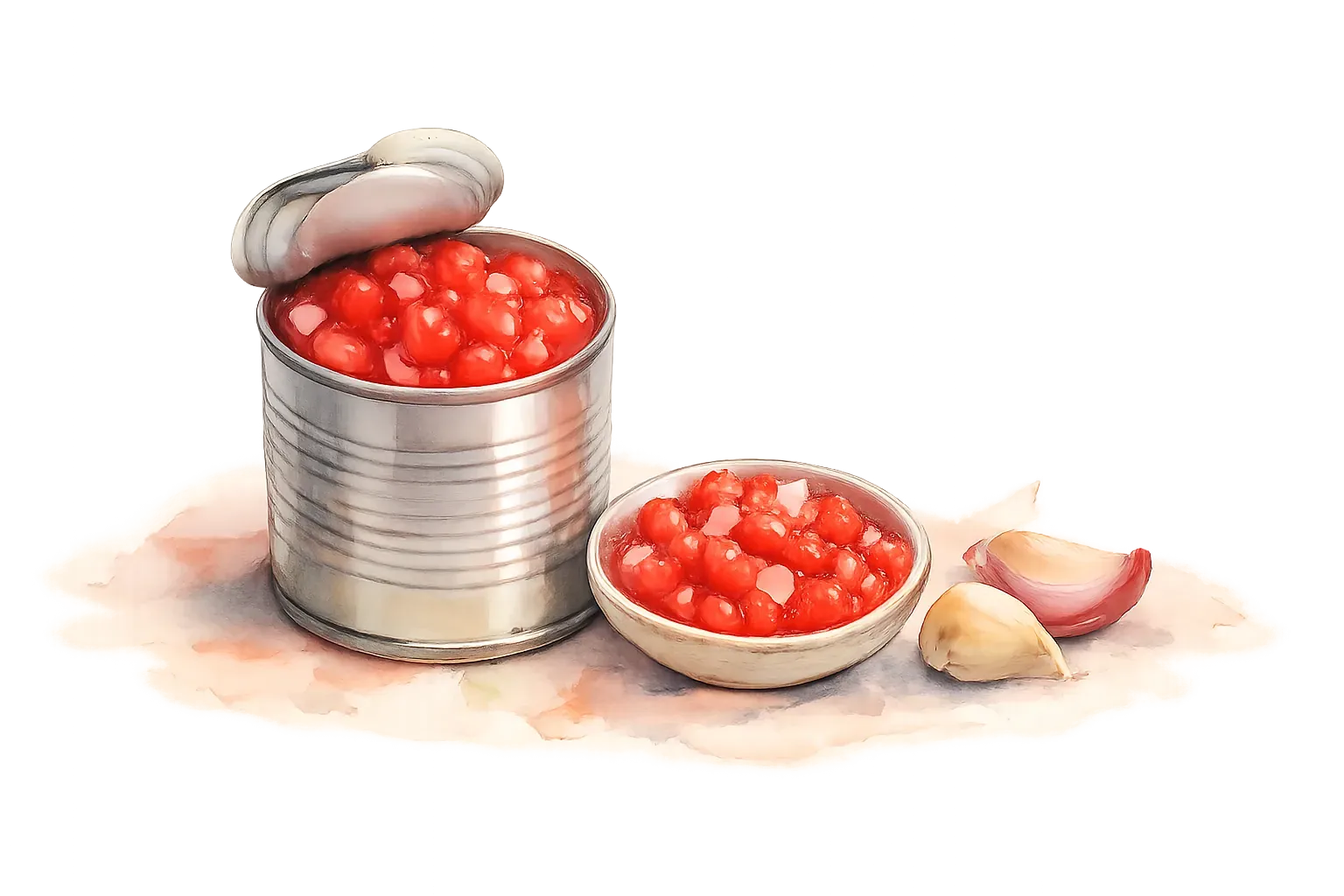
Canned diced tomatoes pre-seasoned with garlic and onion, meant as a shortcut base for sauces, soups, and stews. Because the seasoning is already baked into the can, it saves a step of sauteing aromatics, but it also means accepting the brand's particular salt and garlic-to-onion ratio.
- Dijon mustard

A smooth, sharp French mustard made from brown or black mustard seeds and white wine or verjuice, used as a condiment and in dressings, sauces, and marinades. It's concentrated -- a spoonful carries real heat, acid, and salt at once -- and it doubles as an emulsifier, helping oil and vinegar hold together in a vinaigrette or a pan sauce.
A kind of mustard
- dill weed
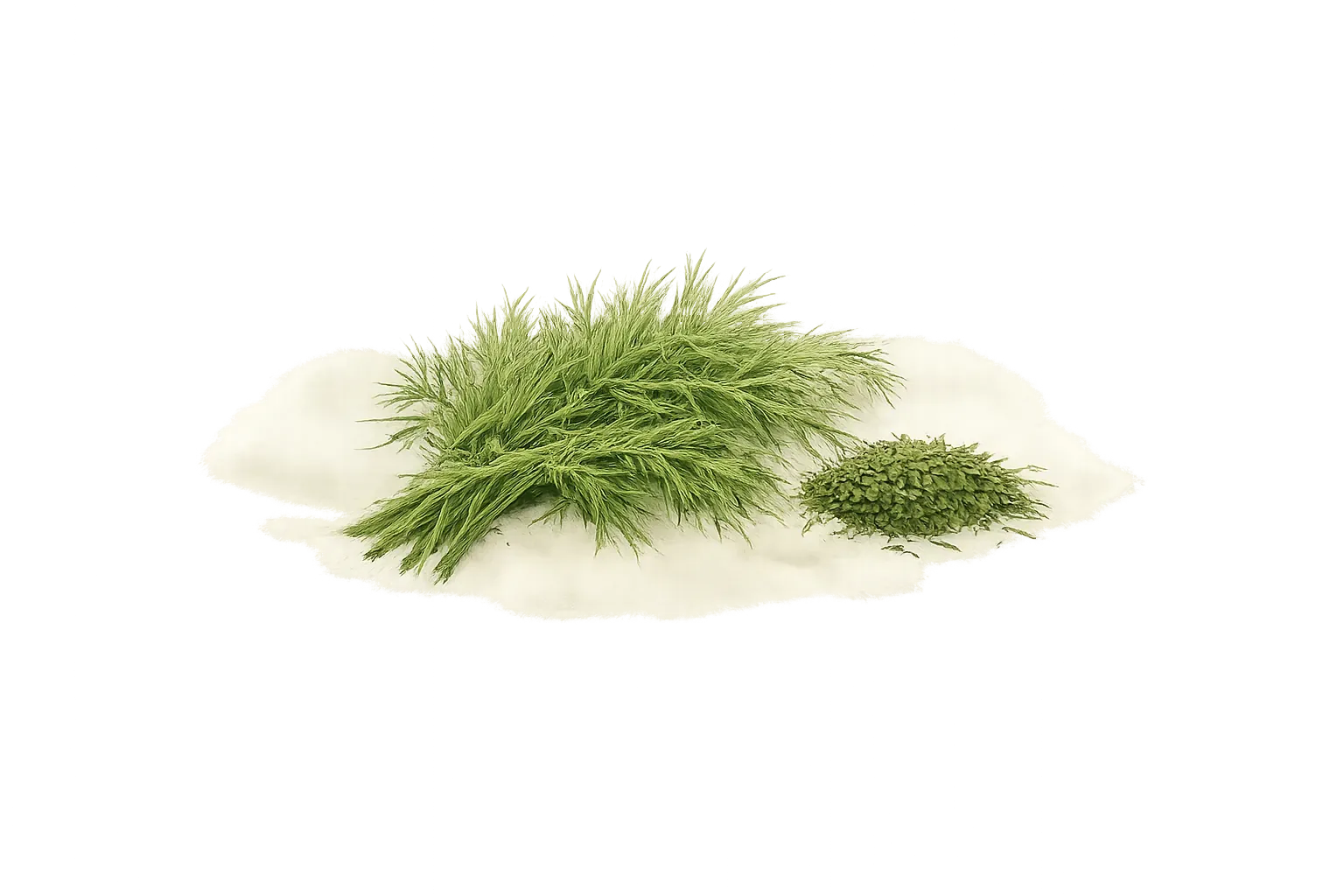
Also: dill
The feathery, fresh (or dried) leaves of the dill plant, with a bright, grassy, anise-like flavor. Used as a finishing herb rather than a base flavor -- stirred in raw or added in the last few minutes of cooking so its aroma survives, since prolonged heat dulls it. Common with fish, potatoes, cucumbers, and pickles.
- dinner rolls
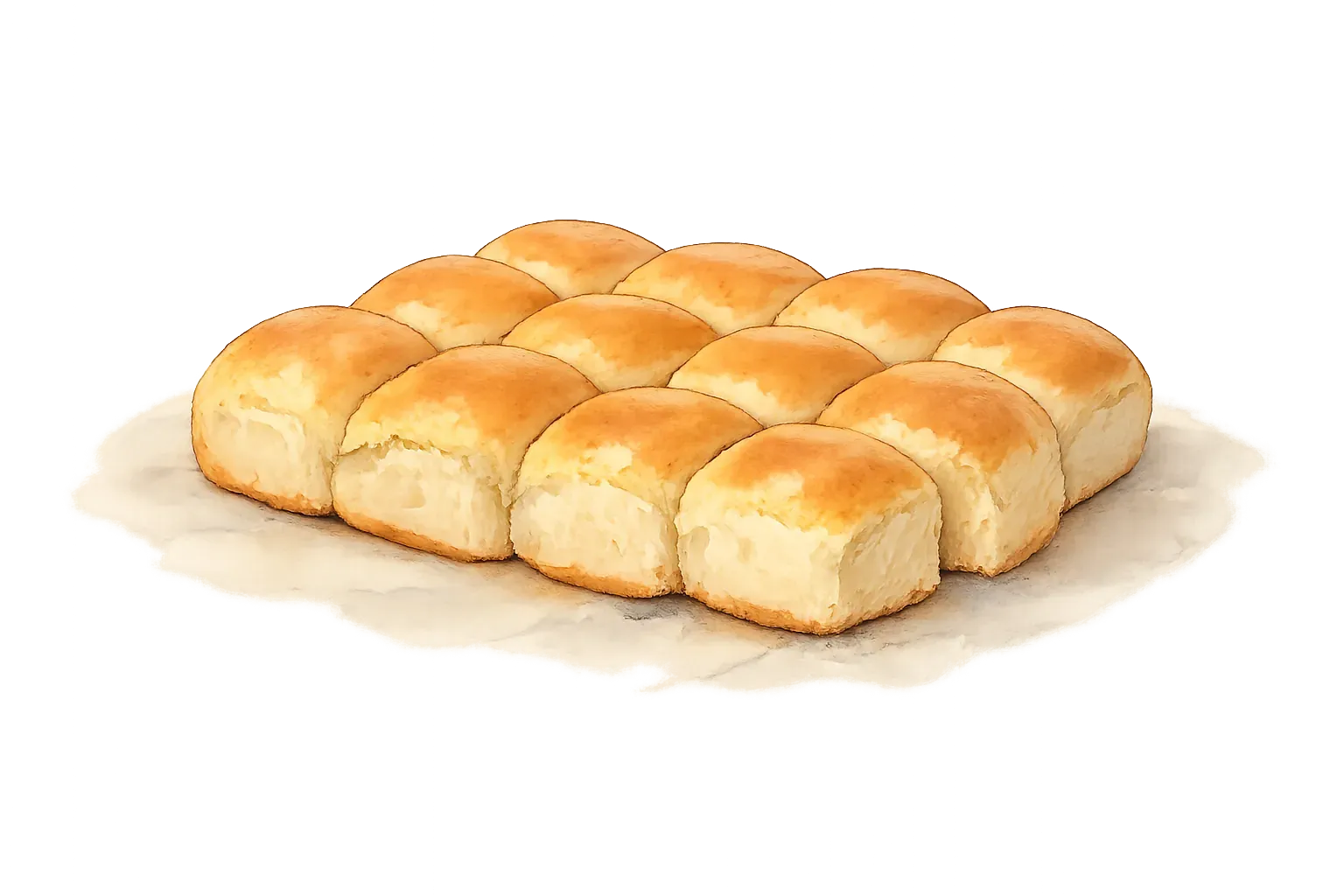
Also: party rolls, Pepperidge Farm Party Rolls
Small, soft, individually-portioned rolls sold pre-baked in a tray or bag of a dozen or more, meant to be split and filled or served alongside a meal rather than eaten as a full sandwich roll on their own. Their small size and soft crumb make them a common base for baked party sliders -- a whole tray gets sliced through as one block, filled, and rebaked together.
- dried apricots

Apricots dried until chewy and concentrated, with a tart-sweet flavor much more intense than fresh apricot. Common in North African and Middle Eastern cooking, stirred into tagines, stews, and rice dishes, where they plump back up slightly as they simmer and add pockets of sweetness against savory, spiced meat.
- dried guajillo chillies
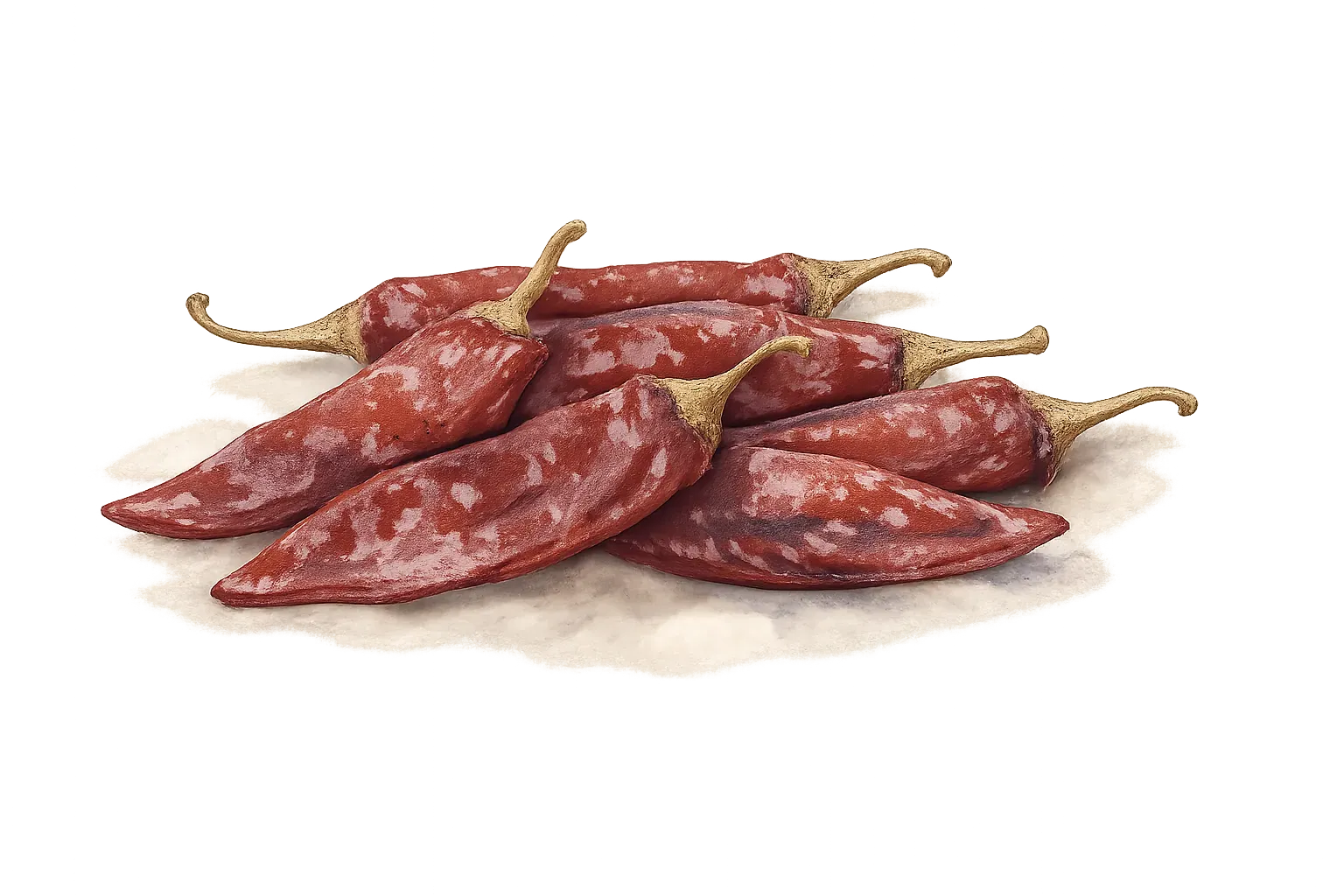
Also: guajillo chiles, dried guajillo chiles, Dried Guajillo Peppers
A mild-to-medium dried Mexican chile with deep red skin and a fruity, slightly tangy flavor. Sold whole and dried, then rehydrated in hot water until pliable and blended into sauces, adobos, moles, and salsas rather than eaten straight from the bag.
- drummettes
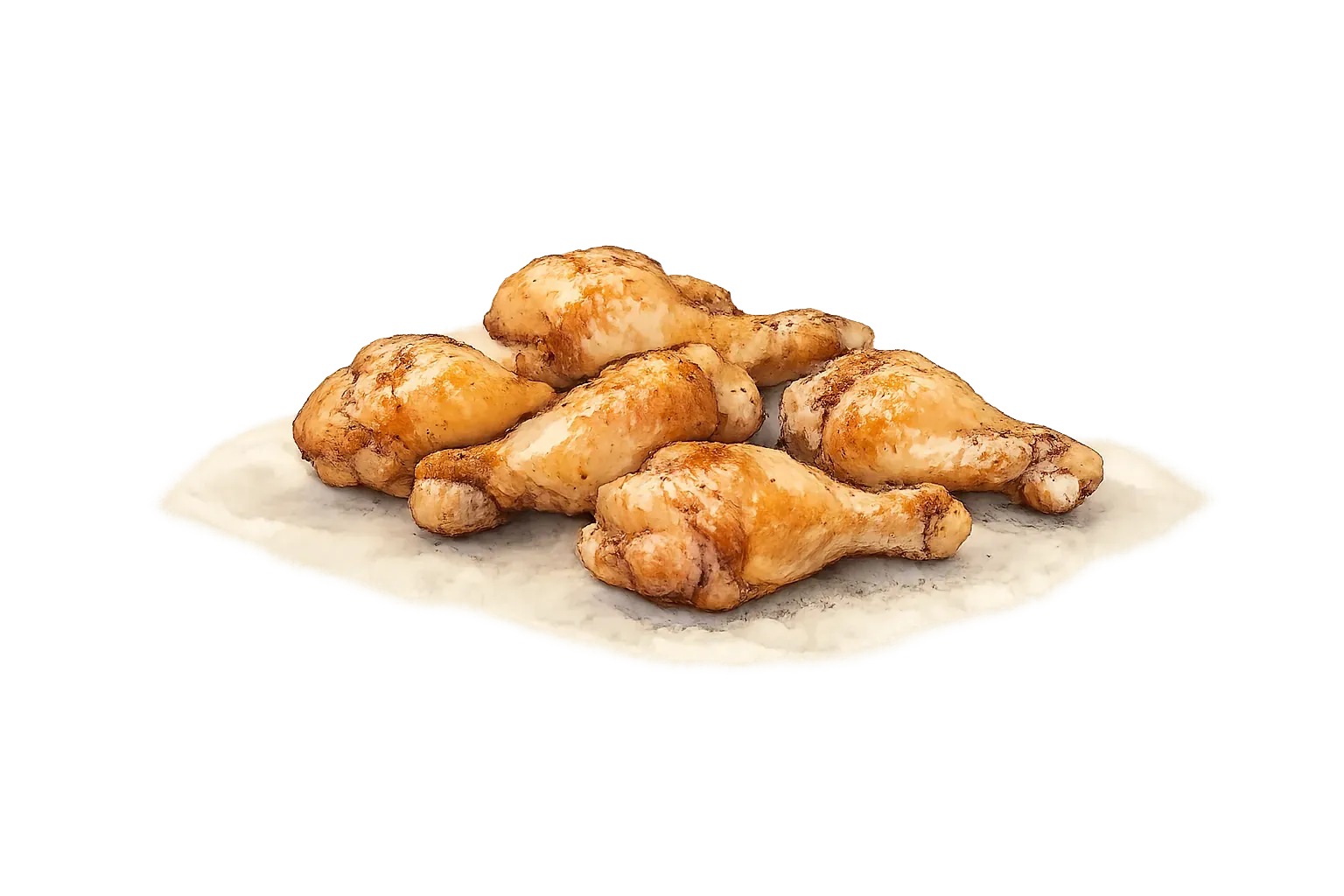
The meatier, wing-shaped upper section of a chicken wing, resembling a small drumstick, with a single bone running through it. Usually separated from the flat and cooked skin-on -- fried, baked, or grilled -- since the bone and skin keep it juicy and forgiving of high heat.
A kind of chicken wings
- dry mustard
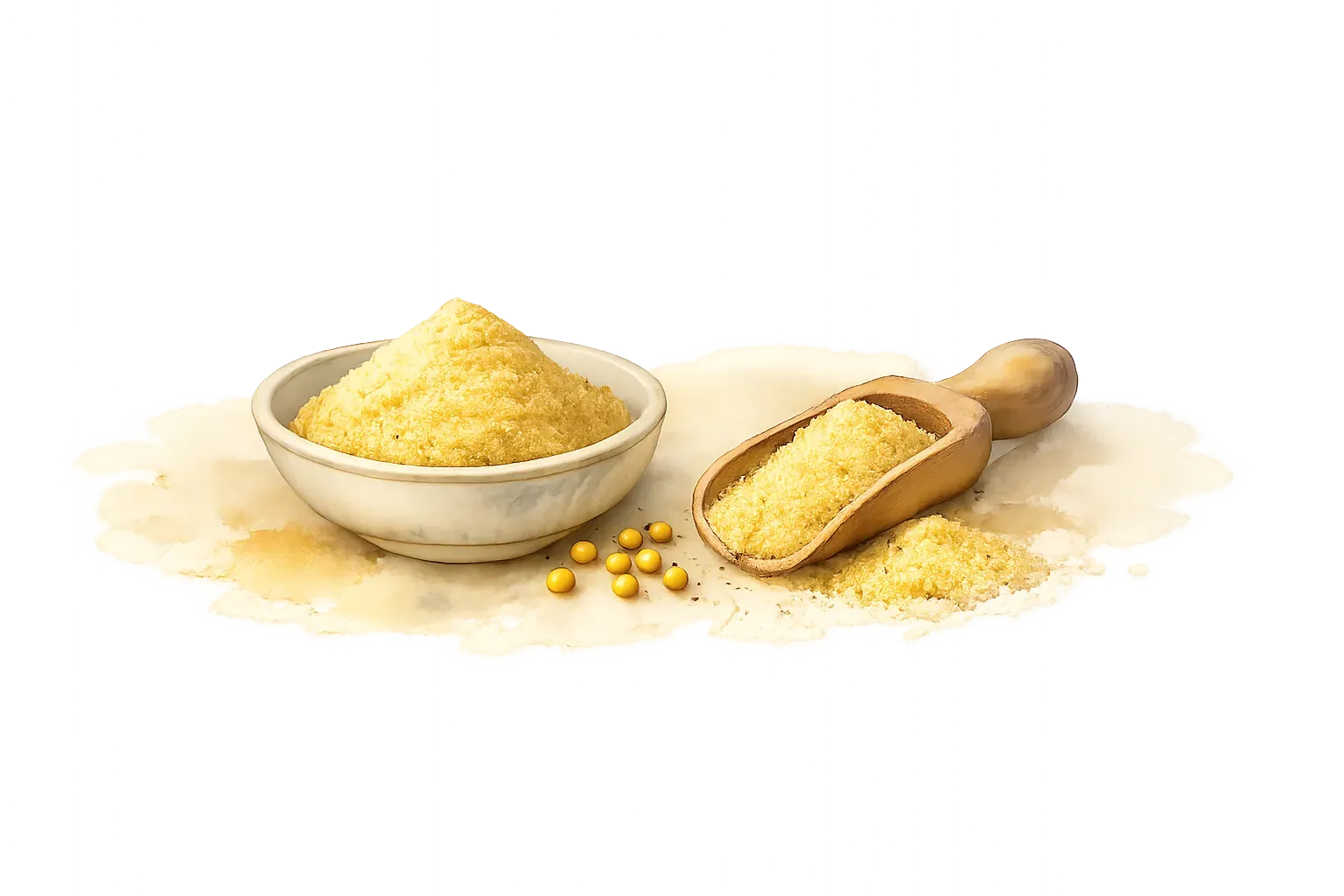
Also: mustard powder
Ground mustard seed, sold as a fine powder -- sharp and pungent on its own, but once moistened (by a liquid in a recipe) it develops the familiar tangy mustard bite. Used in small amounts in sauces, dressings, and cheese dishes, where it adds a background sharpness without the vinegar and other flavorings that prepared mustard carries.
- dry soup mix
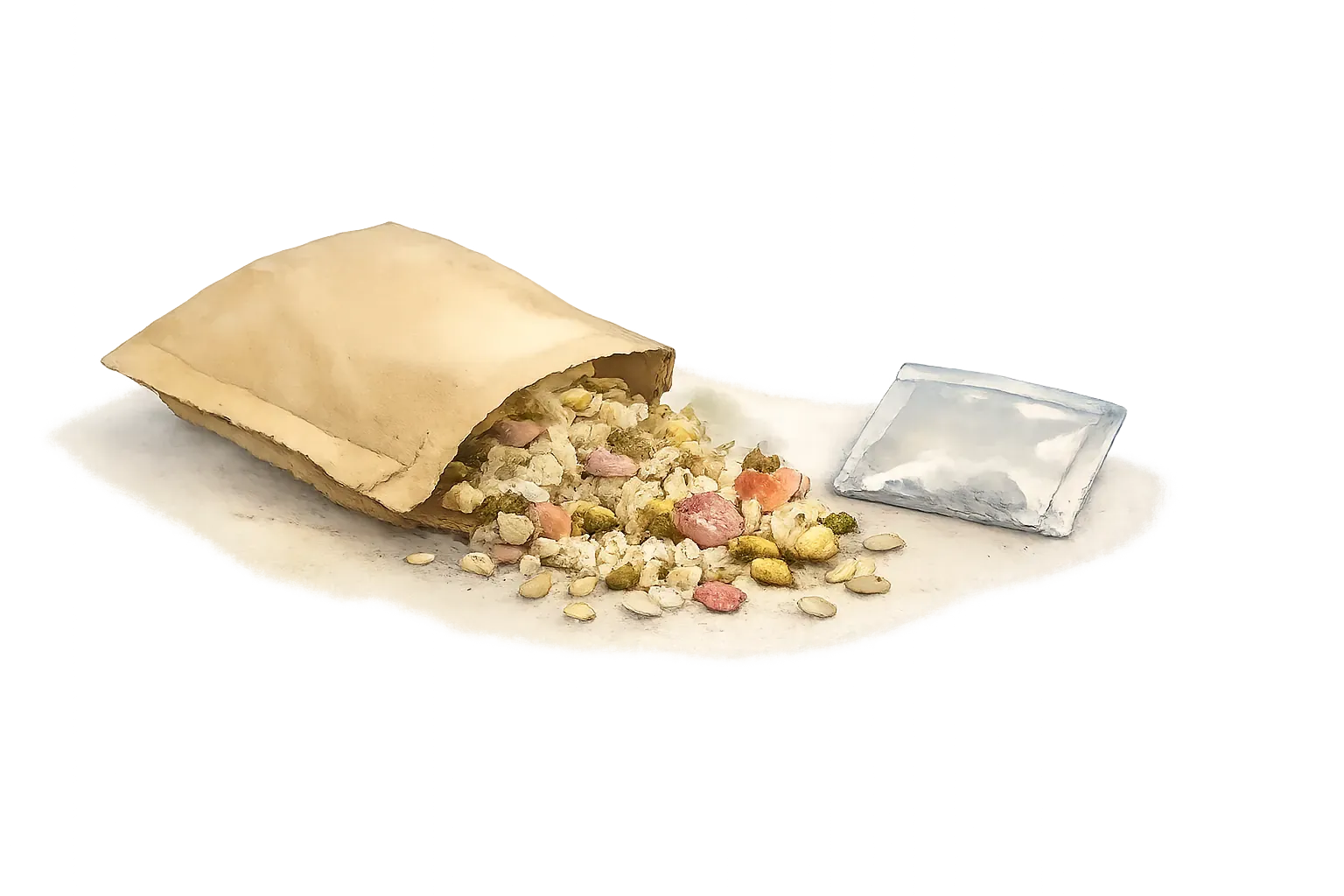
Also: Cugino's wild rice and chicken dry soup mix
A packaged, dehydrated soup base -- typically rice or pasta plus a seasoning and bouillon-style packet -- meant to be simmered with water (and sometimes milk) according to the package directions to build a soup quickly. Brands and specific combinations (wild rice and chicken, minestrone, and similar) vary widely.
- dry vegetable soup mix
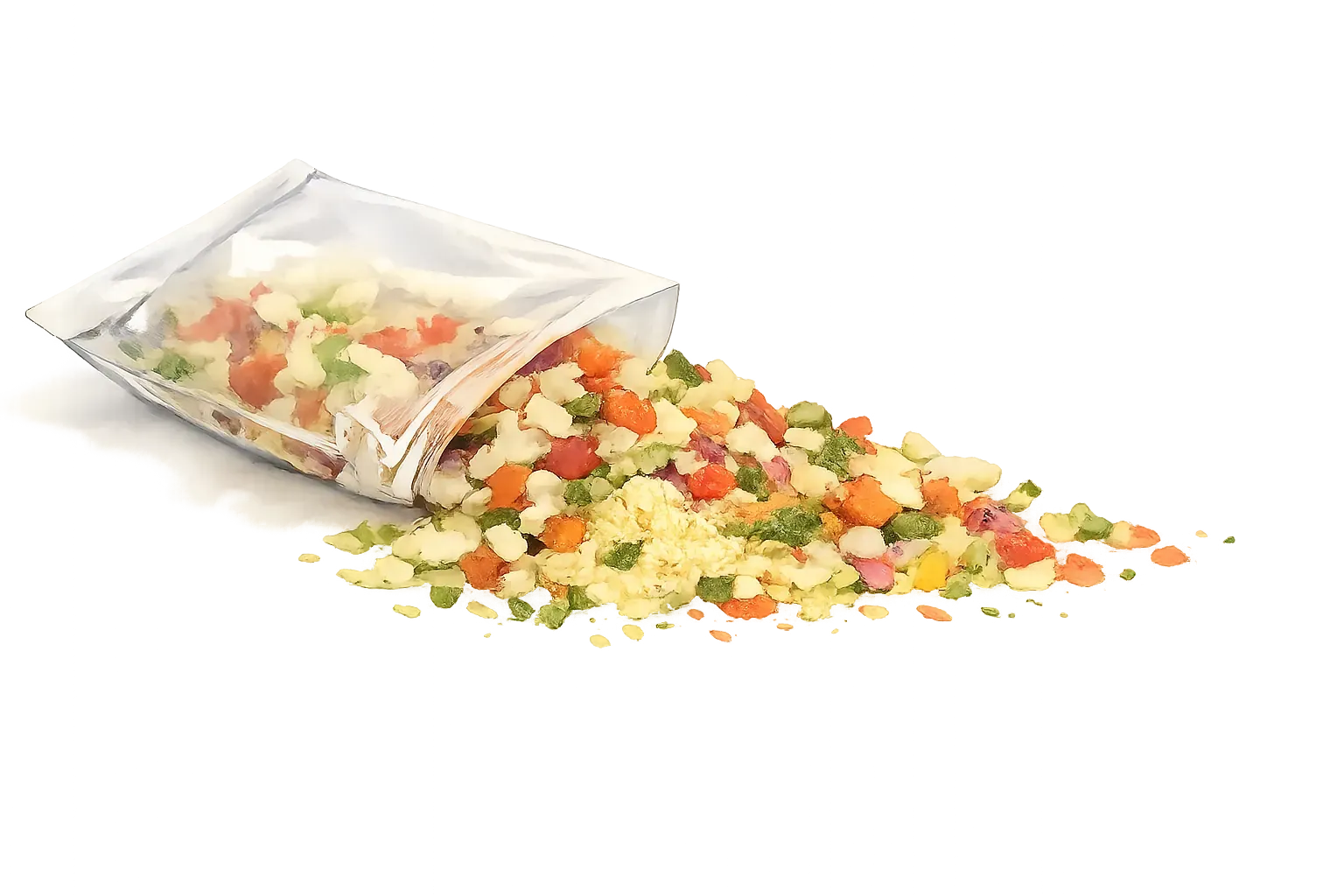
Also: garden vegetable soup mix
A packaged blend of dehydrated vegetables, seasonings, and often a bouillon-style base, sold by small local grocers and general stores as well as national brands, meant to be added straight into a pot of water or broth to build a vegetable soup base quickly. Exact contents vary by brand -- typically dried onion, carrot, celery, tomato, and herbs.
E
- egg
Also: Egg white, Eggs, soft boiled egg
A whole chicken egg, standard in cooking and baking to bind, leaven, thicken, enrich, or emulsify -- and eaten on its own scrambled, fried, boiled, or poached. Proteins in the white and yolk set with heat, and beaten eggs trap air, which is why gentle, gradual heat matters for custards and sauces, and vigorous beating matters for meringues and sponge cakes.
More specific: hard boiled eggs
- egg noodles
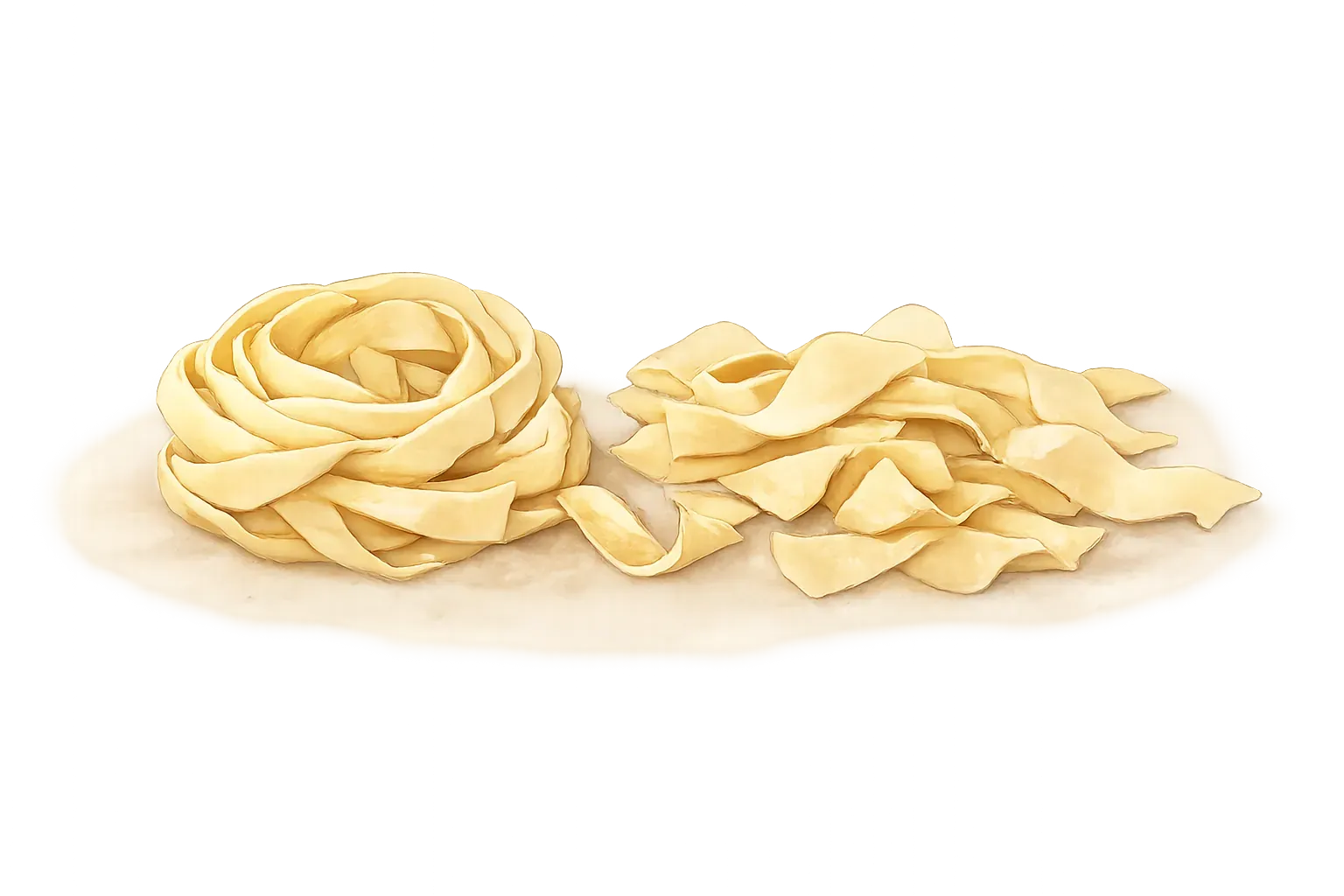
Wheat noodles made with egg worked into the dough, giving them a richer flavor, yellow color, and a more tender, less chewy bite than plain durum pasta. Common in soups, stroganoff, and casseroles, where their softness holds up well in liquid or sauce.
- egg yolks
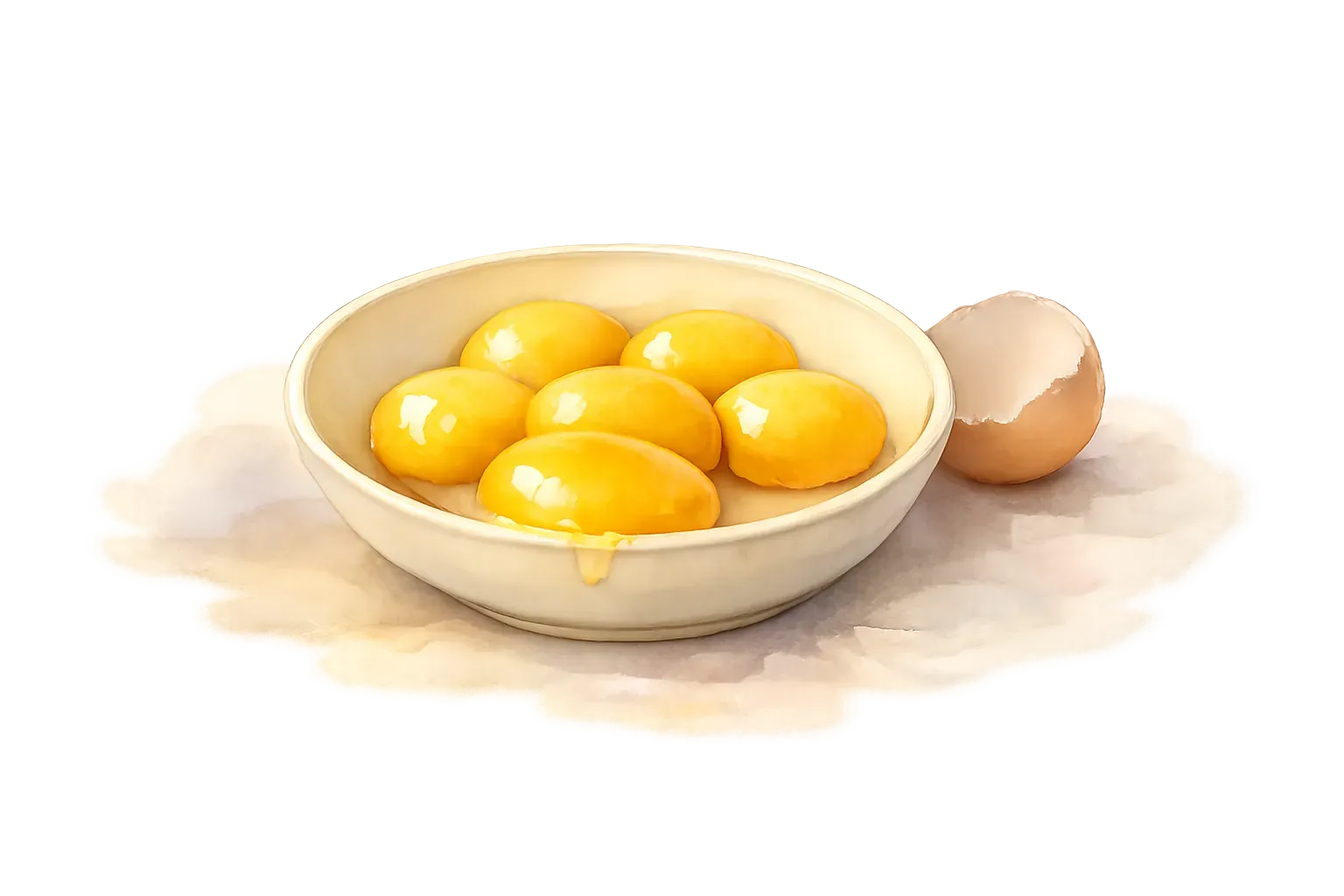
Also: egg yolk
The yellow, fat- and lecithin-rich center of an egg, separated from the white; used to enrich, thicken, and emulsify custards, sauces like hollandaise and mayonnaise, and rich doughs. Lecithin is what lets a yolk bind fat and water into a stable emulsion, and yolks thicken at a relatively low temperature, which is why gentle heat is essential.
- elbow noodles
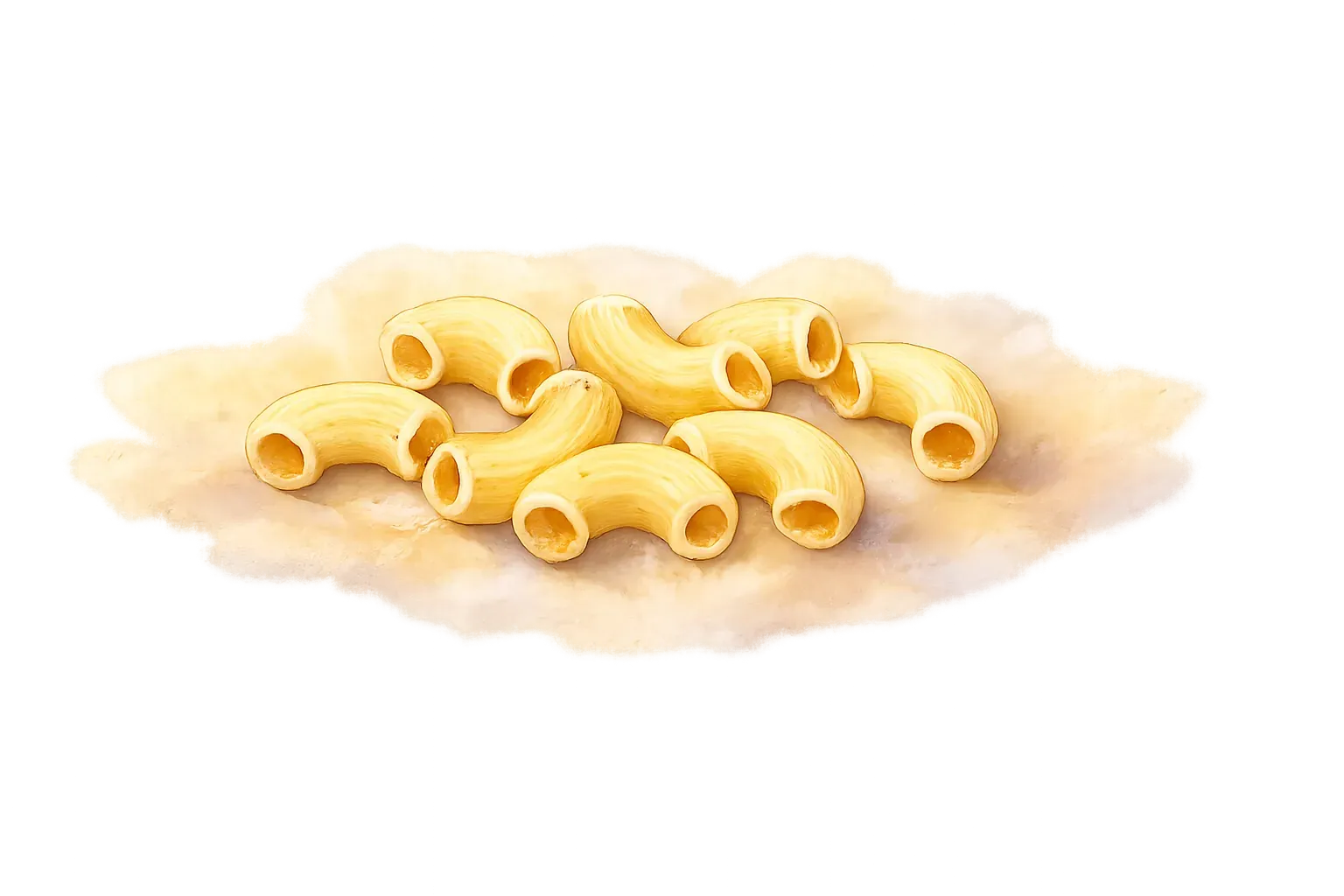
Short, curved tube pasta, hollow through the center -- the classic shape for macaroni and cheese, since the curve and hollow catch sauce and cheese better than a flat noodle would. Made from the same durum wheat as other dried pasta shapes.
- evaporated milk

Milk with about 60% of its water removed by gentle heating, then canned -- shelf-stable, and noticeably richer and slightly caramelized-tasting compared to regular milk because of that concentration and heat treatment. Not the same as sweetened condensed milk, which has sugar added; evaporated milk is unsweetened. Used to add creaminess to soups and chowders without needing fresh cream on hand.
F
- farinheira

Also: Portuguese flour sausage
A traditional Portuguese sausage made mostly of wheat flour, pork fat, paprika, white wine, garlic, and spices rather than the meat that fills most sausages -- giving it a soft, almost spreadable texture once cooked instead of the firm bite of a typical link sausage. It's often smoked, which adds a savory depth on top of the paprika's color and flavor, and it's traditionally poached rather than eaten raw or grilled hard, since its texture is delicate.
A kind of sausage
- fennel
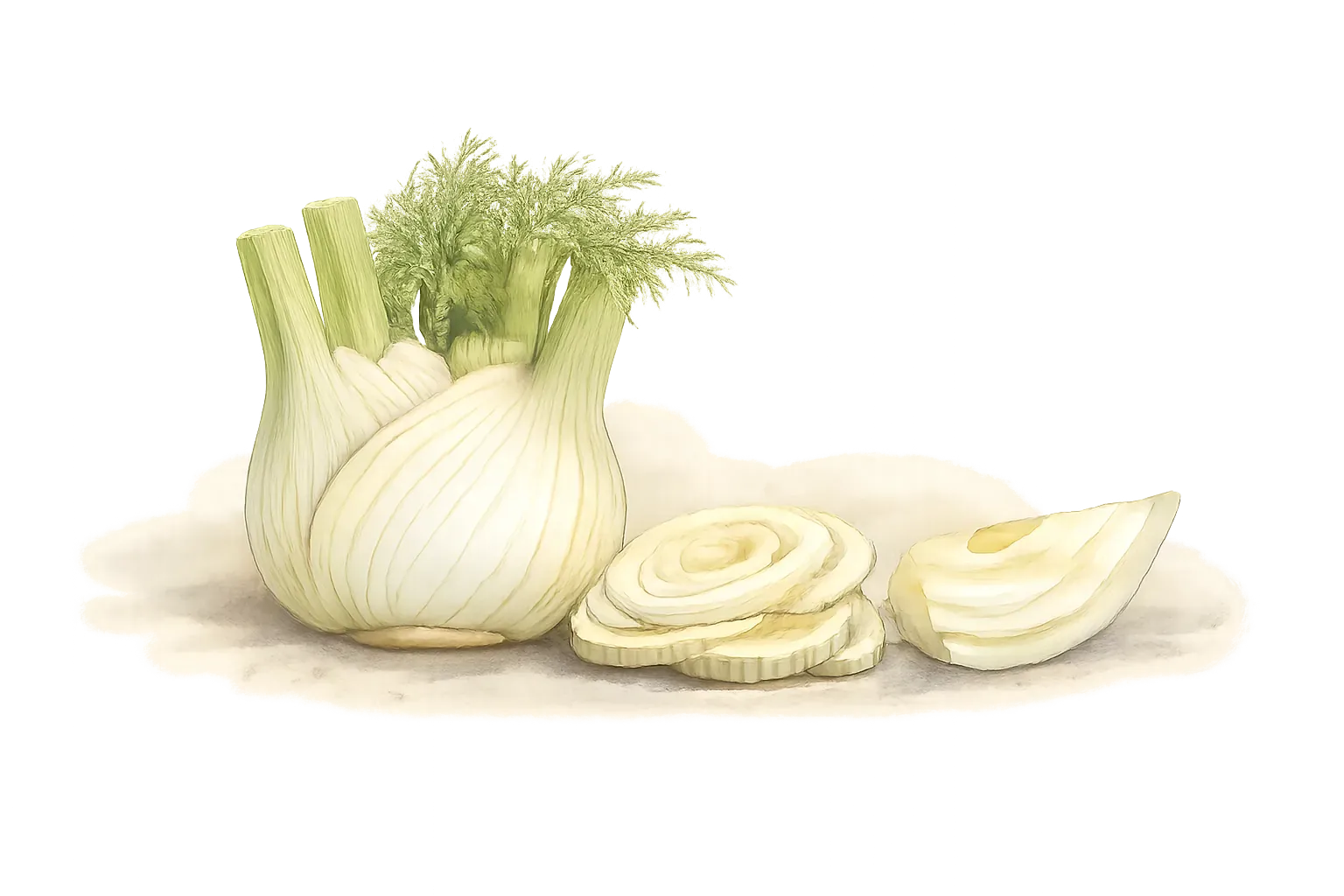
A crisp, pale-green bulb vegetable with a mild anise or licorice flavor that mellows and sweetens considerably when cooked. The bulb is sliced thin for raw salads or cut into wedges and roasted or braised; the celery-like stalks flavor stocks; the feathery fronds work as a fresh herb.
- feta
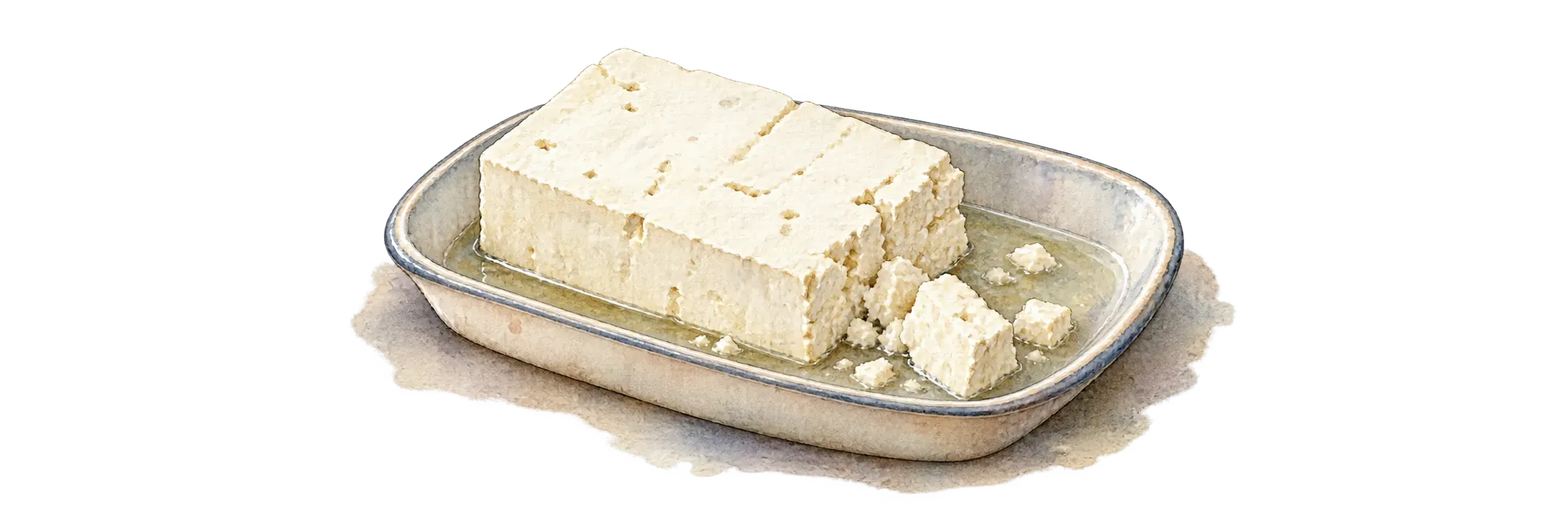
A brined white cheese traditionally made from sheep's milk or a sheep-and-goat blend, cured and stored in a salty liquid brine that gives it its characteristic tang and crumbly-yet-creamy texture. Used as a savory, salty finishing element -- crumbled over salads and vegetables, baked until soft, or eaten in slabs -- rather than melted into a dish the way a cooking cheese would be.
- fire roasted tomatoes
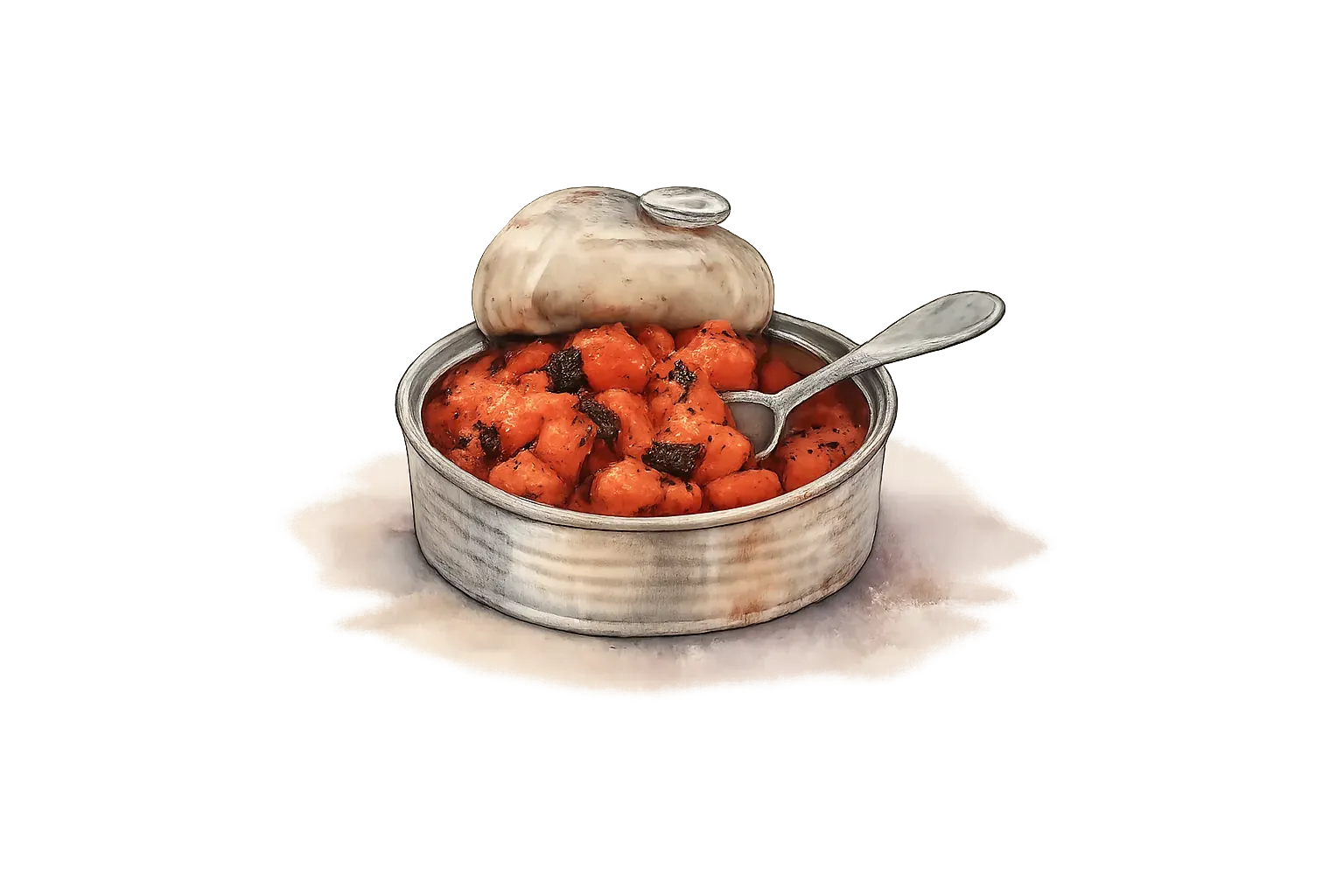
Canned tomatoes charred over an open flame before canning, which adds a smoky depth beyond plain canned tomatoes while keeping the same texture and acidity. Used as a drop-in replacement for regular diced or crushed canned tomatoes in sauces, soups, and chili wherever a smoky background note is wanted.
- fish sauce
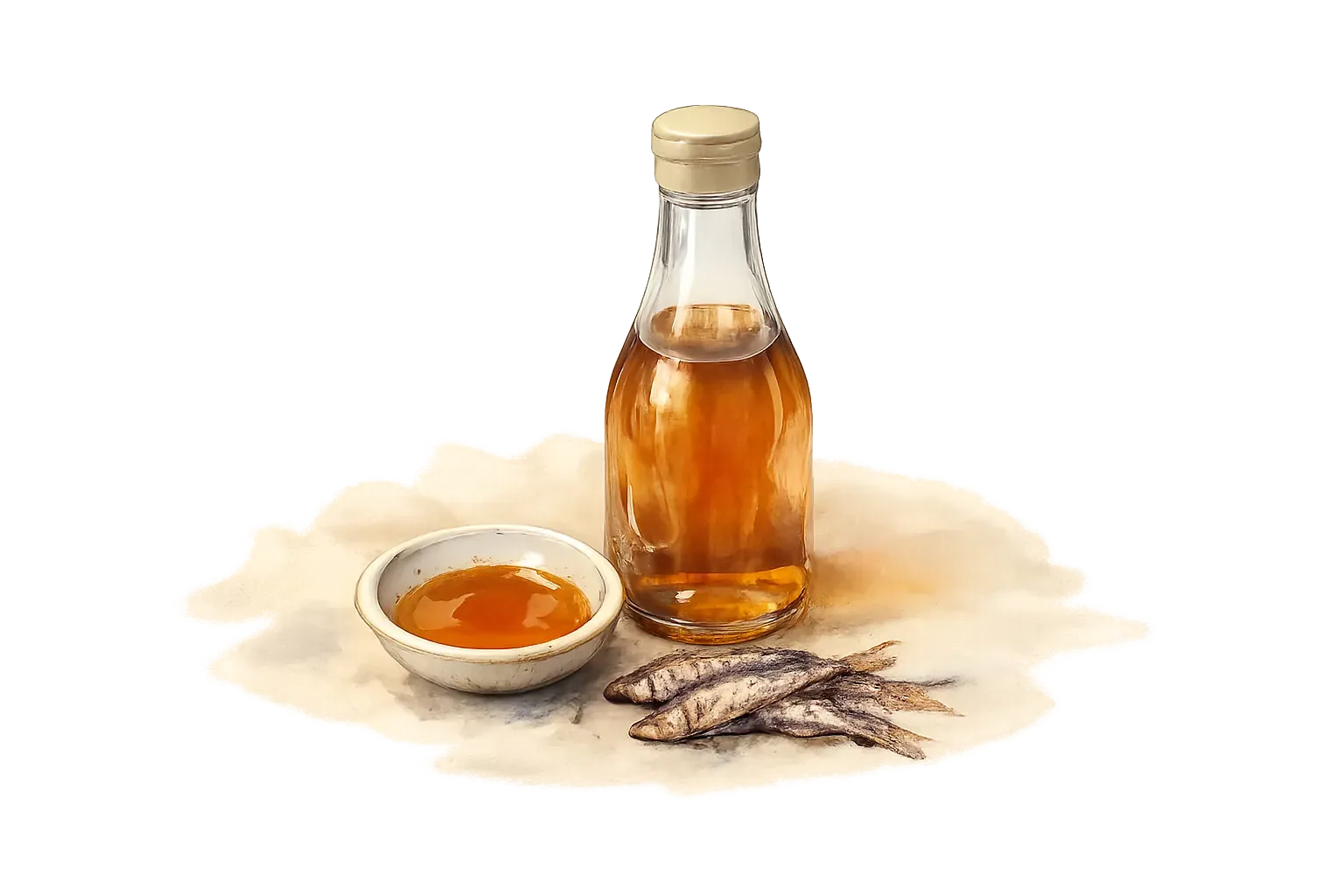
A salty, pungent liquid made from fermented, salted fish, typically anchovies -- a foundational seasoning in Southeast Asian cooking that adds deep savory umami the way soy sauce does elsewhere. It smells sharply fishy straight from the bottle but should melt into a dish's overall flavor rather than taste distinctly fishy once cooked in.
- five spice
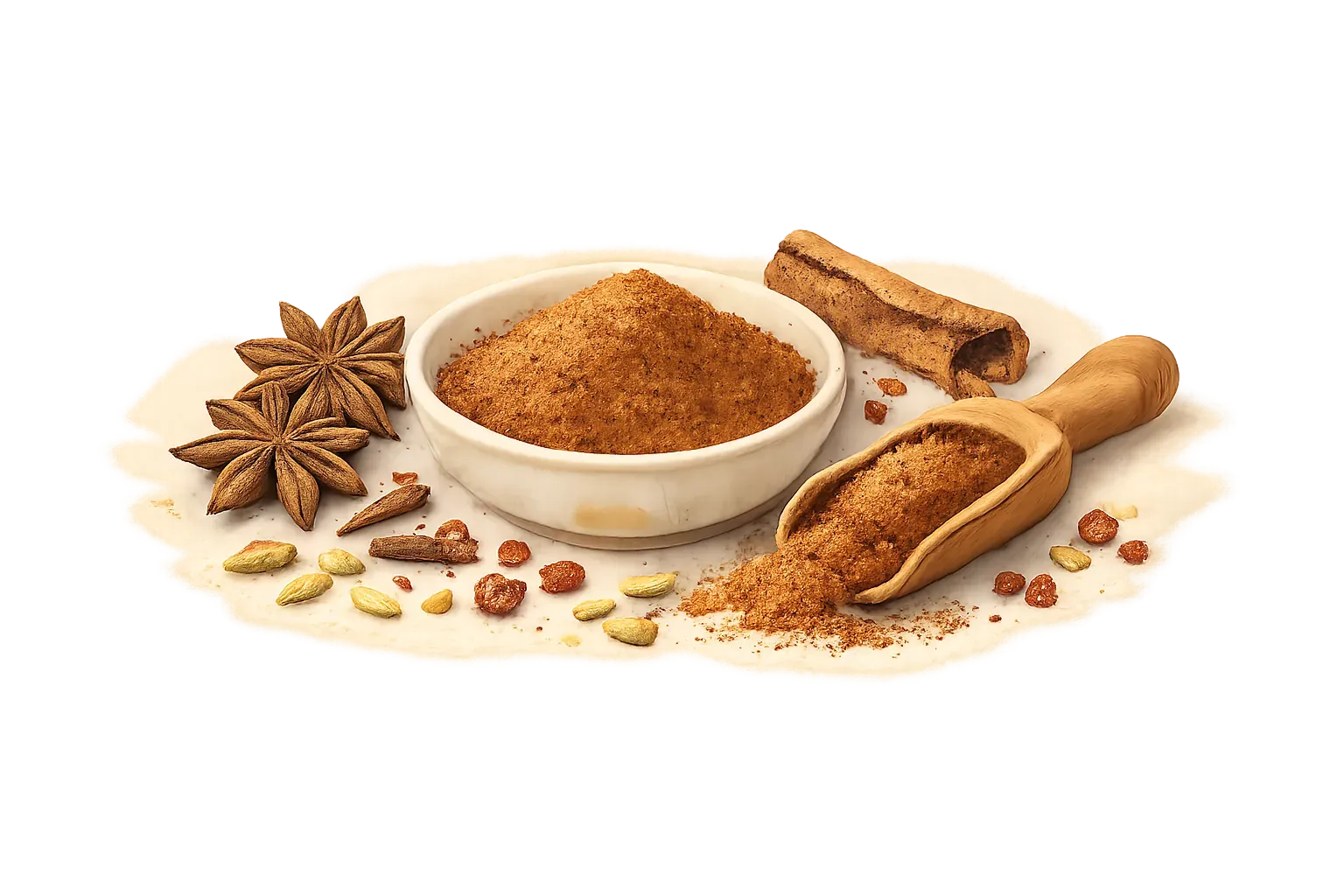
Also: 5 Spice
A Chinese spice blend, typically star anise, cloves, cinnamon, Sichuan peppercorn, and fennel seed, ground together into one powder that balances sweet, savory, warm, and slightly numbing flavors in a single pinch. Common in Chinese roasted meats, marinades, and braises.
- flat iron steak
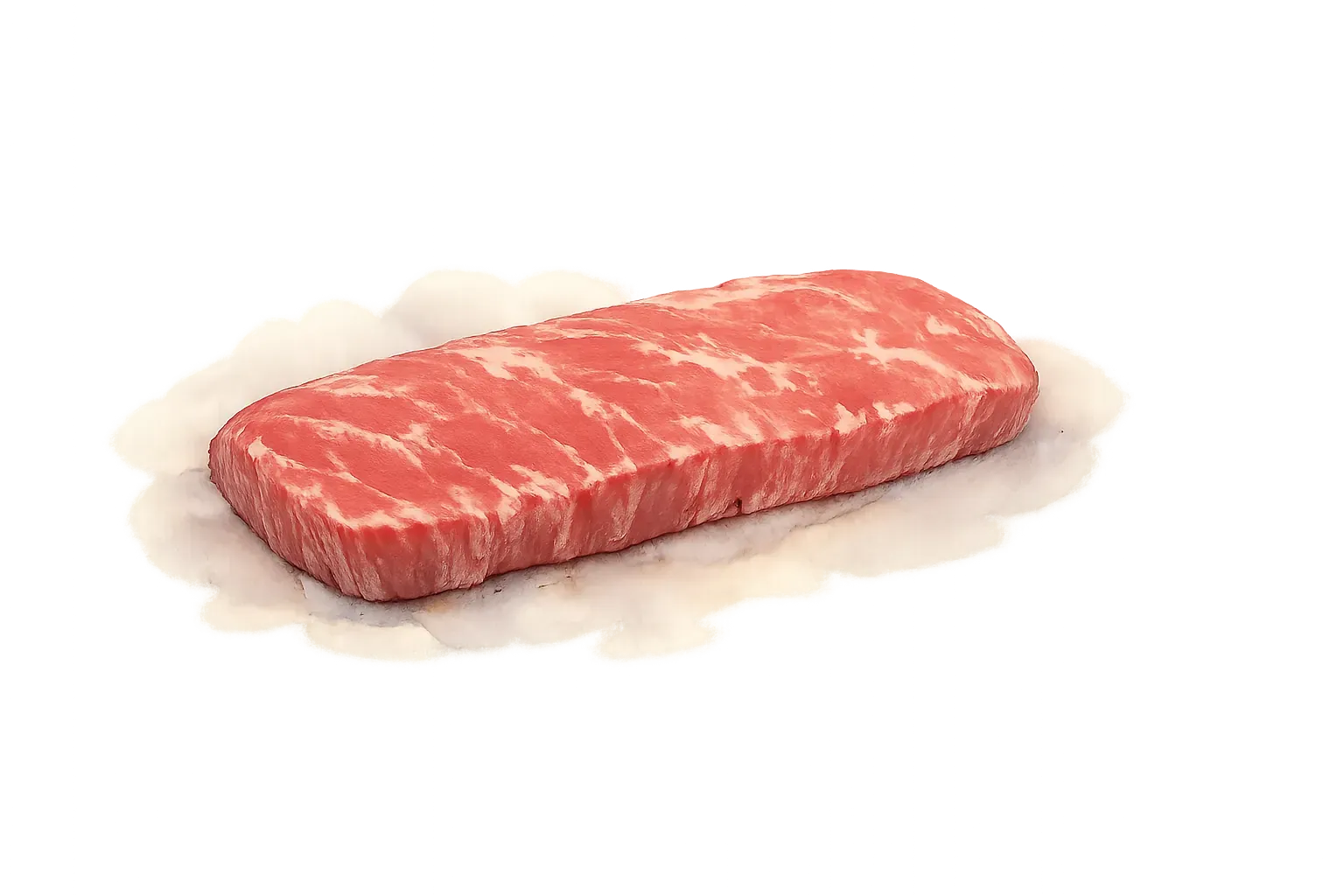
Also: flat iron
A tender, well-marbled beef steak cut from the shoulder (chuck) -- a rare combination among shoulder cuts, tender enough for quick, high-heat cooking like grilling or pan-searing despite coming from a hard-working muscle group. Sold as a flat, rectangular steak with the tough central connective tissue already removed by the butcher.
A kind of steak
- French bread

Also: loaf french bread
A long, crusty white bread loaf with a chewy, open crumb inside a firm, crackling crust. Eaten as a side, sliced for sandwiches like a po'boy, or torn into cubes for stuffing and bread pudding.
- fresh ginger
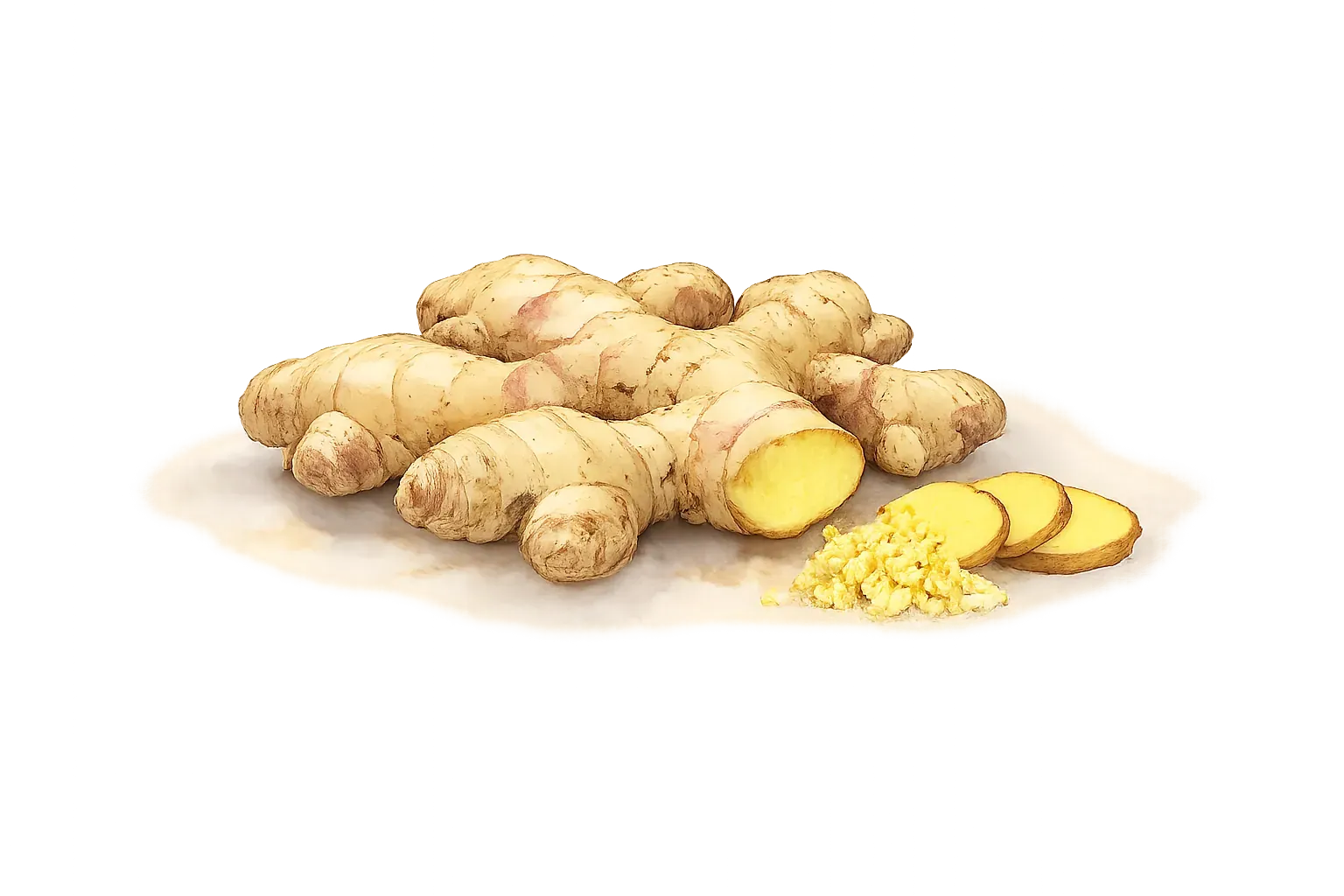
The knobby, fibrous rhizome of the ginger plant, with a sharp, spicy, aromatic bite that turns milder and sweeter with longer cooking. Peeled and then grated, sliced into coins, or minced, it's used as an aromatic in both savory dishes and baking -- a small amount goes a long way.
A kind of ground ginger
- fresh parsley
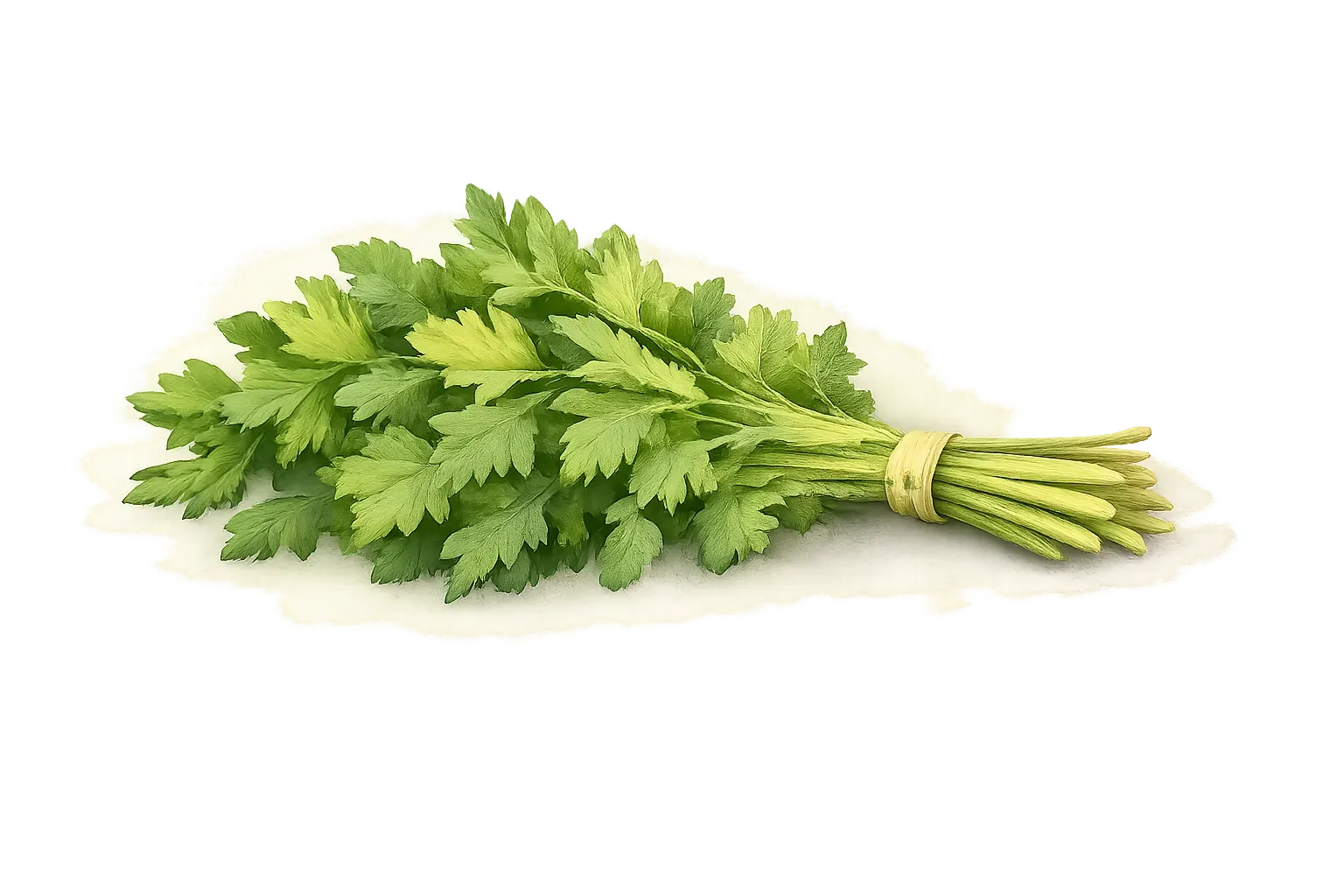
Also: fresh parsley, flat parsley
Parsley sold in bunches in the produce section, with bright green flavor and a tender-but-fibrous stem; distinct from the small-jar dried herb, which is milder and used in much smaller amounts.
A kind of parsley
- fried onion rings
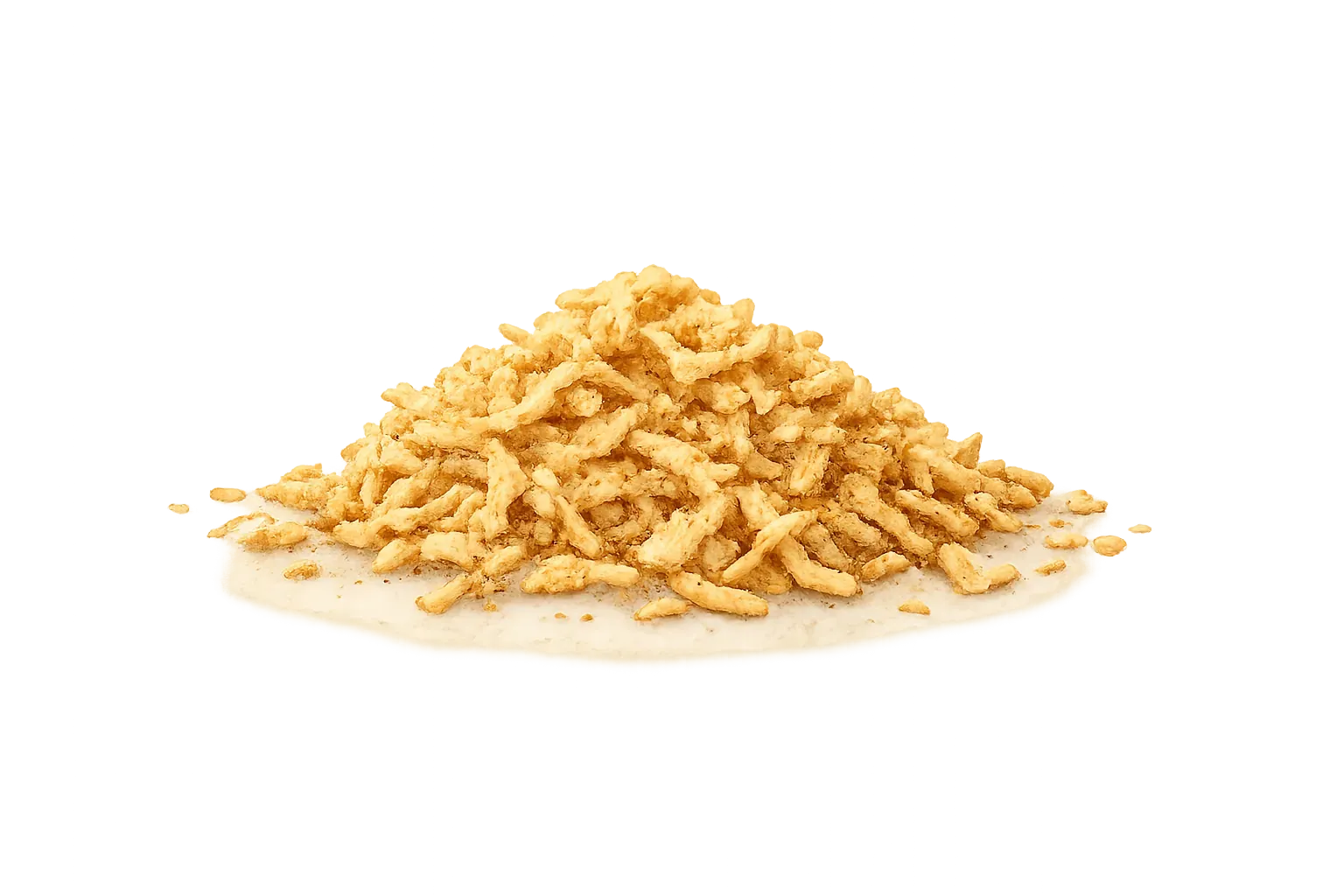
Also: French's Fried Onion Rings
Thin-sliced onions coated in flour or batter and fried until crisp, sold canned or jarred as a shelf-stable topping -- distinct from thick, fresh-battered onion rings served as a side dish. Best known as the crunchy topping baked onto green bean casserole.
- frozen mixed vegetables
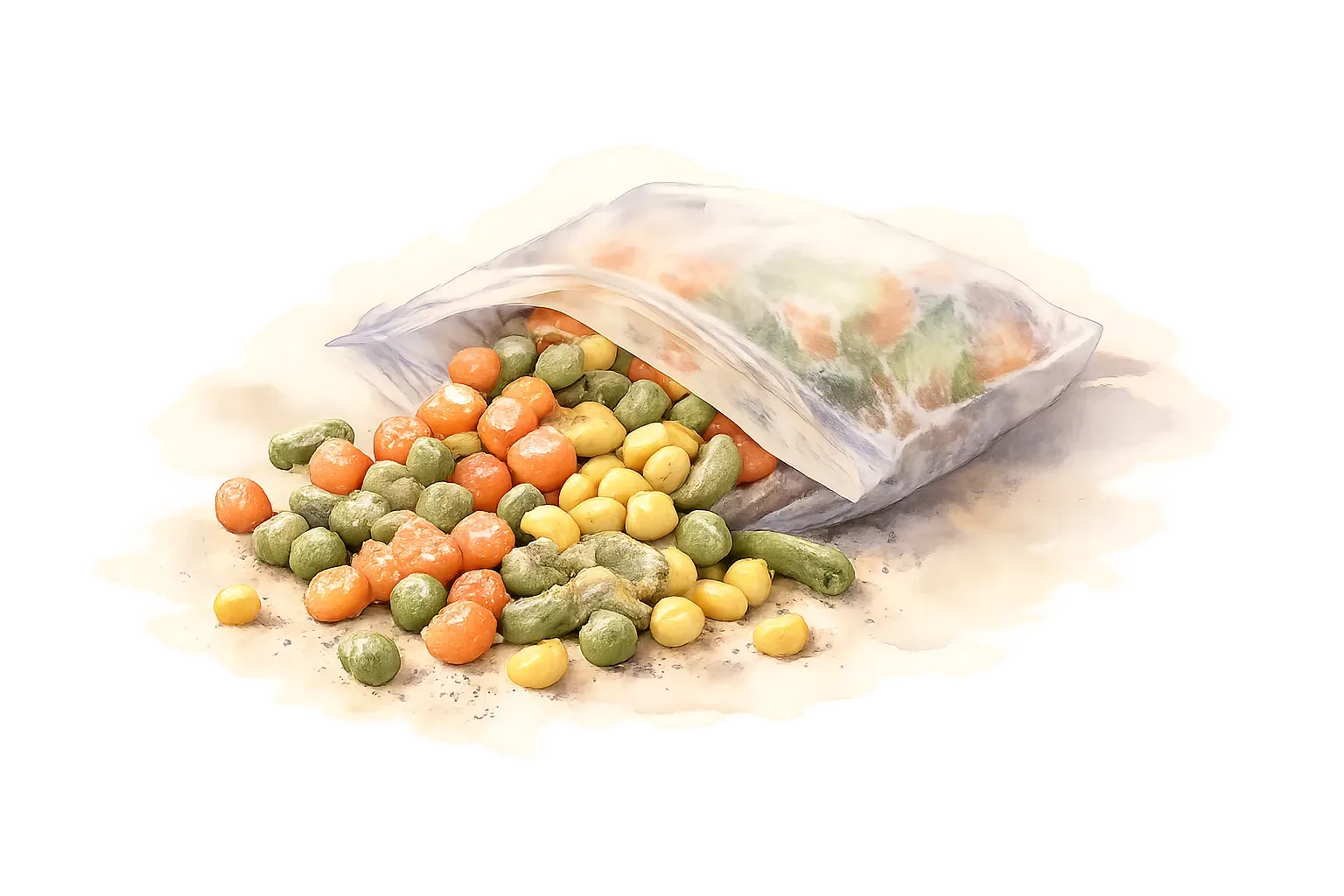
A bag of assorted vegetables (typically carrots, peas, corn, and green beans) individually frozen at peak ripeness, sold together as a one-bag shortcut for a vegetable soup, stew, or side dish. Unlike canned mixed vegetables, they're raw rather than pre-cooked, so they need their own cooking time.
G
- Galliano

A golden Italian herbal liqueur flavored with vanilla, anise, and a blend of other herbs and spices, sweeter and more syrupy than a plain spirit like vodka or bourbon. Best known as the defining flavor in a Harvey Wallbanger cocktail, where its vanilla-anise sweetness plays against orange juice and vodka -- the same combination this cake borrows.
- garlic
Also: Garlic cloves
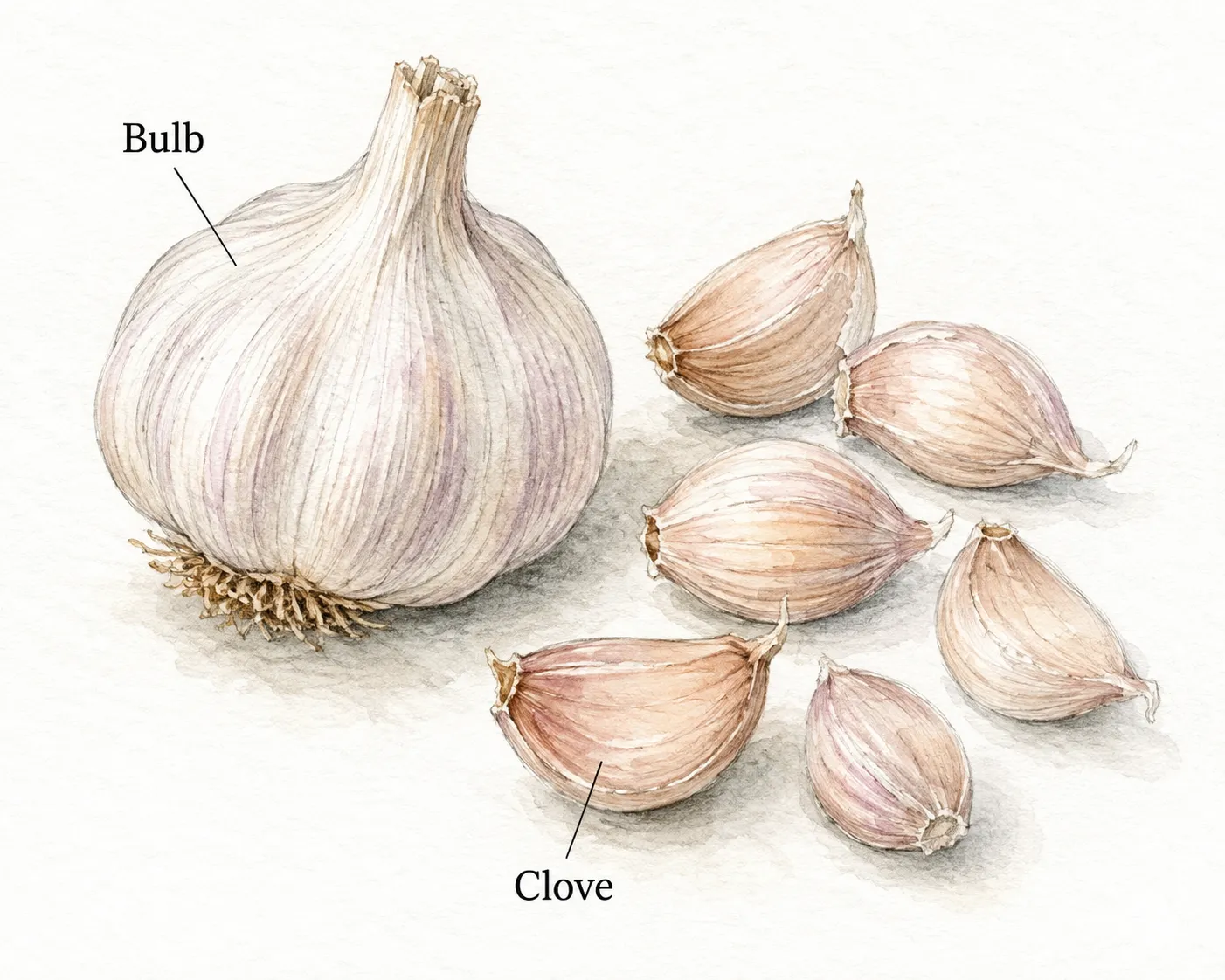
A pungent, aromatic bulb made up of individual papery-skinned cloves -- a foundational aromatic in cooking worldwide, used raw for a sharp bite, sauteed briefly for a mellower savory base, or roasted whole until soft, sweet, and spreadable. Flavor and heat change dramatically with how finely it's cut and how long and hot it's cooked.
More specific: garlic powder, garlic salt
- garlic powder
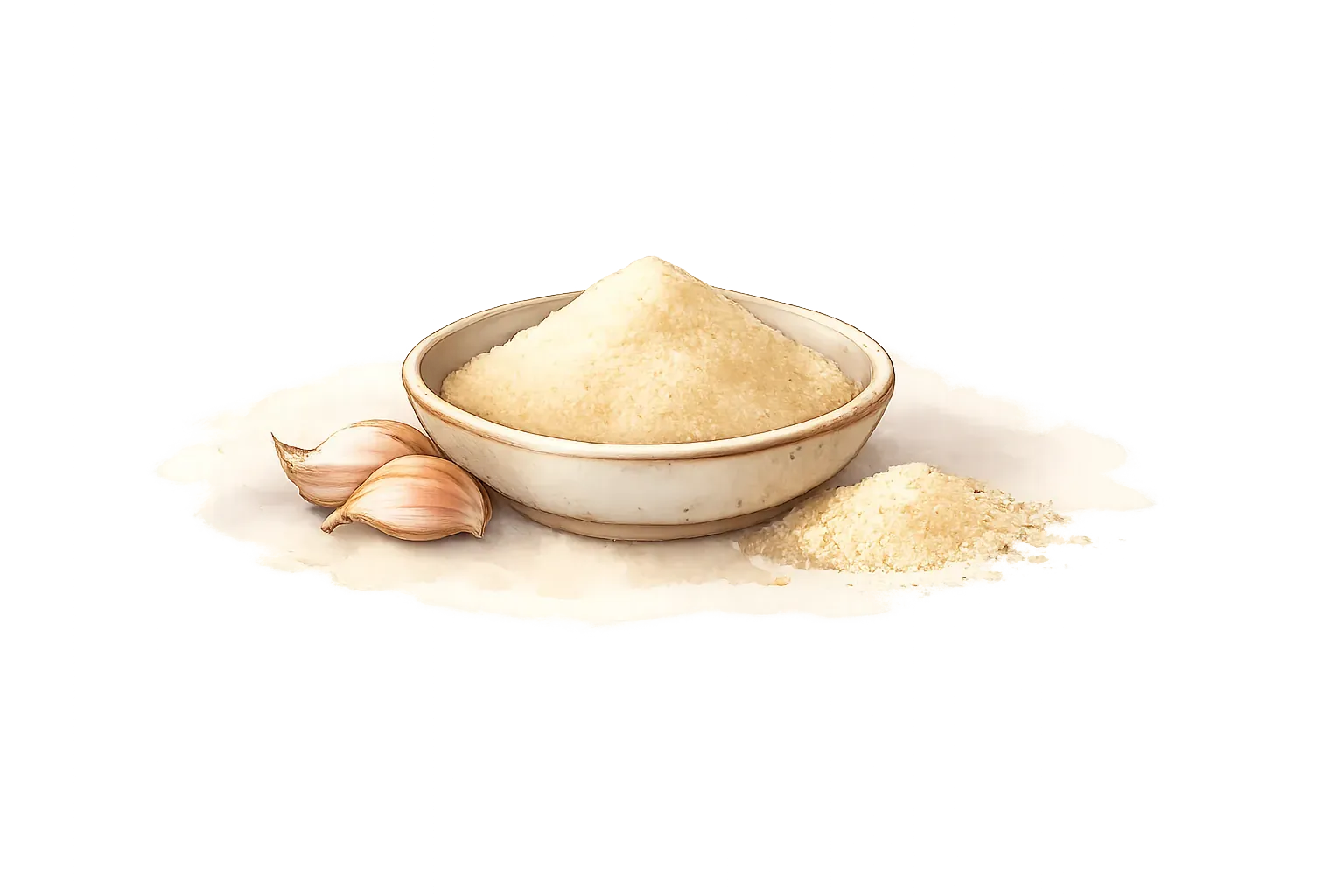
Dehydrated garlic ground into a fine powder -- a shelf-stable way to add garlic flavor to dry rubs, spice blends, and sauces without the moisture, texture, or sharp raw bite of fresh garlic. Much more concentrated by volume than fresh garlic, so it's easy to over-season with it.
A kind of garlic
- garlic salt
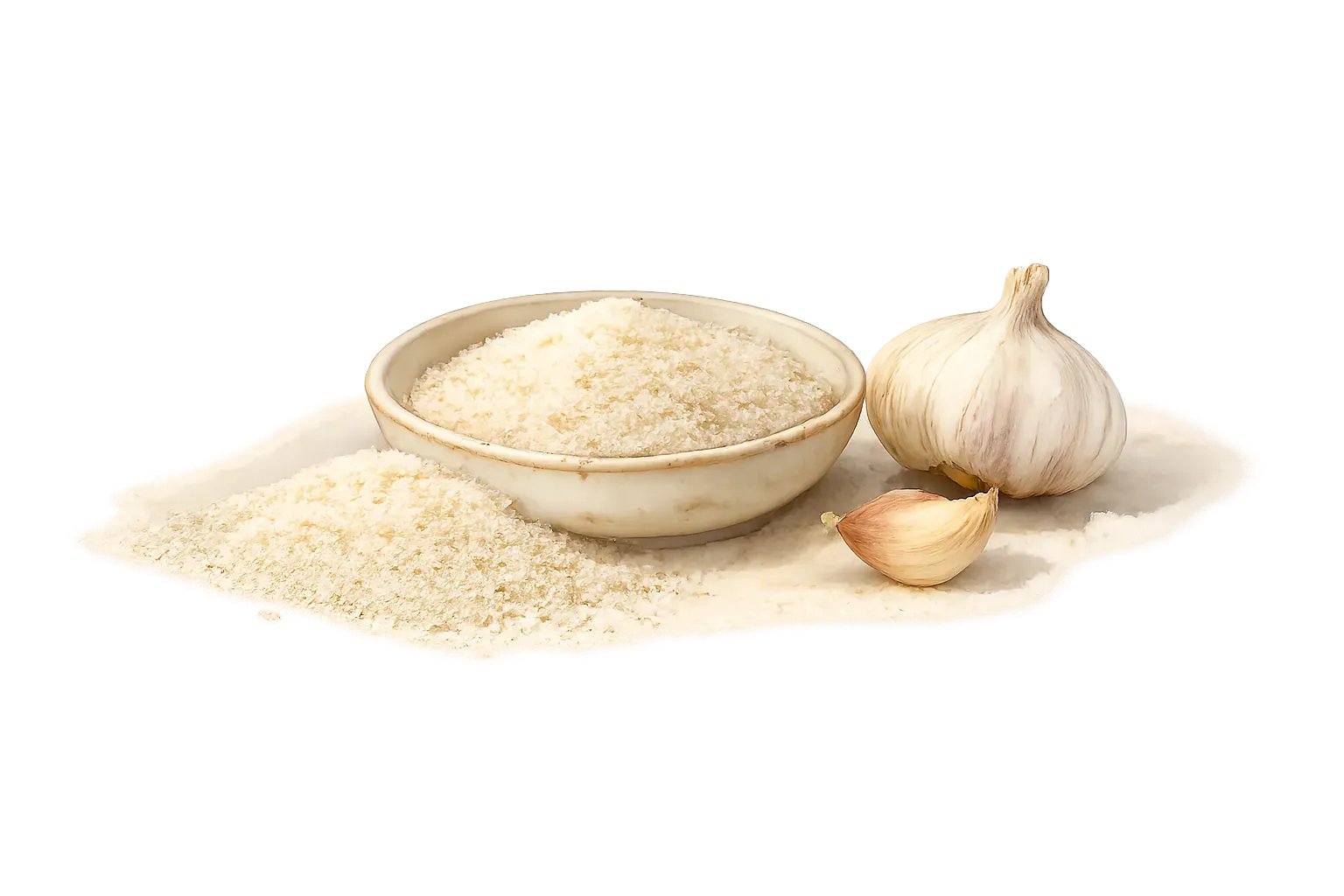
A blended seasoning of table salt and dried, powdered garlic -- mostly salt by weight and volume, with just enough garlic to flavor it. A quick way to season and add a mild garlic note in one shake, but not a substitute for garlic powder where garlic is meant to be the main flavor.
A kind of garlic
- gnocchi
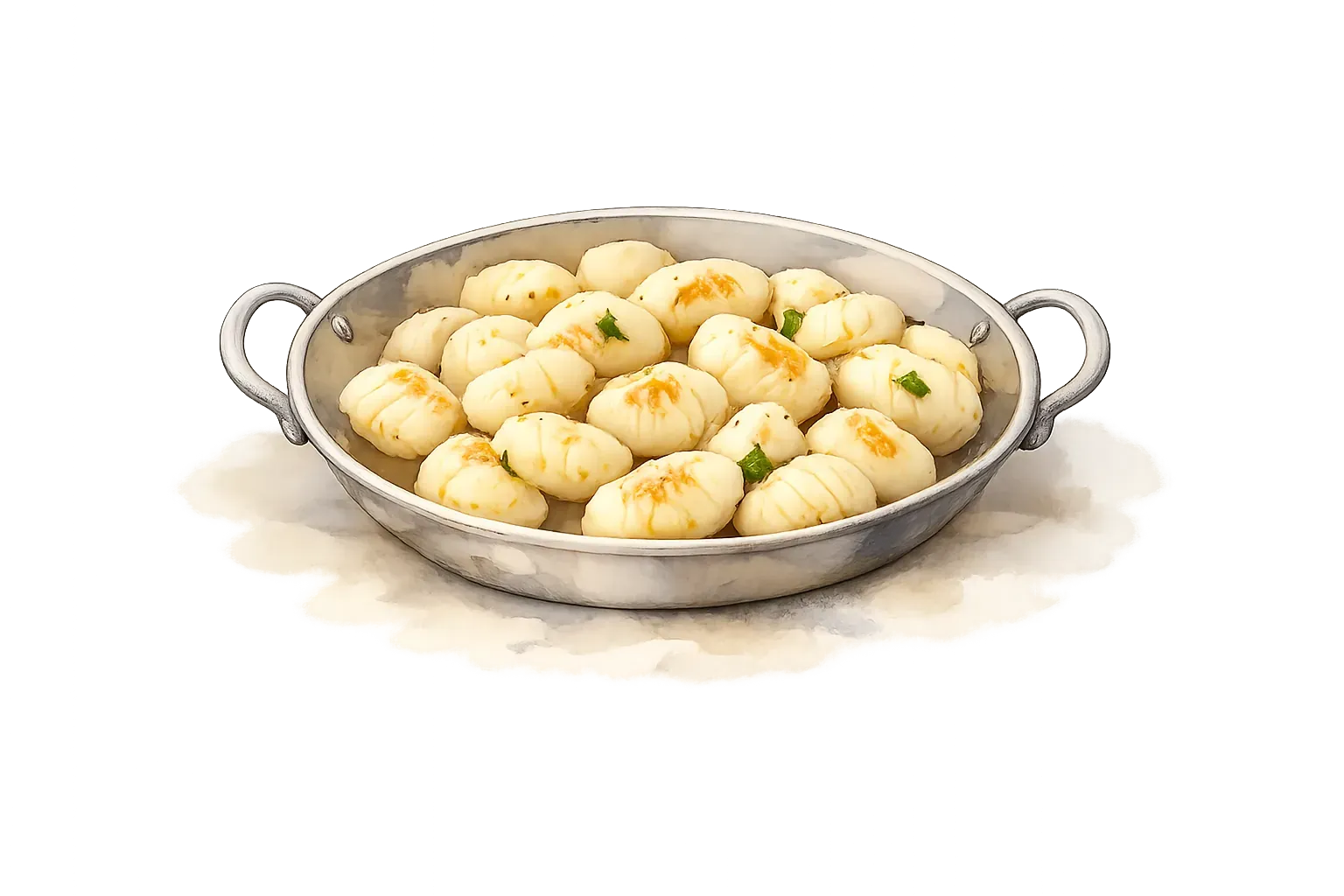
Also: potato gnocchi
Small, soft dumplings, most commonly made from mashed or riced potato bound with flour and sometimes egg, with a light, pillowy texture distinct from firmer, dried pasta shapes. Cooked briefly in boiling water until they float, then often finished a second way -- tossed straight into a sauce, or pan-fried afterward for a crisp, golden exterior.
- goat cheese
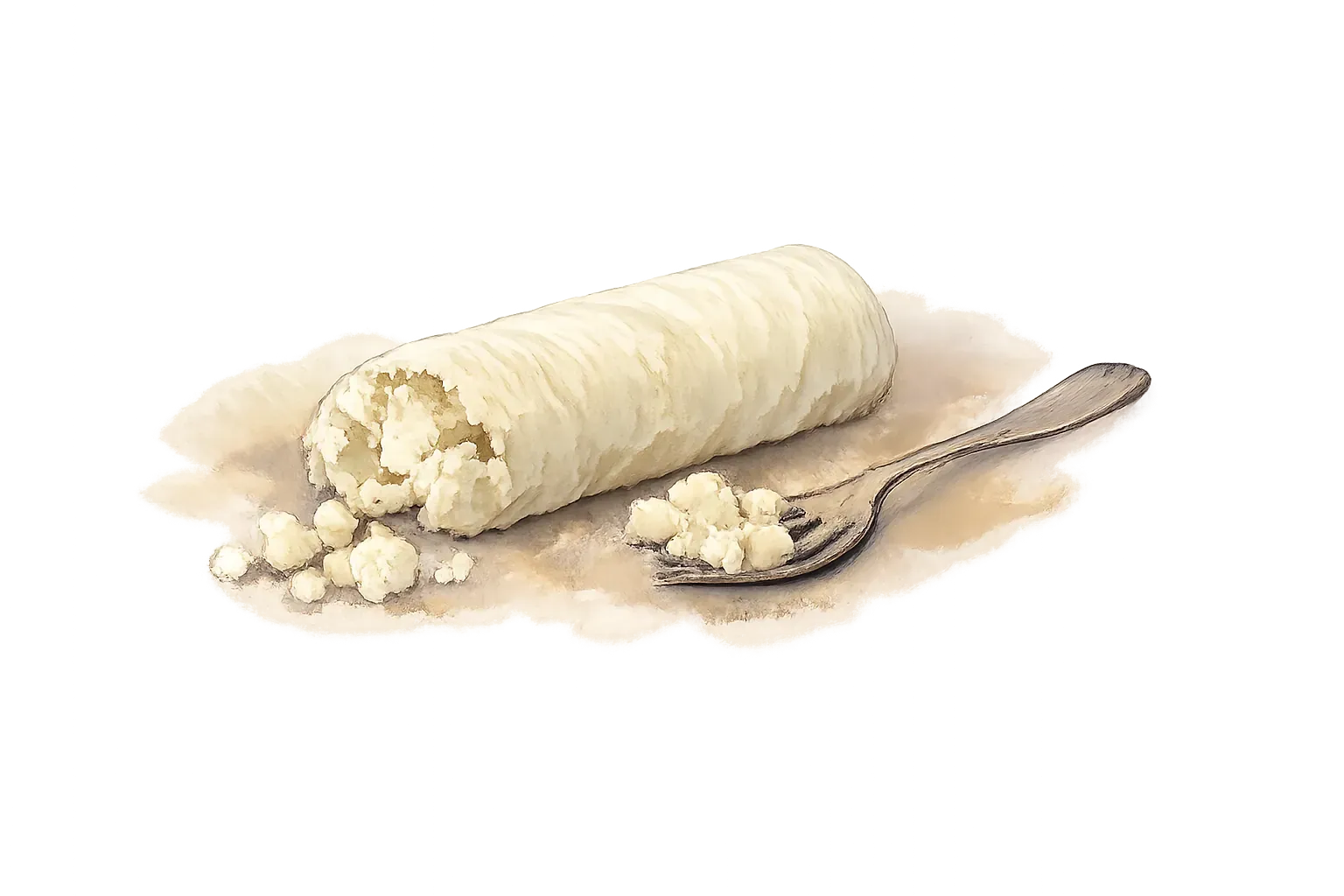
Also: Crumbled Goat Cheese
A soft, tangy cheese made from goat's milk, most often sold as a spreadable log that crumbles easily with a fork. Used crumbled cold over salads, melted into sauces, or worked into a filling for its distinctive sharp, slightly barnyard tang.
- grainy mustard
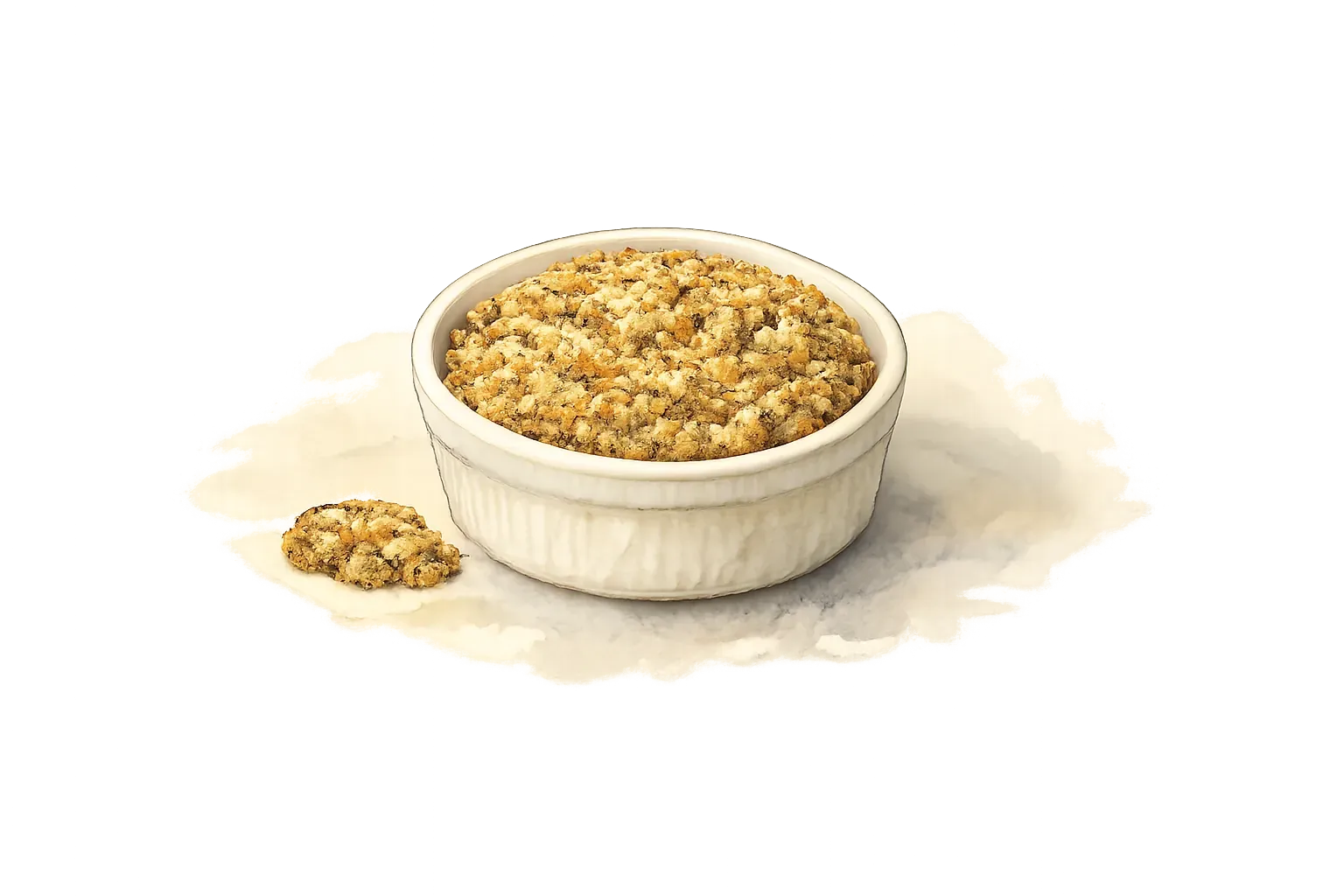
Also: whole grain mustard
Mustard made with whole or coarsely crushed mustard seeds left in the paste, giving it a chunky, popping texture and a milder, more textured bite than smooth Dijon or yellow mustard. Common whisked into vinaigrettes, spread on sandwiches, or stirred into pan sauces for both flavor and visual texture.
A kind of mustard
- great northern beans
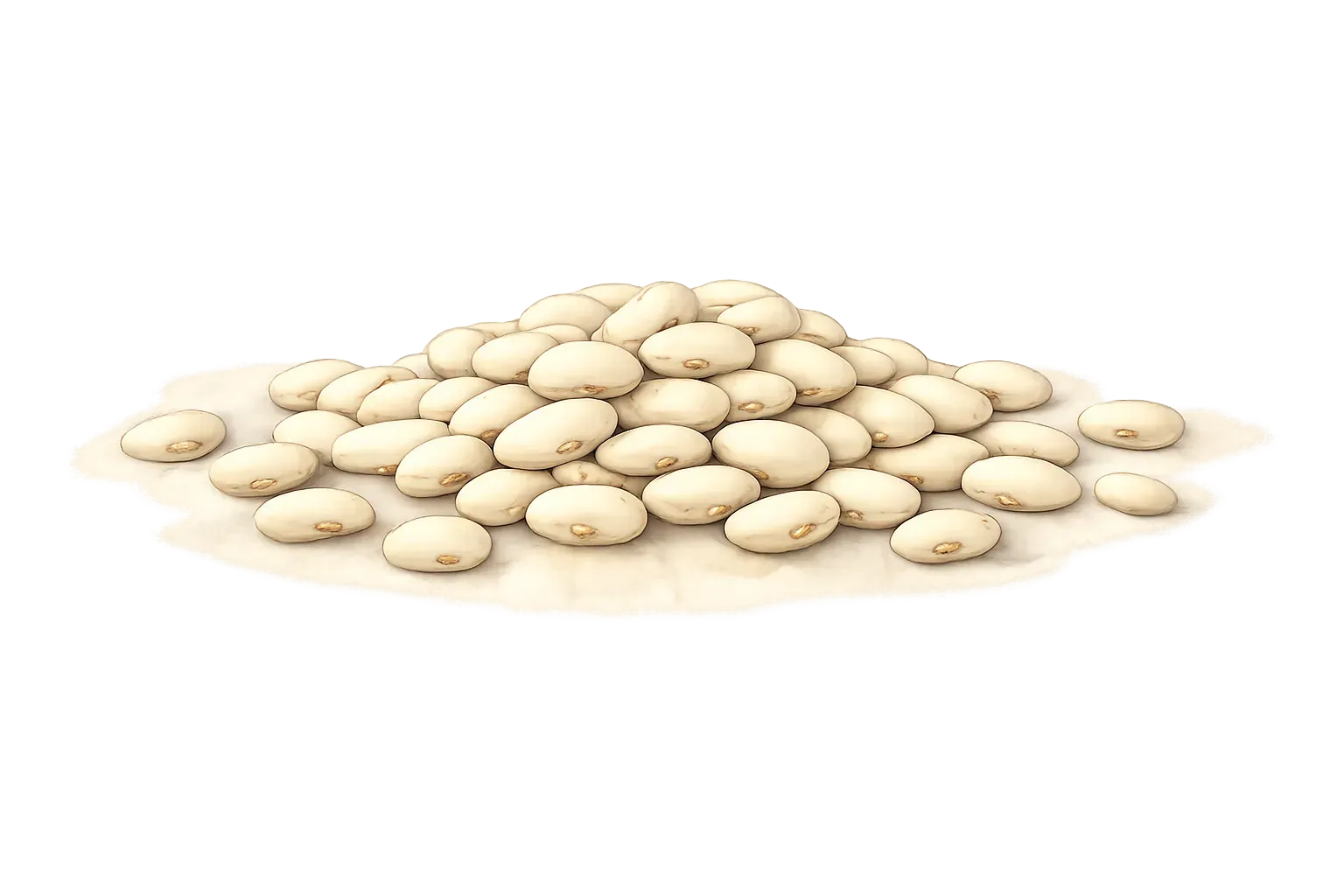
A medium-sized white bean, milder and slightly firmer than a navy bean but smaller than a cannellini, with a mild flavor and a texture that holds its shape a bit better than smaller white beans -- common in soups, stews, and bean salads where a bean that stays somewhat intact is wanted.
- green beans
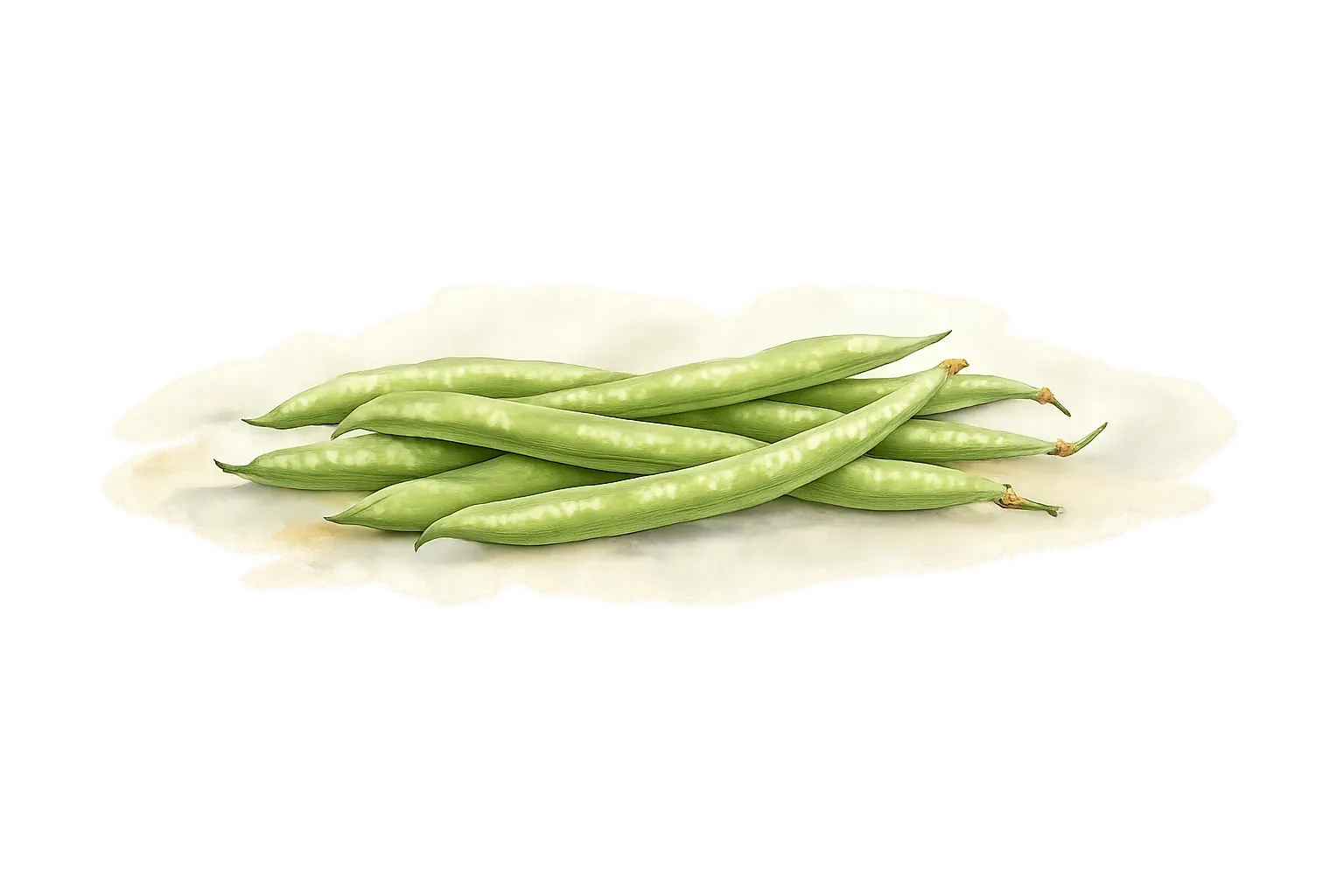
Also: Cut Green Beans, French Cut Green Beans, can French Cut Green Beans
The immature, edible pods of the common bean plant, eaten whole -- pod and seed together -- typically steamed, sauteed, roasted, or braised. Fresh, frozen, and canned versions differ enough in texture that they aren't fully interchangeable: fresh and frozen stay crisp-tender if not overcooked, while canned are already soft.
- green chilies
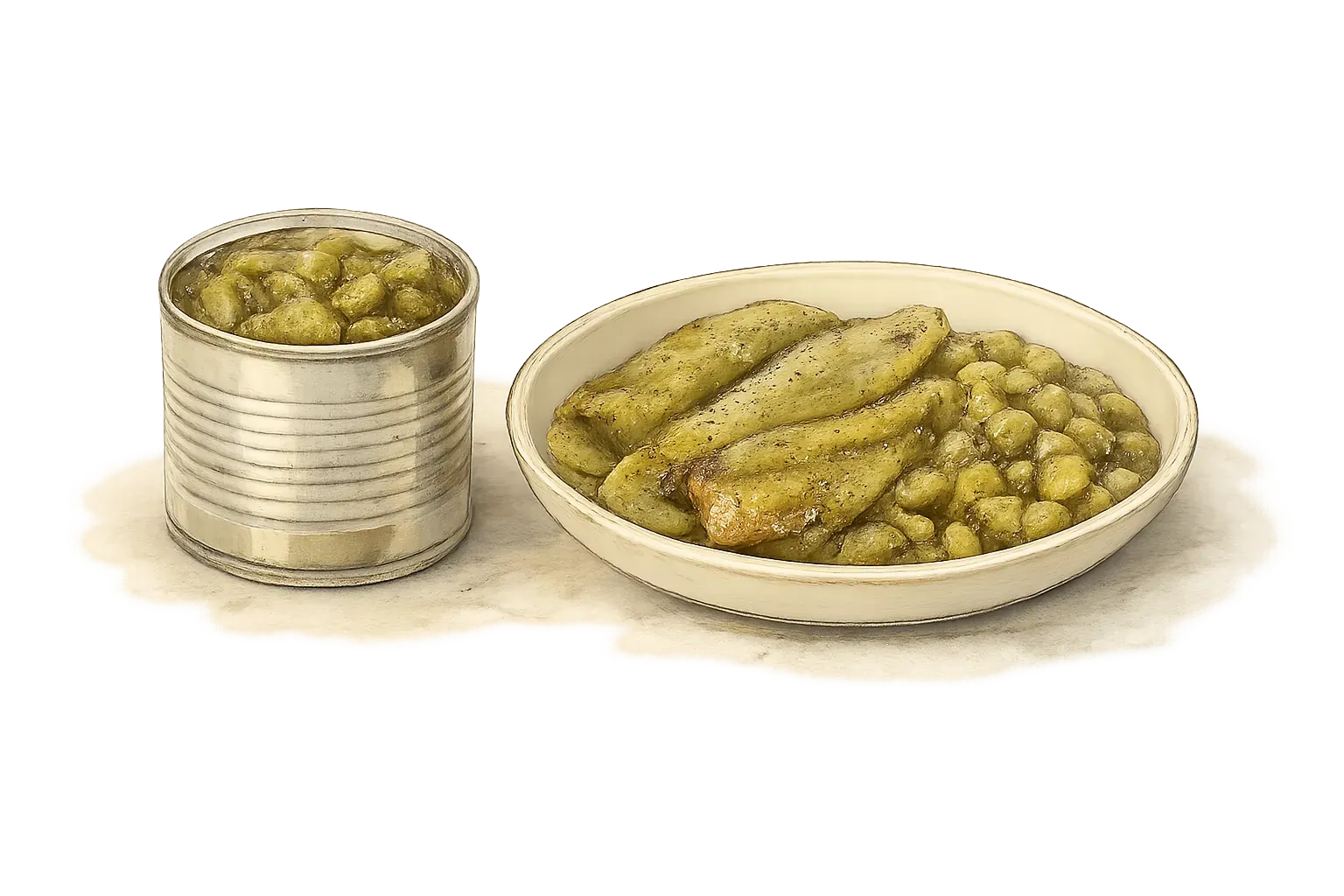
Also: Chopped Green Chilis, can of green chilies
Mild, roasted green chilies -- typically Anaheim or a similar variety -- canned diced or whole, adding a gentle chile flavor with very little heat. Because they're already roasted and peeled, they save the step of charring and skinning fresh chilies, at the cost of a softer texture and a slightly tangy, canned edge.
- green onion
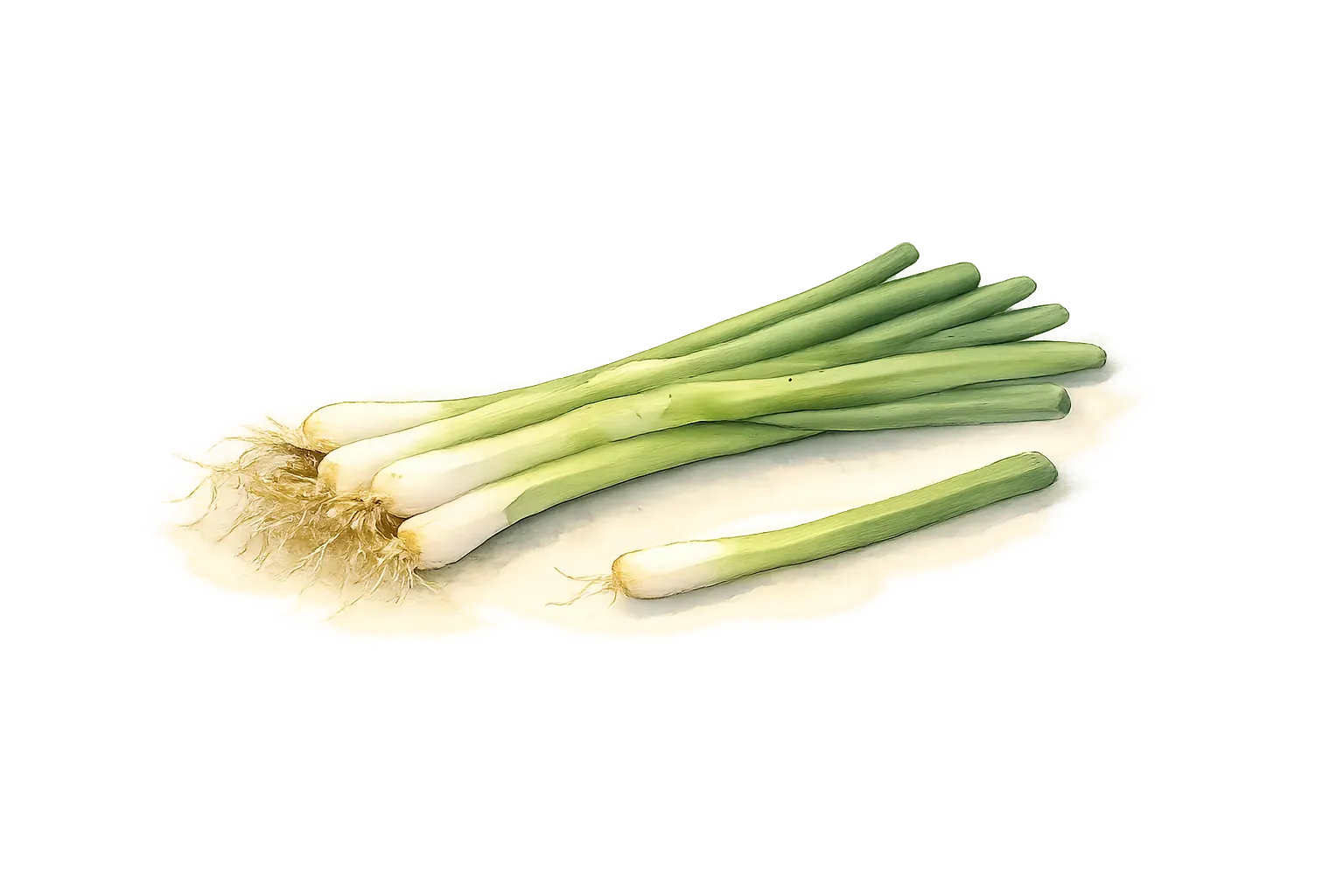
Also: chopped green onion, green onions, spring onions
A young onion harvested before the bulb fully forms, with a mild, fresh, slightly sharp flavor -- much gentler than a mature onion. Both the white base and the green tops are used, most often raw as a garnish or folded in at the end of cooking, since heat mutes their brightness quickly.
A kind of onion
- green peas
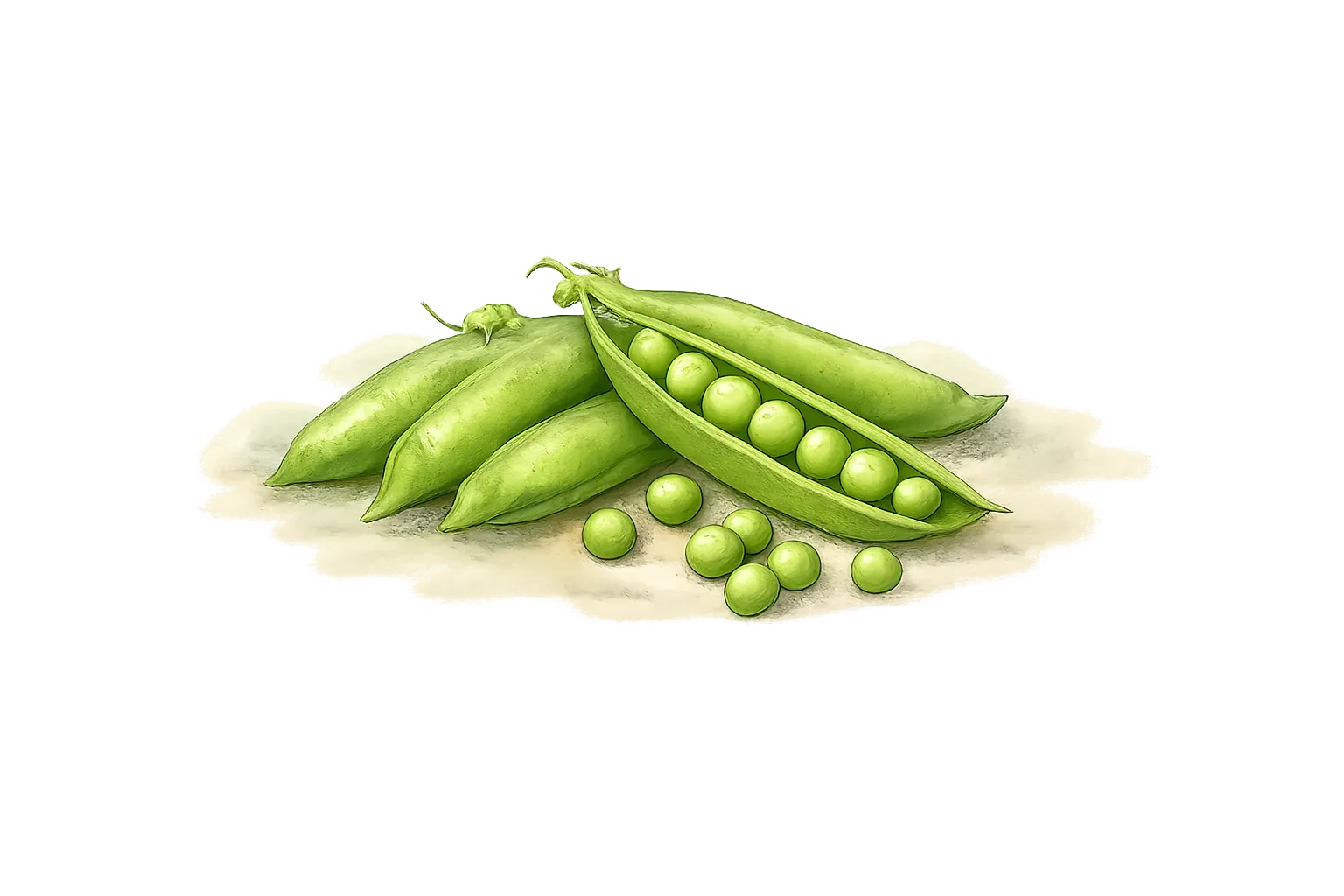
Also: LeSeur Small Green Peas
Small, round, sweet immature peas picked before the pod dries out, eaten fresh, frozen, or canned -- a common side vegetable and a frequent addition to soups, stews, and casseroles for color and sweetness. Their sugars convert to starch quickly after picking, which is why fresh peas are sweetest right after harvest, and why flash-frozen peas often taste fresher than "fresh" peas that traveled a long distance to the store.
- grits
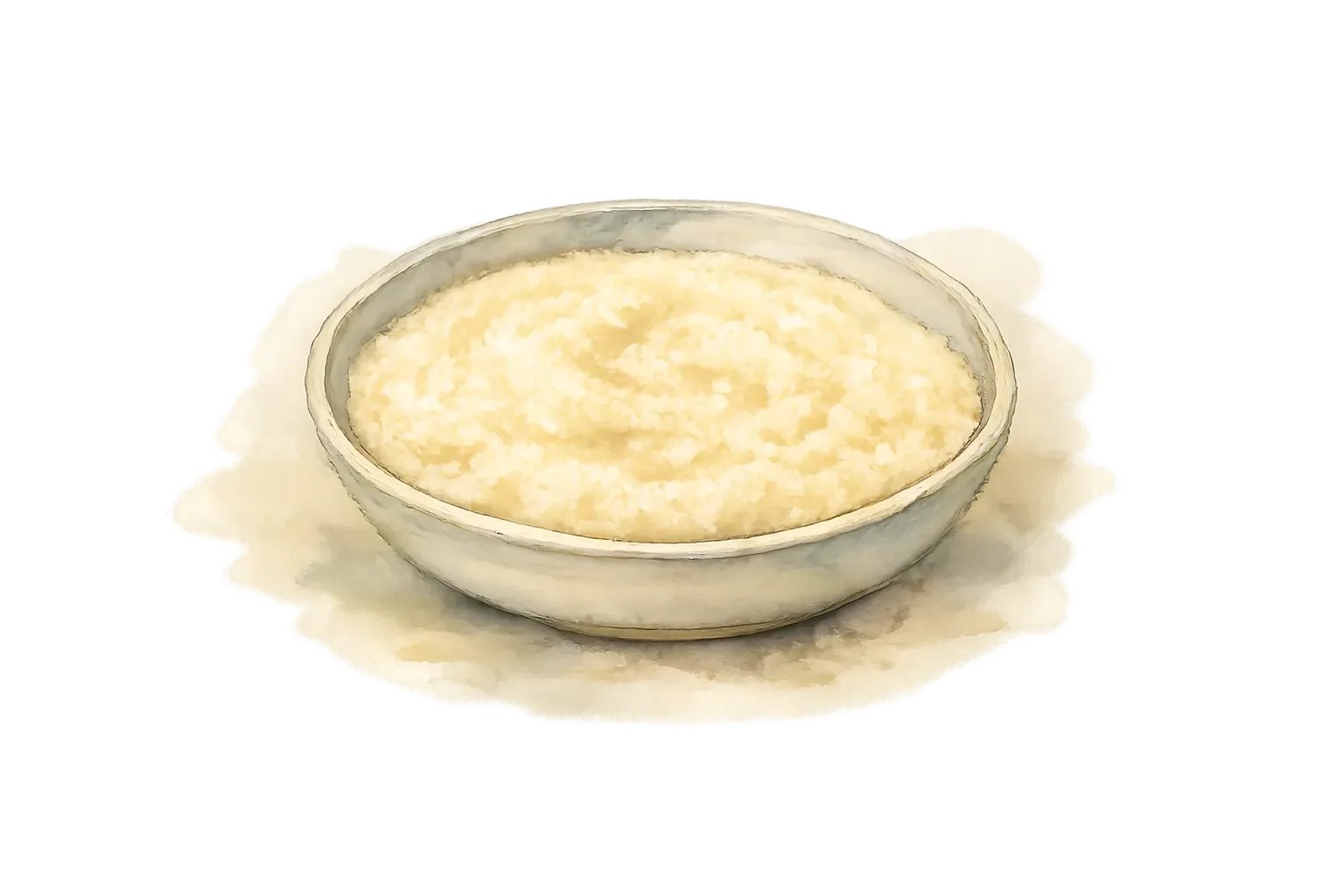
Coarsely ground dried corn, cooked into a soft, creamy porridge -- a Southern staple, traditionally served alongside breakfast or under shrimp and other savory toppings. "Prepared grits" (already cooked) can be stirred into a soup or chowder to thicken it and add a mild corn flavor and body, rather than being served as a separate side.
- ground beef
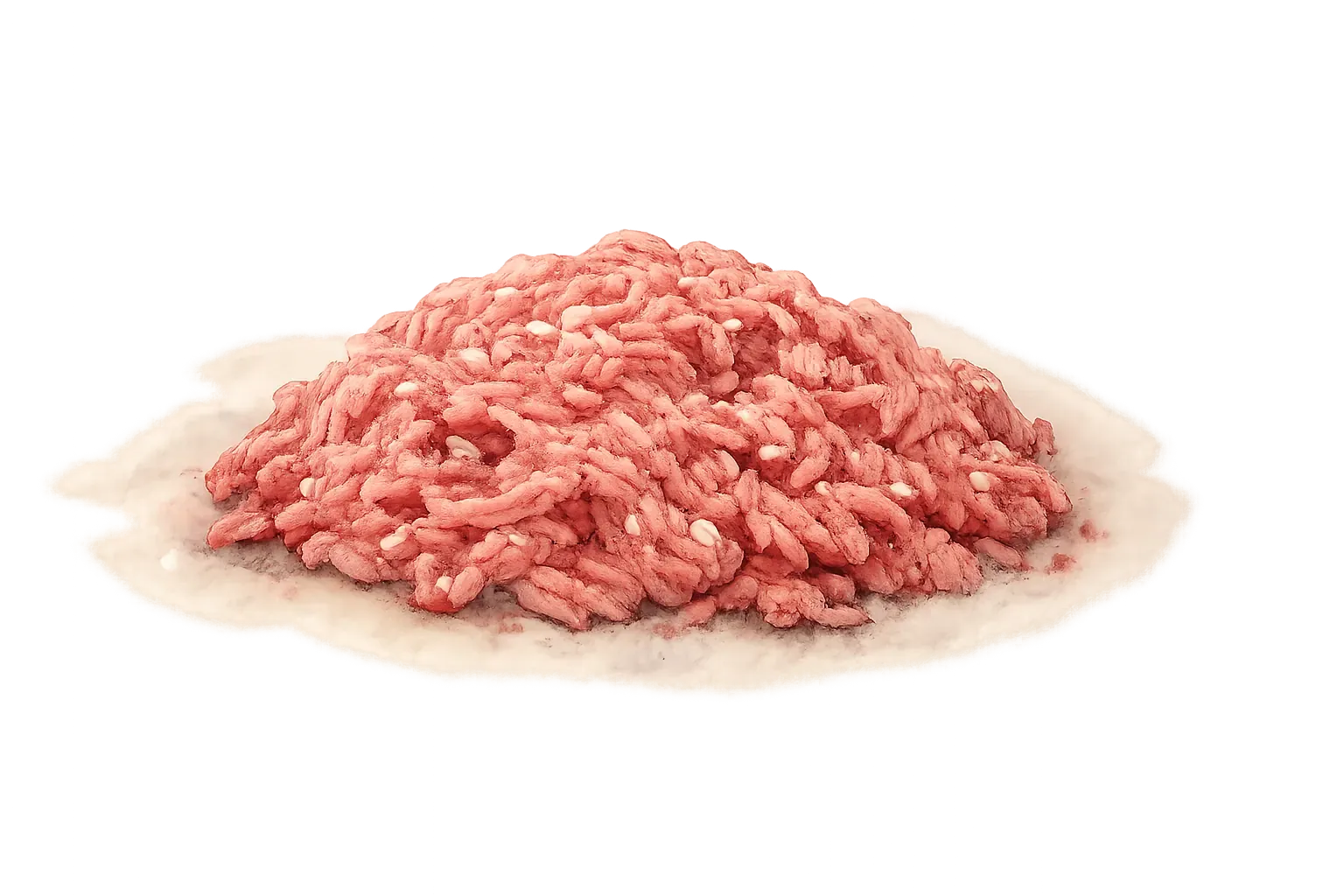
Also: hamburger
Beef trimmed and mechanically ground, sold at different fat percentages such as 80/20 or 85/15 -- the ratio of lean meat to fat, which strongly affects how juicy it stays and how much it shrinks during cooking. Used for burgers, meatballs, chili, tacos, and countless other ground-meat dishes.
- ground beef and pork mix
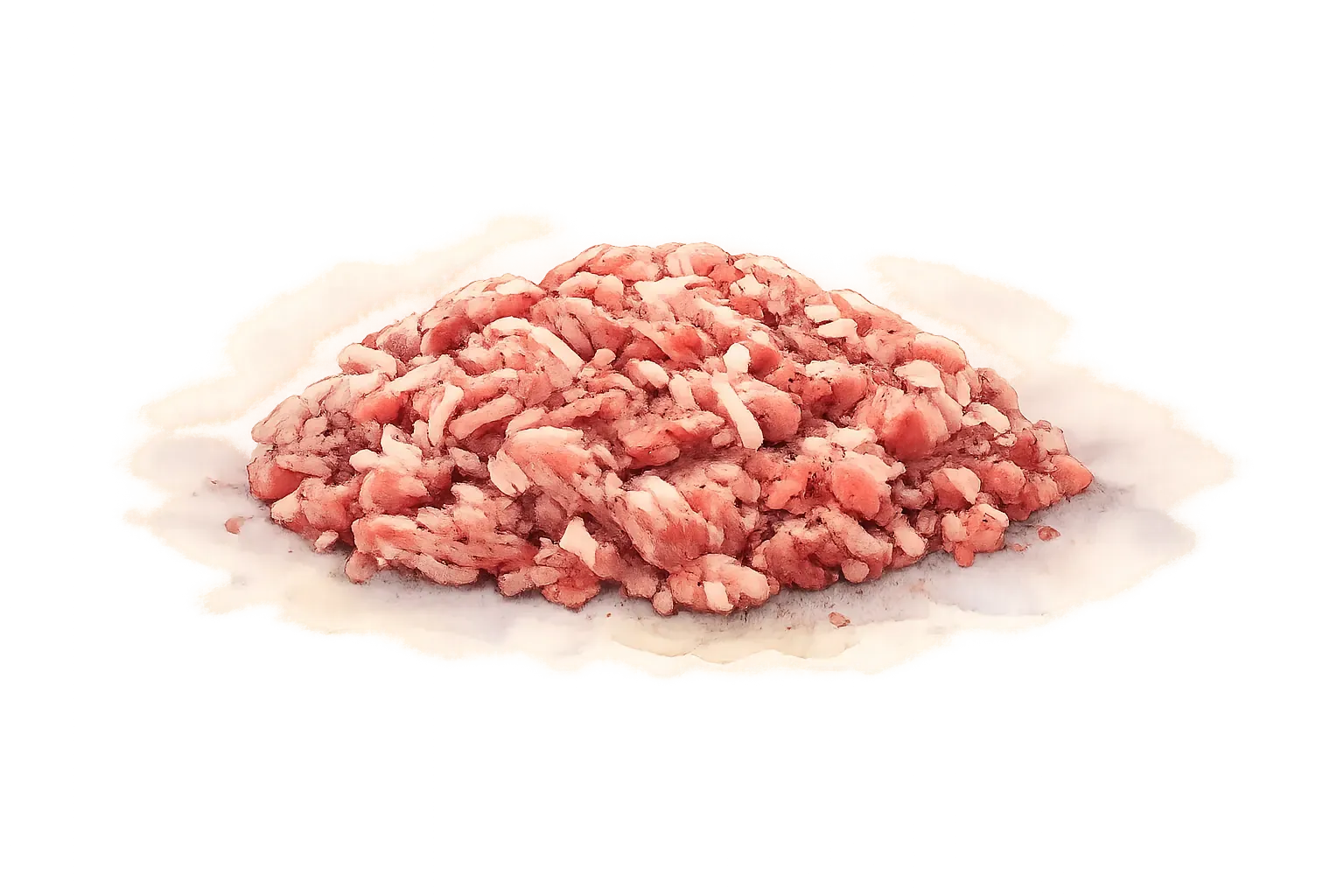
Also: carne picada mista, mixed ground meat
A pre-blended ground meat, roughly half ground beef and half ground pork, sold as a single product at many butchers and grocery stores (common in Portugal, among other places). The pork adds fat and a milder sweetness that straight ground beef doesn't have, giving a rounder flavor and juicier texture in soups, stews, meatballs, and sausage-style dishes.
- ground cardamom
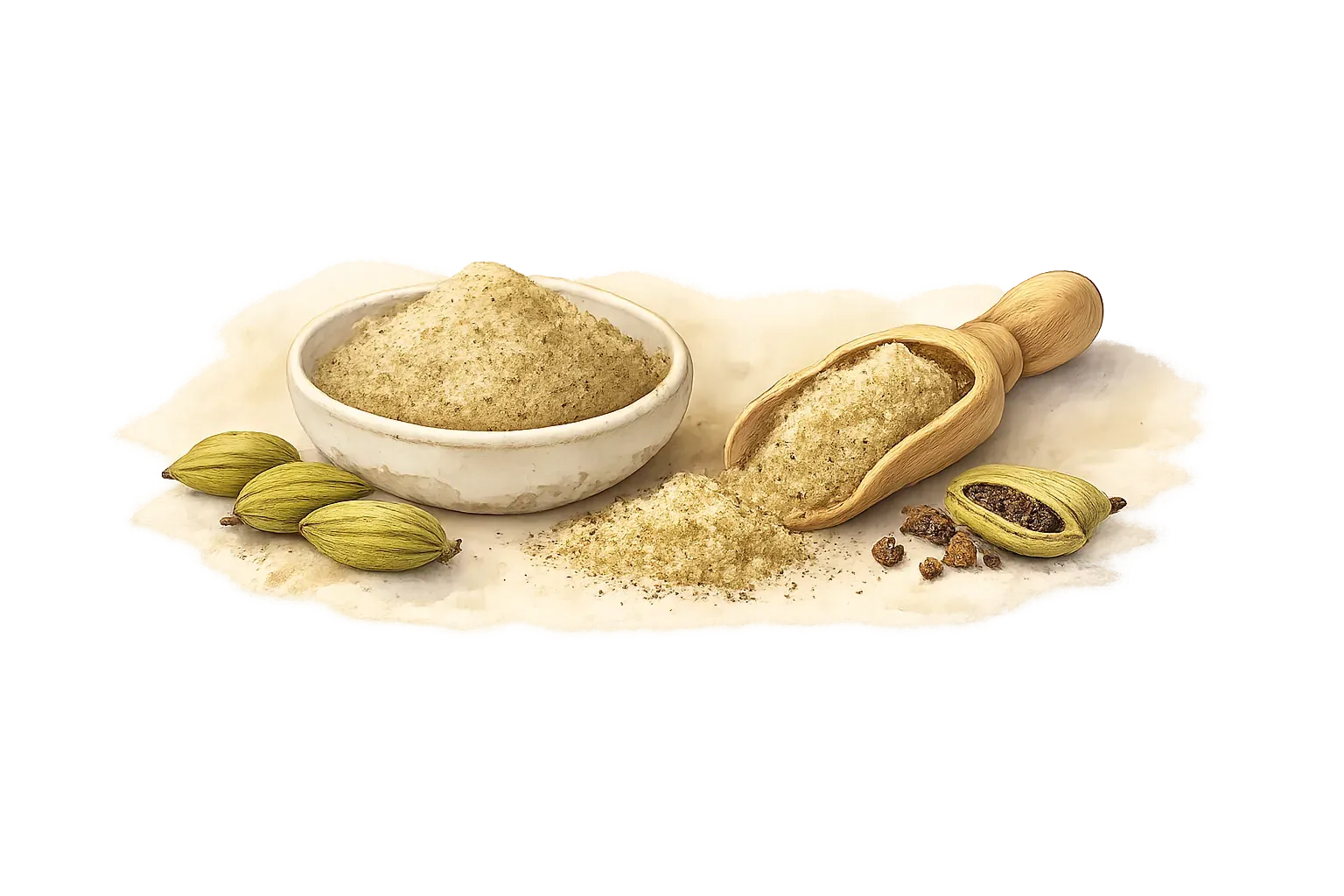
Also: cardamom
The dried seeds of the cardamom pod, ground to a powder, with a warm, sweet, slightly citrusy and floral flavor unlike any other common spice. Used in both baking (spiced rolls, chai-spiced desserts) and savory cooking, especially South Asian and Middle Eastern dishes and spice blends.
- ground cloves
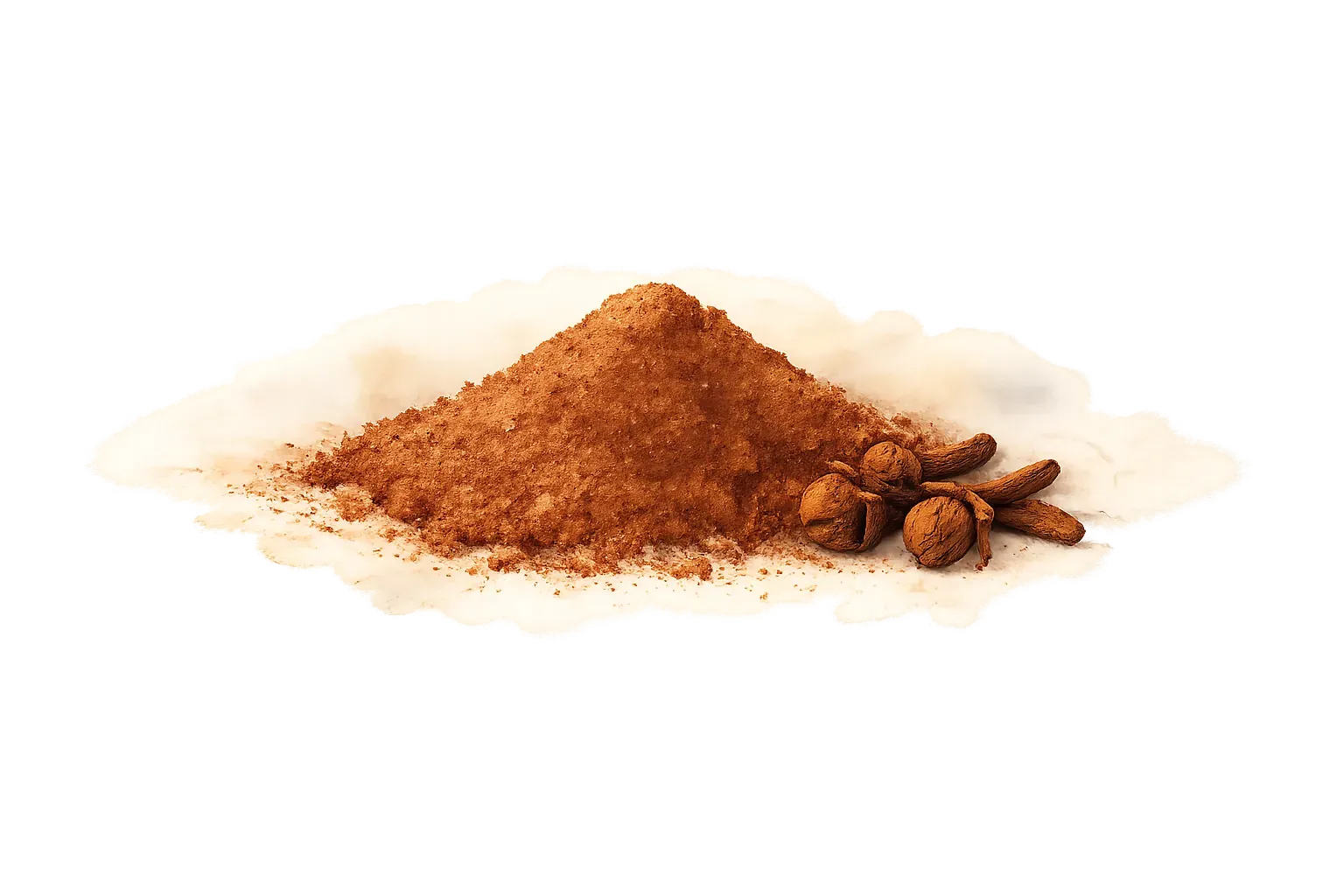
Dried, unopened clove flower buds, ground into a fine brown powder -- an intensely warm, sweet-pungent spice used in small amounts in baking, spice blends, and savory braises and glazes. It's one of the strongest common spices by volume; too much reads as medicinal or numbing rather than warm.
- ground ginger
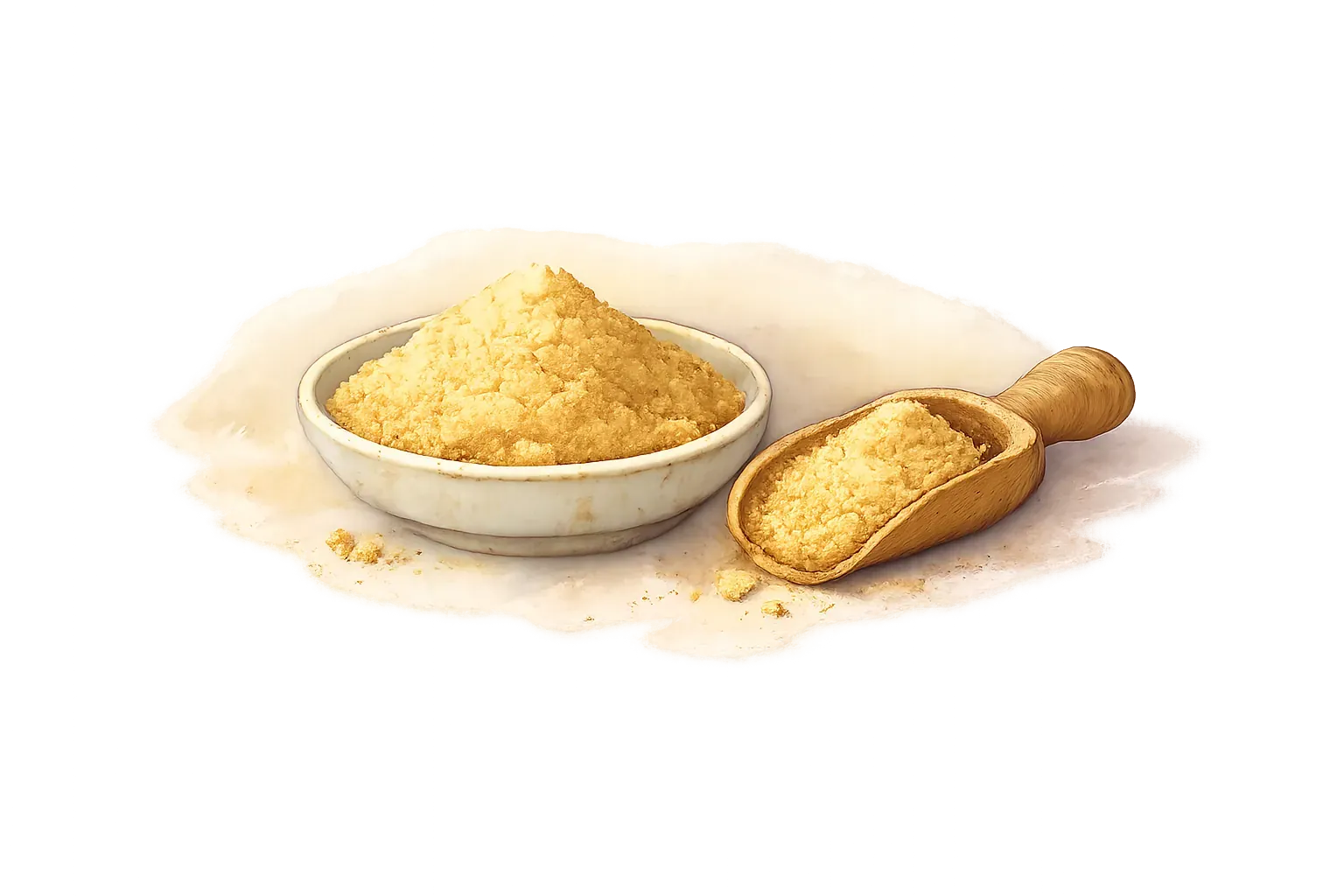
Dried ginger root ground into a fine powder, warmer, drier, and more concentrated in flavor than fresh ginger -- common in baking (gingerbread, spice cookies) and dry spice blends where fresh ginger's moisture would be unwelcome. Its flavor is sharper and more one-dimensionally hot than fresh ginger's brighter, more citrusy profile.
More specific: fresh ginger
- ground pork
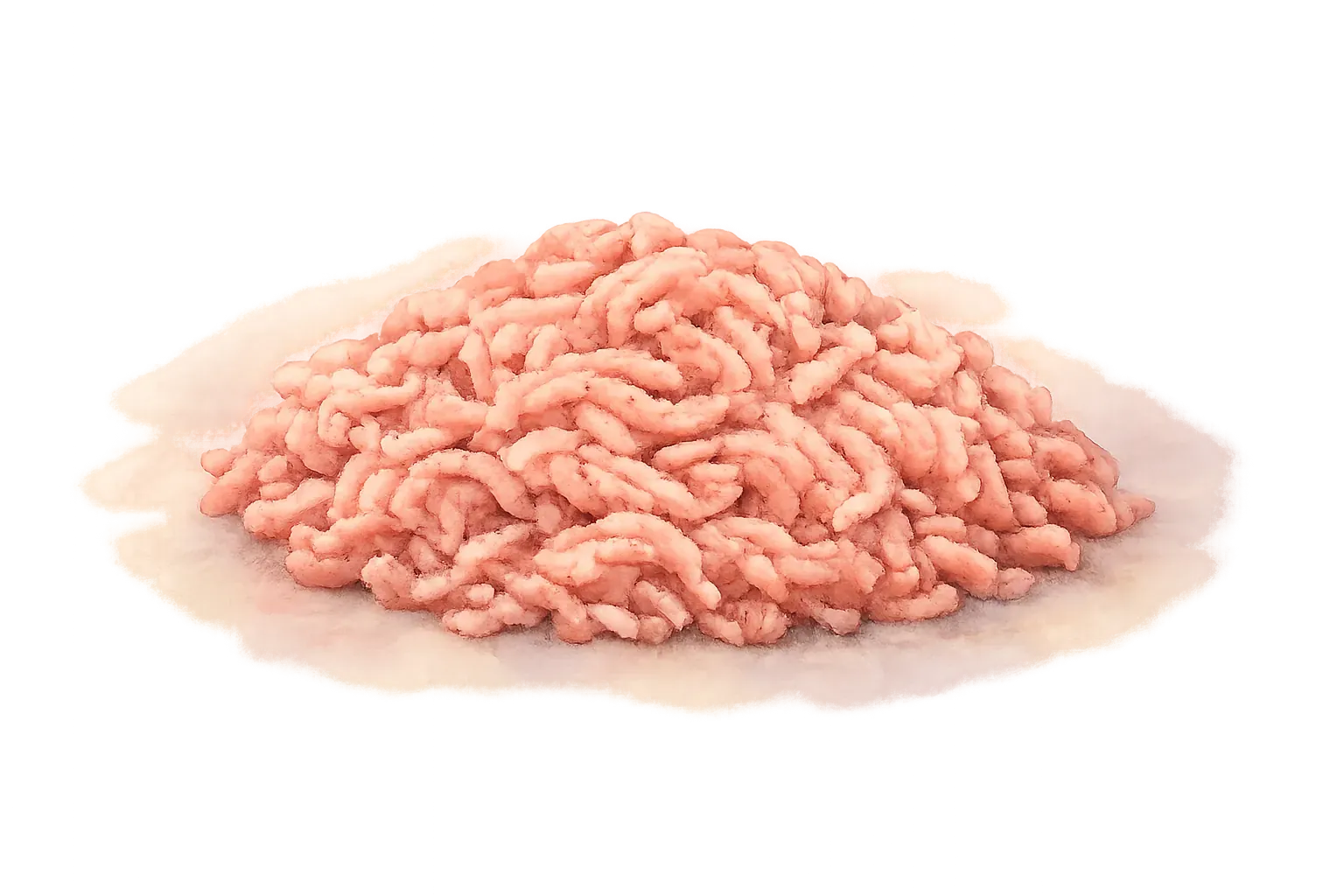
Also: minced pork
Pork trimmed and mechanically ground, usually sold at a fat ratio like 80/20 or 85/15 similar to ground beef. Milder and slightly sweeter than ground beef, and the standard base for homemade sausage, meatballs, and dumpling fillings, since its fat content keeps it from drying out and its mild flavor takes on added seasoning well.
- ground turkey
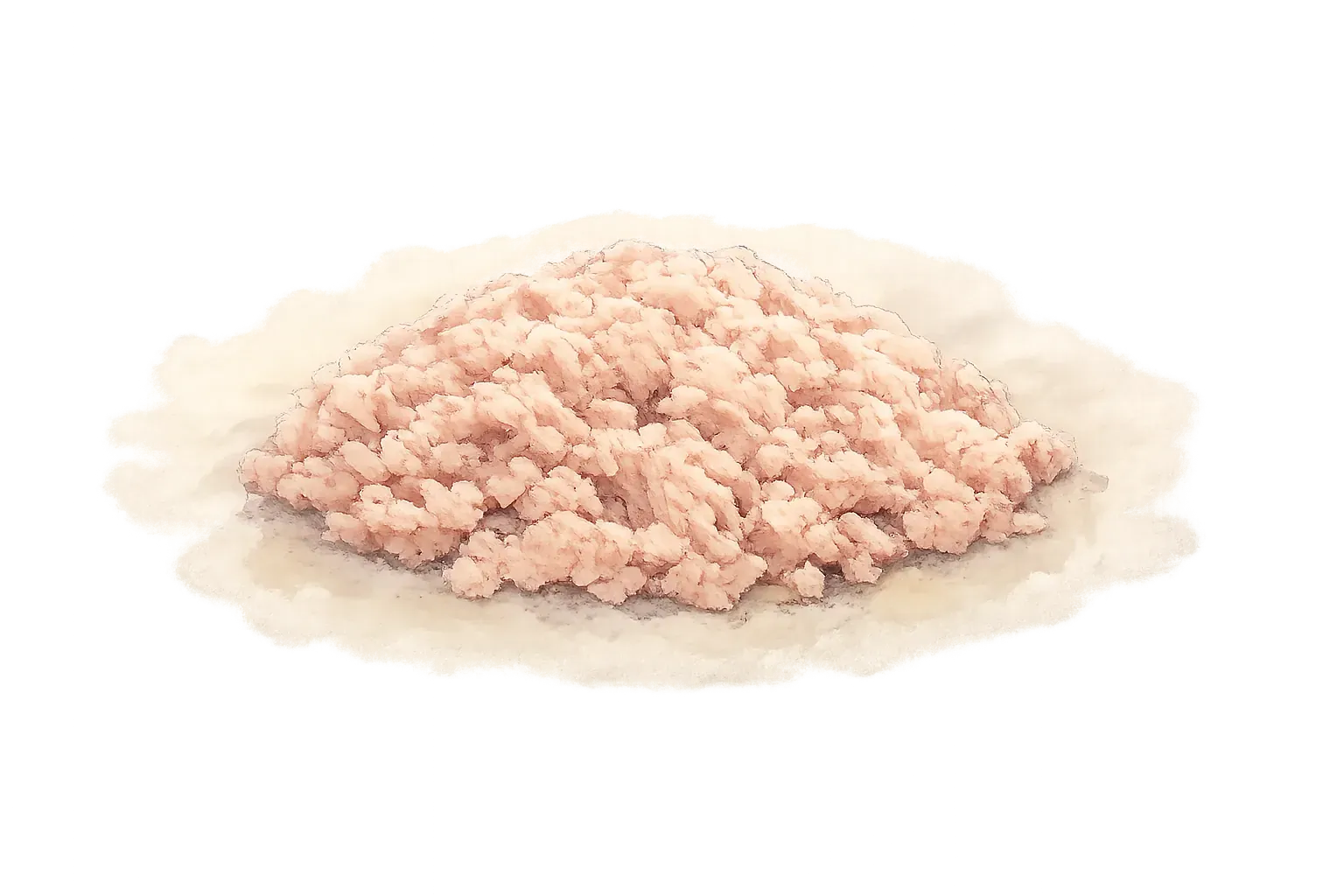
Turkey trimmed and mechanically ground, sold at different fat percentages -- "ground turkey breast" is very lean, while regular ground turkey includes some dark meat and skin for more fat and flavor. Milder than ground beef, and leaner, which can make it dry out more easily if overcooked or under-seasoned.
H
- half & half

Also: half and half
A dairy product that's roughly half whole milk, half cream, landing in richness between the two -- pourable like milk but noticeably richer, with just enough fat to round out coffee or lighten a cream sauce without the heaviness of straight cream. Common in coffee, light cream soups, and sauces where full cream would be too heavy.
- ham
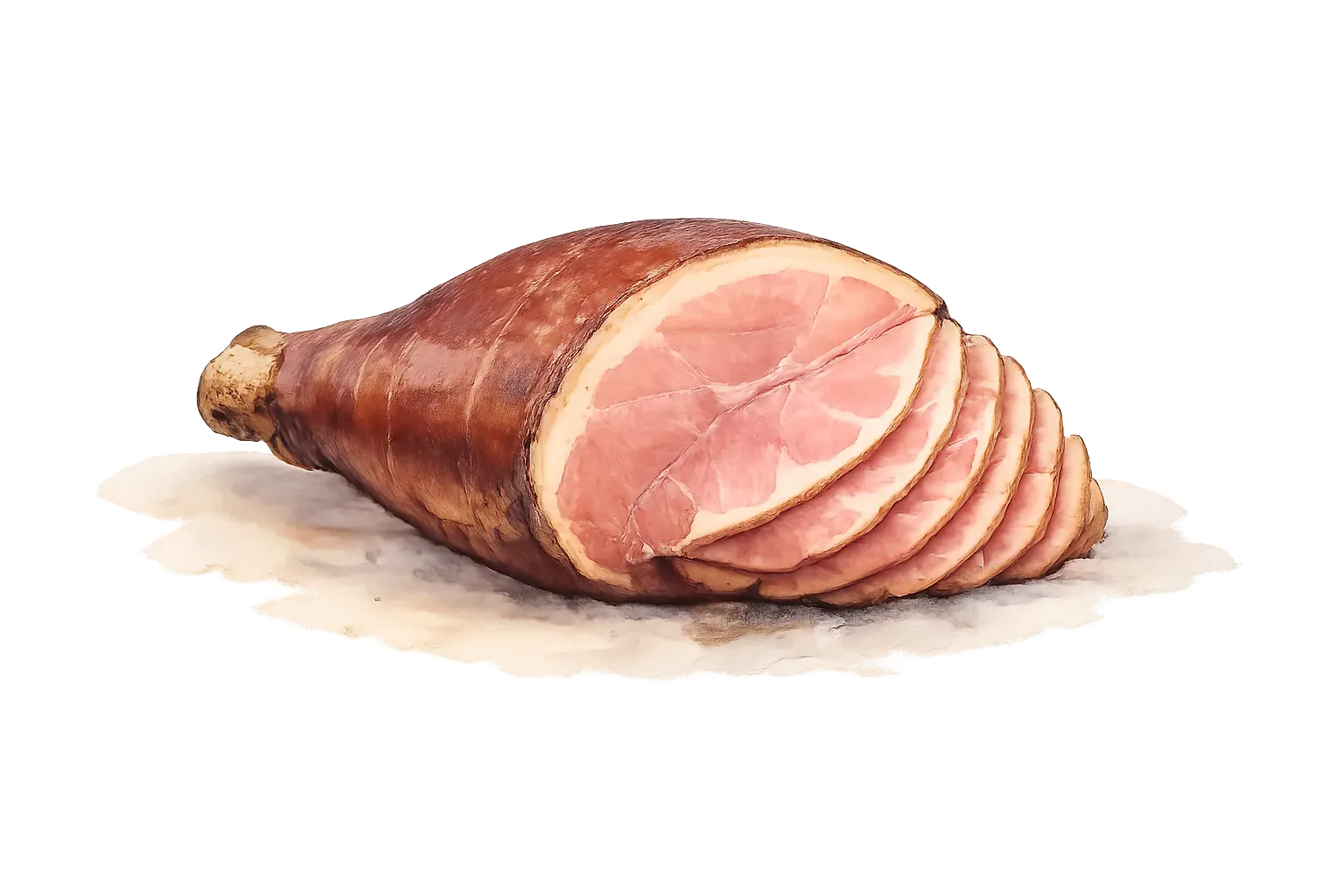
Also: Cured ham, Smoked ham hocks
Cured, and often smoked, pork from the leg, sold whole, sliced, spiral-cut, or diced -- either fully cooked and ready to eat cold, or requiring further cooking, depending on the product. Because curing adds a significant amount of salt (and often sugar and smoke), it functions as much as a seasoning ingredient as it does a protein.
More specific: country ham
- ham bone
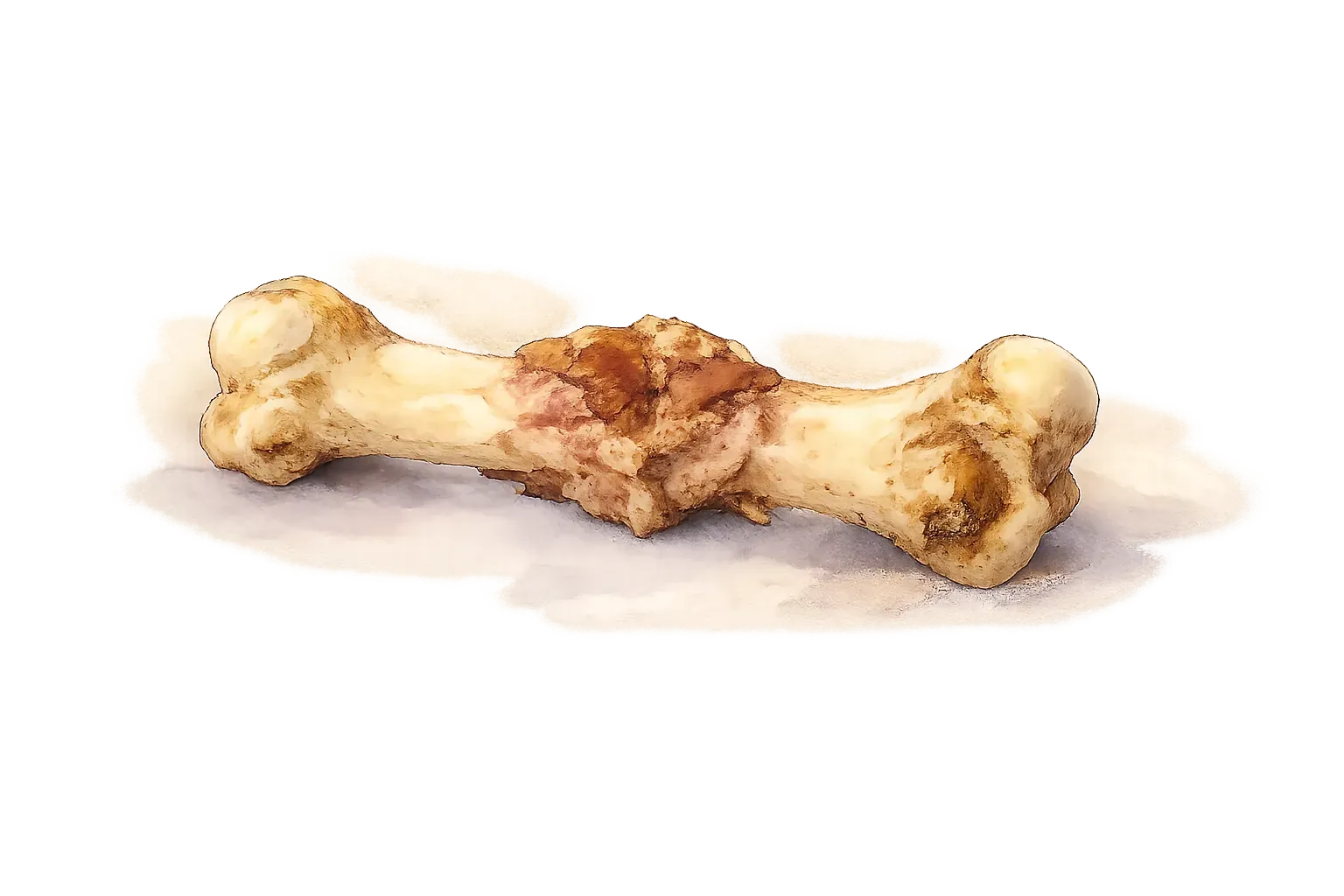
The leftover bone from a cooked ham, often with some meat still clinging to it; simmered into soups, beans, and greens to give a deep, smoky, salty backbone of flavor that a fresh bone can't match.
- ham hock
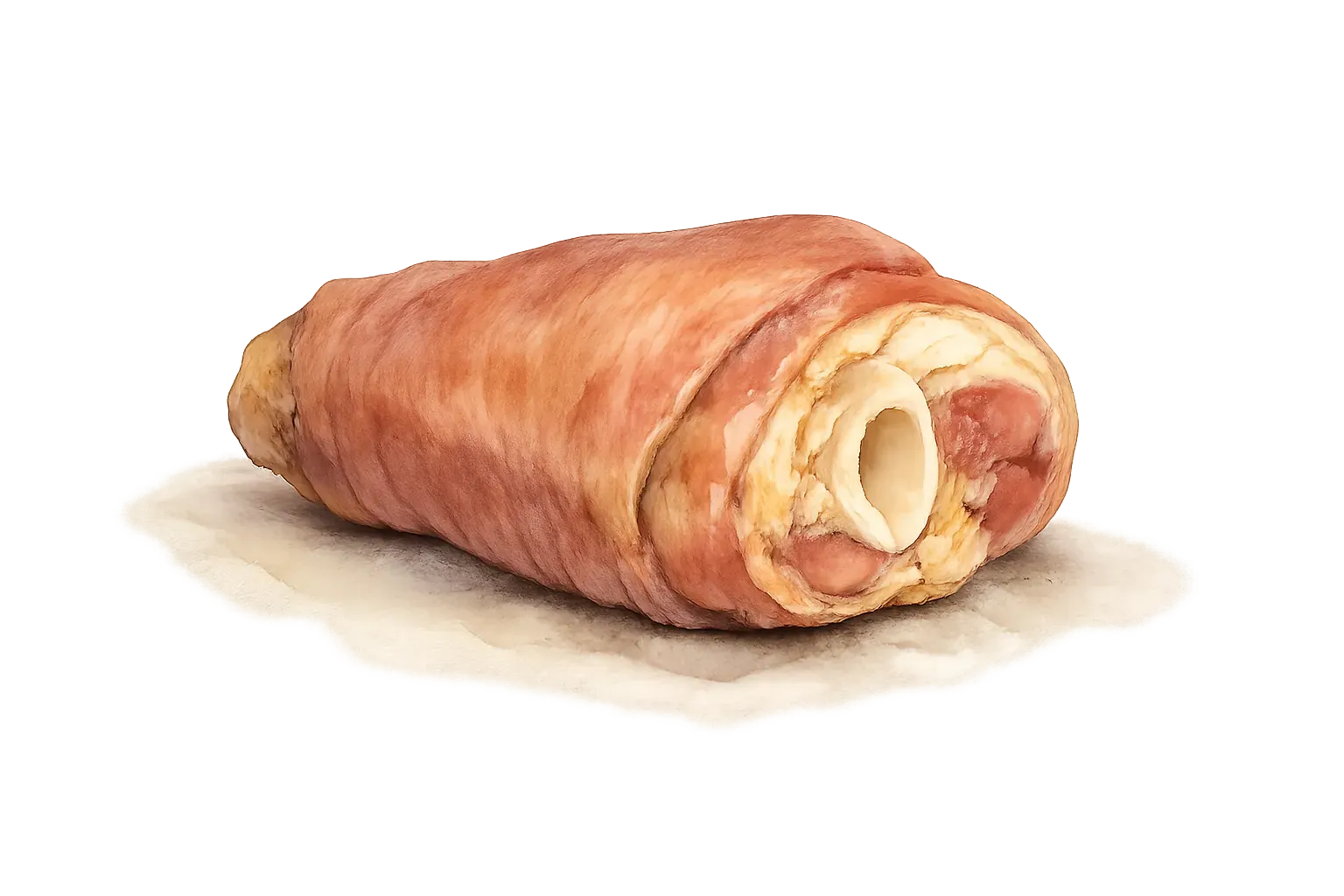
Also: smoked ham hock, pork hock
The lower leg of the pig, just above the foot -- mostly skin, bone, and connective tissue with a modest amount of meat, almost always sold smoked and cured. Unlike a ham bone, which is what's left over after a whole ham has already been cooked, a ham hock is bought specifically as its own cut, raw (despite being smoked and cured), meant to be simmered for hours into beans, greens, or soups. That long simmer melts the connective tissue into rich gelatin and infuses the whole pot with a deep, smoky, salty flavor.
- Hamburger Helper
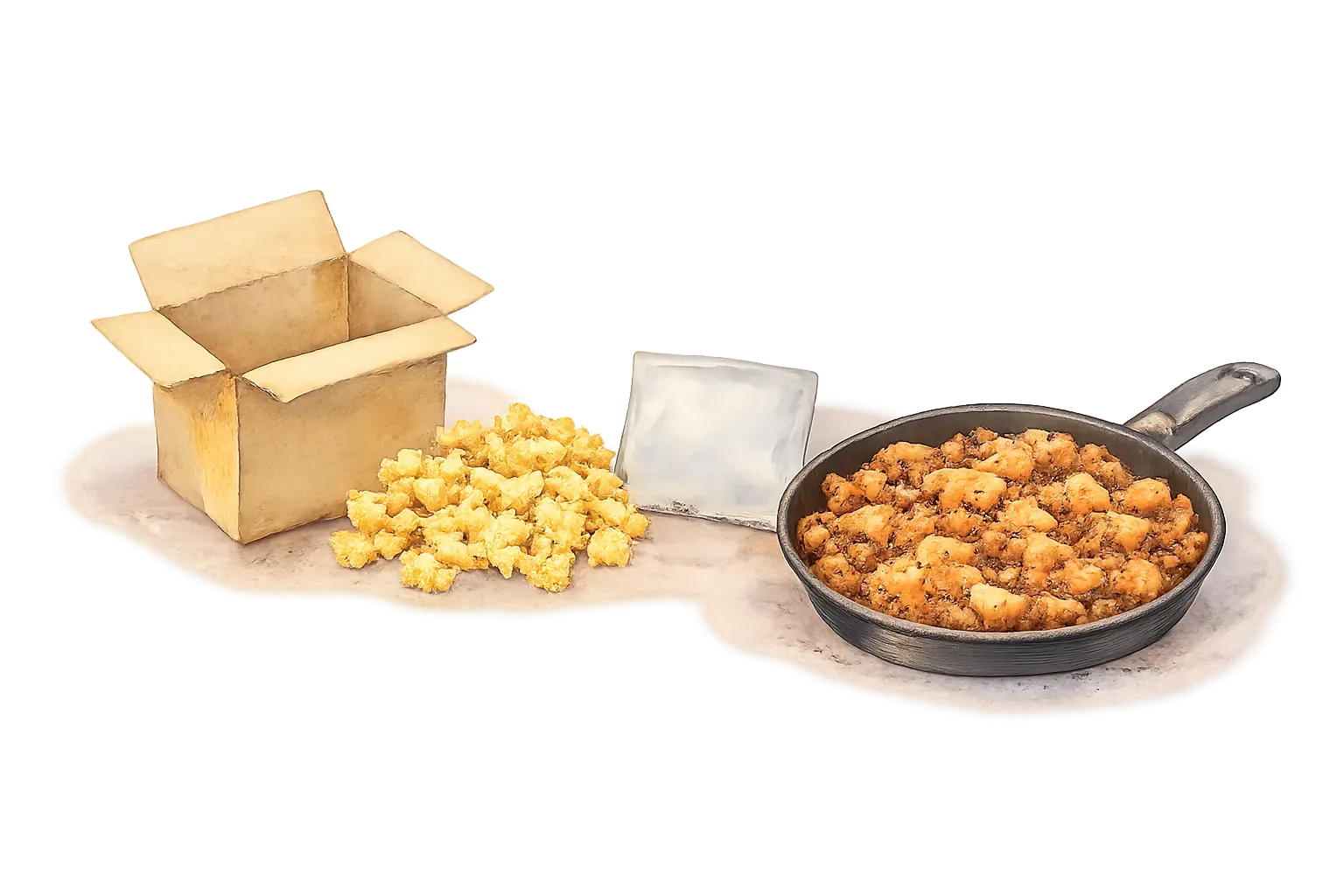
A boxed dinner kit consisting of a pasta or rice component and a separate seasoning/sauce packet, meant to be cooked together with browned ground beef to make a quick skillet meal. Different flavors (like the Italian Lasagna variety) have their own pasta shape and seasoning blend; can also be used as a shortcut base for a soup rather than its usual skillet preparation.
- hard boiled eggs
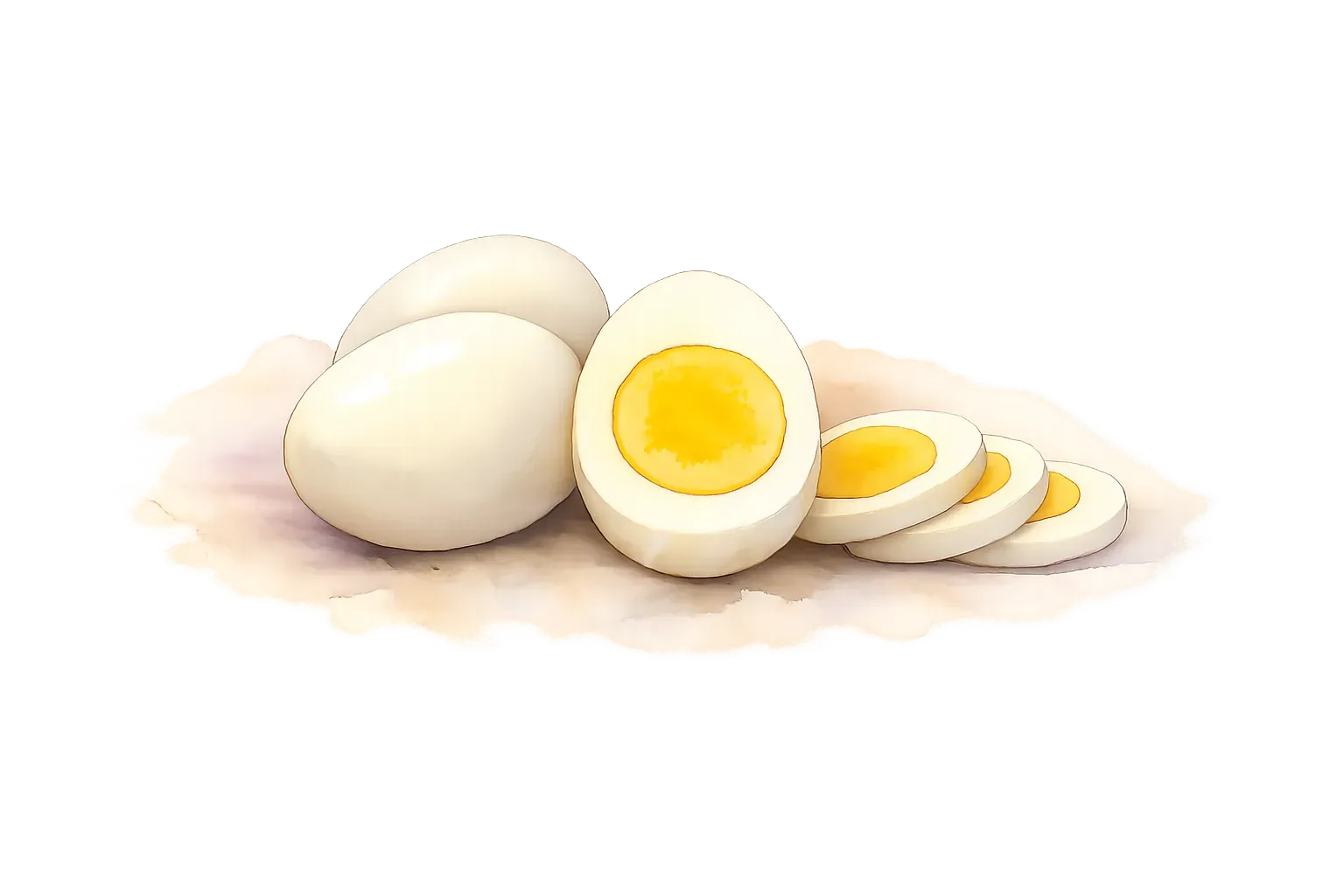
Whole eggs cooked in the shell in hot water until both white and yolk are fully set, then peeled; eaten as-is, sliced, or worked into dishes like deviled eggs and egg salad.
A kind of egg
- hash browns
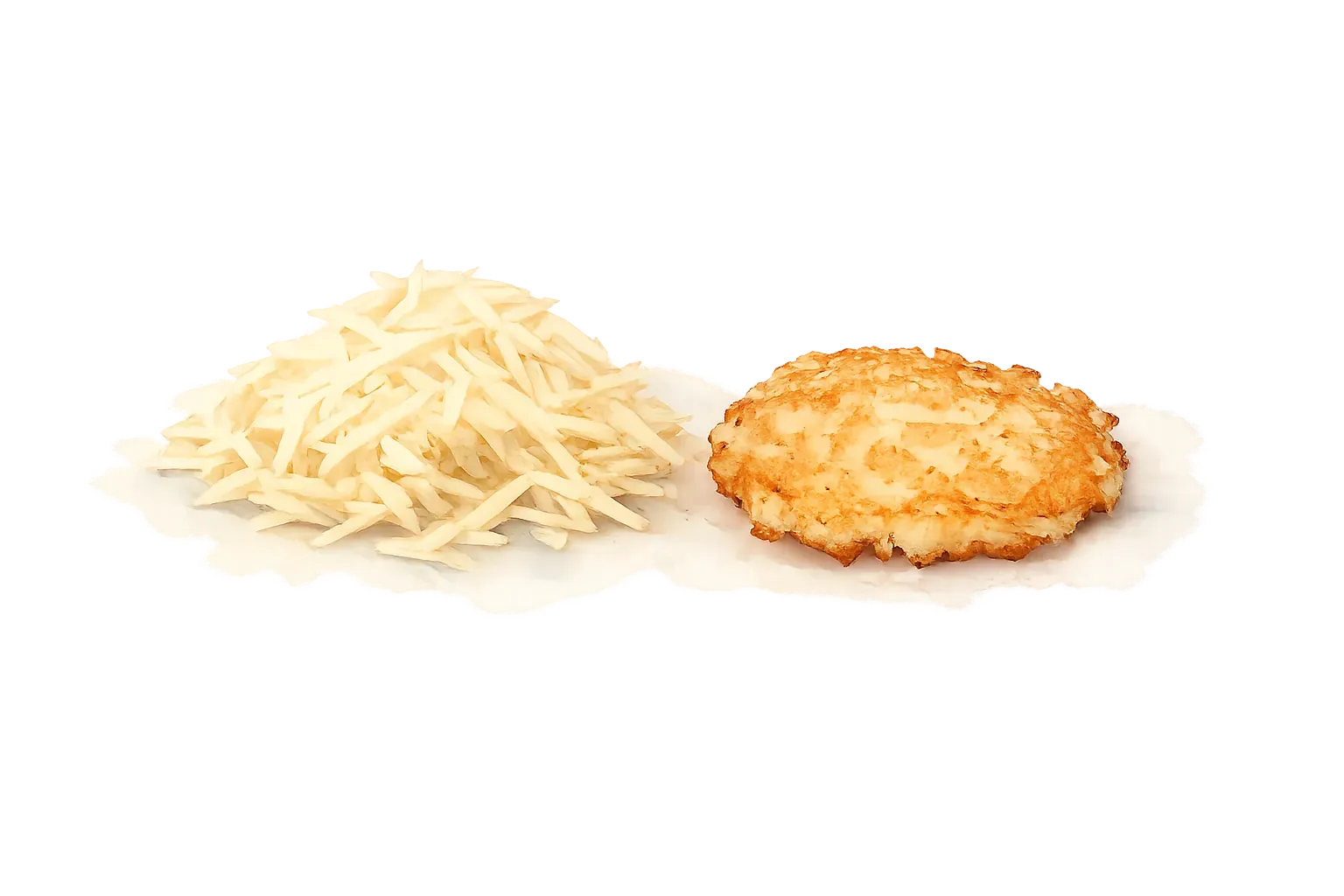
Also: shredded hash browns
Shredded or diced potatoes, sold fresh (refrigerated) or frozen, pre-prepped to skip the peeling and shredding a scratch hash brown would need. Traditionally pan-fried into a crispy cake, but the shredded form also works stirred into a soup or chowder as a quick way to add potato without dicing whole potatoes.
A kind of potato
- heavy cream

A high-fat dairy cream, also labeled heavy whipping cream, with enough fat (36-40%) to whip to stiff peaks and to simmer or boil in a sauce without curdling. Used to enrich soups, sauces, and desserts, and as the base for whipped toppings and many custards.
- hominy
Also: pozole
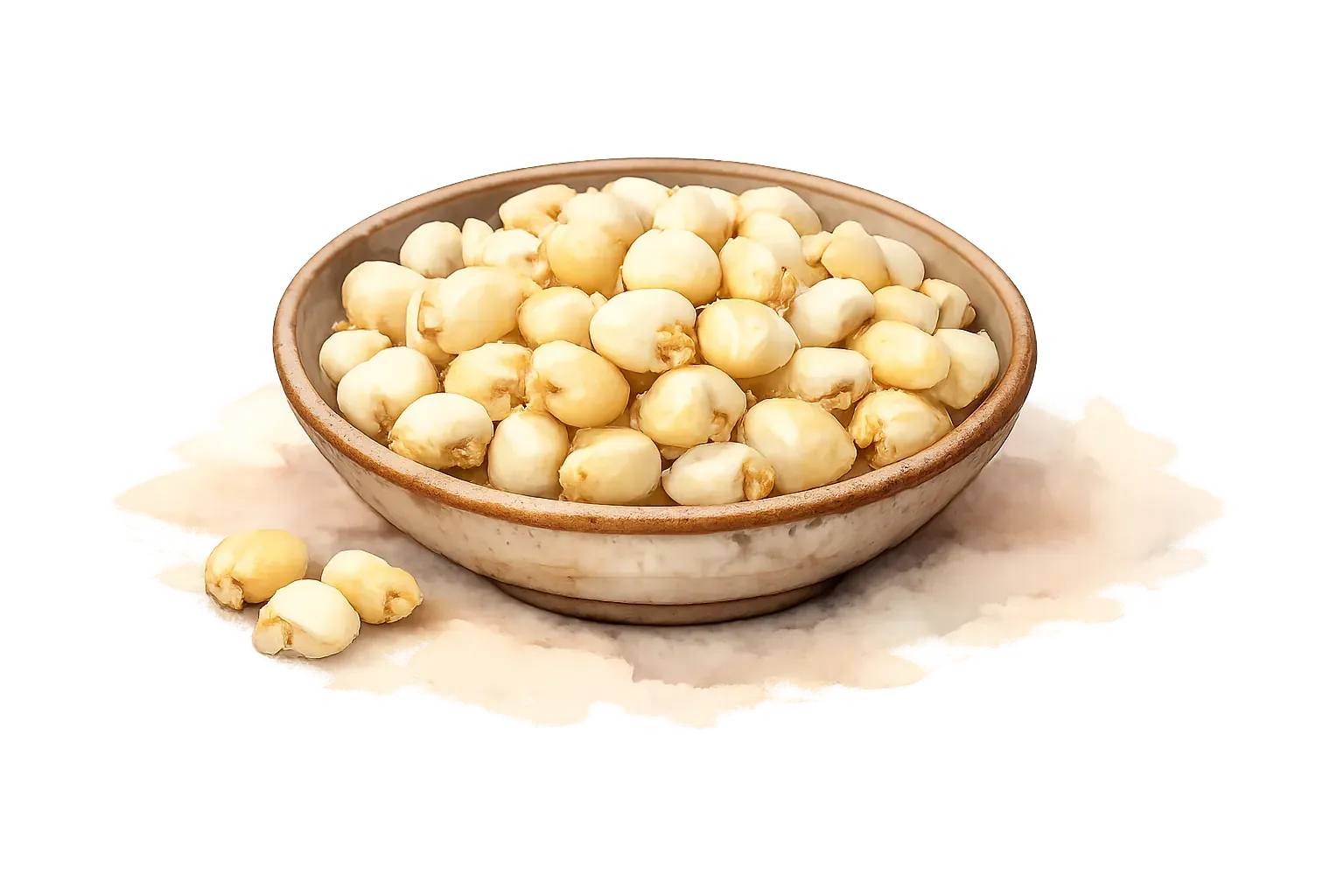
Dried corn kernels treated with an alkali (traditionally lime, a process called nixtamalization) until they swell, soften, and lose their tough outer hull -- giving a chewy, slightly puffy texture and a distinct corn flavor different from fresh or canned sweet corn. The base of Mexican pozole, and also common in Southern cooking, either whole or ground into grits.
- honey

A thick, sweet liquid made by bees from flower nectar, ranging from pale and mild to dark and strongly flavored depending on the flowers it came from. Used as a sweetener, and because it's almost entirely sugar, it also helps baked goods hold moisture and acts as a mild preservative.
- hoppin' John vegetables
Also: hop'n john vegetables
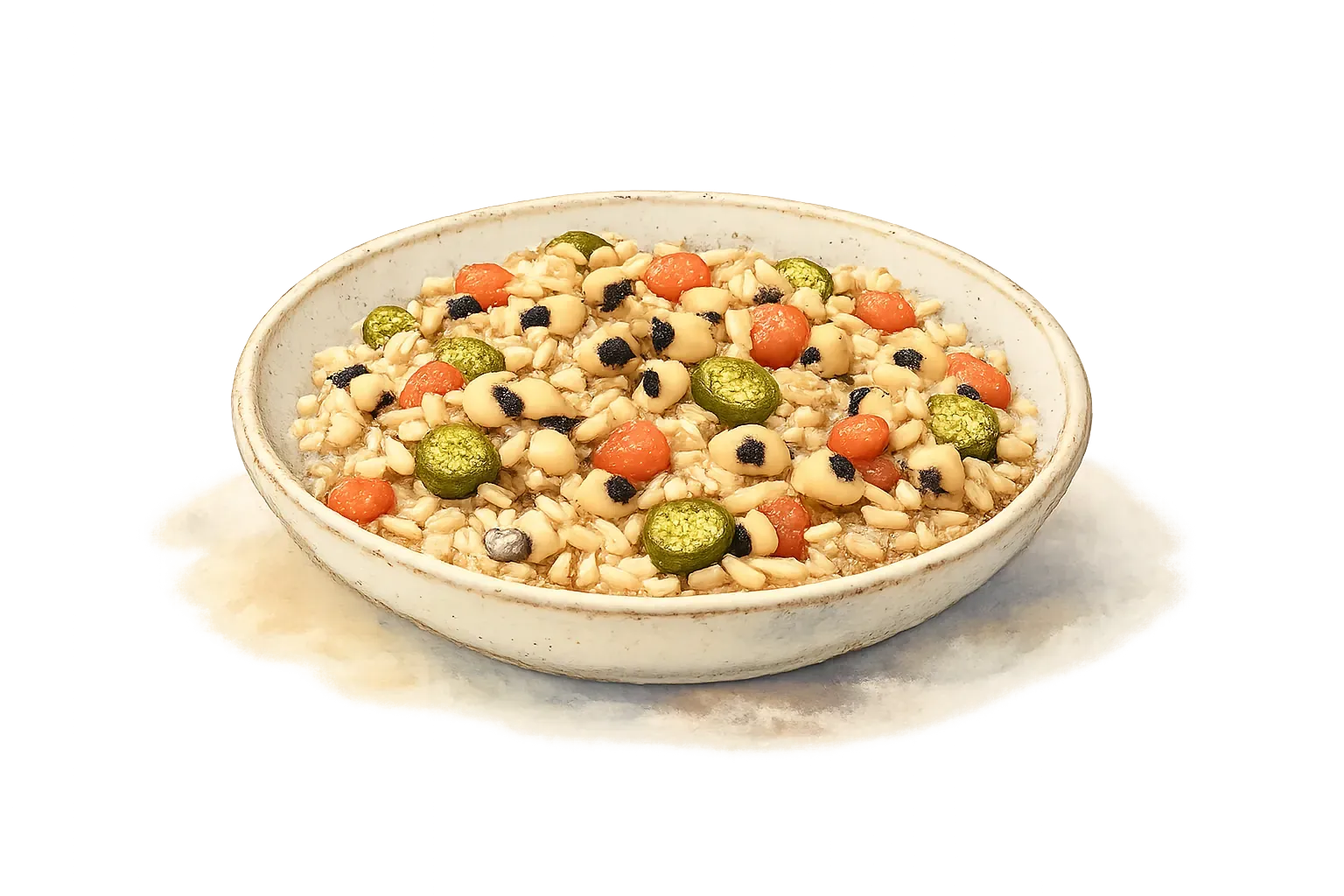
A canned Southern vegetable blend built around the ingredients of Hoppin' John (black-eyed peas and rice, sometimes with other vegetables like tomatoes or okra mixed in), sold shelf-stable and pre-cooked as a shortcut for that traditional dish or as a soup and stew add-in. Exact contents vary by brand.
- horseradish
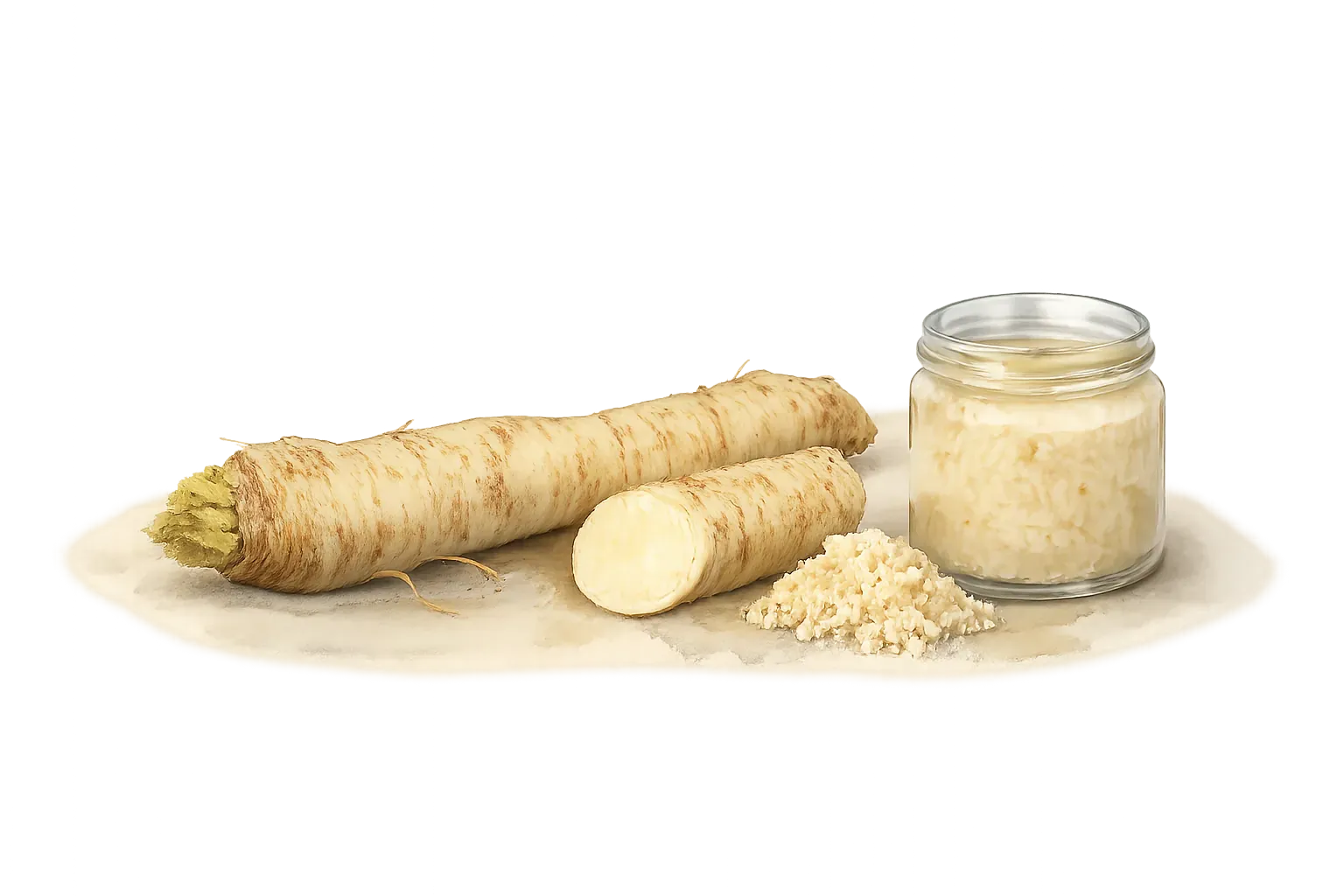
A pungent root vegetable in the same family as mustard and wasabi, grated fresh or sold prepared -- grated and packed in vinegar -- in a jar. Its sharp heat hits the sinuses rather than the tongue and fades much faster than chile heat.
- hot country sausage
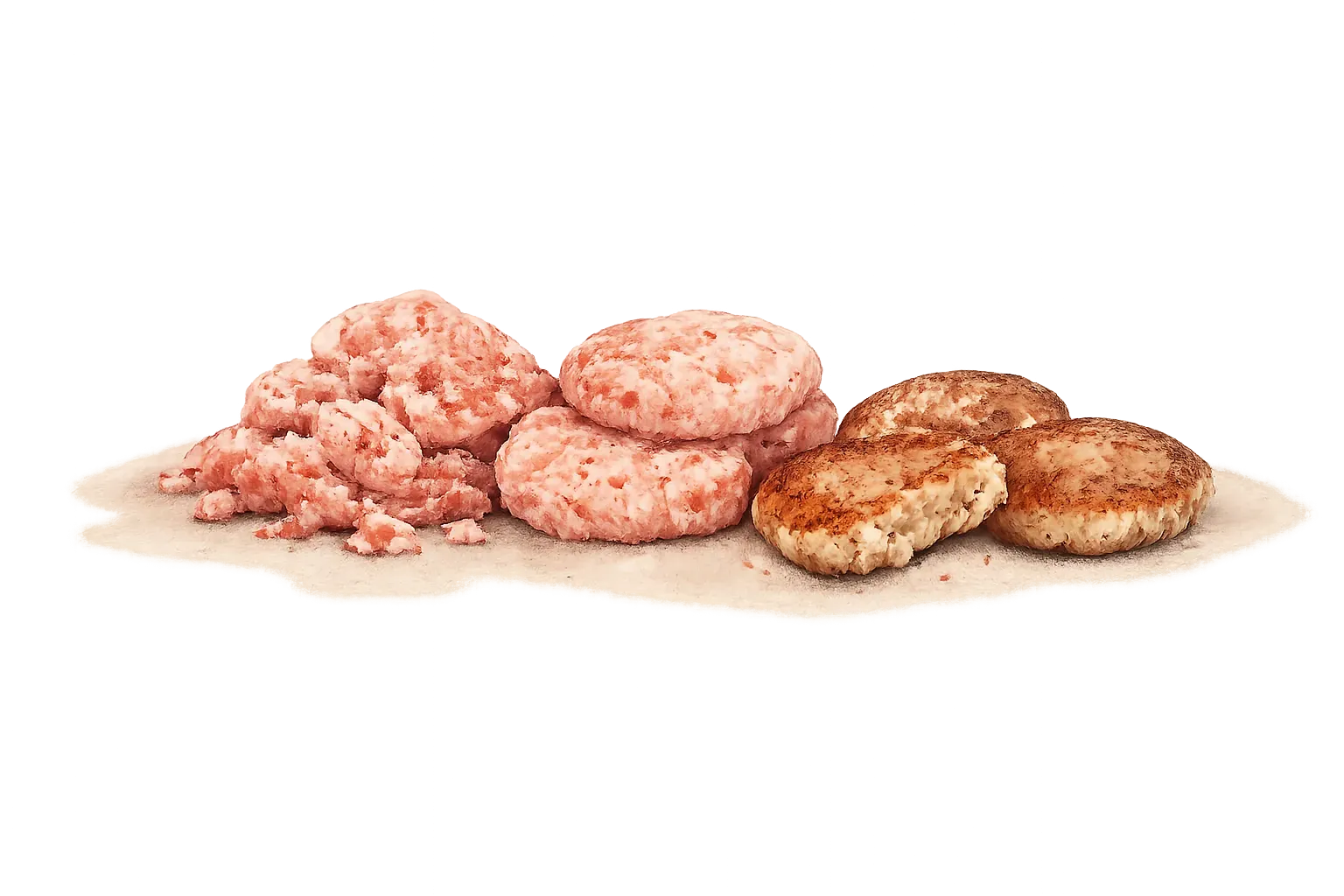
A coarsely ground, well-seasoned fresh pork breakfast sausage with chile or cayenne added for heat, sold loose in bulk or formed into patties. Being fresh rather than cured or smoked, it must be cooked all the way through before eating, unlike a ready-to-eat cured sausage.
A kind of sausage
- hot sauce
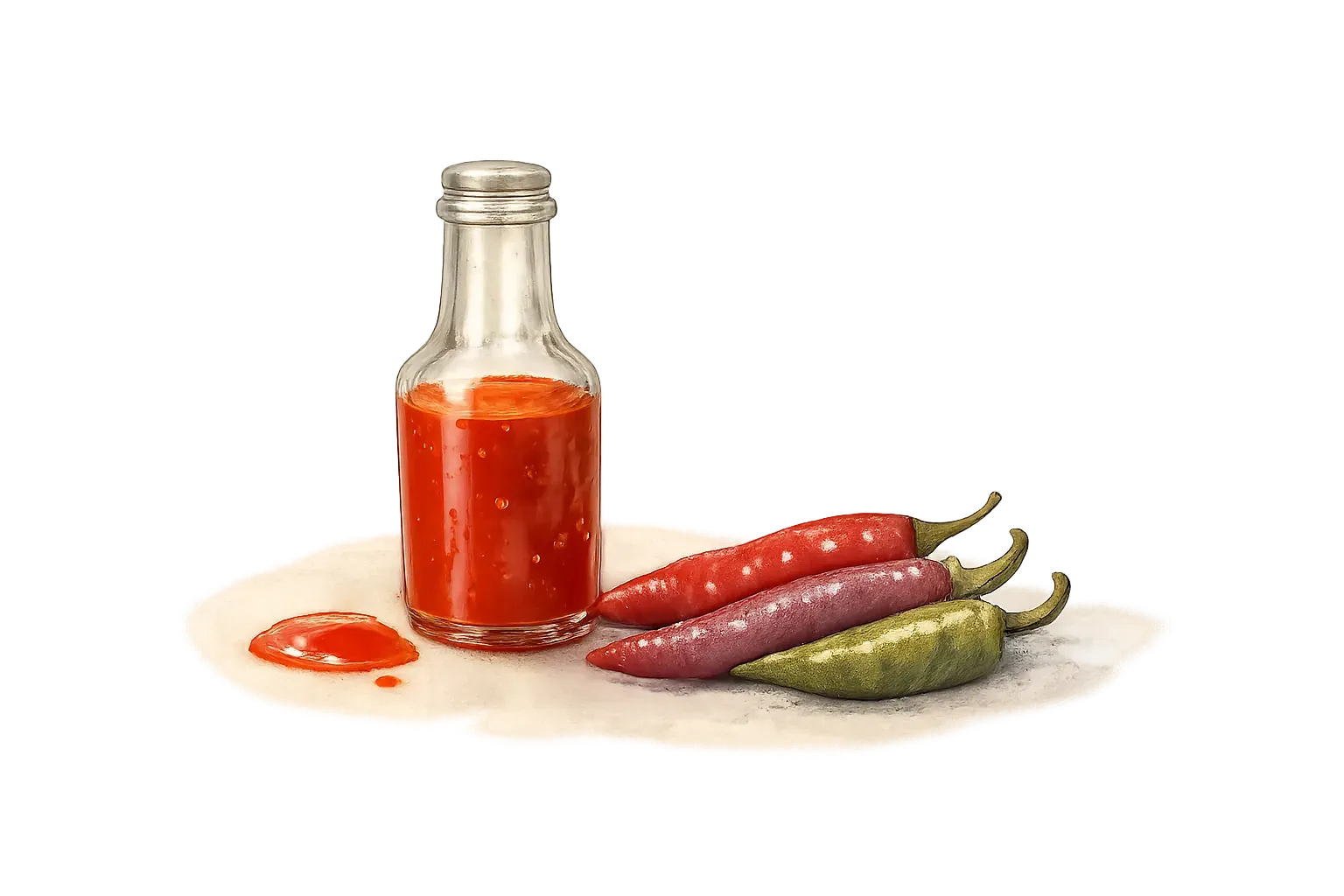
A vinegar-based condiment made from chile peppers, ranging from mild and tangy to very hot depending on the pepper variety and brand. Added by the dash for spice and acidity rather than used as a main ingredient.
- household wax
Also: paraffin wax, food-grade paraffin
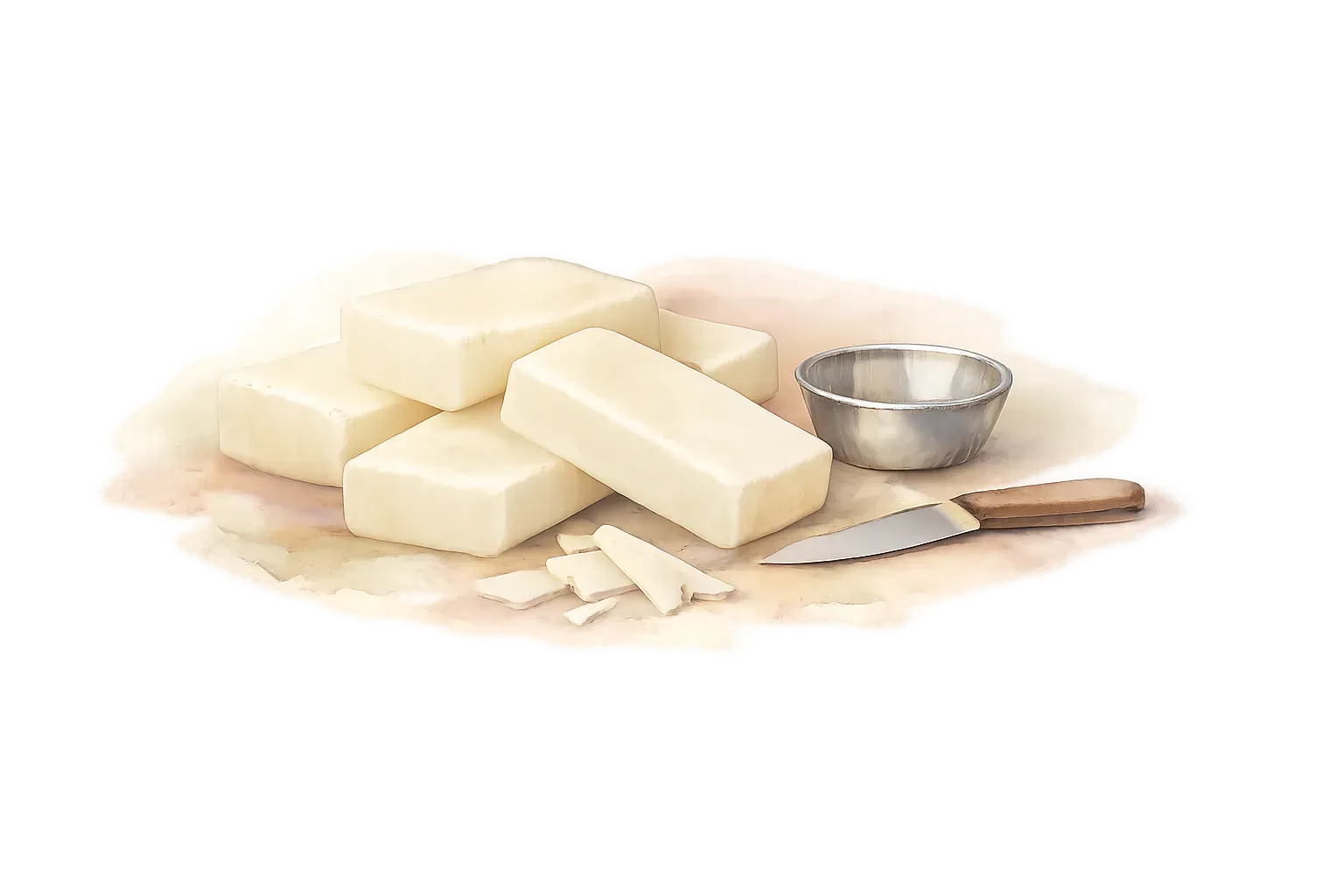
Food-grade paraffin wax, a flavorless, odorless solid wax once commonly stirred into melted chocolate for candy dipping -- it raises the chocolate's melting point and gives the finished coating a firmer snap and glossier shine, and lets dipped candy sit at room temperature without melting as readily as chocolate alone would. Common in older American candy recipes, less so today now that tempered chocolate and chocolate-and-shortening blends have mostly replaced it.
I
- ice

Frozen water. In cooking it functions less as a food and more as a temperature-control tool -- it chills drinks fast, and shocking hot, just-blanched vegetables in ice water stops their cooking instantly so they keep their color and crunch.
- instant potatoes
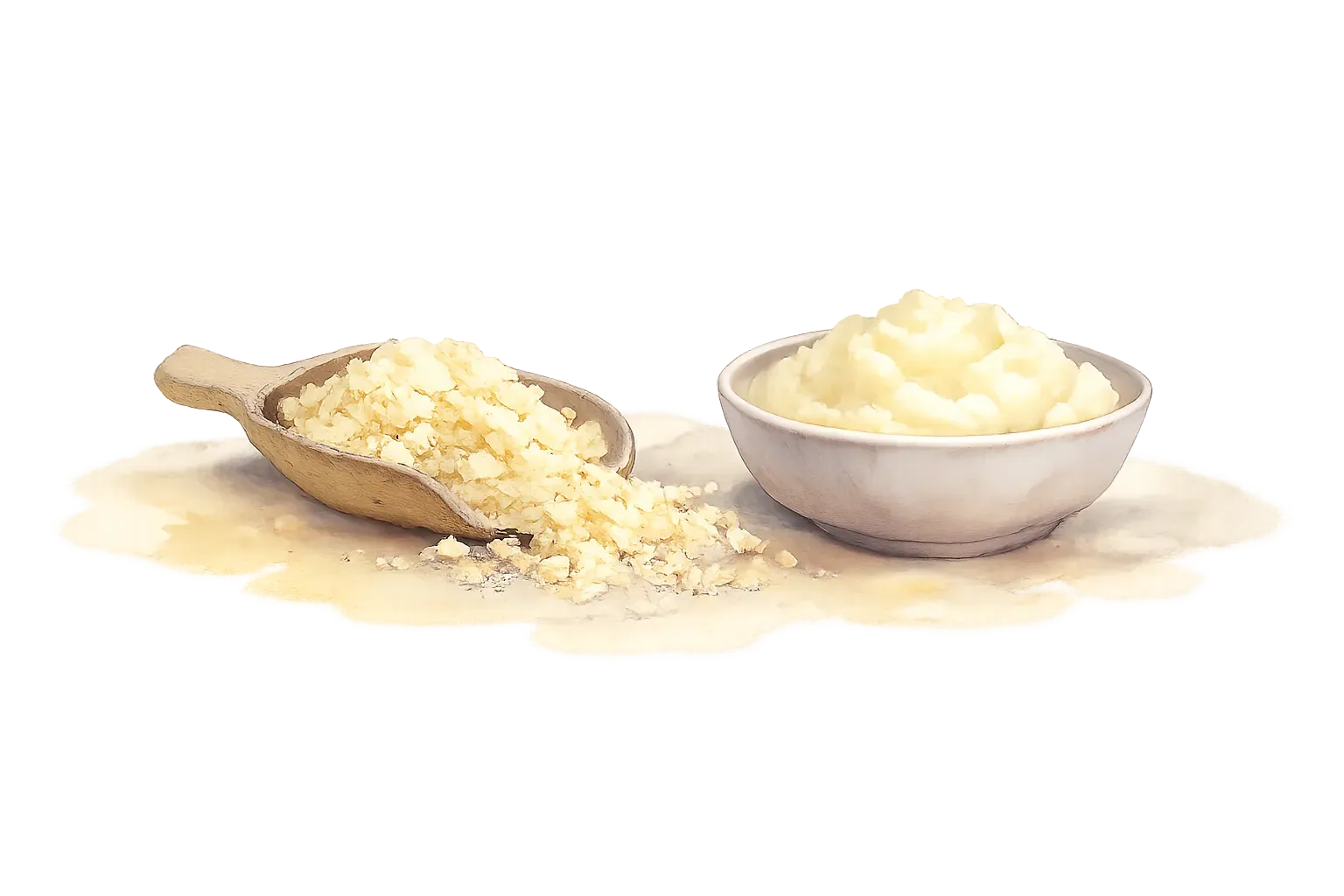
Also: instant mashed potatoes
Dehydrated, pre-cooked potato flakes or granules that reconstitute into mashed potatoes with hot liquid stirred in -- normally a quick side dish shortcut, but also useful stirred dry into an already-cooked soup or chowder as an instant thickener, since the flakes absorb liquid and swell almost immediately.
- instant tea
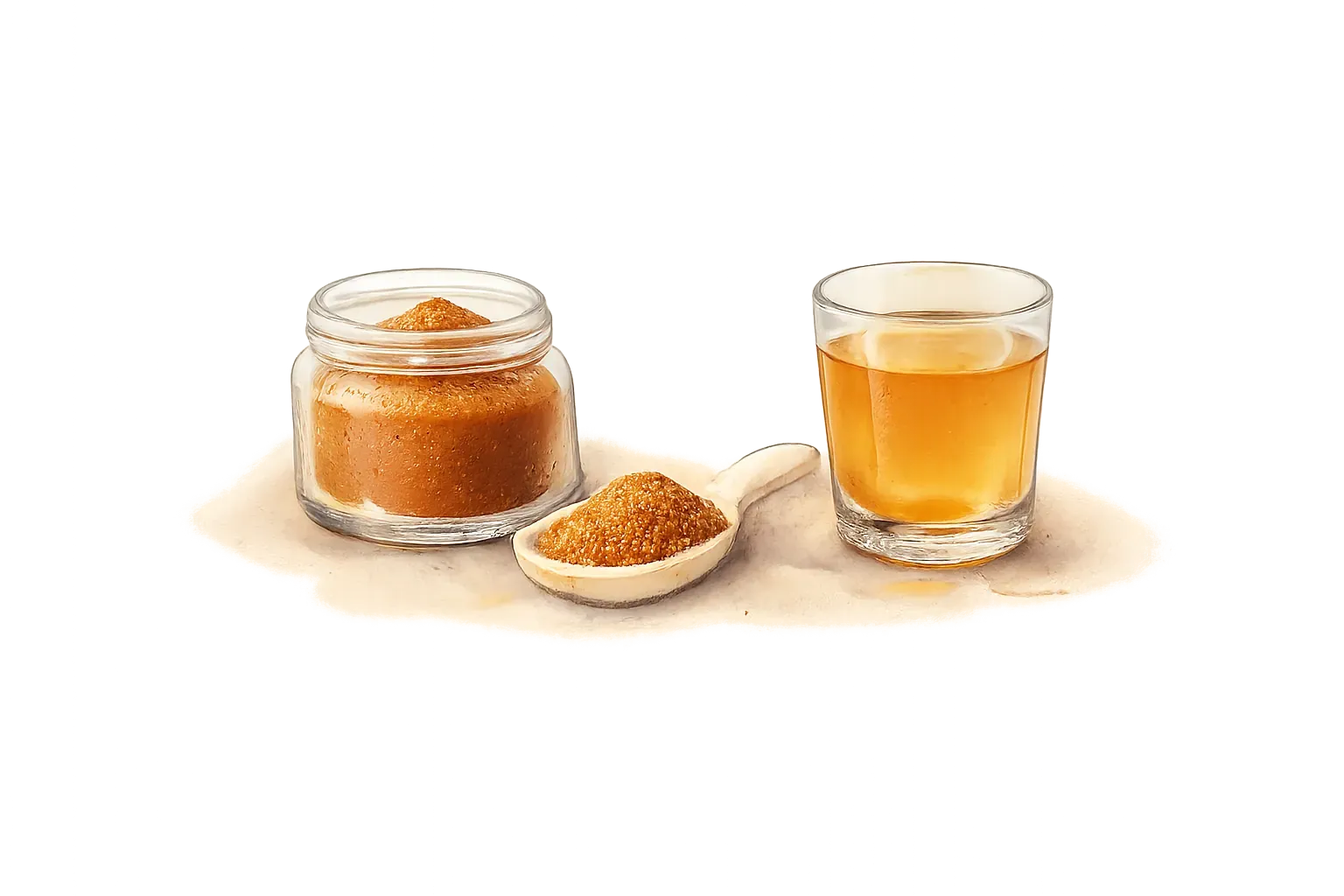
Also: Unsweet Instant Tea
Tea that's been brewed, dried, and powdered so it dissolves directly in cold or hot water without steeping; a shortcut base for iced tea and tea-flavored drink mixes. Sold sweetened or unsweetened, and the two behave very differently as an ingredient since a sweetened mix adds sugar on top of tea flavor.
- instant vanilla pudding mix
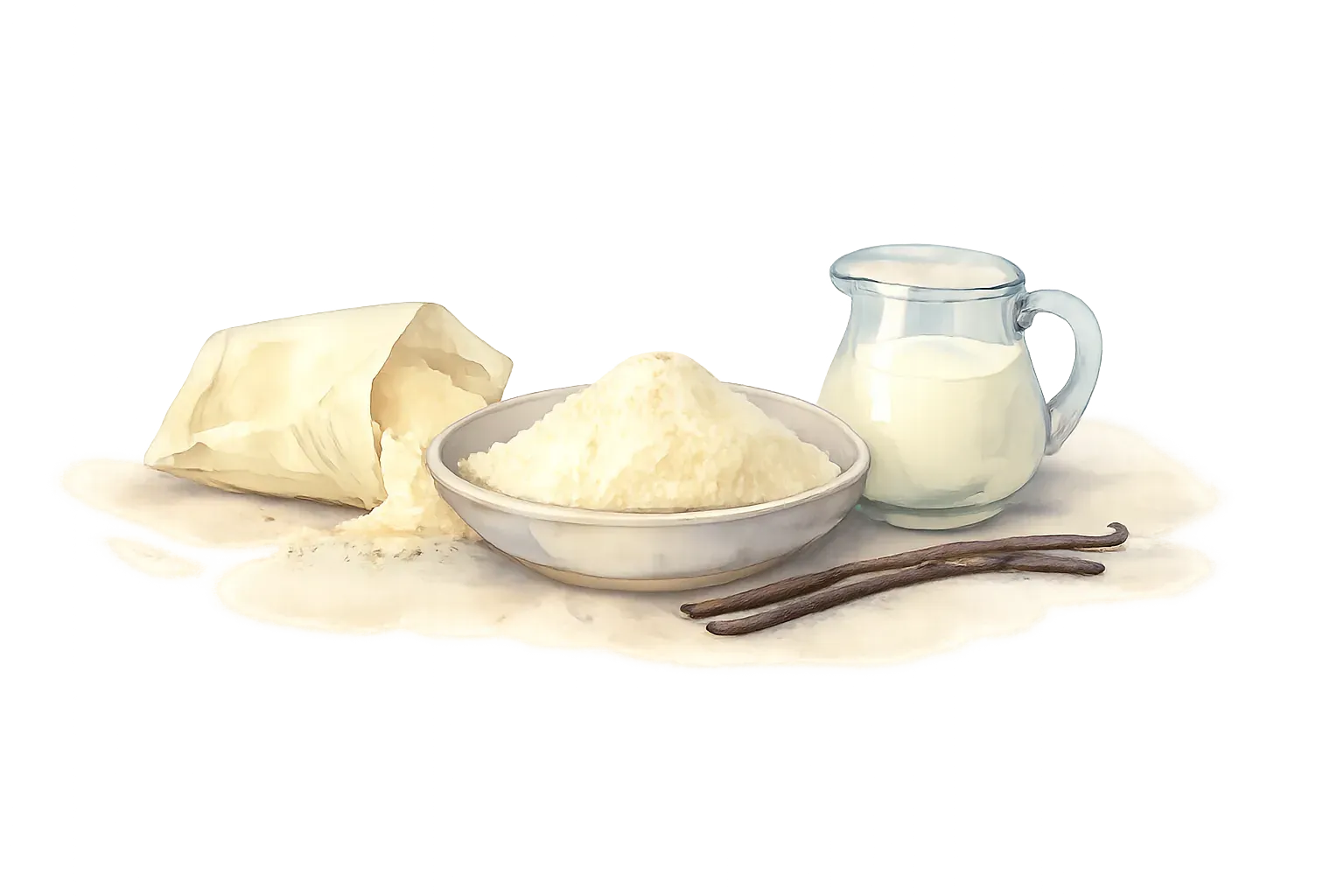
A powdered mix of modified starch, sugar, and vanilla flavoring that thickens on contact with cold milk, with no cooking needed, to set into pudding within minutes. In baking, a small box stirred into cake batter (without making the pudding itself) adds extra moisture and a denser, more tender crumb than the cake mix alone produces.
- instant yeast
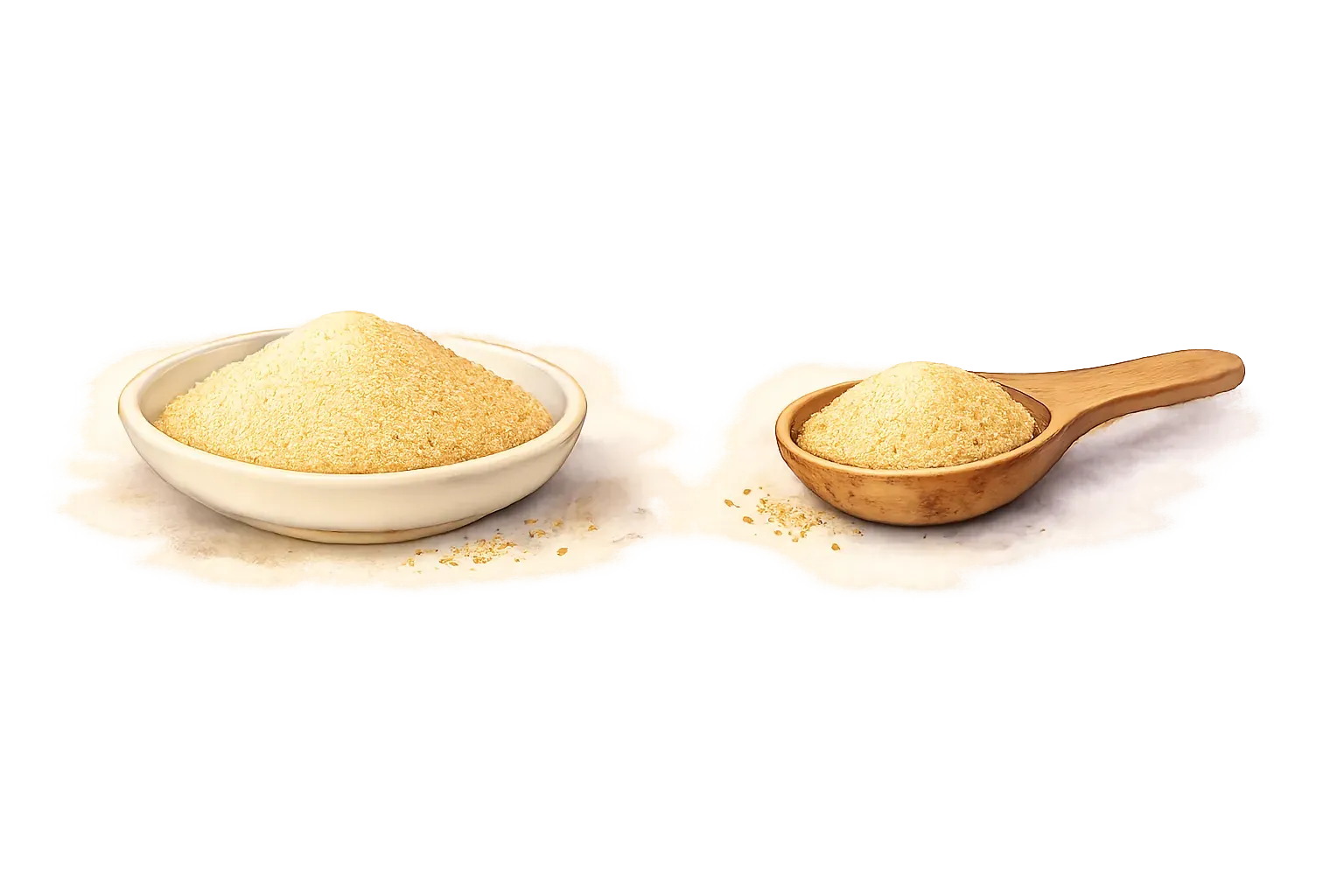
Also: rapid-rise yeast, rapid rise yeast
A fine-grained dried yeast that can be mixed directly into flour without proofing first -- unlike active dry yeast, it doesn't need to be dissolved in liquid before use.
- Italian sausage
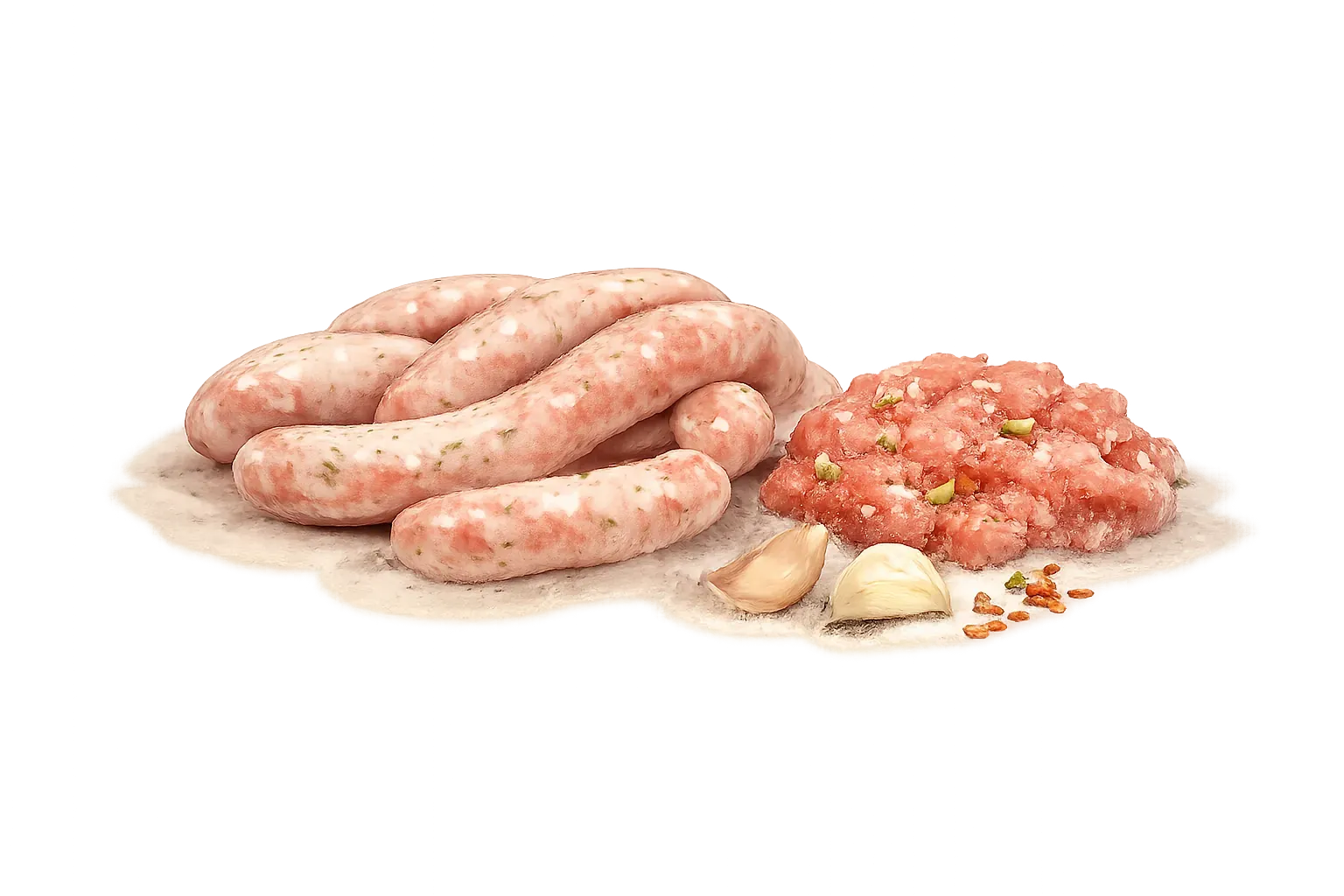
Fresh pork sausage seasoned with fennel seed and garlic, sold "sweet" (mild, no heat) or "hot" (with added red pepper flakes) -- sold raw, in casings or loose, and needs full cooking like any raw sausage. The fennel is what distinguishes it from most other fresh sausages; used widely in Italian-American cooking, from pasta sauces to soups.
A kind of sausage
- Italian seasoning
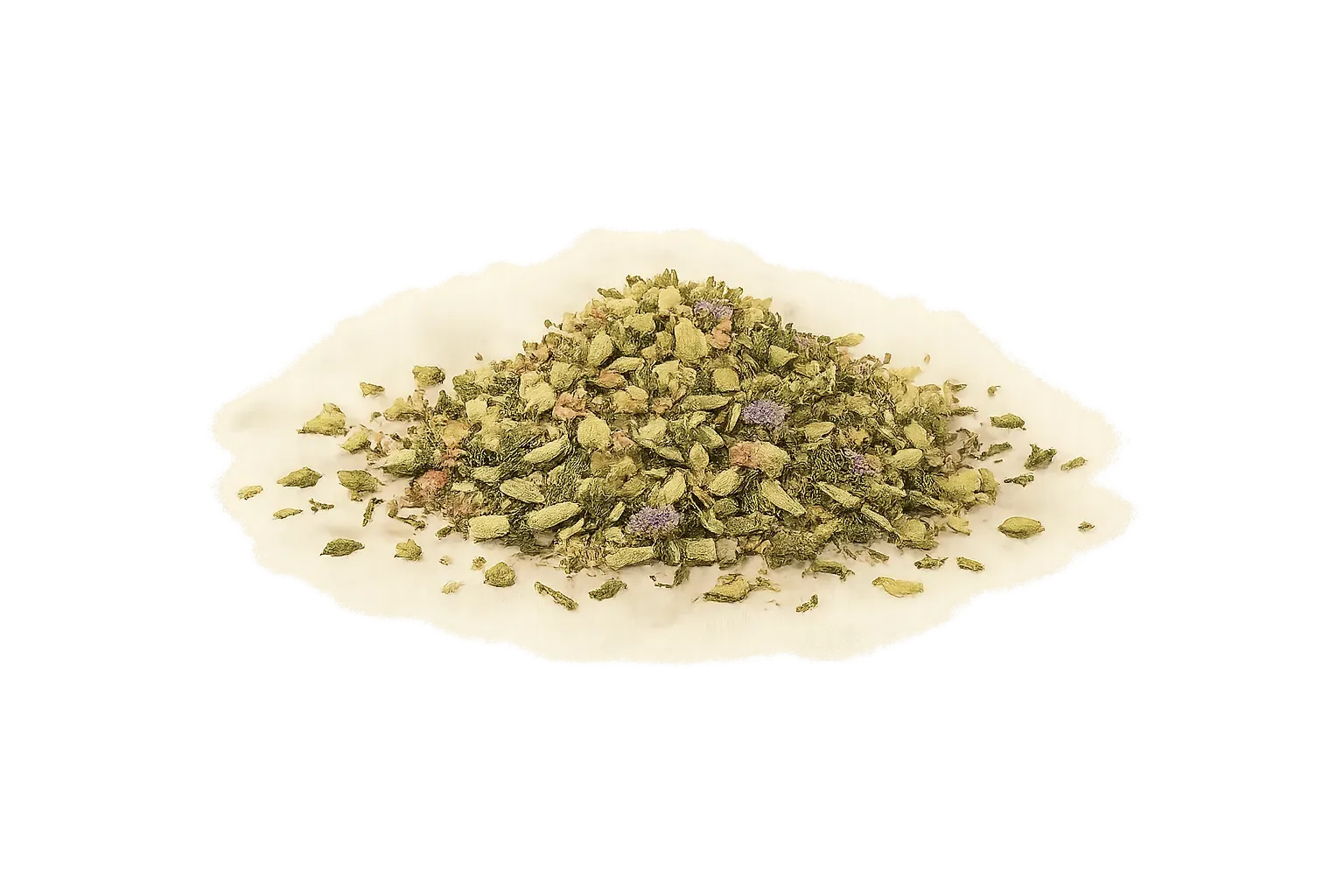
A dried herb blend, typically basil, oregano, rosemary, thyme, and marjoram, sold pre-mixed as a shortcut for the herb profile common to Italian-American cooking.
J
- jalapeño
Also: Jalapeños
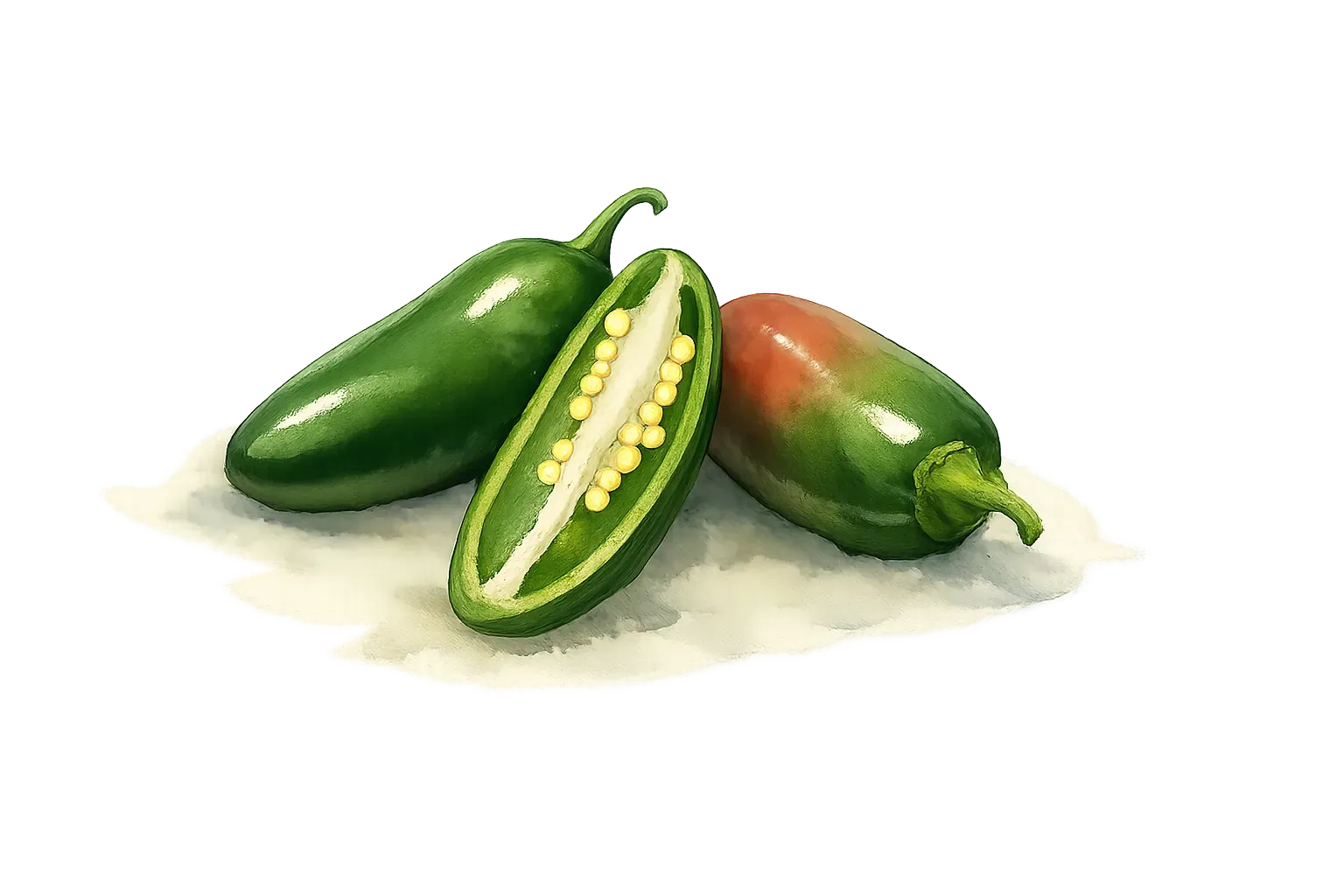
A medium-hot green chile pepper, turning red as it ripens; used fresh, pickled, or -- smoked and dried -- as chipotle. Most of its heat lives in the white pith and seeds rather than the flesh, so removing them tames a pepper considerably.
- jar pimentos
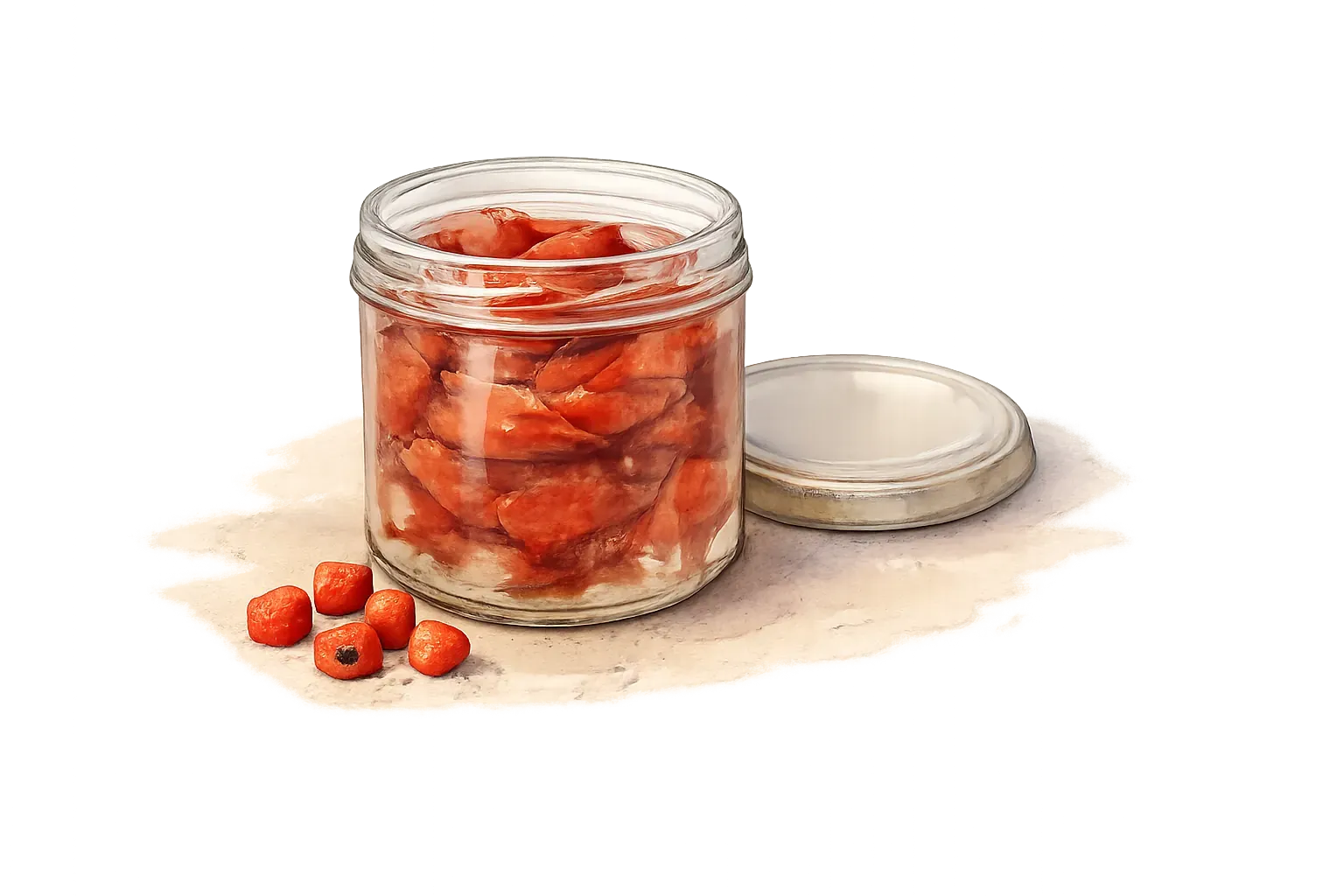
Sweet, mild red peppers, roasted and jarred in brine; used mainly for their color and gentle sweetness rather than any heat, classically diced into pimento cheese.
- jumbo pasta shells
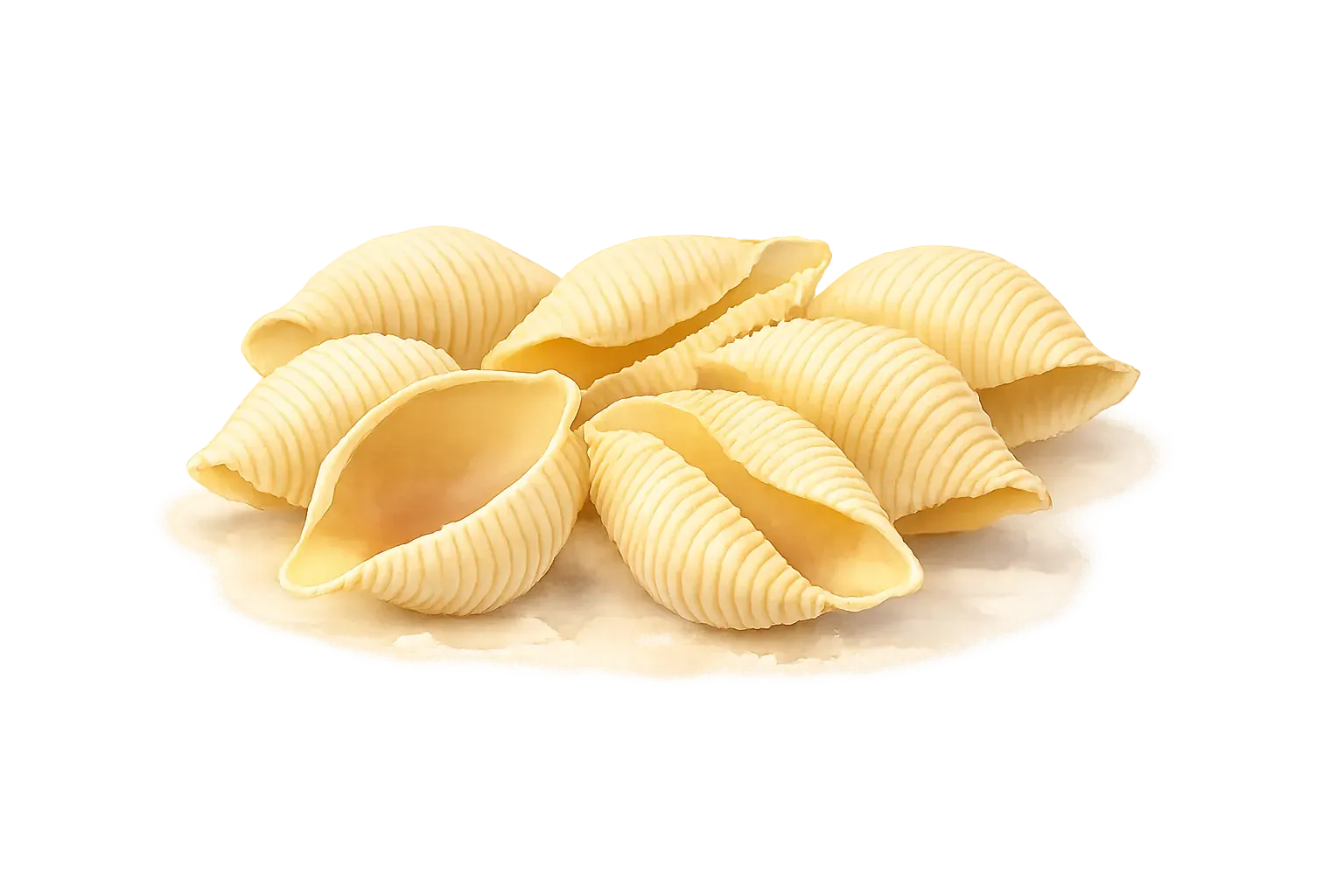
Also: conchiglioni
A large, conch-shaped dried pasta, sized specifically to be boiled, filled, and baked -- unlike most pasta shapes, which are meant to carry a sauce rather than hold a filling. Their wide opening and sturdy walls hold a generous scoop of cheese, meat, or vegetable filling without falling apart once sauced and baked.
A kind of pasta
K
- kaffir lime leaves
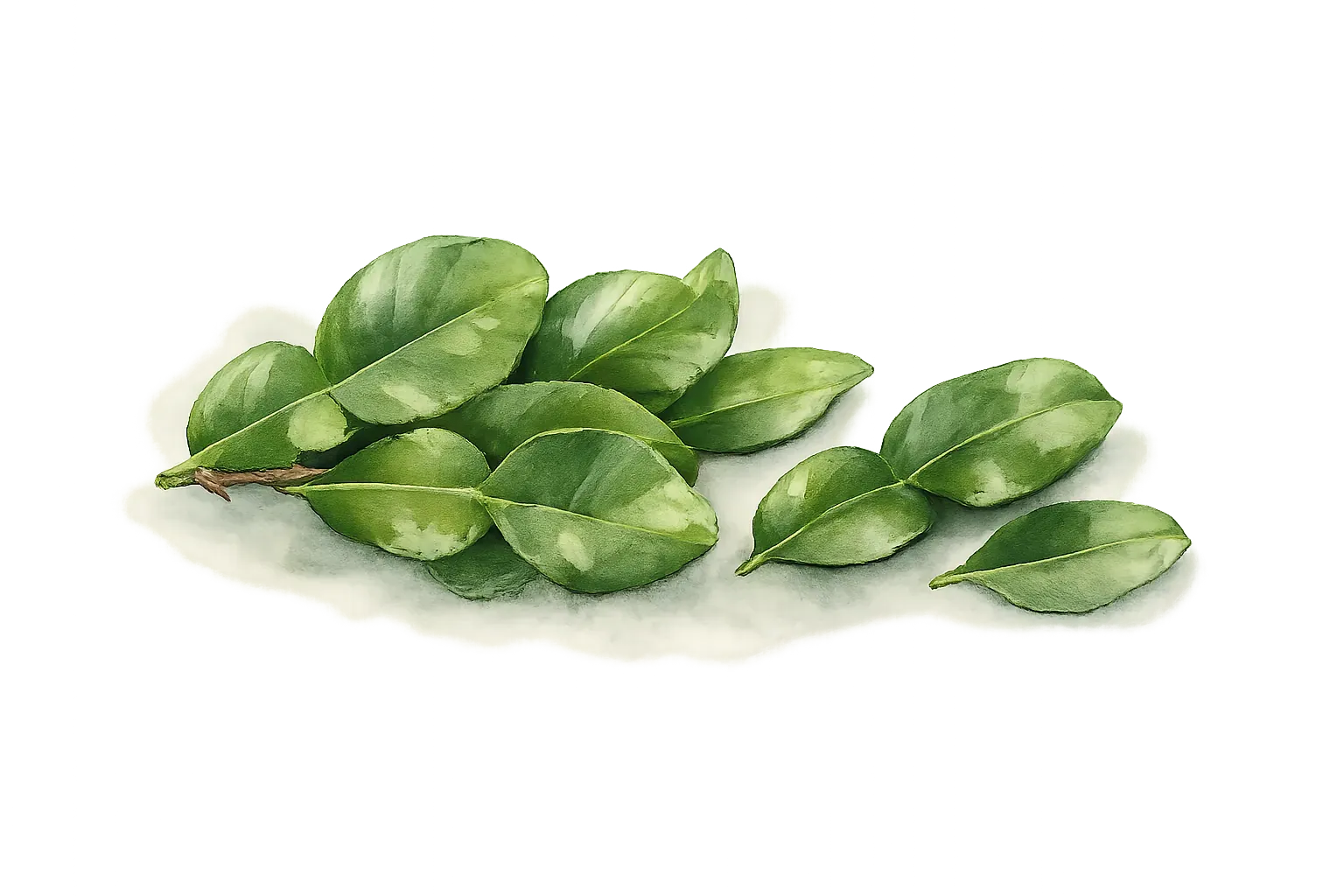
The glossy, double-lobed leaves of the makrut lime tree, prized for an intense citrus aroma; increasingly labeled 'makrut lime leaves' in stores. Used whole or torn to perfume curries, soups, and braises.
- Kalamata olives
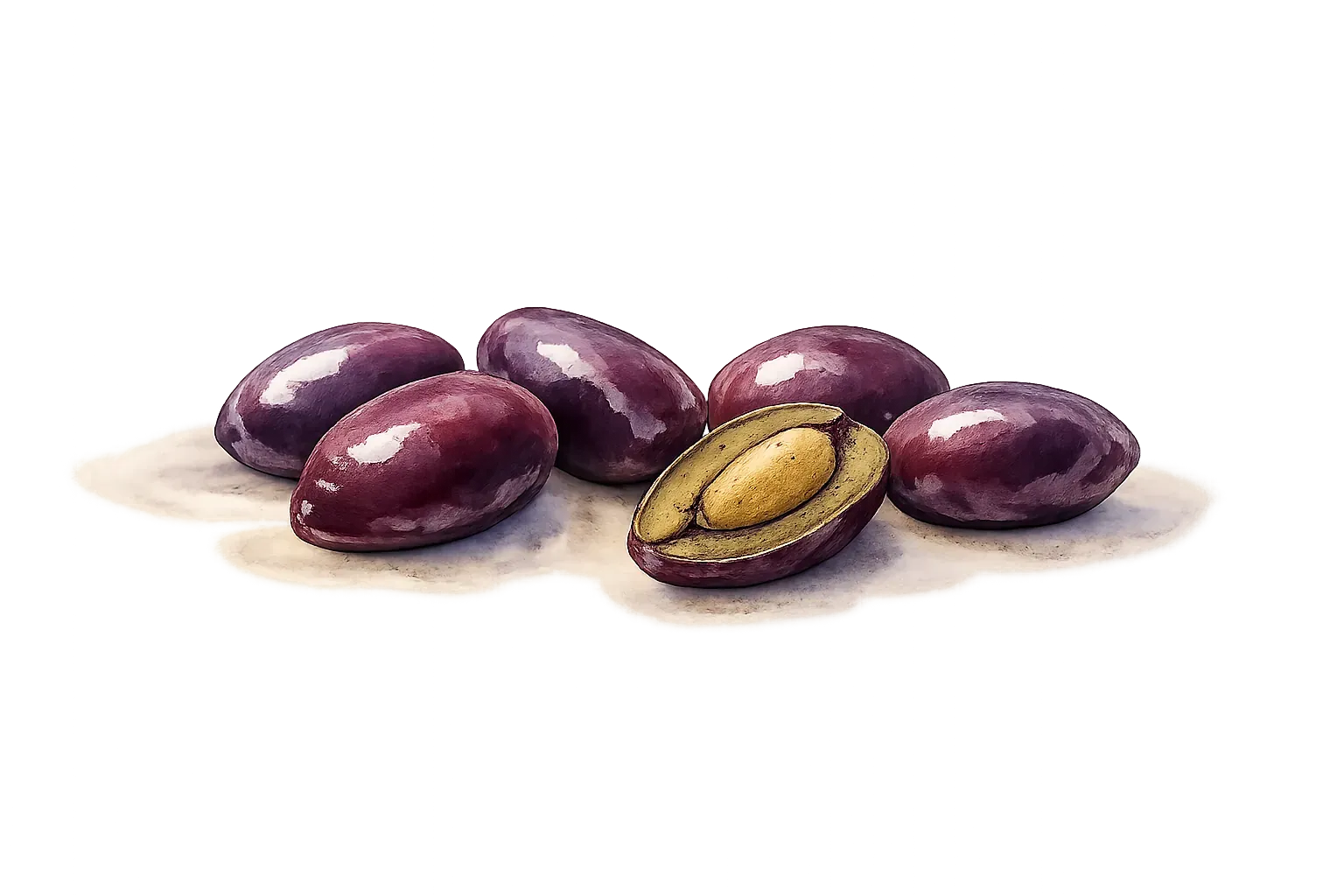
A dark purple, almond-shaped Greek olive with a rich, fruity, slightly tangy flavor, cured in brine or vinegar until ready to eat. Like all olives, it's inedible straight off the tree -- curing is what gives it both its flavor and its safety.
- ketchup
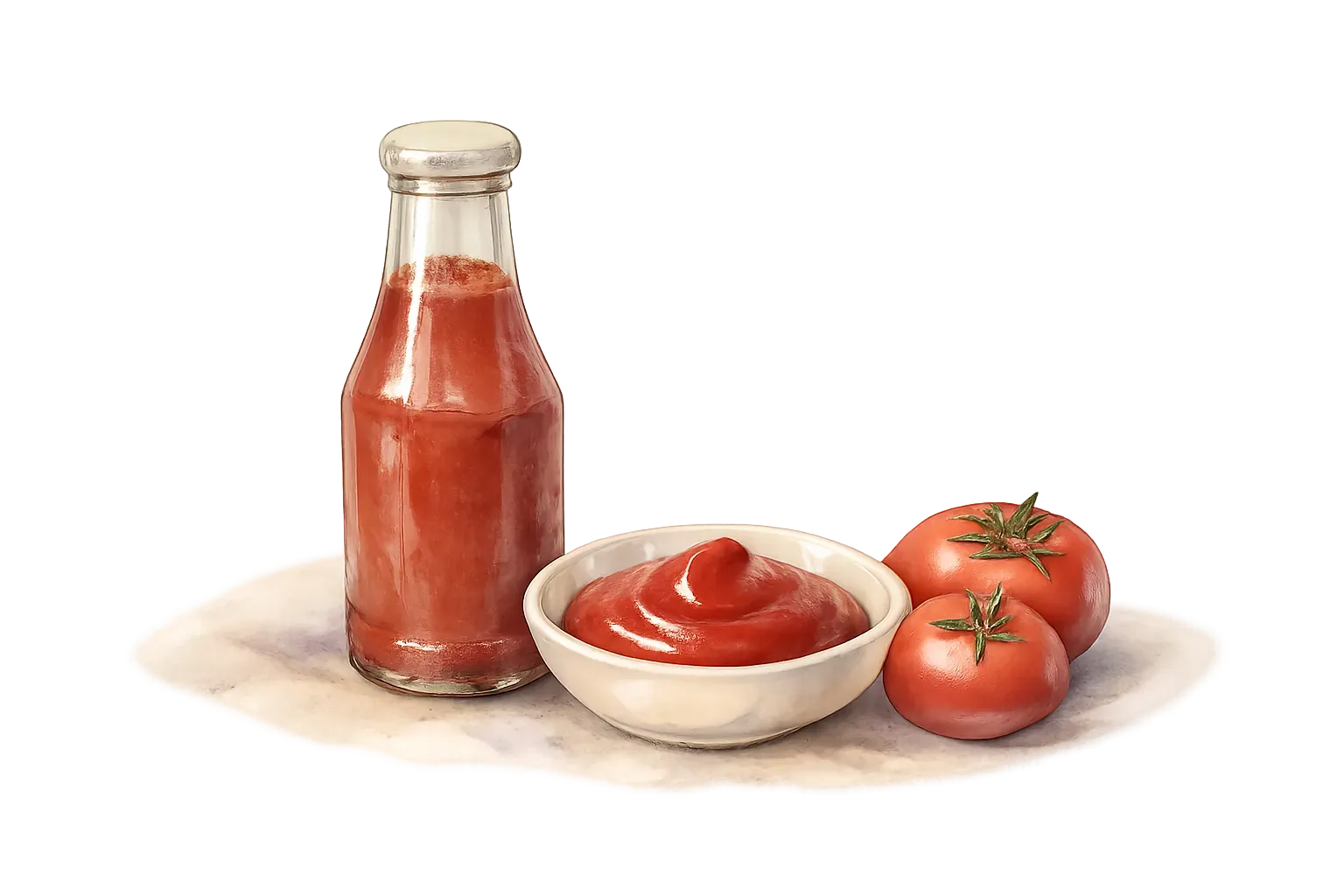
Also: bottle ketchup
A sweet-tangy condiment made from tomatoes, vinegar, and sugar; used as a table condiment and, in cooking, as a fast source of tomato sweetness and acidity in sauces, glazes, and braises.
- kidney beans
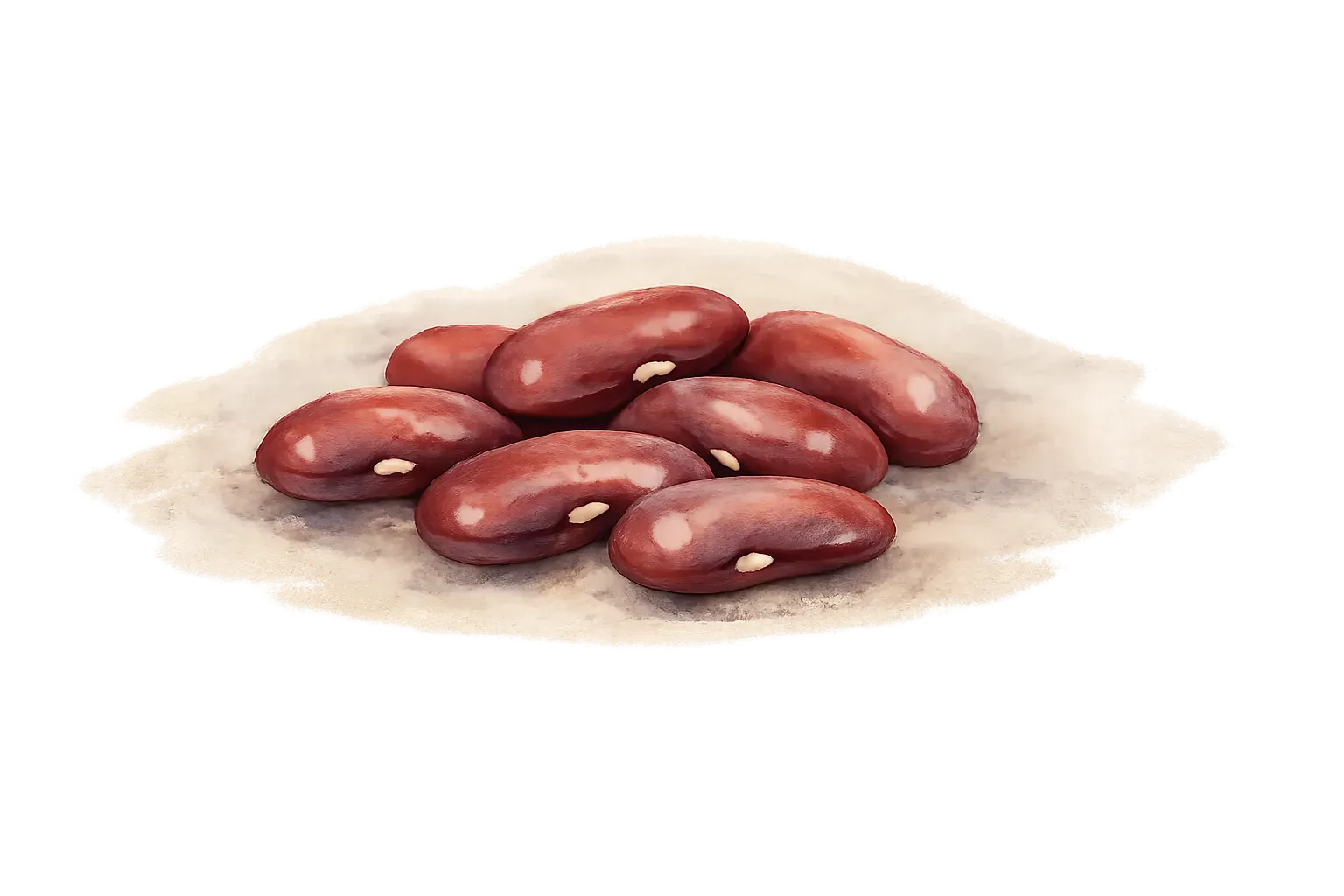
A large, kidney-shaped red bean with a firm texture and mild, earthy flavor, sold canned (fully cooked and ready to use) or dried (needs soaking and cooking first). Common in chili, red beans and rice, and bean salads.
- kielbasa

Also: Polish sausage
A Polish smoked sausage, usually made from pork (sometimes blended with beef), garlicky and mildly seasoned, sold fully cooked and ready to slice into a dish or grill. Common in soups, chowders, and one-pot meals for its smoky, savory flavor and its texture, which holds together well in sliced or diced pieces.
A kind of sausage
- Kool-Aid Lemonade Mix
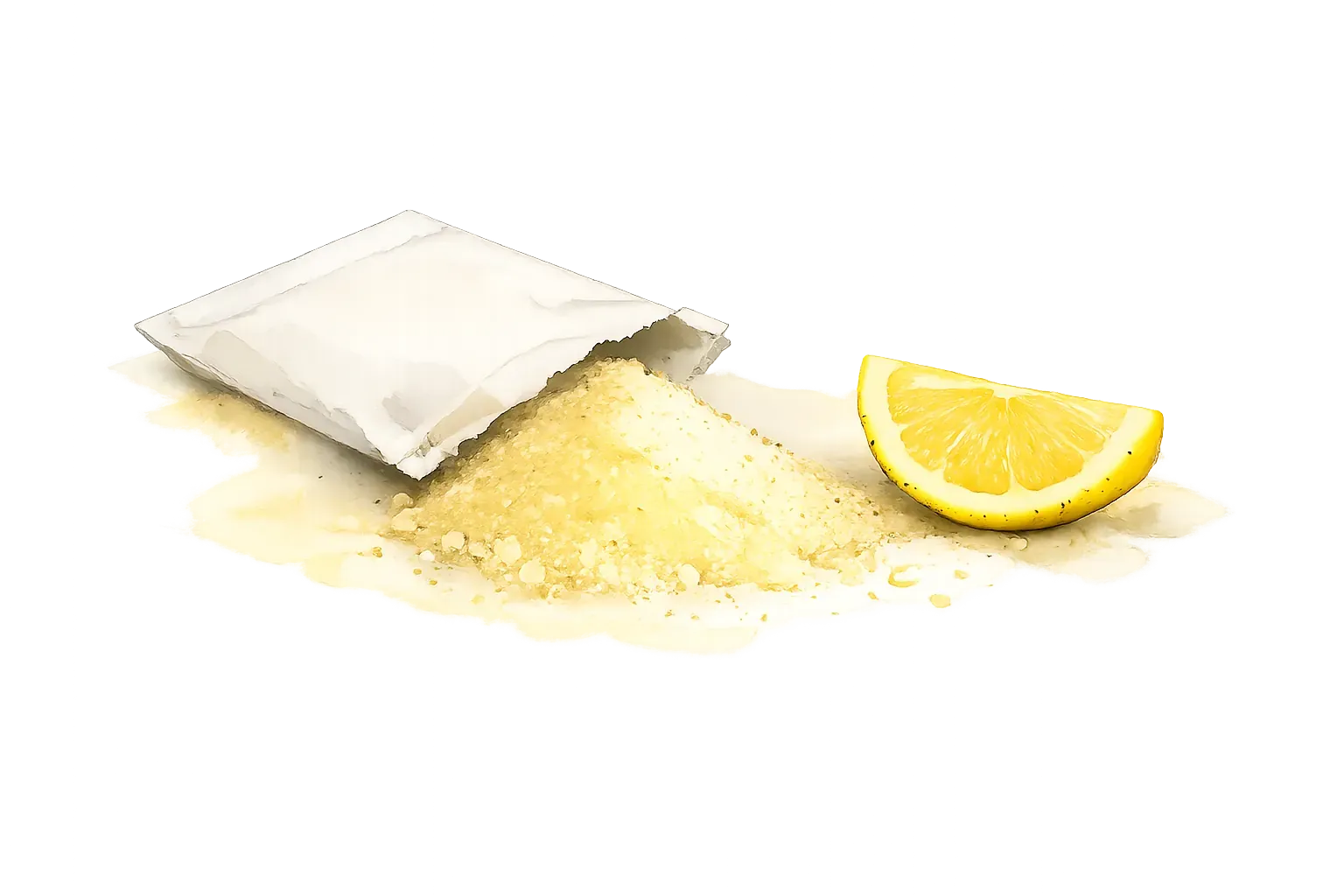
Also: Kool Aid Lemon Aid Mix
A powdered, unsweetened lemonade-flavored drink mix; used in cooking mainly as a concentrated citrus flavoring rather than as a beverage on its own.
- kosher salt
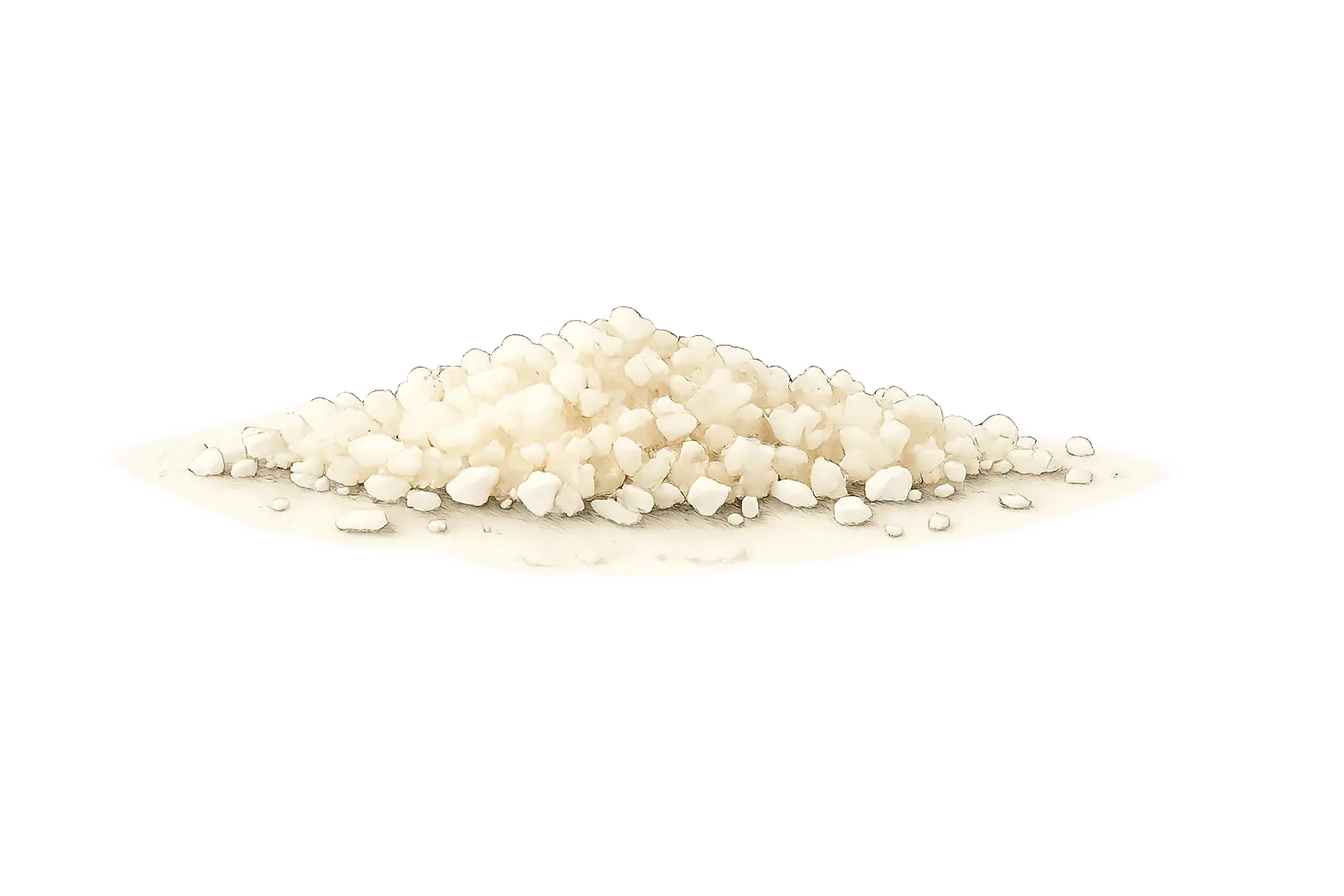
A coarse-grained, additive-free salt named for its use in the koshering process; the coarser crystals make it easier to pinch and season by feel than table salt.
A kind of salt
L
- lamb
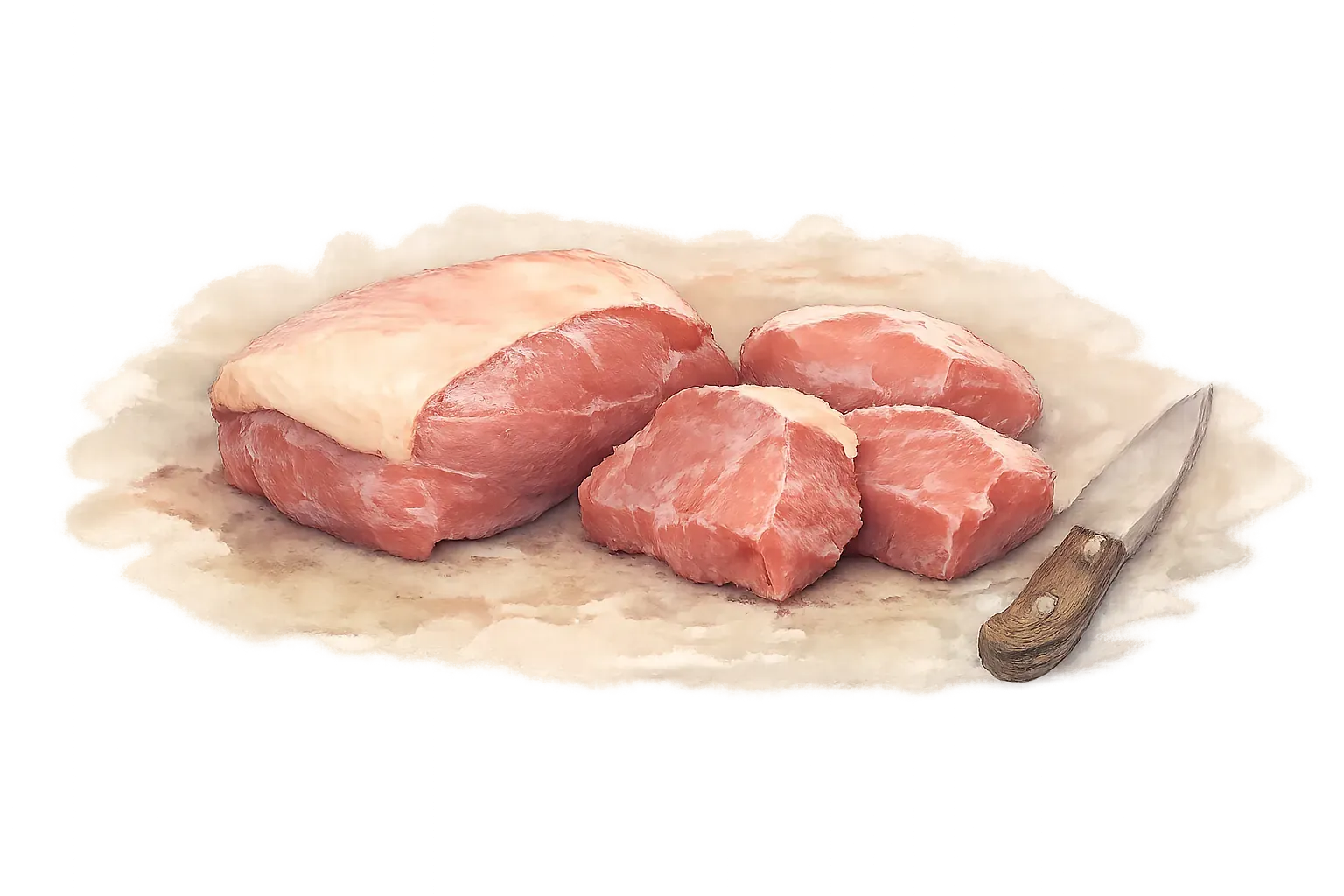
Also: lamb rump
Meat from a young sheep, with a richer, more mineral, slightly gamey flavor than beef -- more pronounced in fattier cuts and cuts from older animals. Rump is a lean, tender cut from the upper back leg, meaty enough to hold up in chunks for a braise or tagine while still being tender enough not to need hours of cooking the way a tougher cut like shoulder or shank does.
- lamb stock
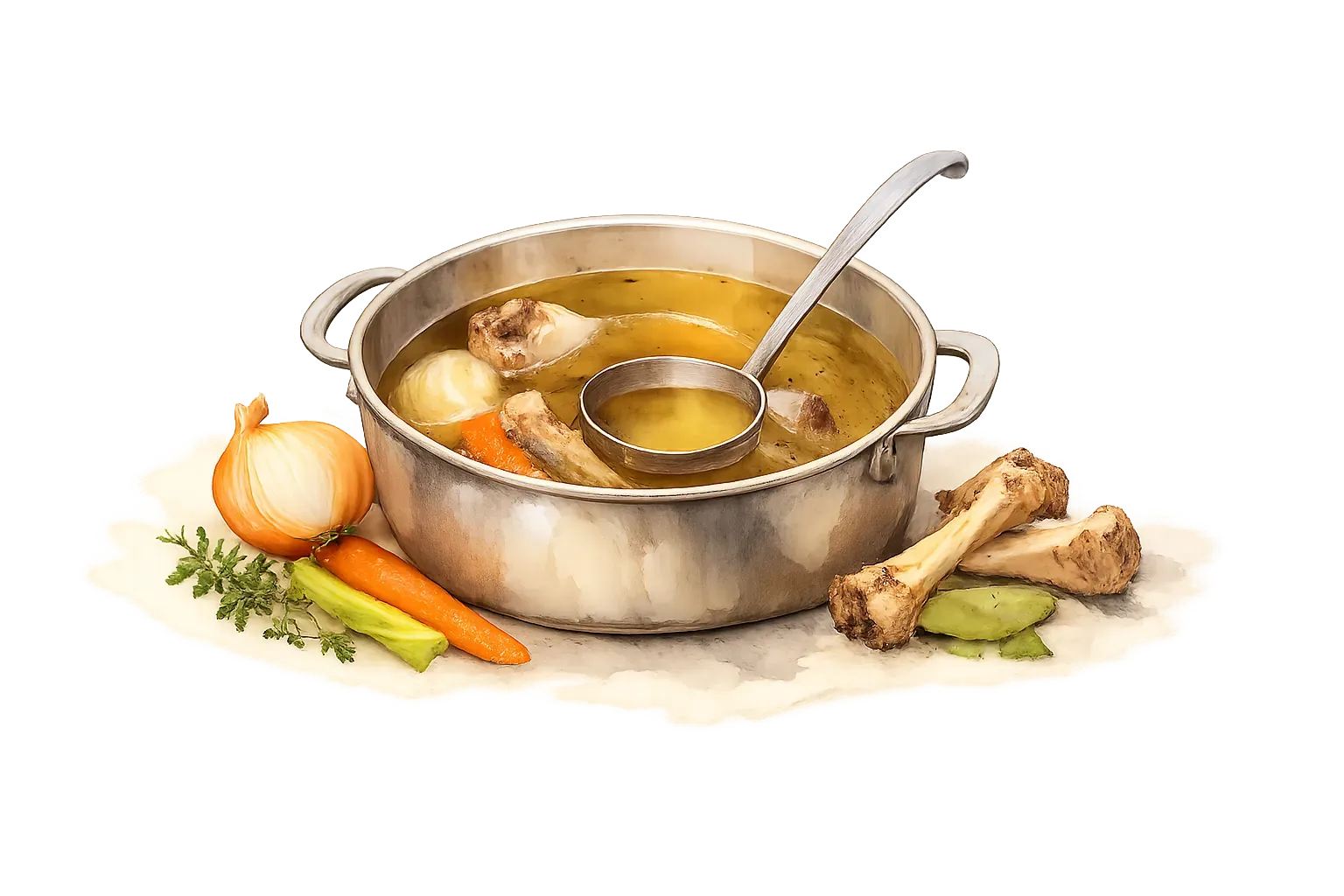
Also: lamb broth
A savory liquid made by simmering lamb bones (and often vegetables and aromatics), less commonly found ready-made than chicken or beef stock, but used the same way -- as a braising and simmering liquid that deepens a lamb dish's own flavor rather than diluting it with something milder.
- lard
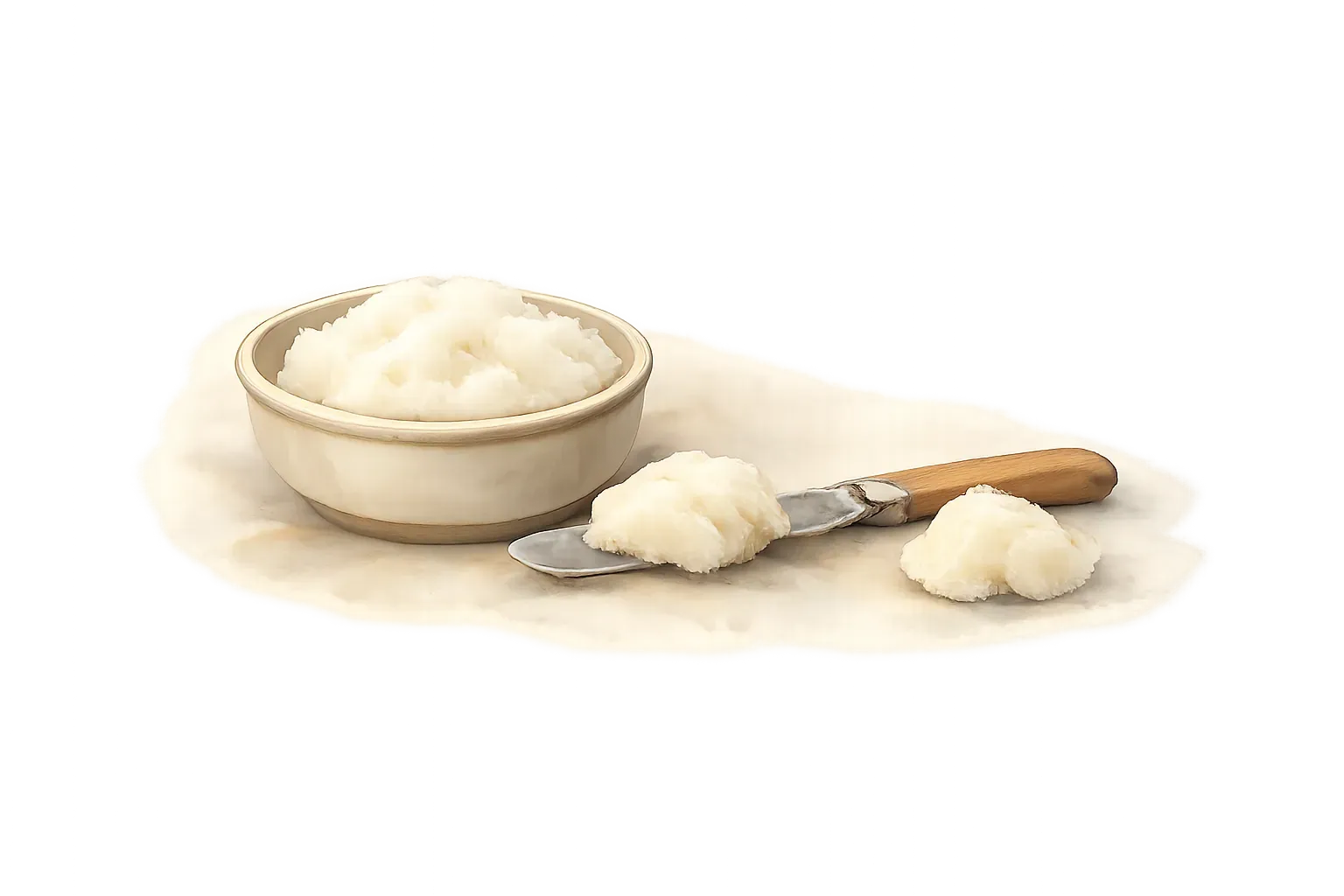
Rendered, purified pork fat, solid at room temperature like shortening or butter but with a distinct savory, faintly porky flavor of its own. Used both as a cooking fat and, in baking, prized for making exceptionally flaky pie crusts and biscuits -- its coarser fat crystals create bigger, flakier layers than butter alone gives.
- leeks
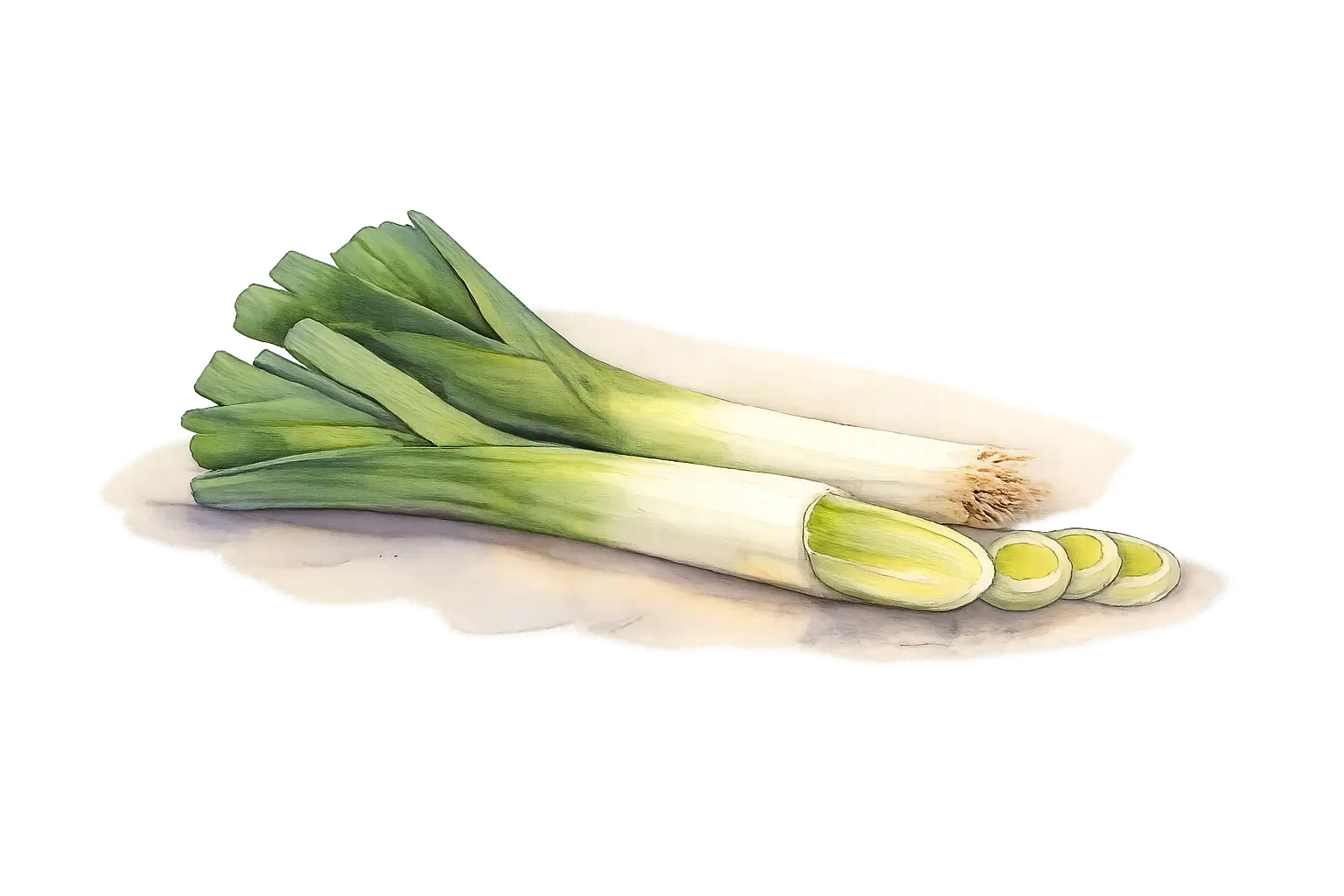
Also: leek
A member of the onion family shaped like an oversized green onion, with a milder, sweeter, more delicate flavor than a regular onion. The white and pale green part is what's usually cooked with (the dark green tops are tougher and more often used for stock); a classic base for potato-leek soup and similar creamy soups, where its subtlety lets the other ingredients lead.
- lemon
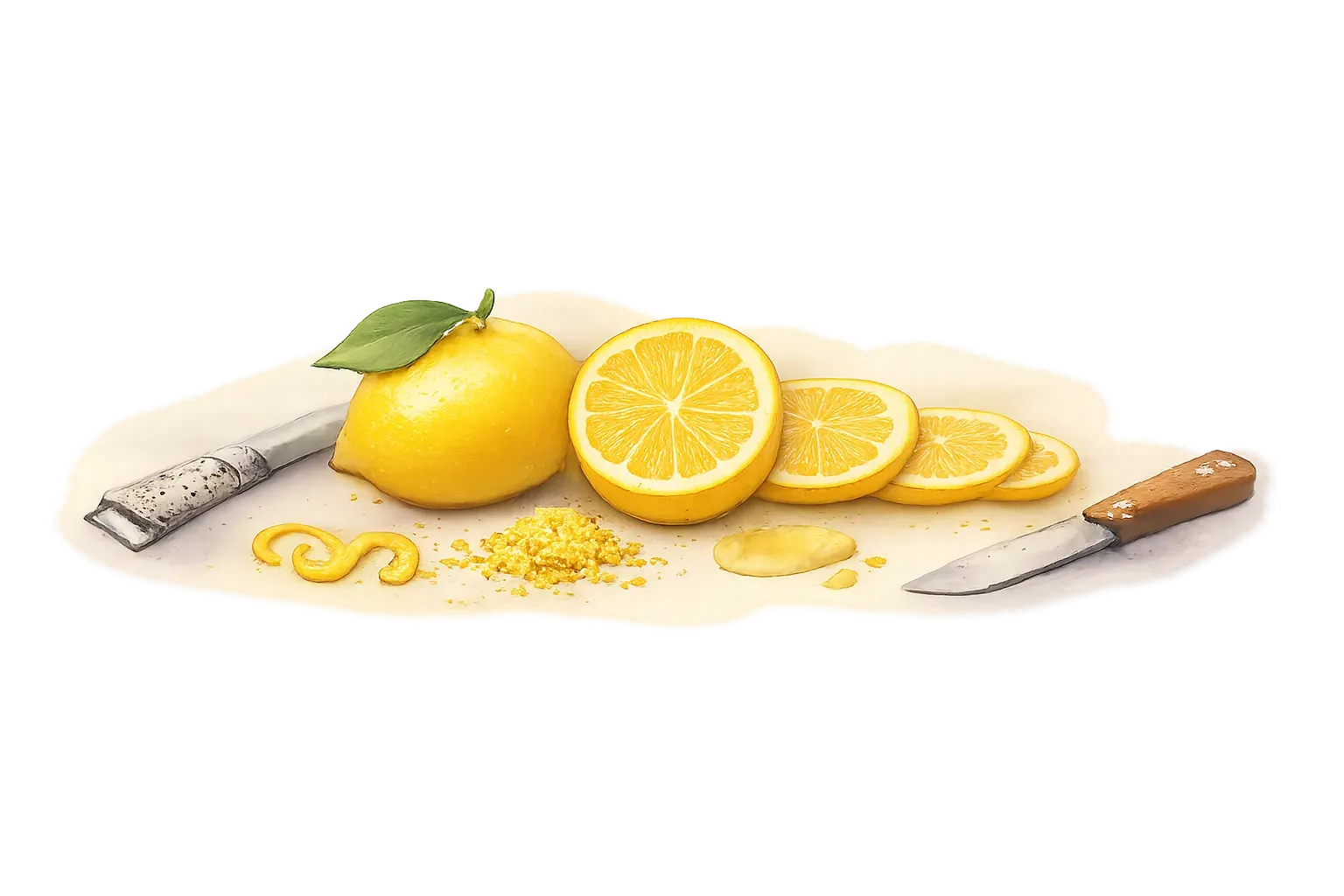
Also: lemon slices
A sour citrus fruit used three ways: juiced for acidity and brightness, zested for its aromatic oil, and sliced as a garnish. Zest and juice come from the same fruit but serve different purposes, so when both are wanted, zest before juicing -- there's no zesting a fruit once it's been squeezed flat.
- lemon juice
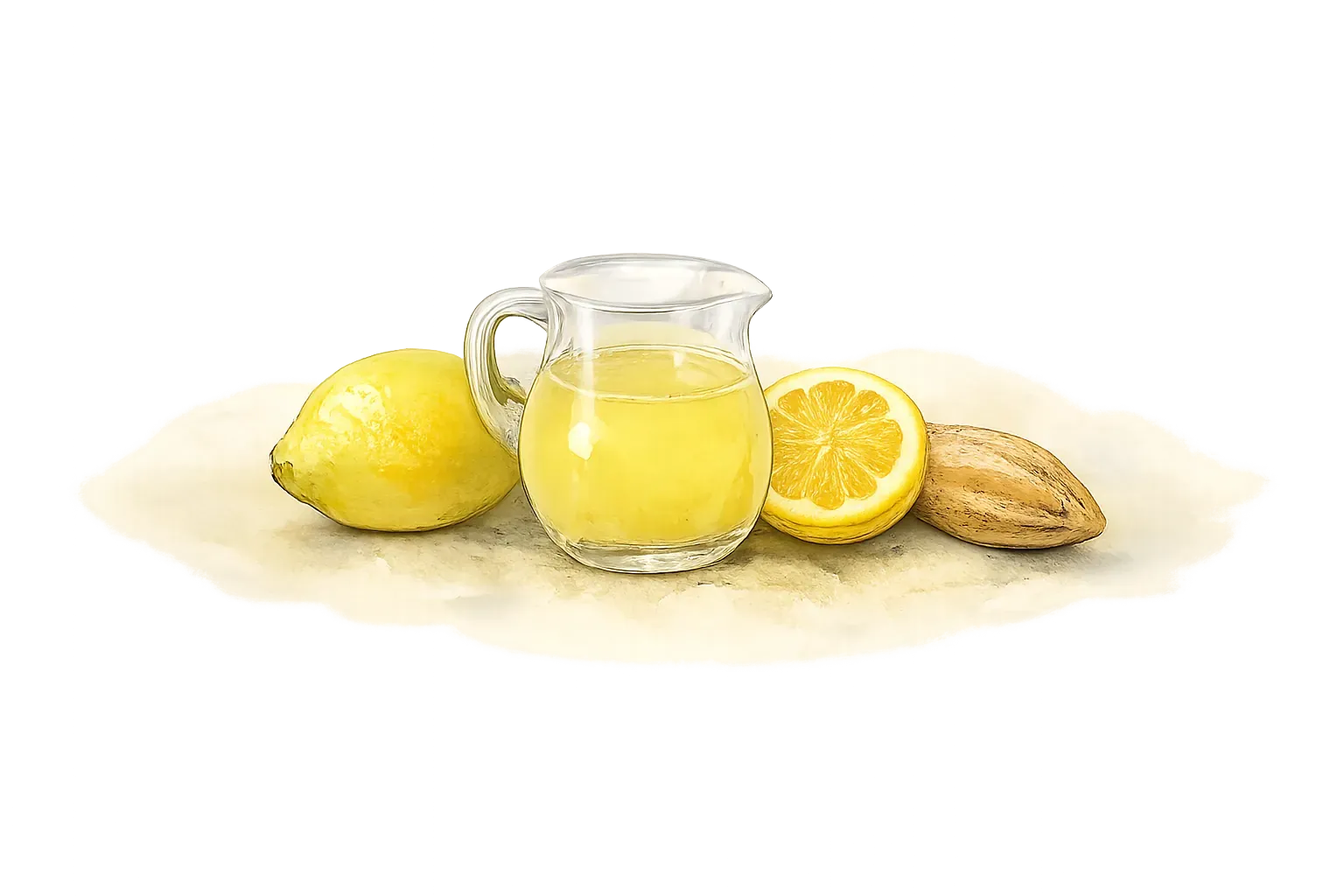
The juice pressed from lemons, sour and bright; used to add acidity, balance rich or fatty dishes, and -- combined with dairy -- to thicken or deliberately curdle.
- lemon pepper
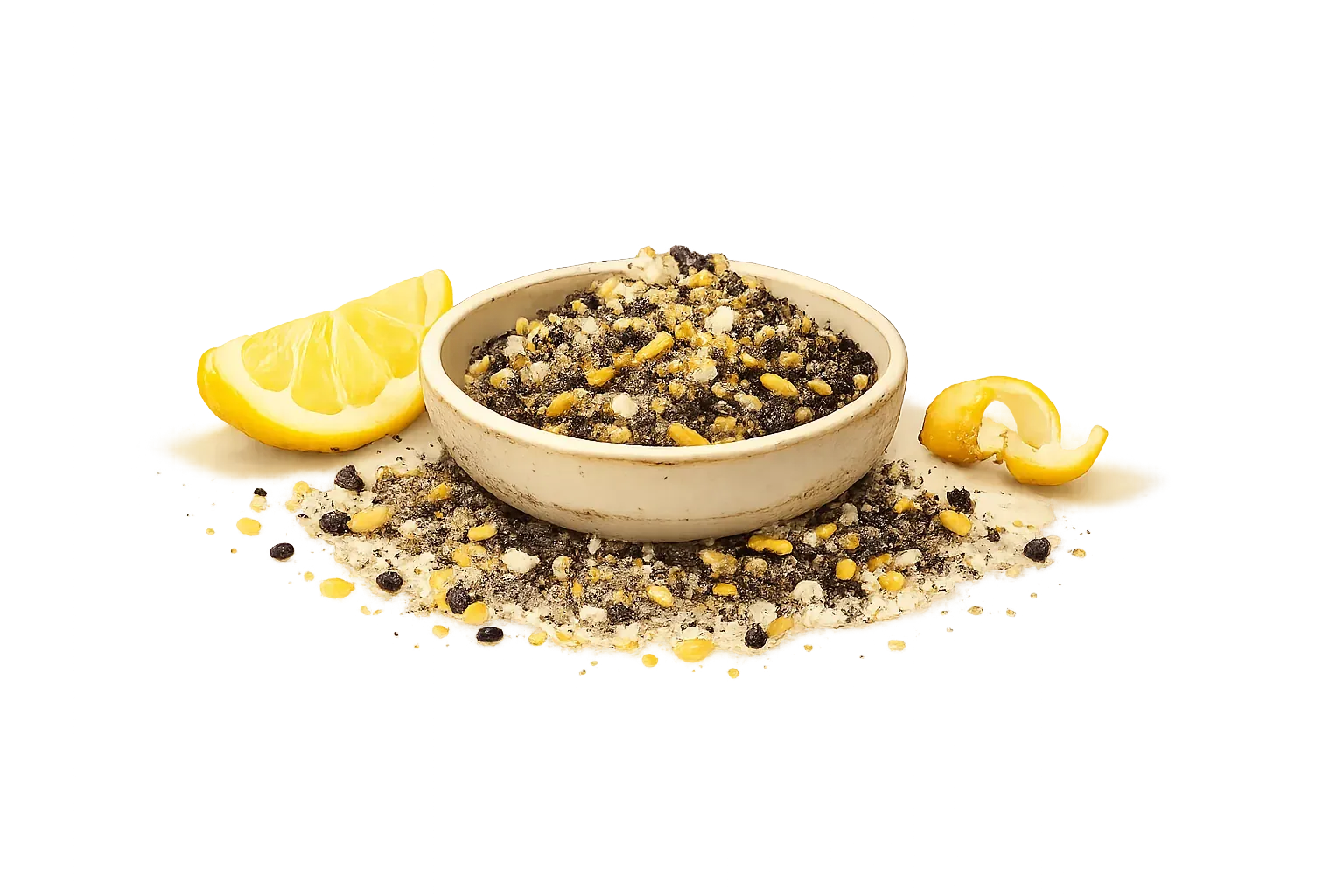
A seasoning blend of coarsely ground black pepper and dried lemon zest, usually with salt and other spices mixed in; used on chicken, fish, and vegetables for a bright, peppery finish.
- lemongrass
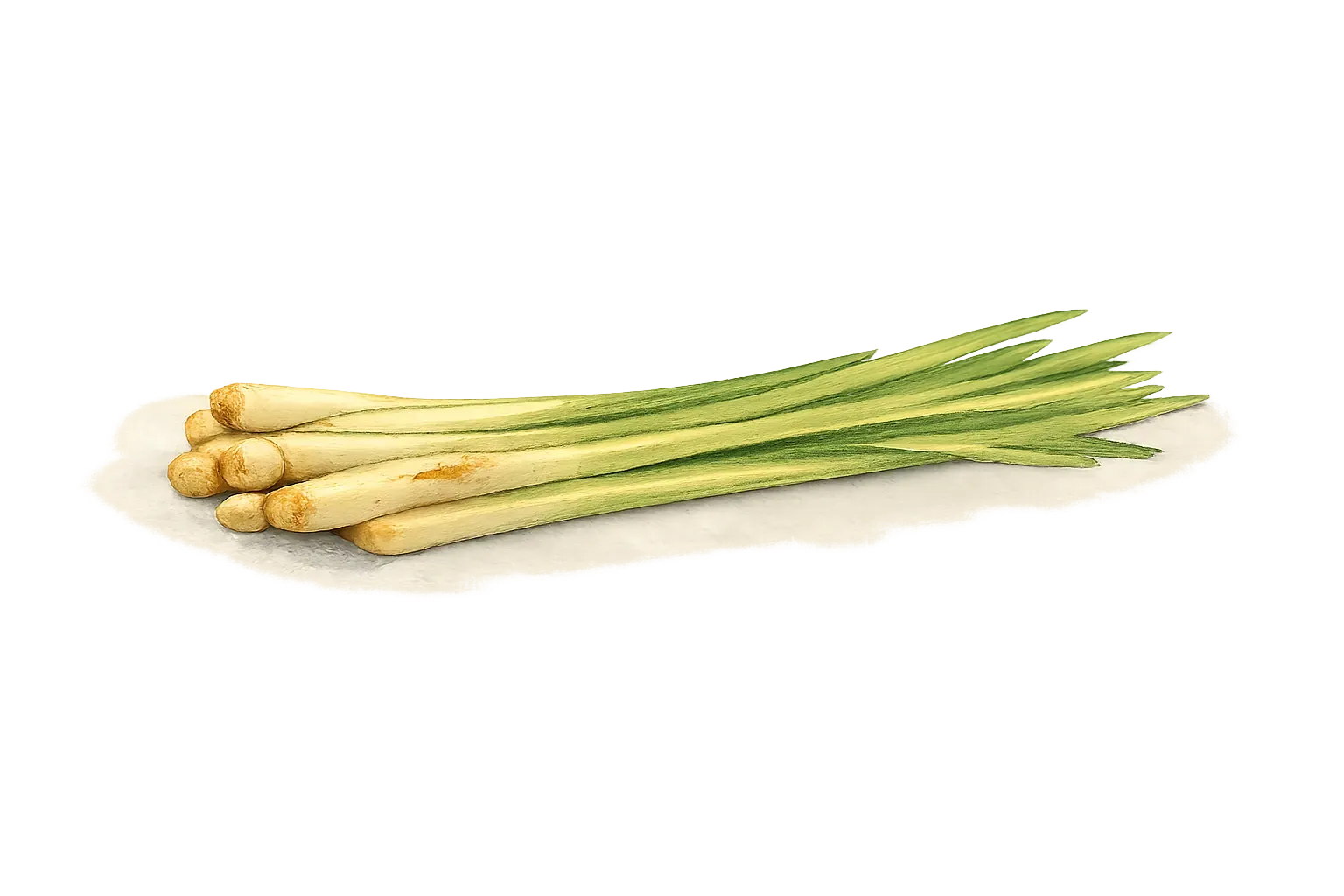
Also: Lemon Grass Leaves
A tall, fibrous grass with an intense lemony aroma; the tender, pale lower few inches of the stalk are minced, sliced, or bruised and simmered into Southeast Asian soups and curries. The tough outer layers and dry upper stalk are typically used only to infuse flavor, then discarded.
- lentils
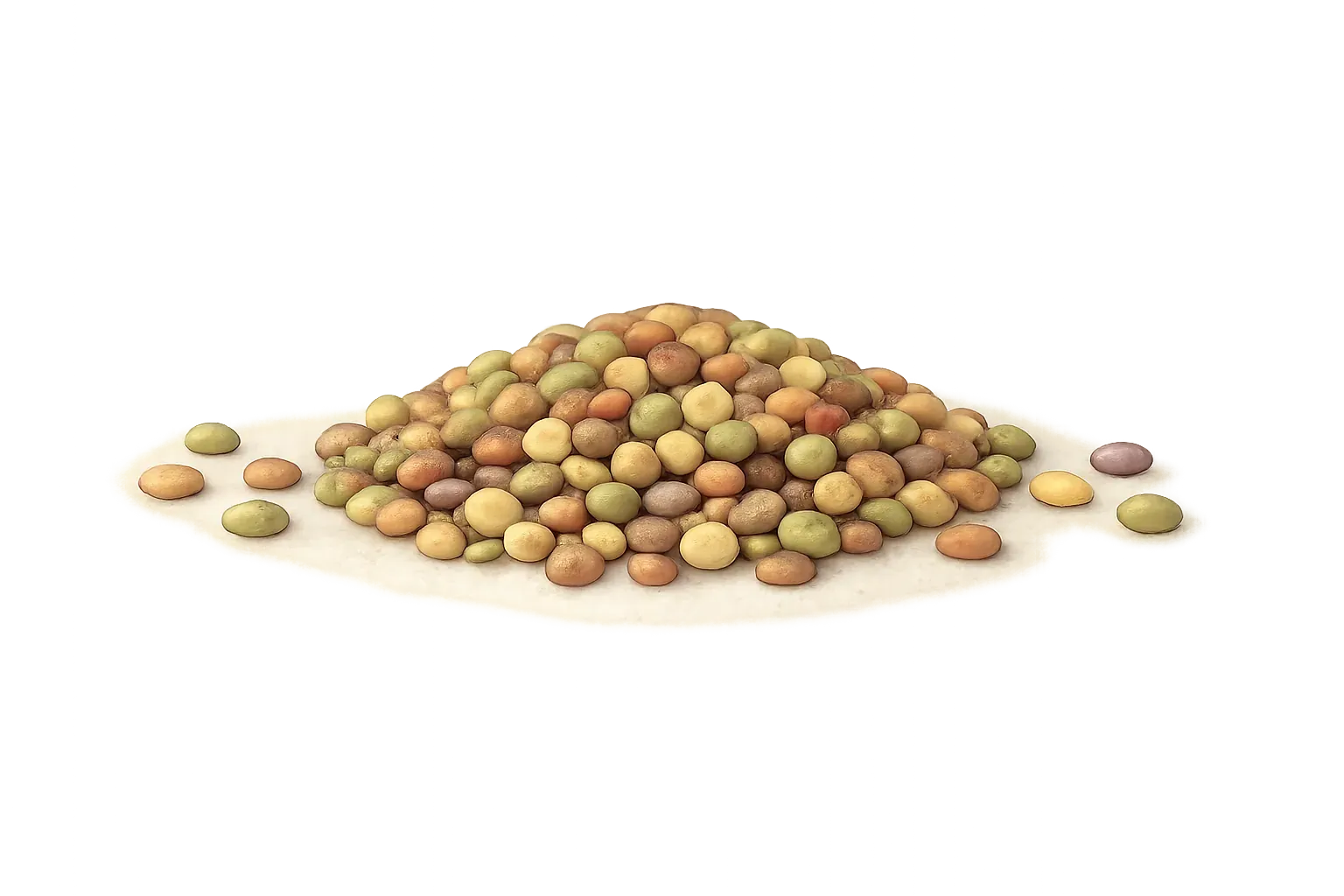
Also: dry lentils
Small, disc-shaped legumes that, unlike most dried beans, need no soaking and cook fully in well under an hour -- a quick way to add substantial protein and body to a soup or stew. Brown and green lentils hold their shape better; red and yellow lentils cook down soft and help thicken a soup on their own.
- lettuce
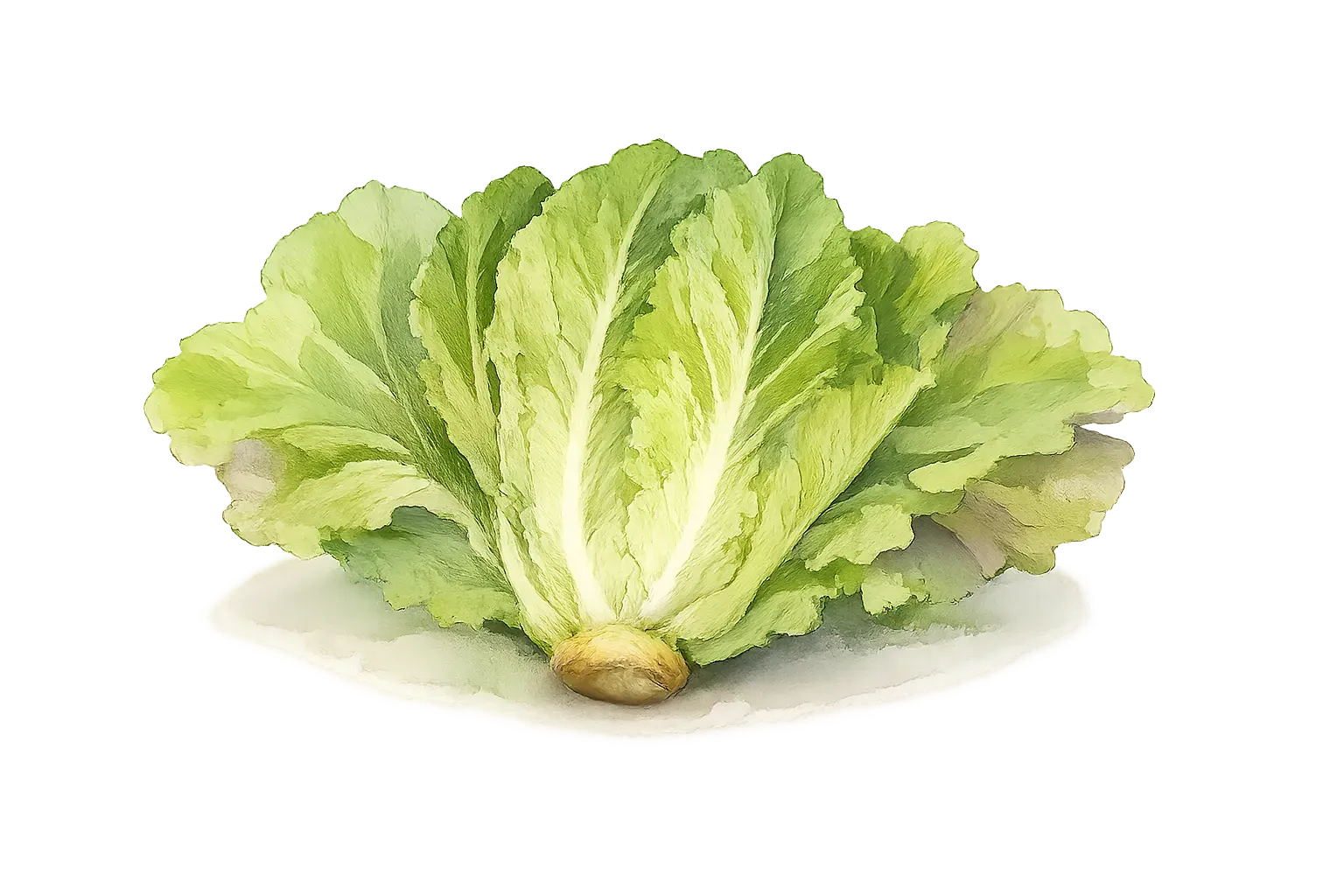
A leafy vegetable eaten mostly raw, ranging from crisp varieties like iceberg and romaine to tender ones like butter and leaf lettuce; the base of most salads and a common sandwich or taco topping.
- lime
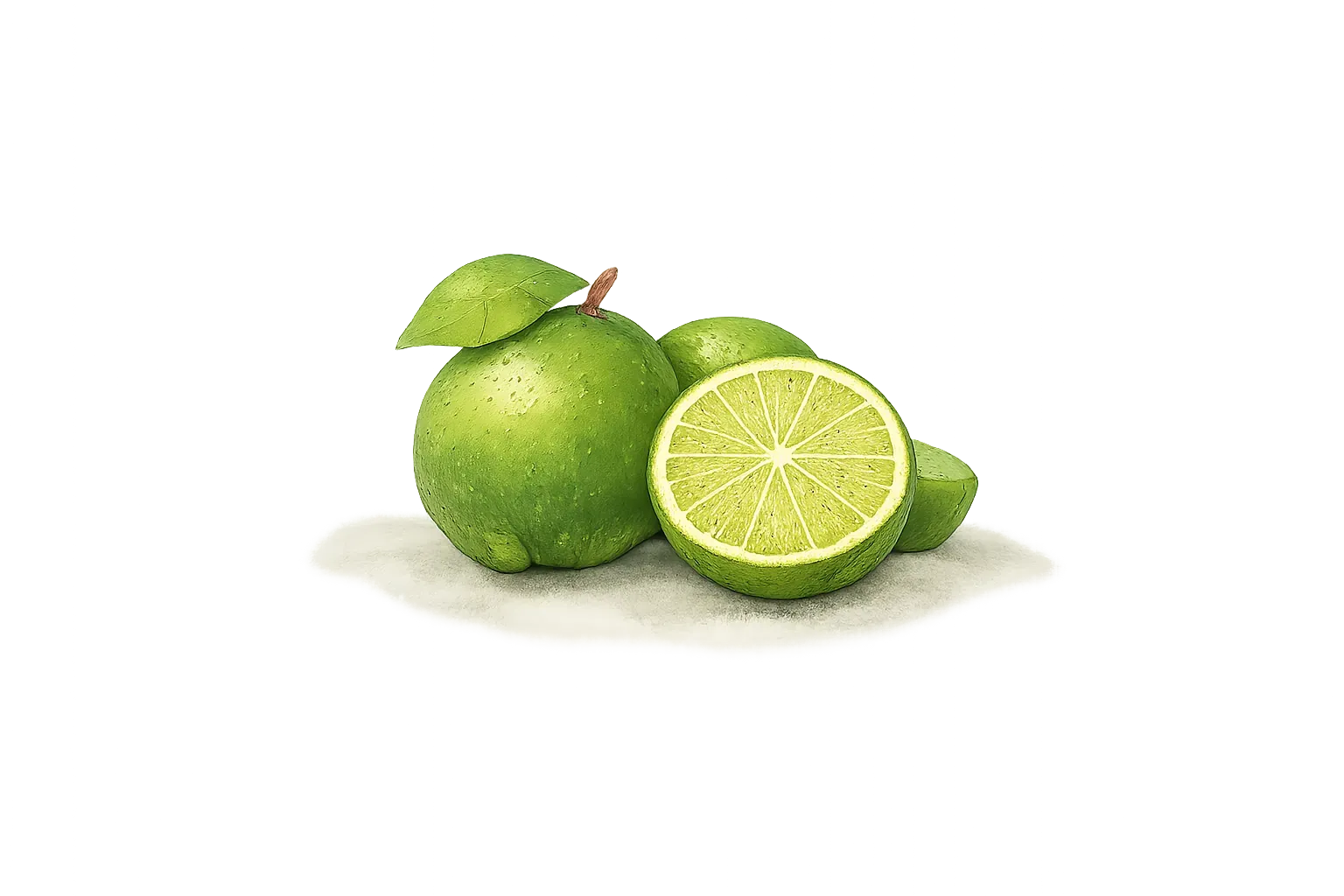
Also: limes
A sour, green citrus fruit, generally more tart and aromatic than lemon; used for its juice and zest, especially in Mexican, Southeast Asian, and Caribbean cooking.
More specific: lime wedges
- lime juice
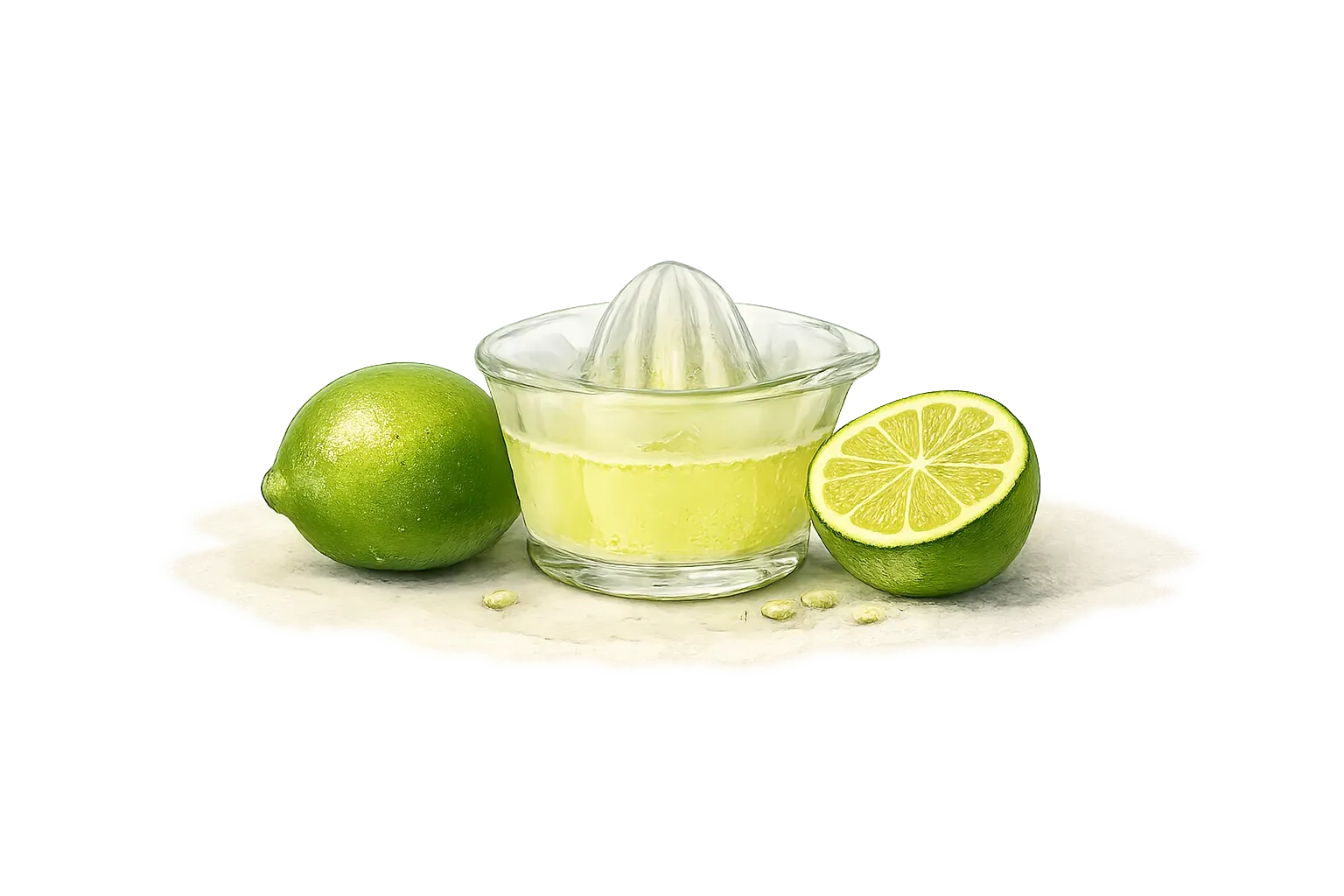
Also: fresh lime juice
The juice pressed from limes, sour and aromatic; used to add acidity and brightness, especially in Mexican, Southeast Asian, and Caribbean dishes.
- lime wedges
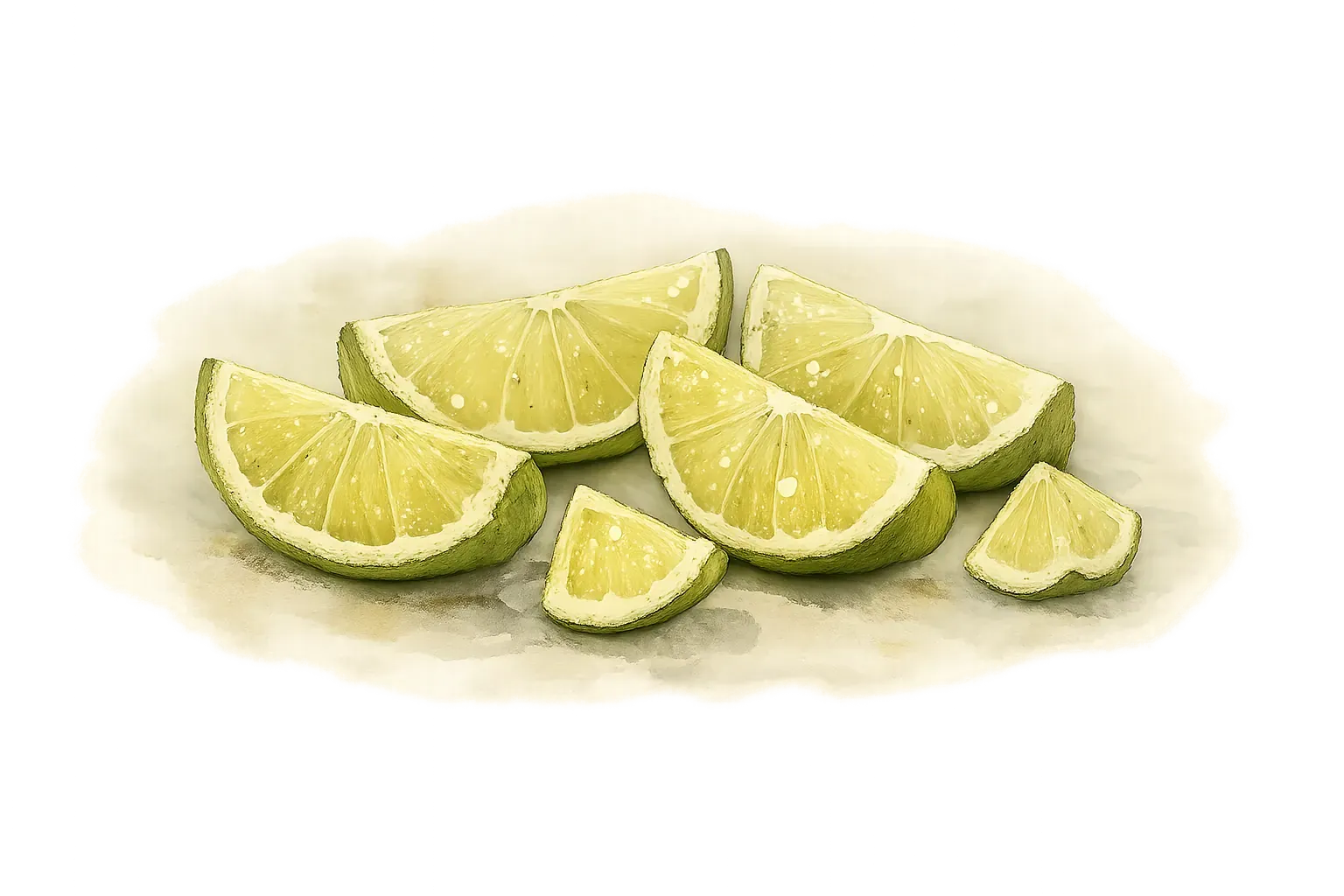
Limes cut into wedges and served alongside a dish so each person can squeeze fresh juice over it at the table, to taste.
A kind of lime
- liquid smoke

A concentrated liquid flavoring made by capturing and condensing actual wood smoke; used a few drops at a time to add smoky flavor without a smoker or grill.
- long grain and wild rice mix
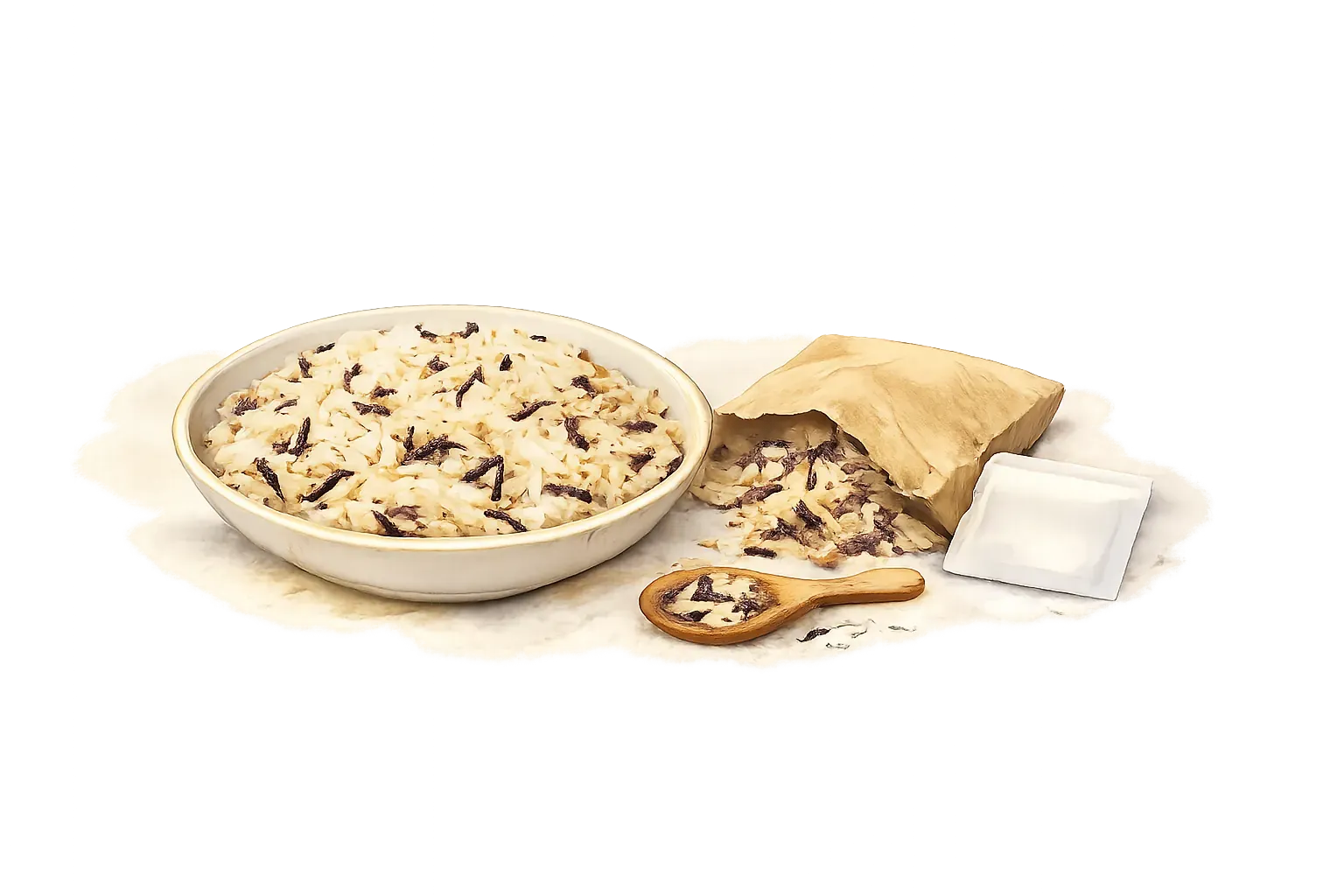
Also: quick cooking long grain and wild rice with seasoning packet
A packaged blend of long-grain white rice and wild rice, usually sold with a separate seasoning packet, cooked together as a quick side dish. The two rices cook at different rates, so packaged blends typically use a par-cooked or specially processed wild rice so both finish at the same time.
M
- mango
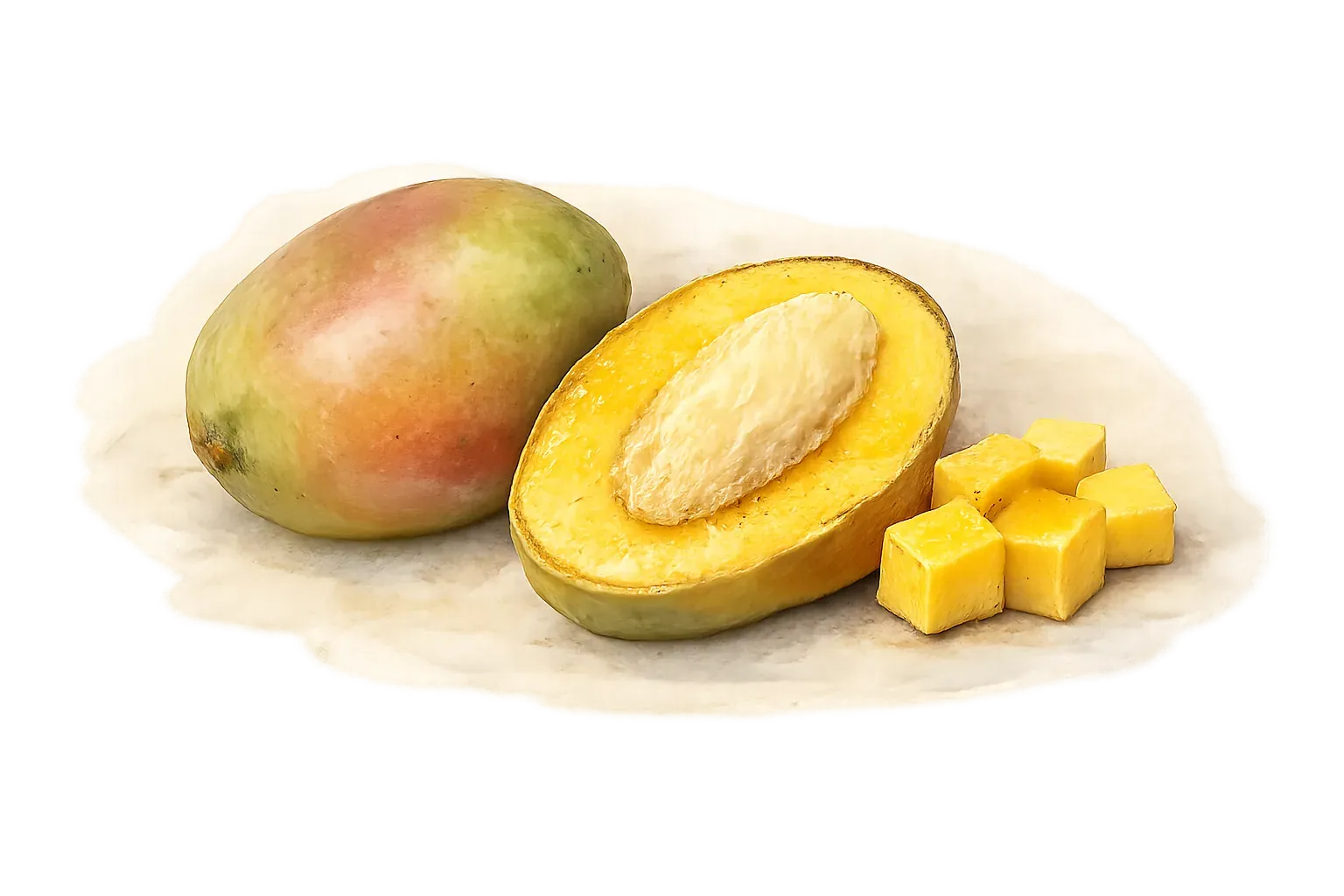
A tropical stone fruit with sweet, fragrant, juicy flesh, ranging from firm and tart when underripe to soft and syrupy-sweet fully ripe. Used both raw -- diced into salsas, salads, and dishes like tartare for a bright, sweet contrast to savory or acidic flavors -- and cooked into sauces and desserts.
- margarine

Also: melted margarine
A butter substitute made from vegetable oil rather than dairy fat, blended and processed to have a similar spreadable texture and behavior. Older recipes often call for it specifically -- it was the everyday baking fat in many kitchens for decades -- and it still works essentially the same way as butter in most mixing and melting applications.
- masa harina
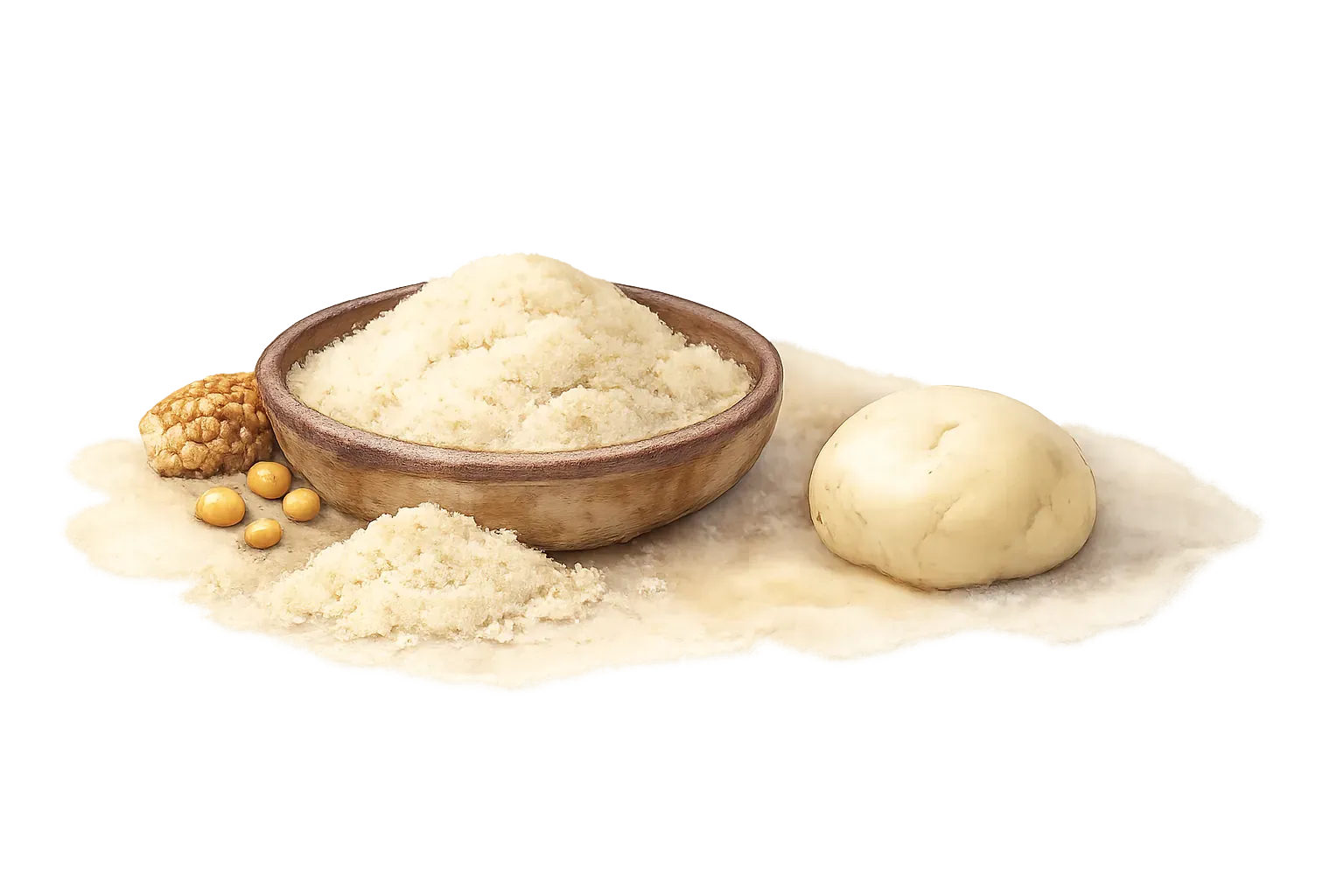
A fine corn flour made from corn treated with lime, or nixtamalized, and dried; the base for corn tortillas, tamales, and other masa doughs. Nixtamalization is what gives it its distinct flavor and lets it form a pliable dough -- it isn't simply ground dried corn.
- mascarpone cheese

A very soft, rich, mildly sweet Italian cream cheese; used in desserts (like tiramisu) and to add richness to sauces.
- mayonnaise

Also: Mayo
A thick, creamy emulsified sauce of oil, egg yolk, and an acid such as vinegar or lemon juice; used as a condiment and as the base for many dressings, dips, and creamy sauces. Being already an emulsion, it's also useful as a coating -- spread thin on food before grilling or roasting, it helps browning and keeps the surface from drying out.
- meat tenderizer
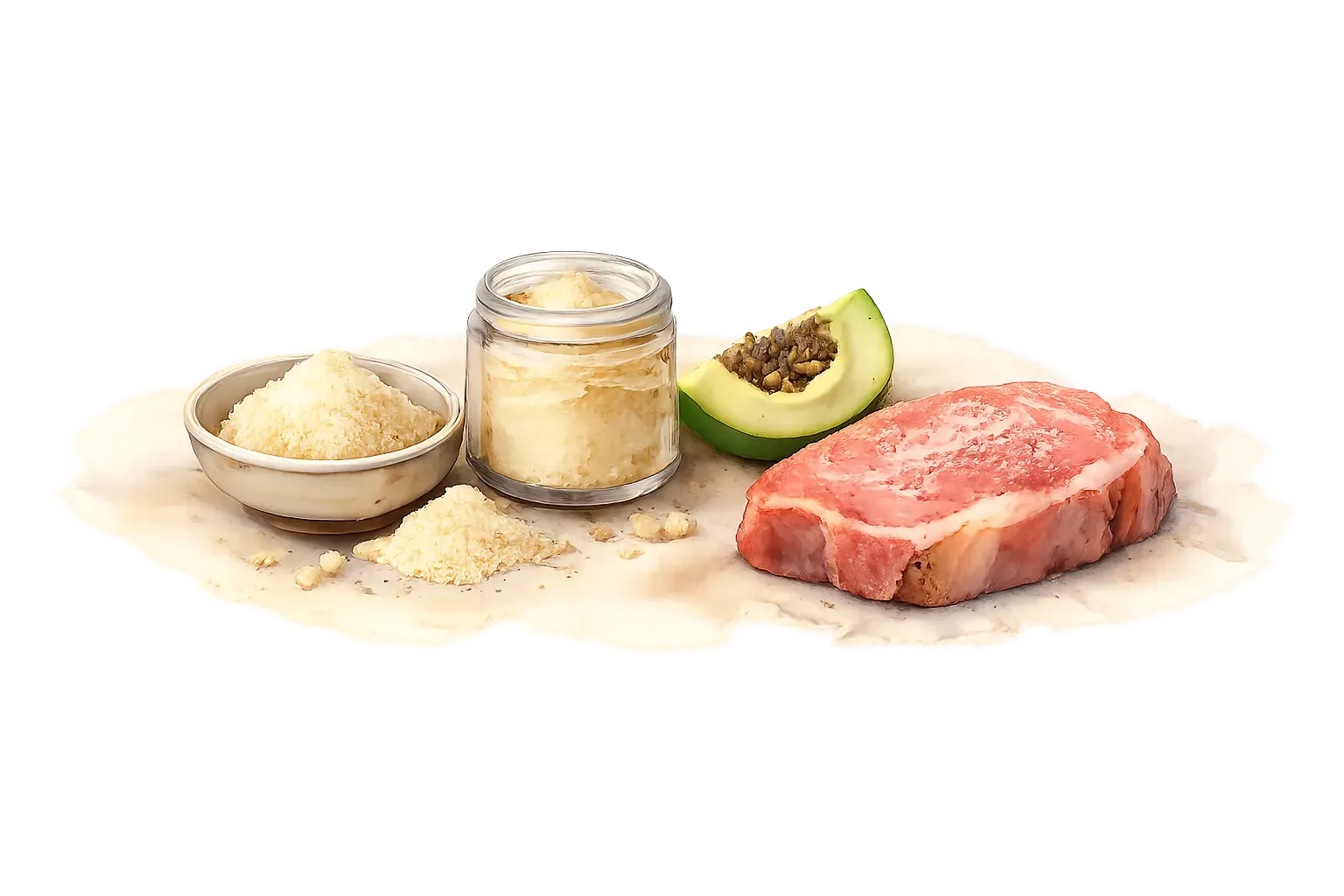
A seasoning powder, usually containing salt plus a proteolytic enzyme such as papain, sprinkled on meat before cooking to break down tough surface fibers and speed tenderizing. It works on the surface layer rather than all the way through, so it helps a tough cut but doesn't replace choosing the right cut or cooking method.
- milk

The liquid dairy base used across baking, sauces, soups, and drinks for moisture, richness, and protein. Fat content is what separates milk from cream and half-and-half, and that fat level governs how thick a sauce gets and how well it survives heat without curdling.
- mixed dried beans for soup
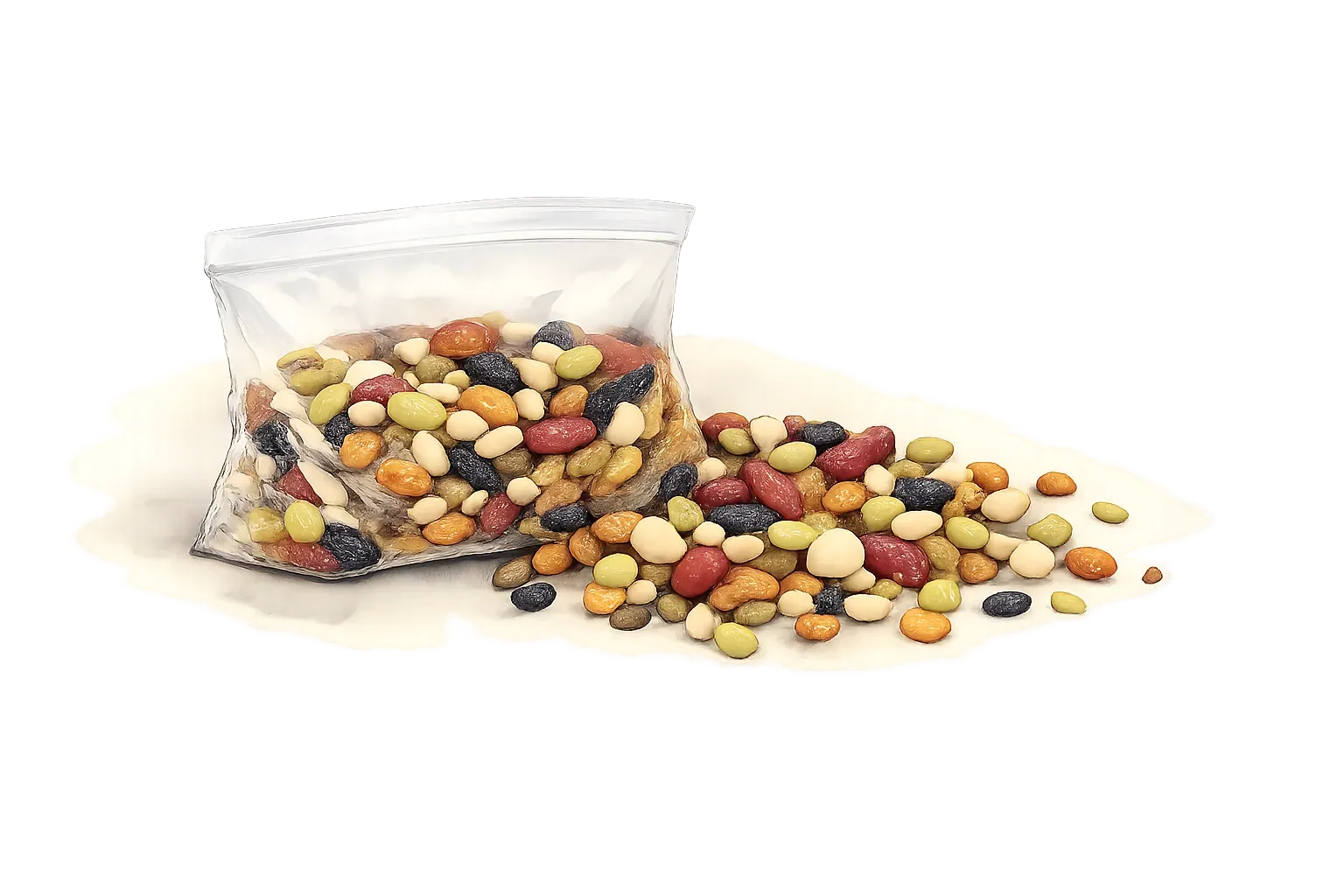
Also: 15 bean soup mix, bean soup mix
A bagged blend of several kinds of dried beans and legumes (pintos, navy, kidney, black, lima, split peas, lentils, and similar, depending on the brand) sold together specifically for soup, so a single bag gives the varied texture of a from-scratch mixed-bean soup without buying and measuring each bean separately.
- molasses
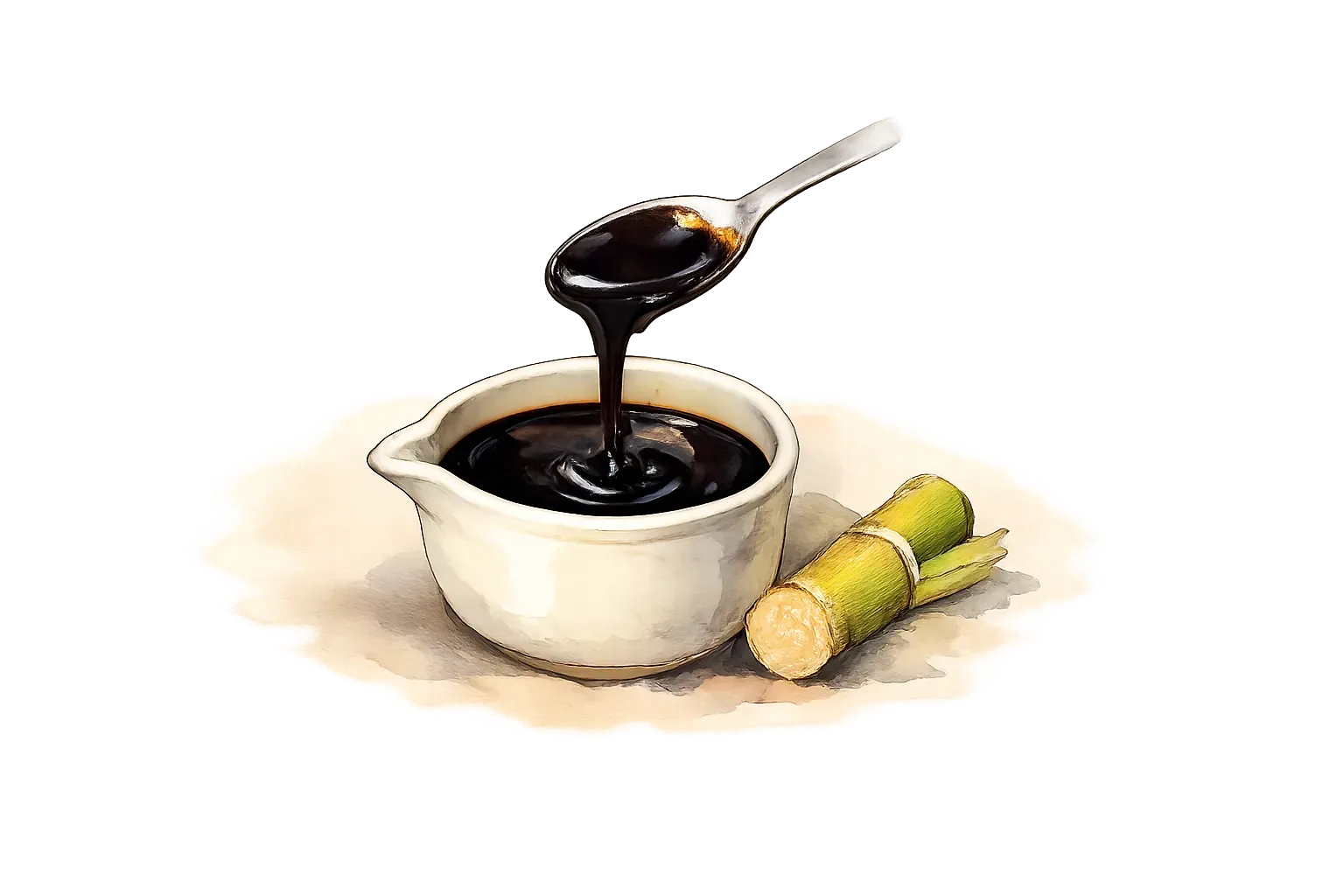
A thick, dark, sweet syrup left over from refining sugar cane or sugar beets into sugar, with a deep, slightly bitter, mineral edge that plain sugar doesn't have. It behaves as a structural baking ingredient as much as a flavoring -- its liquid volume and acidity affect rise and tenderness, so measuring it precisely matters more than with a garnish spice.
- Monterey Jack cheese
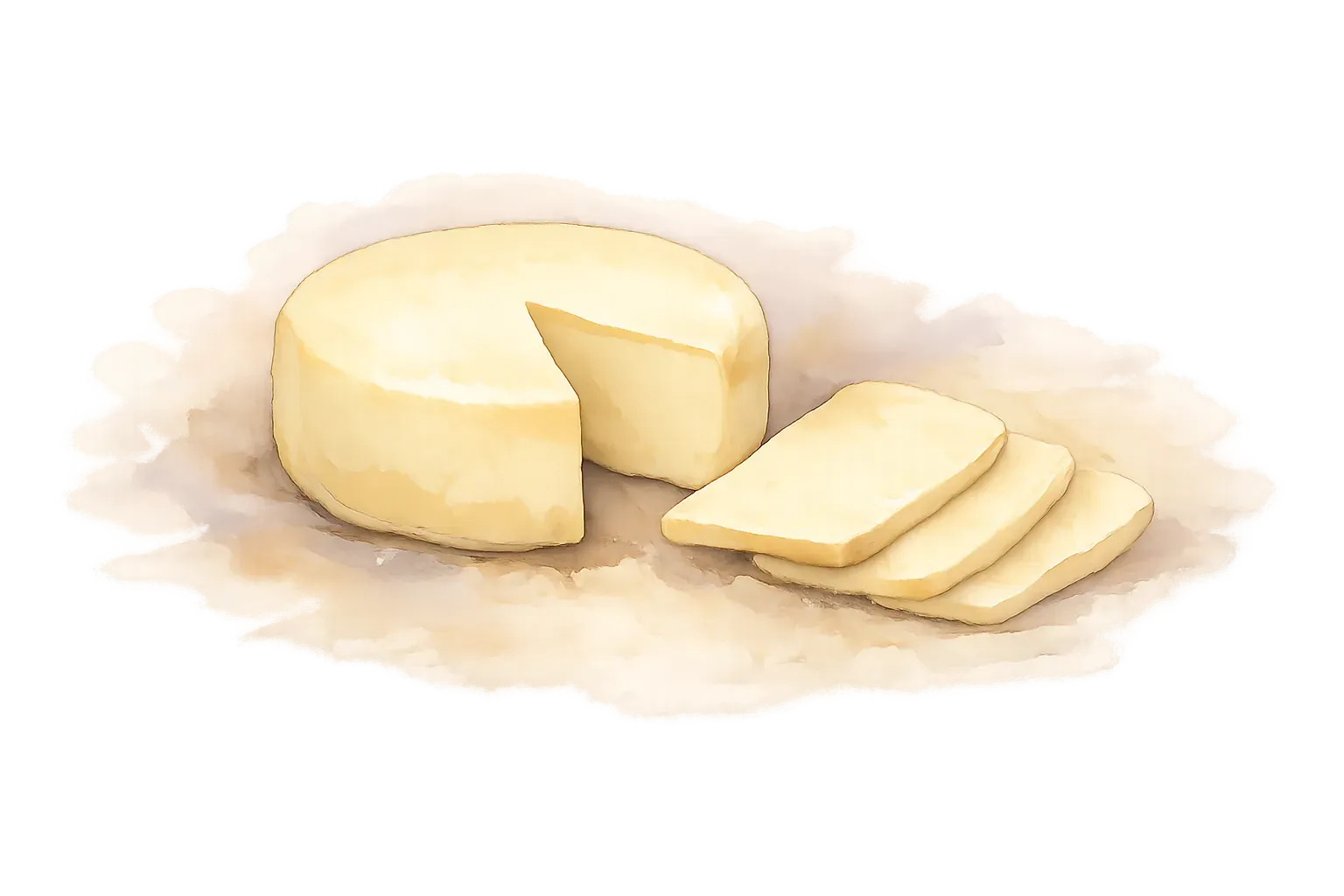
Also: Monterey jack, jack cheese
A mild, semi-soft American cheese with a smooth, creamy melt and very little tang -- a common choice in Mexican and Southwestern-style dishes, often paired with sharper cheddar, since it melts smoothly and lets a dish's other flavors (chiles, spices) lead.
- morcela
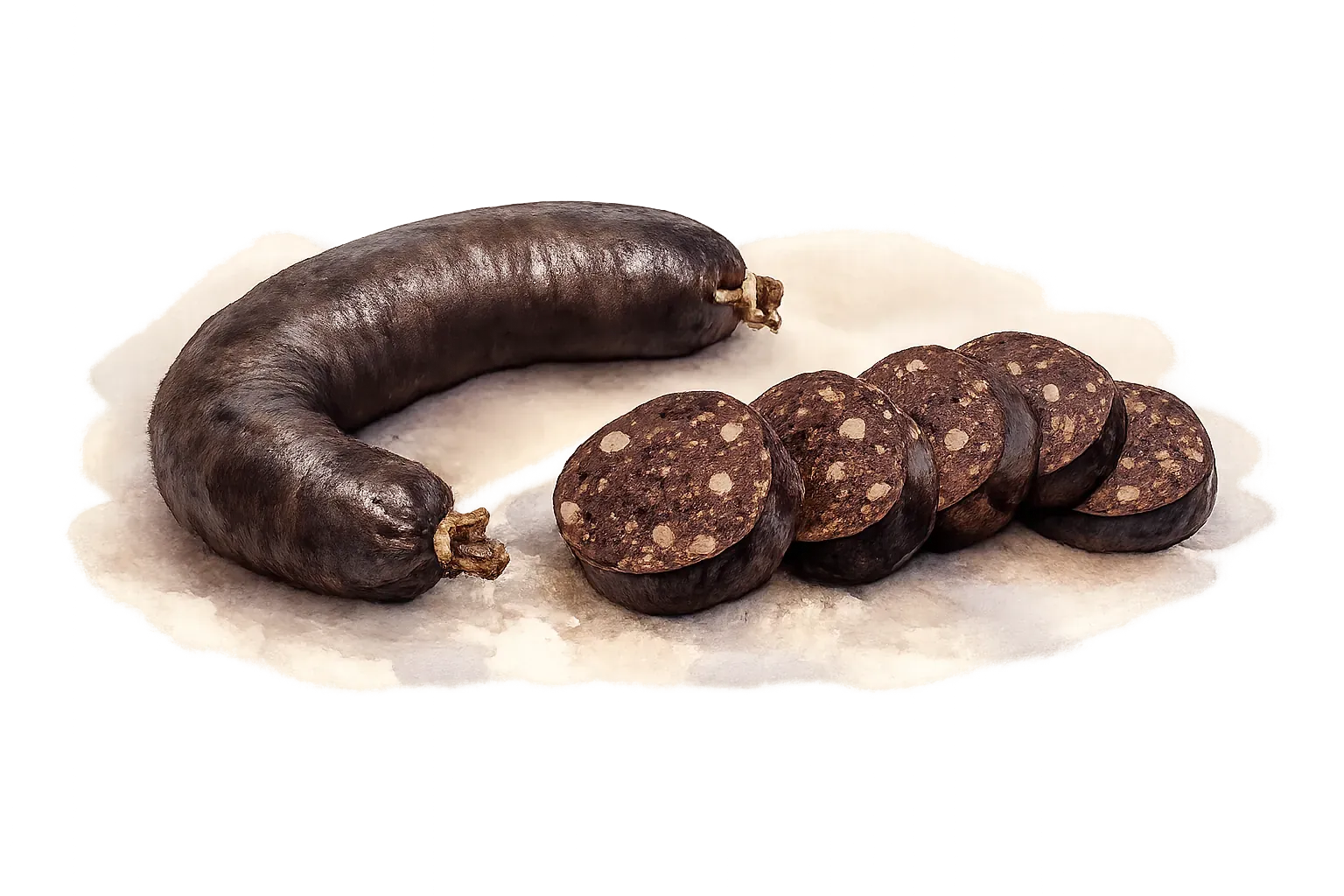
Also: blood sausage, black pudding
A Portuguese blood sausage made from pork blood, fat, and seasonings (often including cinnamon, cumin, or orange peel depending on the region), stuffed into casing and typically already cooked when sold. It has a dark, dense, almost fudgy texture and a rich, mildly spiced, iron-forward flavor -- similar to Spanish morcilla or British black pudding, though seasoned differently.
- mozzarella
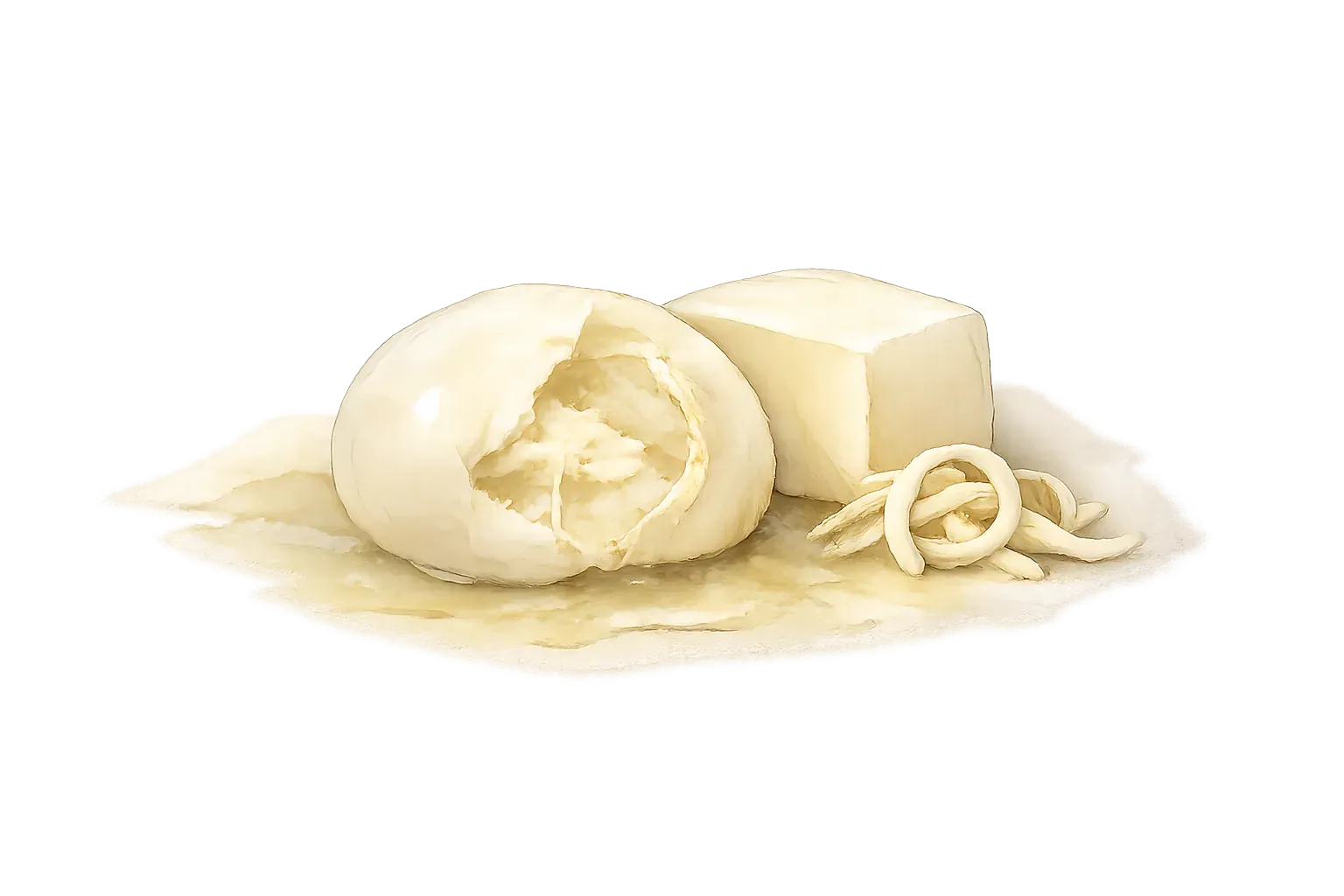
Also: fresh mozzarella
A mild, stretchy Italian cheese sold two ways -- fresh, soft, and packed in water, or firmer and aged in a block for shredding. Its low salt and high moisture are what let it melt into long strands rather than pooling into an oily layer, but that same moisture makes it behave very differently from a hard aged cheese.
- mushrooms
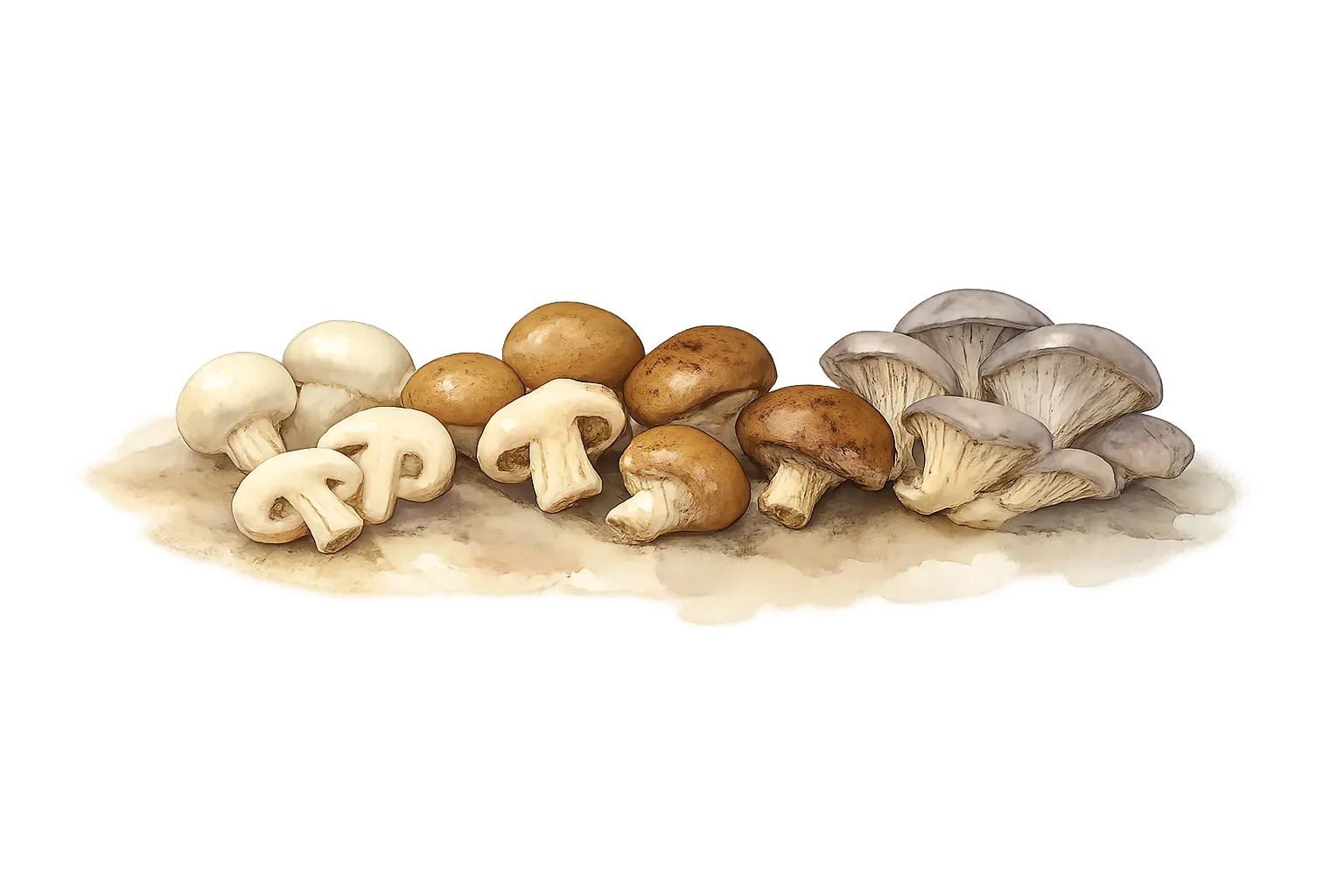
The fruiting body of various fungi, prized for a savory, umami-rich flavor that deepens with cooking; sauteed, roasted, or simmered into sauces and soups. They're mostly water by weight, which is the single fact that governs how they cook -- crowd them in the pan and they steam instead of browning.
More specific: shiitake mushrooms
- mustard
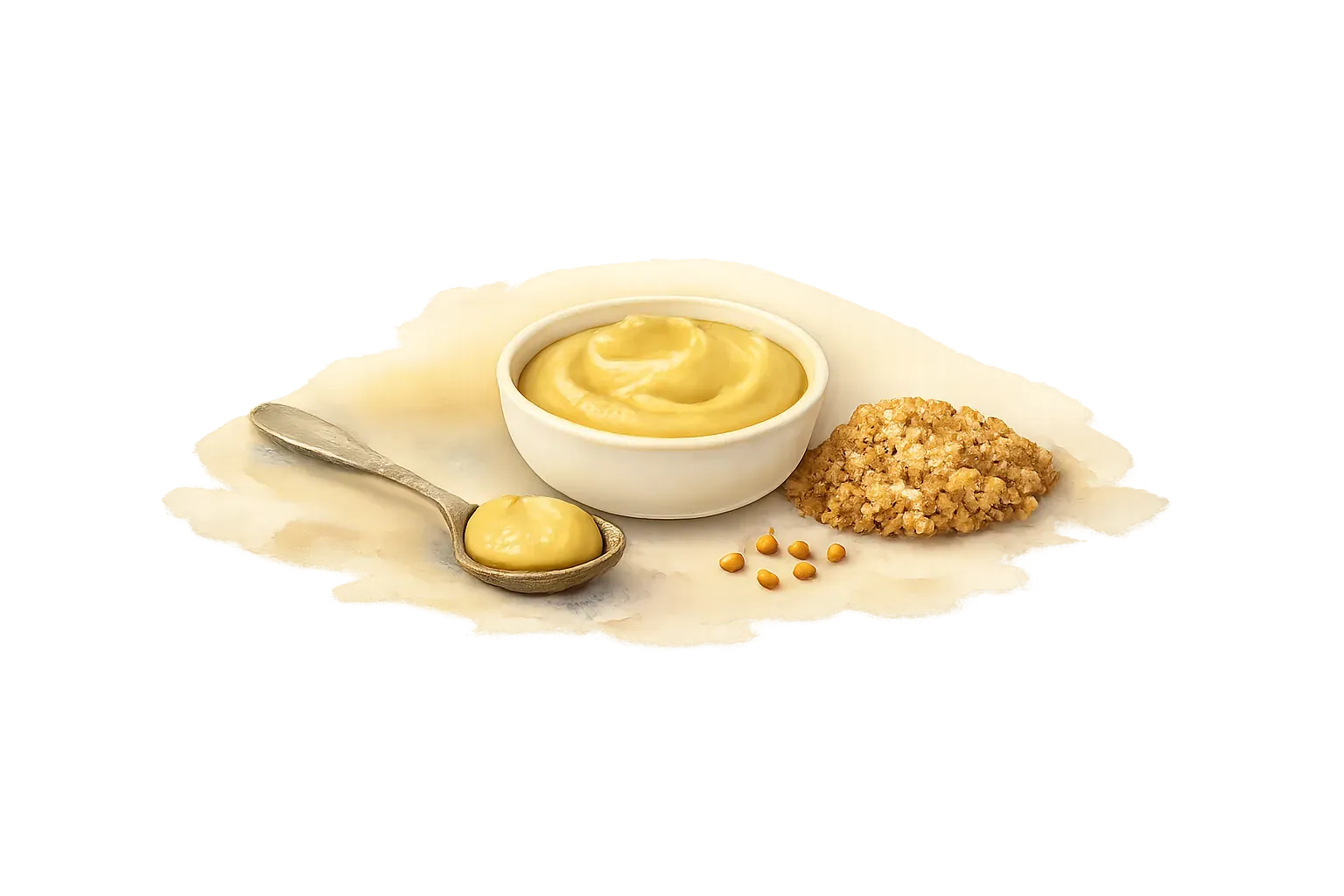
A condiment of ground mustard seeds mixed with liquid and seasonings, ranging from smooth and mild (yellow) to sharp (Dijon) to coarse and grainy (whole-grain); used as a spread, whisked into dressings, or stirred into sauces for tang and a little heat. It's concentrated -- a spoonful carries salt, acidity, and sharpness all at once, so it's easy to overdo.
More specific: Dijon mustard, grainy mustard, sharp mustard, yellow mustard
N
- navy beans
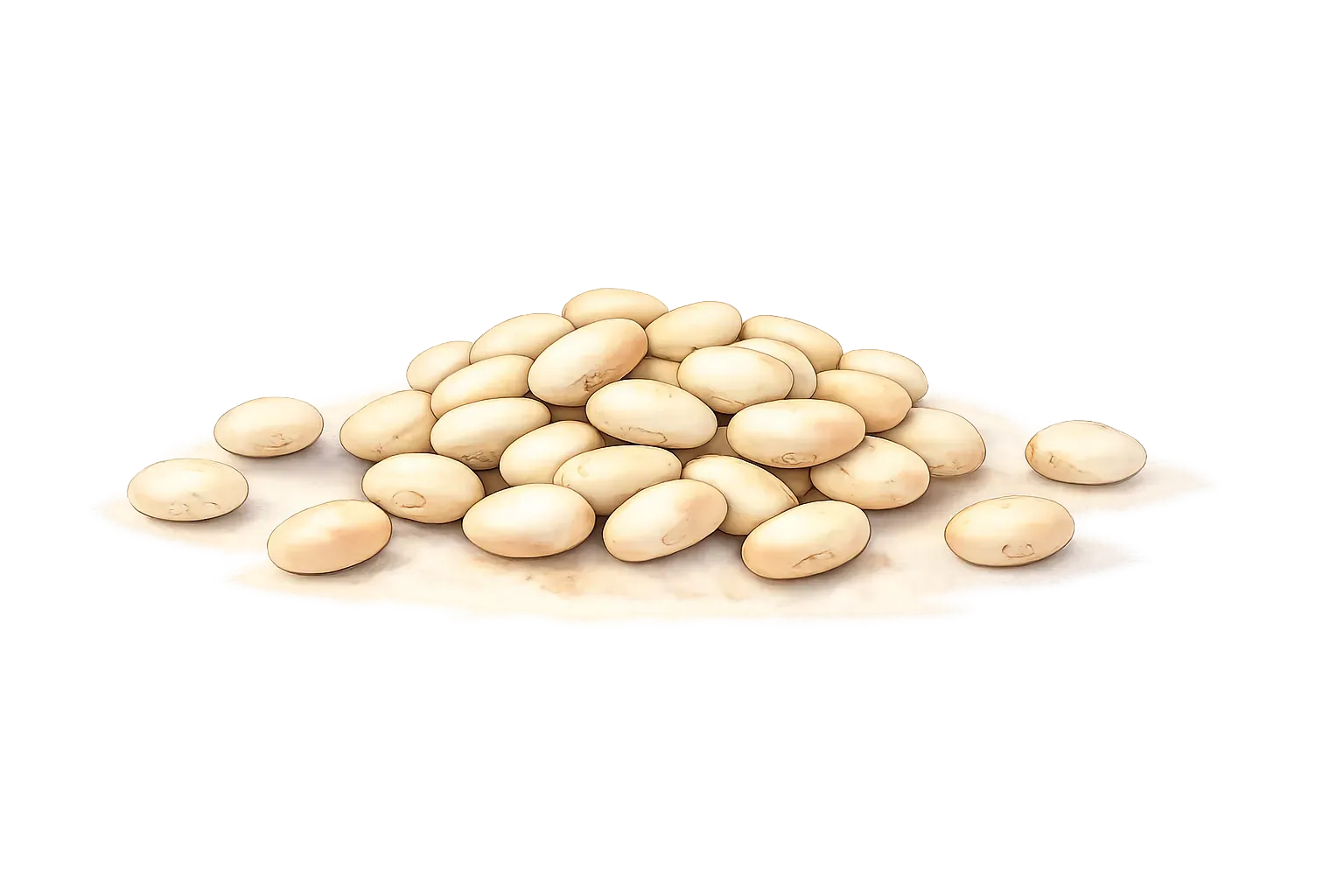
Also: haricot beans
A small, oval white bean with a mild flavor and a smooth texture that breaks down easily into a creamy consistency when cooked long enough -- the traditional bean in Boston baked beans and many ham-and-bean soups, prized for how well it thickens a pot on its own.
- nutmeg
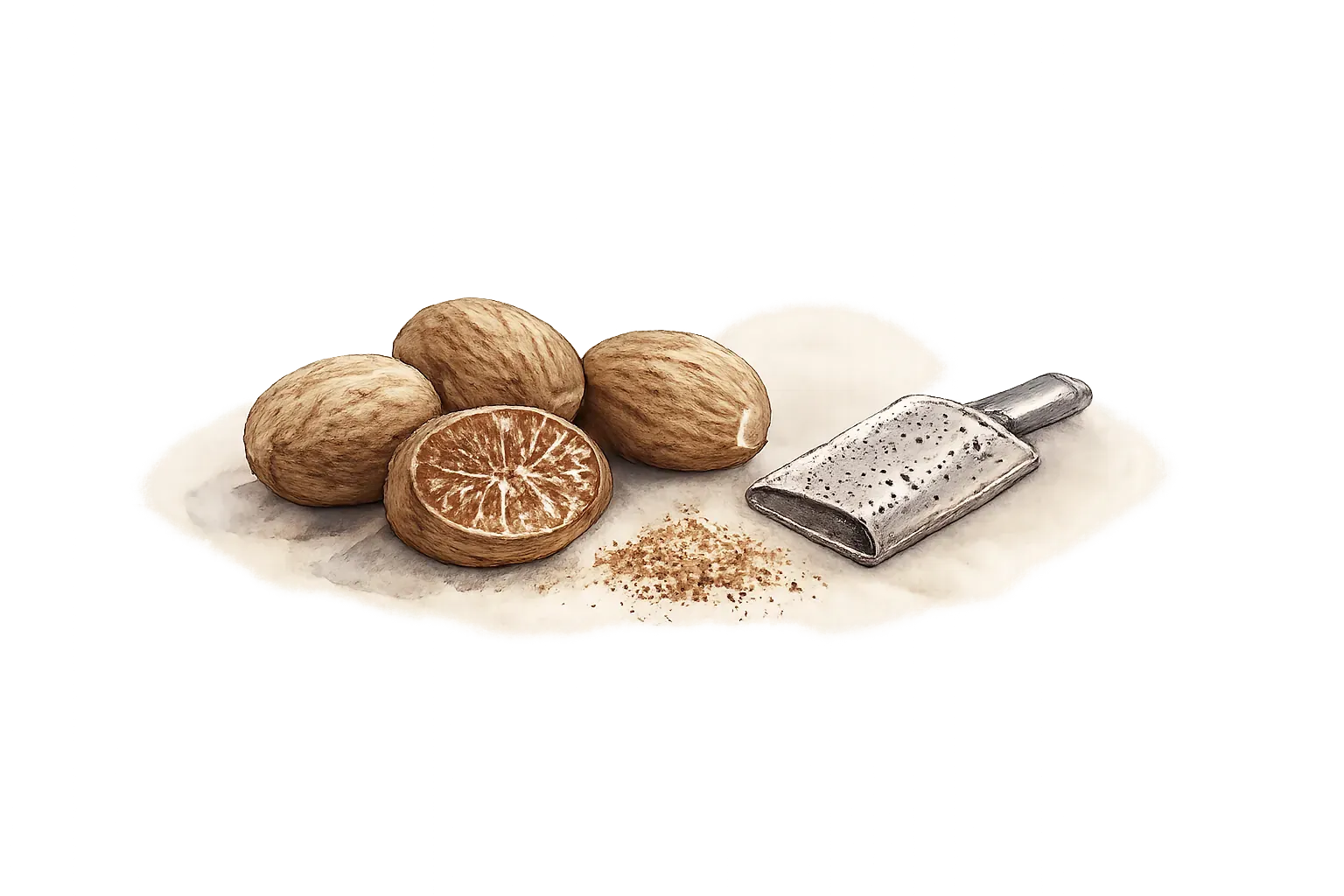
The dried seed of the nutmeg tree, used grated fresh or bought pre-ground; a warm, sweet-savory spice used in small amounts in baking, cream sauces, and spice blends. A little goes a long way -- its flavor turns sharp and slightly numbing in excess, which is why most uses call for a pinch, not a spoonful.
O
- oats
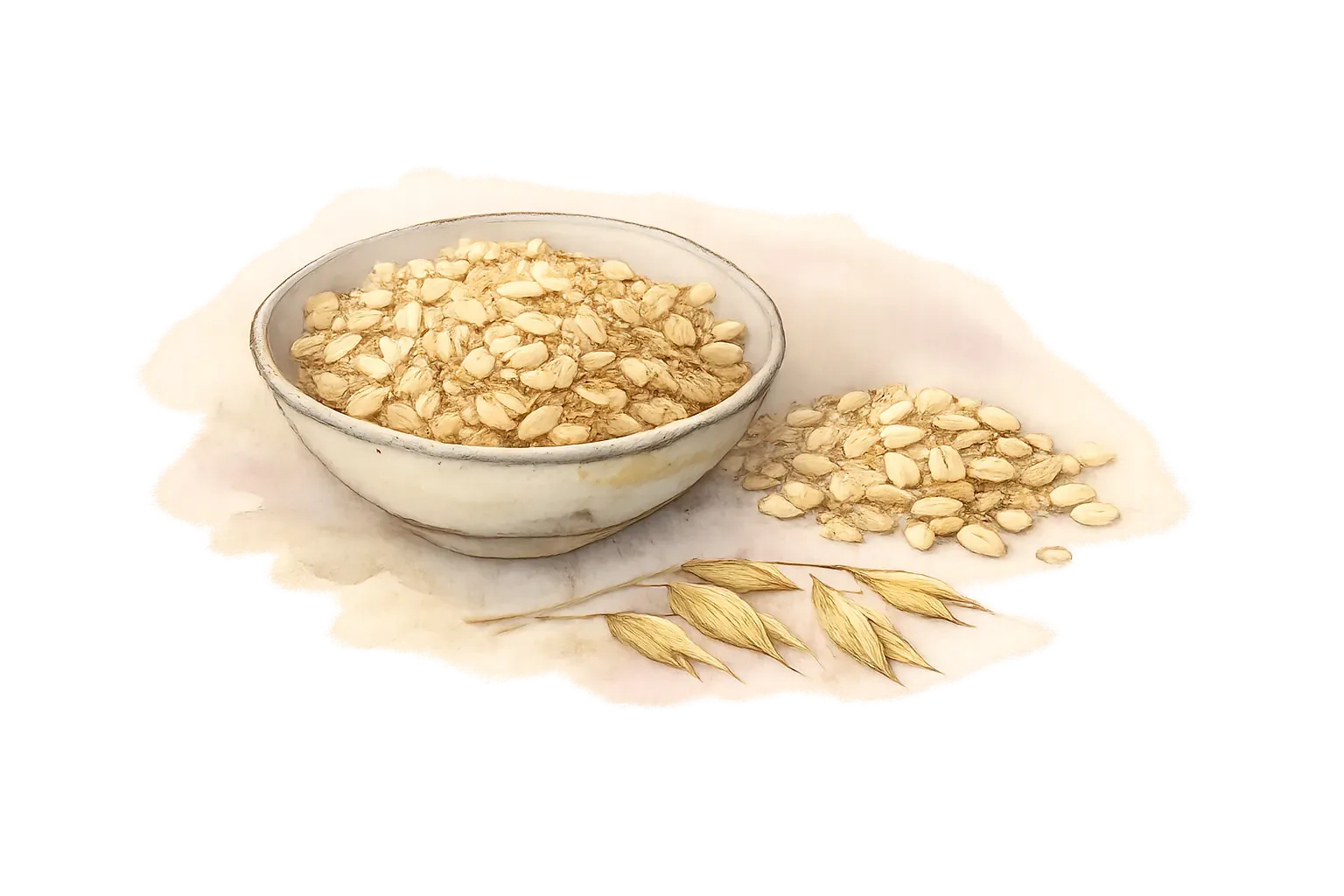
Also: Old Fashioned or Rolled Oats
The rolled or ground grain of the oat plant, cooked into oatmeal or porridge or mixed into baked goods for texture, chew, and a mild nutty flavor. The cut -- rolled, quick, or steel-cut -- determines how fast it cooks and how much liquid it absorbs, so the three aren't interchangeable without adjusting timing.
- oil and vinegar dressing
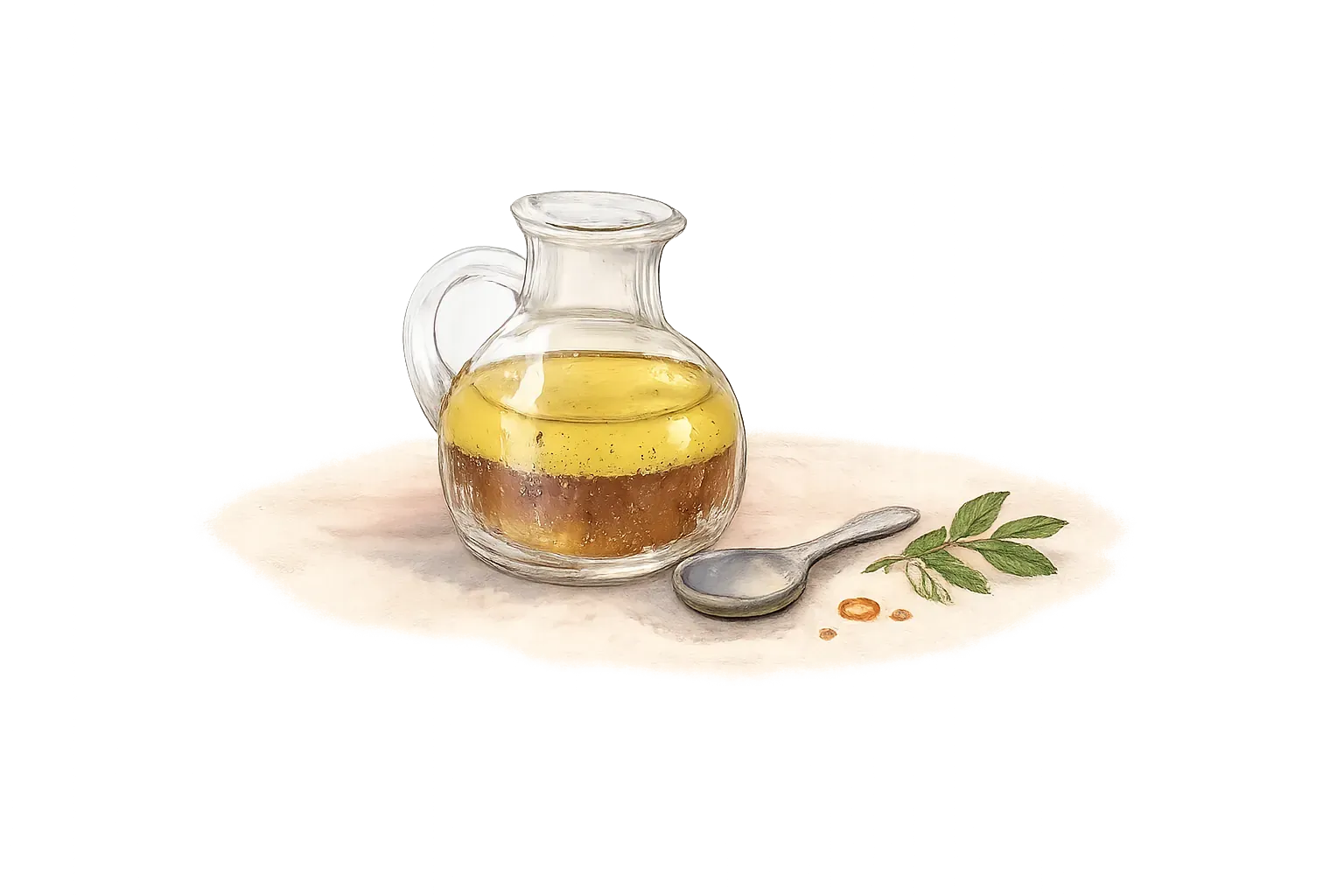
A simple vinaigrette-style dressing of oil and vinegar, usually with salt, a little sweetener, and other seasonings, used to dress salads and vegetables. Because it's mostly fat and acid, it separates on standing -- shake or whisk it again just before pouring.
- Old Bay Seasoning
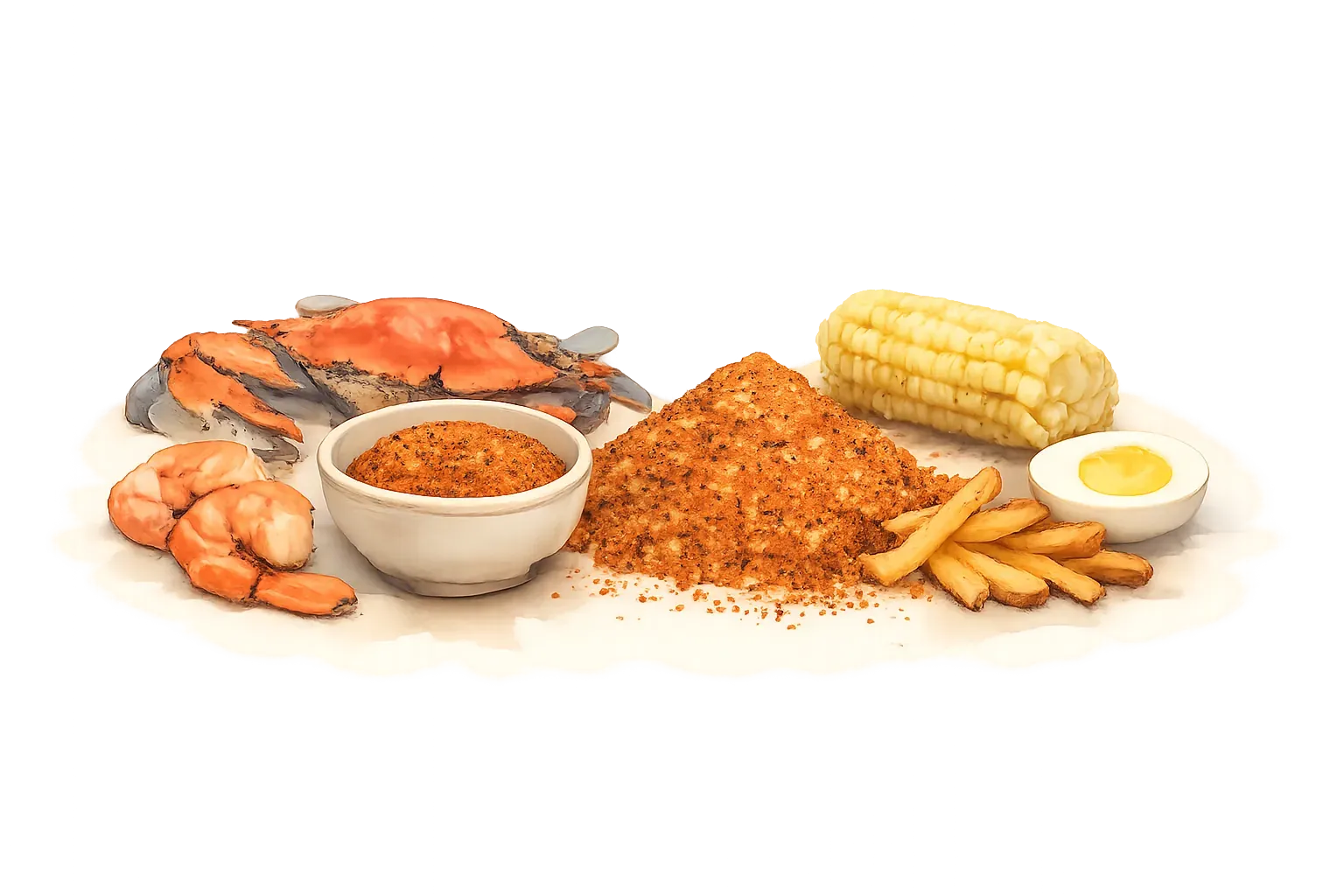
Also: Old Bay
A spice blend built around celery salt, paprika, and a mix of warm spices, originally made for seasoning crab and shrimp; the signature seasoning of Chesapeake Bay-style seafood, also good on corn, fries, and eggs. Because it already contains salt, it seasons and salts a dish at the same time.
- olive oil
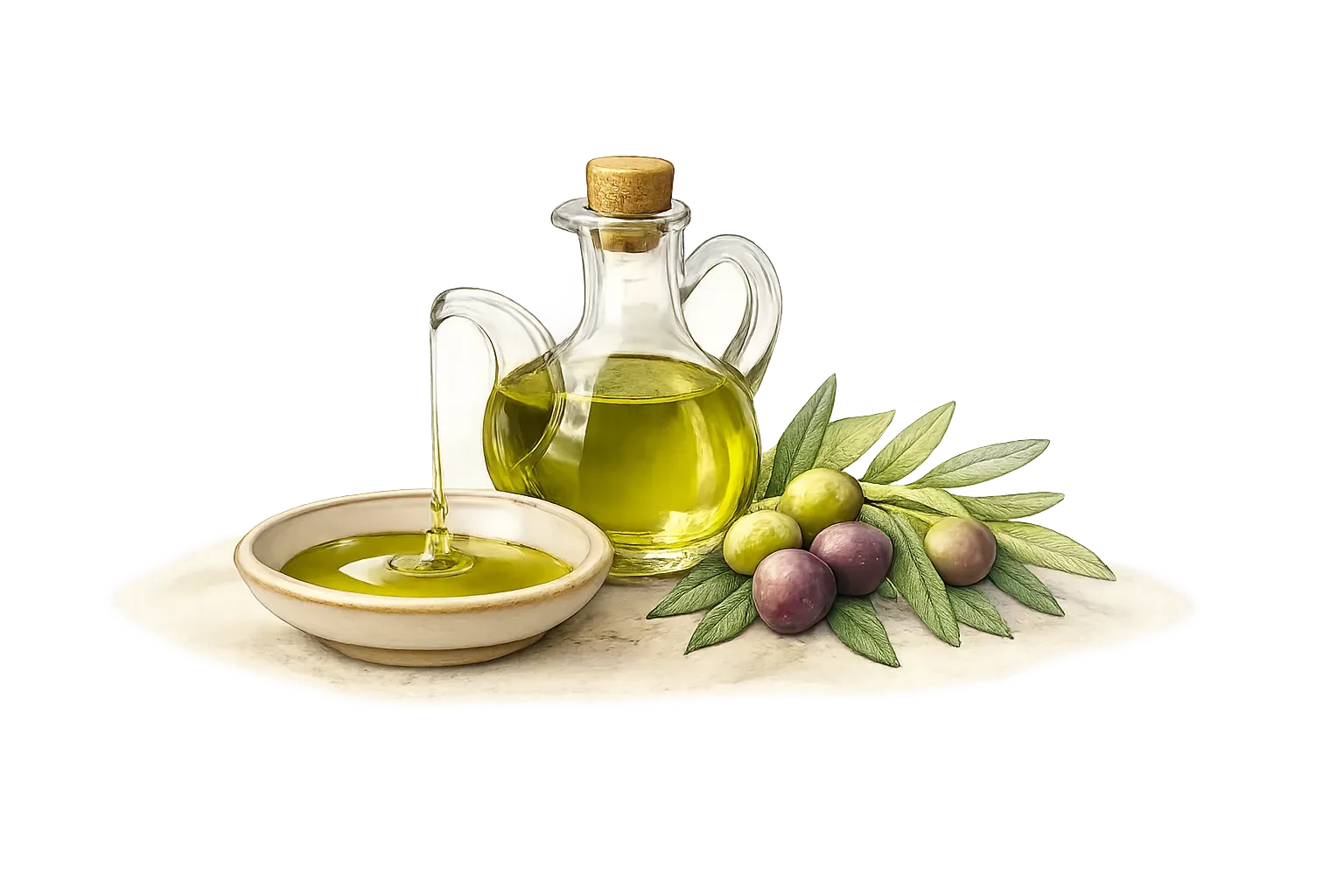
Oil pressed from olives, ranging from mild to peppery and fruity depending on the olives and how they're processed; used for cooking, in dressings, and as a finishing drizzle. Extra-virgin is the least processed grade and carries the most flavor and aroma; more refined grades are milder and better suited to higher heat.
- onion
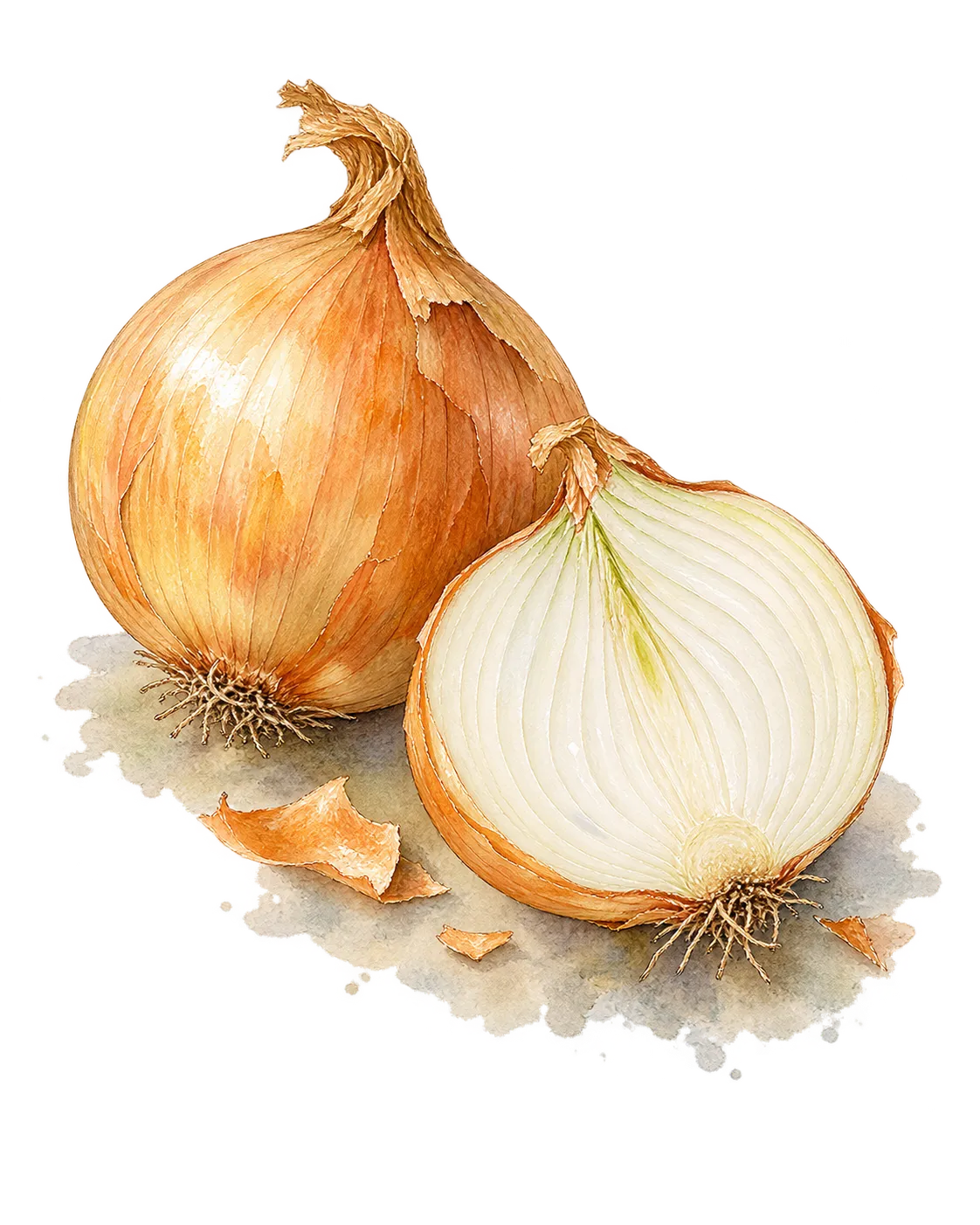
Also: White Onion, Yellow Onion, med onion, onions
A pungent, layered bulb vegetable, and one of the most common aromatics in cooking; used raw, sautéed, caramelized, or roasted.
More specific: green onion, onion powder, red onion, sweet onion
- onion powder
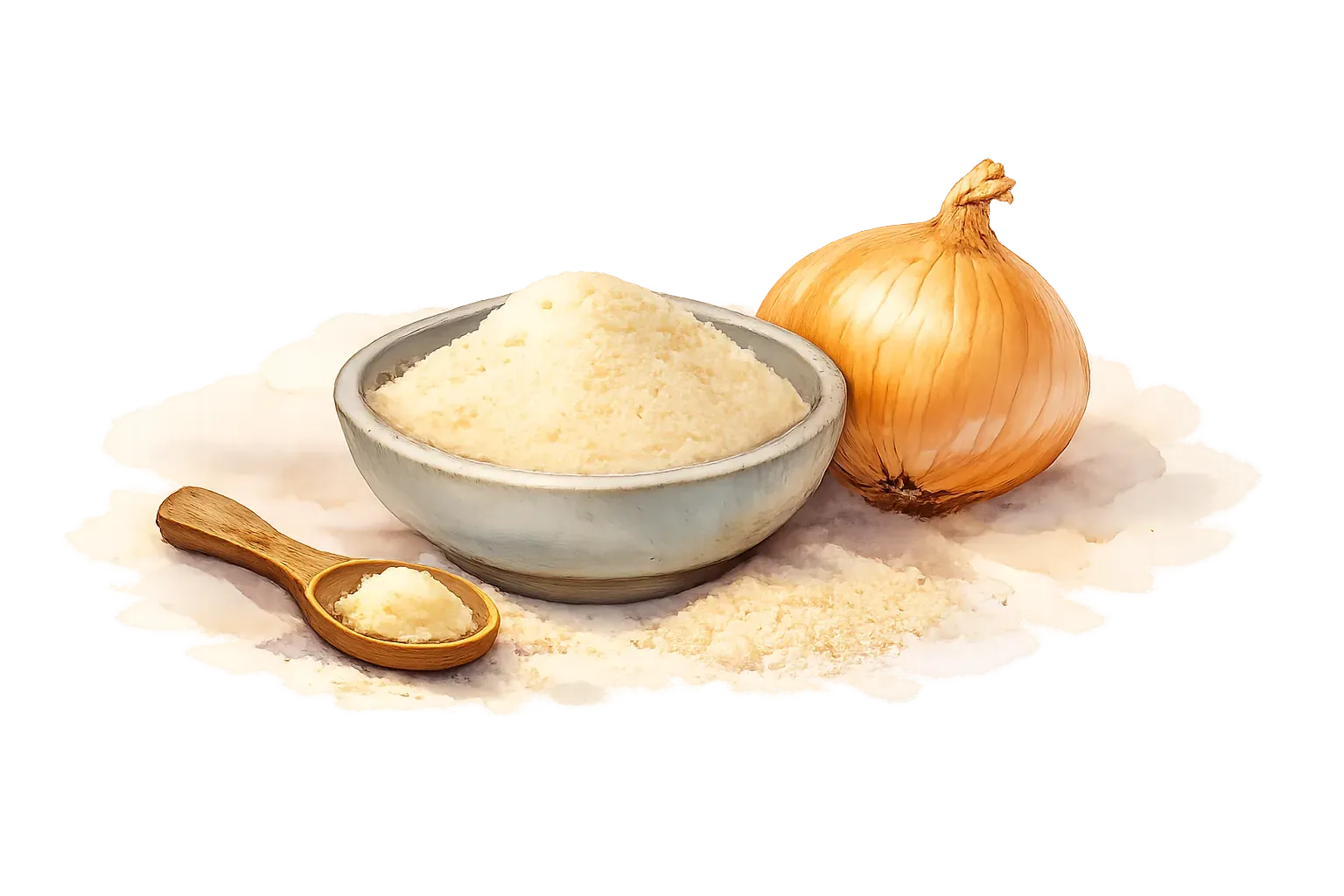
Dehydrated onion ground into a fine powder, giving a shelf-stable, evenly distributed way to add onion flavor without the moisture, texture, or sharpness of fresh onion. It's especially useful in dry rubs and spice blends where fresh onion's water content would be unwelcome.
A kind of onion
- onion soup mix
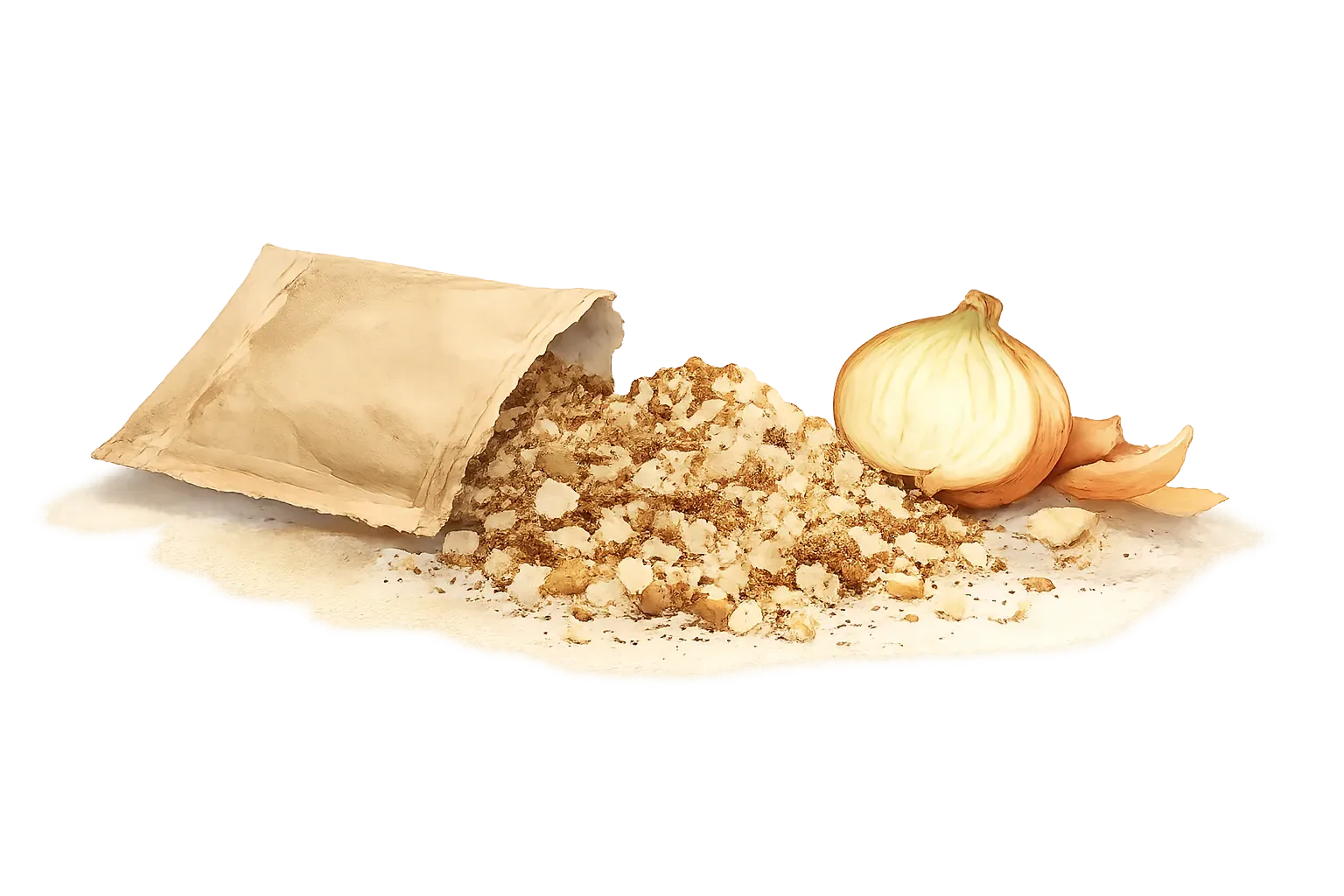
A packaged, dehydrated seasoning mix built on onion and beef bouillon flavor, used to make onion soup or stirred into dips, casseroles, and pot roasts as a quick savory shortcut. It's essentially a pre-blended combination of dried onion, salt, bouillon, and a few other seasonings in one packet.
- orange

Also: Oranges
A sweet citrus fruit eaten out of hand or used for its juice and zest in cooking and baking, where it contributes both bright acidity and aromatic oil from the peel. Zest and juice bring different things -- zest is concentrated aromatic oil with little sourness, juice is sweet-tart liquid -- so a recipe calling for both is using the fruit two separate ways.
- orange juice

Also: fresh orange juice
The juice pressed from oranges, sweet and citrusy, drunk on its own or used in cooking and baking for sweetness, acidity, and citrus flavor. Reducing it on the stove concentrates all three at once, so a reduced orange juice sauce is noticeably sweeter and more intensely flavored than the juice itself.
- oregano
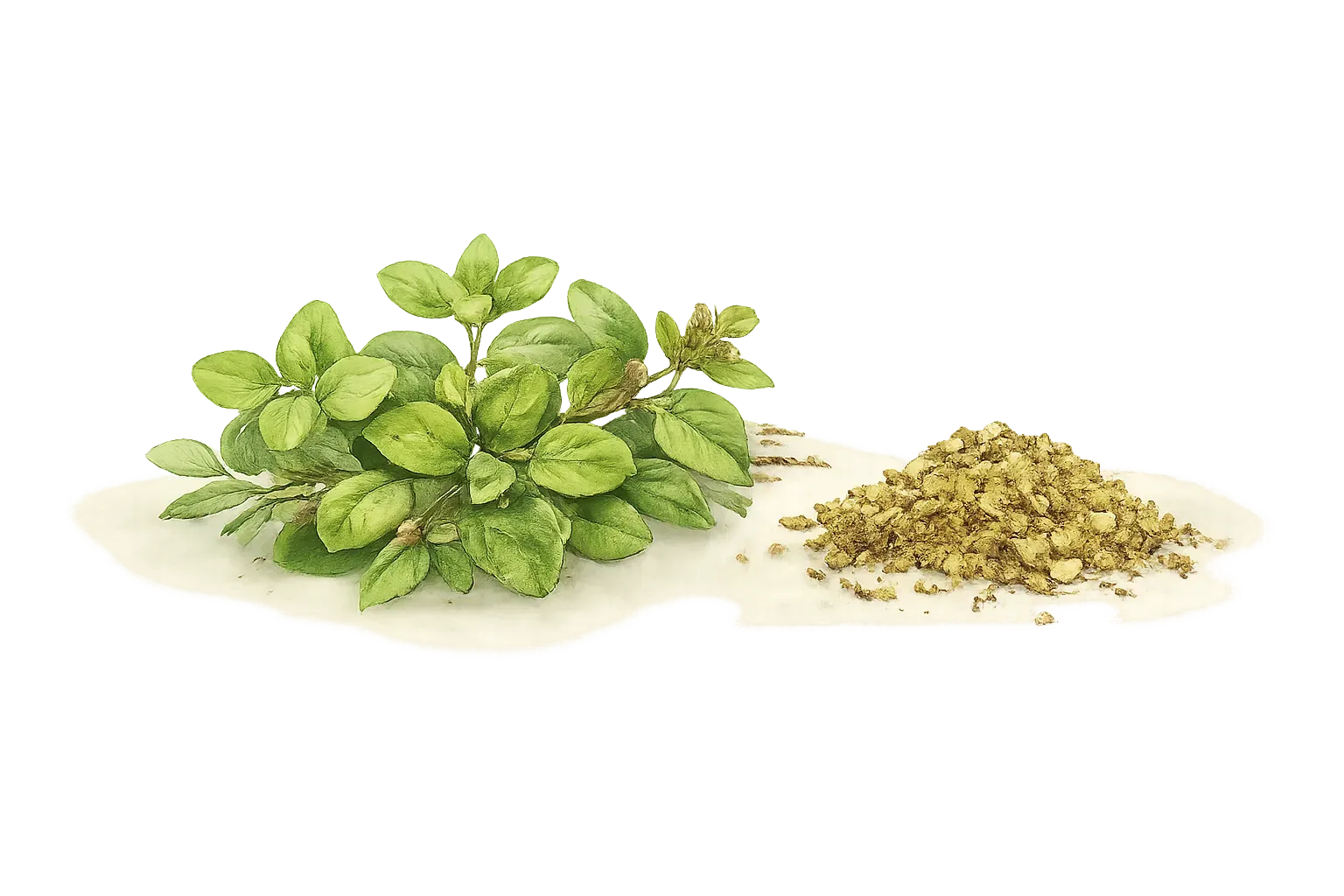
Also: dried oregano, dry oregano, fresh oregano
An aromatic herb with a warm, slightly bitter, peppery flavor, a staple of Italian, Greek, and Mexican cooking; used fresh but far more often dried, since drying concentrates its flavor rather than dulling it the way it does for many herbs. Mediterranean oregano and Mexican oregano come from different plant families and taste distinctly different -- Mexican oregano is more citrusy and grassy, closer to marjoram crossed with lemon verbena.
- oyster crackers
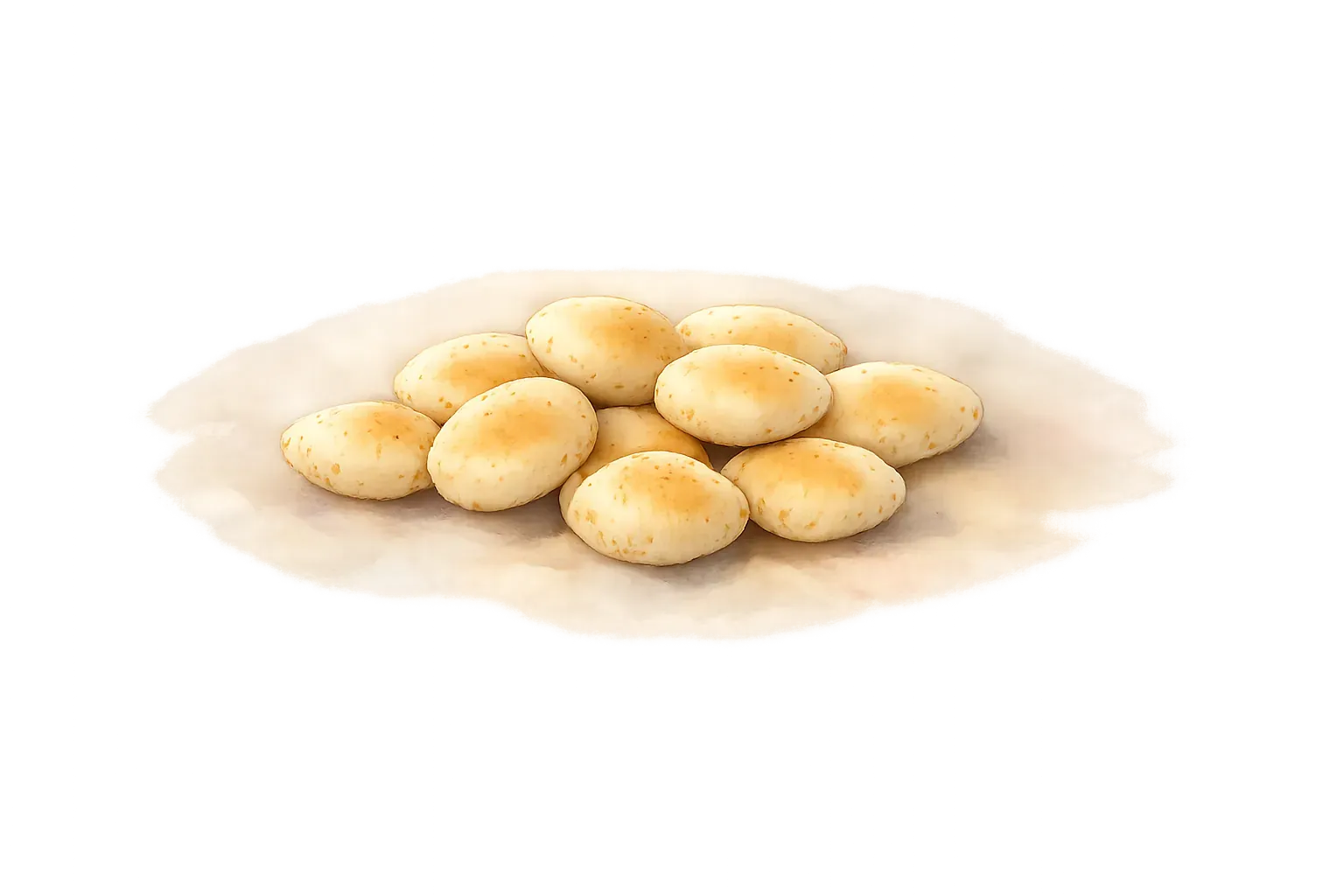
Small, round, unsweetened, oyster-shaped crackers, traditionally floated on soup or chowder or tossed with seasoning and baked into a snack mix. Their plain, faintly salty flavor and sturdy shape are what let them survive being ladled into hot broth without dissolving.
- oyster sauce
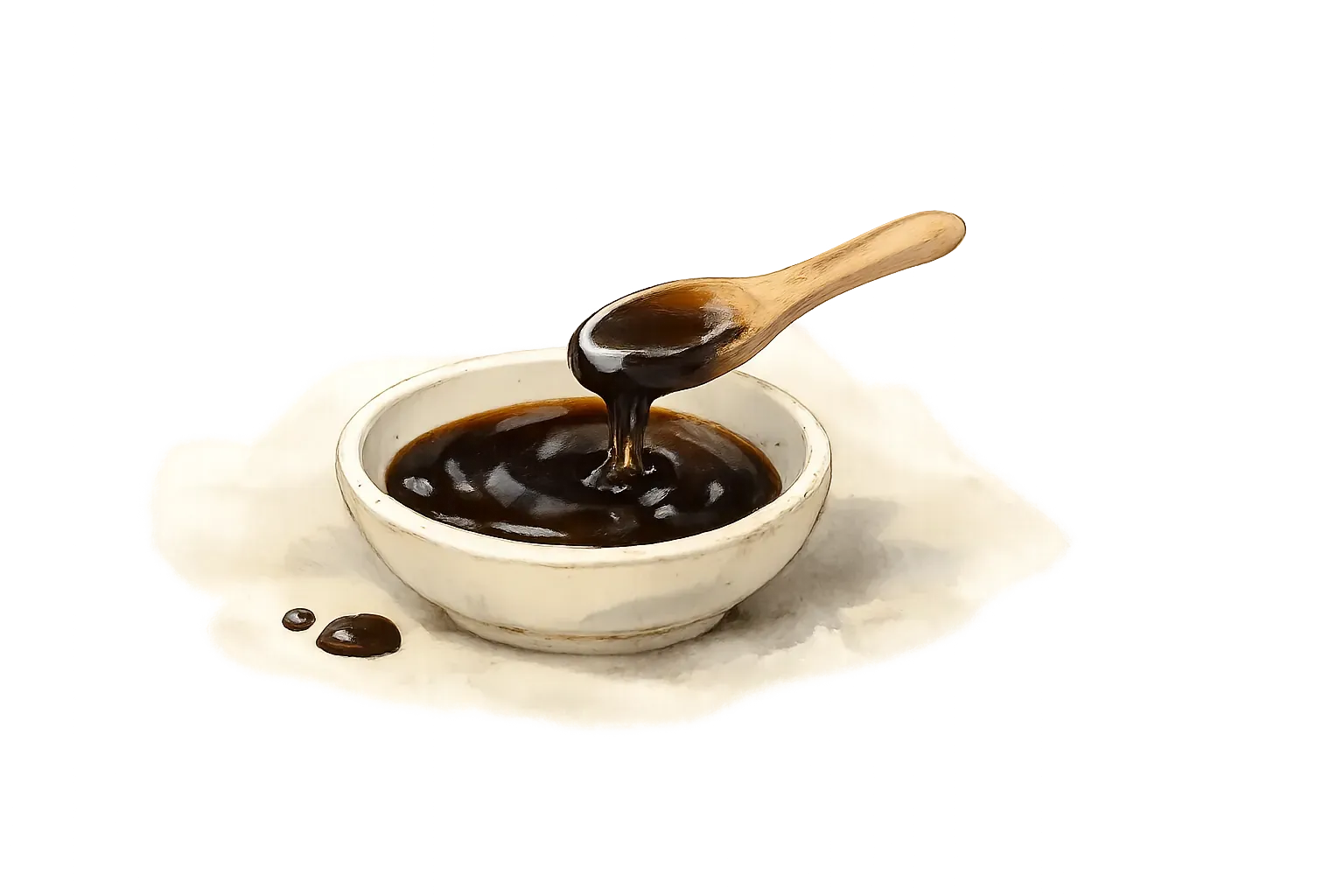
A thick, dark, savory-sweet sauce made from oyster extract along with sugar and seasonings, a common flavoring and glaze in Chinese cooking that adds deep umami without tasting distinctly of seafood. A little goes a long way -- it's meant to season a dish, not to be its primary sauce.
P
- palm sugar
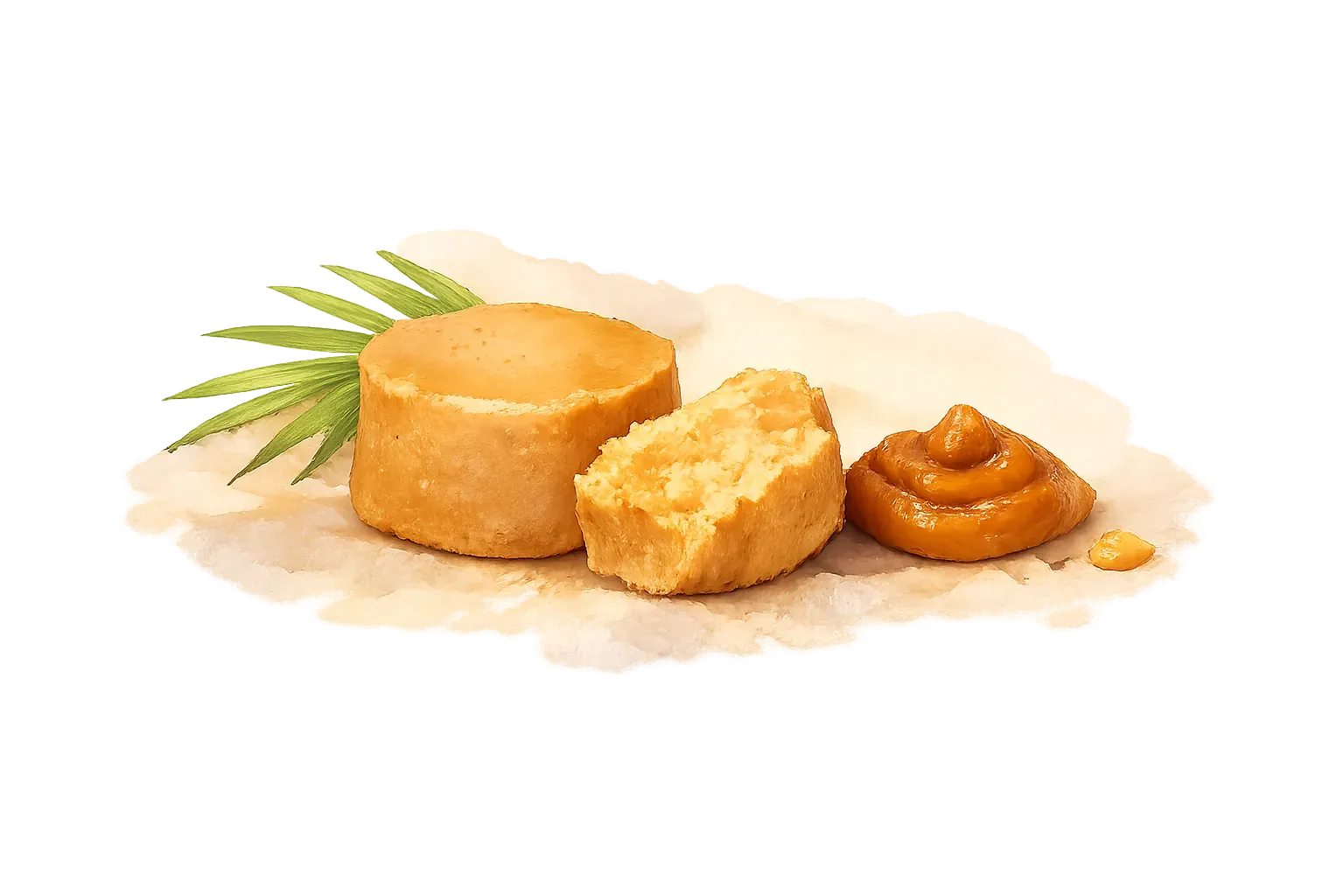
An unrefined sugar made from the sap of palm trees, sold as a paste or hardened block; has a deep, slightly caramel/butterscotch flavor, common in Southeast Asian cooking.
- Panang curry paste
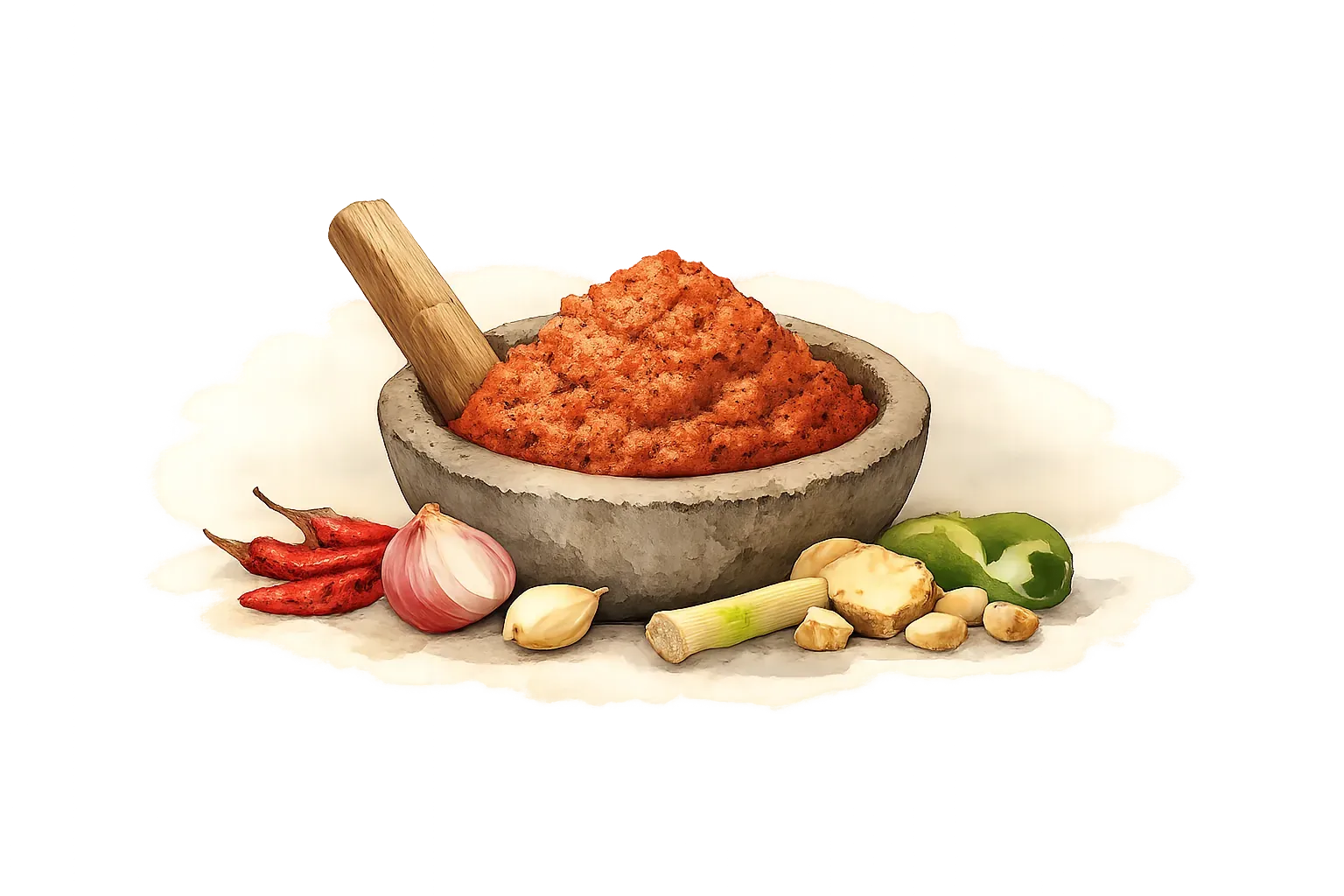
A Thai curry paste built on red chiles, aromatics, and roasted peanuts, milder and nuttier than red curry paste; the base for panang curry, usually cooked briefly in fat or the thick part of coconut milk before more liquid goes in. That short cooking step -- blooming -- dissolves the paste's aromatic compounds and rounds out its raw, sharp edge.
- pancetta
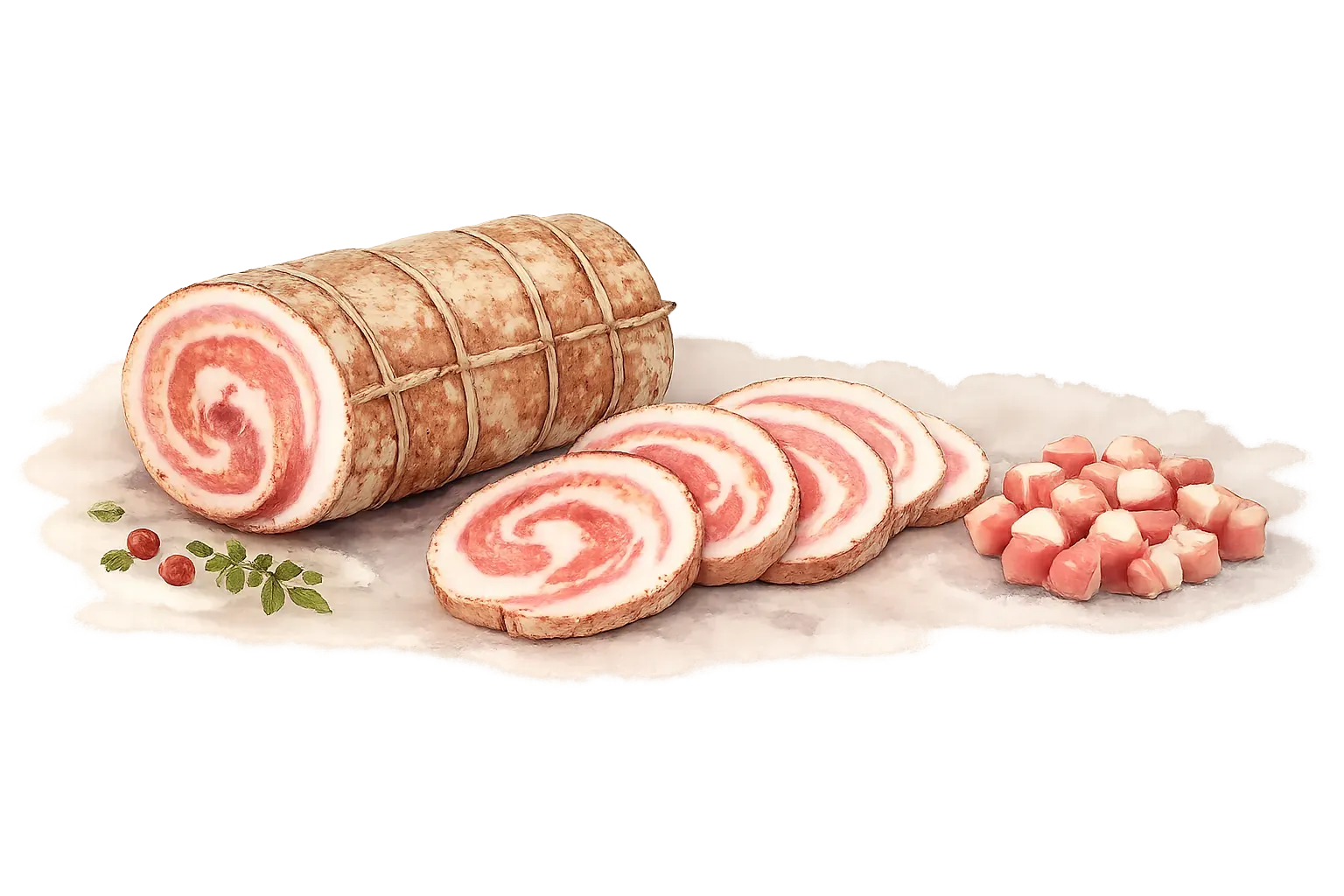
Italian pork belly cured with salt and spices but not smoked, then rolled into a log and sliced or diced; used as a savory, fatty flavor base similar to bacon but without bacon's smokiness. Because it's uncooked when sold, it needs to be cooked before eating, unlike some other cured meats sold ready-to-eat.
- panko breadcrumbs
Also: panko
Japanese-style breadcrumbs made from crustless white bread, processed into large, airy flakes rather than the fine, dense crumbs of standard breadcrumbs. Their larger, more irregular shape traps more air, giving anything coated or topped with them a noticeably lighter, crunchier texture once baked or fried.
- paprika
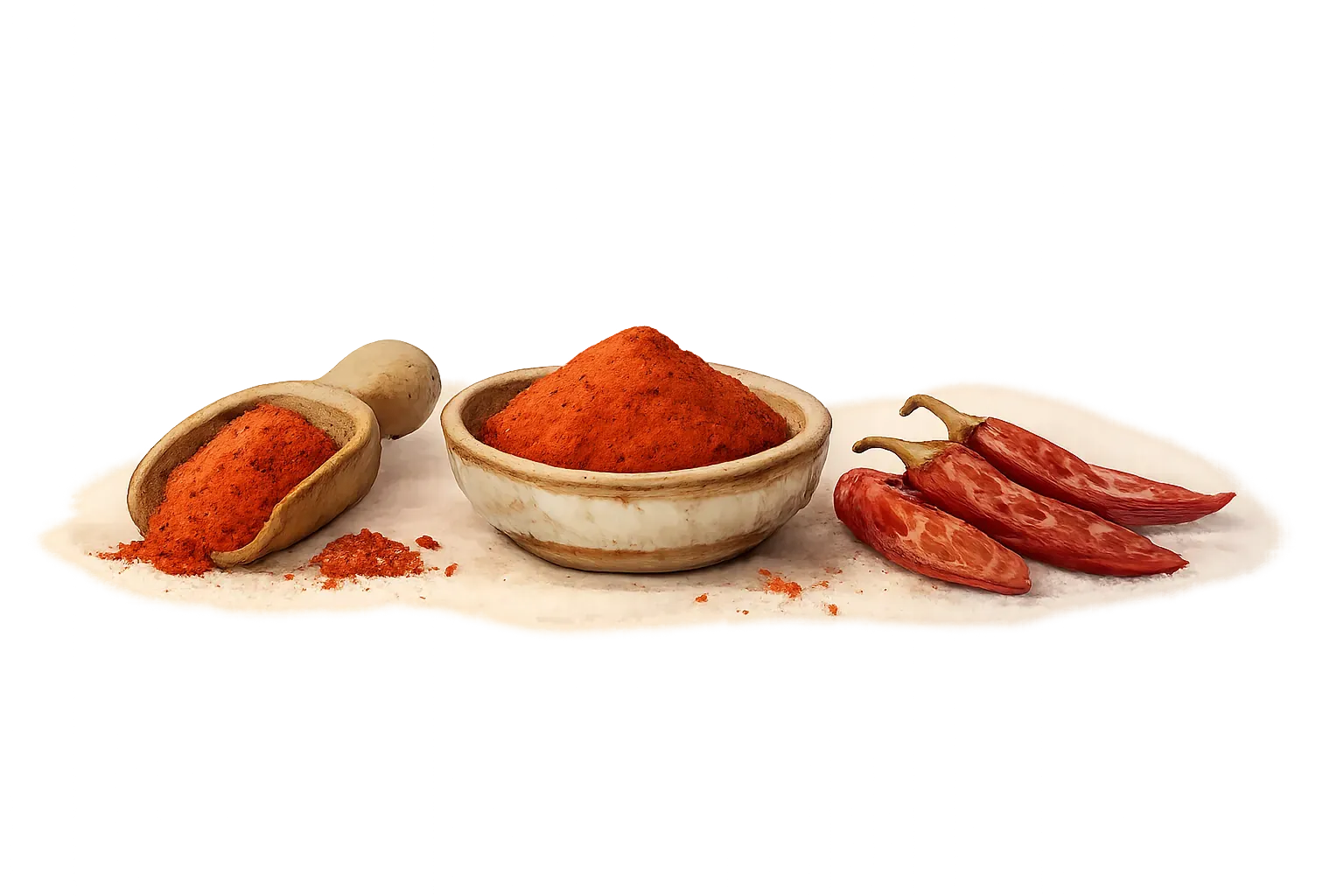
Ground dried red peppers, ranging from mild and sweet to hot depending on the peppers used, prized as much for the red color it adds as for its flavor in rubs, sauces, and stews. Smoked paprika is made from peppers dried over wood smoke and tastes distinctly different from sweet or hot paprika -- it's a separate flavor decision, not just a heat level.
More specific: smoked paprika
- Parmesan
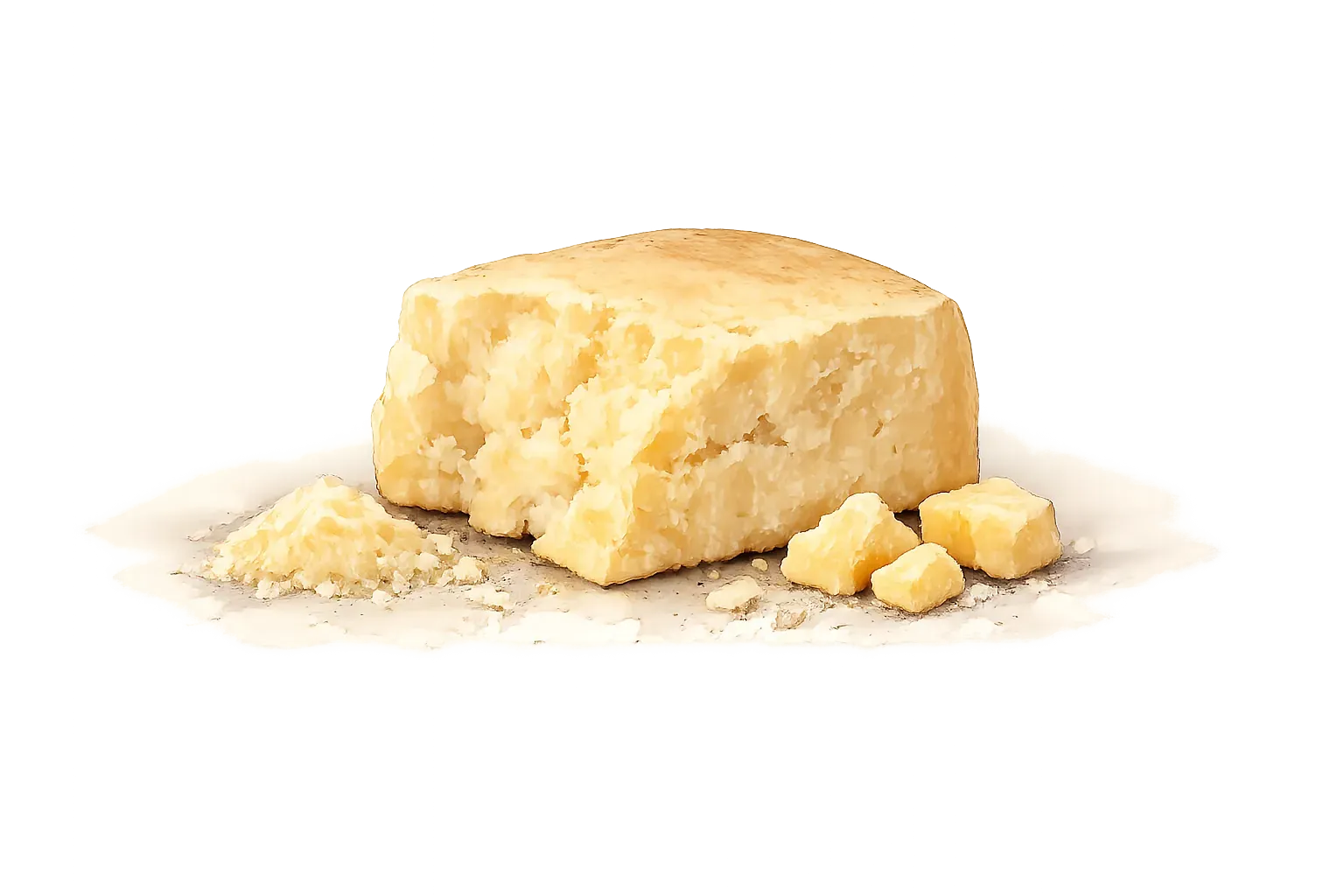
Also: Parmesan cheese
A hard, aged Italian cow's-milk cheese with a sharp, salty, savory flavor, grated over finished dishes or melted into sauces for depth. True Parmigiano-Reggiano is aged at least twelve months, which is what gives it its crystalline texture and concentrated umami -- younger or generic parmesan is milder and softer by comparison.
- parsley
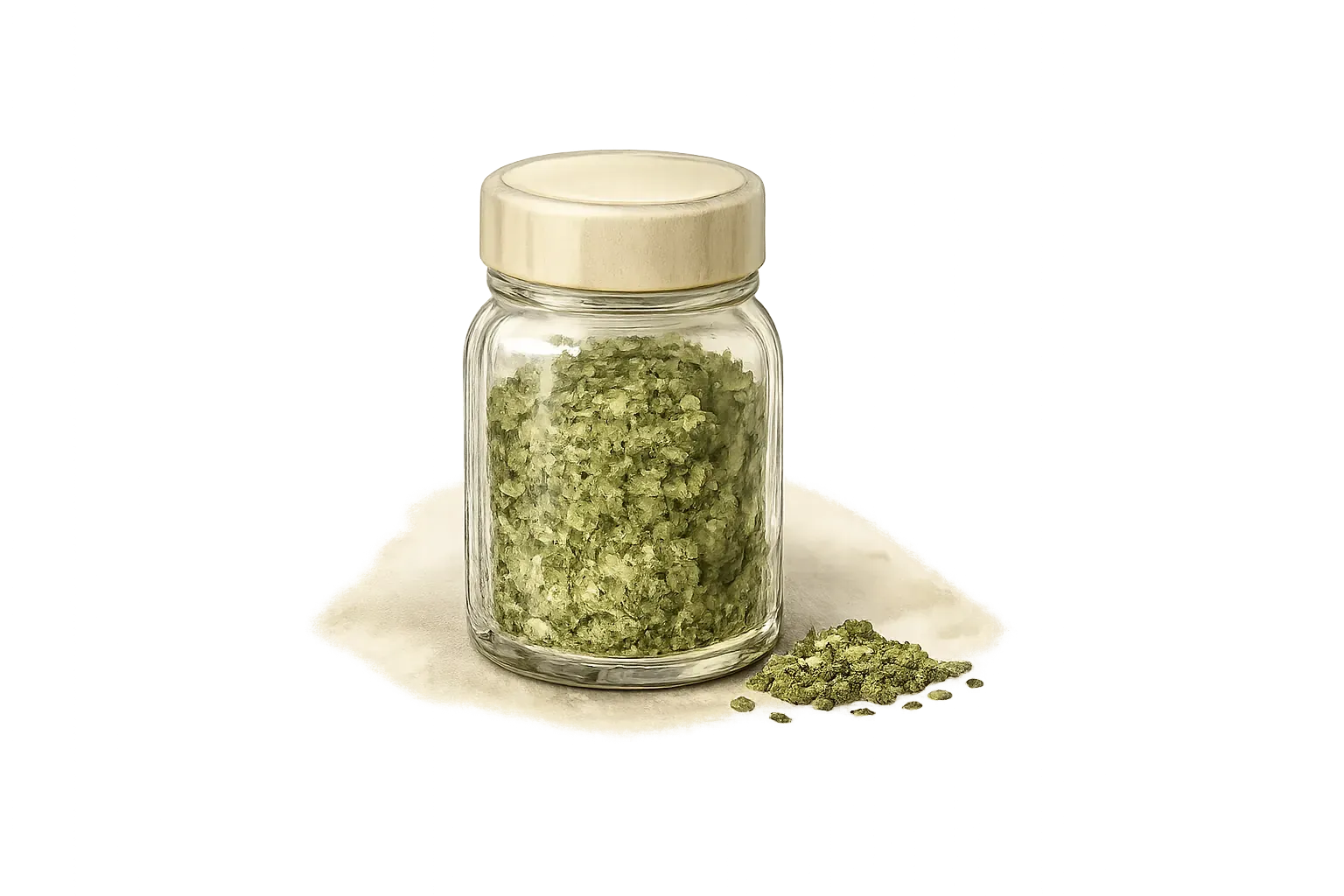
Also: dried parsley
Dried, crumbled parsley leaves sold in a small spice-aisle jar; milder and used in much smaller amounts than the fresh herb, and the default meaning of a bare, unqualified "parsley" in a recipe.
More specific: fresh parsley
- parsnip
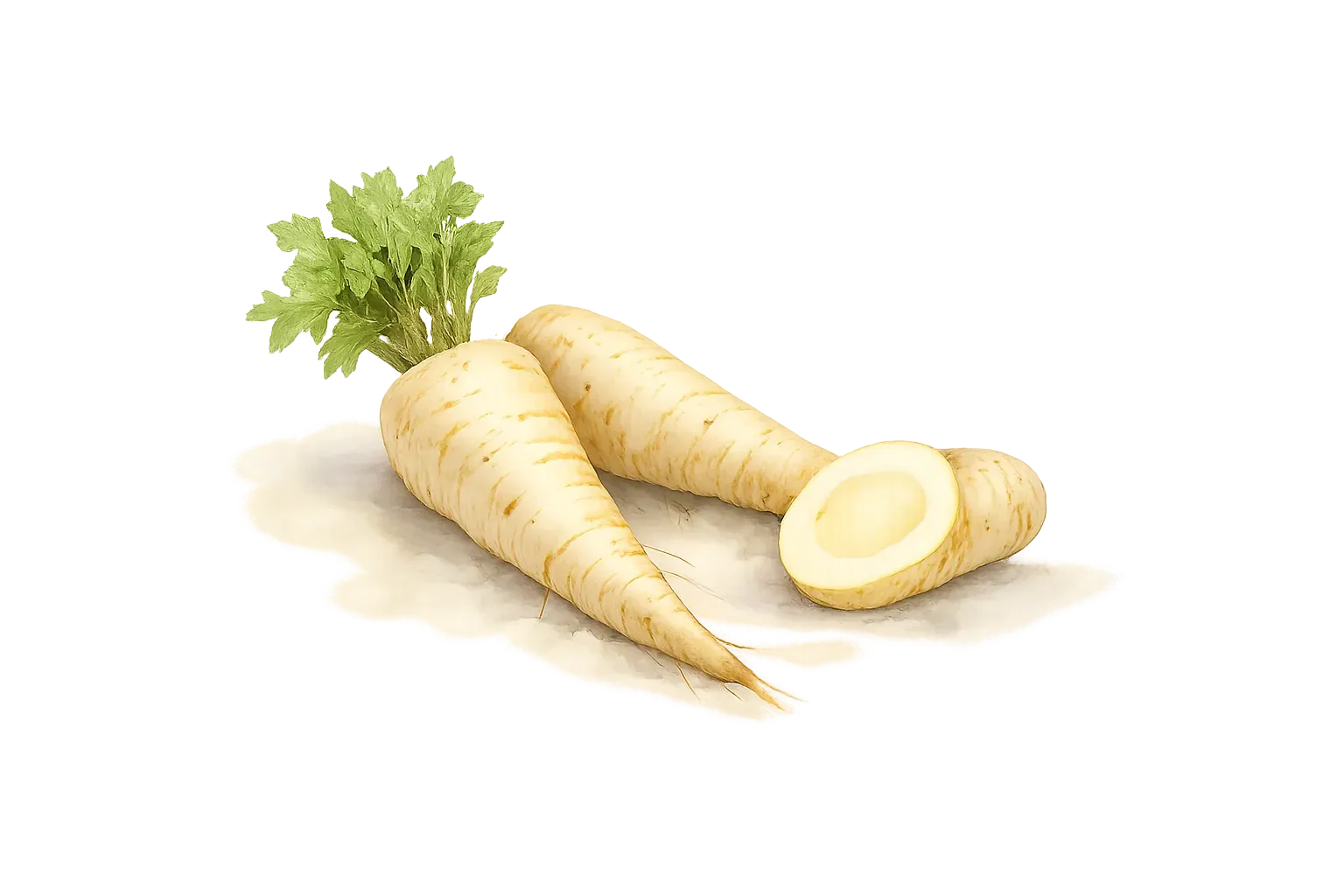
Also: Parsnips
A root vegetable related to the carrot, cream-colored with a sweet, slightly nutty, earthy flavor that becomes more pronounced with roasting. Its sugars caramelize readily, so it browns and sweetens faster than a similarly sized carrot at the same oven temperature.
- pasta
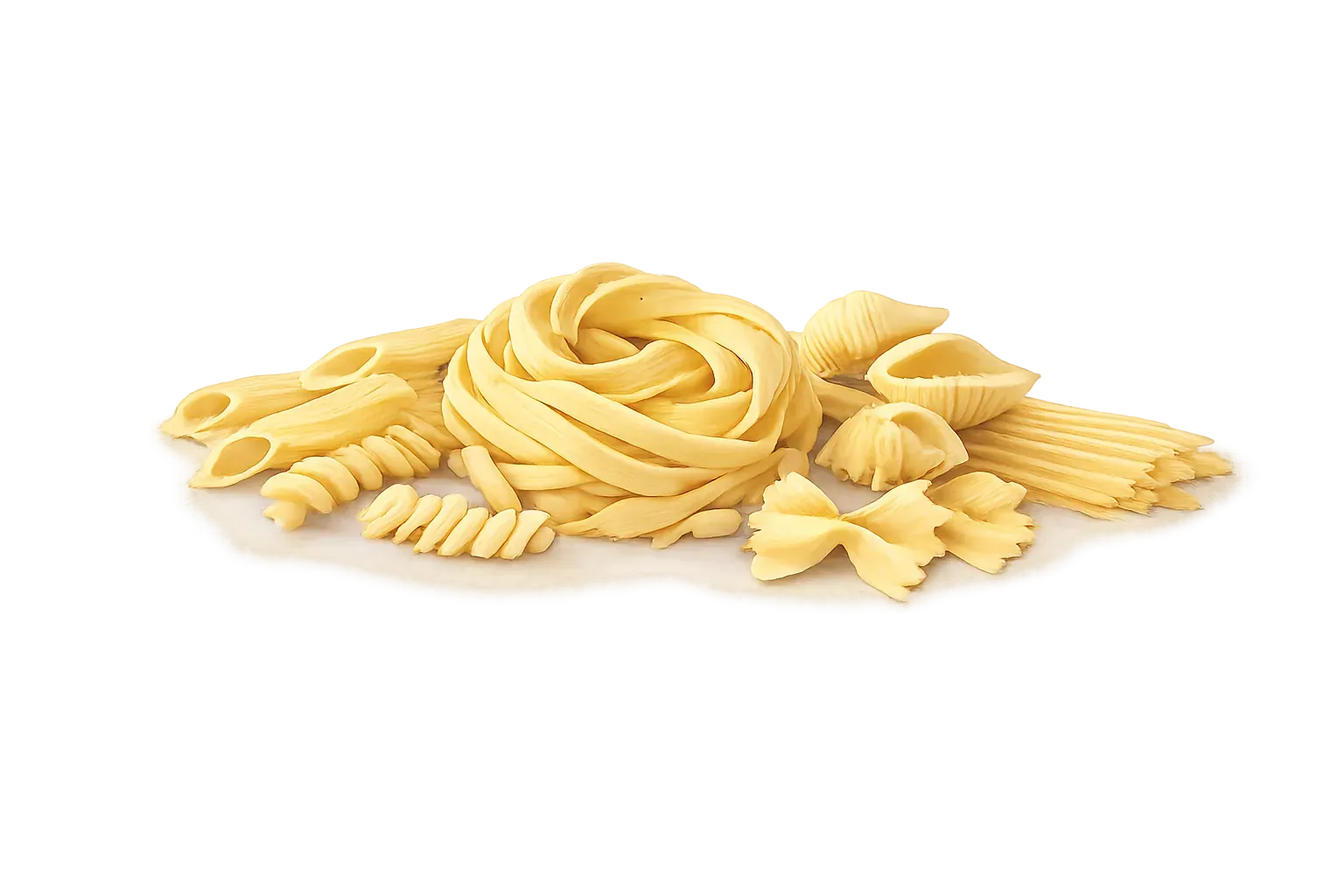
Also: package pasta
Dough made from wheat, often with egg, shaped into countless forms and either dried or cooked fresh; boiled and sauced, or baked into casseroles. Shape and thickness change more than looks -- a thicker or ridged shape holds more sauce, and cooking time varies enough between shapes that package directions aren't interchangeable.
More specific: jumbo pasta shells
- peanut butter
A spread made from ground roasted peanuts, smooth or chunky, eaten on its own and used in baking, sauces, and dressings for richness and nutty flavor. Conventional peanut butter is emulsified and stabilized so it stays smooth on the shelf; natural peanut butter has no added stabilizer and separates into oil and solids, needing a stir before use.
- peanuts
Also: Salted Virginia Peanuts
A legume, not a true nut, with a rich, roasted flavor, eaten salted as a snack or used in cooking, especially in Southeast Asian and Southern U.S. dishes for crunch and richness. Raw and roasted peanuts are cooked very differently -- a dish relying on raw peanuts is cooking them itself, so swapping in already-roasted peanuts changes both texture and timing.
- pearl couscous
A larger, round-pearl variety of couscous, also called Israeli couscous, toasted before drying and cooked more like pasta -- boiled in liquid until tender -- rather than the fine-grain steamed variety. The toasting step gives it a light nuttiness and chewier bite than standard couscous.
- pearl onions
Small, mild onions, typically about a half-inch to an inch across, cooked whole rather than chopped because their size lets them hold their shape through long braising or simmering. Much of their mildness comes from being harvested young rather than from a different species. They're used mainly for their shape and gentle sweetness rather than for pungency.
- pecans
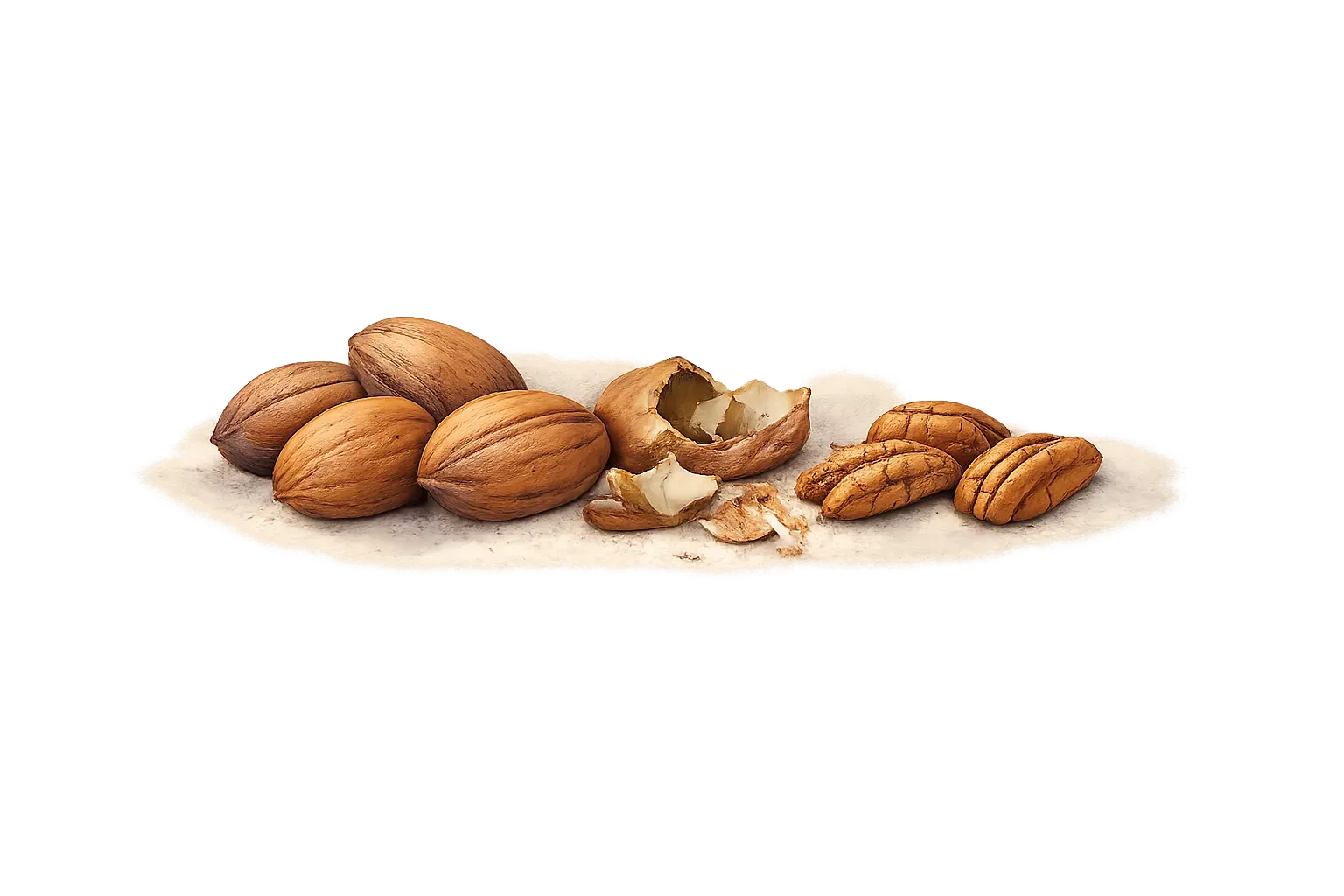
Also: chopped pecans
A rich, buttery tree nut, native to North America and especially associated with Southern baking -- pies, cobblers, and casserole toppings among them. Higher in fat than most other nuts, which gives it that characteristic richness but also means it goes rancid faster than a drier nut like an almond.
- pepper jack cheese
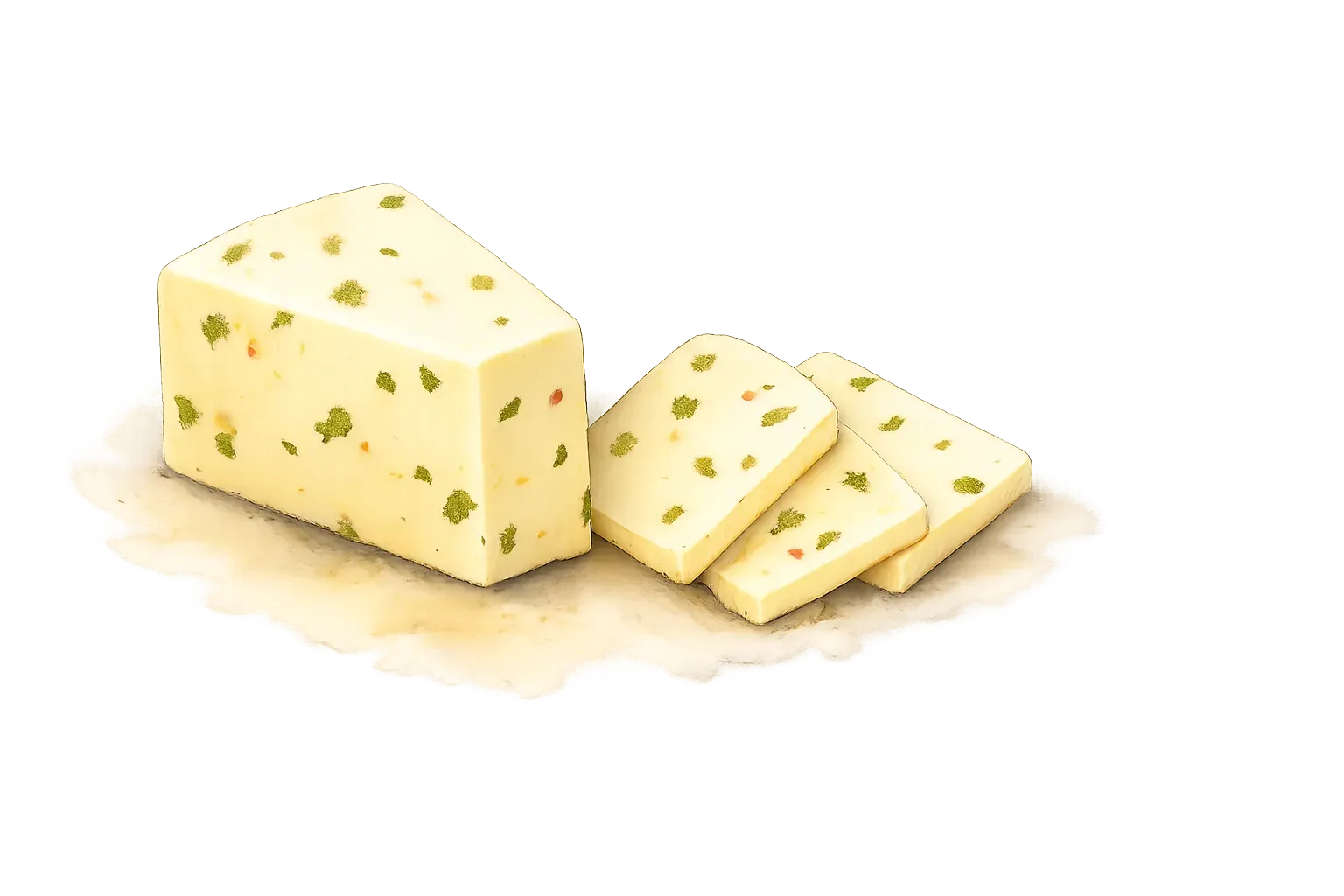
Also: pepper jack
Monterey Jack cheese with hot peppers, usually jalapeno, blended in, so it carries Jack's smooth, high-moisture melt along with scattered heat and flecks of pepper. The heat is generally mild -- closer to background warmth than a chile-forward bite.
- persimmon pulp
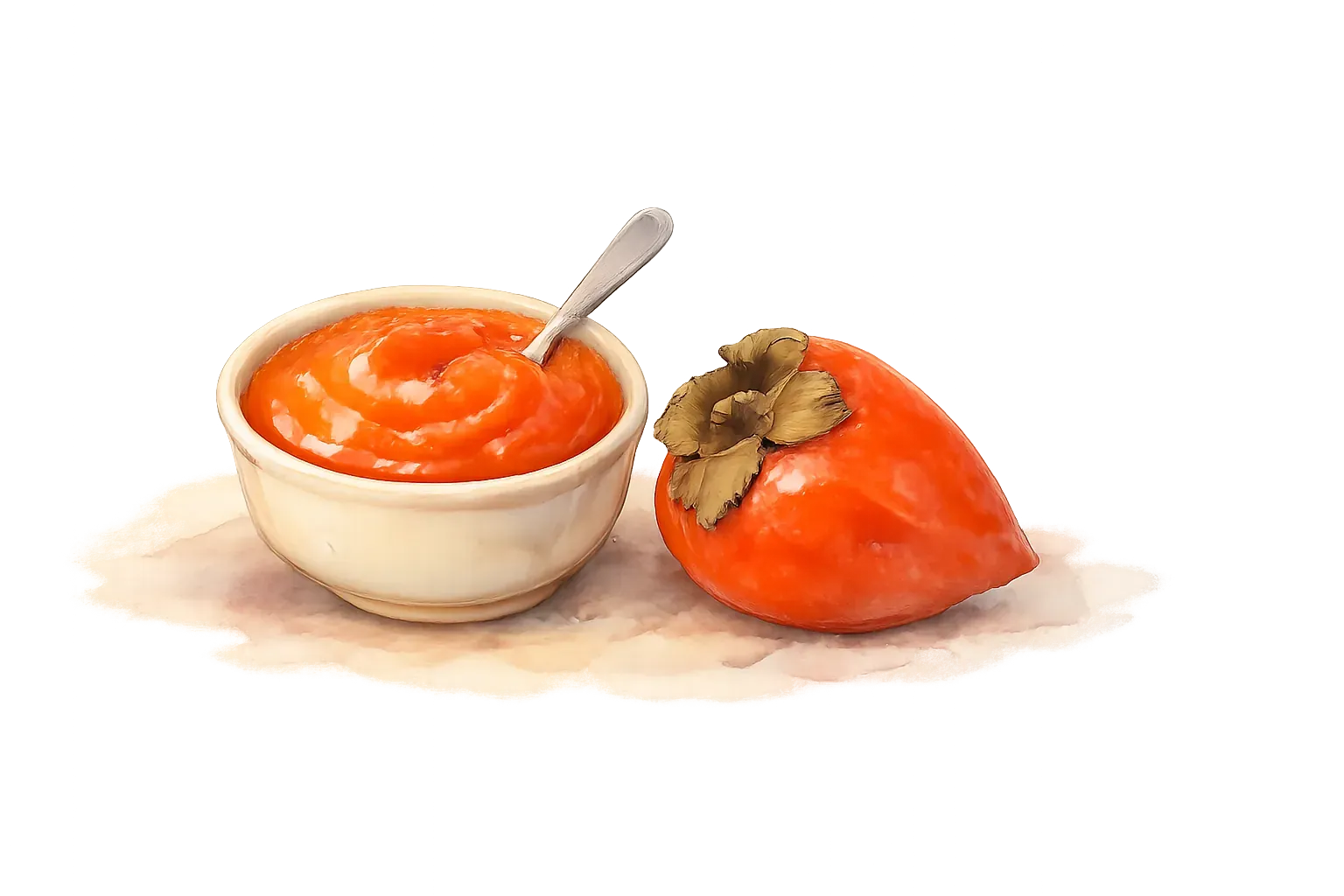
The soft, pureed flesh of a fully ripe persimmon, used in baking the way pumpkin or applesauce puree is -- for moisture, a mild honeyed sweetness, and a deep orange color. There are two common types of persimmon, and the distinction matters more for this ingredient than for most fruit: Hachiya (acorn-shaped, pointed at the bottom) is astringent and inedible until it ripens to an almost water-balloon softness, at which point it purees easily into pulp; Fuyu (flat-bottomed, tomato-shaped) is a non-astringent type eaten firm, sliced like an apple, and isn't the type used for pulp.
- pickles
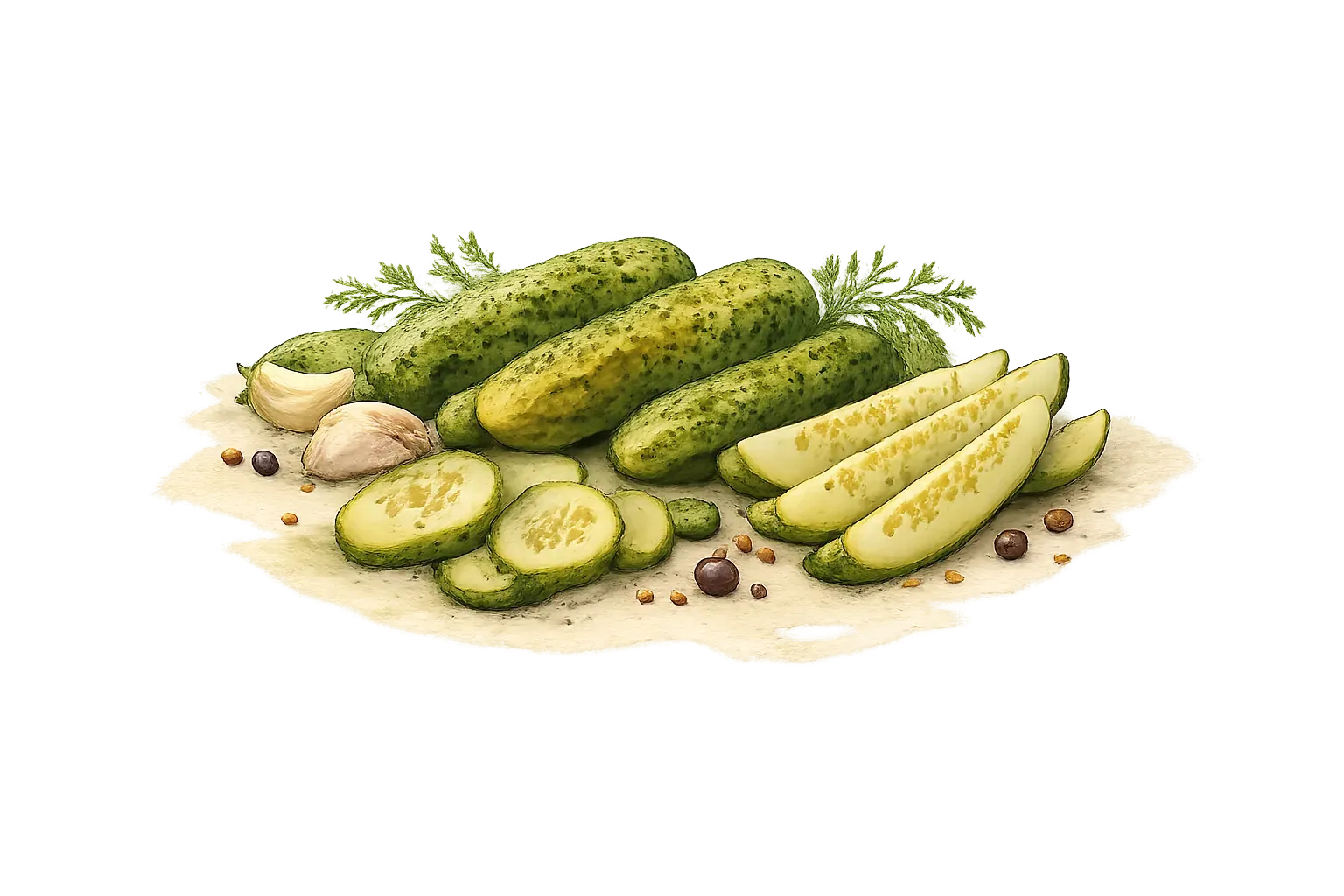
Also: Sliced Pickles
Cucumbers preserved in vinegar or brine, usually flavored with dill, garlic, and other spices, giving a sour or sour-sweet crunch. Sold whole, sliced into chips, or as spears, and the cut matters for how they get used at least as much as the flavor style does.
- pico de gallo
A fresh, uncooked Mexican-style salsa of chopped tomato, onion, jalapeno, cilantro, and lime juice, salted lightly and kept chunky rather than pureed. Its bright, crisp texture comes specifically from being uncooked and eaten soon after chopping -- the tomato and onion release liquid and soften within a few hours.
- pineapple
Also: pineapple chunks
A tropical fruit with sweet-tart, very juicy yellow flesh under a spiky rind, eaten fresh, grilled, or canned, and used in both sweet and savory dishes. It contains bromelain, an enzyme that breaks down protein -- useful for tenderizing a marinade, but also the reason fresh pineapple can keep gelatin from setting.
- pineapple juice
Juice pressed from pineapple, sweet with a distinct tang, used in marinades, drinks, and glazes. Like the fresh fruit, unpasteurized or fresh-pressed juice carries an active enzyme (bromelain) that can tenderize or even oversoften meat in a marinade; most bottled juice has been heat-treated and lacks this effect.
- pinto beans

A mottled brown-and-tan bean (the speckling fades to a solid brown once cooked) with an earthy, slightly nutty flavor and a creamy texture -- the standard bean in Tex-Mex and Southwestern cooking, used whole in soups and chilis or mashed for refried beans.
- piri piri sauce
Also: peri peri sauce, piri piri, peri peri
A hot sauce built around African bird's eye chile peppers, associated with Portuguese and Southern African cooking, typically blended with garlic, citrus, and oil alongside vinegar -- giving it more aromatic depth than a straight vinegar-and-pepper hot sauce, on top of its heat.
- poppy seeds
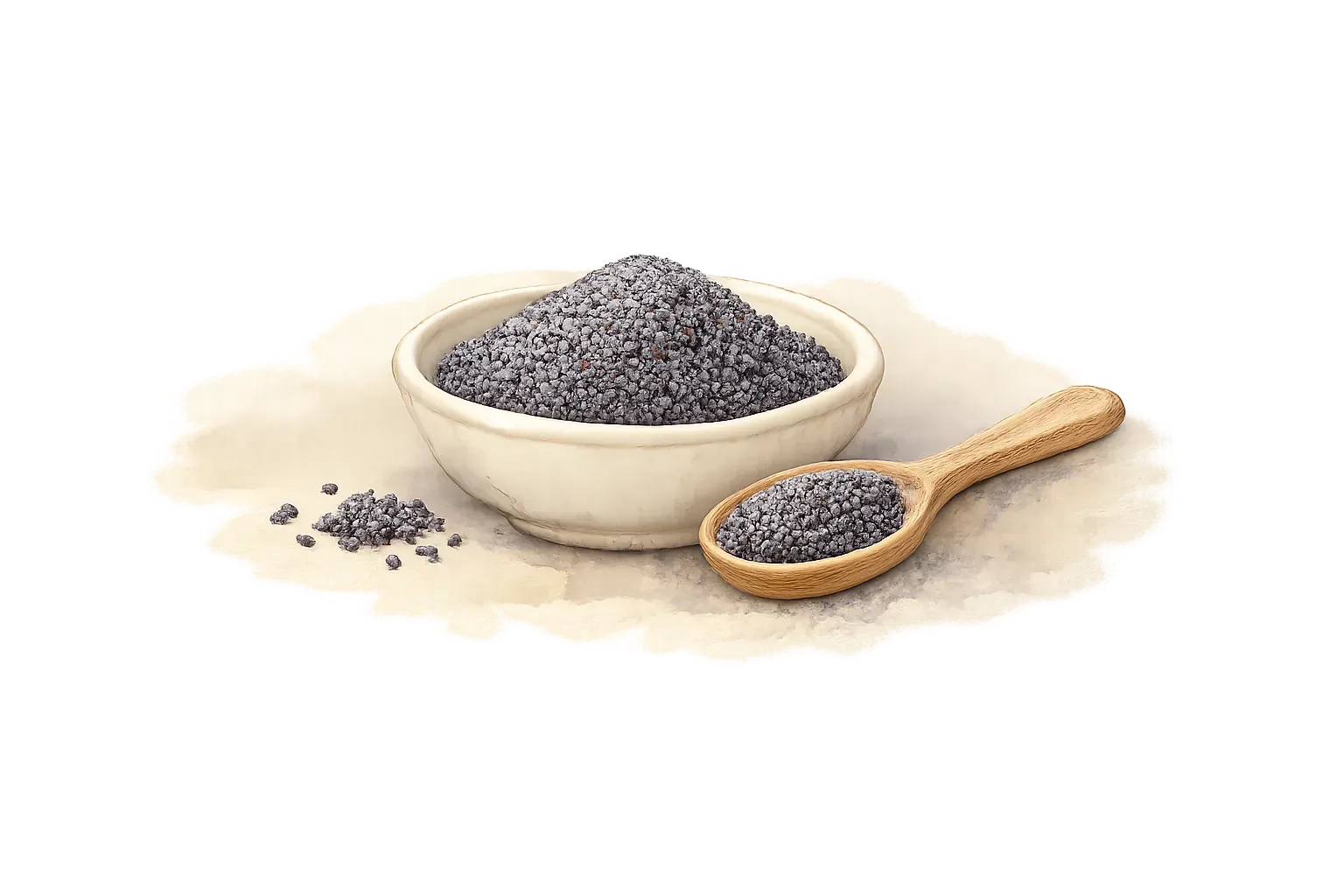
Tiny, crunchy seeds from the poppy plant, with a mild, faintly nutty flavor. Used both baked into breads and pastries for texture and speckled appearance, and mixed into savory butter or dressing bases -- like the poppy-seed-mustard spread used on baked ham sandwiches -- where they add a light crunch rather than a strong flavor of their own.
- pork and beans
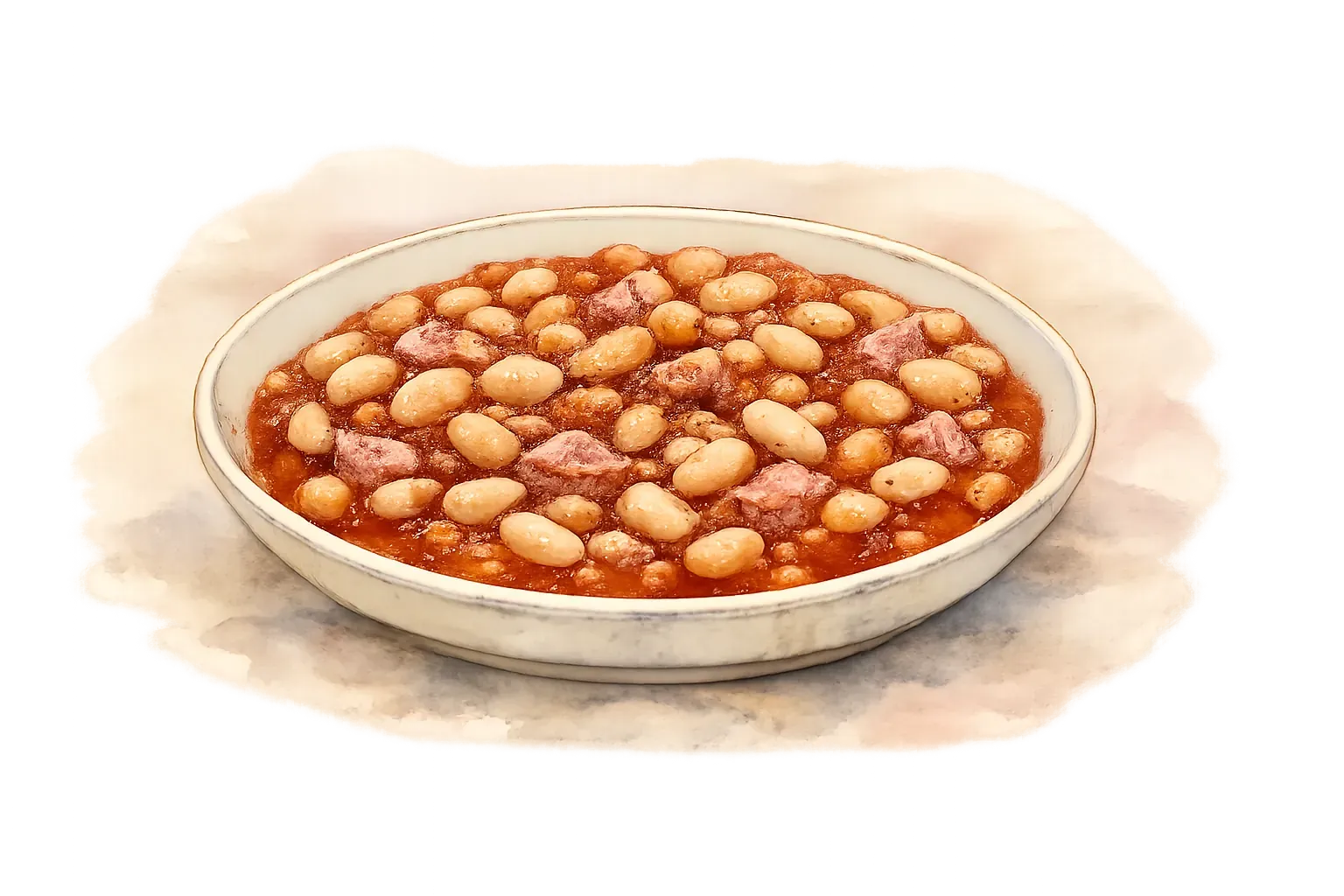
A canned dish of white or navy beans cooked in a sweet-savory tomato sauce with small bits of pork, sold ready to eat as a quick side or used as the starting base for a more elaborately doctored baked-bean dish. It's already fully seasoned and cooked, so it contributes both the bean and a good share of the finished flavor.
- pork belly
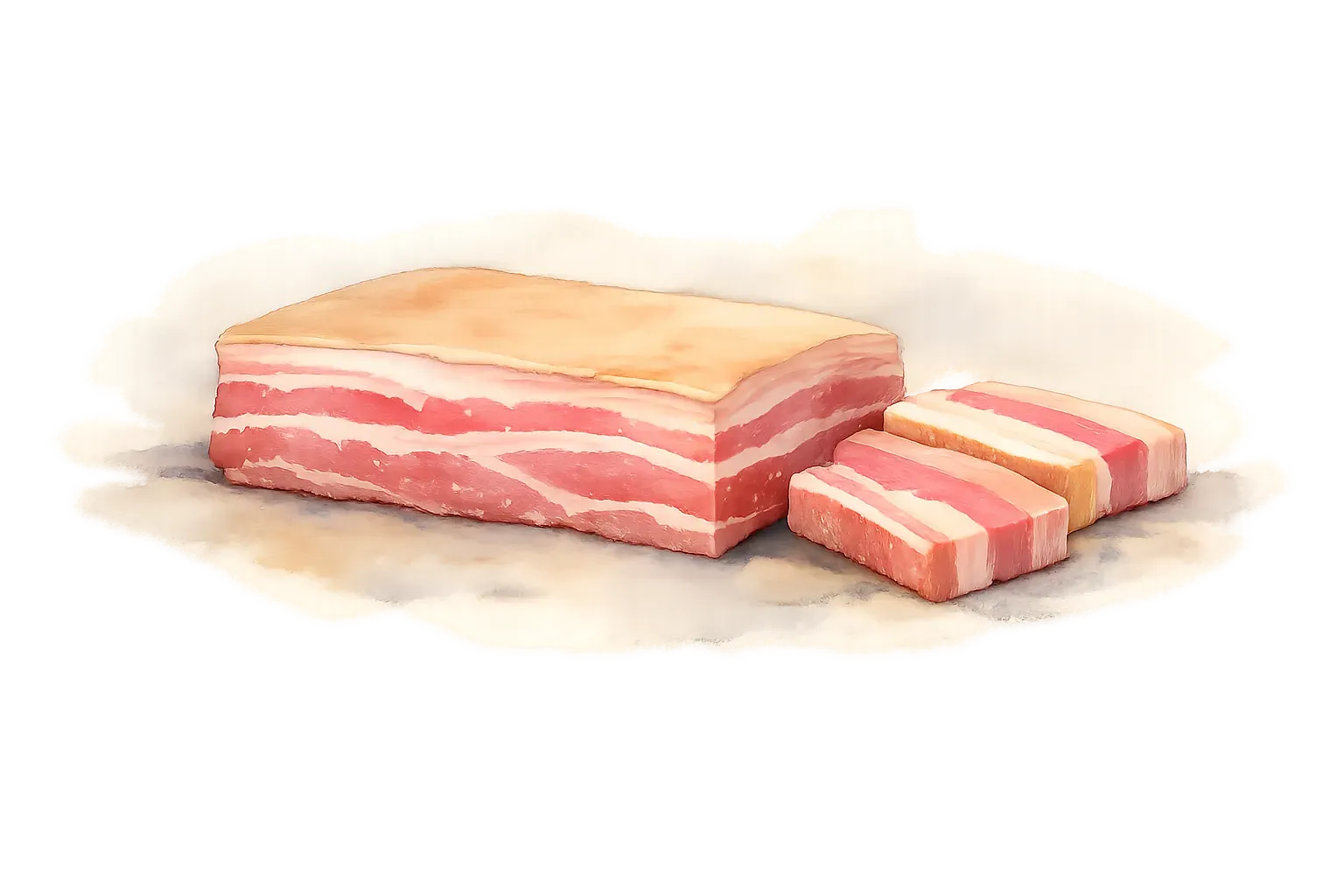
Also: Crispy Pork Belly
The fatty, boneless cut of pork from the belly -- the same cut bacon is made from, though sold fresh and uncured rather than cured and smoked -- typically rendered slowly until the fat turns tender and the skin or exterior crisps. Its high, even fat content is what makes it forgiving to cook low and slow, and what makes the skin capable of crisping dramatically.
- pork butt
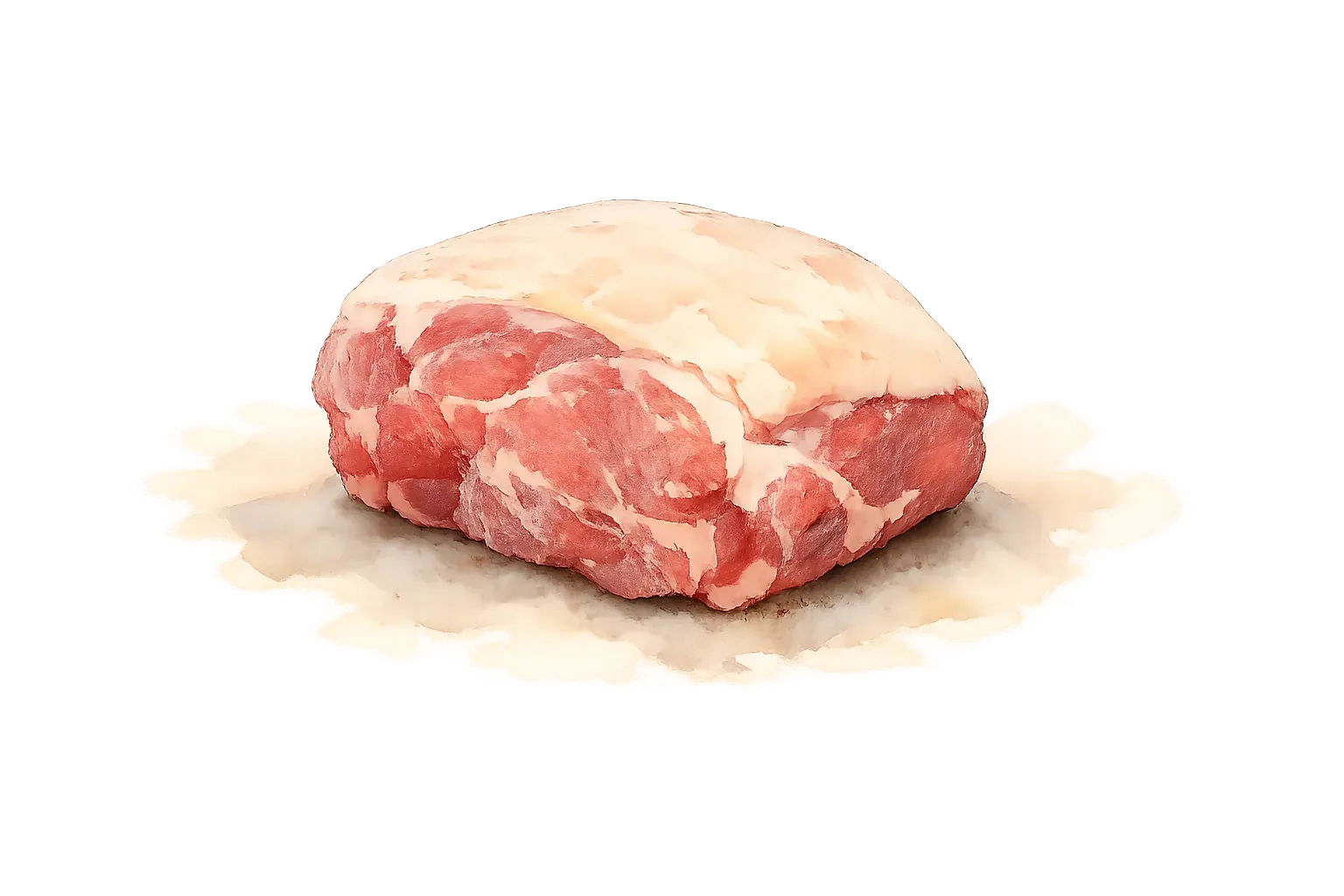
Also: Bone-In Pork Butt, pork shoulder, 4-6 lb Pork Butt/Shoulder, boneless pork shoulder, pork shoulder roast
A well-marbled, tough cut of pork from the upper shoulder (despite the name, not from the rear); suited to long, slow cooking -- braising, roasting, or smoking -- until tender enough to pull apart.
- pork chops
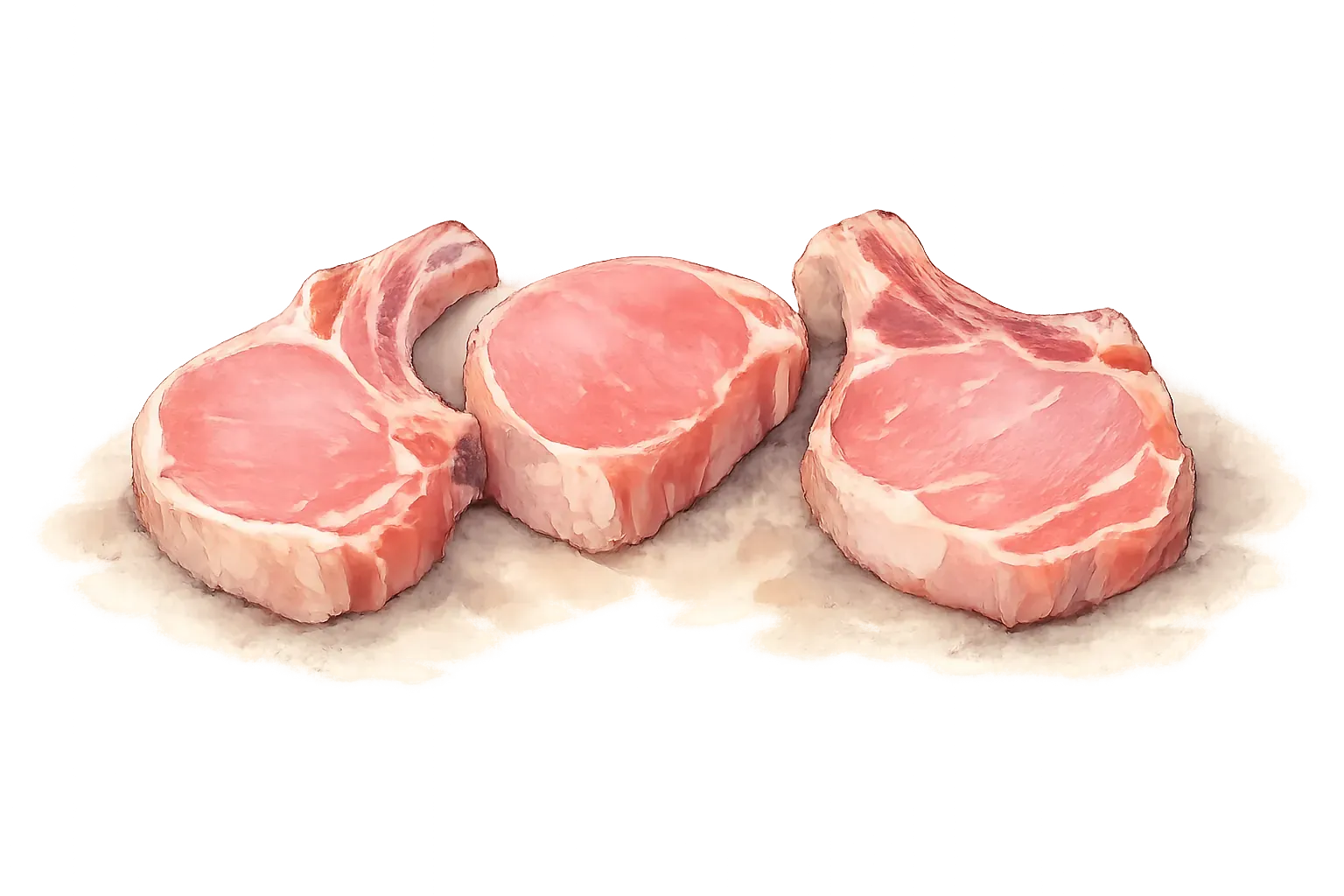
A cut from the pork loin, sold bone-in or boneless, that cooks quickly because it's fairly lean -- and dries out just as quickly if overcooked past medium. Thickness varies a great deal by package, and thickness is the single biggest factor in how fast a chop cooks through.
- pork jowl
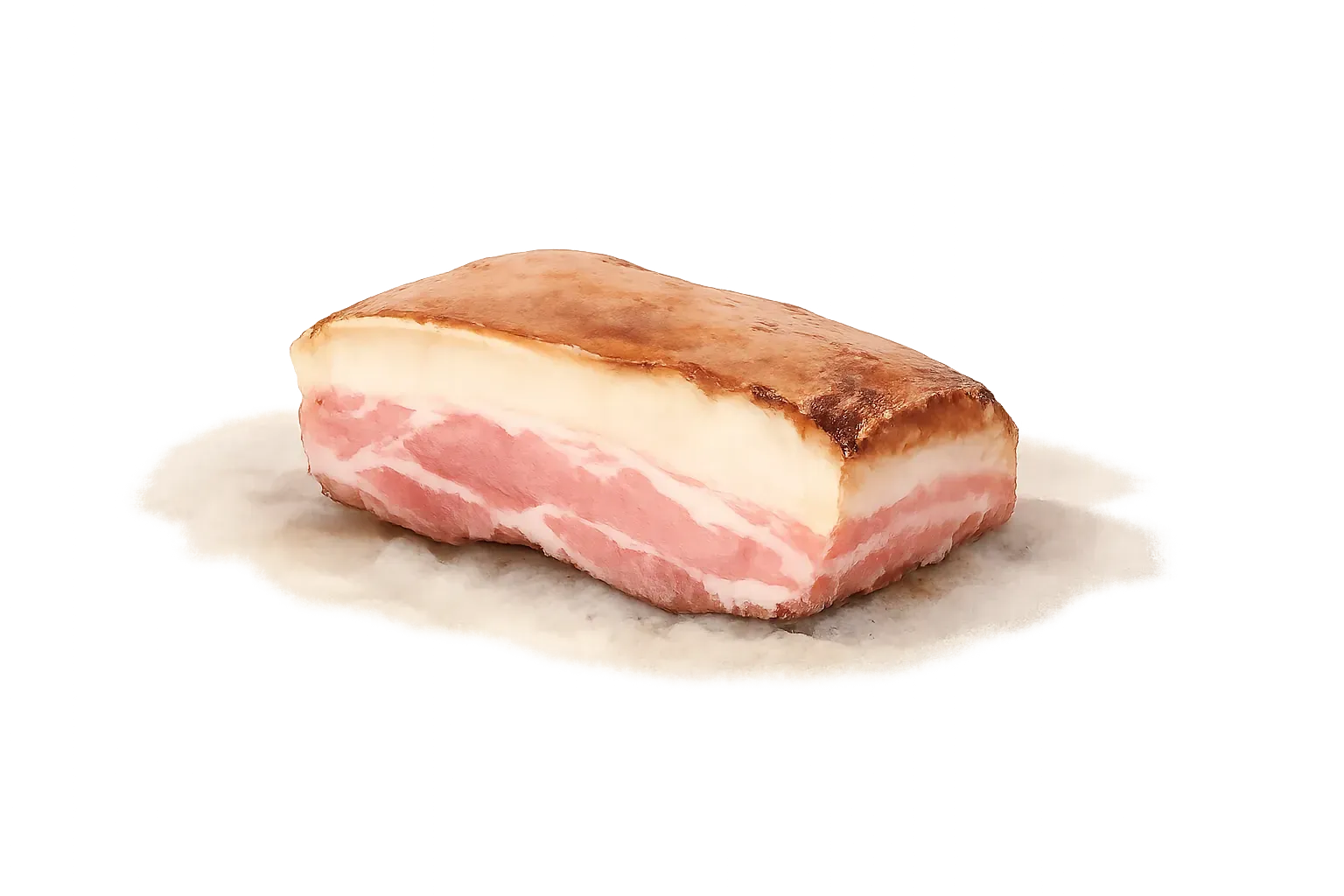
The fatty cut of pork from the cheek, often cured and smoked (similar to bacon); used to add rich, smoky flavor to beans, greens, and other slow-cooked dishes.
- potato
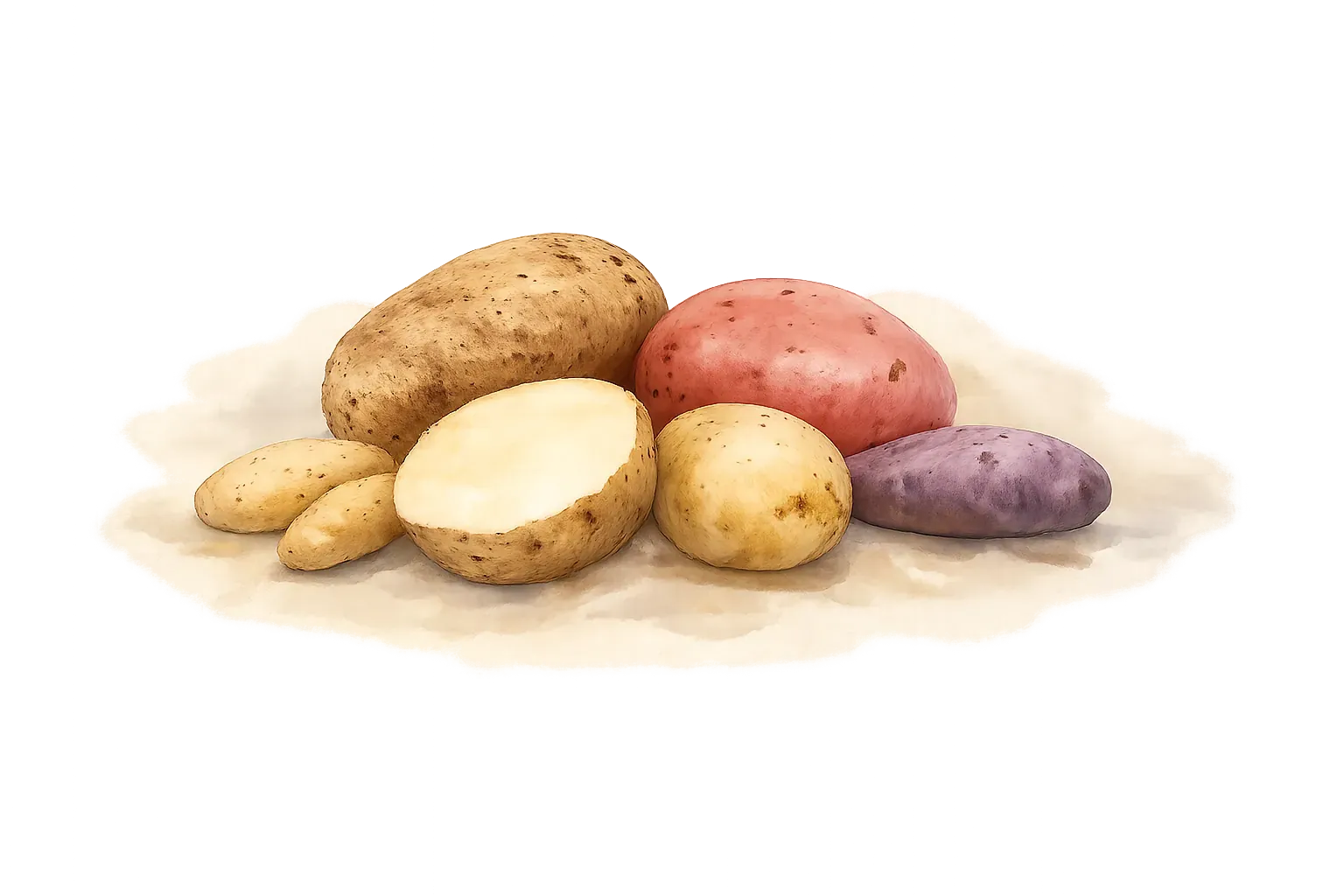
Also: Fingerling or new potatoes, Red Potatoes, Yukon Potatoes, new potatoes, potatoes [2 large russets = 4 cups], small red potatoes
A starchy root vegetable, sold in many varieties (russet, red, Yukon Gold, fingerling, etc.) that differ in starchiness and texture; boiled, roasted, fried, mashed, or baked.
More specific: hash browns, russet potato, Yukon gold potatoes
- presunto
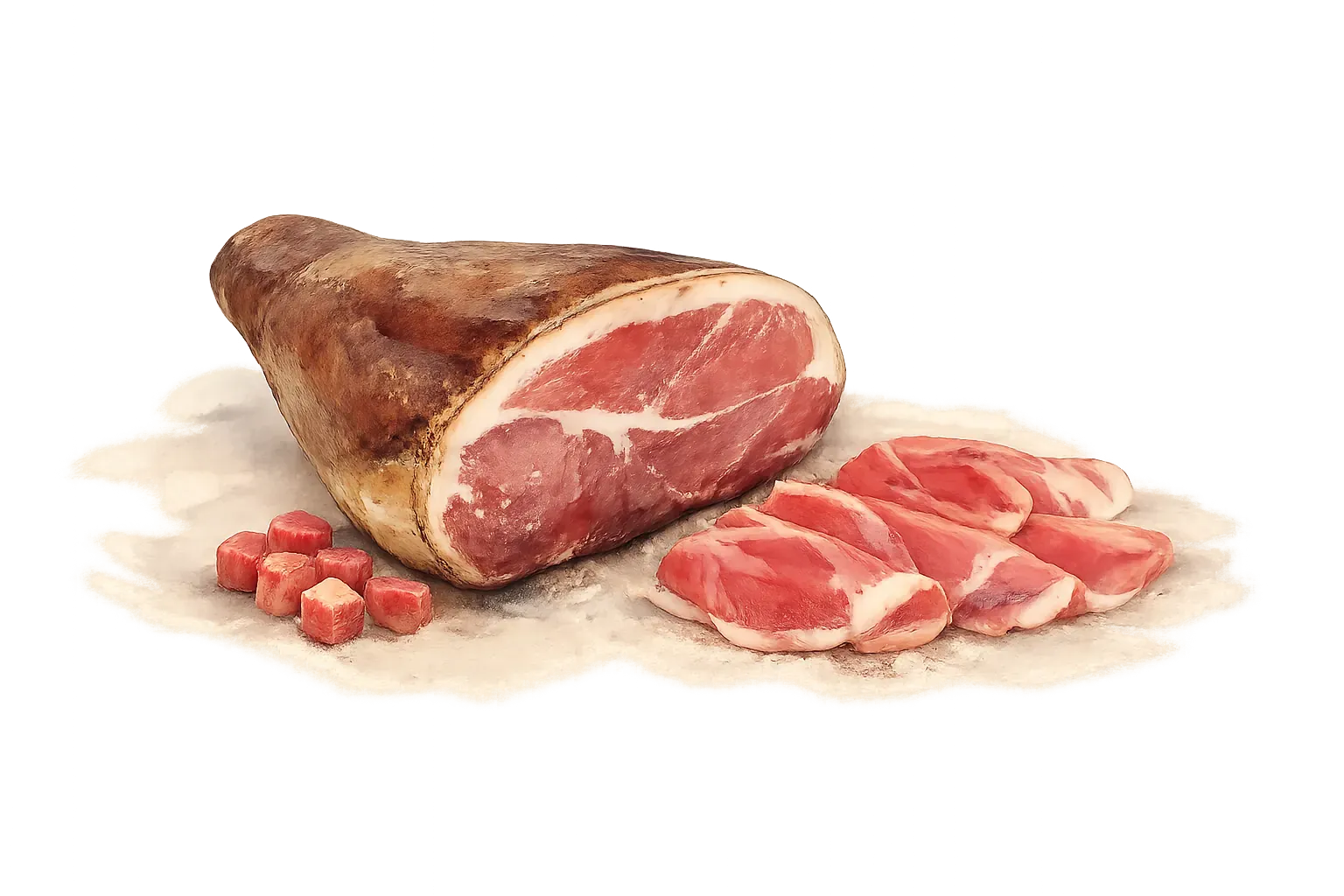
Also: Portuguese ham
A Portuguese dry-cured ham, made and aged similarly to Italian prosciutto or Spanish jamón -- salted, air-dried, and matured for months, giving it a firm texture and a concentrated, salty-savory flavor. Used both sliced thin as a cured meat on its own and diced or cubed as a flavor base browned at the start of soups, beans, and stews, where it works like a smokier, more intense bacon.
- processed cheese food
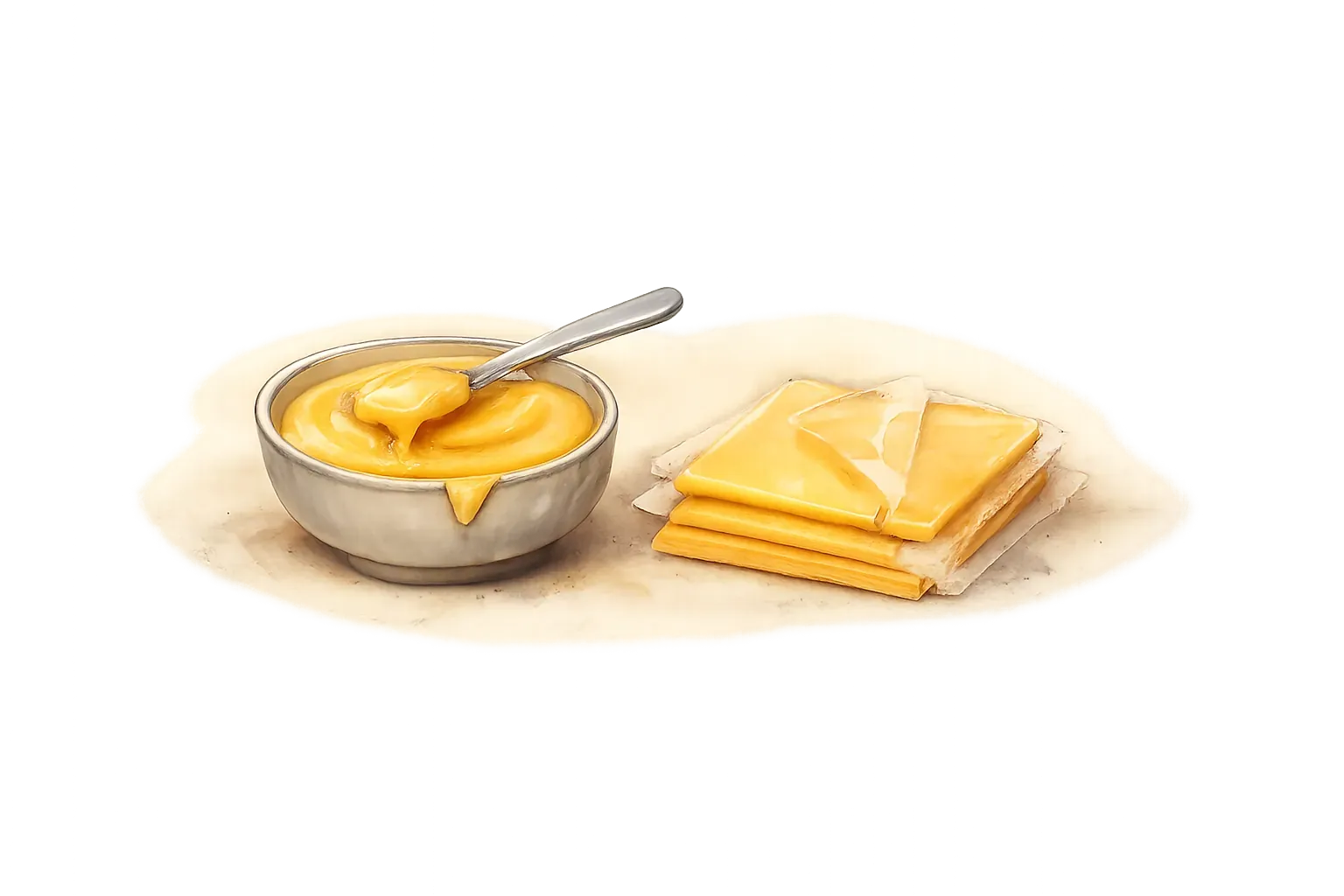
Also: loaf processed cheese food, Velveeta
A blend of real cheese with emulsifying salts and other dairy ingredients, engineered to melt into an extremely smooth, glossy result rather than the stringier or oilier melt natural cheese can give. Used specifically where uniform creaminess matters more than complex cheese flavor -- classic examples are nacho-style cheese sauces and individually wrapped cheese slices.
- provolone
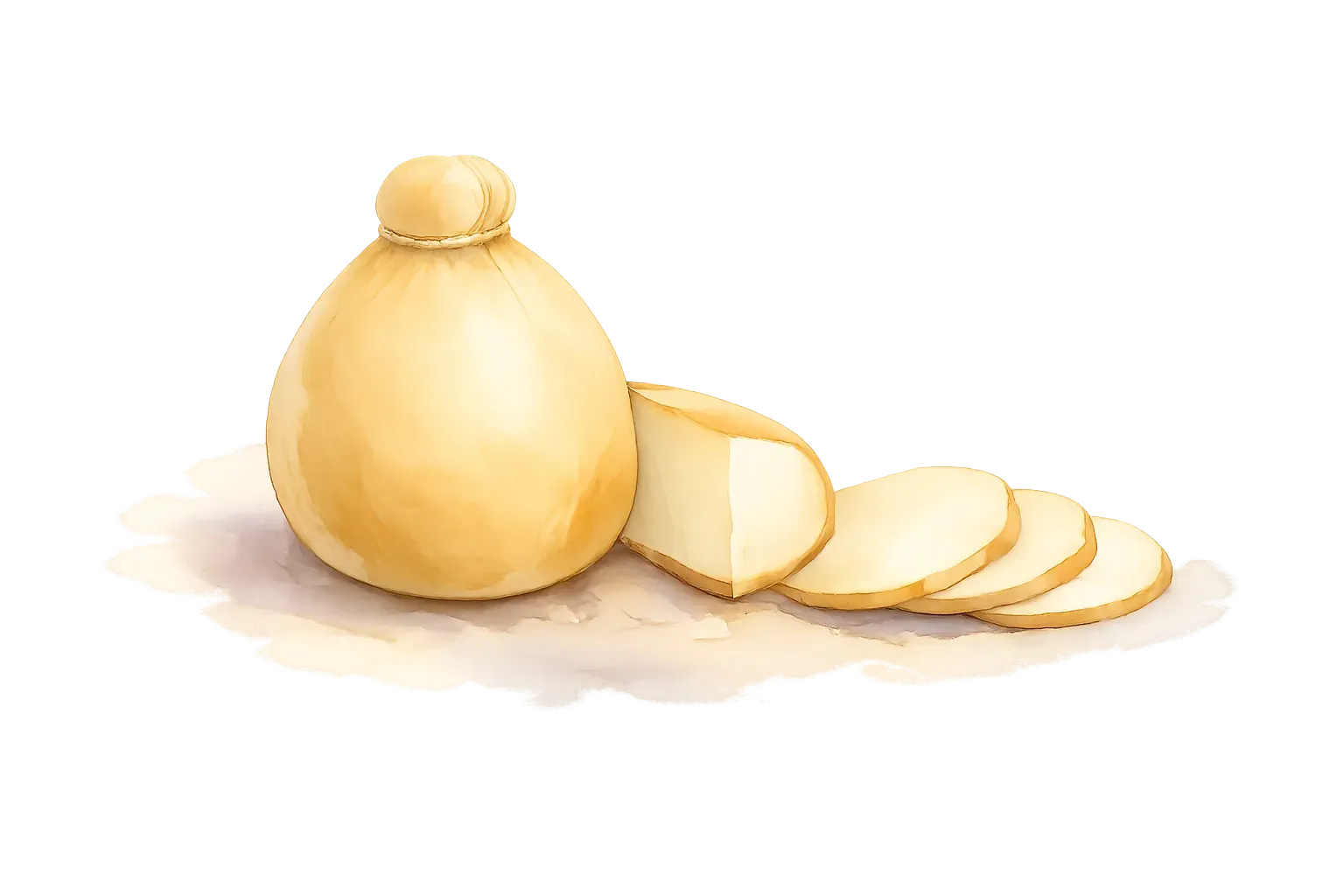
A semi-hard Italian cow's-milk cheese, mild and milky when young (dolce) and noticeably sharper and firmer as it ages (piccante), melting smoothly in either form. Common on sandwiches and layered into subs for its meltability plus its stronger flavor than mozzarella.
- pumpkin puree
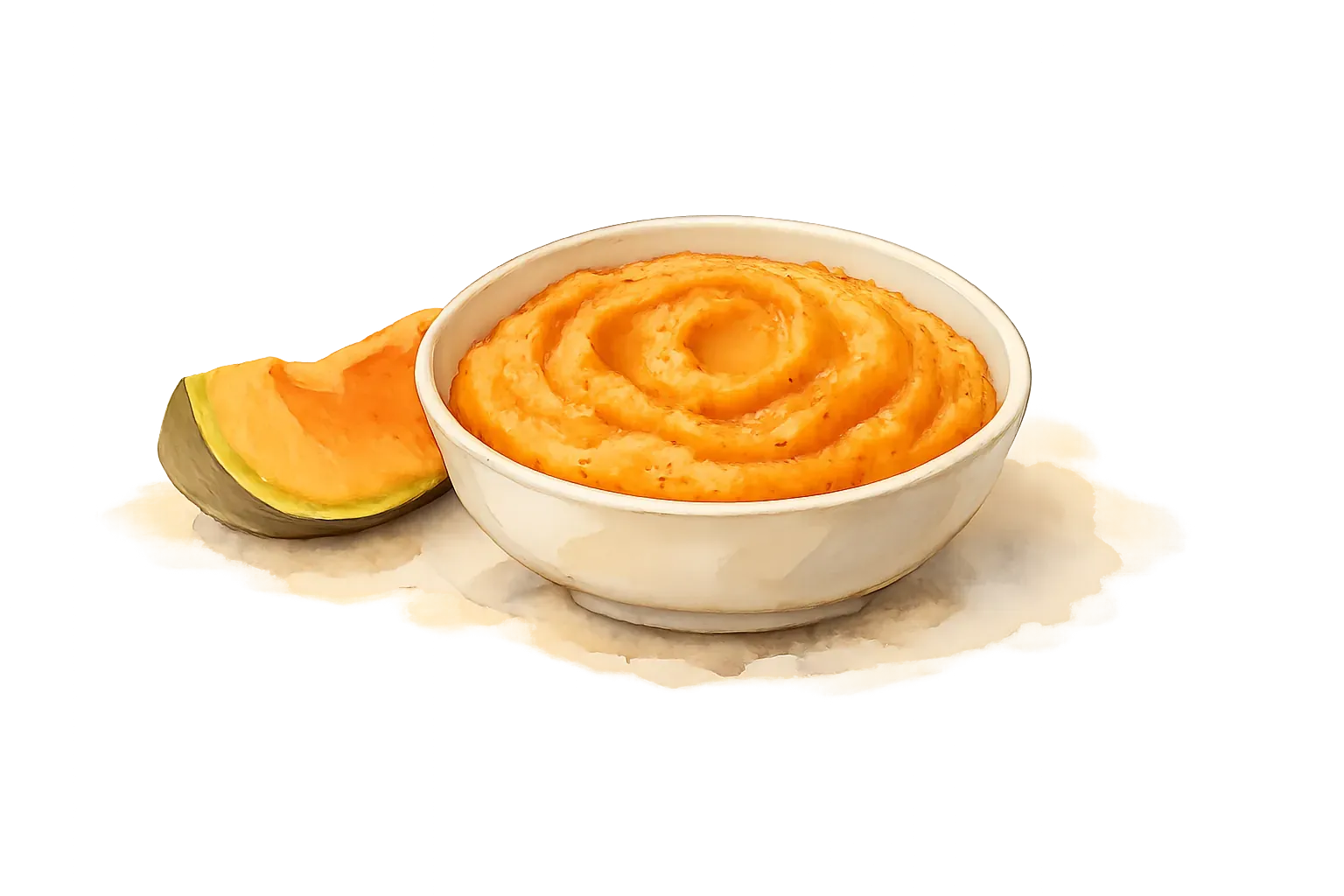
Also: canned pumpkin
Cooked, mashed pumpkin (or, in most canned versions, a similar winter squash blend) with nothing added -- not the same as pre-sweetened, pre-spiced "pumpkin pie filling," which has sugar and spices already mixed in. Used both in sweet baking and, less obviously, in savory soups and stews, where its earthy sweetness and thick body round out a dish.
- pumpkin seeds
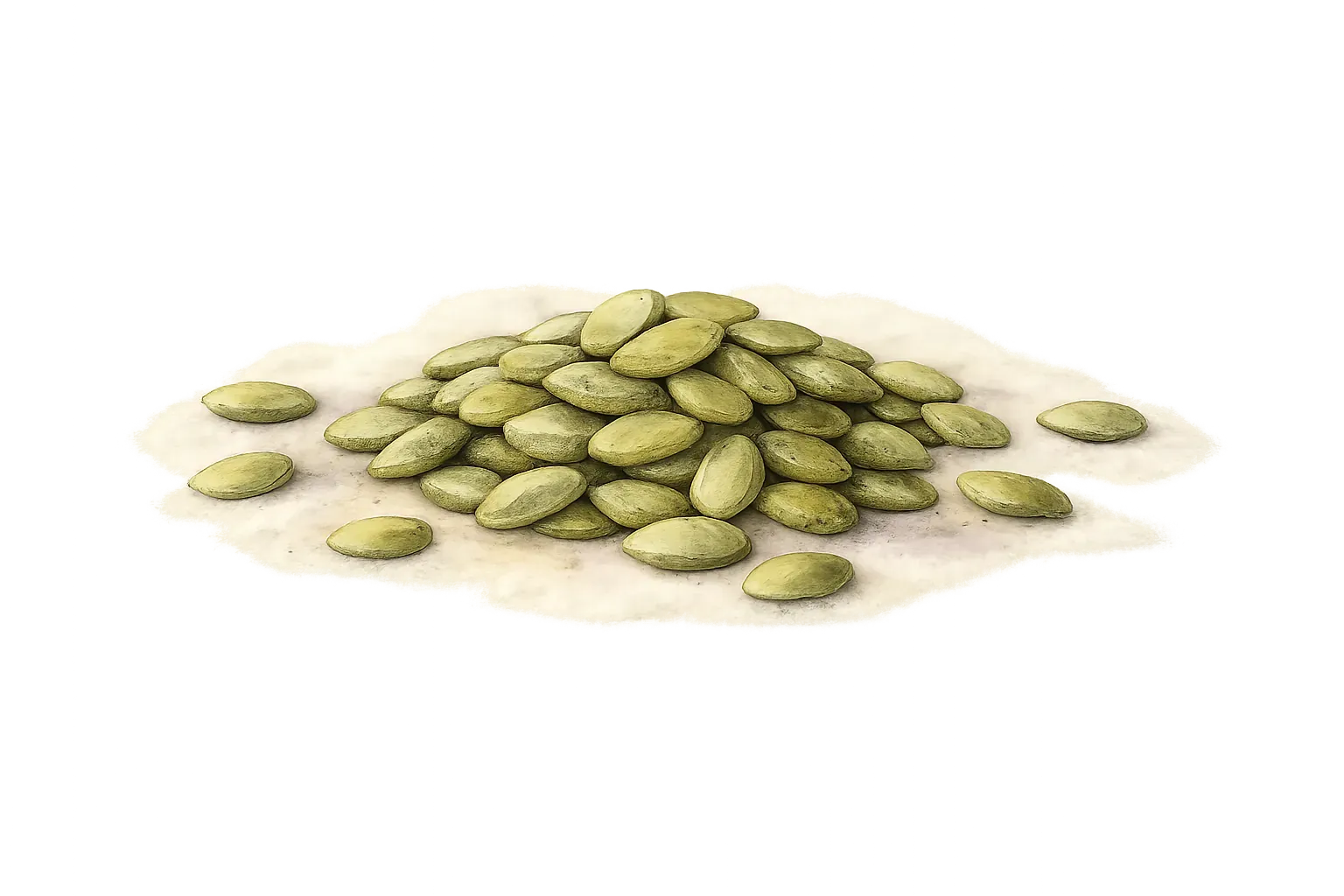
The flat, green seeds of the pumpkin (also called pepitas when hulled); eaten roasted as a snack or used as a crunchy garnish.
Q
- Queijo da Ilha
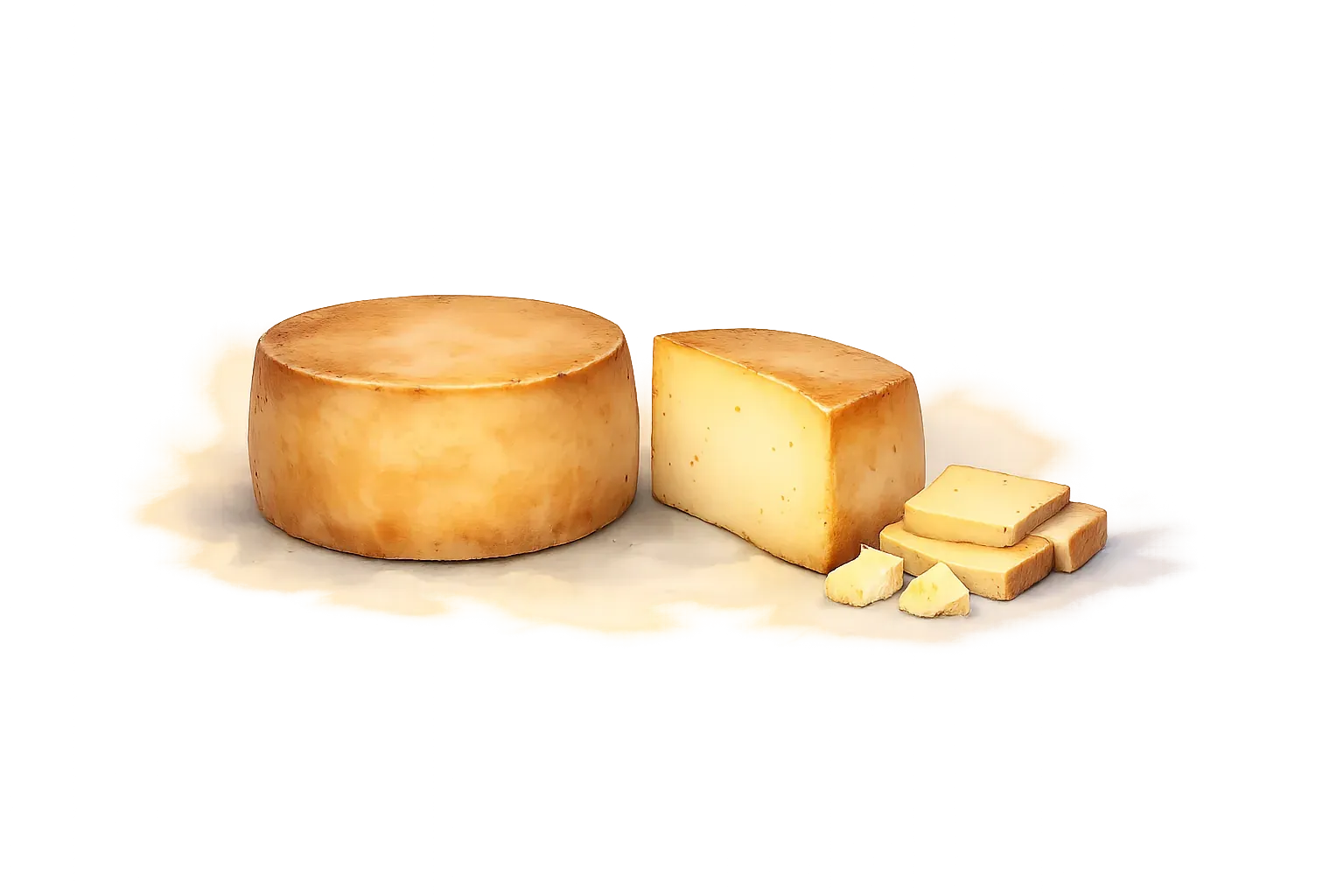
Also: Azores cheese, Ilha cheese
A semi-hard cow's-milk cheese from São Jorge island in the Azores ("queijo da ilha" translates to "cheese of the island"), aged until it develops a sharp, tangy, slightly spicy flavor somewhere between a sharp cheddar and an aged provolone. Melts well, making it a common choice both grated over dishes and eaten on its own.
R
- radish
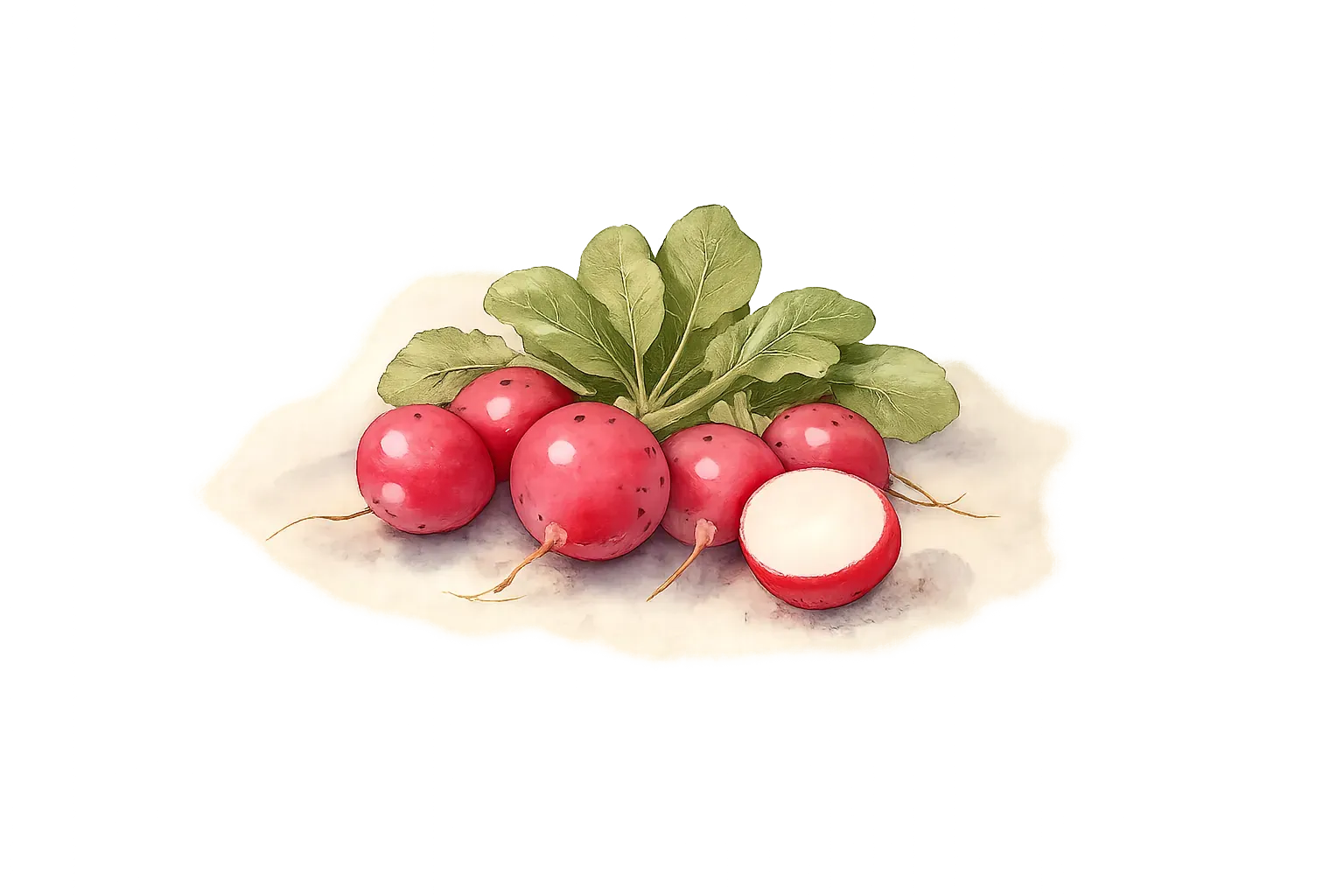
Also: Radishes
A crisp, peppery root vegetable, most commonly small and round with red skin and white flesh, eaten raw for crunch and bite in salads or as a garnish, or roasted, which mellows the peppery edge into something closer to sweet. Their sharpness fades noticeably with cooking, which is why raw and cooked radishes taste almost like different vegetables.
- ramen noodles
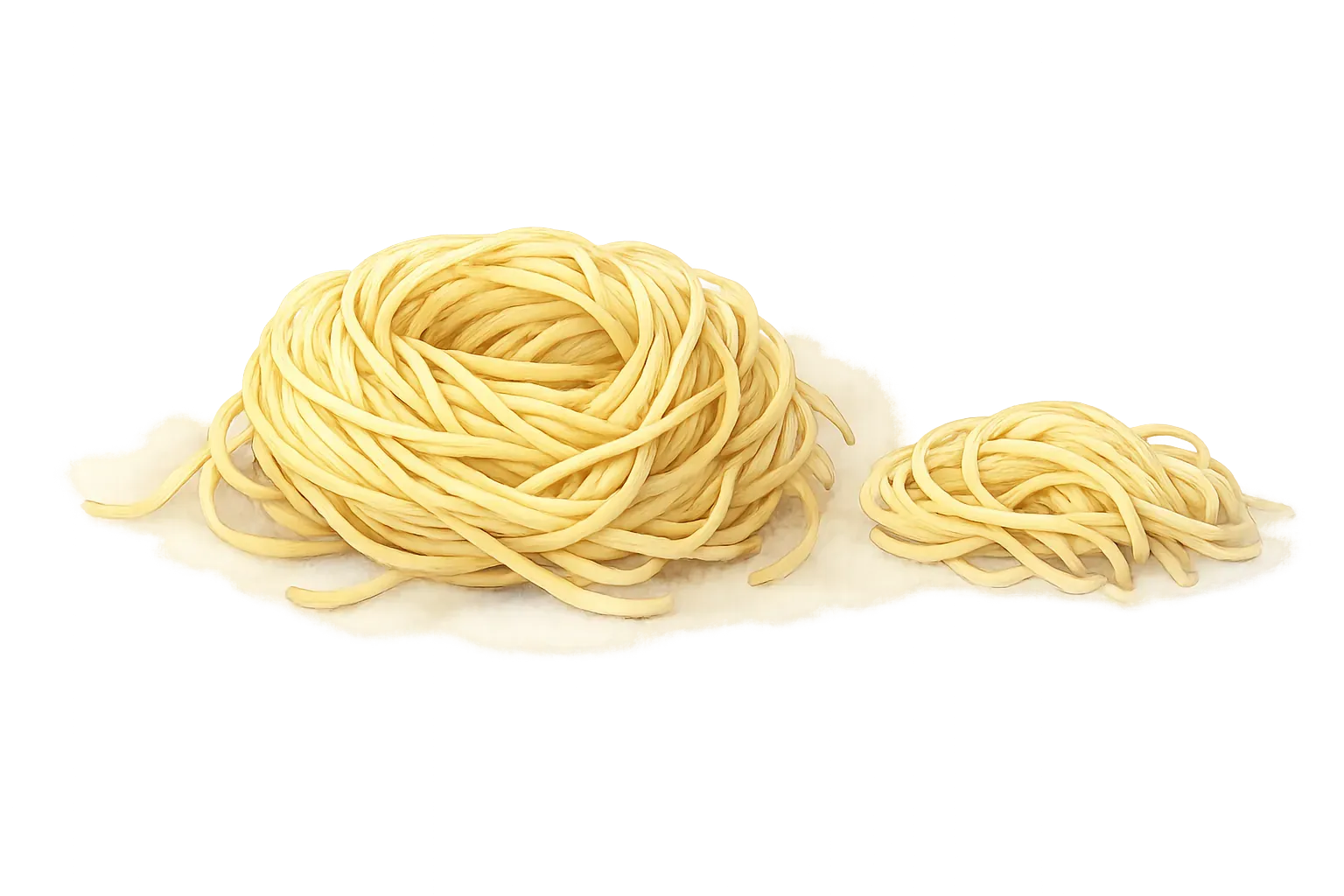
Also: Ramen Noodle
Thin, springy wheat noodles made with an alkaline mineral water called kansui, which gives them their distinctive yellow tint and elastic, chewy bite that plain wheat noodles don't have. Sold both fresh or refrigerated and as the dried instant bricks most familiar from packaged ramen, served in broth or stir-fried.
- Ranch Dressing Mix
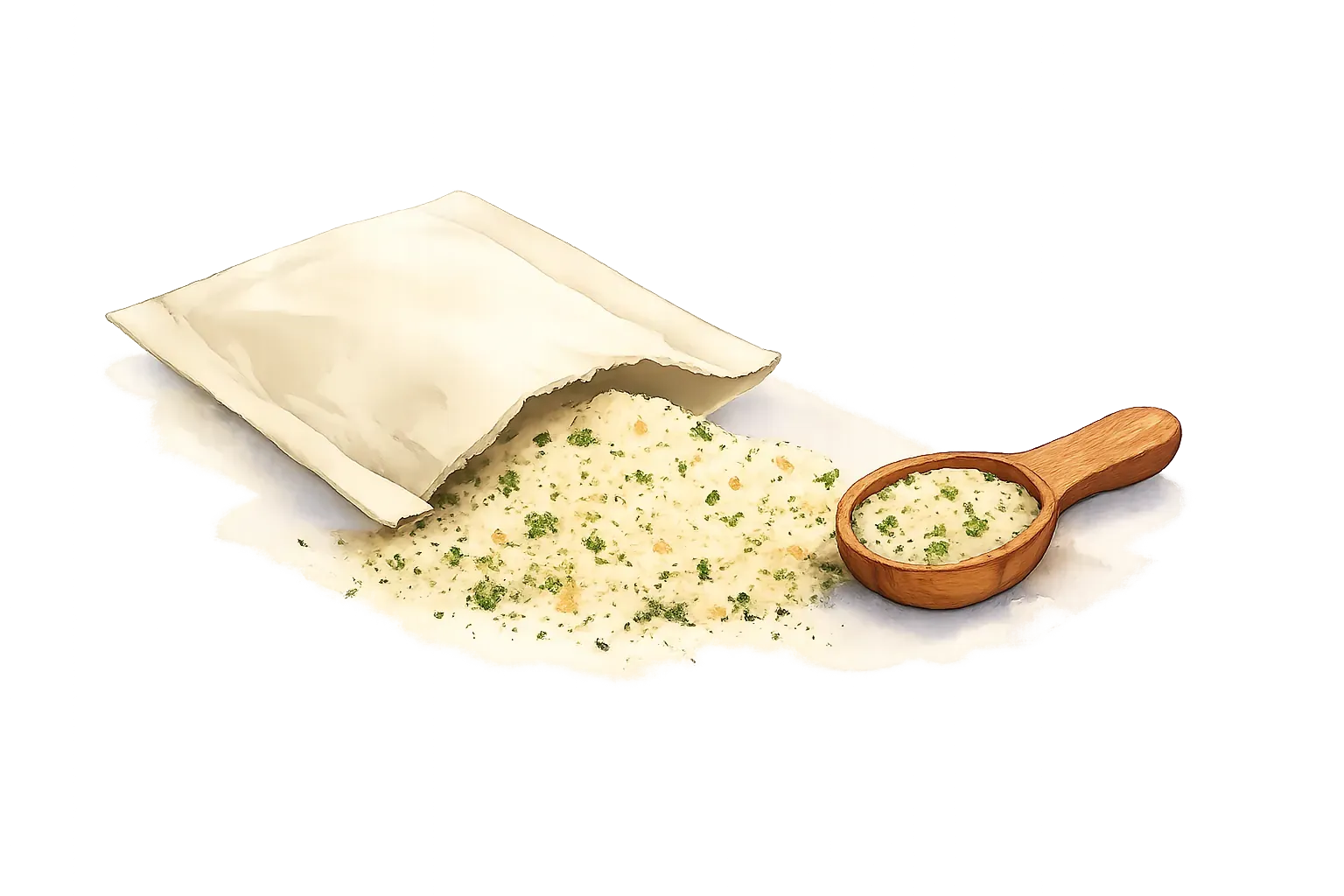
Also: Hidden Valley Ranch dressing mix
A packaged, dehydrated blend of buttermilk powder, dried herbs, and spices -- typically dill, garlic, onion, and black pepper -- mixed with mayonnaise and buttermilk or a similar dairy to make ranch dressing, or sprinkled in dry as a fast way to add that same herb-and-buttermilk flavor elsewhere. The buttermilk powder is what gives finished ranch its characteristic tang, not the herbs alone.
- raw peanuts
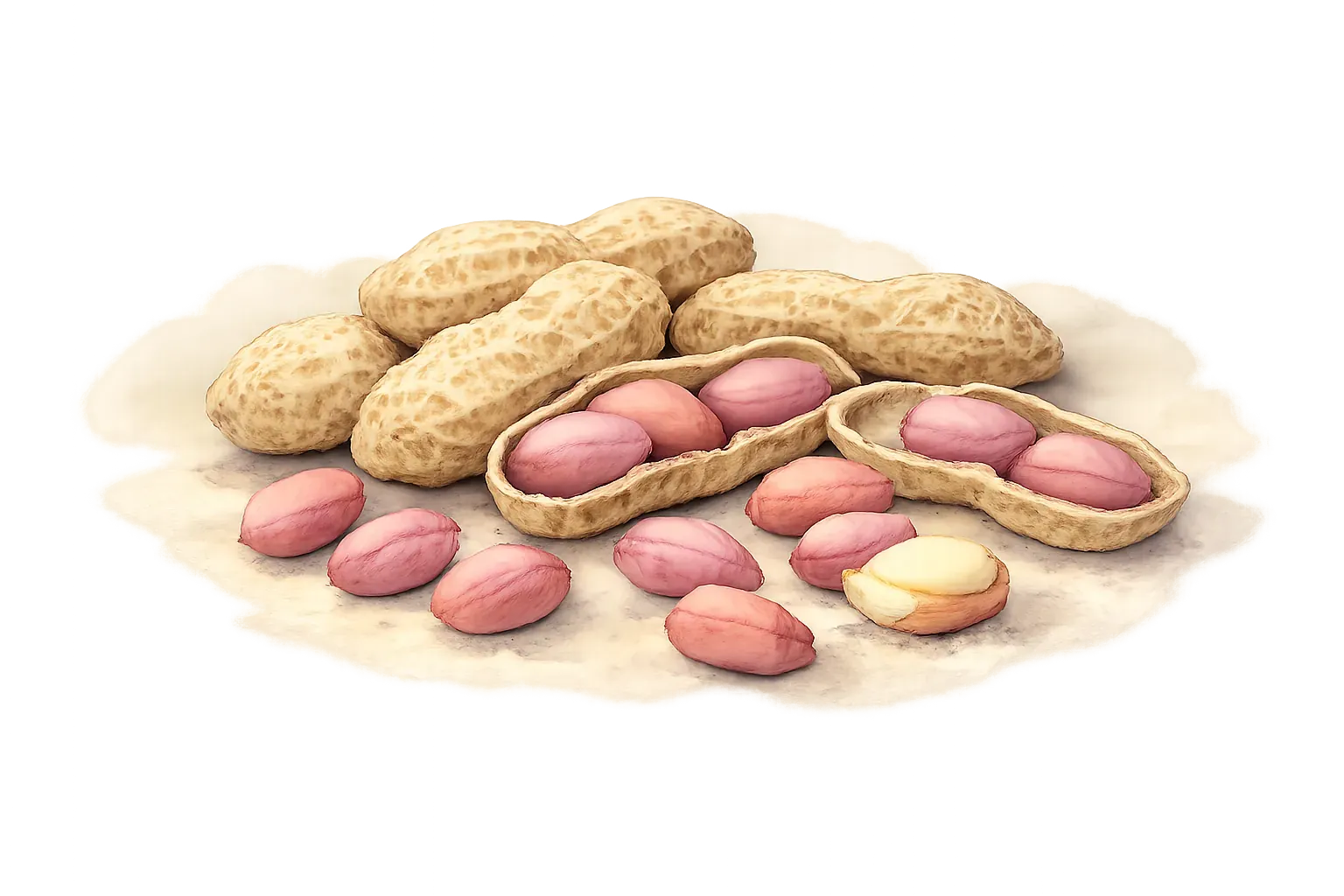
Peanuts that haven't been roasted, used specifically when a dish does its own cooking of the peanuts -- boiled peanuts being the clearest example -- rather than starting from an already-roasted peanut, which won't soften or absorb liquid the same way. Their raw state gives them a starchy, almost bean-like texture rather than the crisp, toasted one roasted peanuts have.
- red cabbage
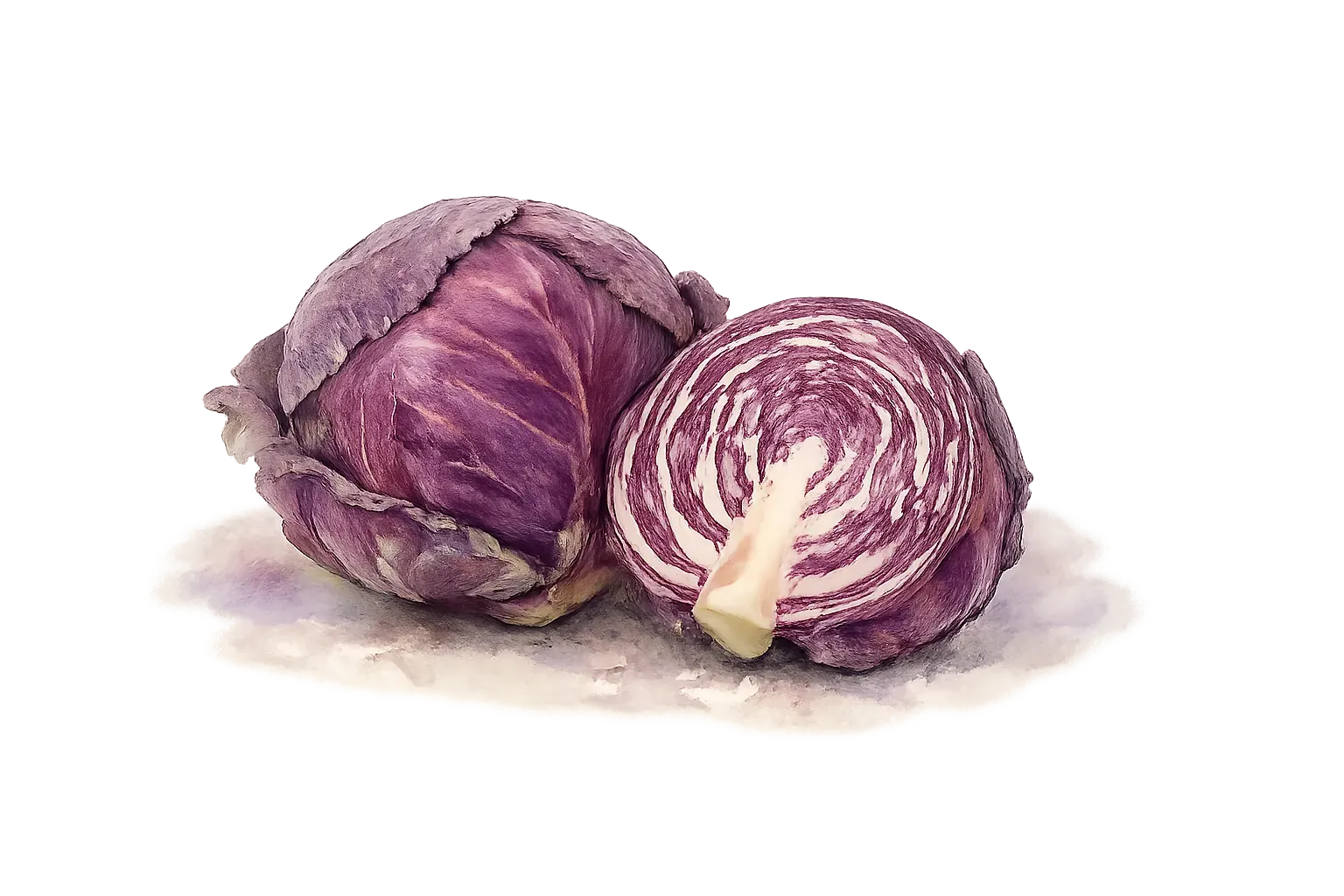
A cabbage variety with deep red-purple leaves and a slightly peppery flavor, eaten raw in slaws for crunch and color or cooked, where its color often shifts dramatically with acid or heat -- turning bluish with alkaline exposure and staying vivid red-purple with an acid like vinegar. That color sensitivity is worth knowing before cooking it, since an unexpectedly blue pot of cabbage is a common surprise.
A kind of cabbage
- red grapes
Sweet, red-skinned table grapes, eaten fresh as a snack or used in salads and as a garnish for their juicy crunch and color. Sweetness varies more by variety and season than in most fruit, so tasting one before use is worthwhile.
- red onion
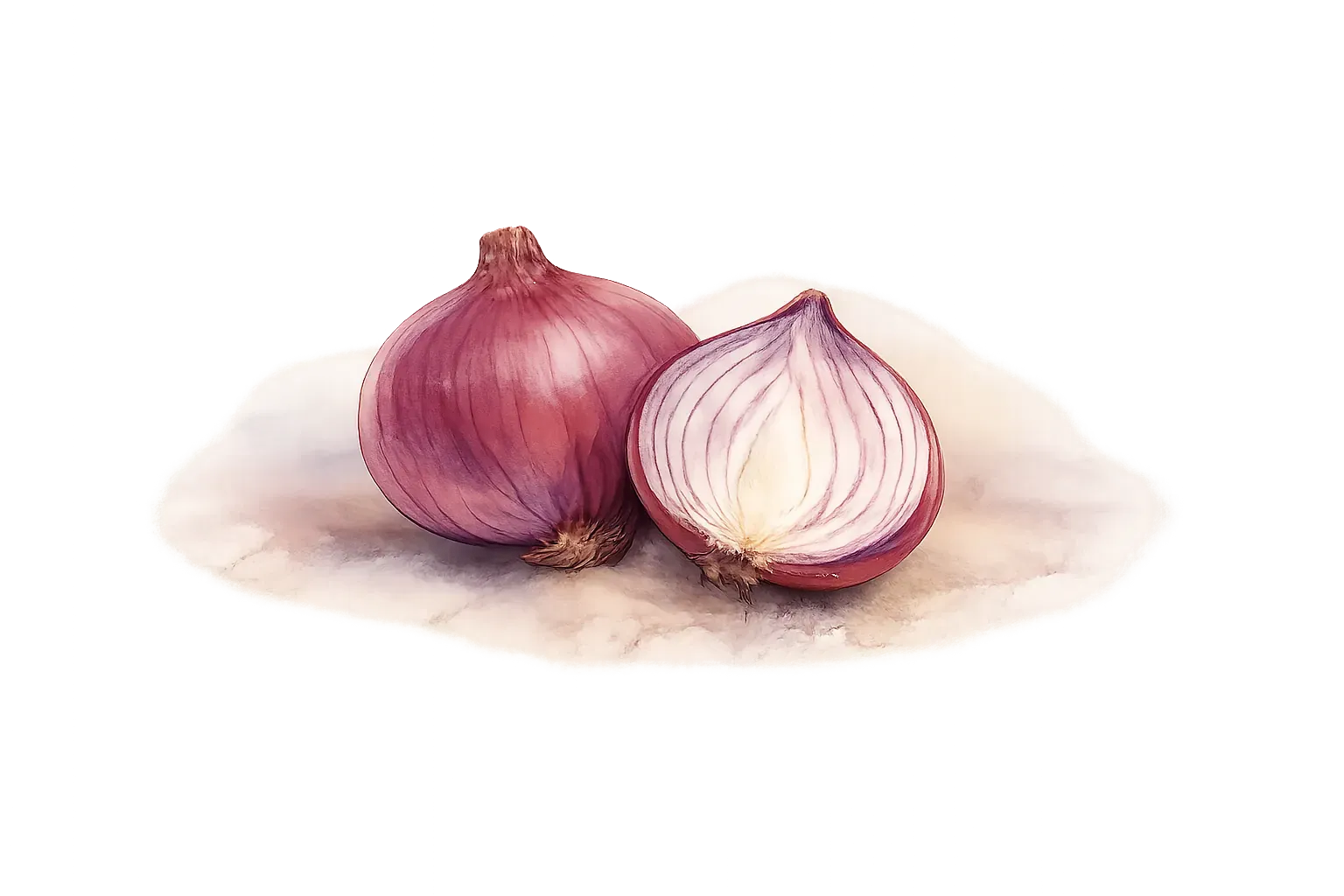
An onion with reddish-purple skin and flesh, milder and slightly sweeter than yellow onion when eaten raw, which is why it's the common choice raw in salads and salsas for both its color and gentler bite. Cooked, its color fades toward gray-purple and its flavor becomes closer to that of other cooked onions.
A kind of onion
- red pepper flakes
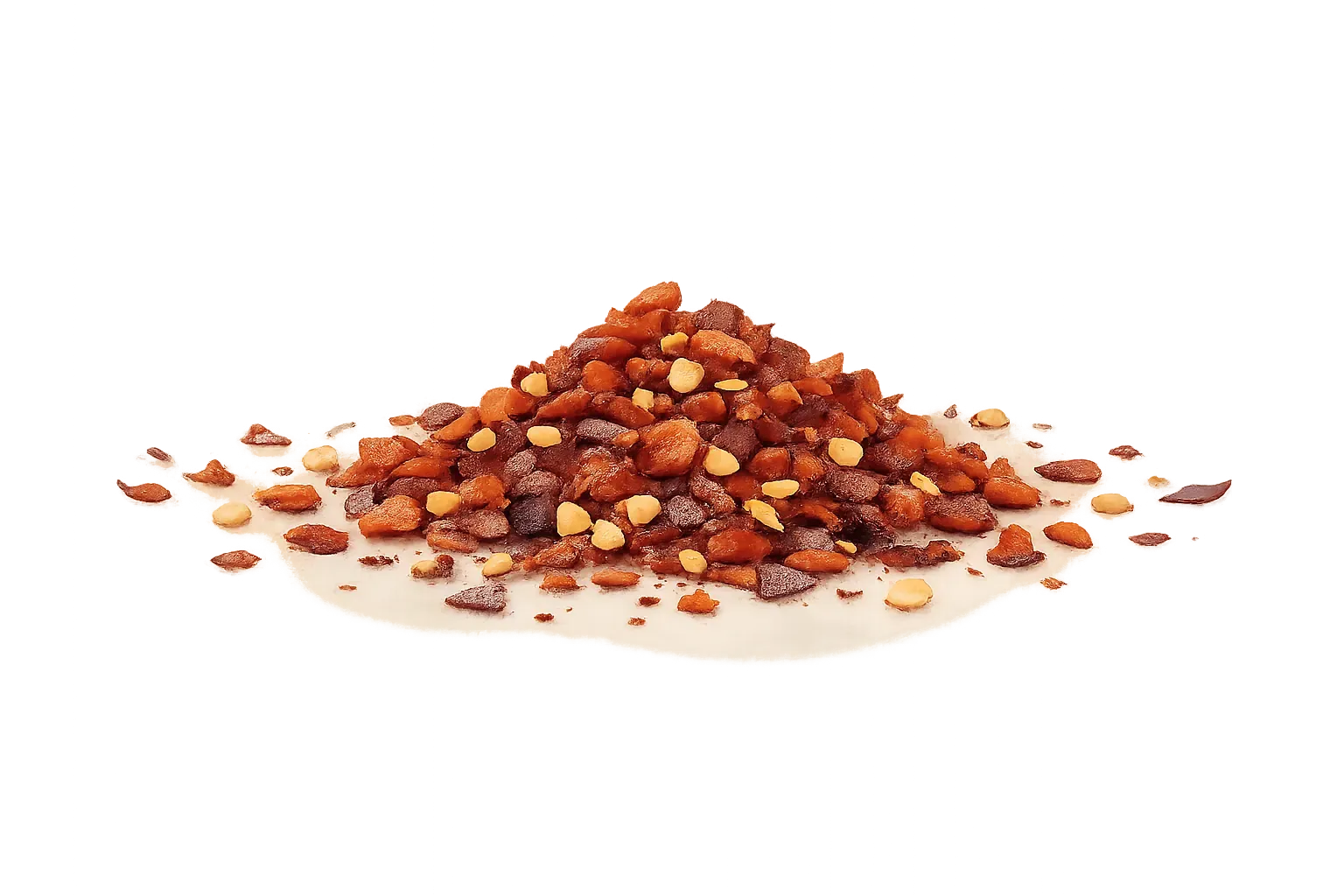
Also: crushed red pepper, crushed red pepper flakes, red cayenne pepper, red pepper
Dried, crushed red chile peppers, often a blend of varieties, sprinkled onto a finished dish or bloomed briefly in oil for a quick, direct shot of heat. Unlike a smooth ground chile powder, the coarse flakes deliver heat unevenly -- one bite can land next to a seed with a sharp, concentrated punch.
More specific: cayenne pepper
- red wine

Wine made from dark-skinned grapes fermented with their skins on, which is what gives red wine its color and tannin -- the drying, slightly bitter sensation on the tongue. In cooking it's used for braising liquids, deglazing, and pan sauces, where its acidity and tannin balance rich or fatty ingredients.
- red wine vinegar
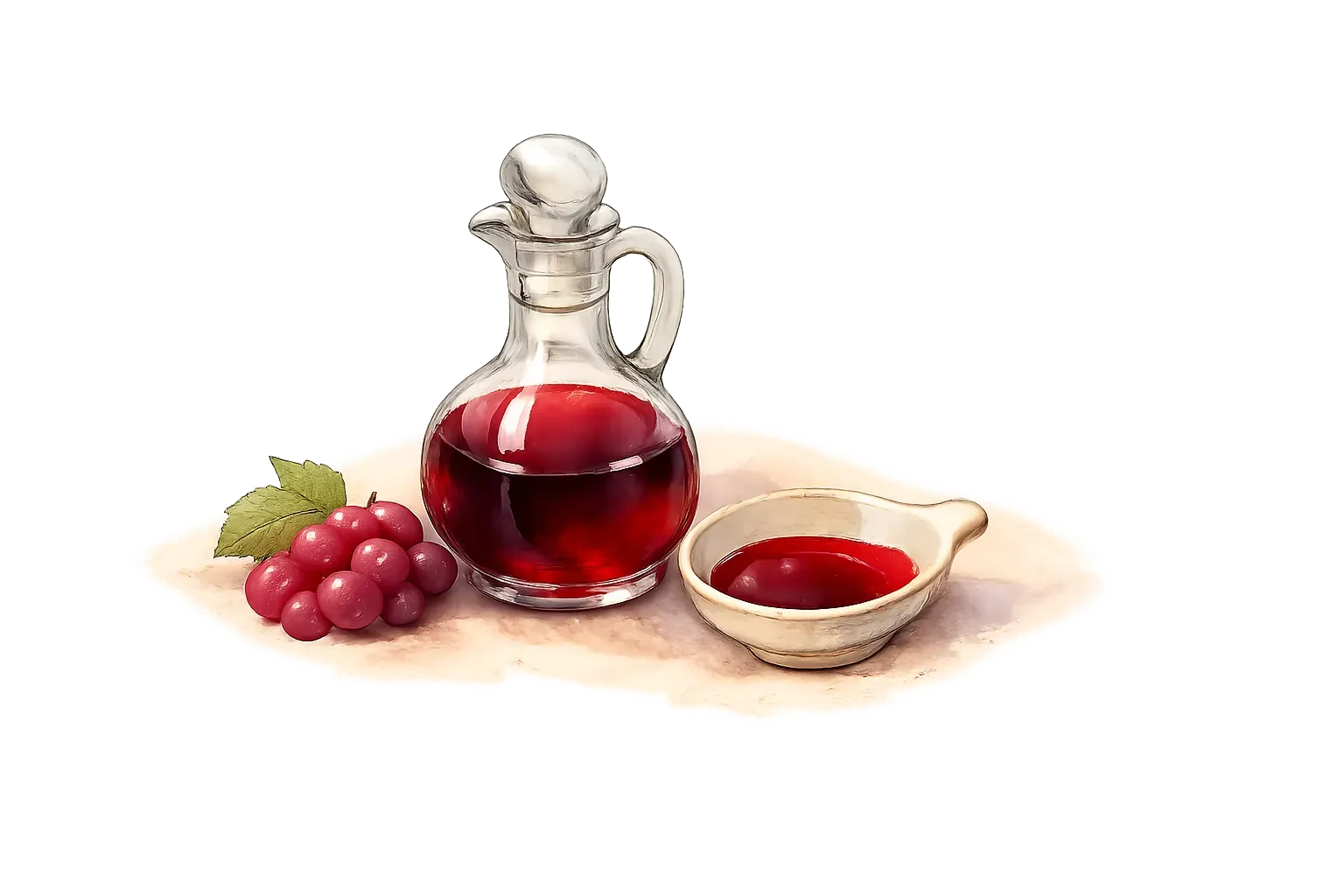
Vinegar made from fermented red wine, sharp and fruity with more depth than plain distilled vinegar, used in dressings, marinades, and pan sauces to add acidity and a rounder flavor than white vinegar's harsher bite. The specific wine it came from can make one bottle noticeably fruitier or sharper than another.
- refried black beans

Cooked black beans mashed and fried, traditionally in lard, into a thick, spreadable paste, used as a side dish, a filling, or a dip base. The frying step is what gives them their smooth, slightly caramelized flavor -- simply mashed, unfried black beans taste noticeably flatter.
- ribs
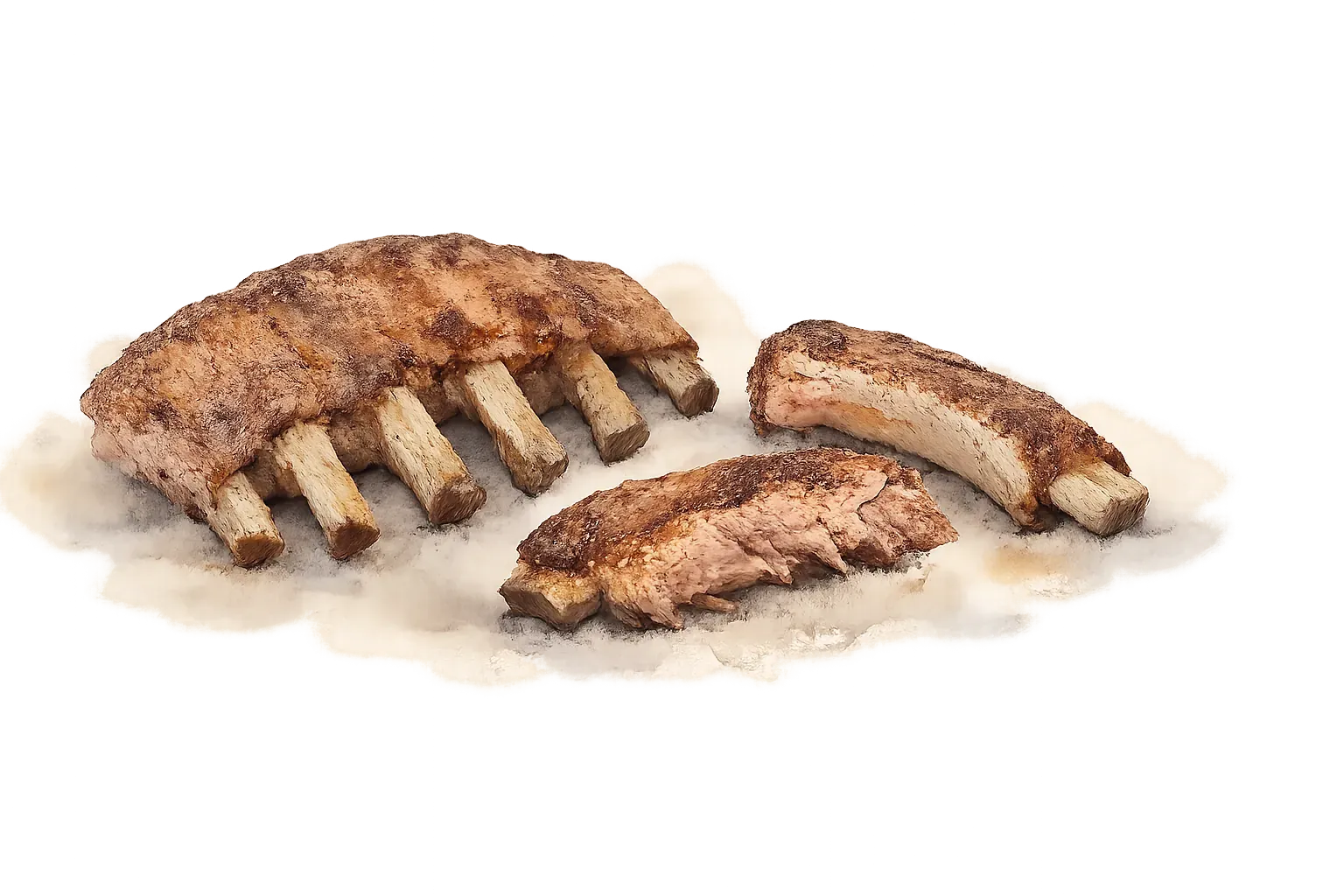
Also: St. Louis Ribs
A cut of pork or beef that includes the rib bones along with the meat between and around them, almost always cooked low and slow -- braised, smoked, or slow-grilled -- until the connective tissue breaks down and the meat pulls easily from the bone. Cooked hot and fast the way a steak would be, ribs turn out tough and chewy instead of tender.
- rice
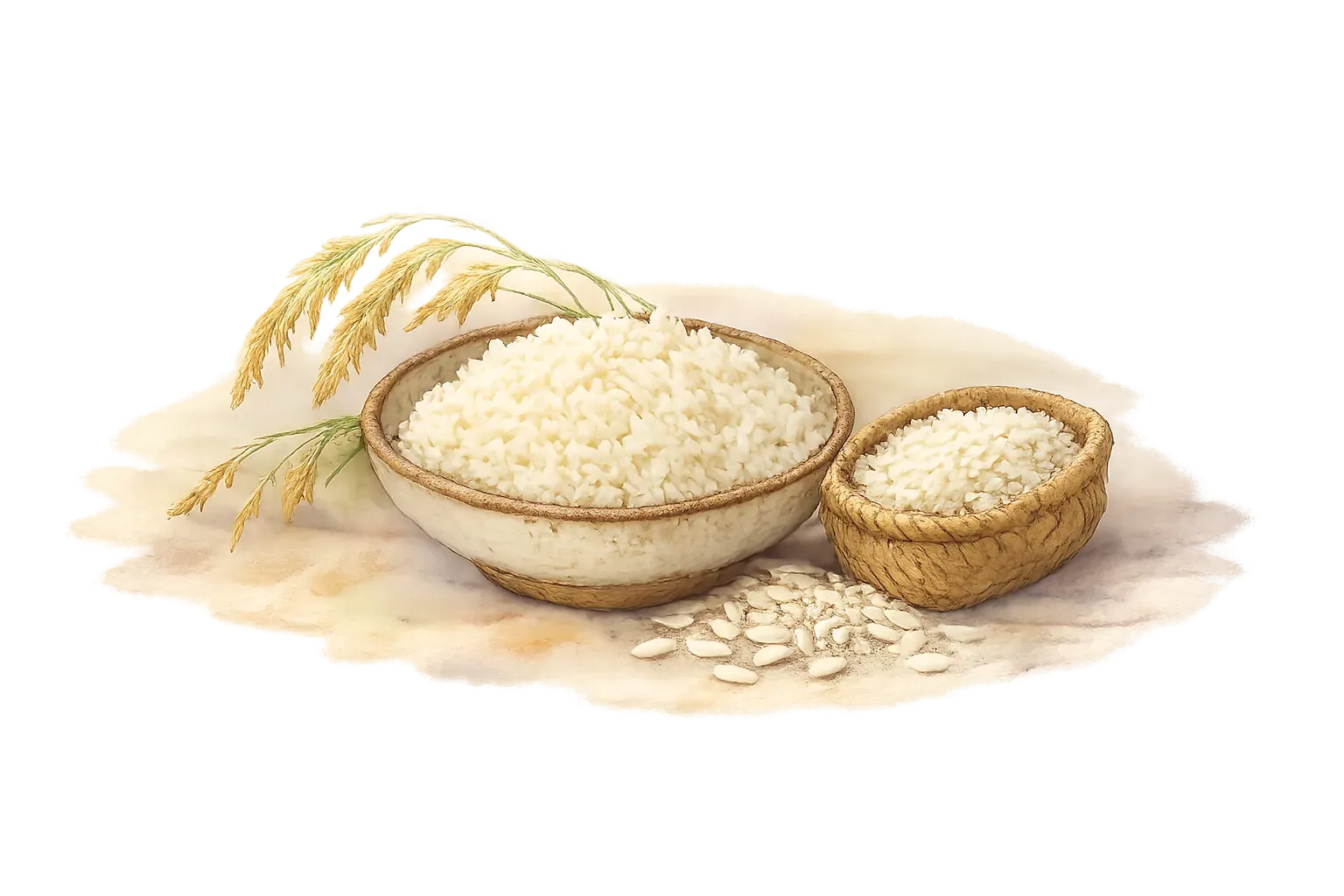
Also: Long grain white rice, basmati rice, jasmine rice, rice (Uncooked, (wild?))
A starchy grain and staple food for much of the world's population, with varieties -- long-grain, short-grain, basmati, jasmine, and others -- that differ meaningfully in texture, aroma, and stickiness once cooked. Rinsing rice before cooking washes away loose surface starch and produces more separate, distinct grains, but some dishes, like risotto or certain puddings, rely on that starch staying put, so rinsing isn't always the right move.
More specific: brown rice
- rice noodles
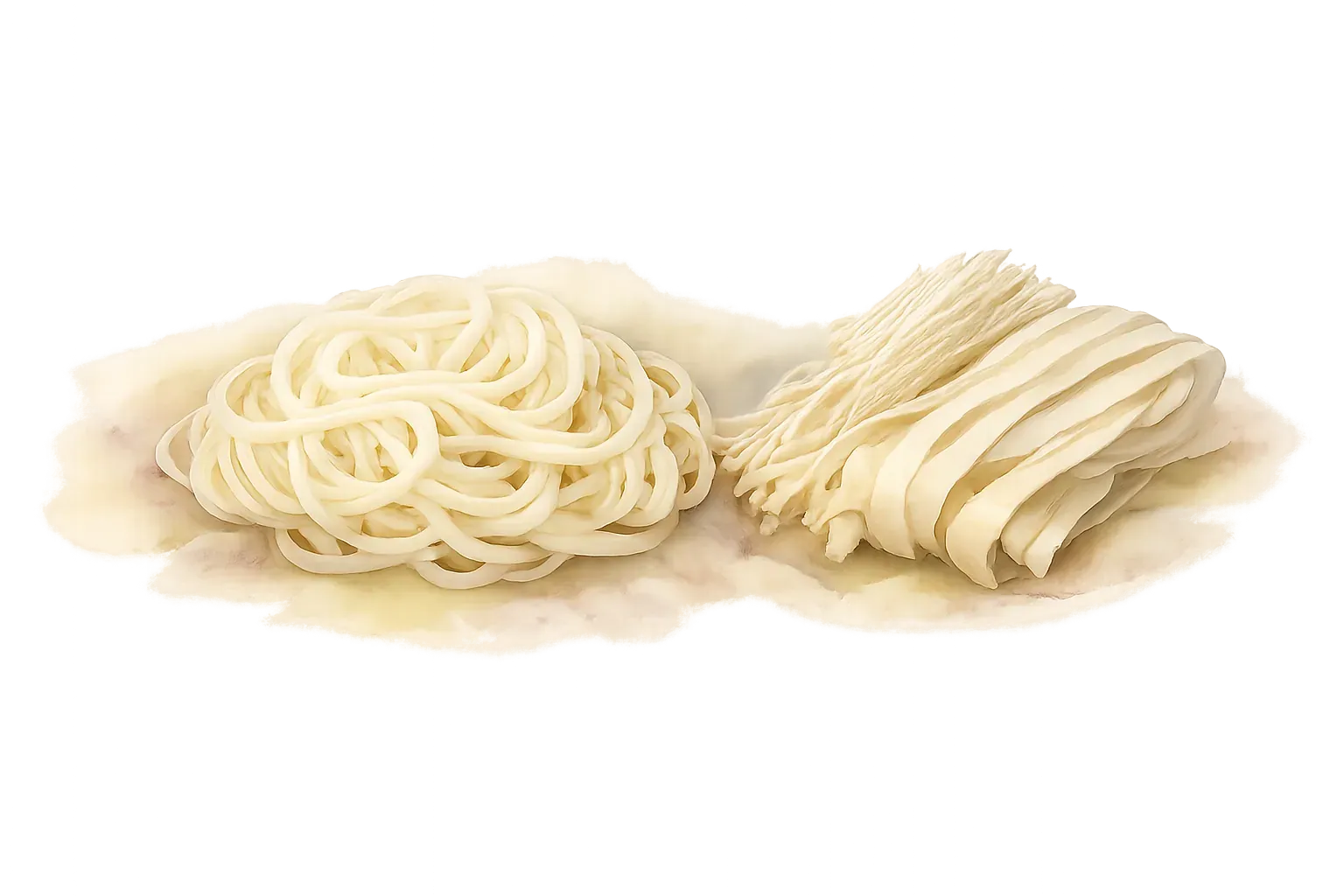
Also: Medium 4mm Rice Noodles
Noodles made from rice flour and water, translucent and chewy once cooked, a staple of Southeast Asian and Chinese cooking sold dried in widths ranging from thin vermicelli to wide, flat noodles. Because they're made from rice rather than wheat, they're naturally gluten-free and have a distinctly slippery, springy bite that wheat noodles don't.
More specific: wide rice noodles
- rice vinegar
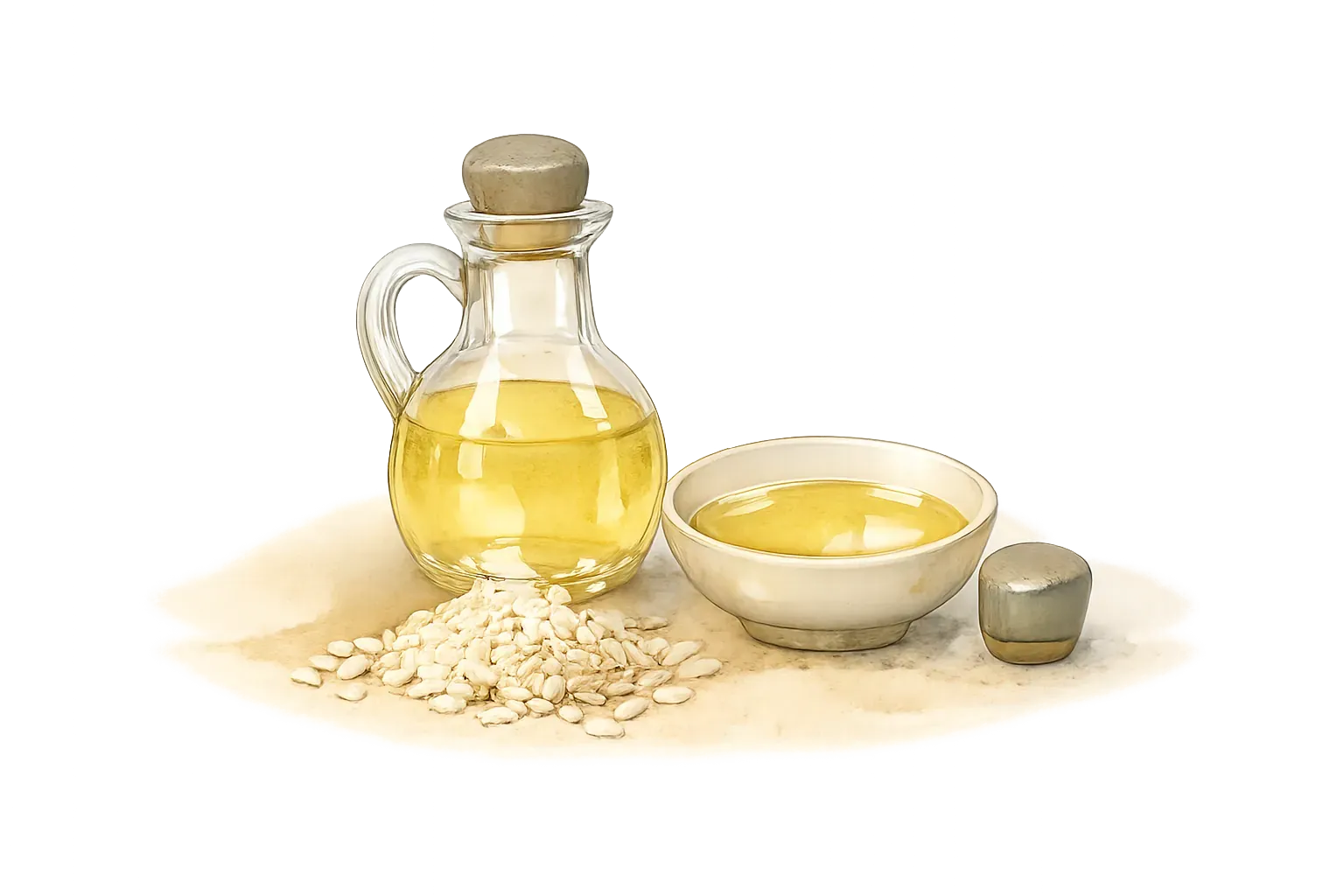
A mild, slightly sweet vinegar made from fermented rice, much gentler and rounder than most Western vinegars, common in Asian cooking, dressings, and pickling. Its low acidity and light sweetness make it forgiving to use generously without overwhelming a dish the way a sharper vinegar can.
- ricotta
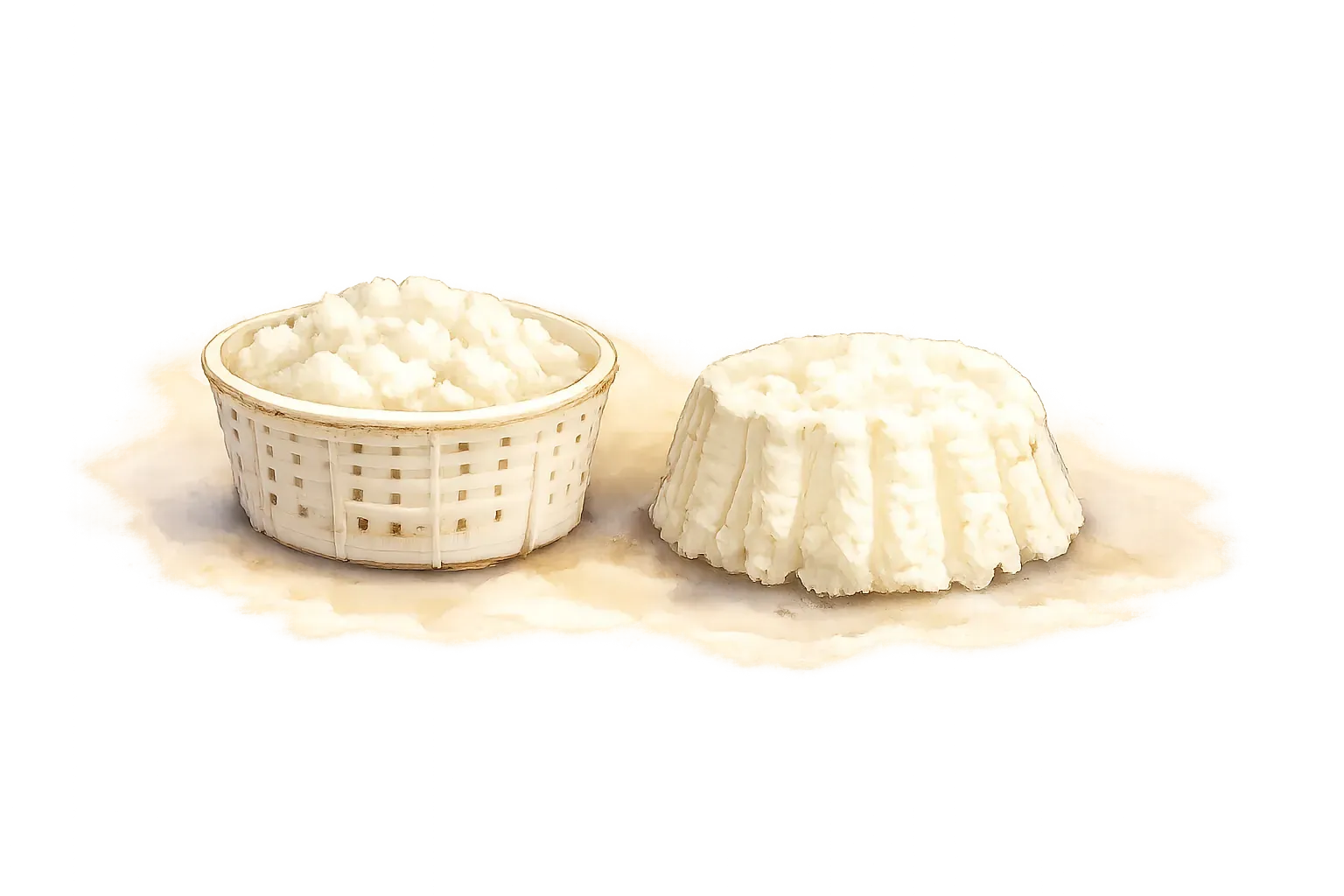
A soft, mild, slightly sweet Italian cheese made from whey (re-cooked, hence the name); used in fillings, baked pasta dishes, and desserts.
- Ritz crackers

Also: buttery crackers
A round, buttery, slightly sweet cracker, eaten as a snack on its own, crushed as a crisp topping, or used as the base for a quick pie or crumb crust. Their butter content and delicate structure mean they crush easily into fine crumbs without much effort -- a sealed bag and a rolling pin work as well as a food processor.
- roast pork
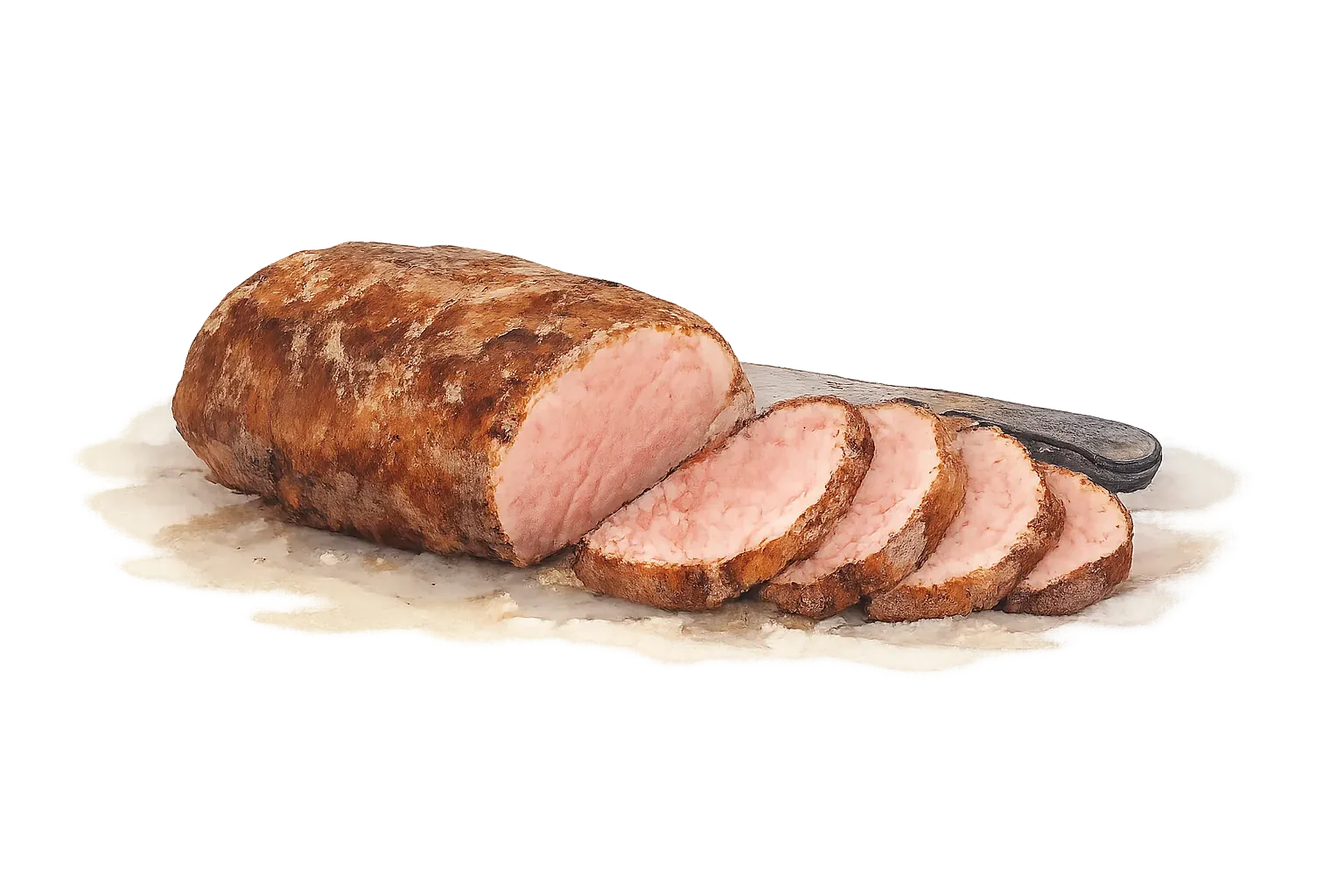
Pork -- often shoulder or loin -- roasted whole in the oven until tender and well browned, then sliced or shredded for serving. Many versions sold pre-cooked are also cured or smoked, so they add salt and smoke flavor on top of the meat itself rather than arriving as a blank canvas.
- roasted garlic
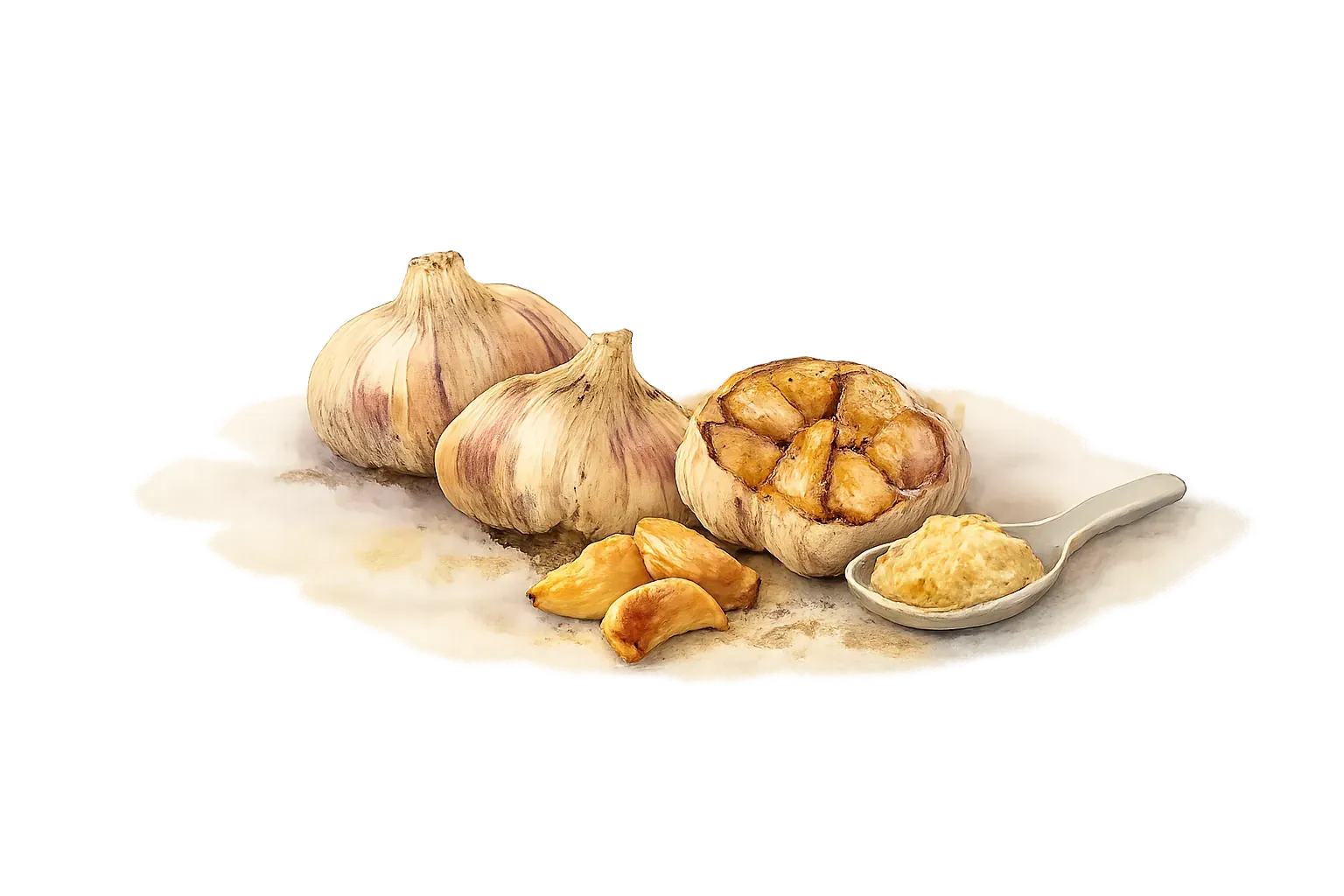
Whole garlic heads roasted until soft and caramelized, mellowing the raw bite into a sweet, spreadable paste; squeezed from the skins and used in sauces, spreads, and dressings.
- roasted peppers
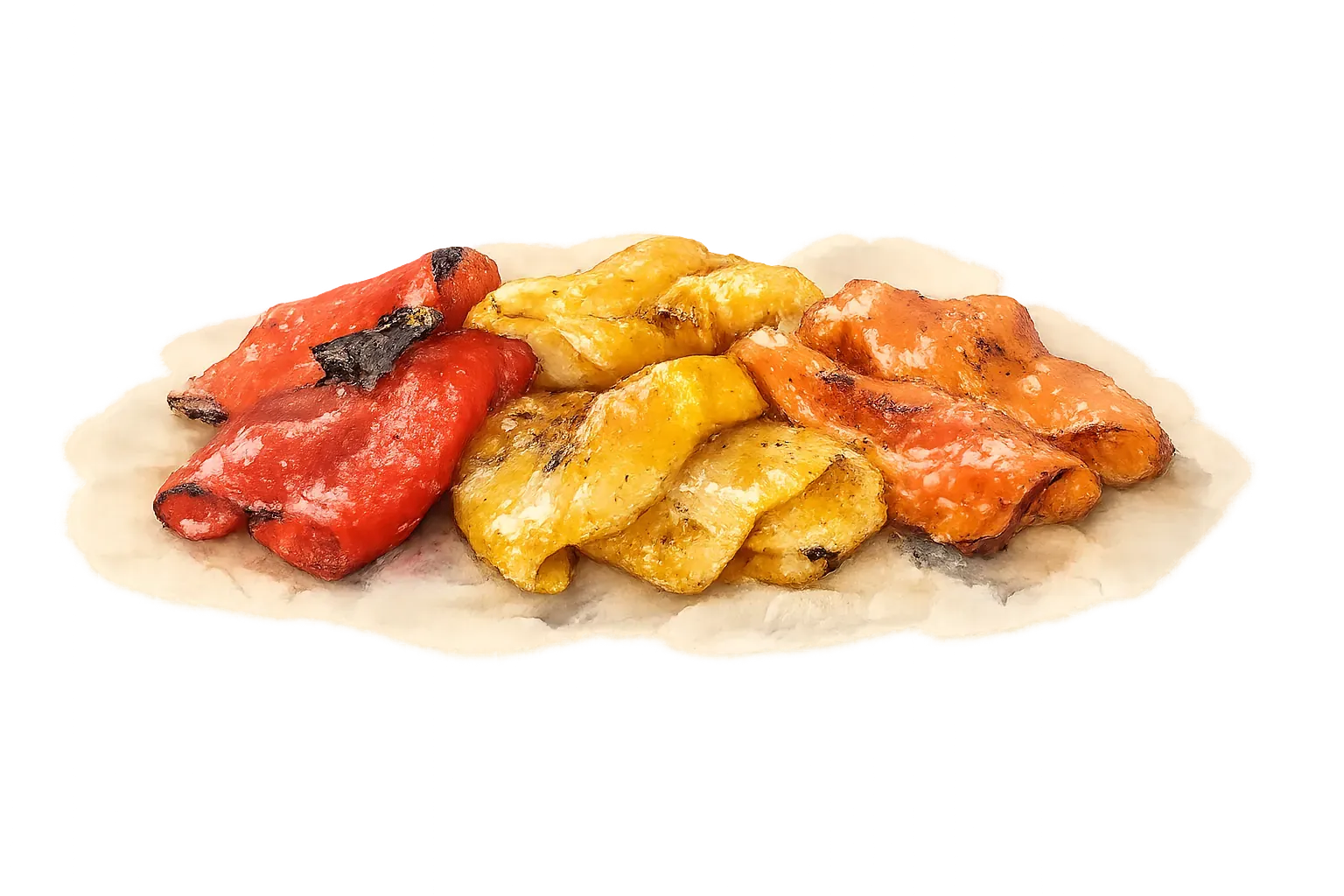
Sweet peppers charred until the skin blisters, then peeled to leave smoky, tender, sweet flesh; sold jarred in oil or brine, or made at home over a flame or under a broiler. Used in sandwiches, salads, dips, and sauces for their soft texture and concentrated sweetness.
- rosemary
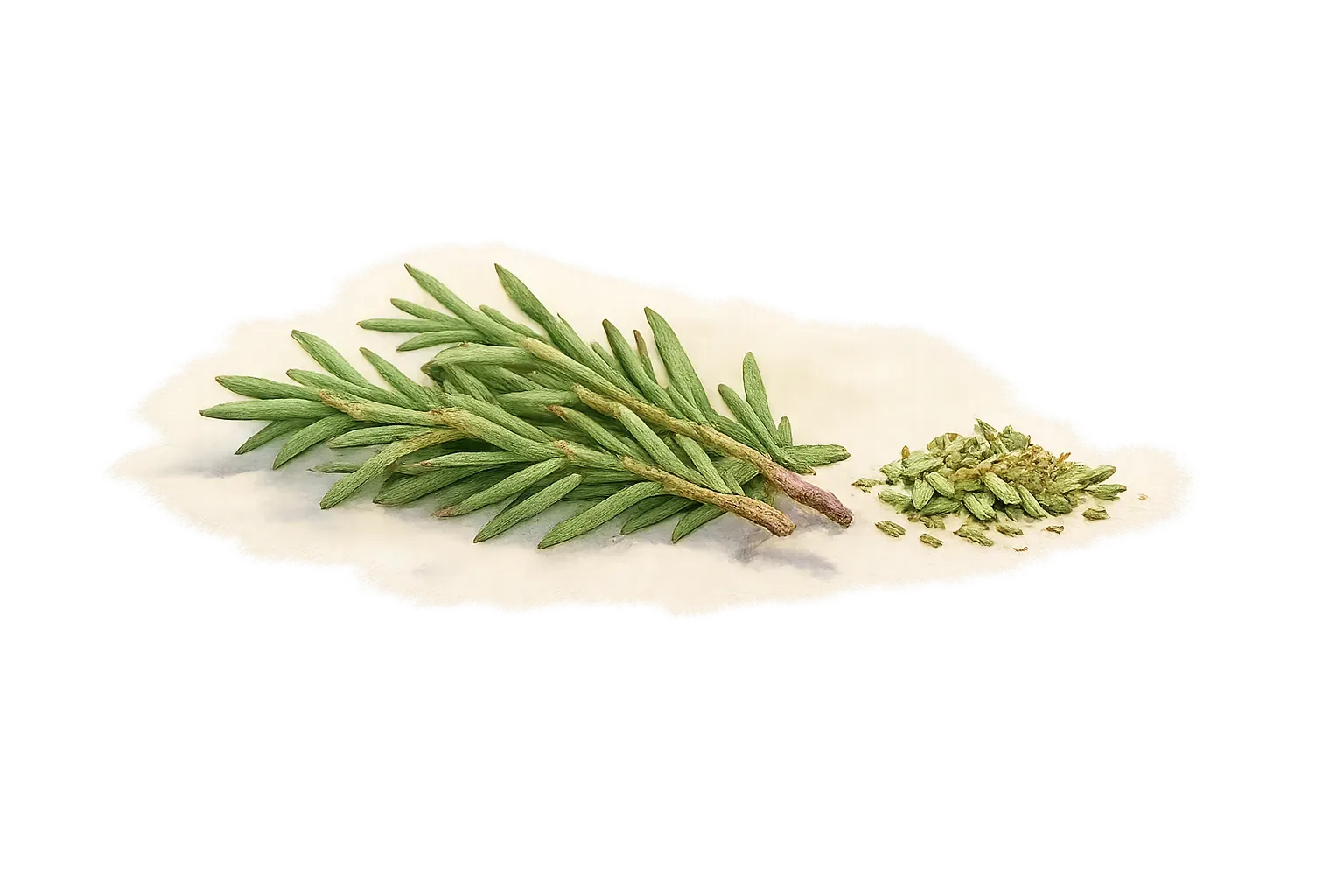
Also: Dried Rosemary, fresh rosemary
A pungent, pine-scented herb used fresh or dried, common with roasted meats, potatoes, and bread. Whole sprigs release their oil slowly during cooking, while chopped or dried rosemary disperses through a dish faster and more evenly.
- Rotel
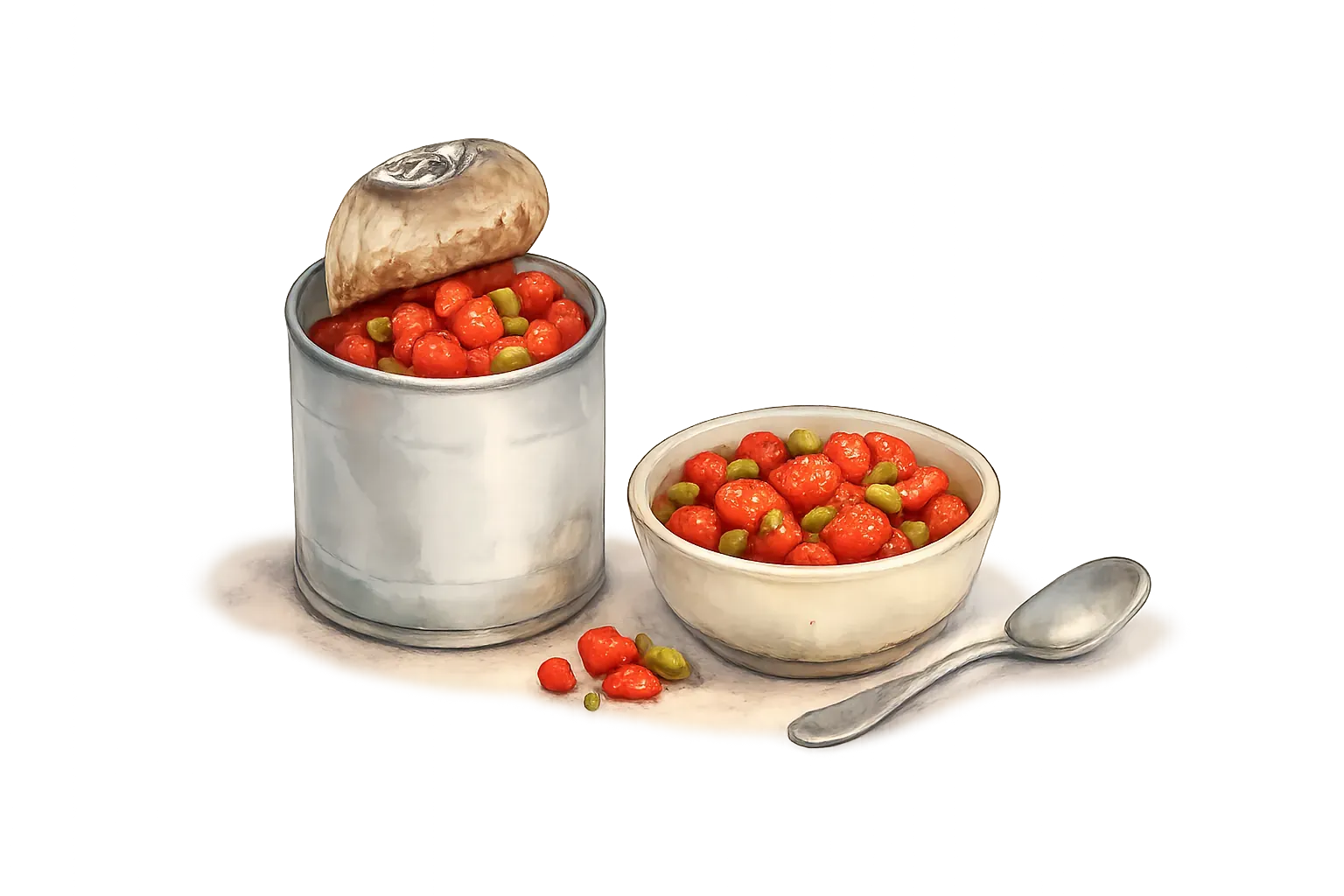
A canned product of diced tomatoes mixed with green chiles, sold in a few heat levels (Original, Mild, and hotter varieties); used as a quick, already-seasoned base for dips, chili, and Tex-Mex-style dishes. Because the tomatoes and chiles are already combined and seasoned, one can replaces both an ingredient and a seasoning step.
- rotisserie chicken
A whole chicken cooked on a rotating spit until browned and juicy, most often bought already cooked from a grocery store rather than roasted at home from raw. A fast source of cooked chicken meat for other dishes; the skin and dark meat carry noticeably more salt and fat than the breast, since store versions are usually brined or seasoned before cooking.
- roux
Also: white roux
Equal parts fat and flour cooked together into a paste, used to thicken sauces and soups. A restaurant kitchen often makes a batch ahead and keeps it on hand as its own measurable ingredient, rather than building it fresh into each dish -- see the roux technique entry for how it's made and how its color changes its thickening power and flavor.
- rubbed sage
Dried sage leaves crumbled into a light, fluffy texture rather than ground to a fine powder, giving it more surface area and a softer body than ground sage. Earthy and slightly peppery, it's the form most common in poultry seasoning blends and sausage.
- russet potato
A large, oblong potato with rough brown skin and dry, starchy flesh; the classic baking potato, also good for frying and mashing.
A kind of potato
S
- saffron
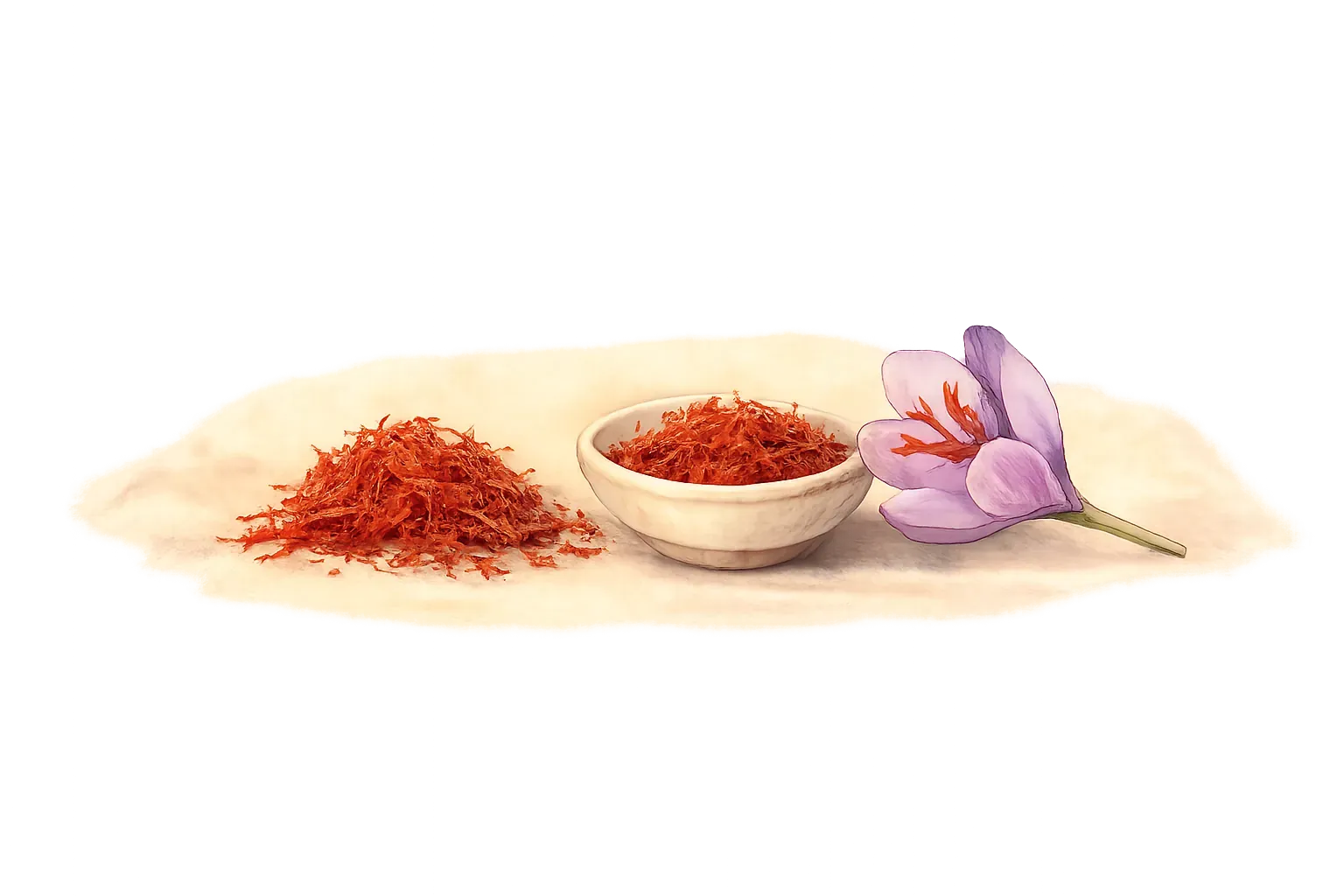
Also: saffron threads, saffron strands
The dried stigmas of a crocus flower, harvested entirely by hand (each flower yields only three tiny threads), which makes it the most expensive spice by weight in the world. A few threads add a distinctive earthy, faintly sweet, almost hay-like flavor and a deep golden-yellow color to a dish -- used across Mediterranean, Middle Eastern, Persian, and South Asian cooking, in dishes from paella to biryani to tagines.
- salsa
A Mexican-style sauce of chopped or blended tomatoes, chiles, onion, and seasonings, served raw or cooked and ranging from chunky to smooth. Sold both fresh in the refrigerated case and shelf-stable in jars, with the two differing significantly in freshness, texture, and shelf life.
- salt
Also: Salt & Pepper, Salt and Pepper, sea salt, table salt
The most fundamental seasoning, used to enhance and balance flavor across nearly every savory (and many sweet) dishes.
More specific: kosher salt
- sauerkraut
Cabbage fermented in a salt brine until tangy and sour, eaten cold as a condiment or warmed and cooked into dishes like reubens and sausages. The fermentation gives it a sharper, more sour edge than cabbage simply cooked with vinegar.
- sausage

Also: Banger Sausages, Hot Sausage, Saprosetta Sausage, smokey Sausage (cooked, sliced (see notes))
Ground meat, most commonly pork, mixed with fat and seasoning and often stuffed into a casing; styles range from mild breakfast sausage to spicy Italian to smoked links. Fresh sausage is raw and must be cooked through, while some styles -- many smoked sausages, for instance -- are sold fully cooked and only need reheating, so the two require different handling.
More specific: andouille sausage, country sausage, farinheira, hot country sausage, Italian sausage, kielbasa, smoked sausage
- seasoning salt
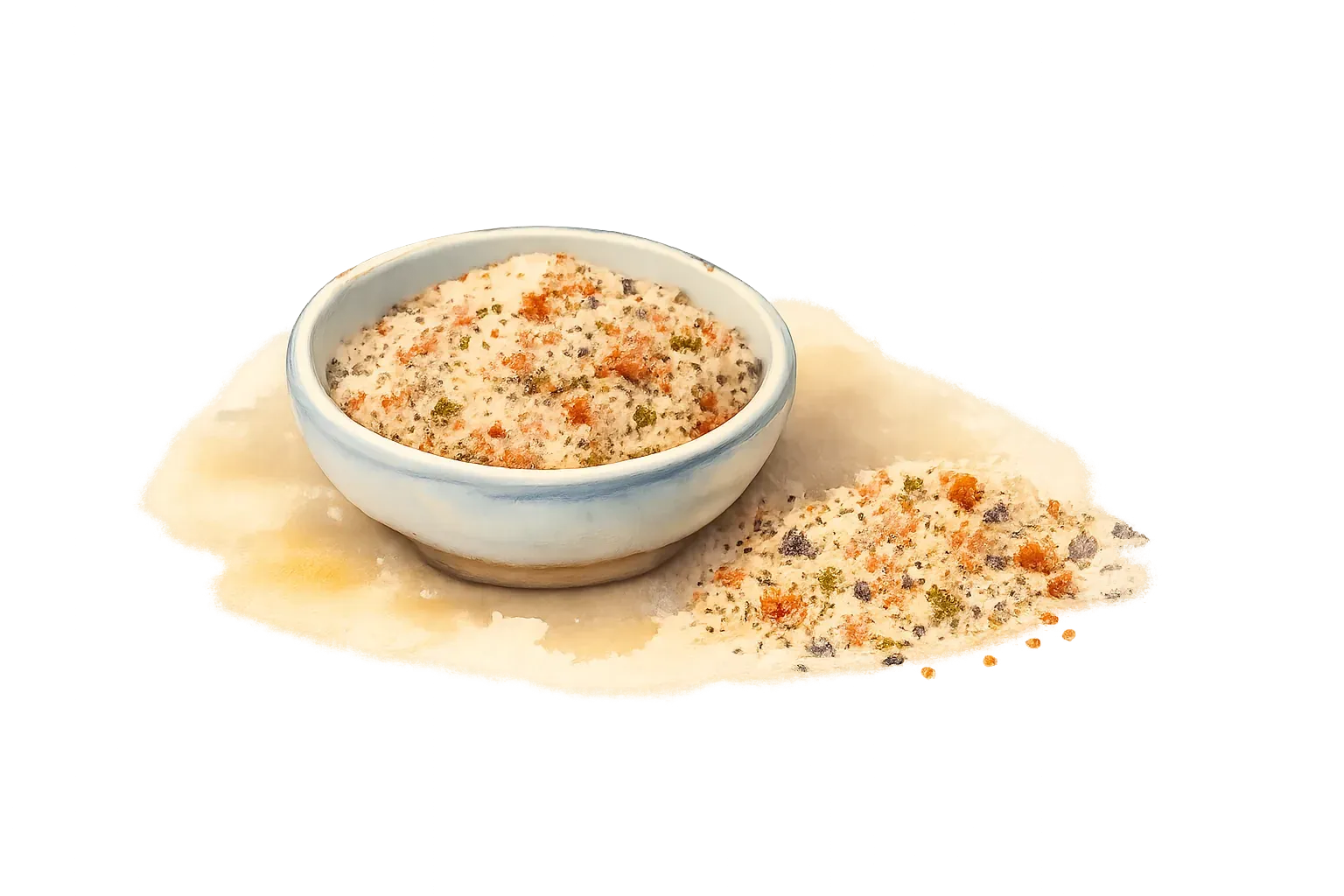
Also: Lawry's seasoning salt
A pre-mixed blend of salt with other seasonings -- commonly paprika, garlic, onion, and dried herbs -- that adds a more complex flavor than plain salt in a single shake. Because it's already salted, it functions as both the salt and part of the spice blend in a dish.
- sesame oil

Also: Sesame oil - Toasted, Toasted Sesame Oil
Oil pressed from sesame seeds, sold in two distinct forms: toasted sesame oil is dark, strongly nutty, and aromatic, used sparingly as a finishing oil rather than a cooking fat, while untoasted (light) sesame oil is pale, mild, and neutral enough for actual cooking. The two are not interchangeable -- toasted sesame oil also has a lower smoke point and turns bitter if used for high-heat cooking.
- shallot
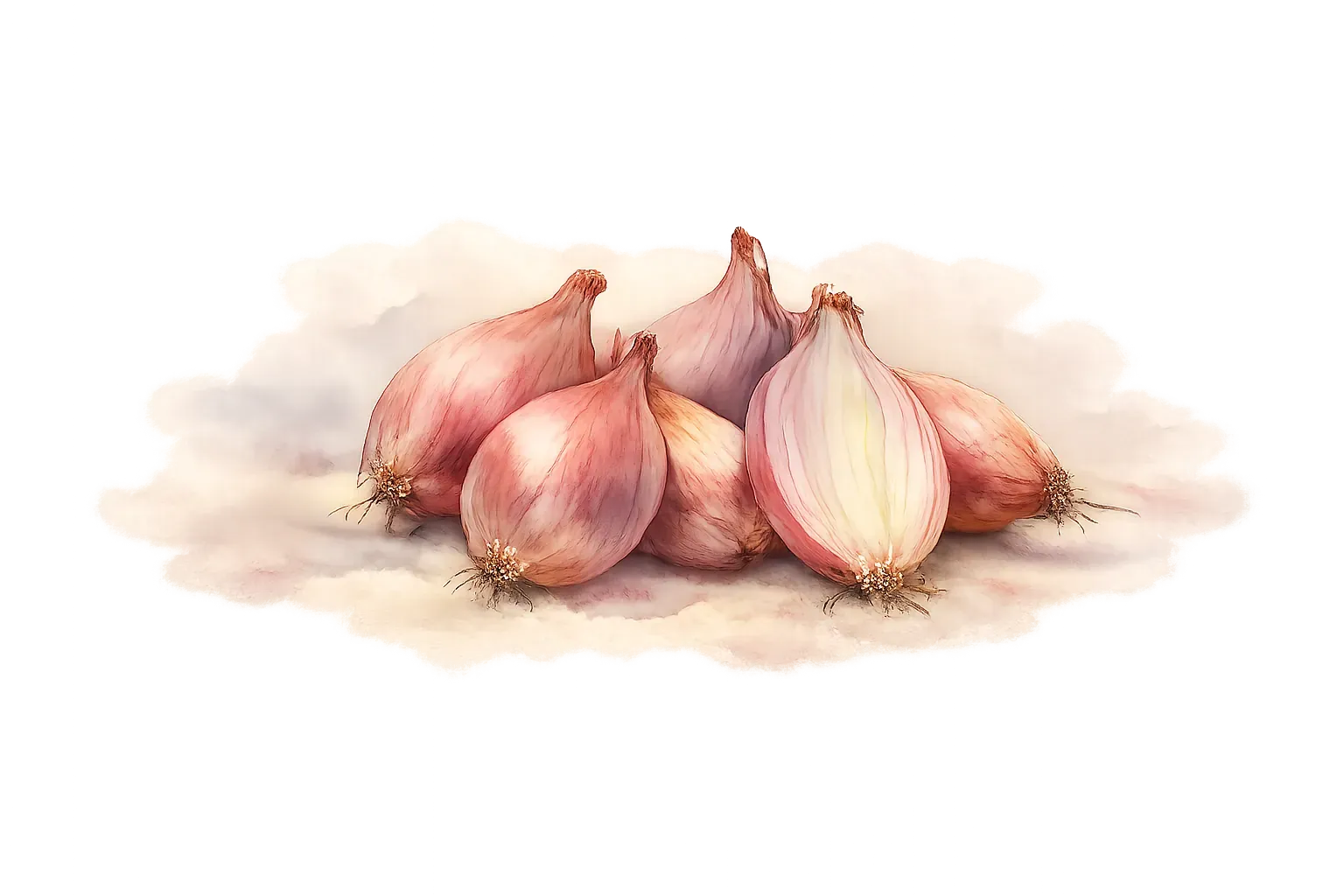
A small, mild member of the onion family with a delicate, slightly sweet flavor between onion and garlic; used raw or cooked wherever a subtler onion flavor is wanted.
- sharp mustard
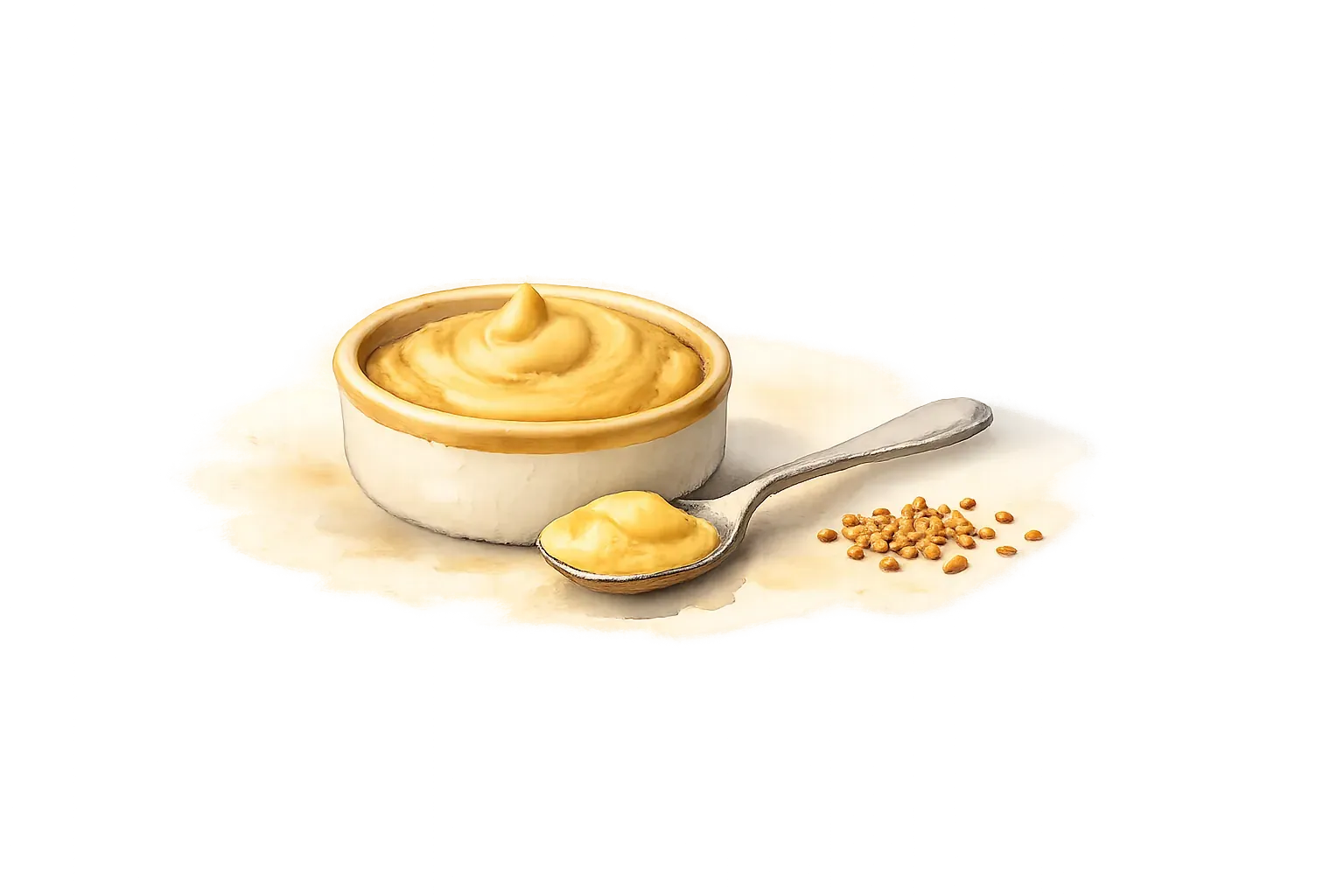
A mustard with a pronounced, pungent bite (like a strong Dijon or English mustard), as opposed to milder yellow mustard.
A kind of mustard
- sherry

A fortified Spanish wine, ranging from dry to sweet; used both as a drink and, in cooking, to add depth to sauces and soups.
- shiitake mushrooms
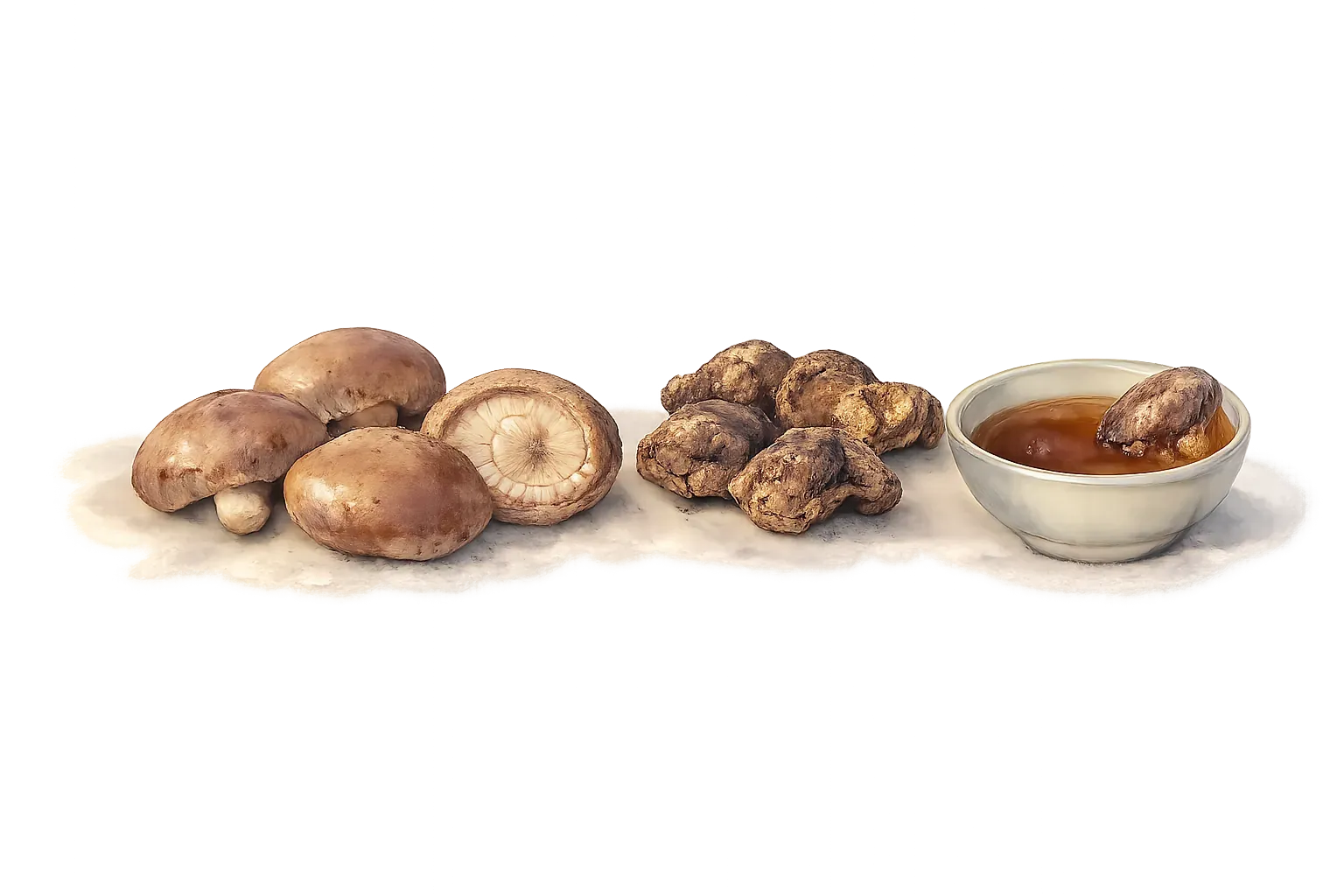
Also: Shitake mushrooms
A meaty, savory mushroom common in Asian cooking, with a deep umami flavor; sold fresh or dried. Dried shiitakes are rehydrated in water before use, and that soaking liquid becomes a flavorful broth in its own right rather than something to discard.
A kind of mushrooms
- shortening
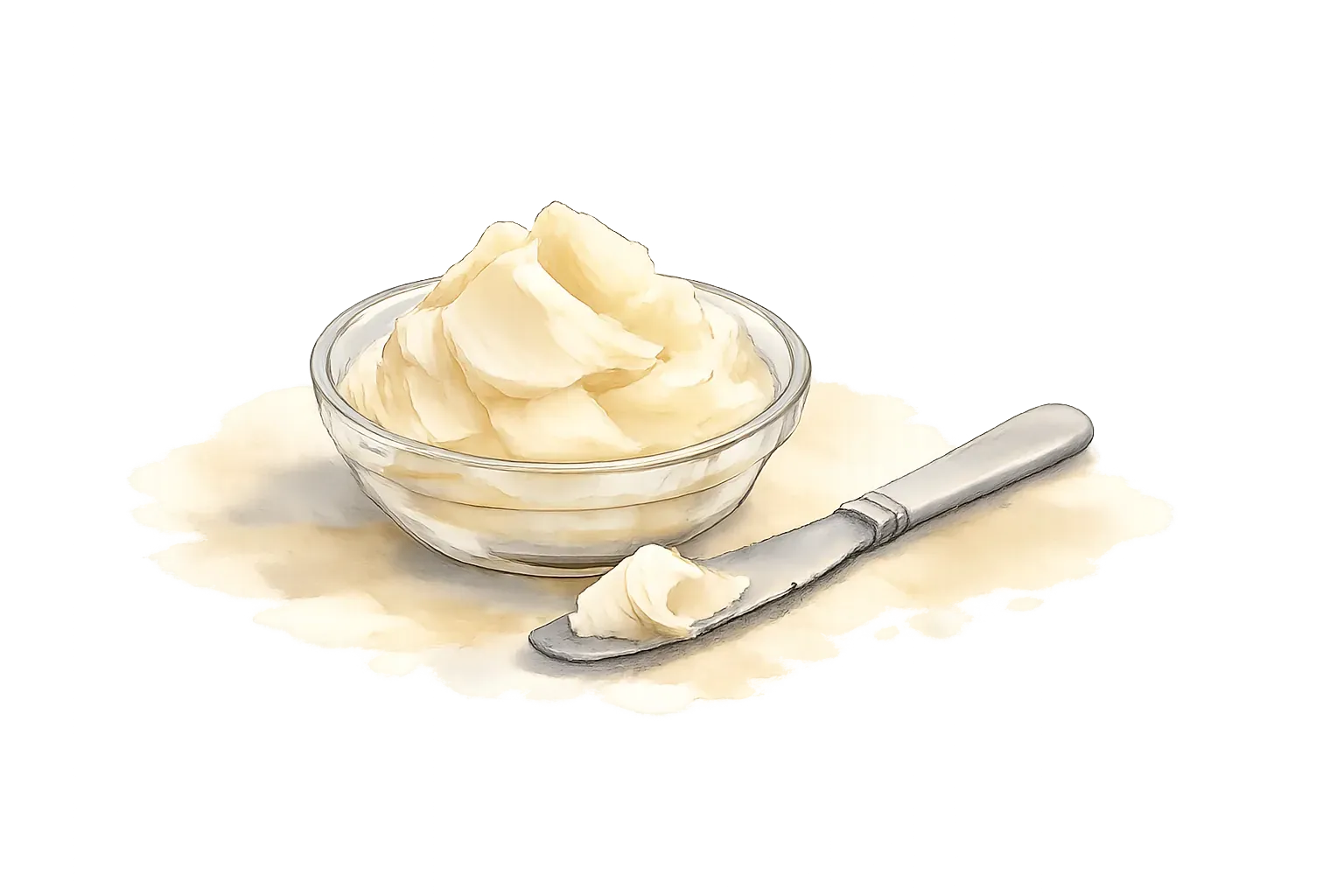
Also: Crisco, vegetable shortening
A solid, flavorless fat made from hydrogenated or otherwise processed vegetable oil, developed as a shelf-stable substitute for lard and butter in baking. Used for its neutral flavor and reliably solid texture at room temperature -- in candy-making, a small amount stirred into melted chocolate thins it and helps it set with a firm, glossy snap, a modern substitute for old recipes that used paraffin wax the same way.
- shredded cheese
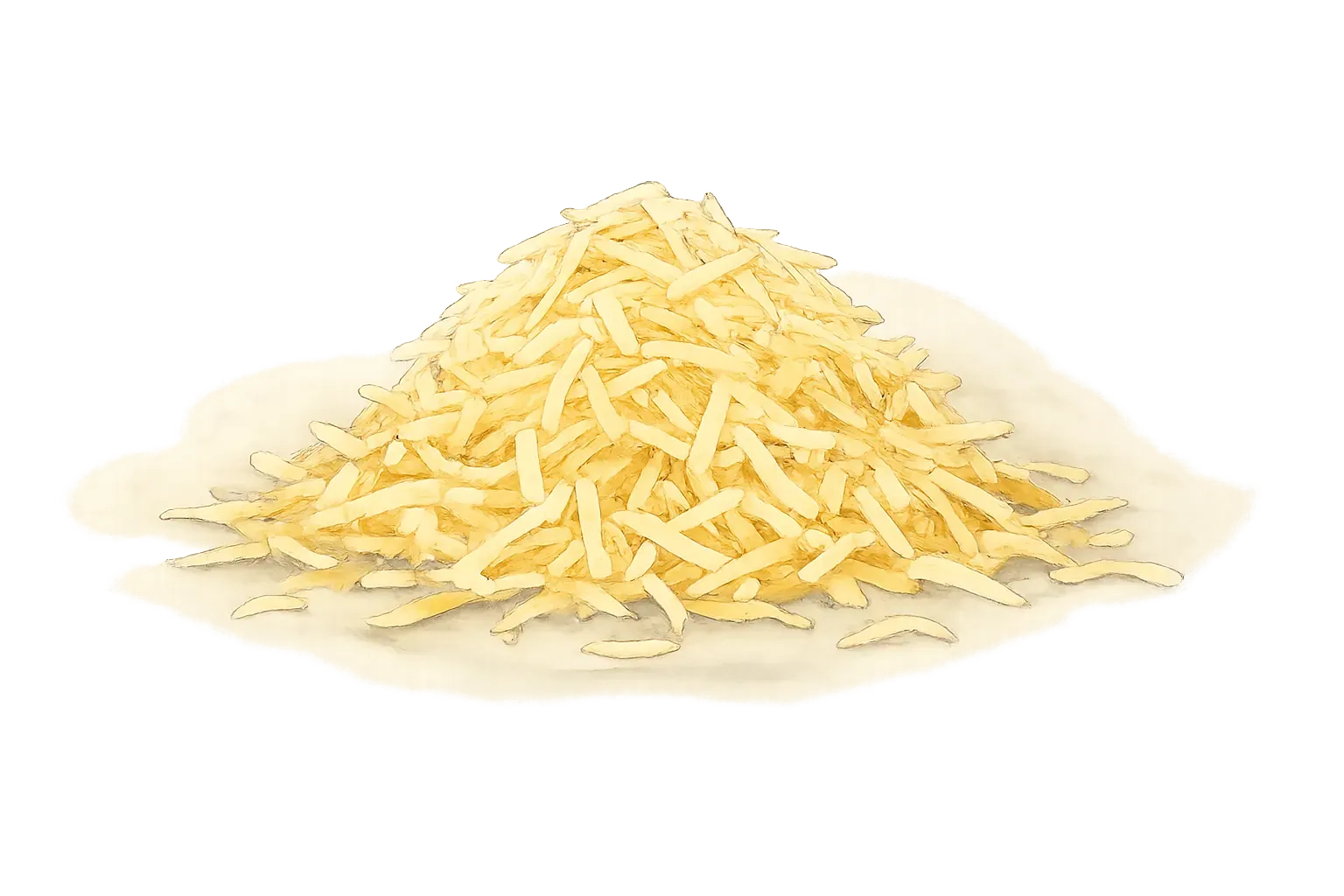
Cheese that's been grated or shredded into strands so it melts quickly and evenly, sold pre-shredded in bags or done fresh at home with a box grater. Pre-shredded bags are coated with a starch or cellulose anti-caking agent to keep the strands from clumping, which also makes them melt slightly less smoothly than cheese grated fresh off a block.
A kind of cheddar cheese
- shrimp

Also: medium uncooked shrimp
A small, sweet shellfish sold by size -- as a count-per-pound number, like 16/20, rather than vague labels like 'large' -- and available fresh, frozen, or pre-cooked. It cooks extremely fast and turns tough and rubbery within a minute or two of overcooking, so timing matters more than technique.
- smoked paprika
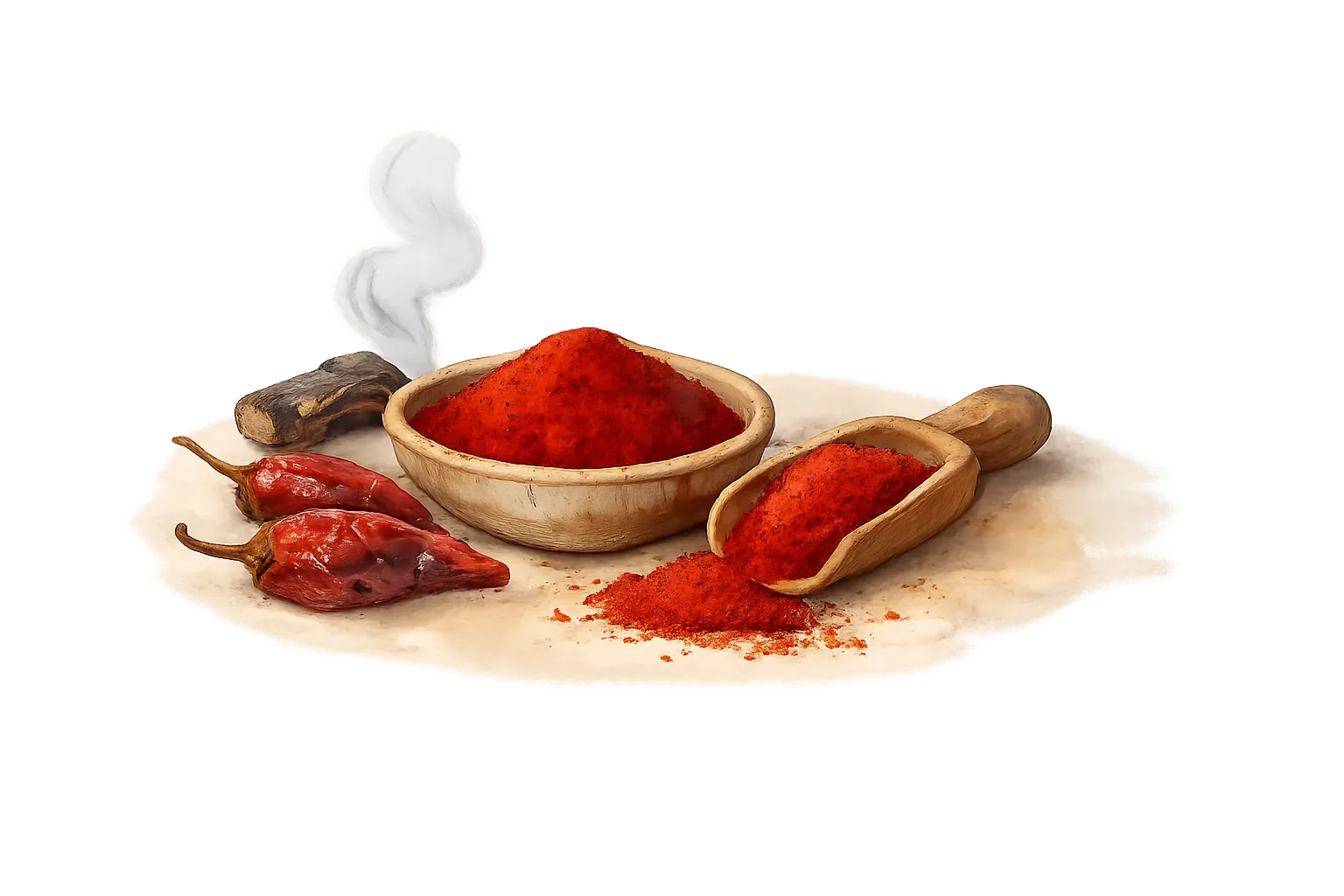
Paprika made from peppers dried over smoldering wood before grinding, giving it a deep, smoky flavor well beyond the mild sweetness of regular paprika. Because the smoke flavor is concentrated, a little goes further than an equivalent amount of sweet paprika.
A kind of paprika
- smoked sausage

A general term for fully-cooked, smoked pork or beef sausage sold in a ring or link (Hillshire Farm and Eckrich are common national brands) -- milder and less specifically seasoned than andouille or kielbasa, though closely related to both. A versatile, ready-to-heat protein for soups, jambalaya, and skillet meals.
A kind of sausage
- sour cream

A thick, tangy dairy product made by fermenting cream with bacterial cultures, used as a topping, a base for dips, and to add richness and tang to baking and sauces. Its fat content makes it more stable under heat than thinner dairy products, though it can still curdle if boiled hard or hit with too much acid too fast.
- sourdough bread
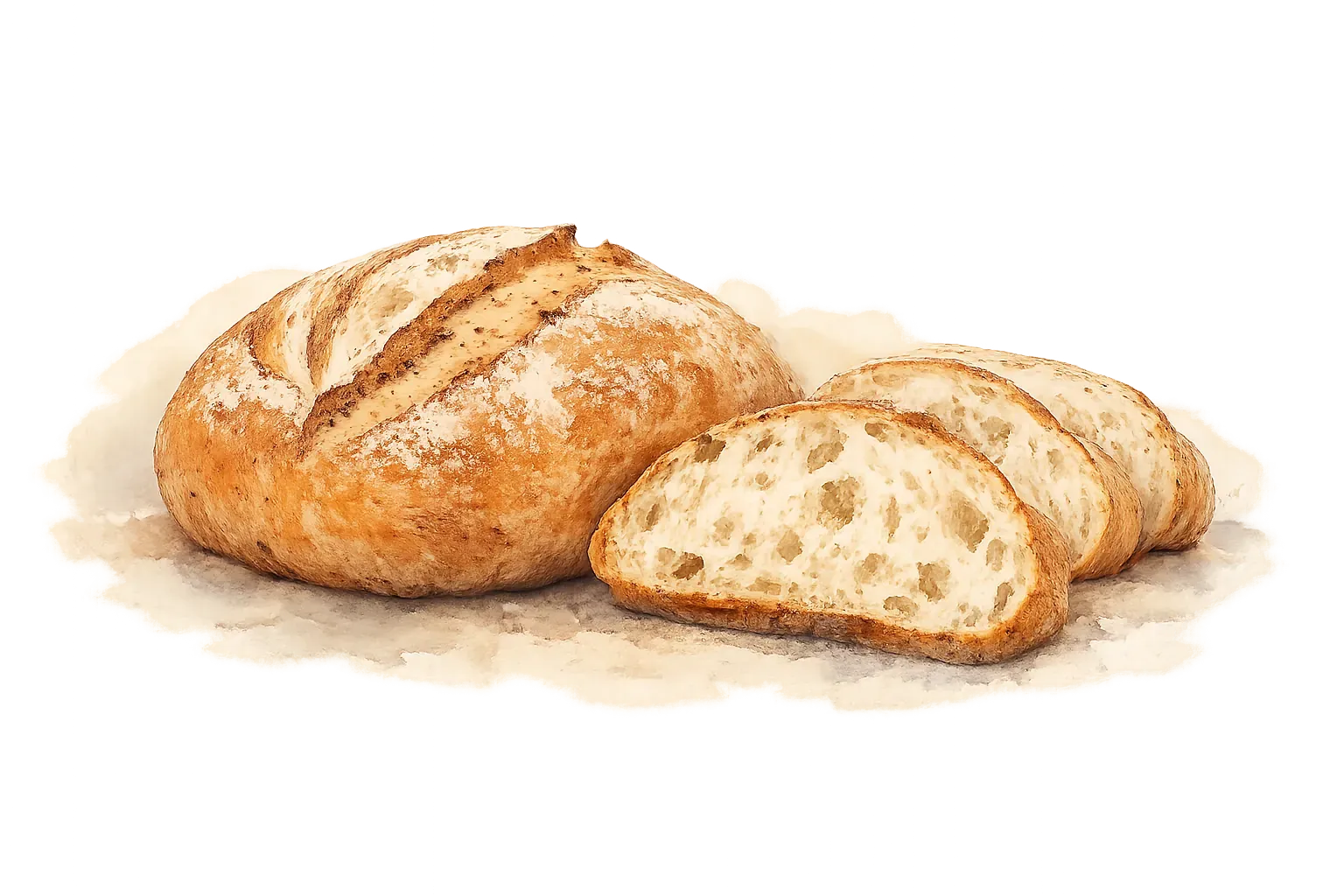
Bread leavened with a naturally fermented starter (wild yeast and bacteria) instead of commercial yeast, giving it a tangy flavor and a chewy crumb with a thick, crackly crust. A common bread to serve alongside a rich soup or chowder, since its sturdy crust and tang stand up well next to a creamy dish.
- soy sauce
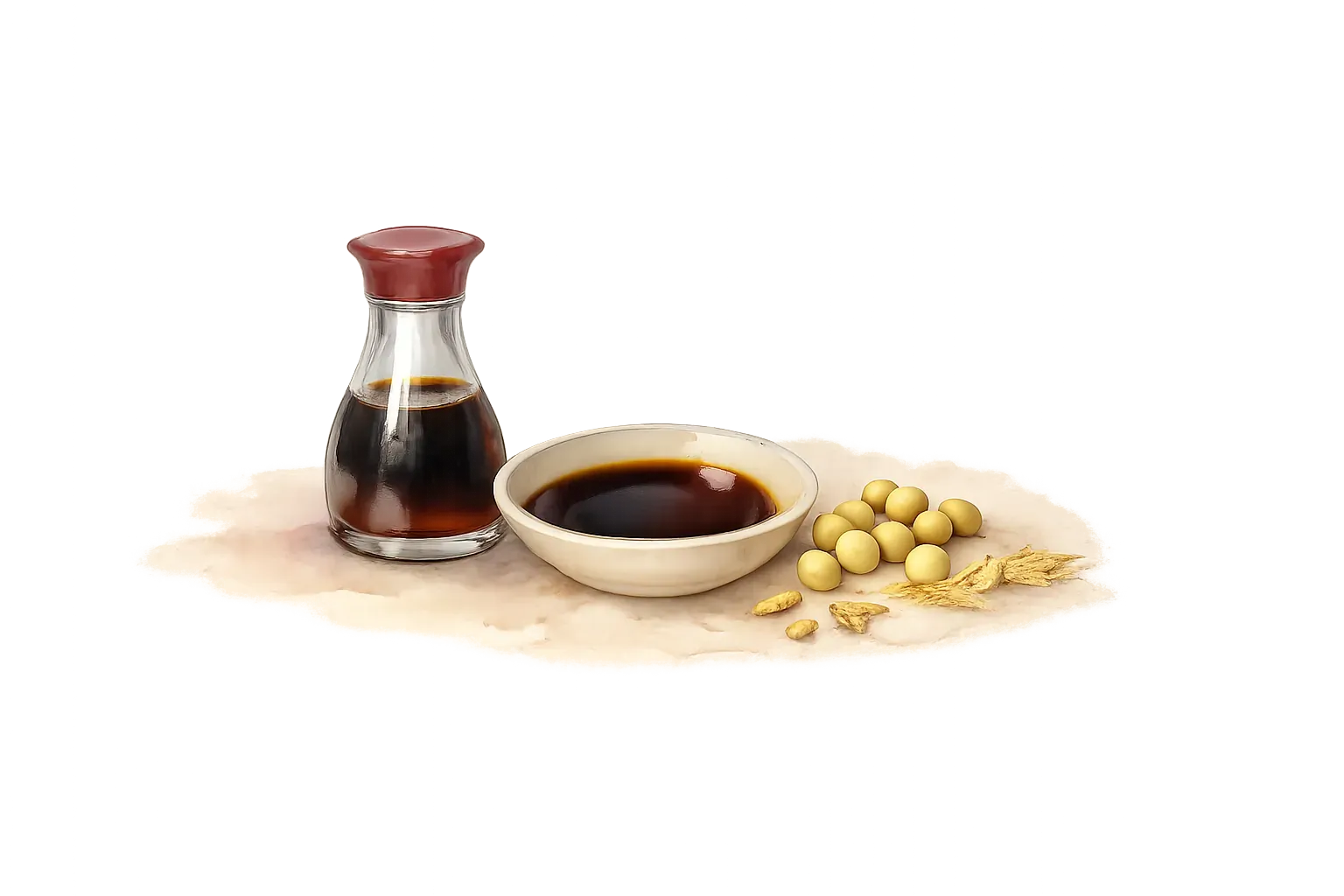
Also: Soy
A salty, savory, fermented sauce made from soybeans and usually wheat, a foundational seasoning across Chinese, Japanese, and other Asian cooking. Regular (light) soy sauce and dark soy sauce are different products, not just different brand names: dark soy is thicker, slightly sweeter, and used mainly for color and depth rather than as the primary salt source.
More specific: sweet soy sauce, tamari
- spaghetti squash
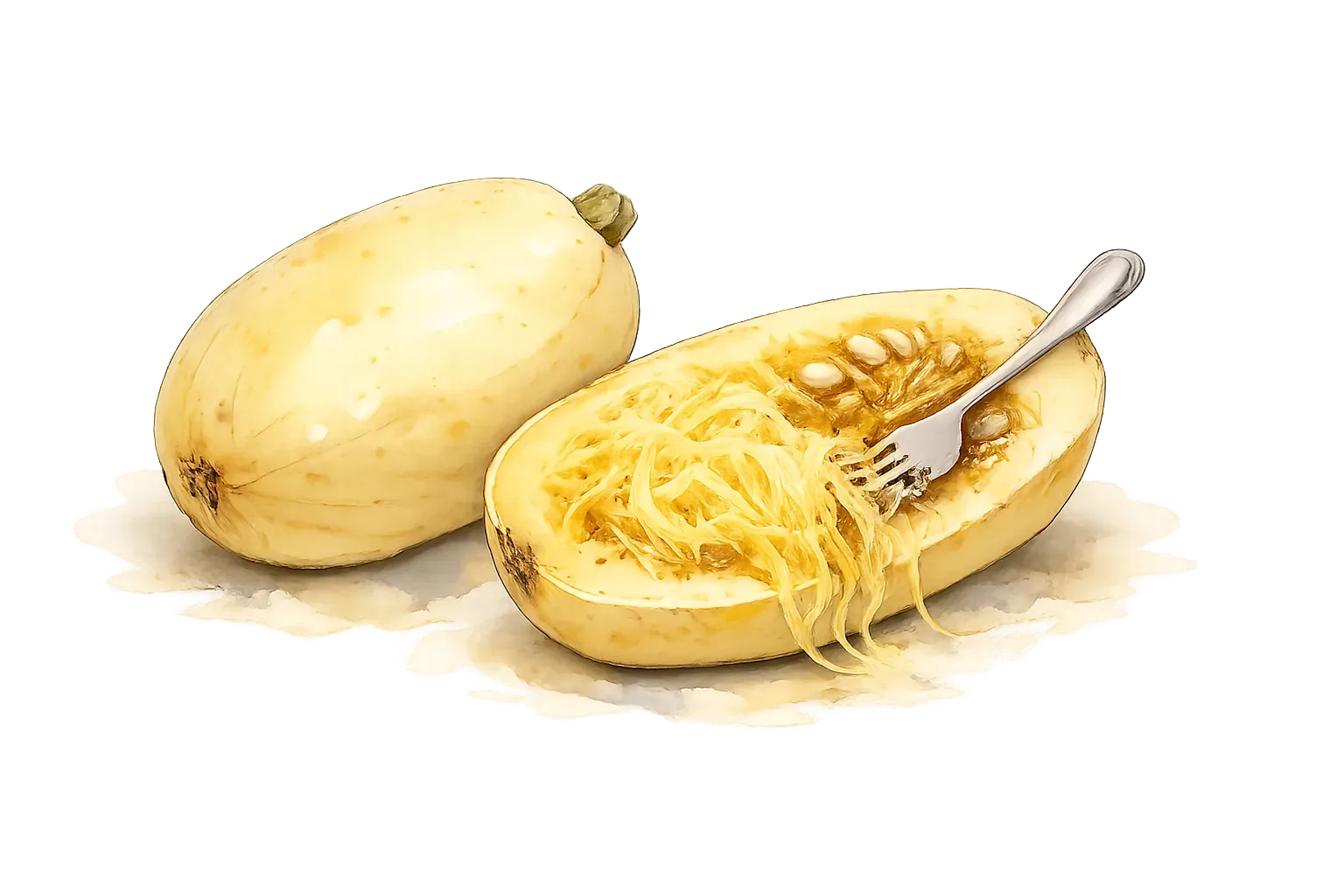
A winter squash whose cooked flesh separates into long, spaghetti-like strands when scraped with a fork, used as a lower-carb stand-in for pasta. Unlike other winter squashes, it doesn't puree or mash well -- its stringy structure is what makes it useful.
- spinach
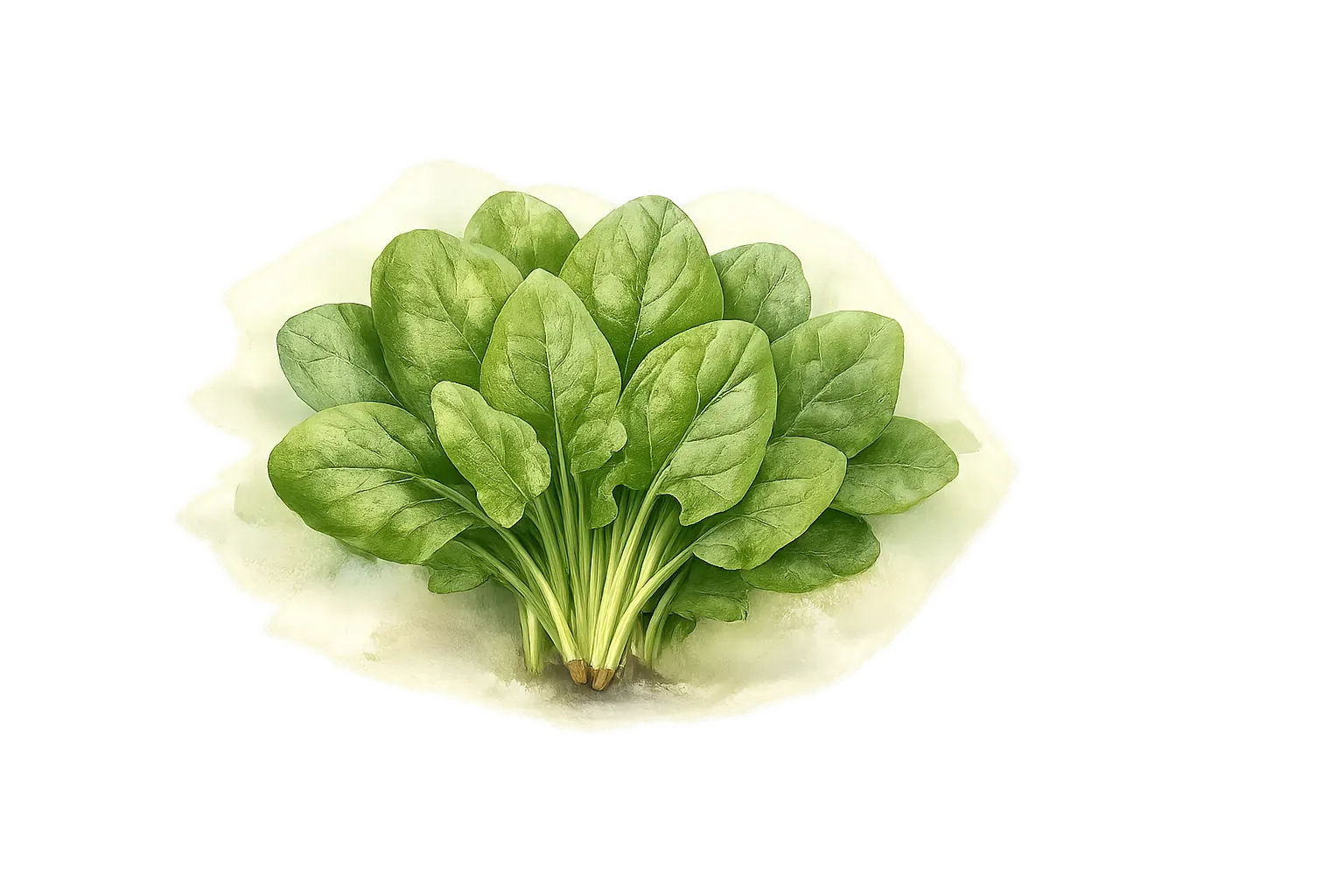
Also: Fresh chopped spinach
A leafy green with a mild, slightly earthy flavor, eaten raw in salads or cooked, which wilts it down dramatically in volume -- a large bag of raw spinach reduces to a small handful once cooked. Baby spinach is more tender and mild, while mature spinach has larger, more textured leaves and a slightly stronger flavor.
- split peas
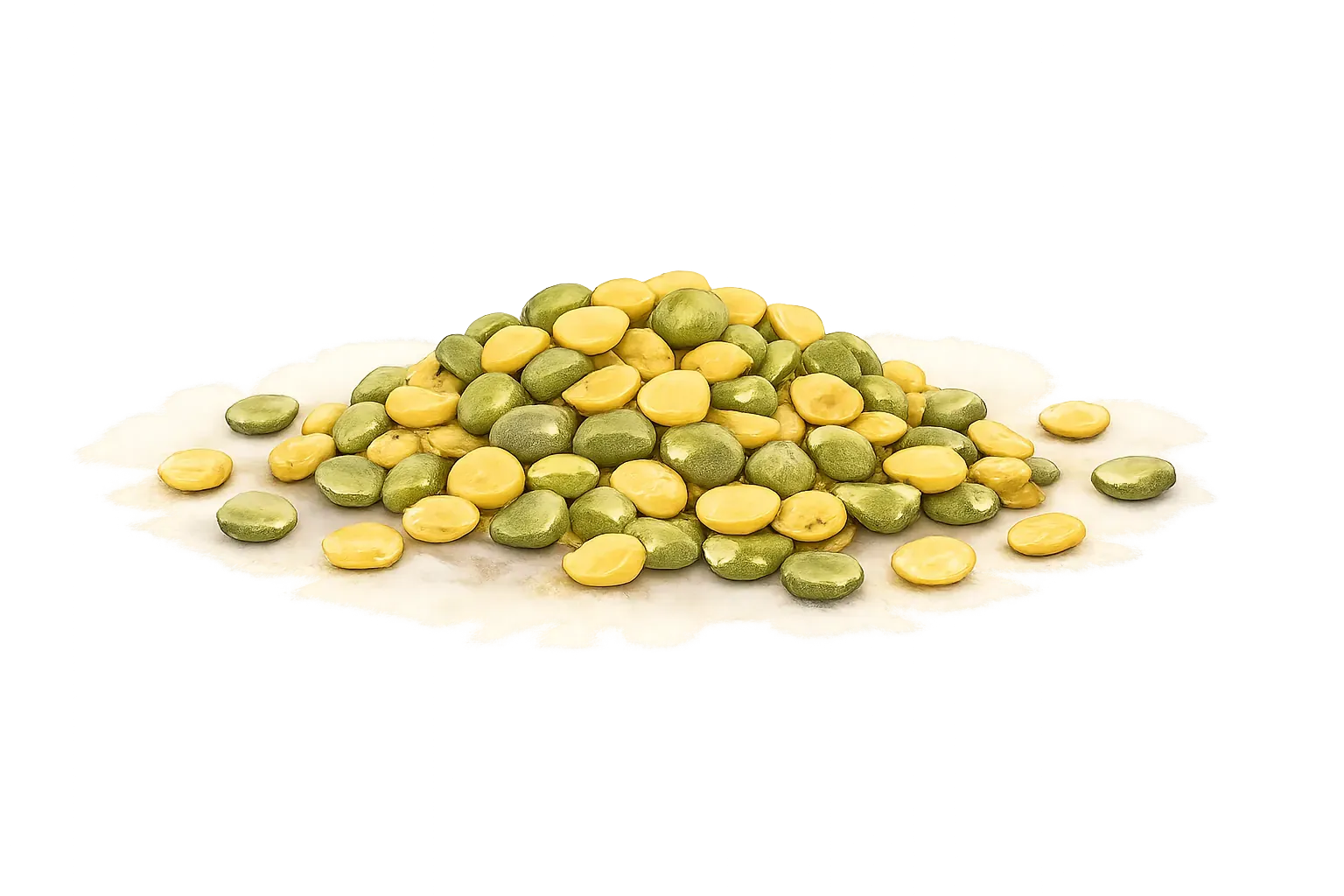
Also: split green peas
Dried, peeled, and split field peas (green or yellow), which cook down into a thick, smooth, porridge-like consistency without needing to be pureed -- the base of classic split pea soup, and a common addition to a mixed-bean soup for the body it adds.
- Sriracha
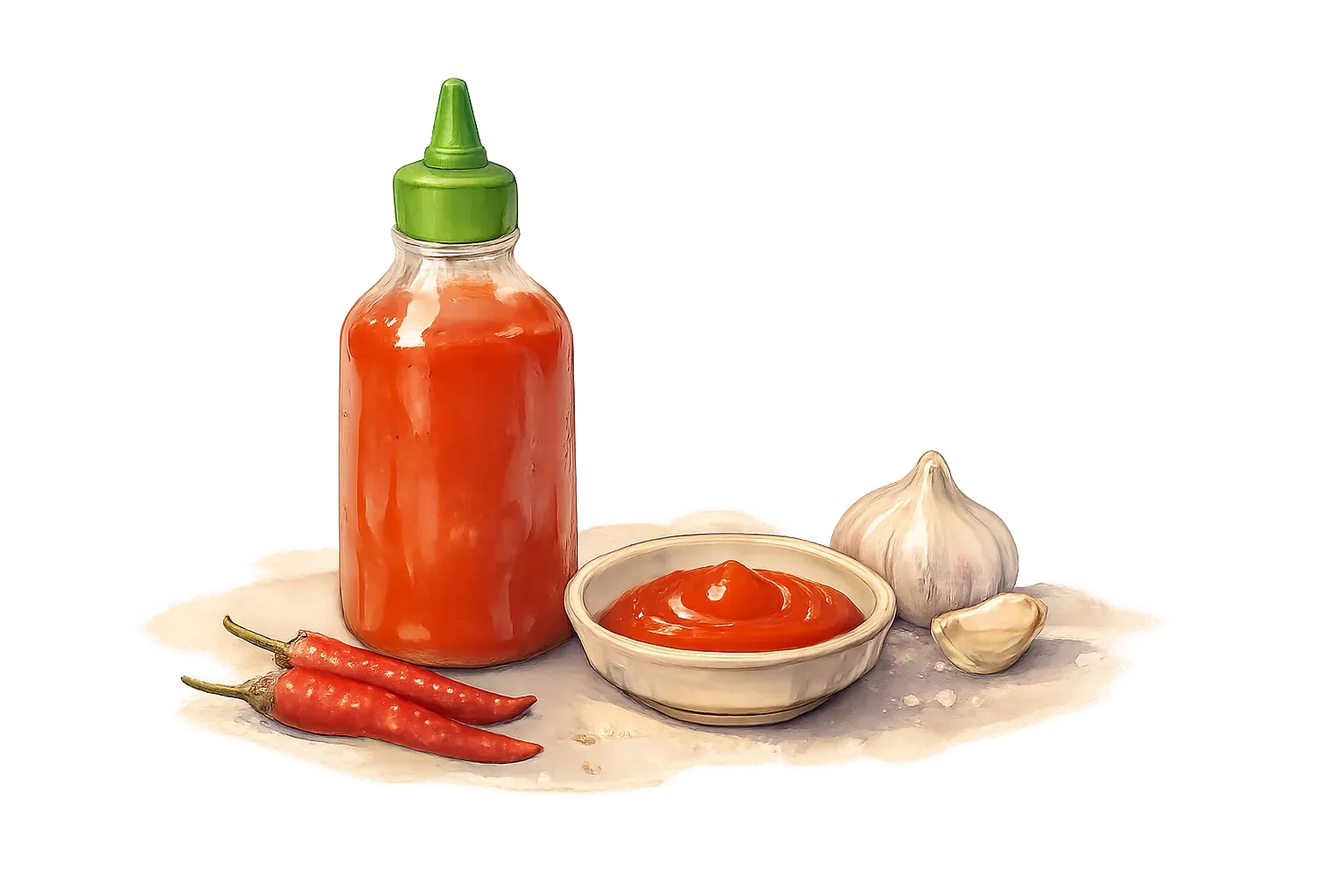
Also: Sriracha sauce
A hot sauce made from chile peppers, garlic, vinegar, and sugar, with a distinctive garlicky, tangy-sweet heat; the name is generic but is strongly associated with the Huy Fong brand's rooster-labeled bottle. Milder and sweeter than most vinegar-forward hot sauces, which is part of why it works as a table condiment on its own rather than only as a cooking seasoning.
- steak
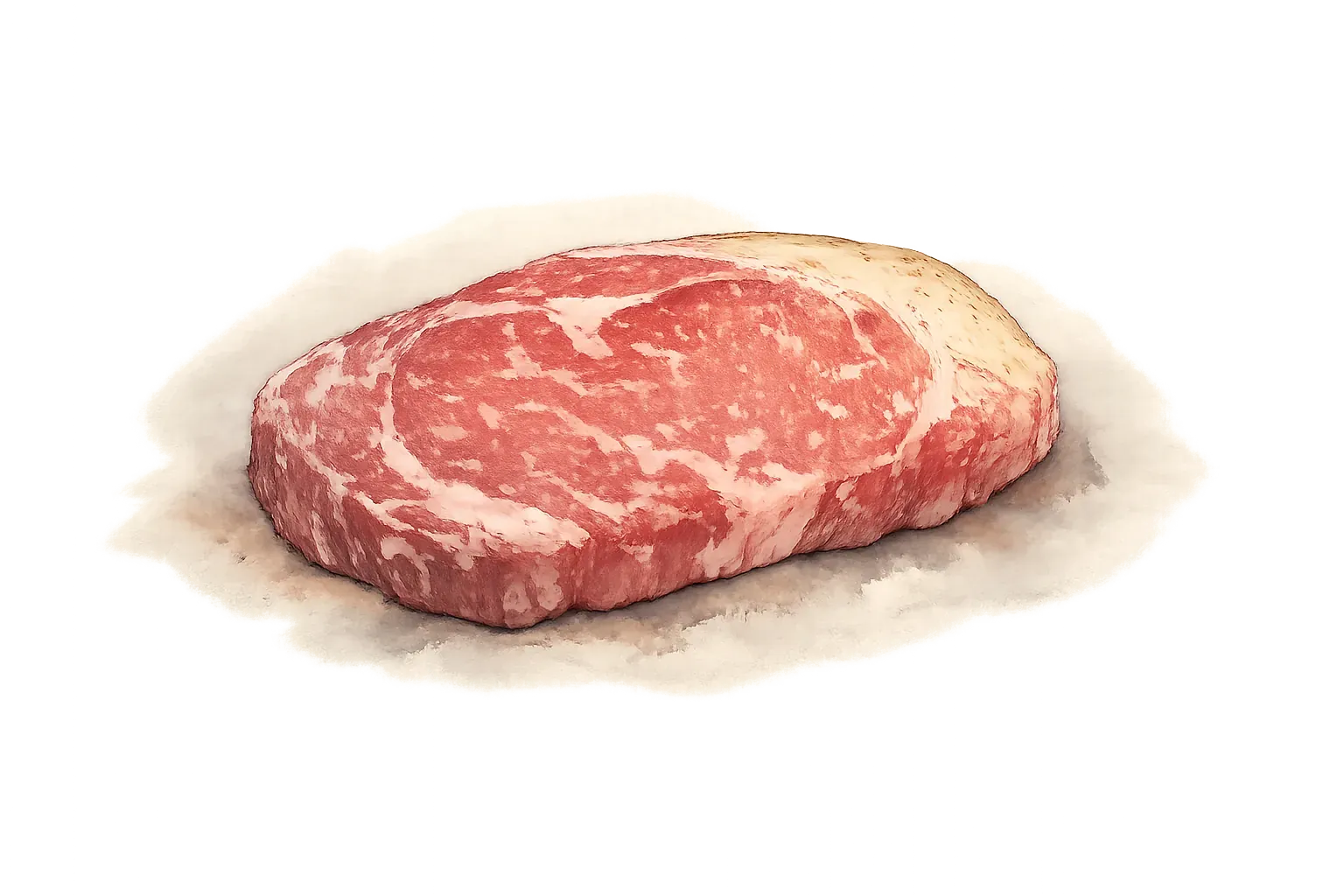
Also: Steak - Ribbeye, NY Strip, Filet, etc.
A cut of beef, typically from the more tender parts of the animal -- ribeye, strip, tenderloin, and similar -- suited to quick, high-heat cooking like grilling or pan-searing rather than the long, slow cooking that tougher cuts need. Matching the cut to the cooking method matters more than any other single factor: a tender steak cooked low and slow turns dry, while a tough cut seared quickly stays chewy.
More specific: flat iron steak
- sugar
Also: White sugar
Refined, granulated sucrose -- the standard sweetener in baking, cooking, and drinks. Beyond sweetness, it plays a structural role in baking, affecting browning, moisture, and texture, so it isn't purely a flavor ingredient the way it might seem.
More specific: brown sugar, confectioners sugar
- sweet chili sauce
A Southeast Asian condiment combining chile heat with sweetness -- usually from sugar -- and a light tang, used as a dipping sauce and glaze. It's noticeably sweeter and milder than most hot sauces, closer to a syrup with heat than a straight chile sauce.
- sweet onion
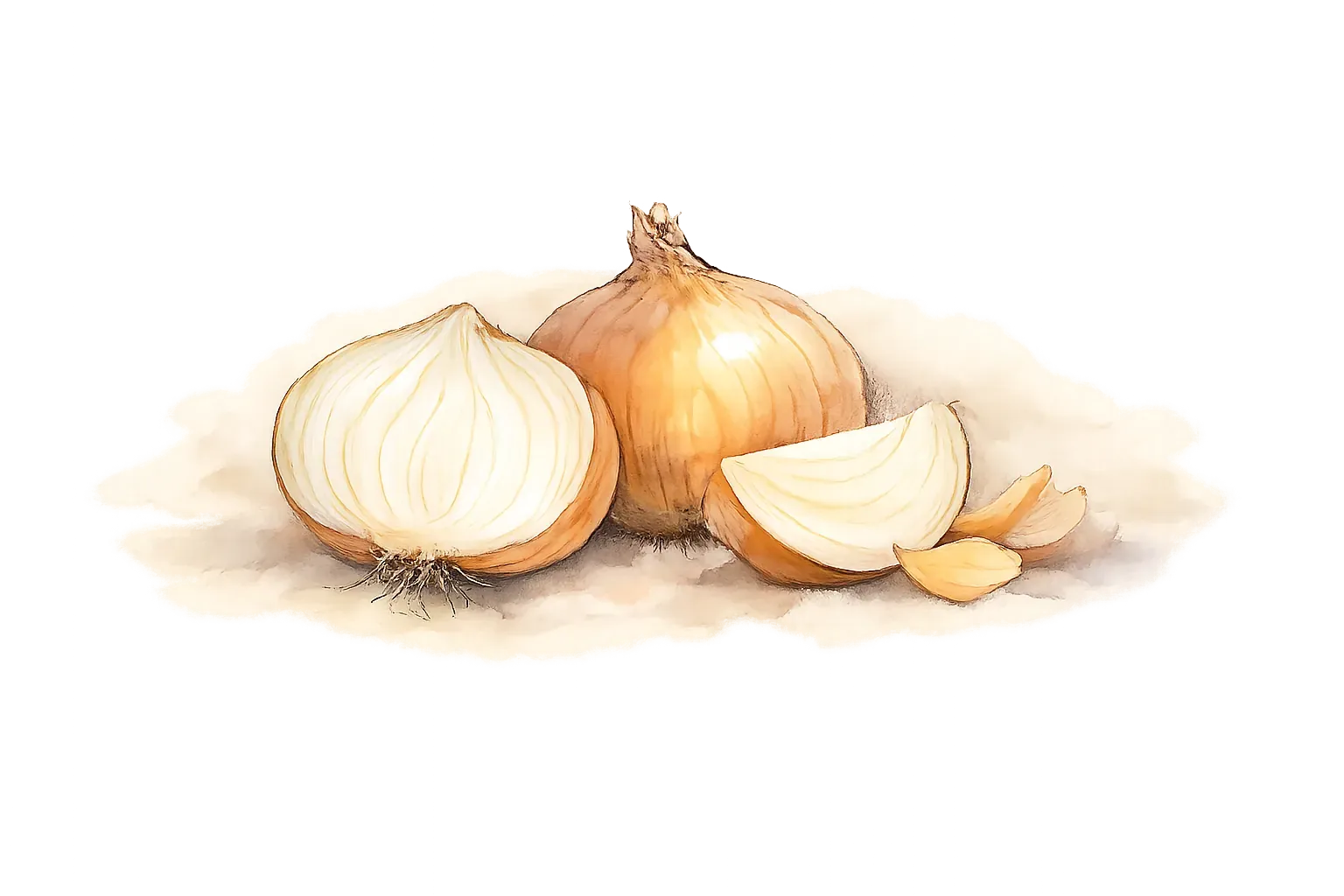
Also: Sweet Onions
An onion variety -- Vidalia and Walla Walla are the best-known examples -- bred to be milder and higher in sugar than standard yellow onions, with less of the sharp bite that makes raw onion sting. Its higher water and sugar content make it good eaten raw but also mean it browns and caramelizes faster than a standard onion, so it can scorch if treated the same way.
A kind of onion
- sweet potatoes

Also: sweet potato
A starchy root vegetable with sweet, moist flesh, usually orange but sometimes white or purple depending on the variety; roasted, baked, mashed, or fried. Despite the name, it's unrelated to the regular potato and behaves differently -- its natural sugars mean it caramelizes and can scorch faster under high heat.
- sweet soy sauce
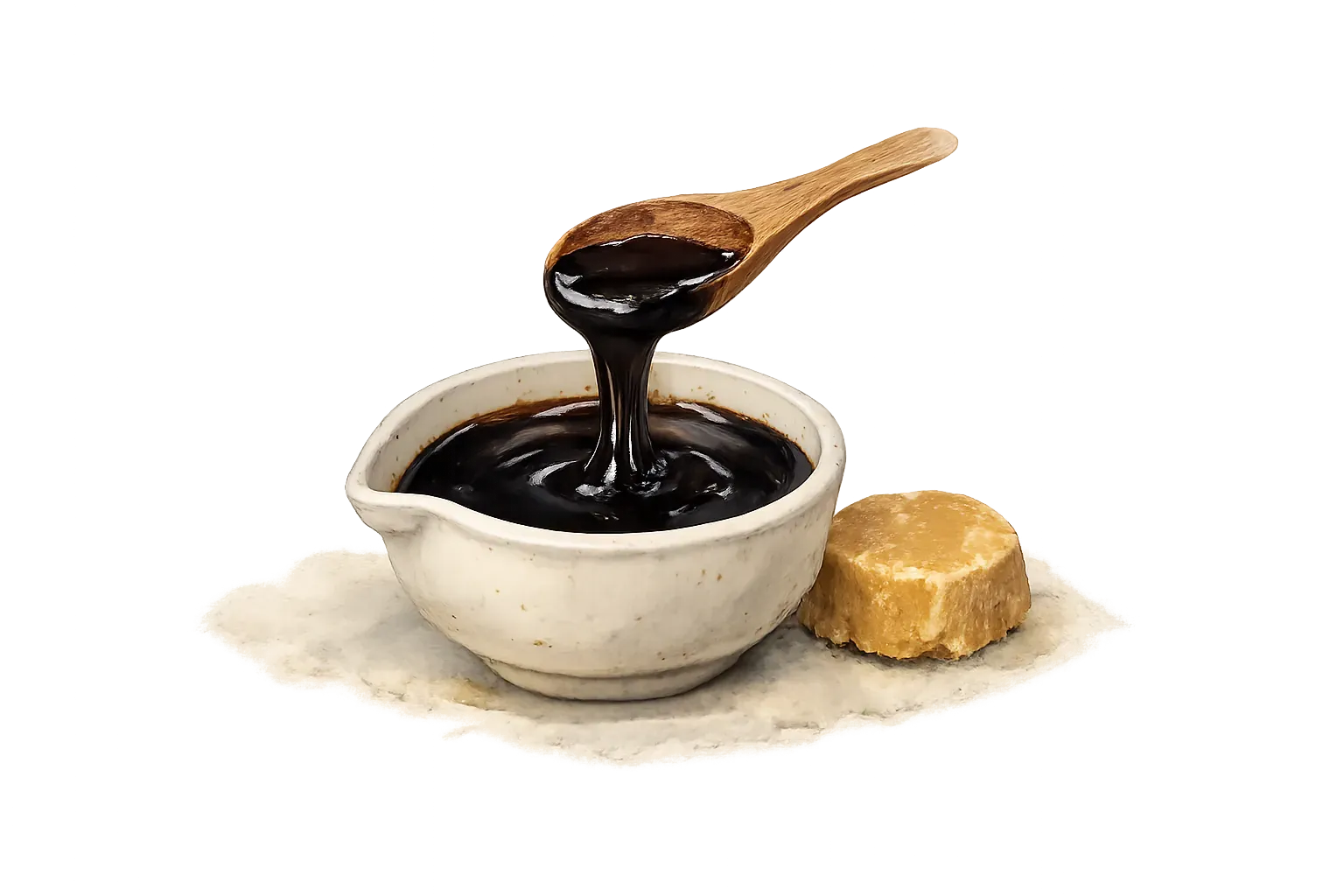
A thick, syrupy, sweetened soy sauce -- Indonesian kecap manis is the best-known version -- used as a glaze and seasoning in Southeast Asian cooking. It's sweetened heavily with palm sugar during production, making it far thicker and sweeter than regular soy sauce rather than simply a sweetened variant of the same thing.
A kind of soy sauce
- sweet tea

Black tea brewed strong, sweetened with sugar while still hot so it fully dissolves, then chilled over ice; a Southern US staple drink. Used in cooking, it functions as a concentrated source of tannin, sweetness, and flavor rather than as a drink, so the ratio of tea to sugar in a dish may differ substantially from how it's brewed for drinking.
- Swiss cheese
A firm, pale yellow cheese made from cow's milk, known for its characteristic holes and mild, slightly nutty flavor; melts smoothly and is common on sandwiches. The holes, called eyes, form naturally from gas produced during aging and are a sign of the traditional process rather than a defect.
T
- Tabasco sauce
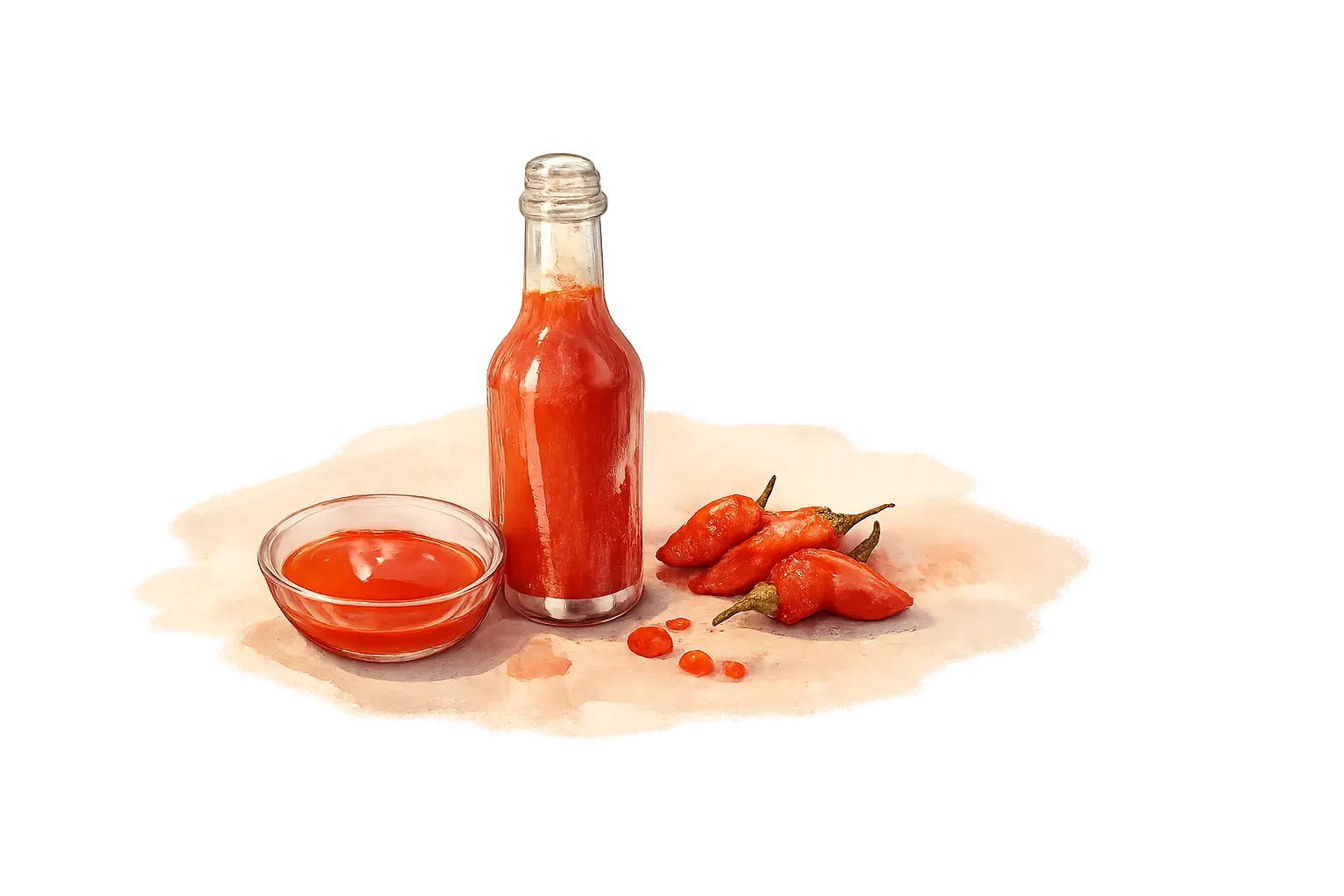
Also: 6-7 Drops tabasco sauce, Tabasco
A thin, vinegar-forward hot sauce made from aged, fermented Tabasco peppers blended with vinegar and salt; adds sharp acidic heat by the dash rather than deep pepper flavor. It's a seasoning, not a base ingredient -- a few drops shift a dish's balance of heat and tang without adding bulk or watering it down.
- taco seasoning
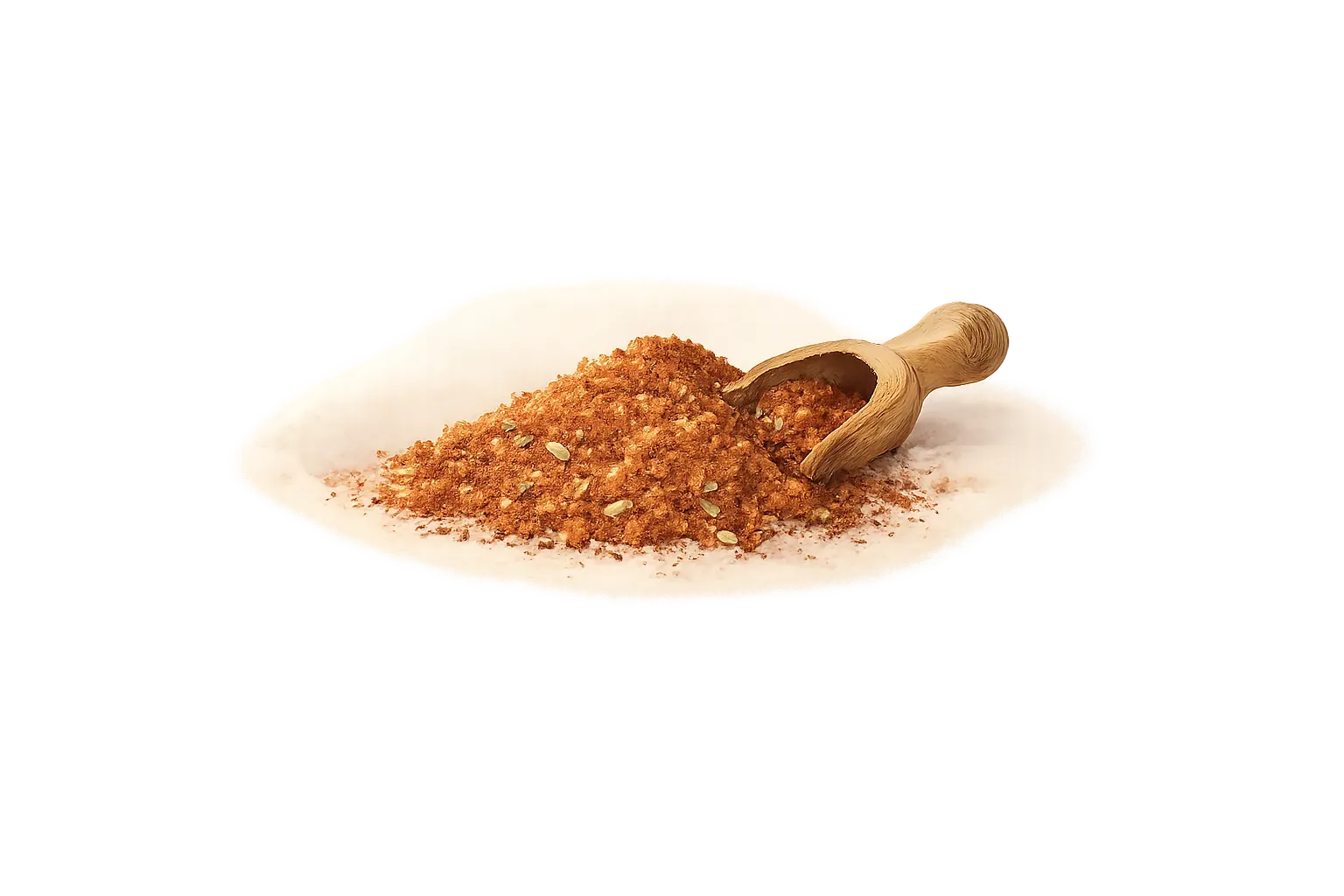
A pre-mixed blend of chili powder, cumin, garlic powder, onion powder, oregano, and paprika (exact mix varies by brand), built to season taco meat and similar dishes in one shot rather than measuring each spice separately.
- tamari
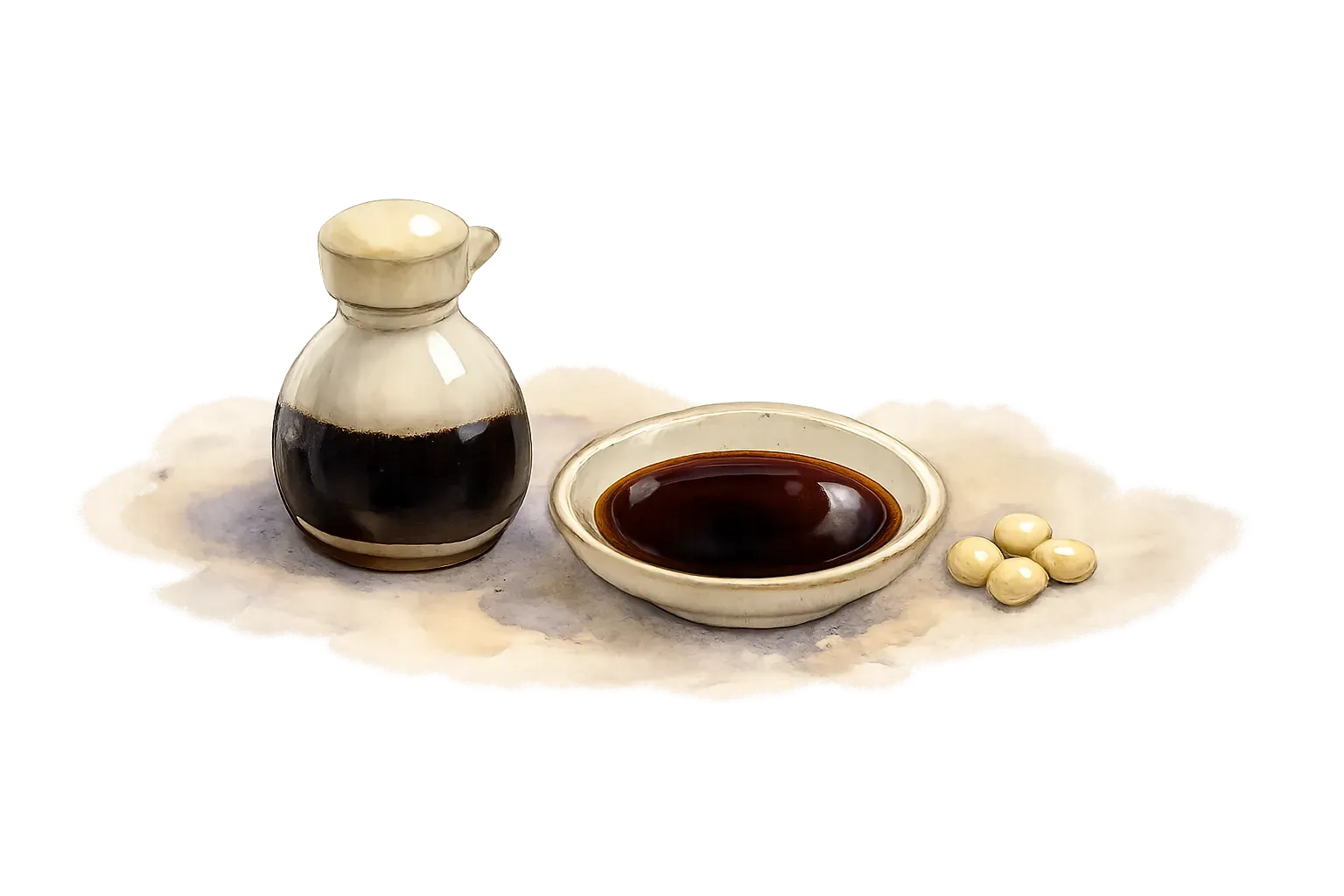
A Japanese soy sauce made with little or no wheat, giving it a smoother, less sharp flavor than regular soy sauce (and making it a common gluten-free substitute).
A kind of soy sauce
- Tang
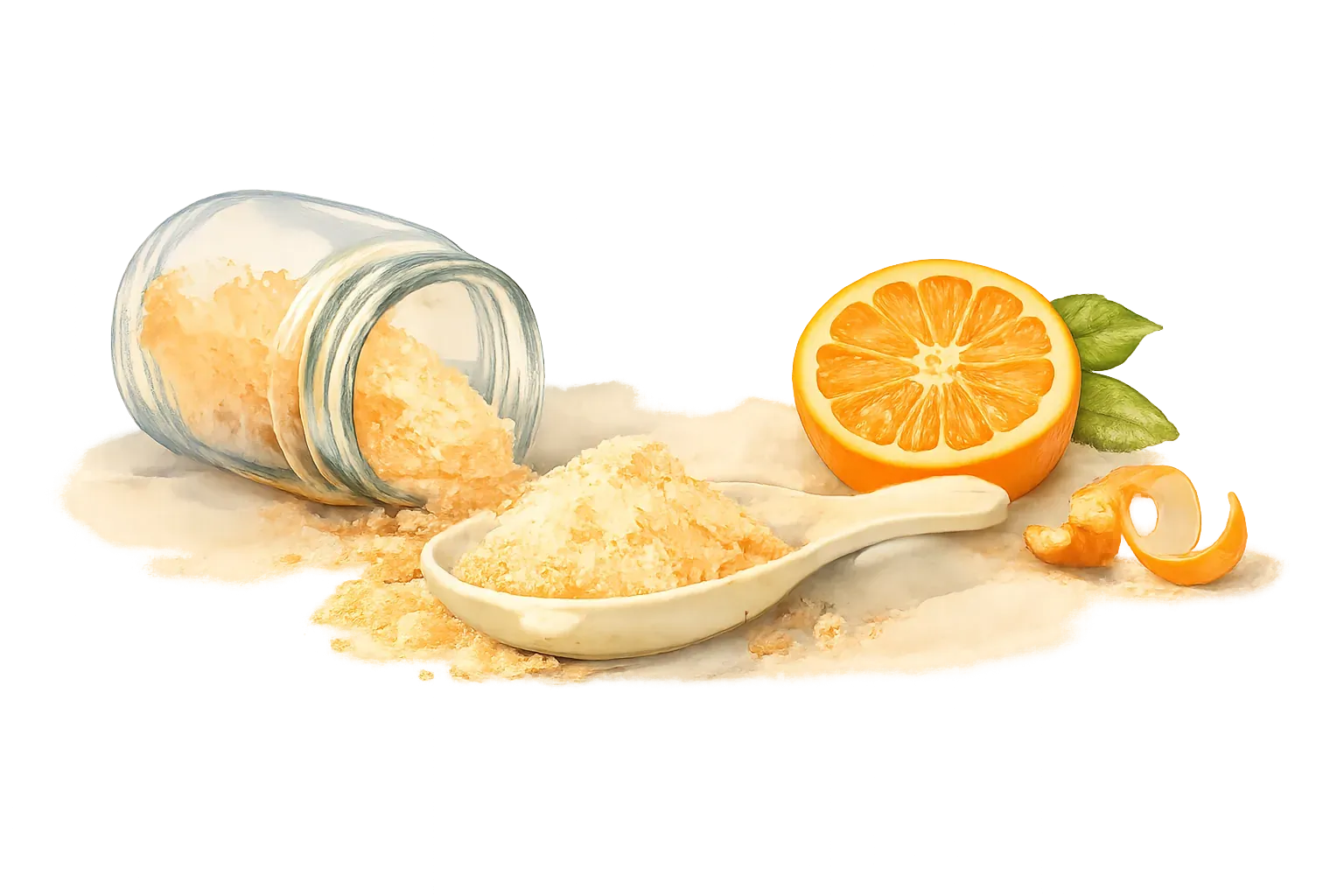
A powdered, orange-flavored, vitamin-C-fortified drink mix meant to be stirred into water; in cooking it works as a shelf-stable shortcut for concentrated orange flavor plus sugar and citric acid, not as a beverage on its own.
- tarragon
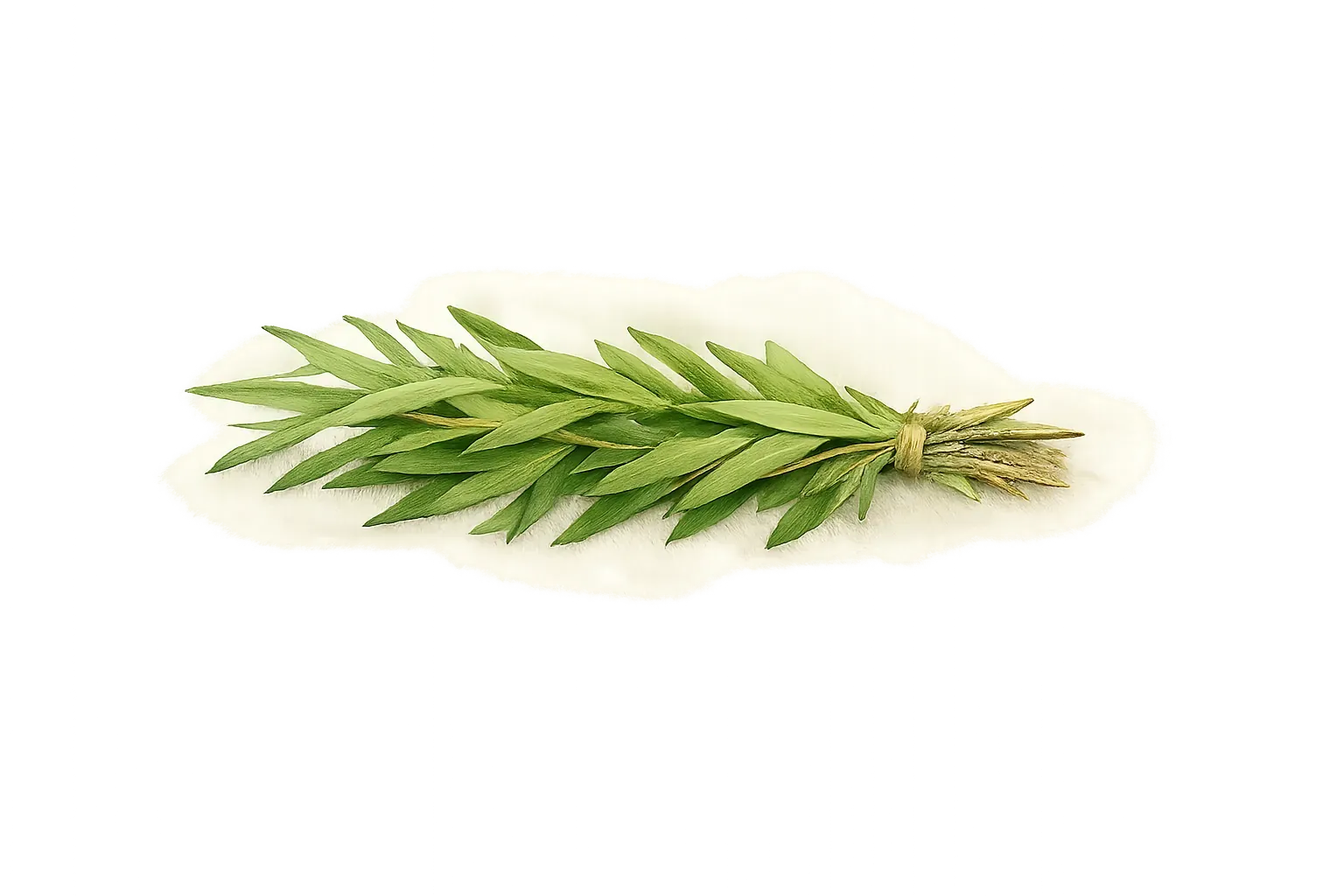
Also: Dried Tarragon
A slender-leaved herb with a distinctive anise or licorice note, central to French cooking (bearnaise sauce, fines herbes, chicken dishes); sold fresh or dried, with the dried form noticeably more muted than fresh.
- tequila
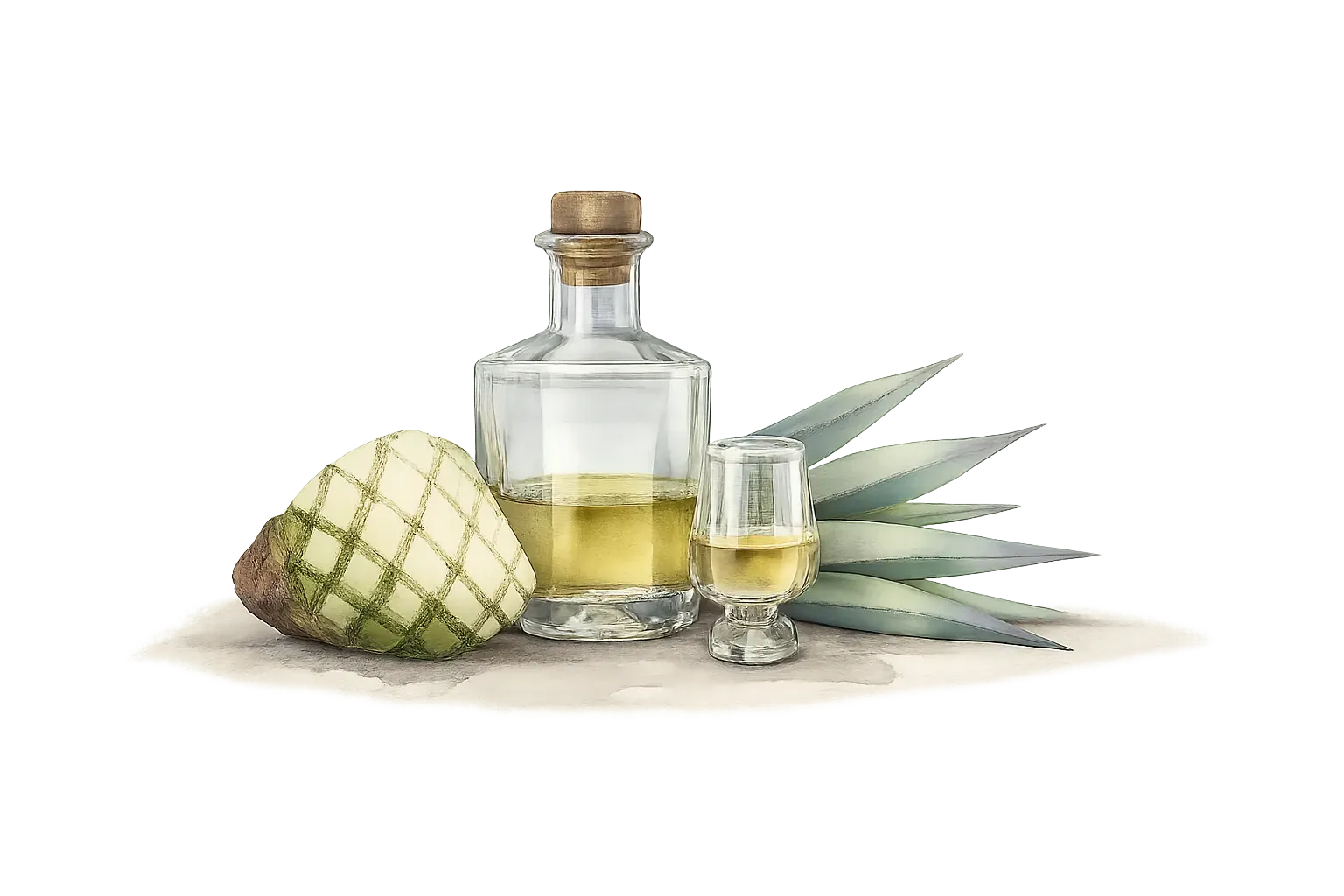
A Mexican spirit distilled from the blue agave plant; in cooking it shows up mainly in marinades and pan sauces, contributing an earthy, faintly sweet agave aroma along with alcohol.
- Texas Pete
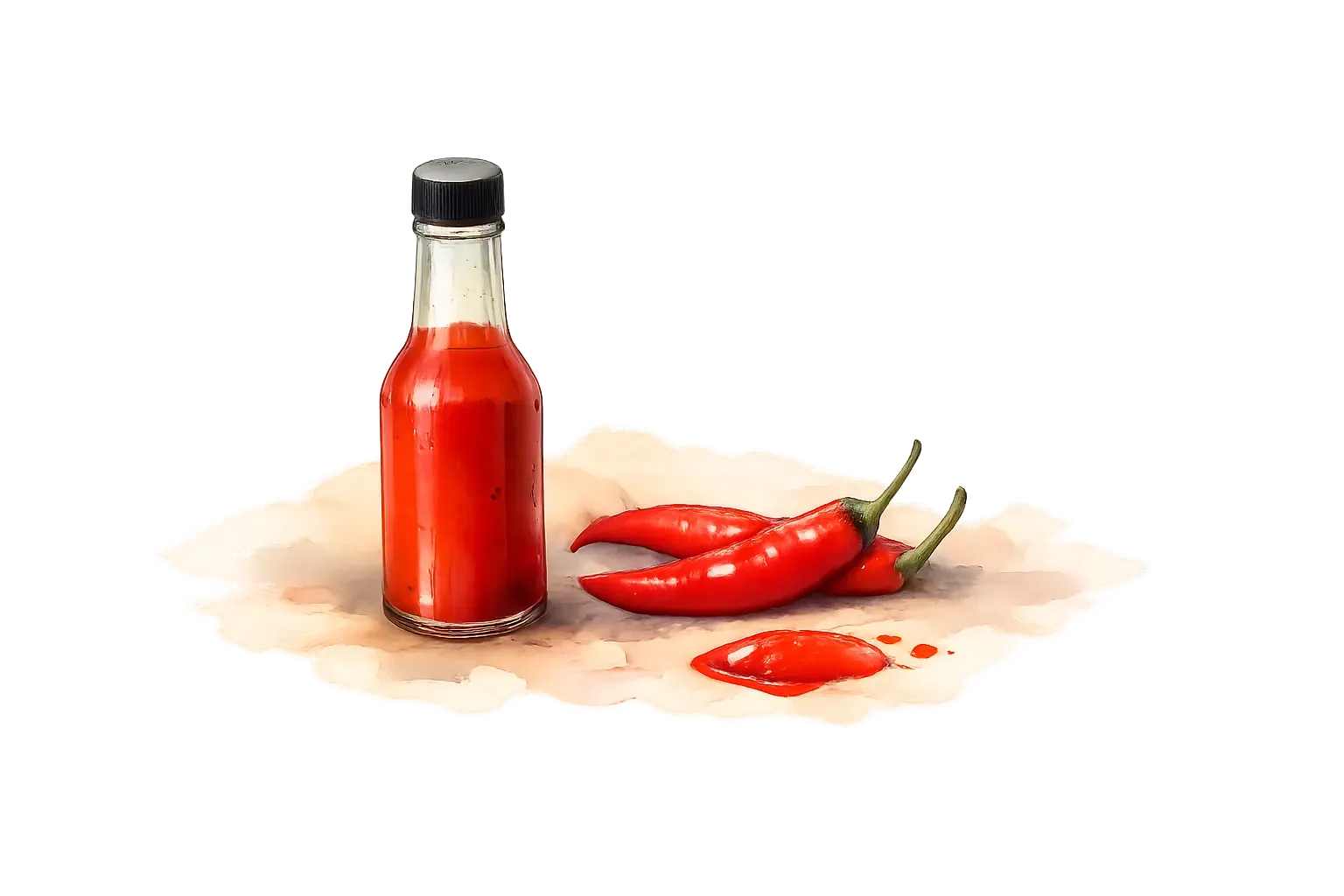
A brand of thin, vinegar-based cayenne hot sauce in the same family as Louisiana-style hot sauces; adds tangy, moderate heat by the dash rather than the smoky depth of a chipotle-based sauce or the fruitiness of a Caribbean-style one.
- thyme
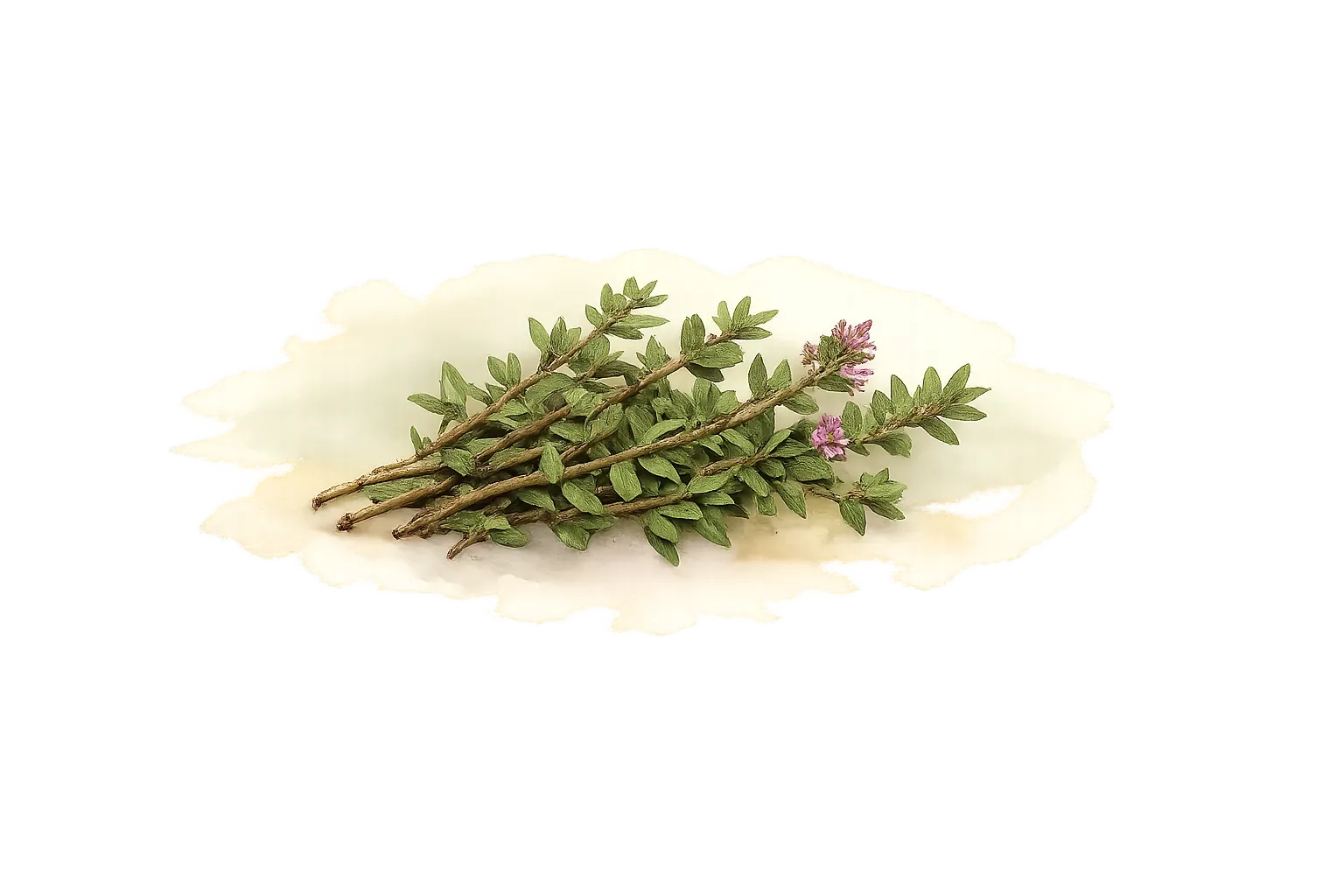
Also: Dried Thyme Leaves
A small-leaved, earthy, slightly minty herb central to French and Mediterranean cooking; its sturdy, woody stems hold up to long, slow cooking better than more delicate herbs do, which is why it shows up so often in braises and stocks.
- tomatillo
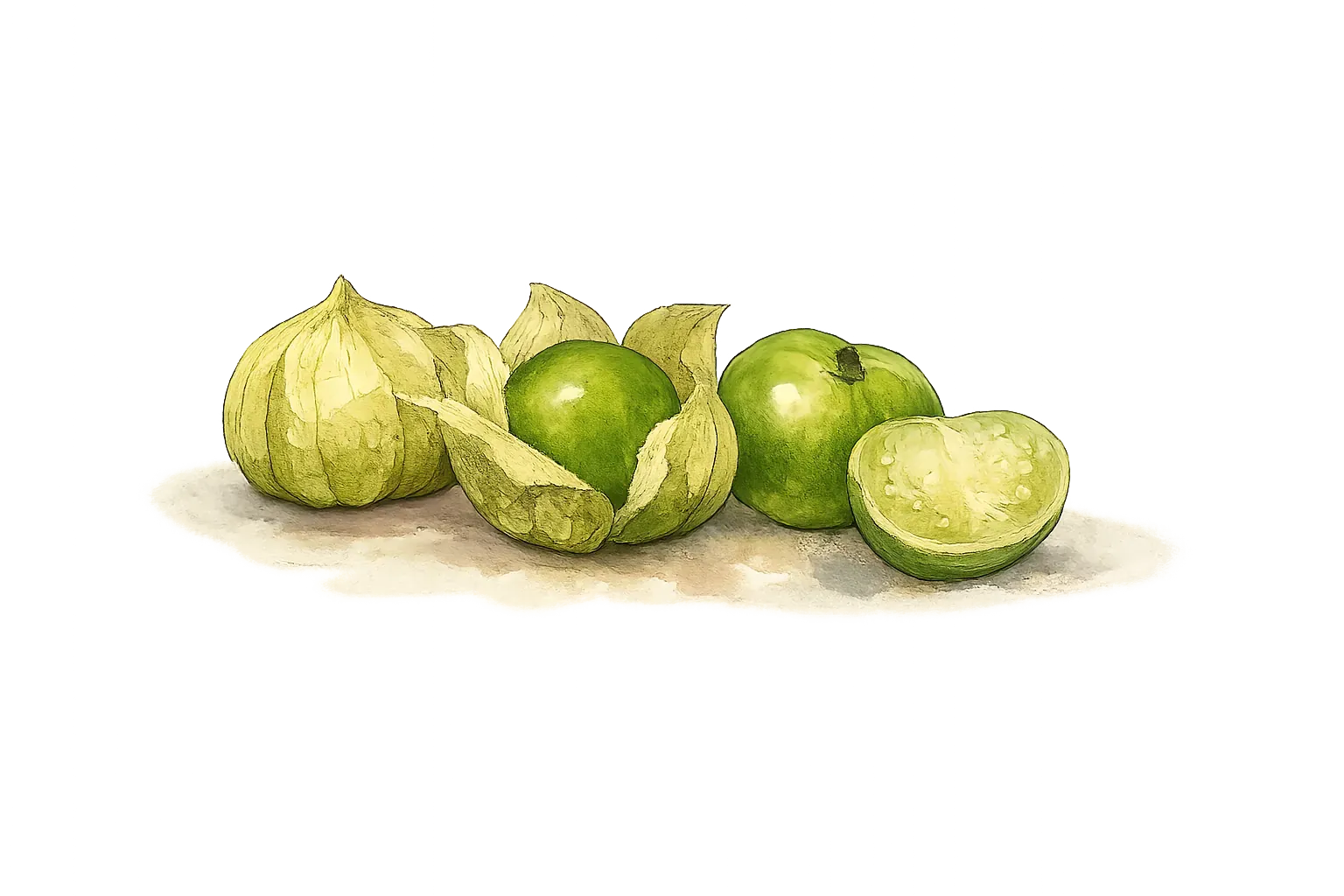
Also: tomatillos
A small, firm, green Mexican fruit related to the tomato, wrapped in a papery husk, with a bright, tart, faintly herbal flavor. Used raw or cooked (often charred or simmered) and blended into green salsas, sauces, and soups like pozole verde, where its acidity plays a similar role to lime juice or tomato.
- tomato
Also: Roma Tomatoes
A juicy, acidic fruit used as a savory vegetable; eaten raw in salads and sandwiches or cooked down into sauces, soups, and braises, where its water content and acidity both shape the final texture and balance.
More specific: diced tomatoes, tomato juice, tomato sauce
- tomato juice
Strained, thin tomato liquid, sold bottled or canned -- thinner and more drinkable than tomato sauce or puree, closer to a savory juice than a cooking base. Used both as a drink on its own (or in a Bloody Mary) and, in home cooking, as an easy way to add a large volume of tomato flavor and liquid to a soup or stew.
A kind of tomato
- tomato paste
Tomatoes cooked down and reduced far past sauce or canned-puree strength, into an intensely concentrated paste; used by the tablespoon to deepen color and tomato flavor in sauces, stews, and braises rather than as a sauce on its own.
- tomato sauce
Also: canned tomato puree
Smooth, canned cooked tomatoes, thinner and less concentrated than tomato paste but thicker than tomato juice -- often lightly seasoned with salt and sometimes onion or garlic. A base-layer ingredient in soups, chilis, and pasta sauces, adding tomato flavor and body without the chunks of diced tomatoes or the intensity of paste.
A kind of tomato
- top round
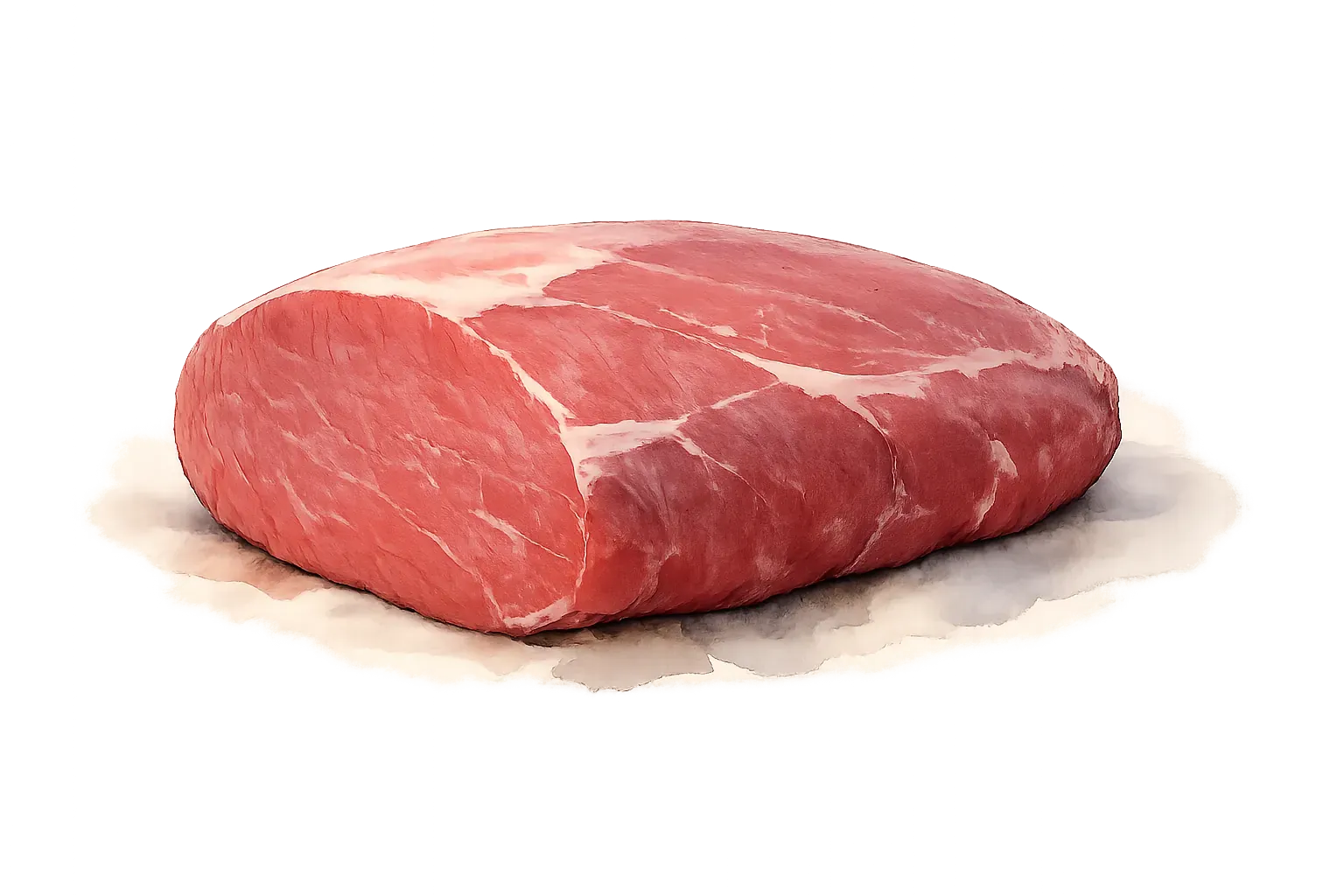
A lean, relatively tough cut of beef from the round (rear leg); this muscle does a lot of work on a live animal, so it carries more connective tissue than cuts like ribeye or tenderloin and turns chewy if cooked quickly like a tender steak.
- tortellini
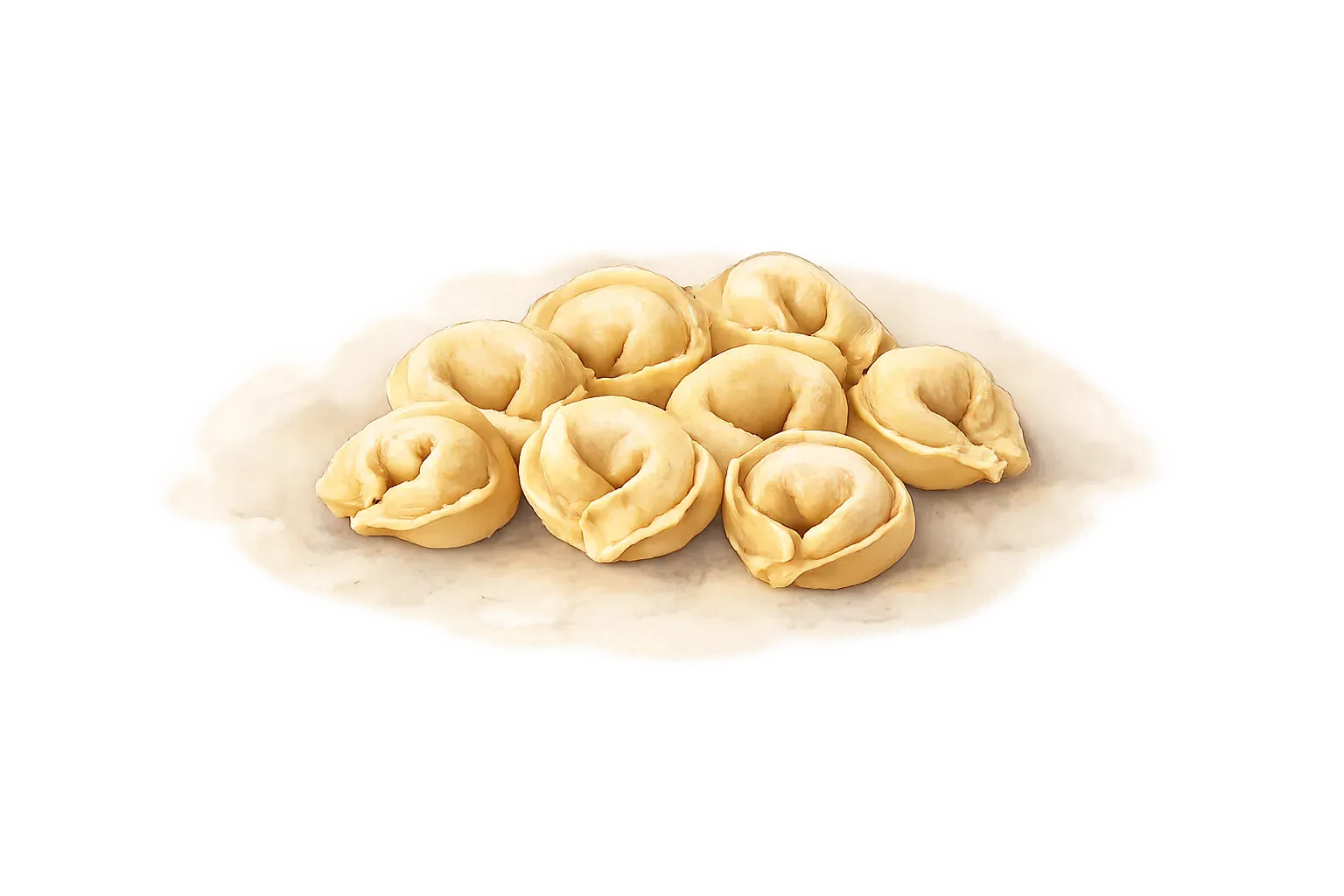
Also: Cheese Tortellini
Small, ring-shaped stuffed pasta, most often filled with cheese or meat; sold fresh/refrigerated, frozen, or dried, and typically boiled briefly, then served in broth or tossed with sauce.
- tortilla chips
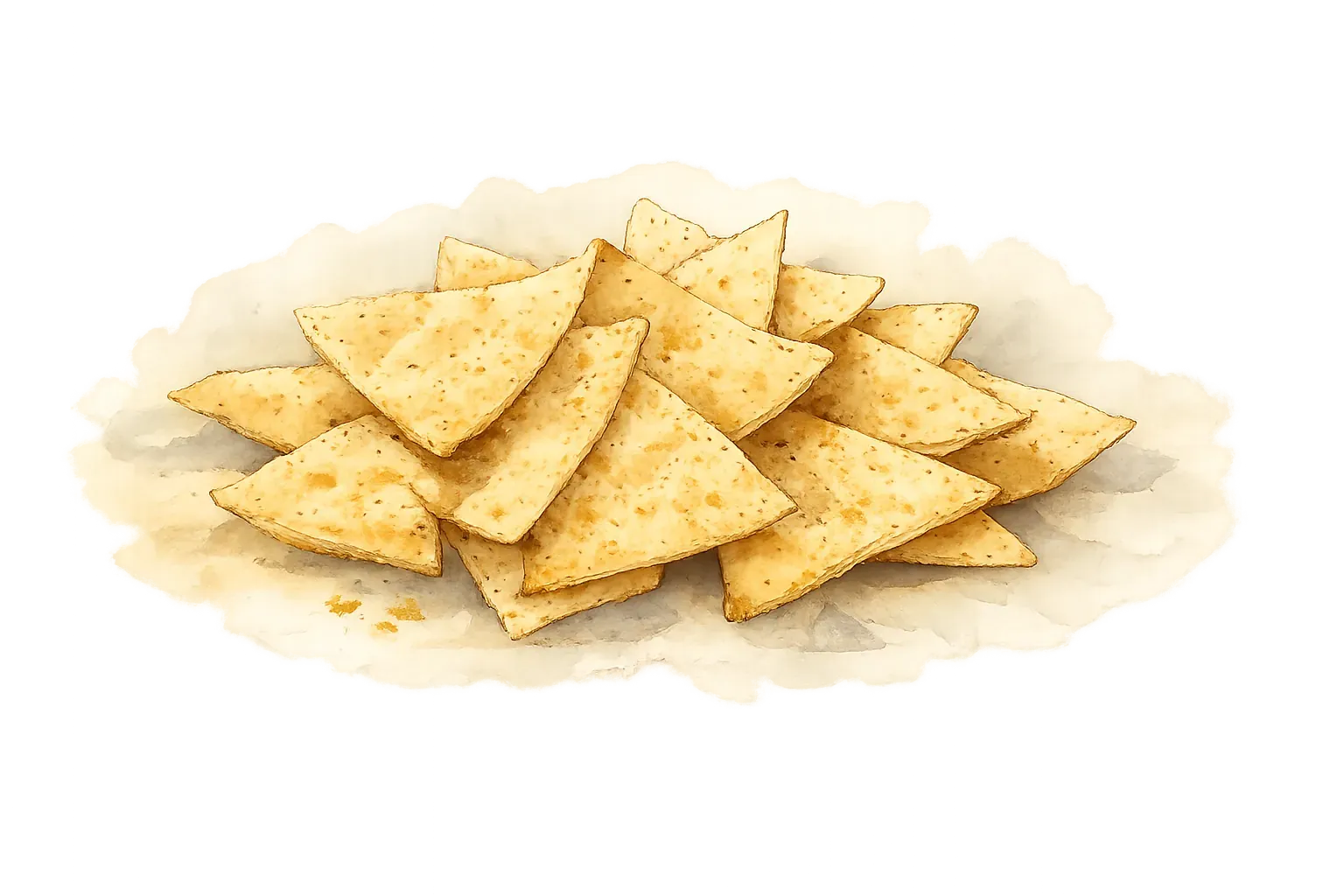
Also: corn chips
Corn tortillas cut into wedges and fried or baked until crisp and sturdy, or the thicker, extruded style sold as corn chips (like Fritos) -- eaten as a snack with dips, or used as the crunchy base for nachos and casseroles.
- tortillas

Also: Soft Tortillas
Thin, round flatbreads made from either wheat flour or corn, used to wrap or hold fillings as in tacos, burritos, and quesadillas; corn tortillas are smaller, firmer, and more prone to cracking, while flour tortillas are larger and more pliable.
- triple sec

A clear, orange-flavored liqueur, sweeter and higher-proof than plain orange juice; used mainly in cocktails like margaritas, and occasionally in desserts, for concentrated sweet citrus flavor plus alcohol.
- turmeric
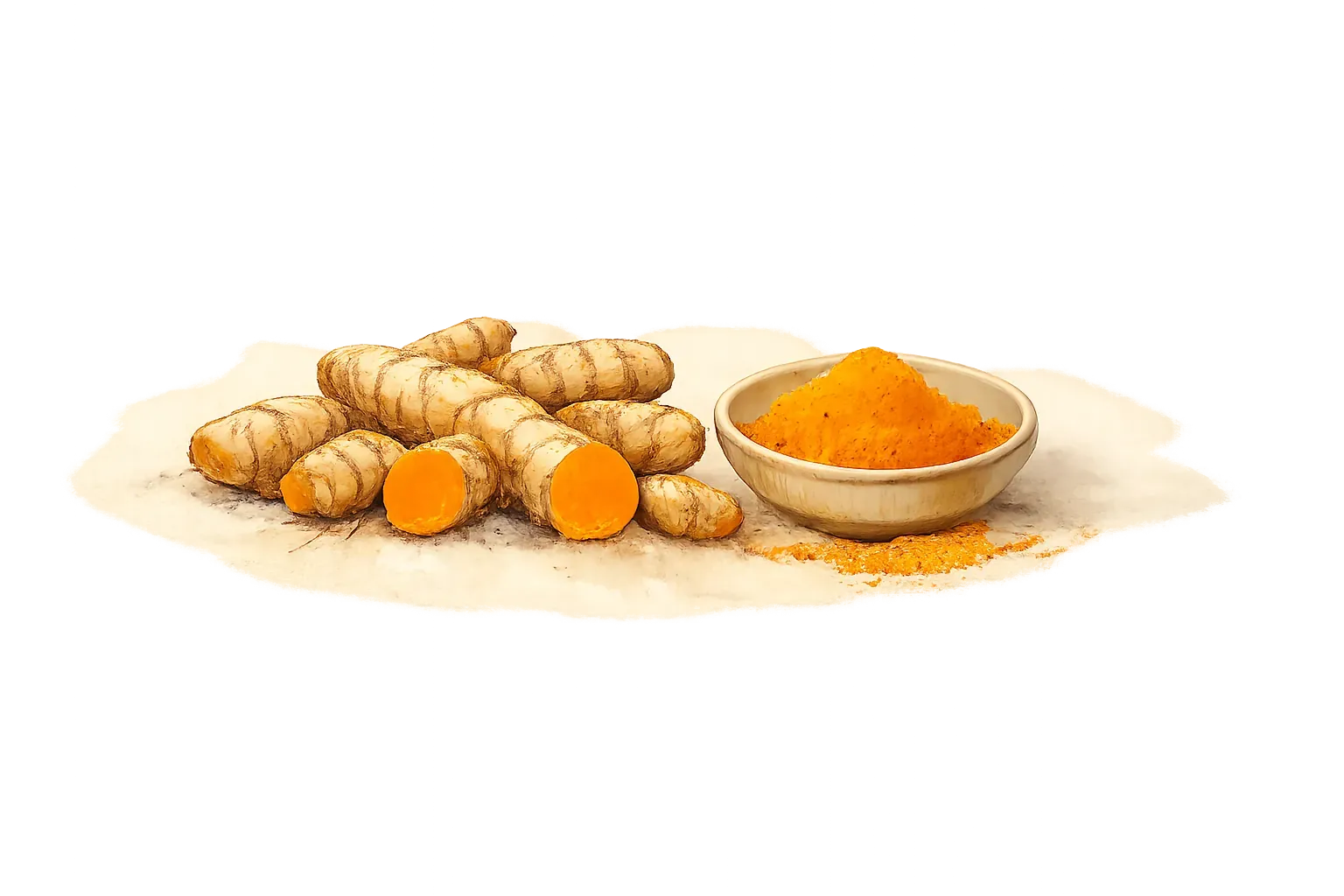
A bright orange-yellow root, most often sold dried and ground, with an earthy, slightly bitter, faintly peppery flavor -- used as much for its intense color as its flavor, since a small amount tints a whole dish golden-yellow. A key spice in curries and mustard, and in small amounts adds warmth and color to soups and stews.
U
- unsweetened chocolate

Also: baking chocolate, Hershey's unsweetened chocolate
Pure chocolate liquor (ground cacao nibs) molded into bars or squares with no added sugar, sold specifically for baking and candy-making rather than eating out of hand -- on its own it tastes intensely bitter. Recipes built around it, like brownies and old-fashioned candy coatings, add their own sugar to balance it.
V
- vanilla extract
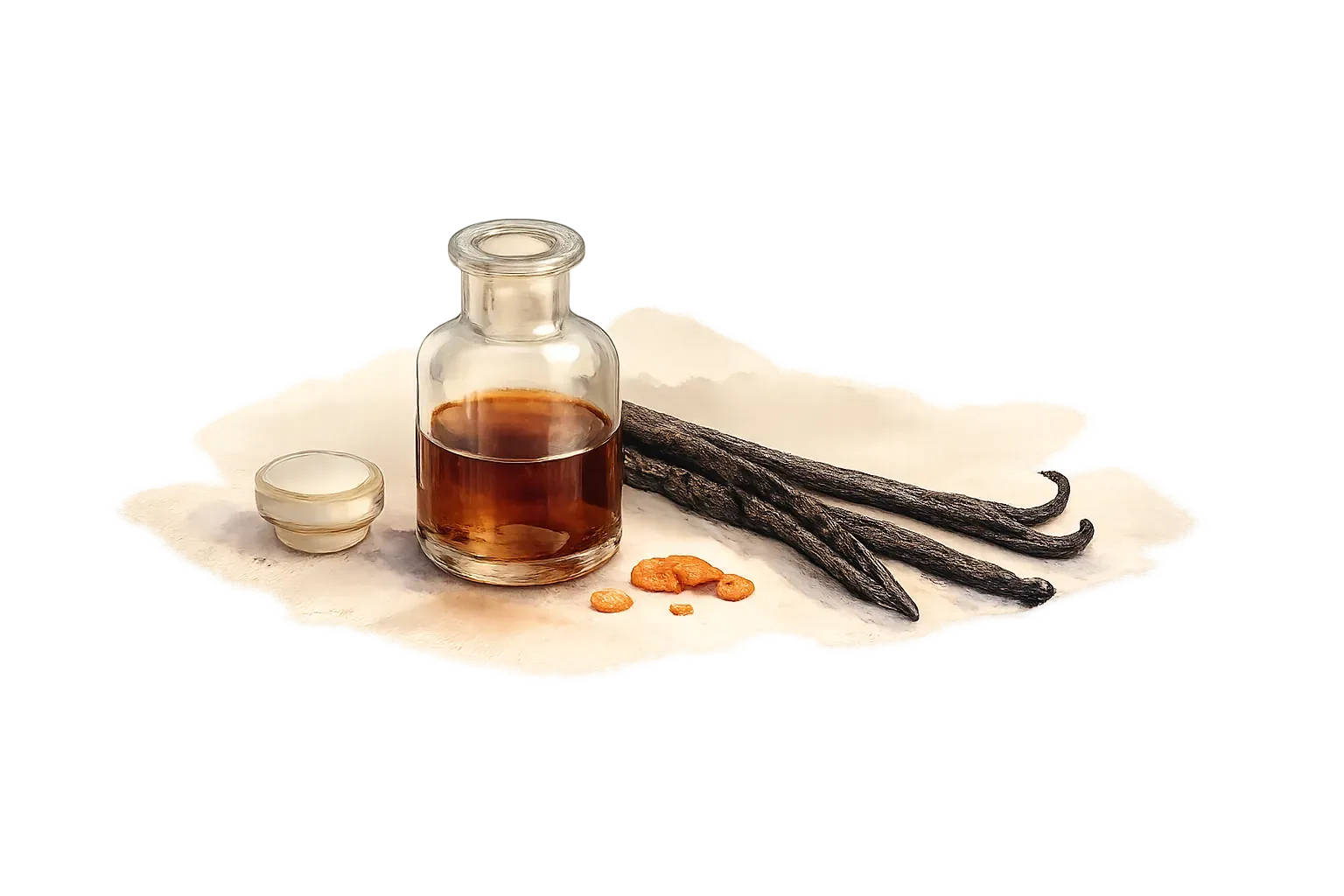
Also: vanilla
A flavoring made by steeping vanilla beans in alcohol, used in small amounts across nearly all baking to round out and deepen other flavors -- it rarely reads as "vanilla" on its own in a finished dish, more often just making everything else taste fuller.
- veal
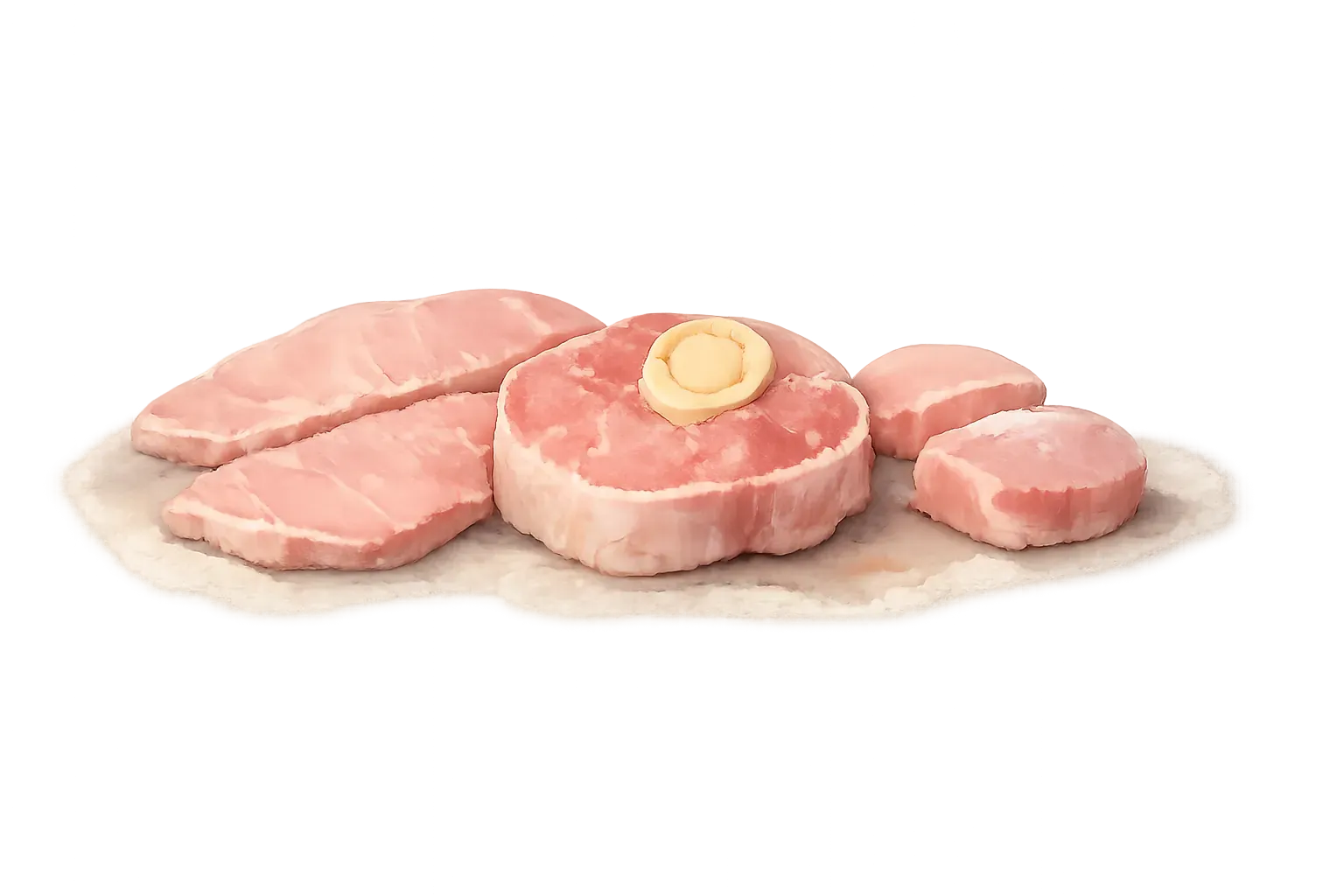
Meat from a young calf, pale pink and much more tender and mild-flavored than beef from a mature animal, since the muscle hasn't had time to develop beef's fuller flavor or toughness. Used in classic European cooking (scaloppine, osso buco) and, in small amounts, added to a mixed-meat stew for a subtler layer of flavor alongside beef and pork.
- Veg-All
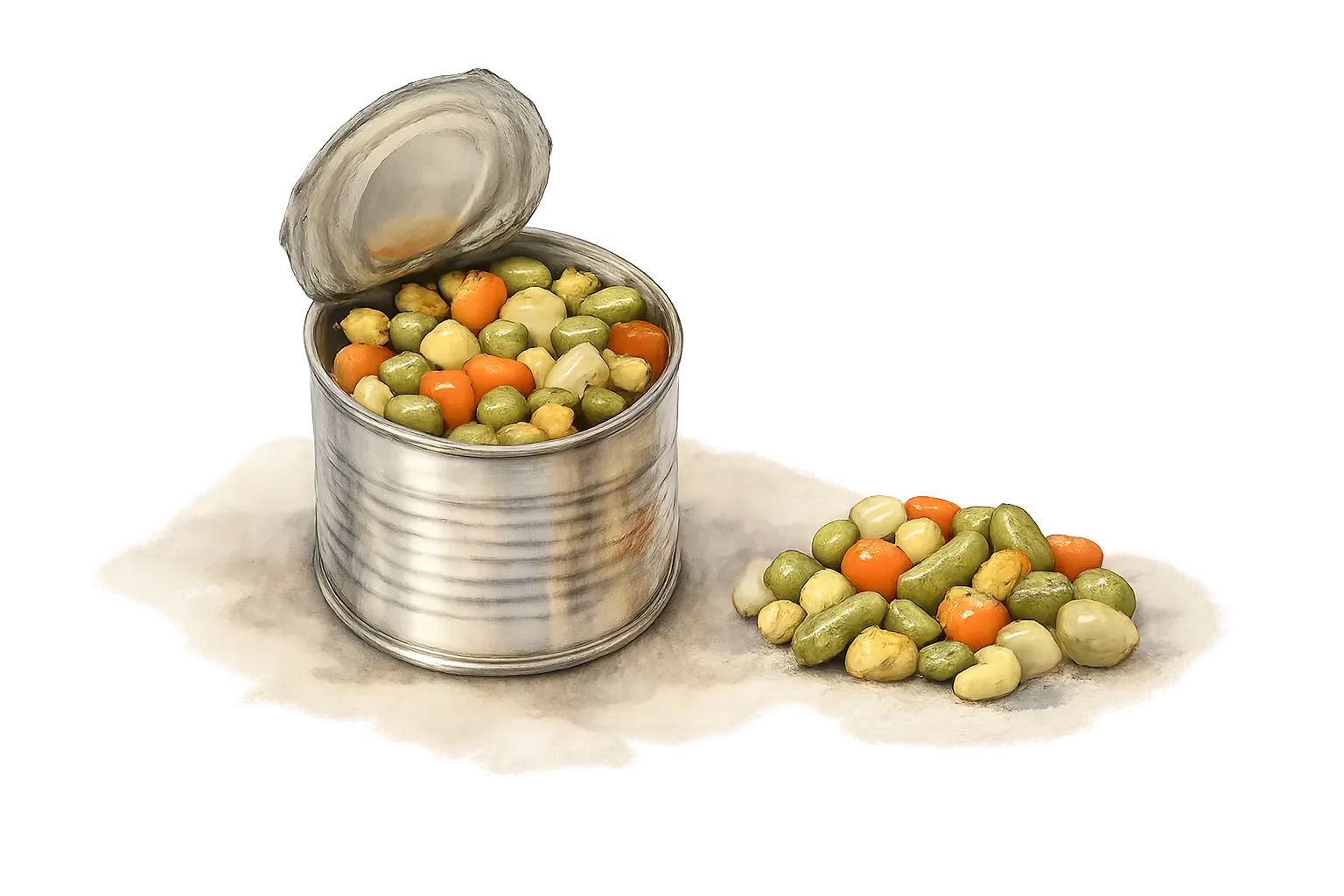
Also: mixed vegetables, canned
A brand of canned mixed vegetables (typically potatoes, carrots, green beans, peas, corn, celery, and lima beans) sold pre-cooked and ready to heat, meant as a one-can shortcut for a vegetable soup or stew base instead of prepping and cooking each vegetable separately.
- vegetable bouillon
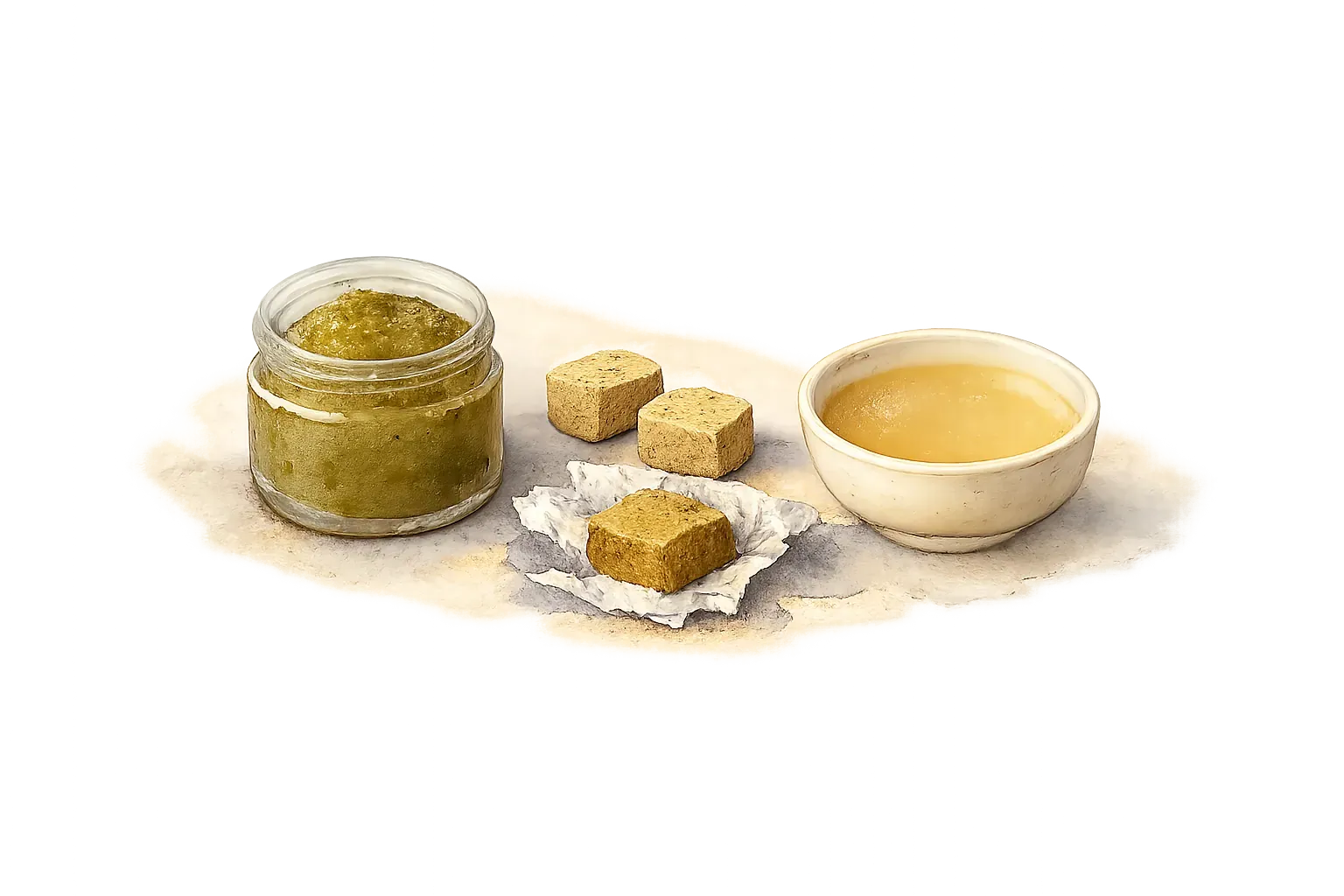
Also: Knorr vegetable bouillon, concentrated vegetable broth, vegetable stock concentrate, veg broth concentrate
A concentrated, shelf-stable form of vegetable stock, sold either as a paste in a jar, small dried cubes, or individually wrapped concentrated packets (Knorr is a widely available brand in all three forms) meant to be dissolved in or combined with hot water to reconstitute into broth. A pantry shortcut for vegetable broth, and also used in smaller amounts to boost the savoriness of a broth or soup that's already been made.
- vegetable oil
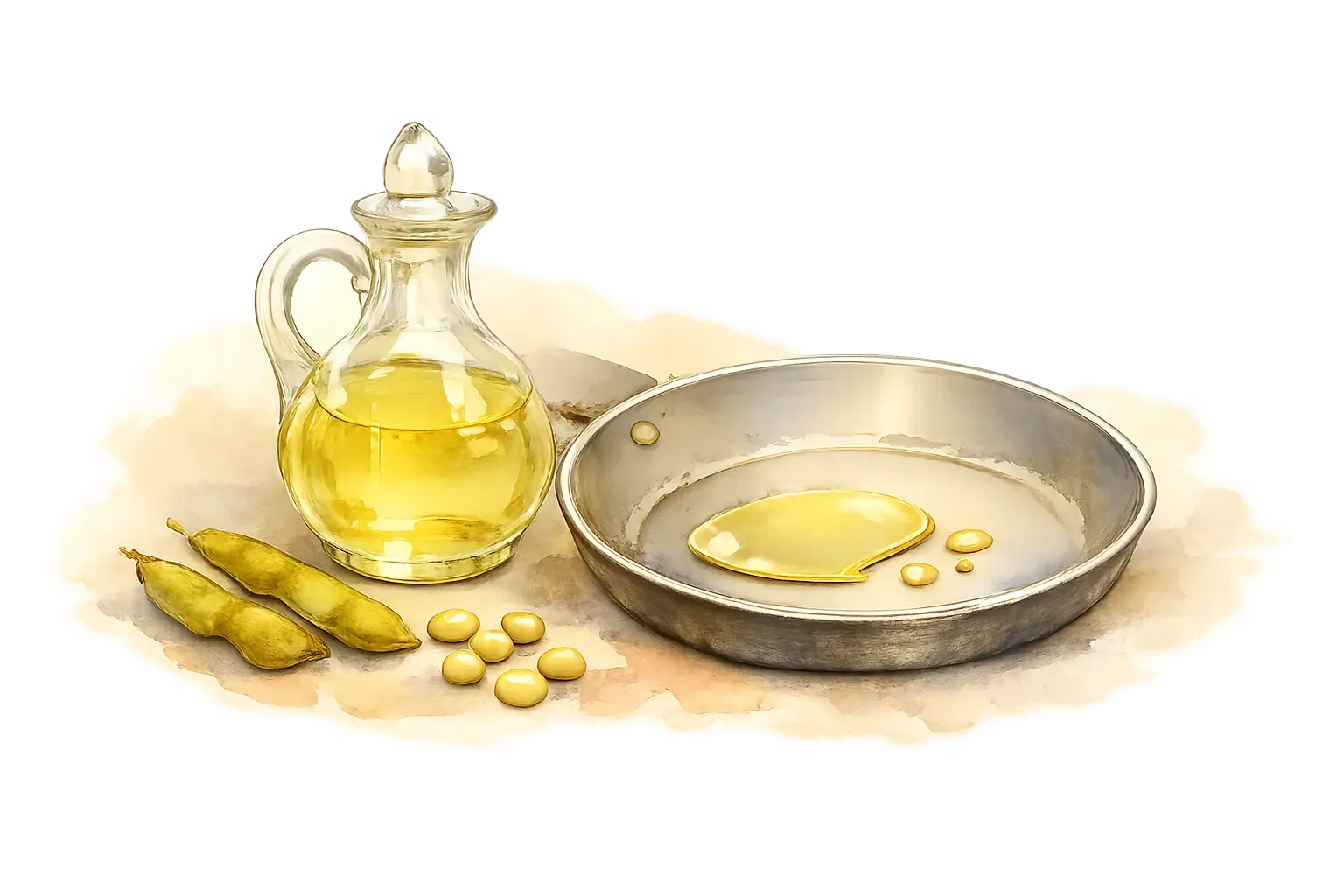
Also: cooking oil, Oil, avocado oil
A neutral-flavored cooking oil, commonly soybean-based though the term is used loosely for any bland blended oil; suited to sauteing, frying, and baking wherever fat is needed without adding its own flavor.
More specific: canola oil, corn oil
- vinegar
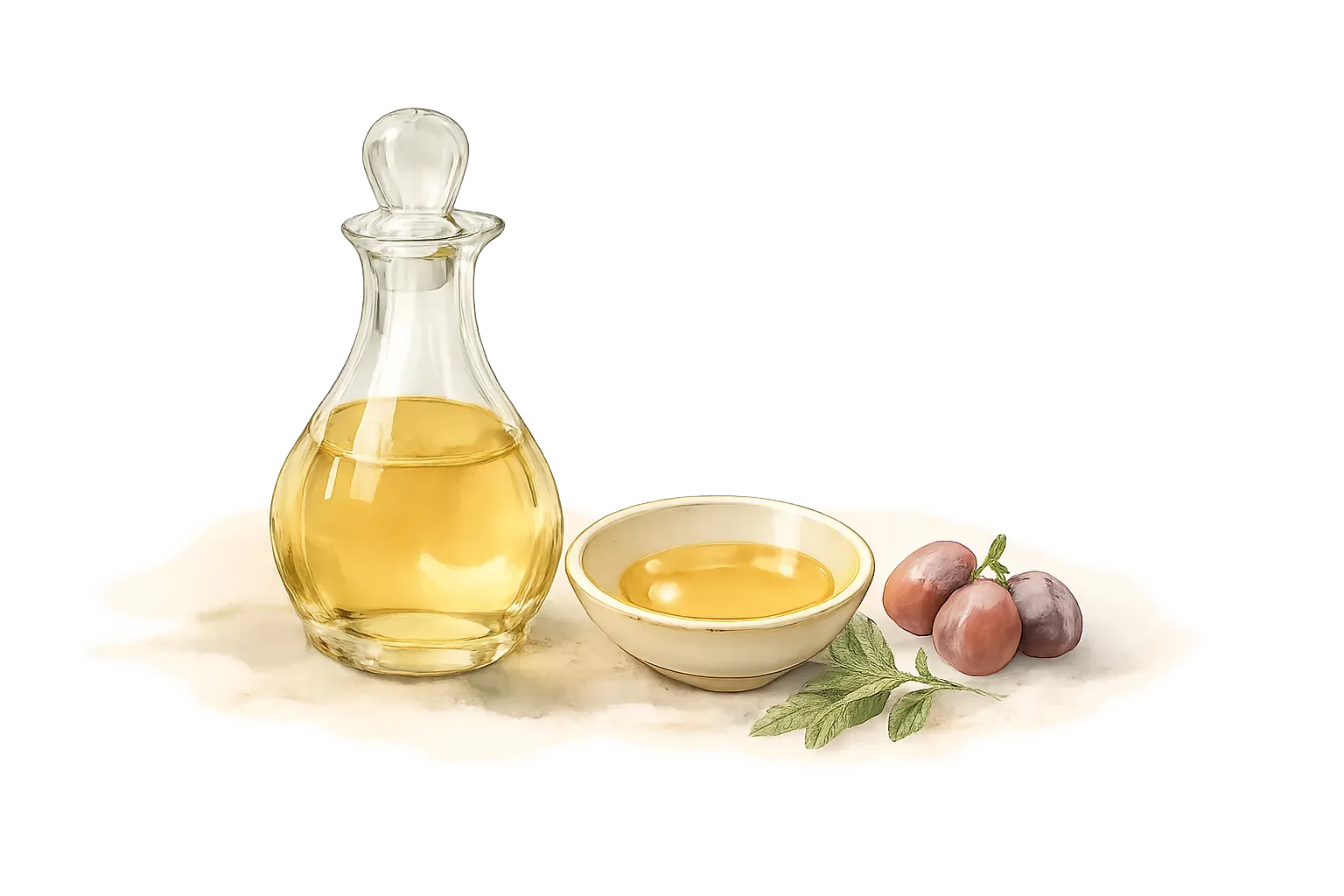
Also: white vinegar
An acidic liquid made by fermenting alcohol into acetic acid; used in small amounts to add tang and brightness to dressings, marinades, sauces, and pickling brines. Different vinegars vary widely in sharpness and flavor, from the aggressive neutrality of distilled white vinegar to the fruitiness of a good red wine vinegar.
- vodka

A clear, neutral spirit distilled from grain or potatoes and filtered to have little flavor or aroma of its own. In cooking and baking, it contributes alcohol and moisture without adding a competing flavor -- in a cake batter, some of that alcohol also bakes off, leaving behind extra tenderness without a strong boozy taste.
W
- walnuts
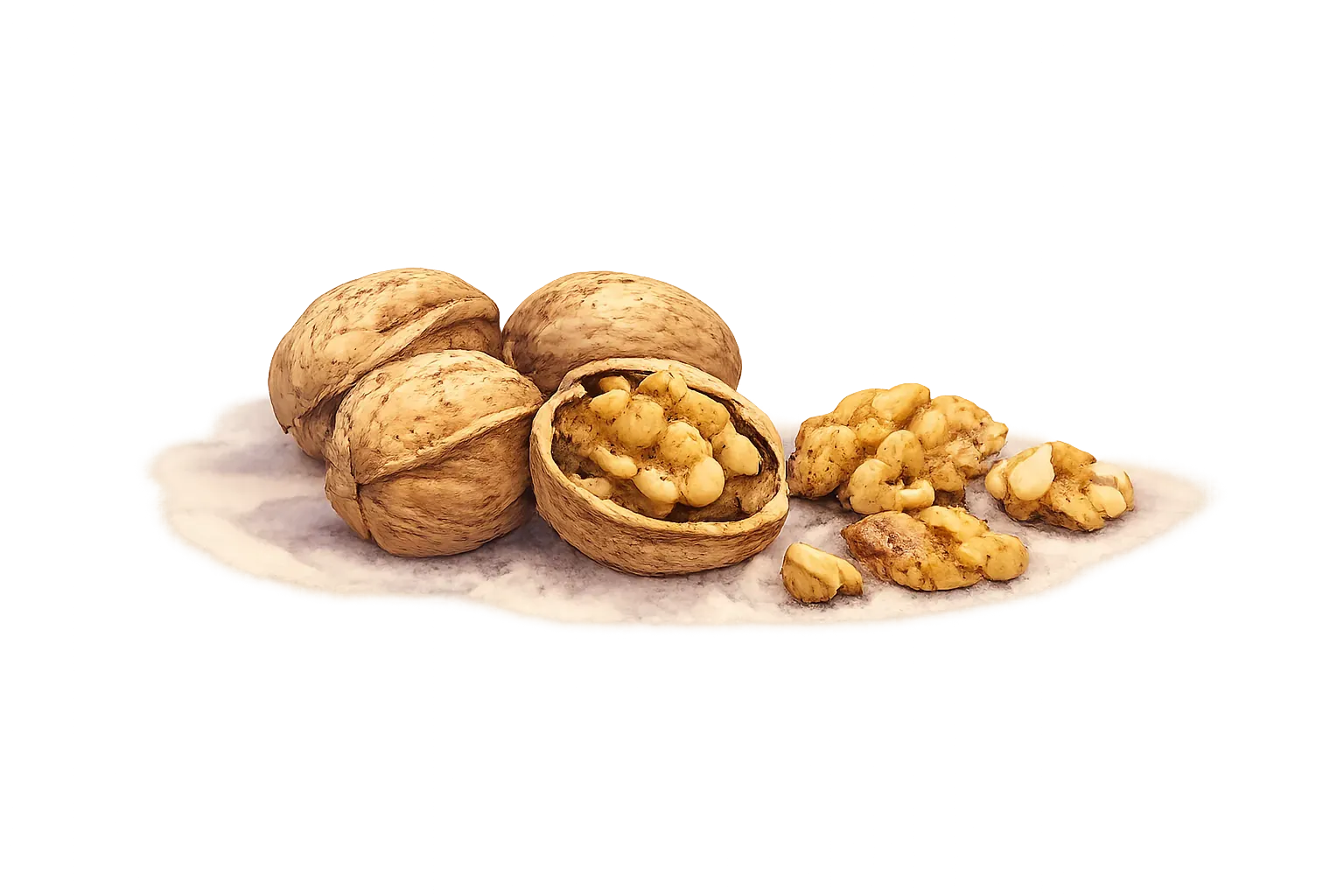
Also: Walnut Pieces
A rich, slightly bitter tree nut with a distinctive wrinkled shape; eaten raw or toasted in baking, salads, and snacking. It's one of the higher-fat nuts, which makes freshness matter more than it does for most pantry staples.
More specific: black walnuts
- water

Also: Enough water to cover
The neutral liquid base used for boiling, steaming, thinning, and diluting whenever a dish doesn't need the flavor that broth, wine, or another liquid would add. It isn't actually neutral in effect -- the amount used controls concentration, hydration, and texture, so treating it as an infinite, flavorless filler is a common source of watery sauces and gummy rice.
- water chestnuts
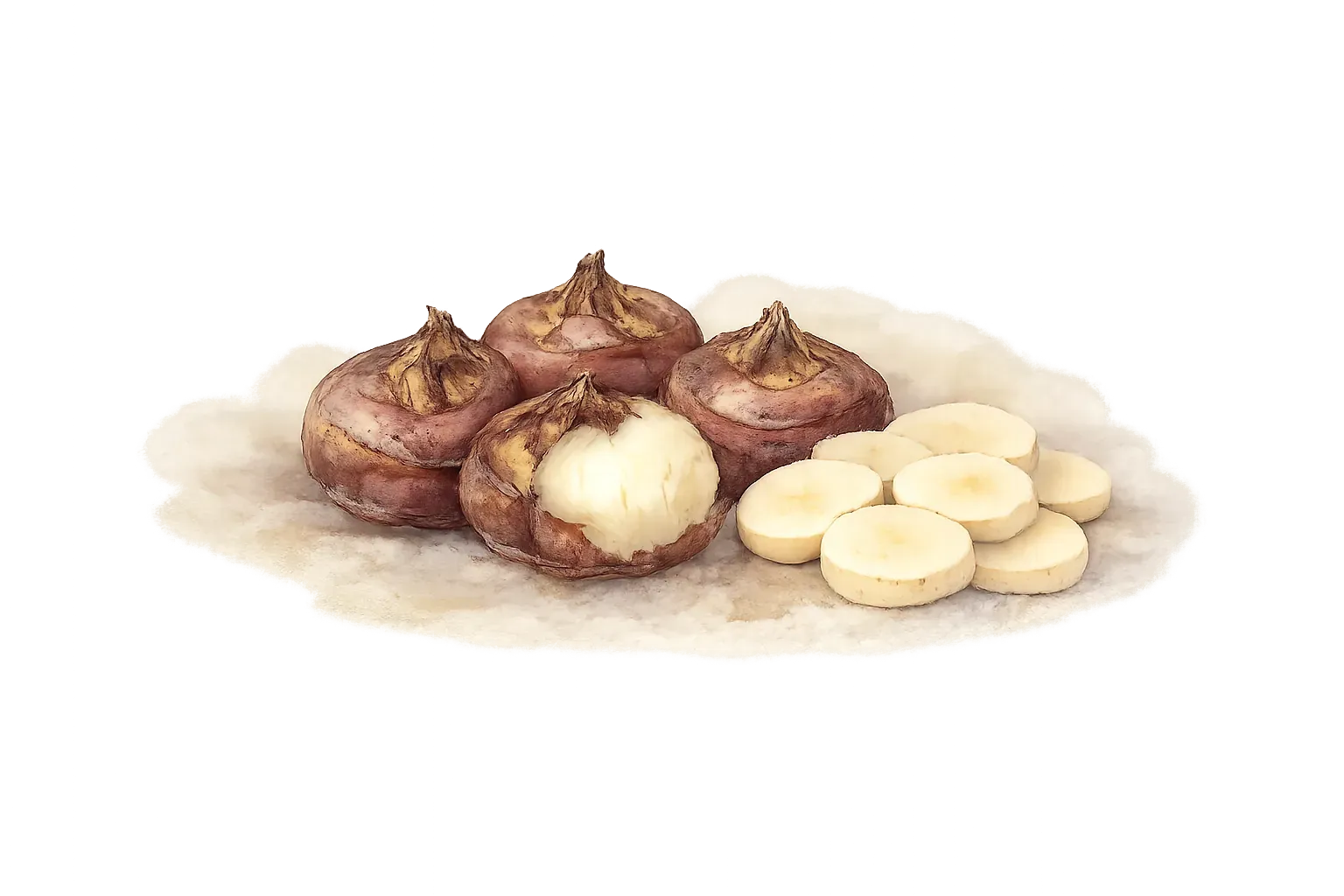
The crunchy corm (an underground stem, not a nut despite the name) of an aquatic plant, sold sliced in cans, with a mild, faintly sweet flavor and a crisp texture that stays crunchy even after cooking -- used in stir-fries and Asian-style soups mainly for that texture contrast rather than for flavor.
- white bread

Also: Slices White Bread
A soft, mild sandwich bread made from finely milled wheat flour with the bran and germ removed, giving it a light, tender crumb; a plain, versatile everyday bread used for sandwiches, toast, and as a base for stuffing or bread pudding.
- white chicken chili seasoning mix
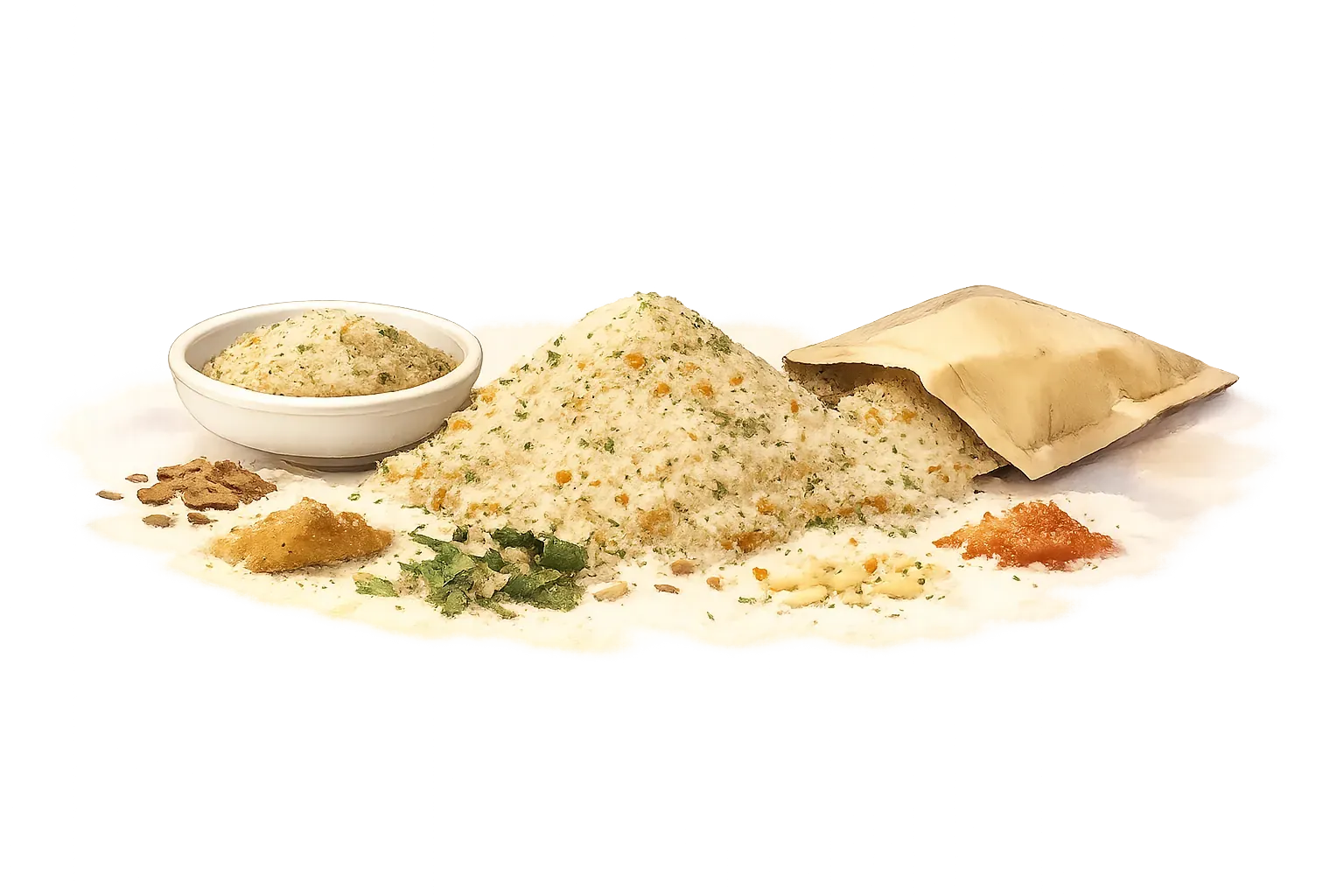
Also: white chicken chili mix
A packaged seasoning blend built for white chicken chili -- typically cumin, oregano, and chile-forward spices, seasoning a pale, tomato-free chili the way a standard chili powder blend seasons a red, tomato-based one.
- white pepper
Pepper made from the same berry as black pepper, but soaked until the dark outer skin loosens and can be removed before drying; the result is milder and less complex than black pepper, with a faintly fermented, earthy edge and no dark flecks.
A kind of black pepper
- white wine
Wine made from white or dark-skinned grapes fermented without skin contact, giving it a light color; drunk on its own and used in cooking for deglazing a pan, building a pan sauce, or as part of a braising liquid, where its acidity balances rich or fatty dishes.
- whole chicken
An entire chicken, uncut, roasted, grilled, or spatchcocked (butterflied flat) rather than cooked as separate parts; cooking it whole keeps breast and thigh meat cooking together, so timing and technique matter more than they do for a single cut.
- wide rice noodles
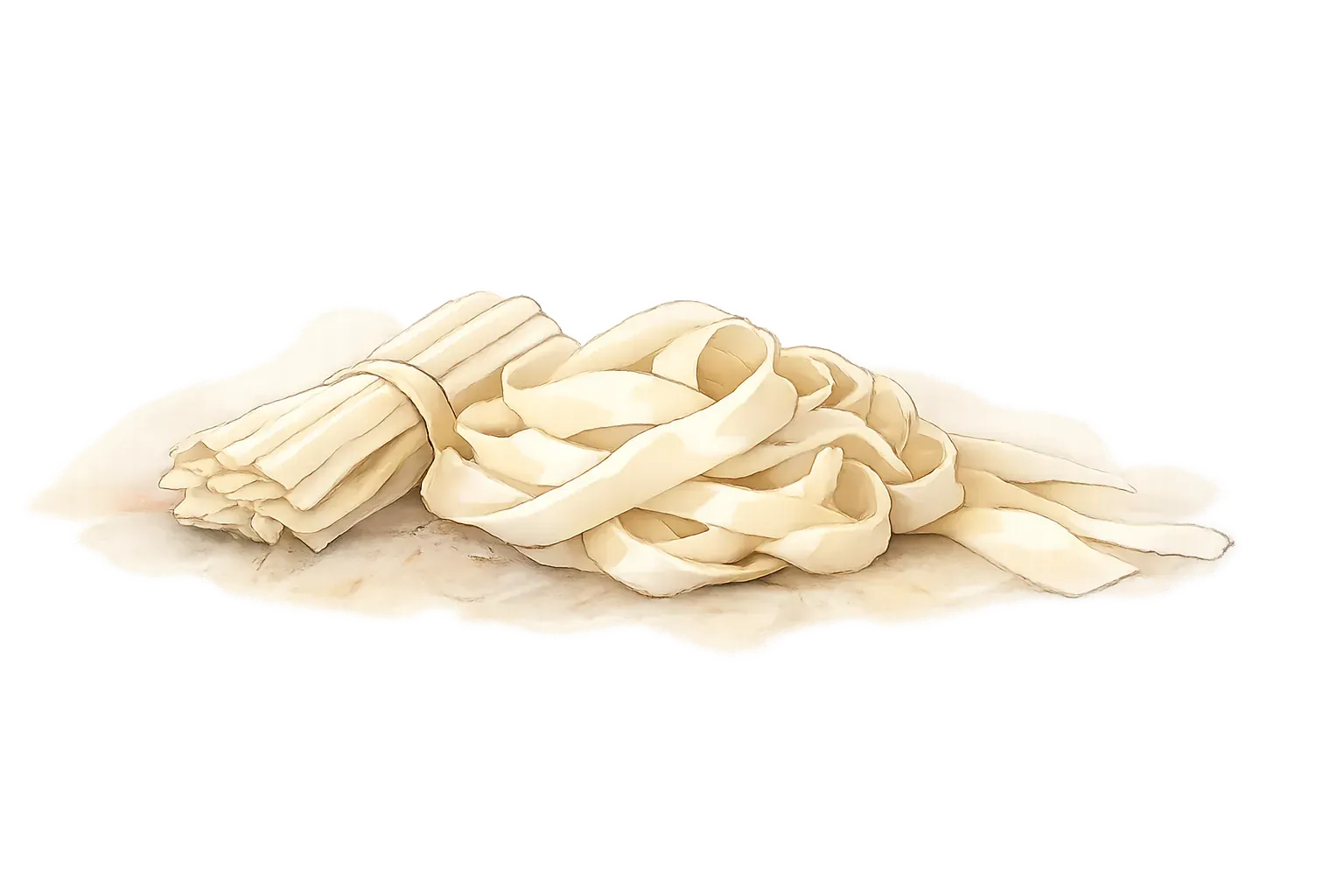
Flat, broad noodles made from rice flour, used in dishes like pad see ew and chow fun where a wide surface holds sauce and coats well; sold both dried and fresh/refrigerated, with fresh noodles softer and quicker to prepare.
A kind of rice noodles
- wild rice
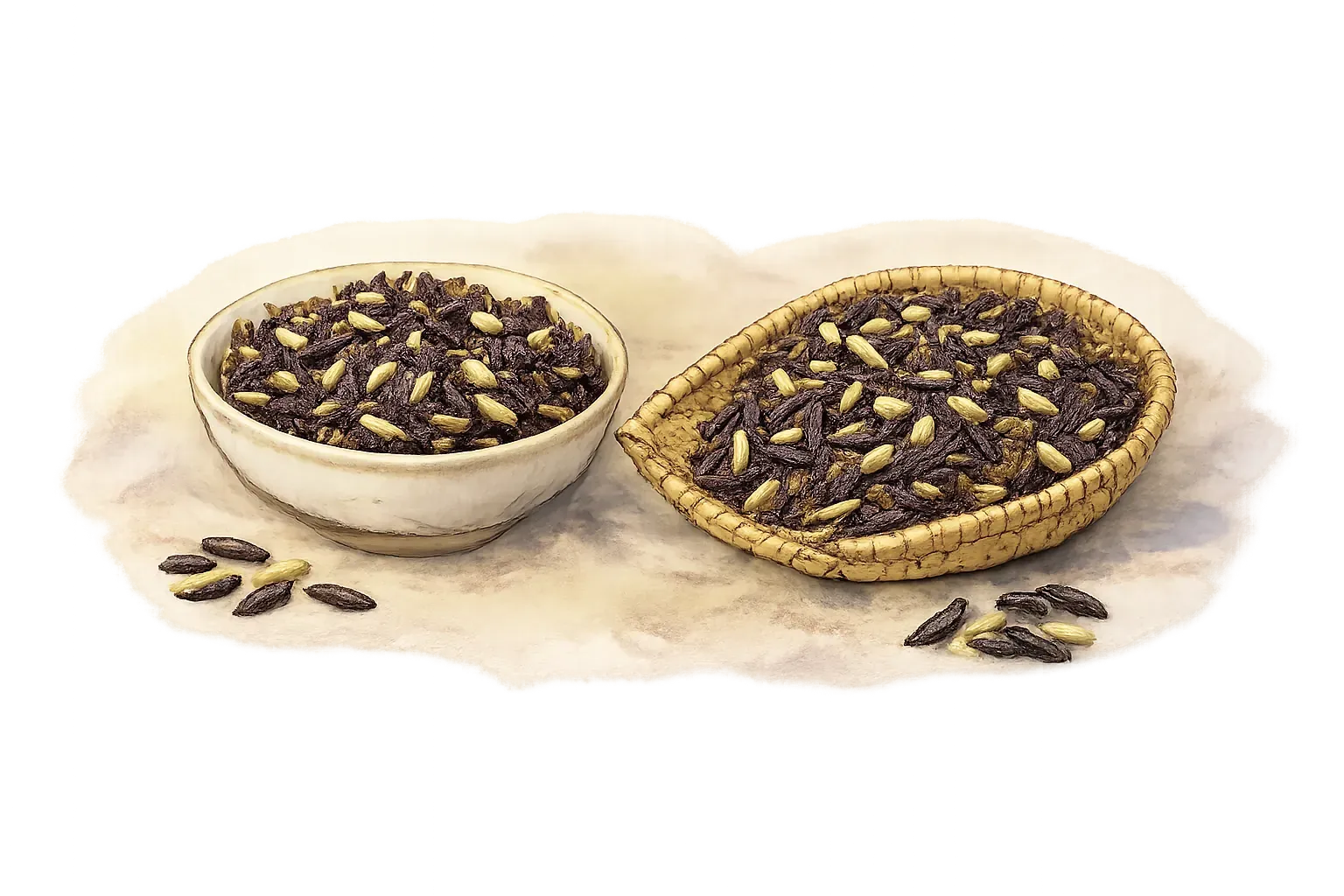
The seed of an aquatic grass, not a true rice, with long dark, almost black grains, a chewy texture, and a nutty, slightly smoky flavor. Takes considerably longer to cook than white rice and never turns fully soft the way white rice does -- it stays pleasantly chewy even fully cooked, which is part of its appeal in soups like chicken and wild rice.
- wing sauce

Also: Wings Sauce
A tangy, buttery hot sauce -- classic Buffalo style is cayenne pepper sauce whisked with melted butter -- tossed with fried or baked chicken wings just before serving so the coating stays glossy instead of baking dry.
- Worcestershire sauce
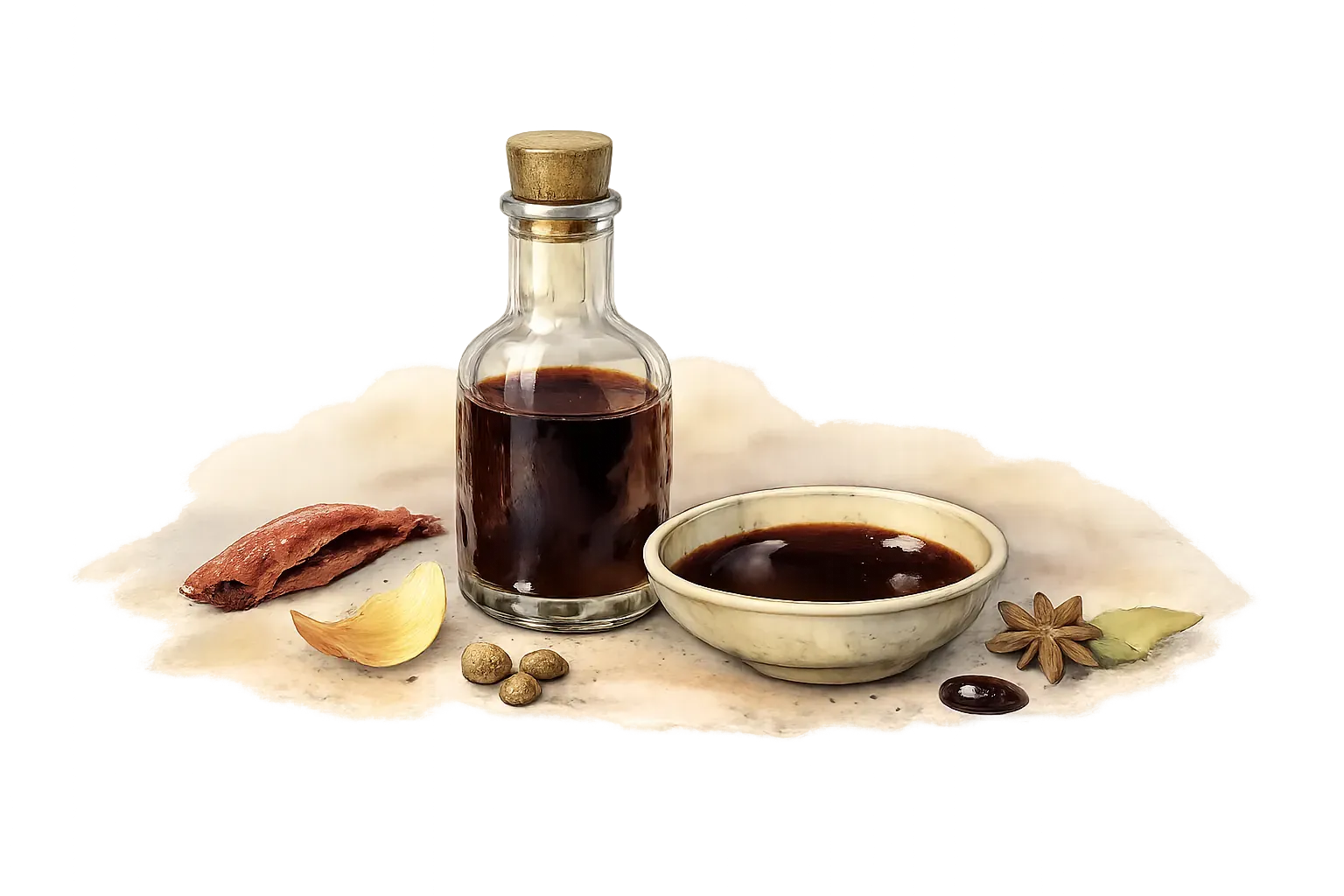
Also: Worcestershire
A dark, tangy, savory fermented sauce made from vinegar, molasses, anchovies, and seasonings; used in small amounts to add deep umami to marinades, sauces, and drinks like a Bloody Mary.
Y
- yellow cake mix
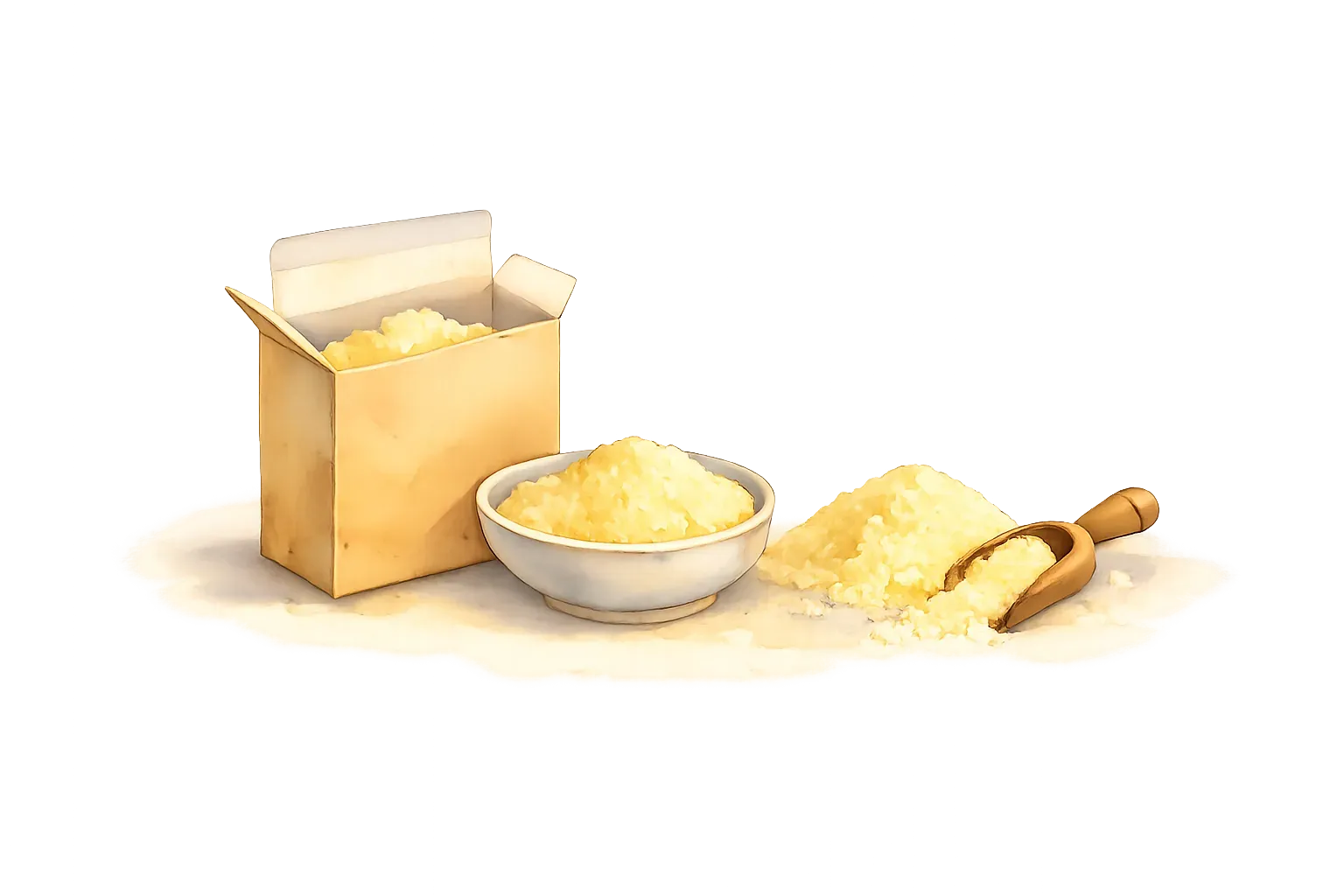
A boxed, pre-blended mix of flour, sugar, leavening, and flavoring (egg yolk and vanilla give it its yellow color and name) that only needs eggs, oil, and a liquid stirred in to become cake batter. Used both baked as-is for a plain yellow cake and as a shortcut base doctored up with extra flavoring ingredients -- a liqueur, extra fruit juice, a box of pudding mix -- for a fuller-flavored cake without building a batter from scratch.
- yellow mustard
A smooth, mild, bright yellow condiment mustard made from ground mustard seed, turmeric (for color), and vinegar; the classic American ballpark-style mustard, milder and less complex than Dijon or whole-grain mustard.
A kind of mustard
- Yukon gold potatoes
A yellow-fleshed, medium-starch potato -- creamier and more buttery-tasting than a starchy russet, but holds together a bit better than a low-starch red or white potato when cut and boiled. A common all-purpose choice for soups and chowders, since it gives a naturally creamy texture without turning to complete mush.
A kind of potato
Z
- ziti
A medium, tube-shaped pasta, usually smooth-surfaced (unlike ridged penne); a common choice for baked pasta dishes because its hollow shape traps sauce and cheese inside as well as around it.
- zucchini
A mild, tender summer squash eaten raw, sauteed, roasted, grilled, or baked into quick breads; its high water content means it releases liquid readily once cooked, which is worth planning for.